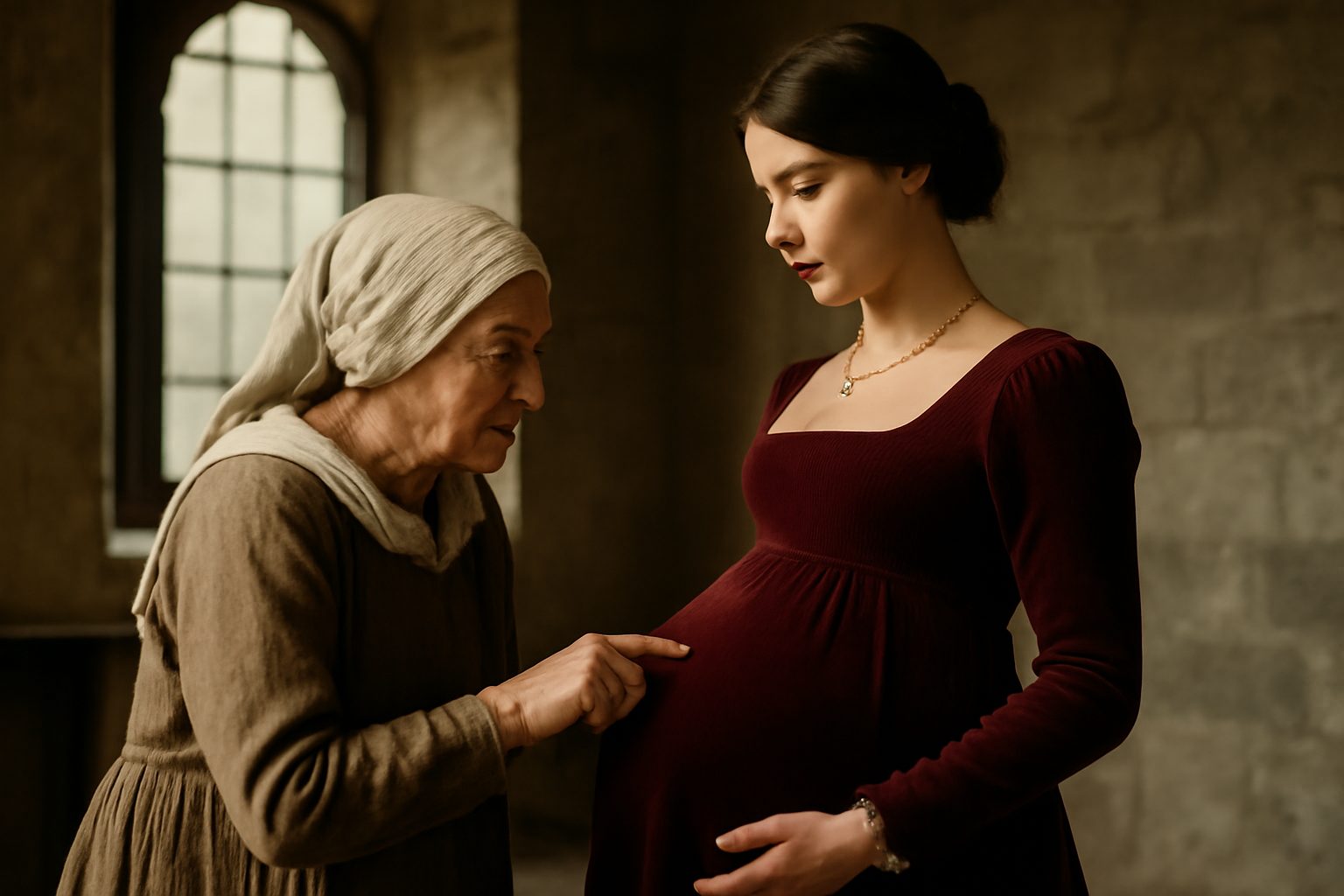
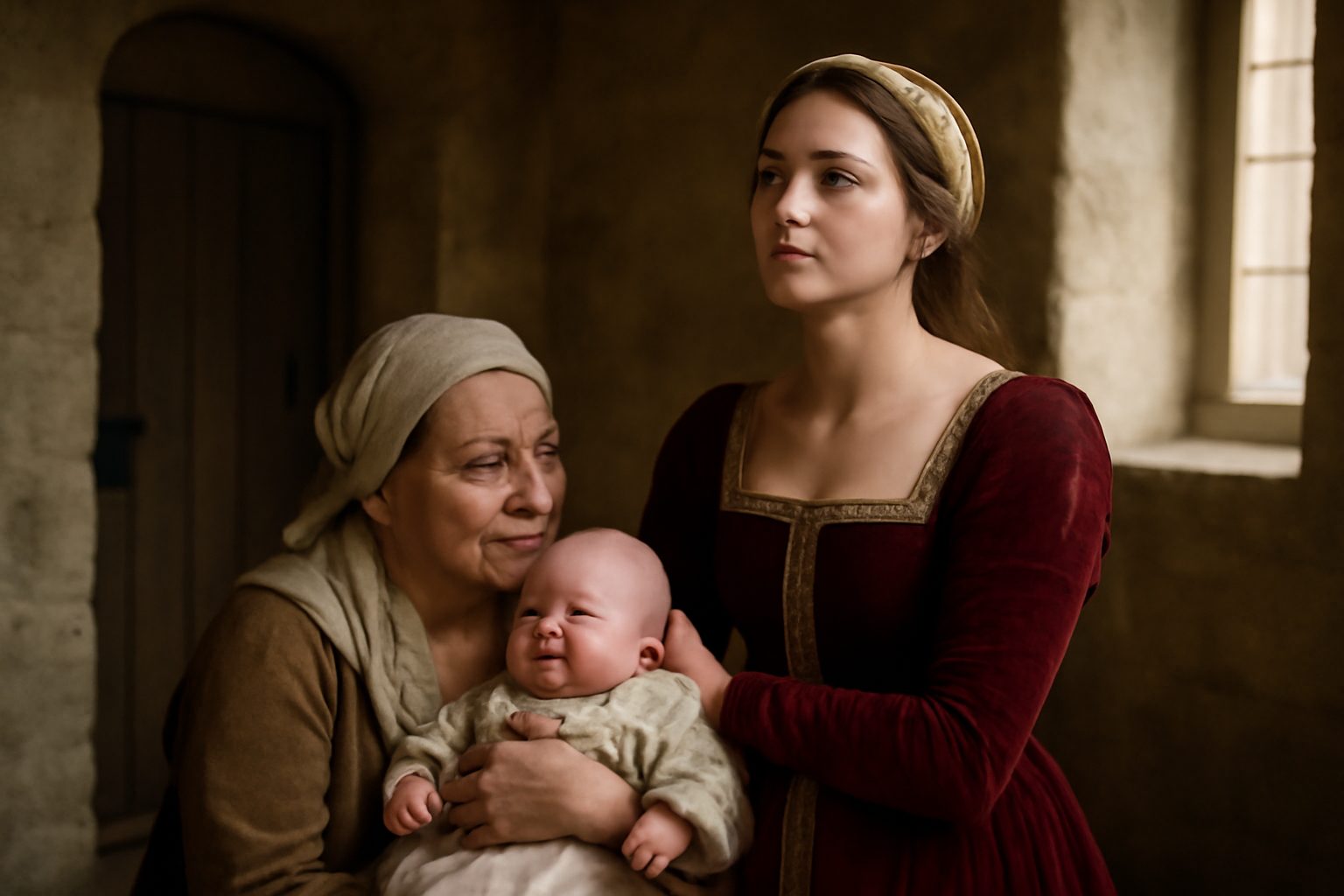
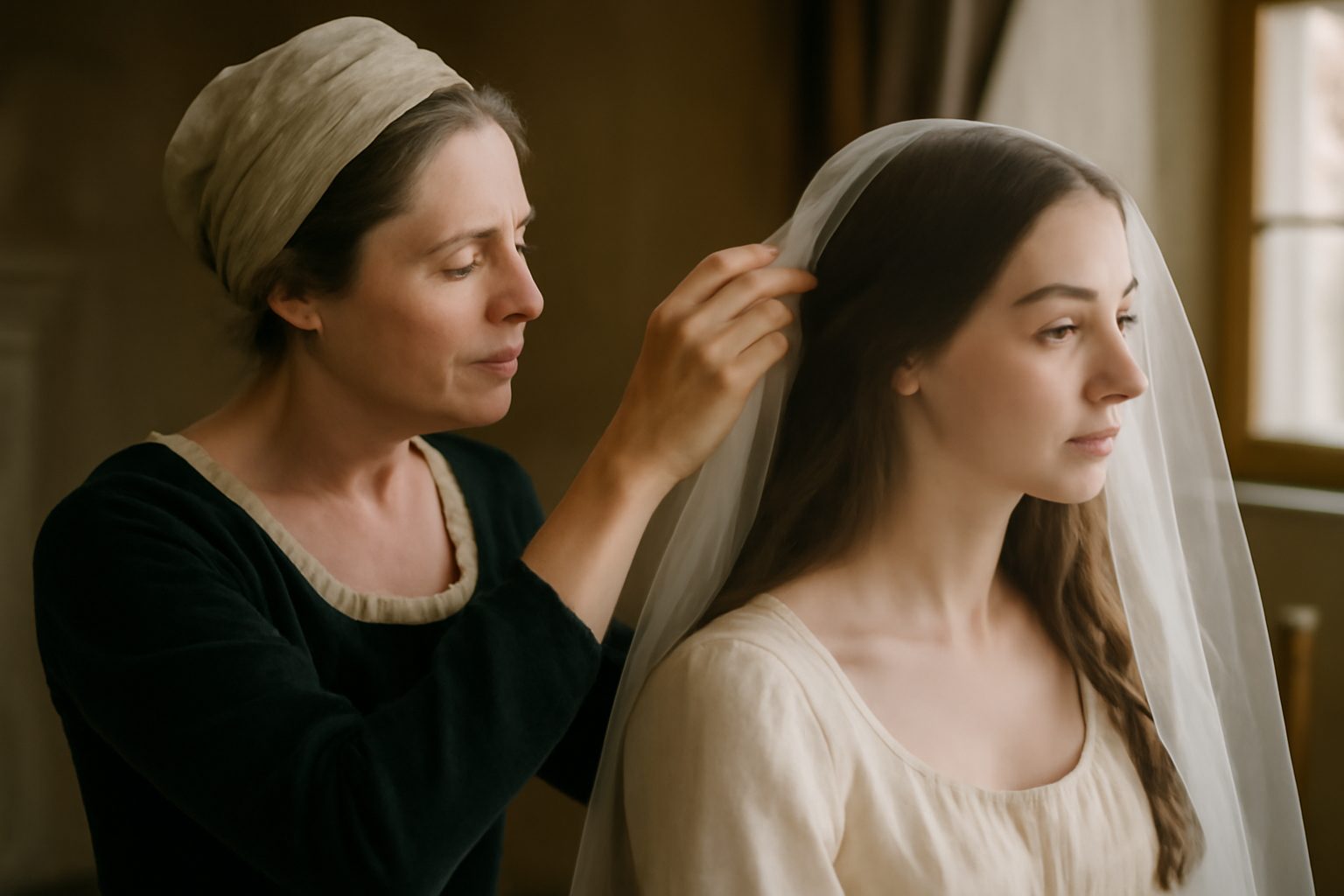
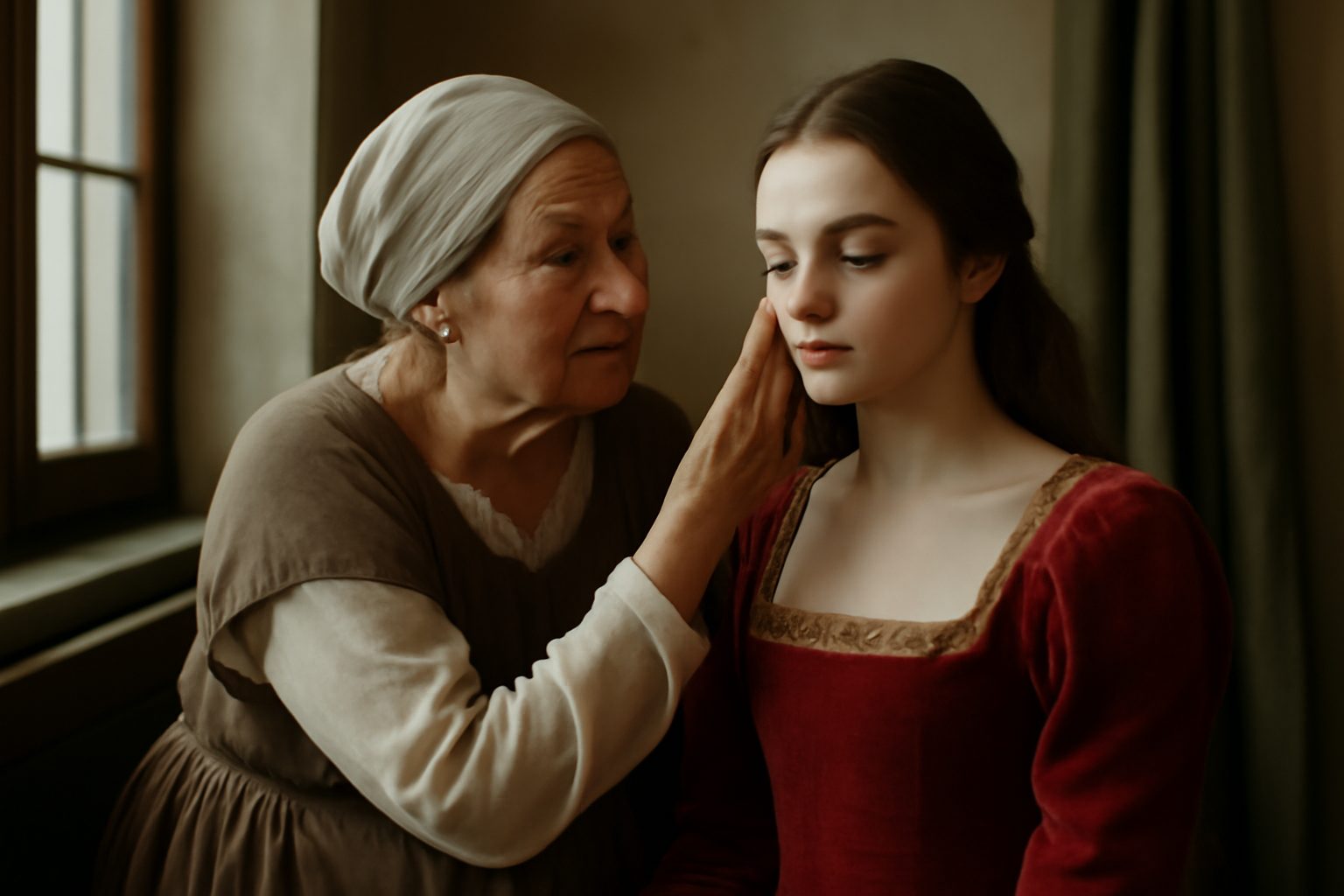
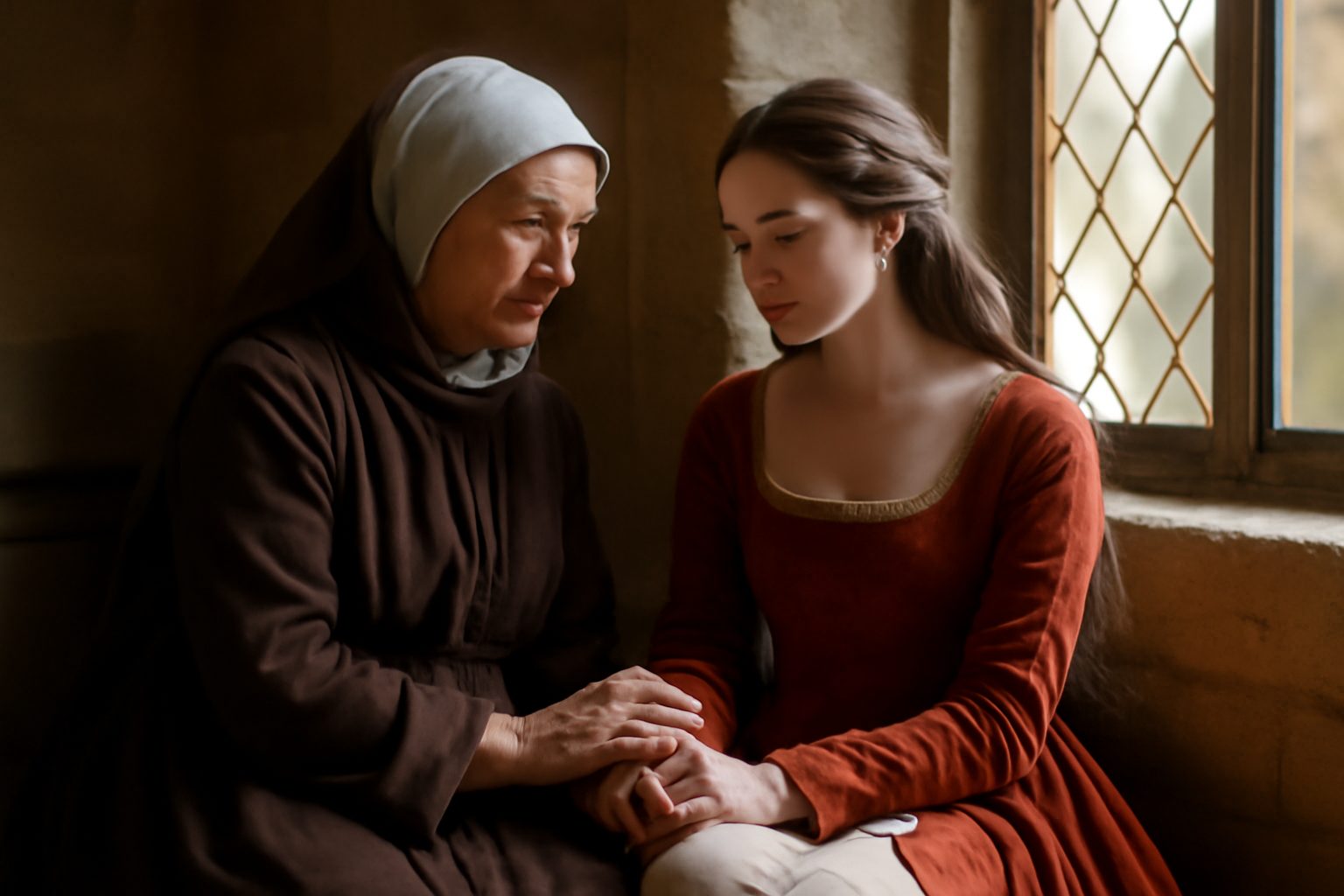
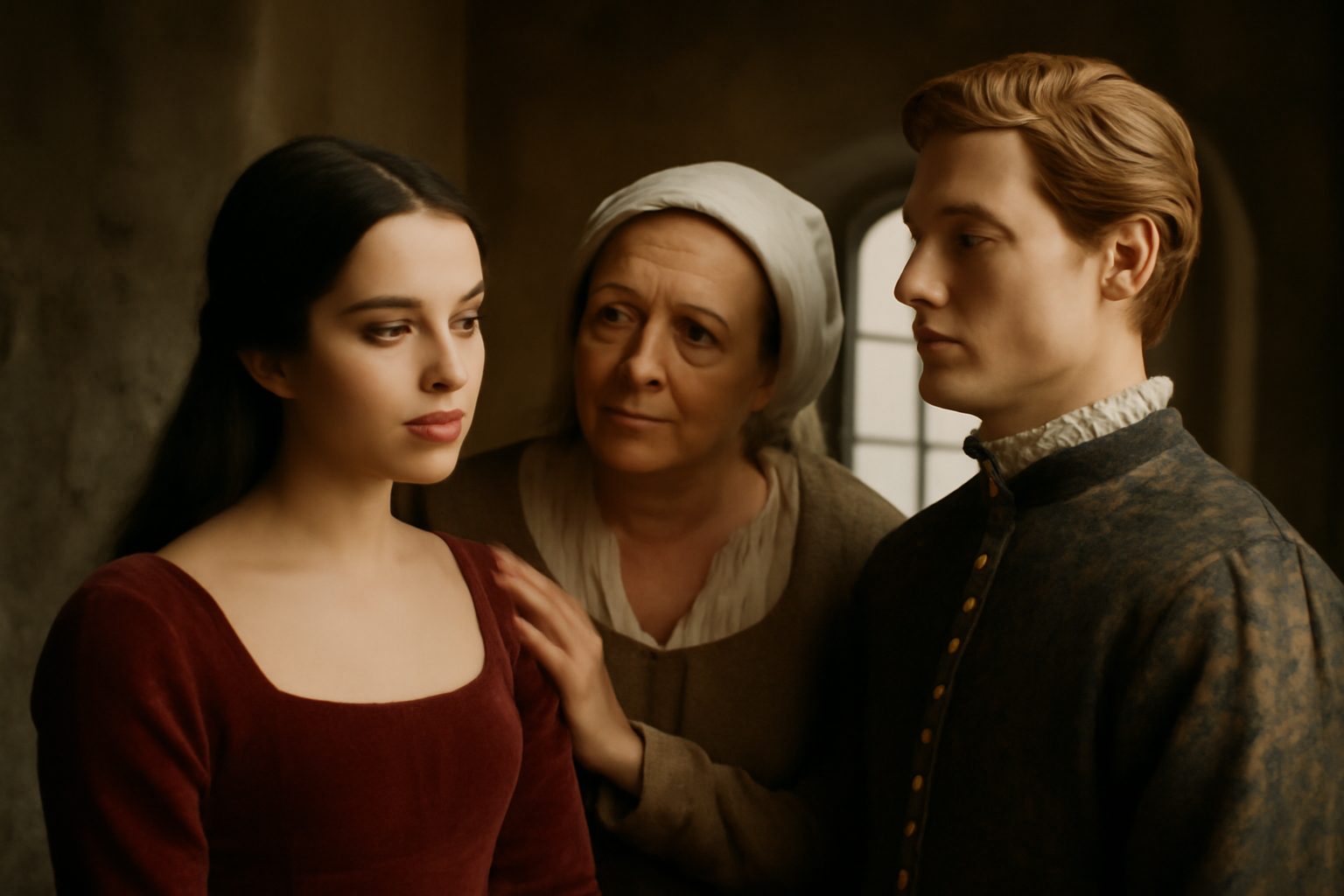
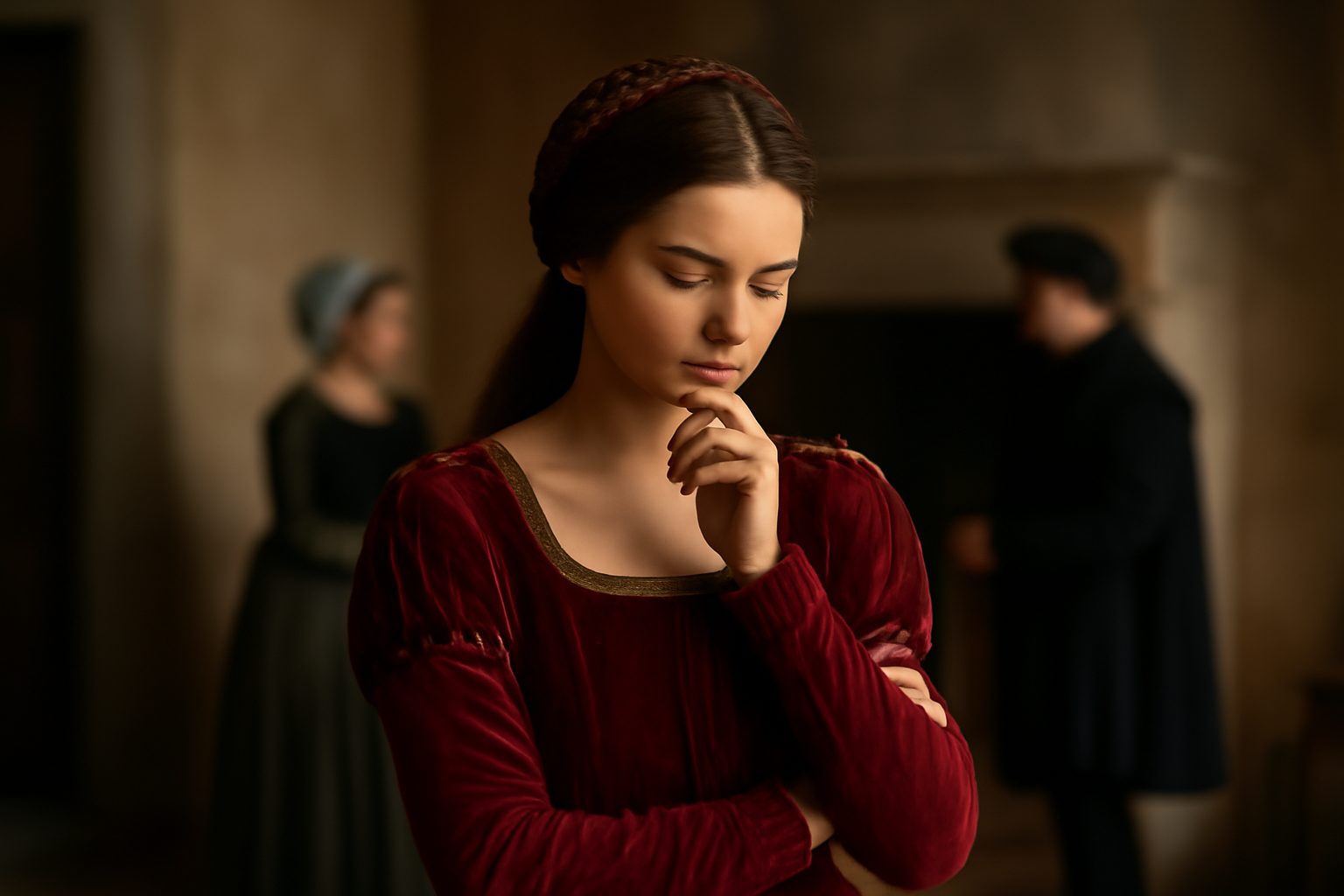
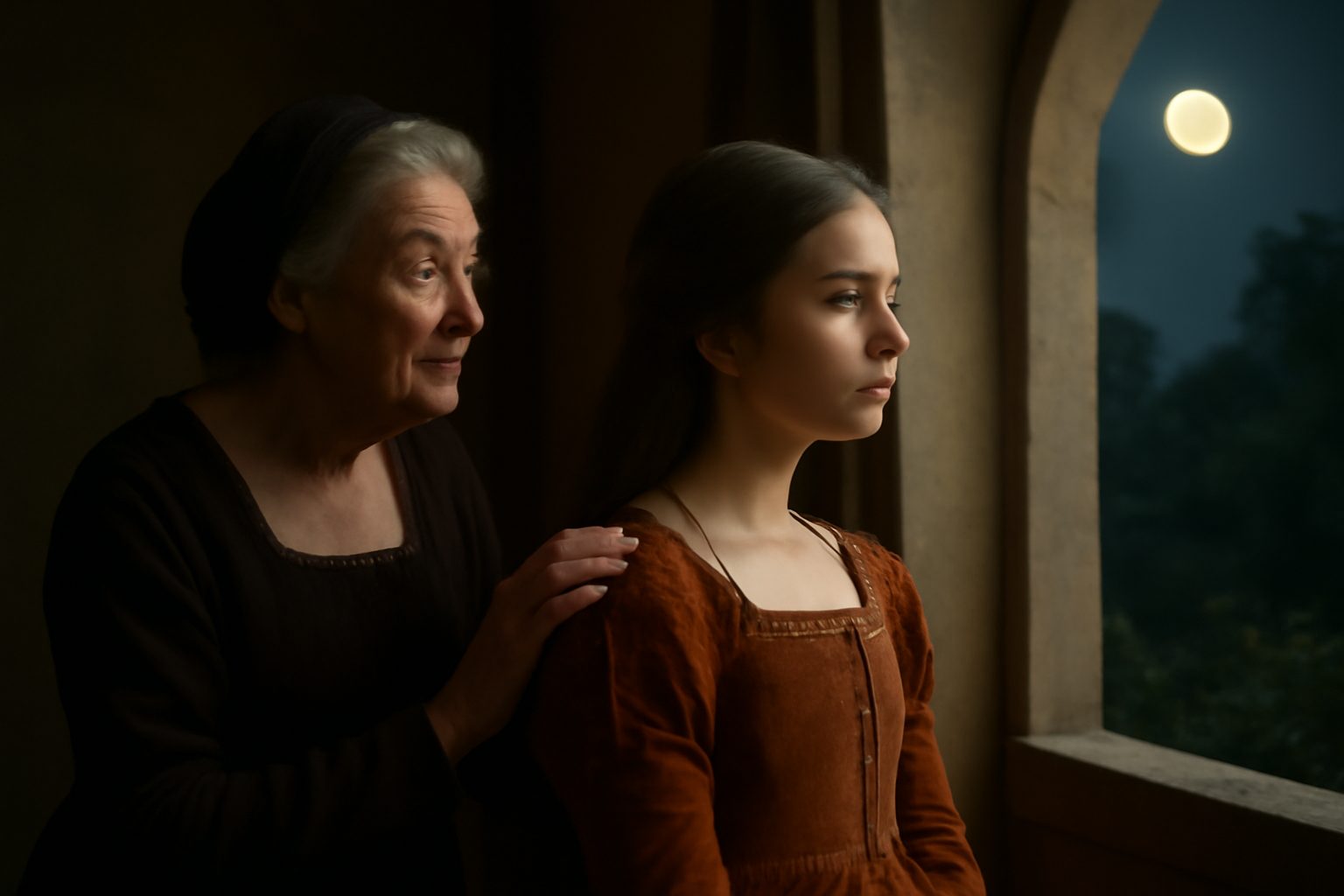
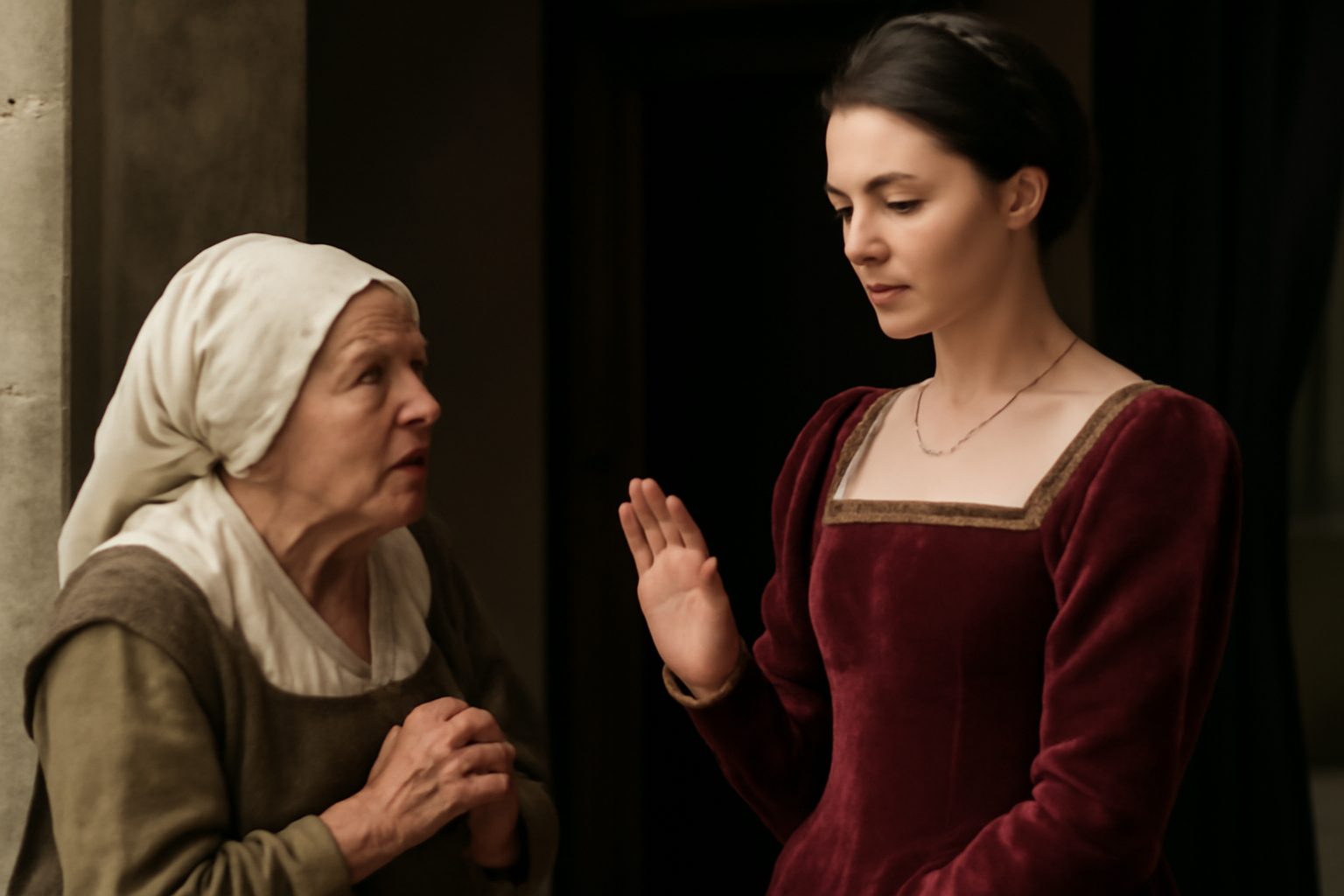
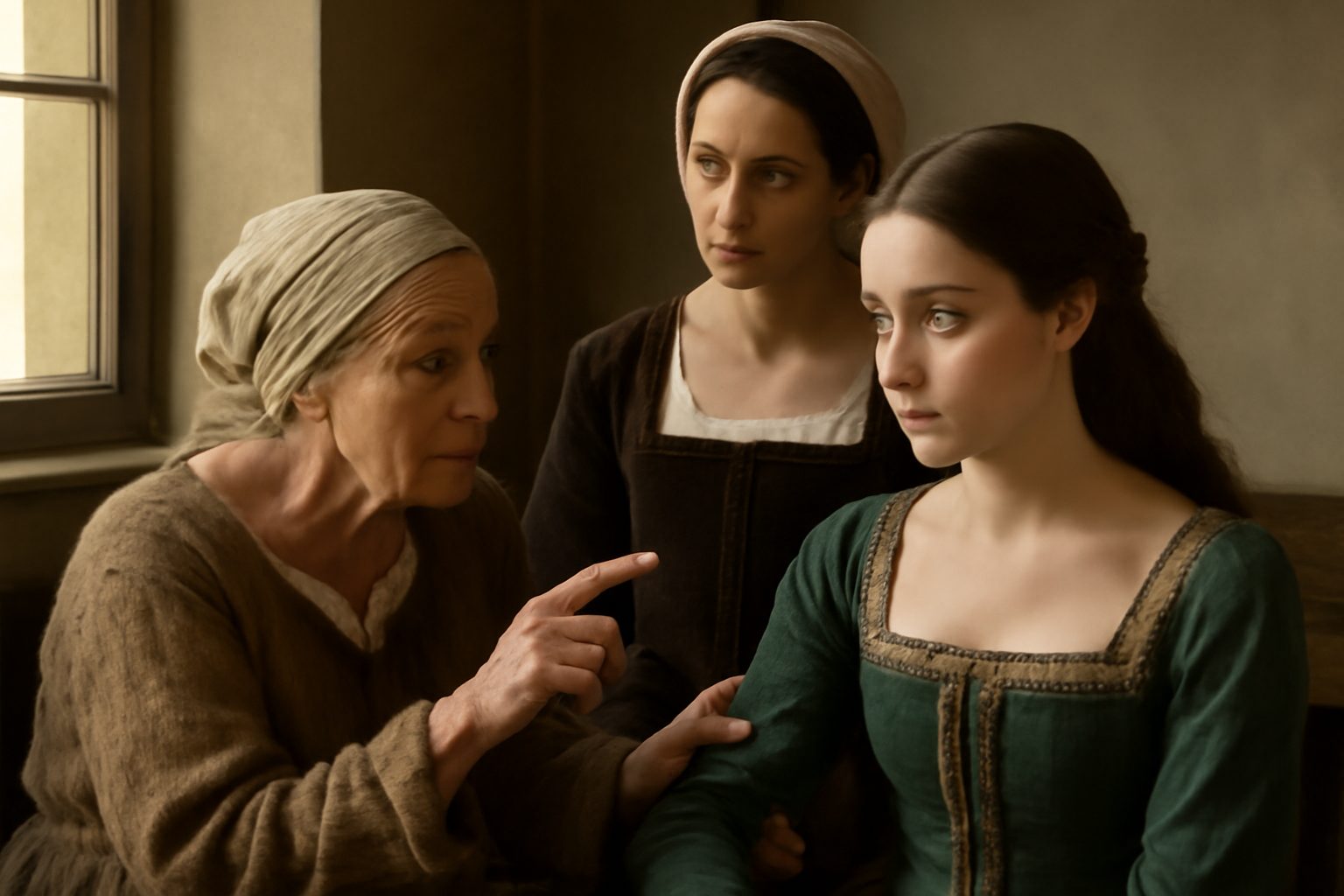
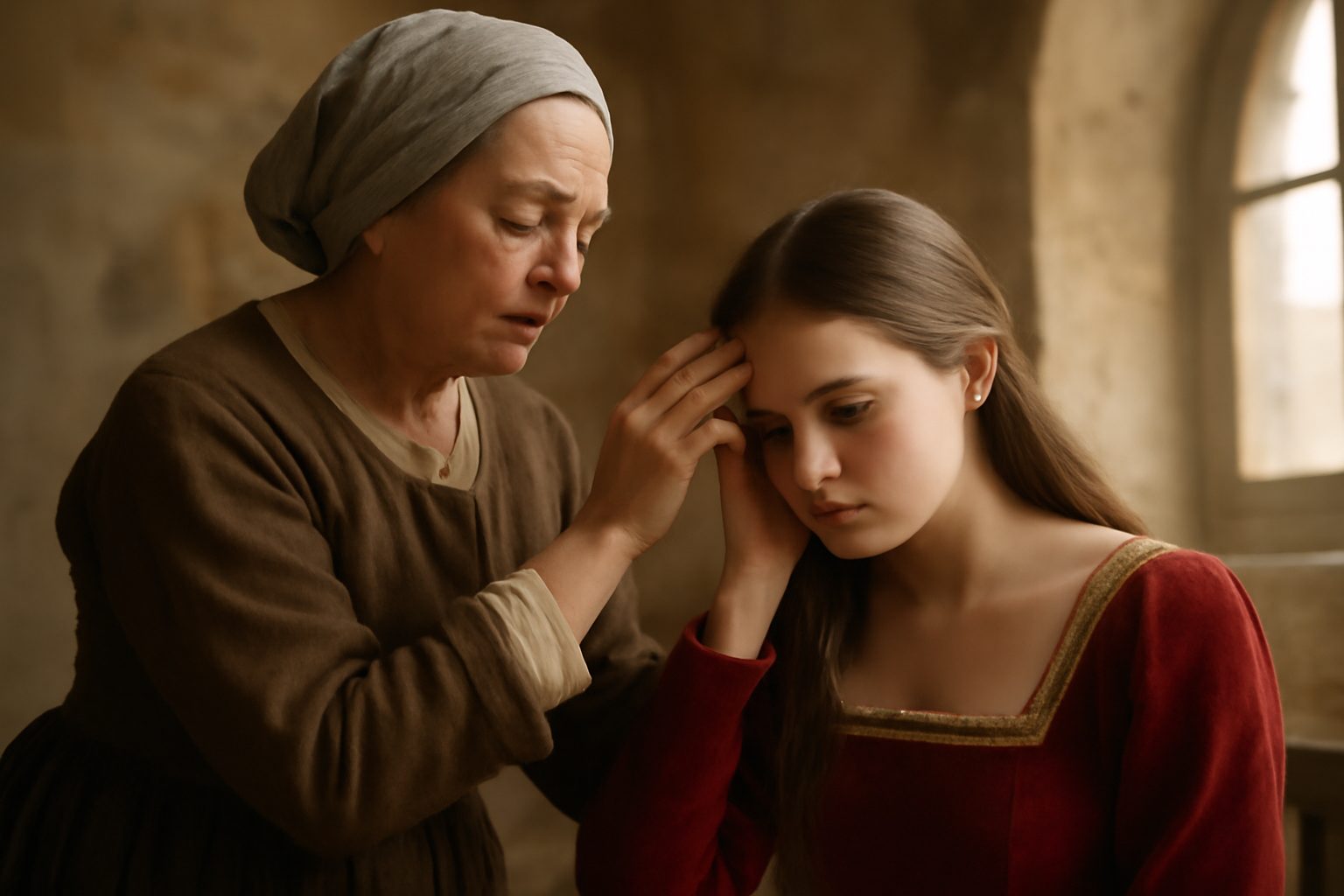
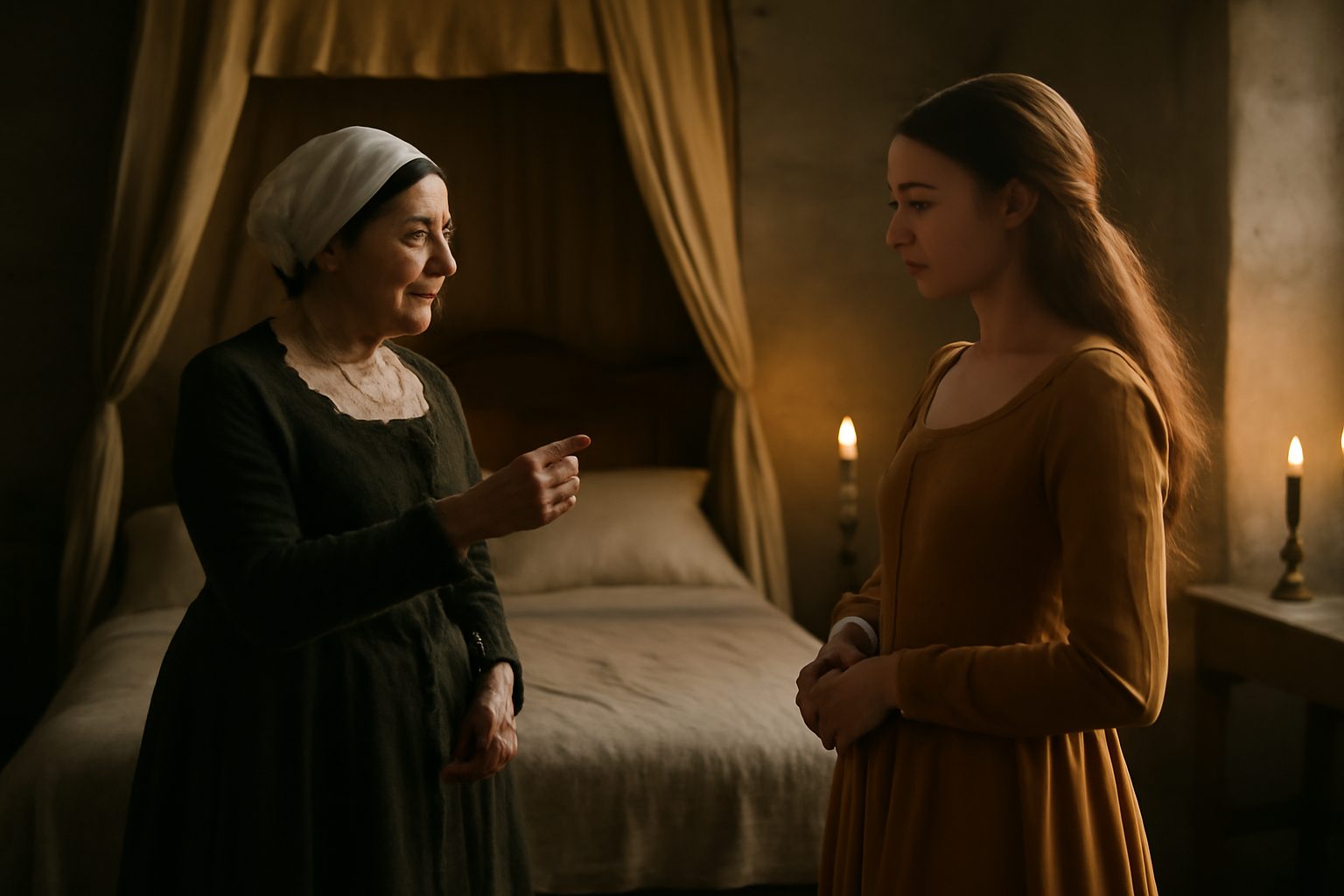
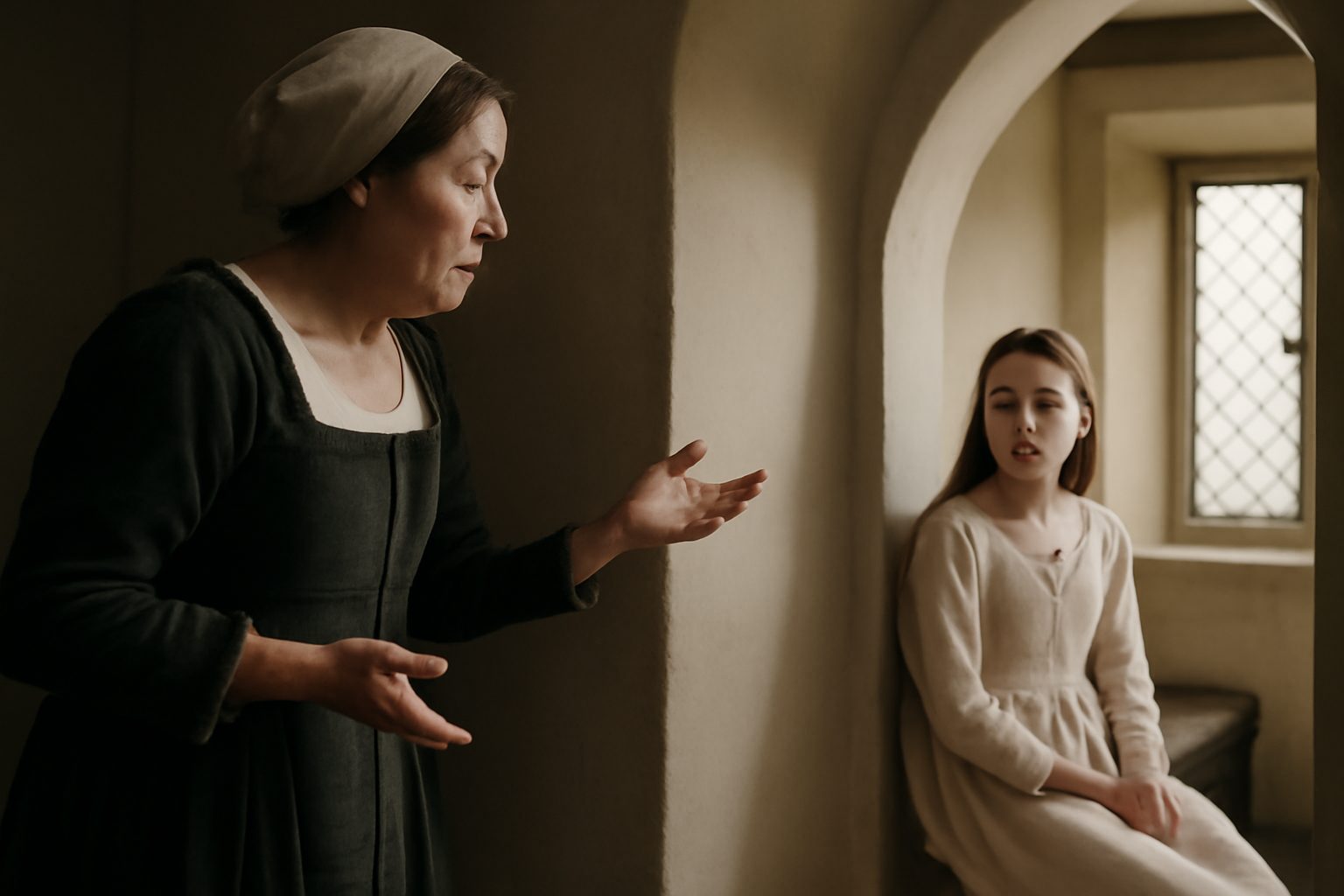
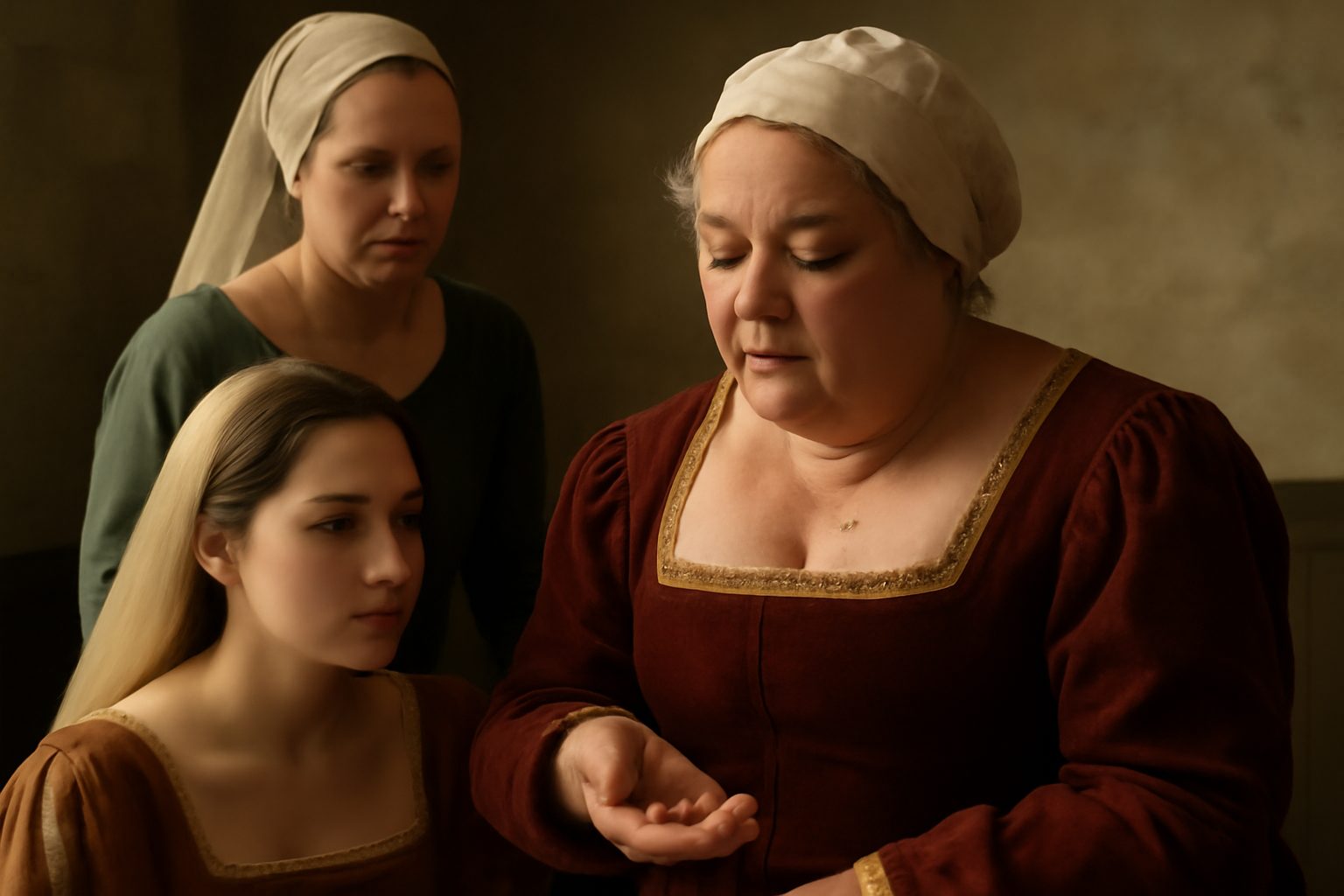
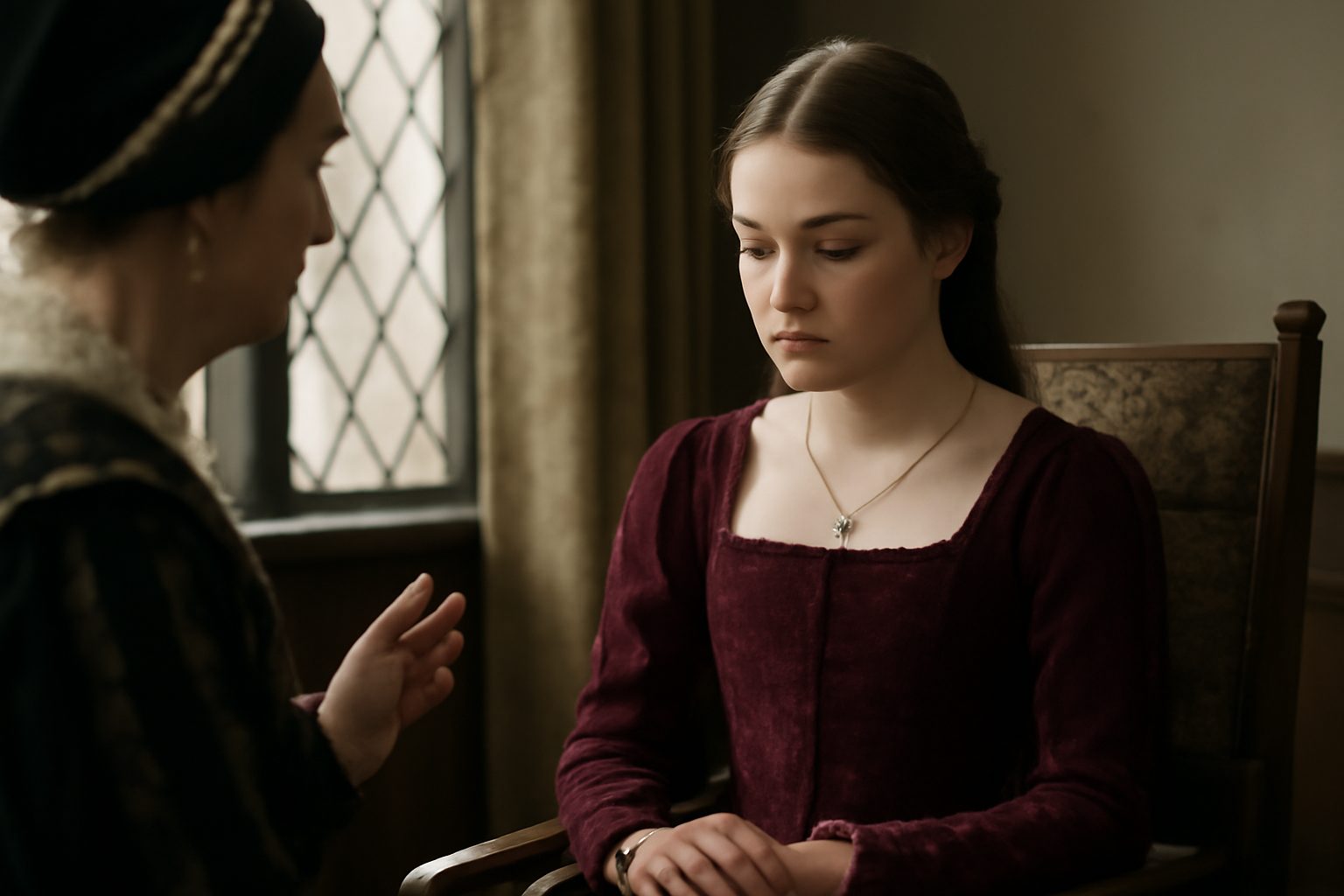
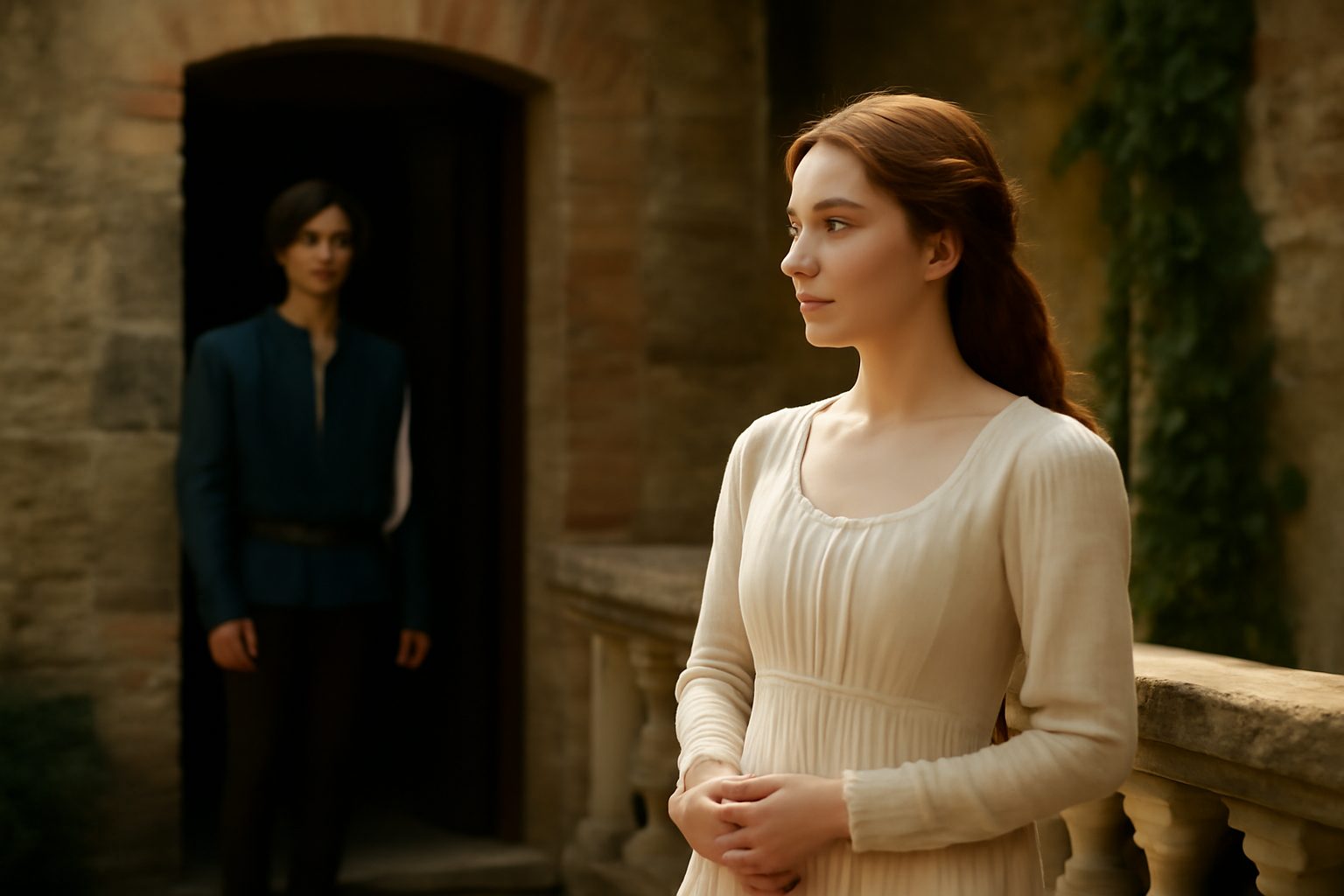
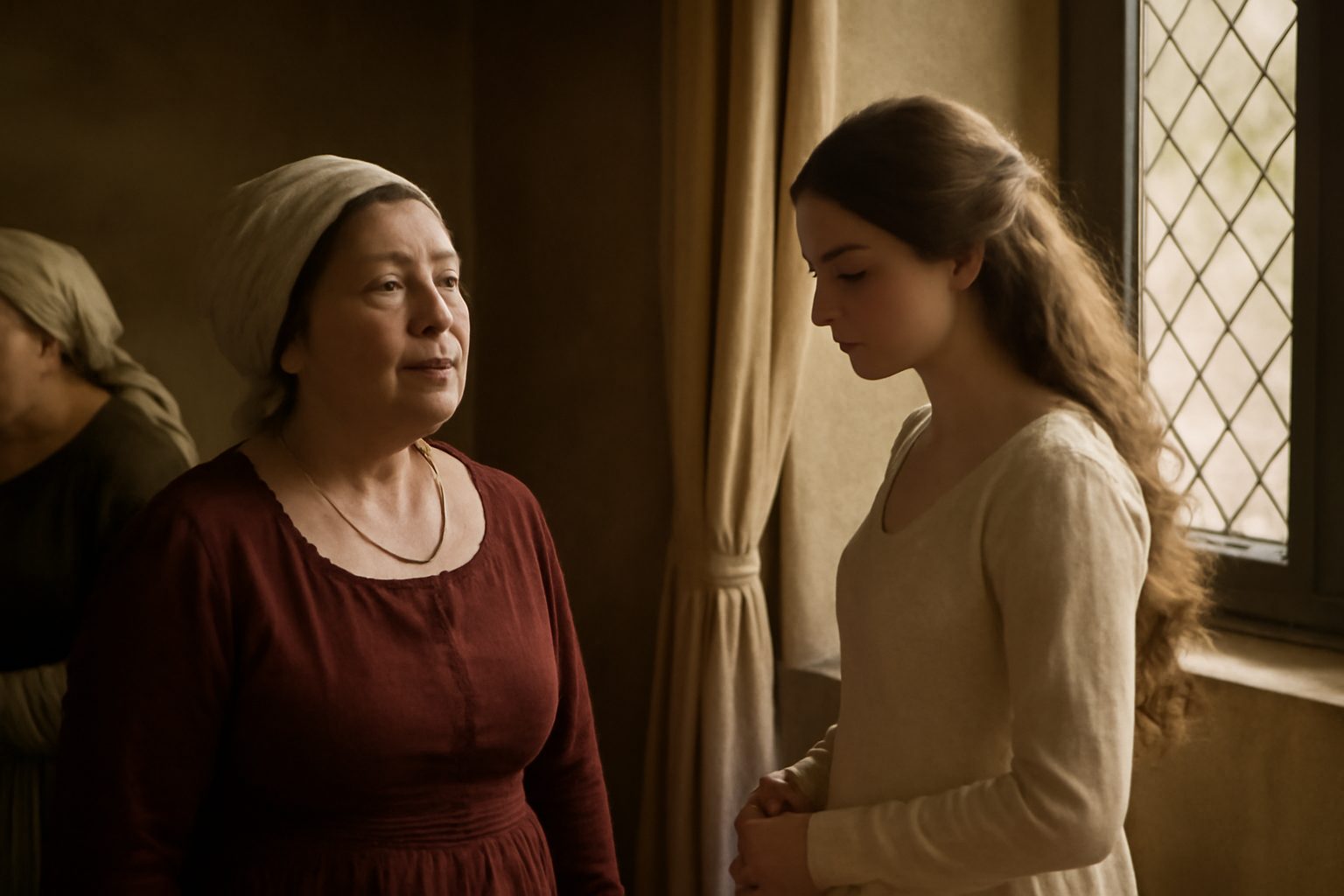
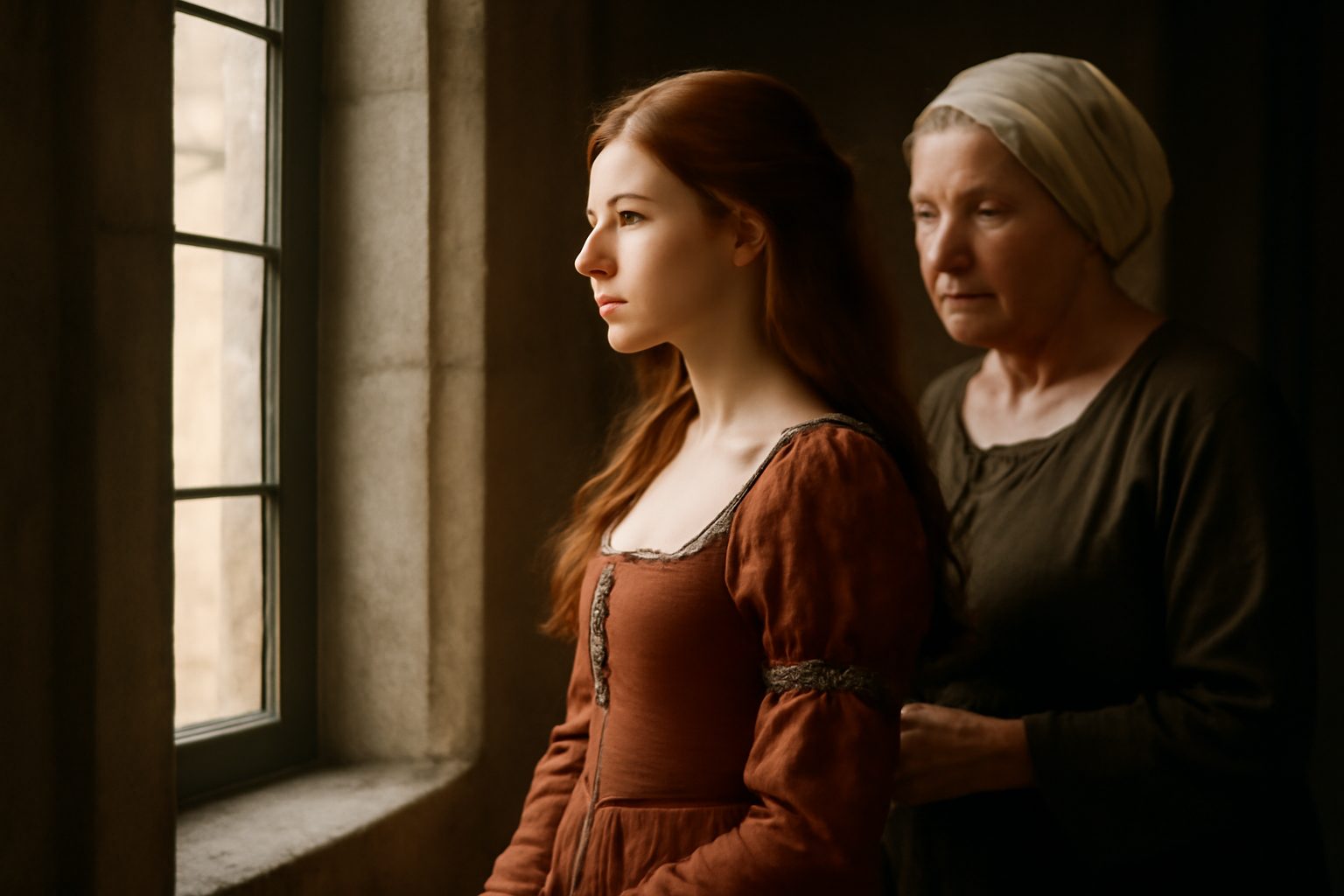
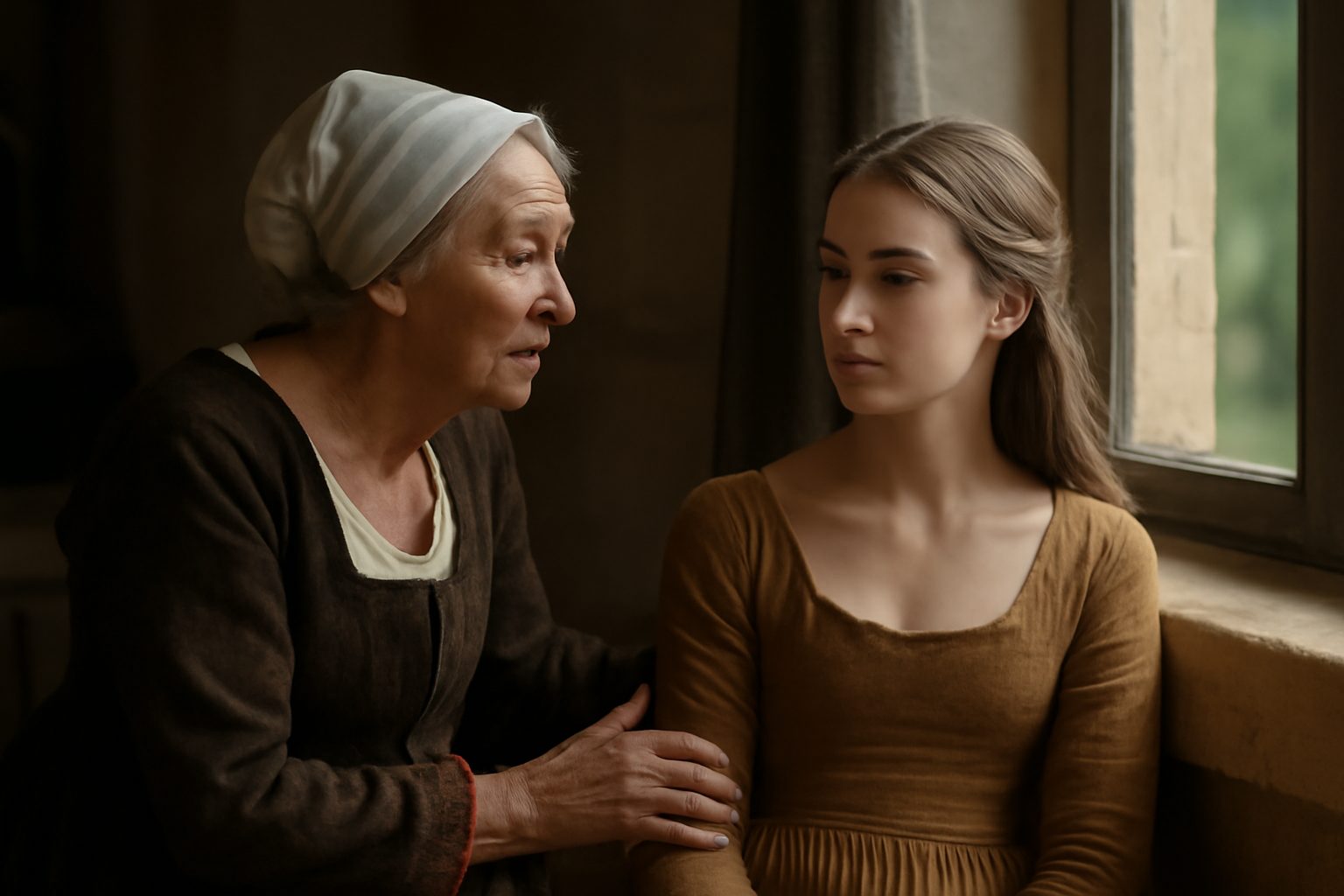
In Act 1, Scene 3 of Romeo and Juliet, Lady Capulet speaks to her daughter Juliet and the Nurse about the prospect of marriage. This line is part of her attempt to persuade Juliet to consider Paris, a wealthy and eligible suitor from Verona. She emphasizes the social standing of the women in their city to highlight the importance of making a respectable match.
Lady Capulet: "Here in Verona, ladies of esteem,"
In modern day english, we would say:
In Verona, there are respected women of high standing.
Frequently Asked Questions
Who is speaking in this line from Romeo and Juliet?
Lady Capulet
Where does this scene take place?
Verona
What kind of women is Lady Capulet referring to?
Ladies of high reputation or respect
Connections to other verses:
Connections to "Here in Verona, ladies of esteem"
The verse "Here in Verona, ladies of esteem" is spoken by Lady Capulet as she introduces the topic of marriage to Juliet, specifically referring to Paris as a suitable match. This line establishes the social context of esteemed families in Verona and connects to several other verses in the scene that elaborate on themes of status, marriage, and Paris's qualities.
Social Standing and Esteem
Lady Capulet's emphasis on esteemed ladies in Verona ties directly to her description of Paris as "a man of wax", highlighting his perfection and social desirability. She further praises him in "Verona's summer hath not such a flower", reinforcing his unmatched status among Verona's elite. This connects to the idea that marriage to him would bring honor, as hinted in "That book in many's eyes doth share the glory", where Paris is metaphorically described as a valuable book that garners admiration.
Marriage and Maternal Advice
The conversation about esteemed ladies leads into Lady Capulet's encouragement for Juliet to consider marriage, as seen in "Well, think of marriage now; younger than you", where she notes that girls younger than Juliet are already mothers. This is supported by "Are made already mothers: by my count", emphasizing the societal expectations for young women of esteem. Lady Capulet's personal experience is referenced in "I was your mother much upon these years", urging Juliet to follow suit.
Paris as the Ideal Suitor
The focus on Paris culminates in Lady Capulet's direct question in "What say you? can you love the gentleman?", which follows her praise of his qualities. She earlier describes him as "a flower; in faith, a very flower", using floral imagery to signify his rarity and beauty, aligning with the initial reference to esteemed ladies. The Nurse's humorous interjection in "No less! nay, bigger; women grow by men" adds a earthy contrast to Lady Capulet's refined persuasion, yet underscores the practical benefits of marrying well.
Juliet's Response and Resolution
Juliet's cautious reply in "I'll look to like, if looking liking move" shows her willingness to consider Paris, guided by her mother's framing of him as a top-tier match among Verona's esteemed circles. This ties back to the original verse, as Lady Capulet's societal perspective sets the stage for Juliet's eventual compliance, though it also foreshadows her later defiance when true love conflicts with these expectations.