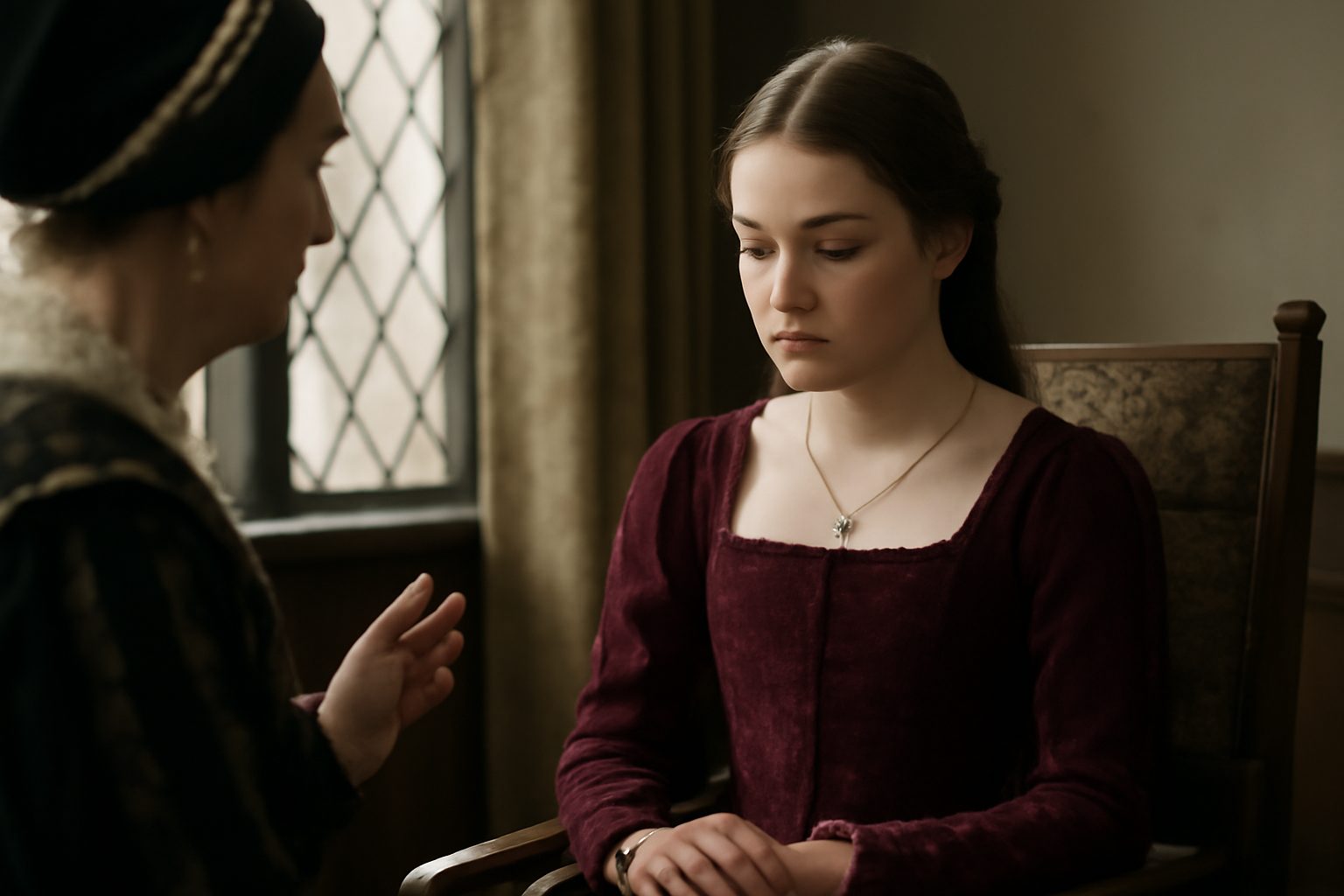
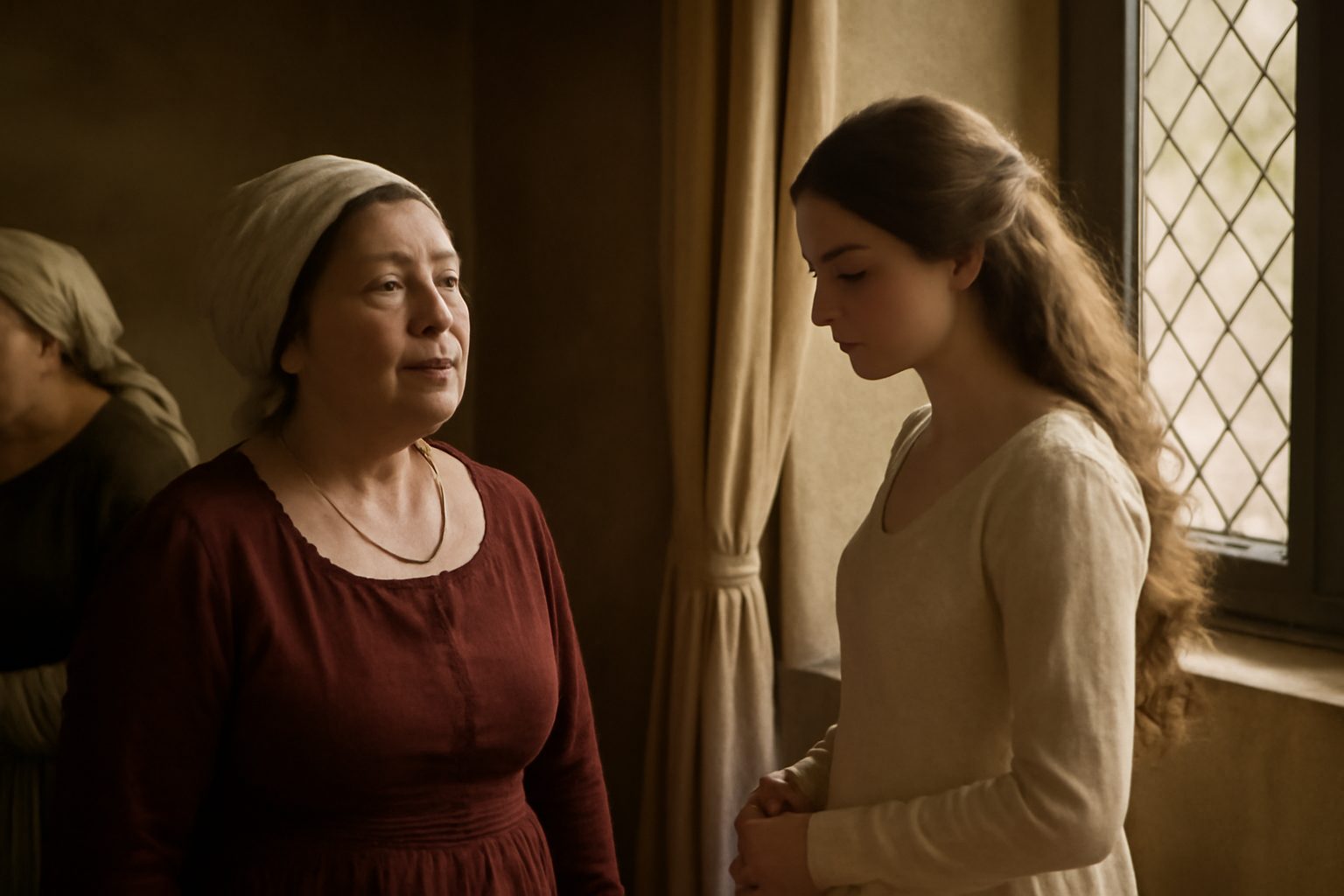
In Act 1, Scene 3 of Romeo and Juliet, the Nurse fondly recalls a childhood memory of Juliet, playfully calling her affectionate pet names. This moment occurs as Lady Capulet and the Nurse discuss Juliet's potential marriage to Paris, revealing the Nurse's warm, maternal relationship with Juliet. The lighthearted tone contrasts with the formal conversation about marriage, highlighting the Nurse's earthy humor and deep affection for her charge.
Nurse: "I bade her come. What, lamb! what, ladybird!"
In modern day english, we would say:
I told her to come here—what, my sweet girl, my little darling!
Frequently Asked Questions
What does the Nurse call Juliet in this line?
The Nurse calls Juliet lamb and ladybird.
Connections to other verses:
Connections to "I bade her come. What, lamb! what, ladybird!"
The verse "I bade her come. What, lamb! what, ladybird!" is spoken by the Nurse, calling Juliet with affectionate nicknames. This moment highlights the Nurse's warm, maternal relationship with Juliet, which is a recurring theme throughout the scene.
Affectionate Address and Maternal Tone
The Nurse's use of endearing terms like "lamb" and "ladybird" connects to her earlier reminiscence in "Thou wast the prettiest babe that e'er I nursed", emphasizing her deep fondness for Juliet since infancy. Similarly, her playful, nurturing demeanor is echoed when she recalls Juliet’s childhood in "The pretty wretch left crying and said 'Ay.'", further illustrating their bond.
Call and Response Dynamics
This call to Juliet initiates a series of interactions. Juliet’s prompt response in "Madam, I am here" shows her obedience and respect, while Lady Capulet’s question in "What is your will?" shifts the conversation toward the main purpose of the scene: discussing marriage.
Transition to Serious Matters
The Nurse’s affectionate summons quickly gives way to more serious discourse, as Lady Capulet announces "The valiant Paris seeks you for his love". The contrast between the Nurse’s warmth and the formal proposal underscores the tension between familial duty and personal affection that defines the play.
Reflection on Juliet’s Youth
The Nurse’s tender address also ties into broader references to Juliet’s age and innocence, such as "She's not fourteen" and "Come Lammas-eve at night shall she be fourteen", reminding the audience of Juliet’s youth amid the adult pressures she faces.