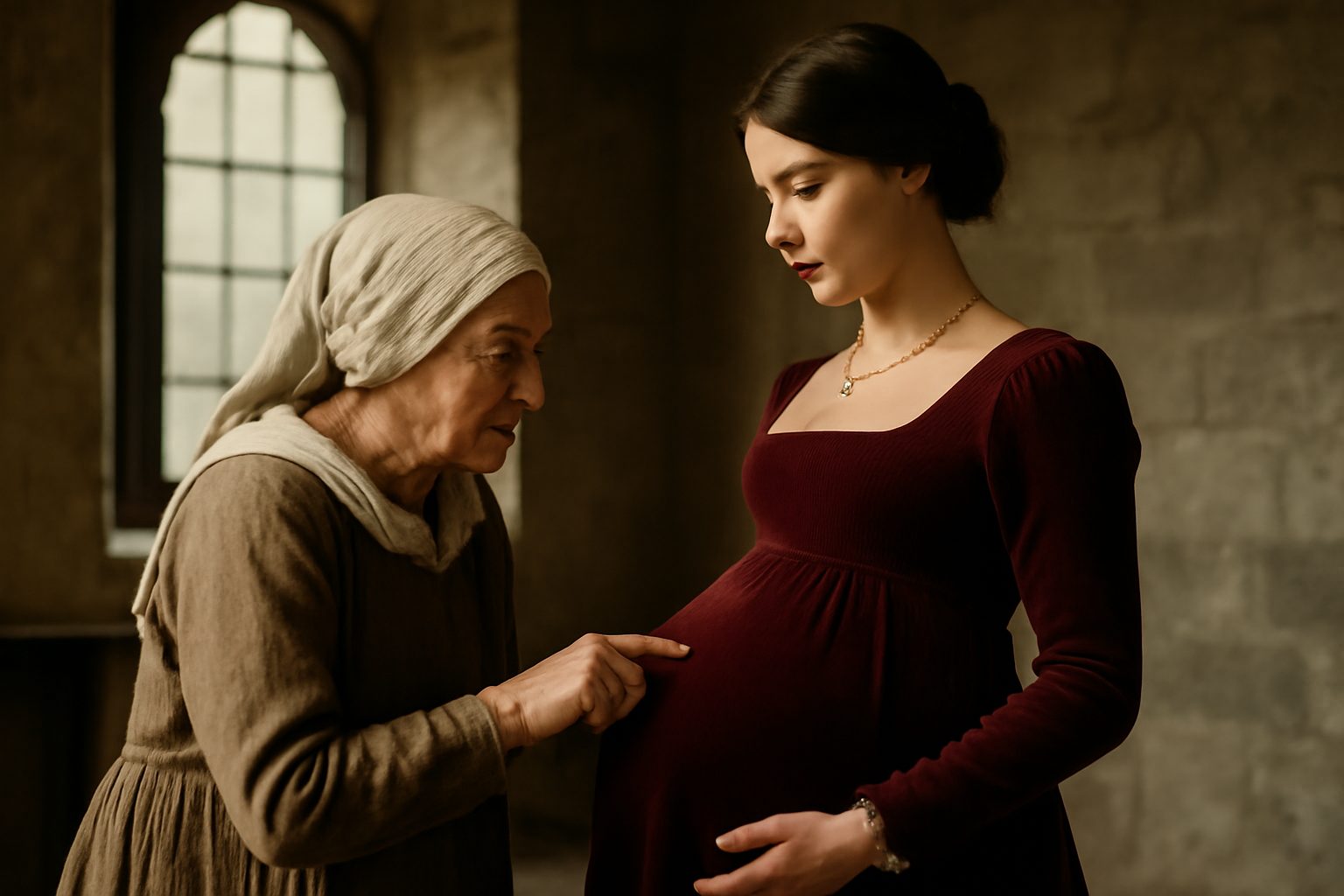
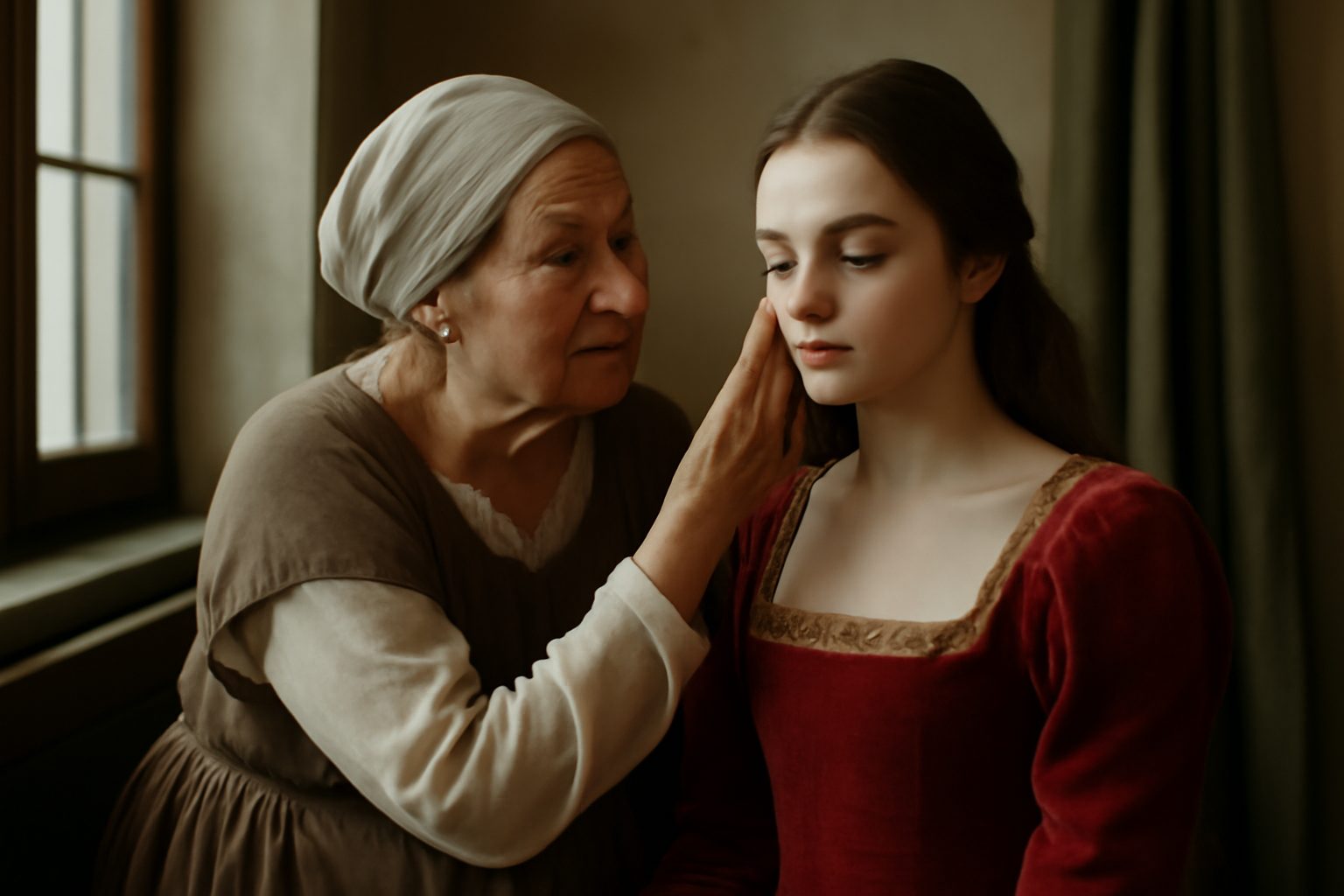
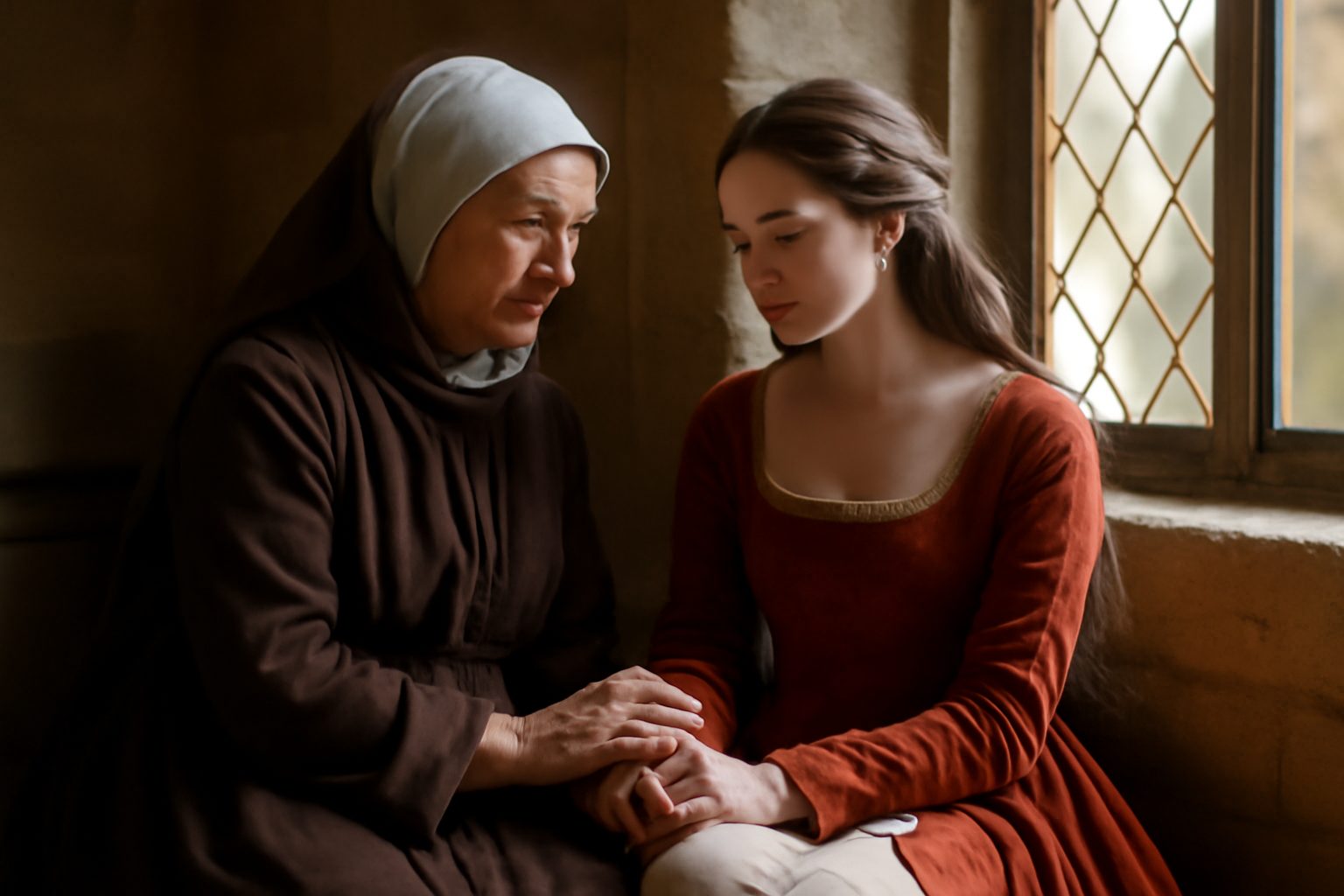
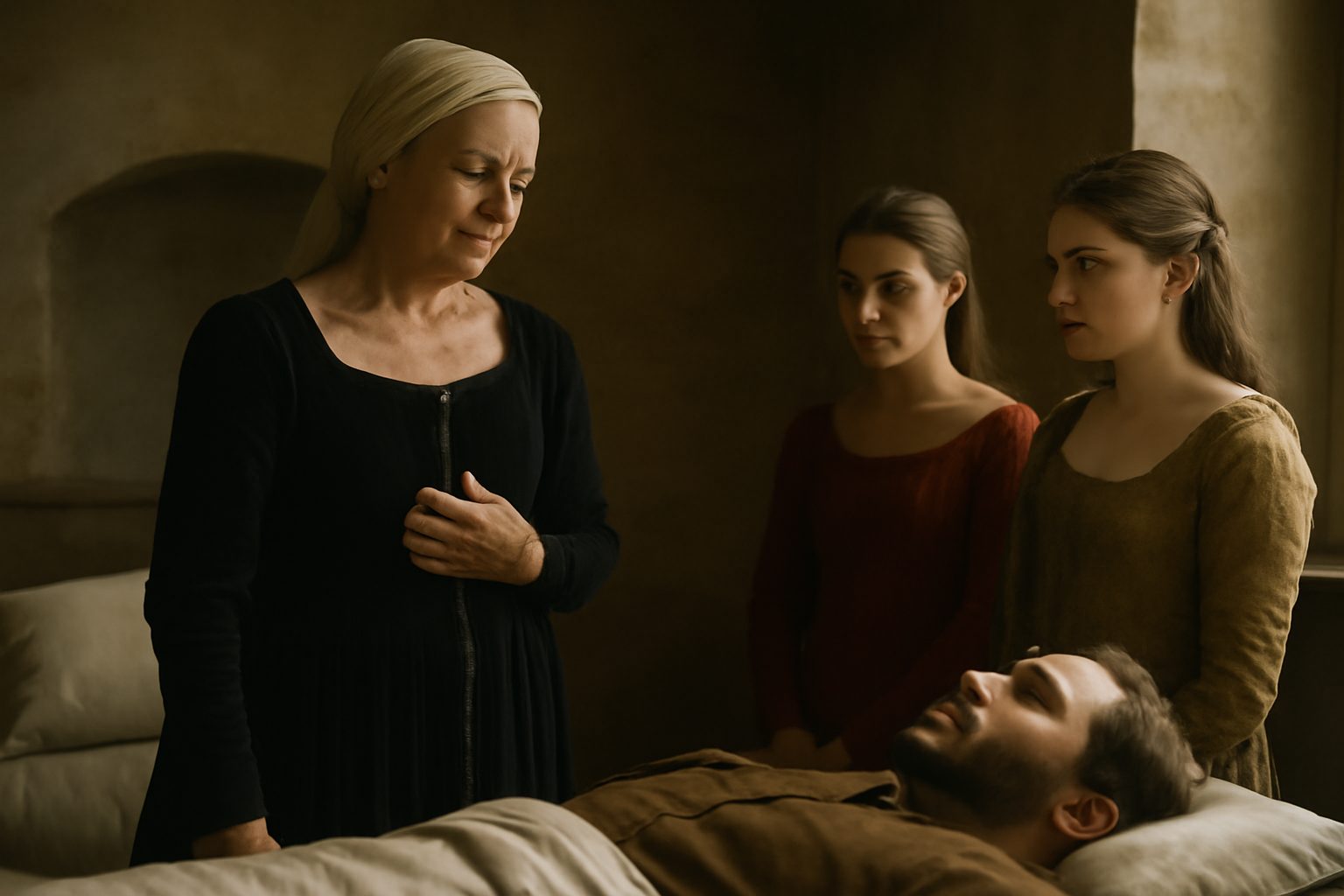
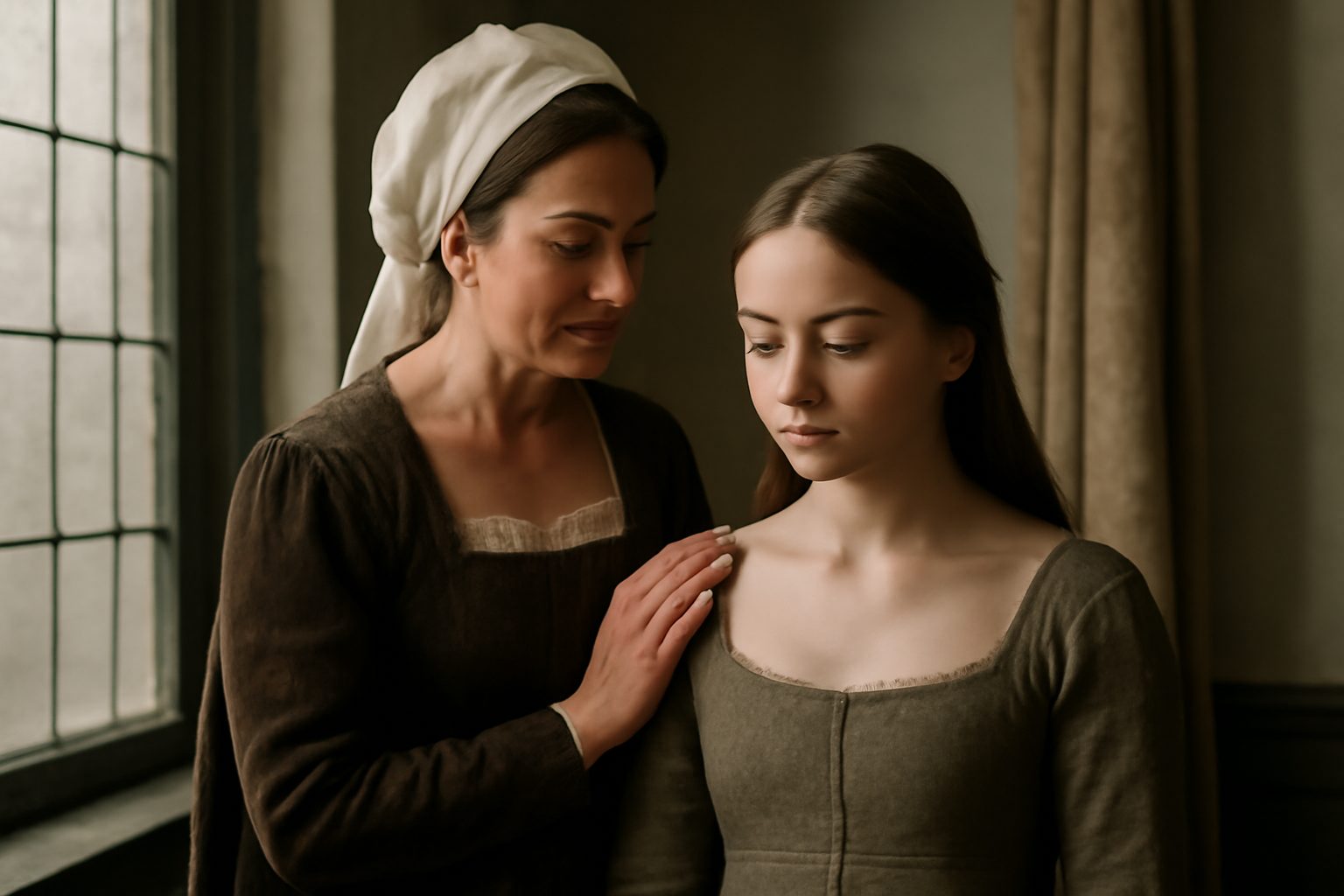
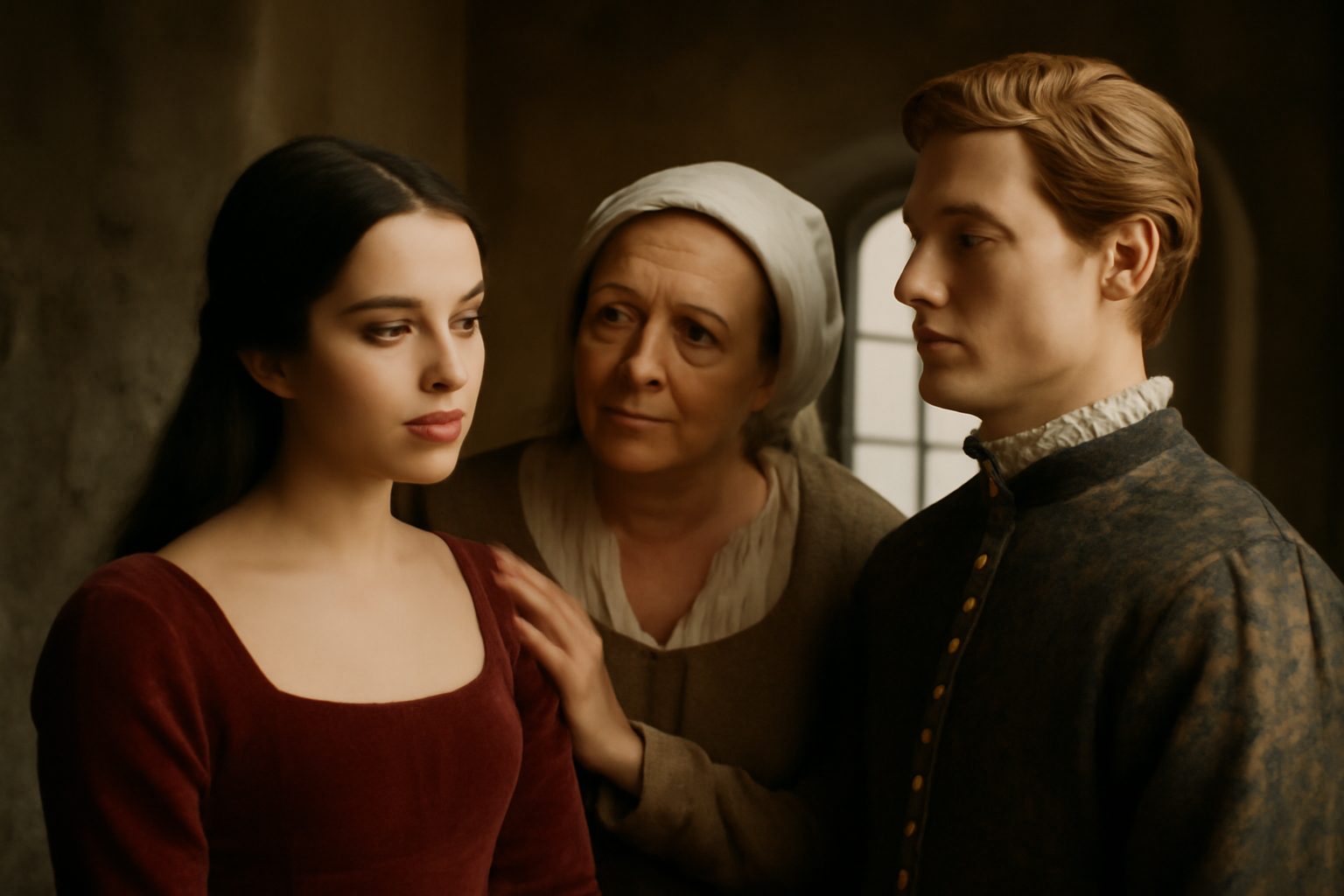
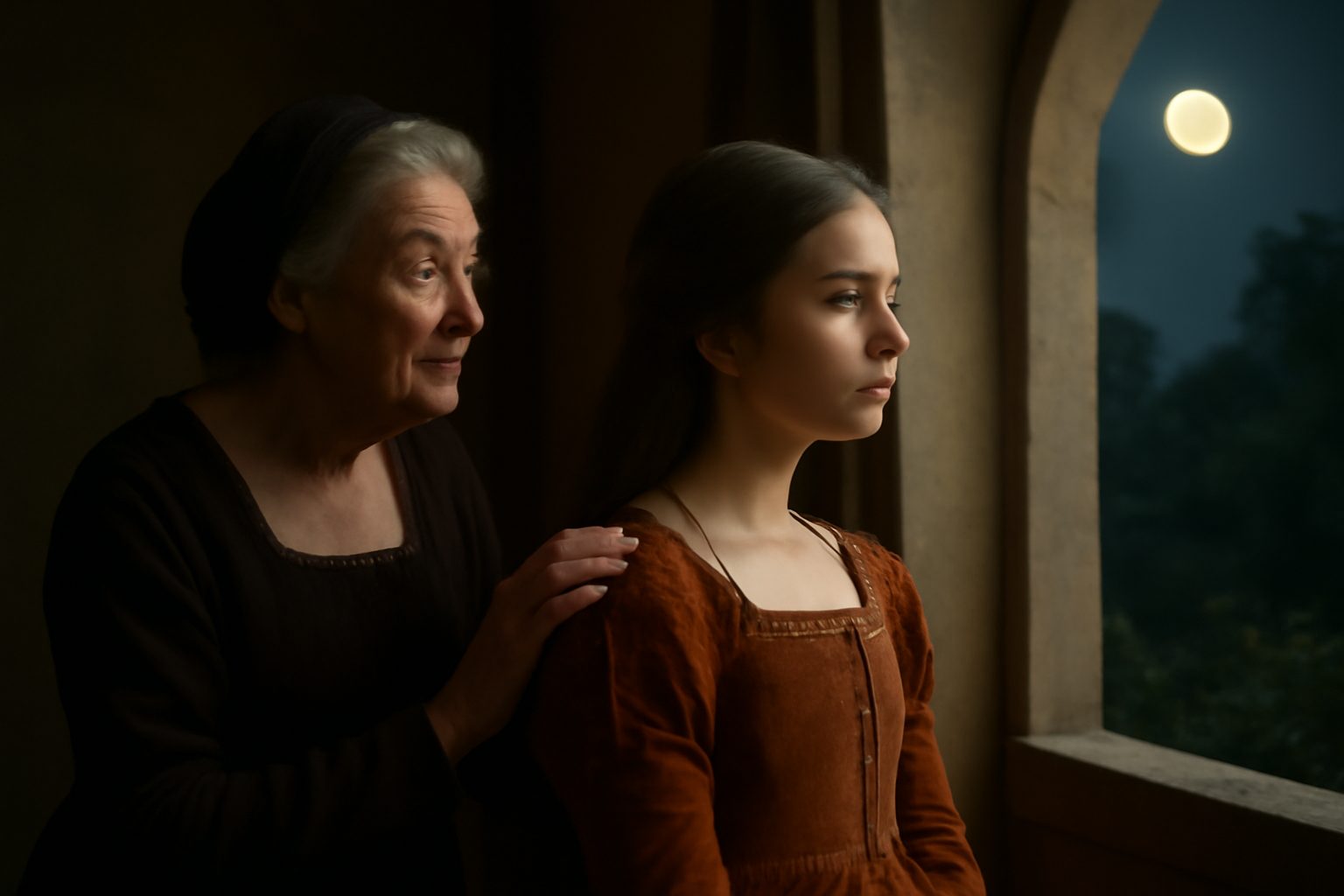
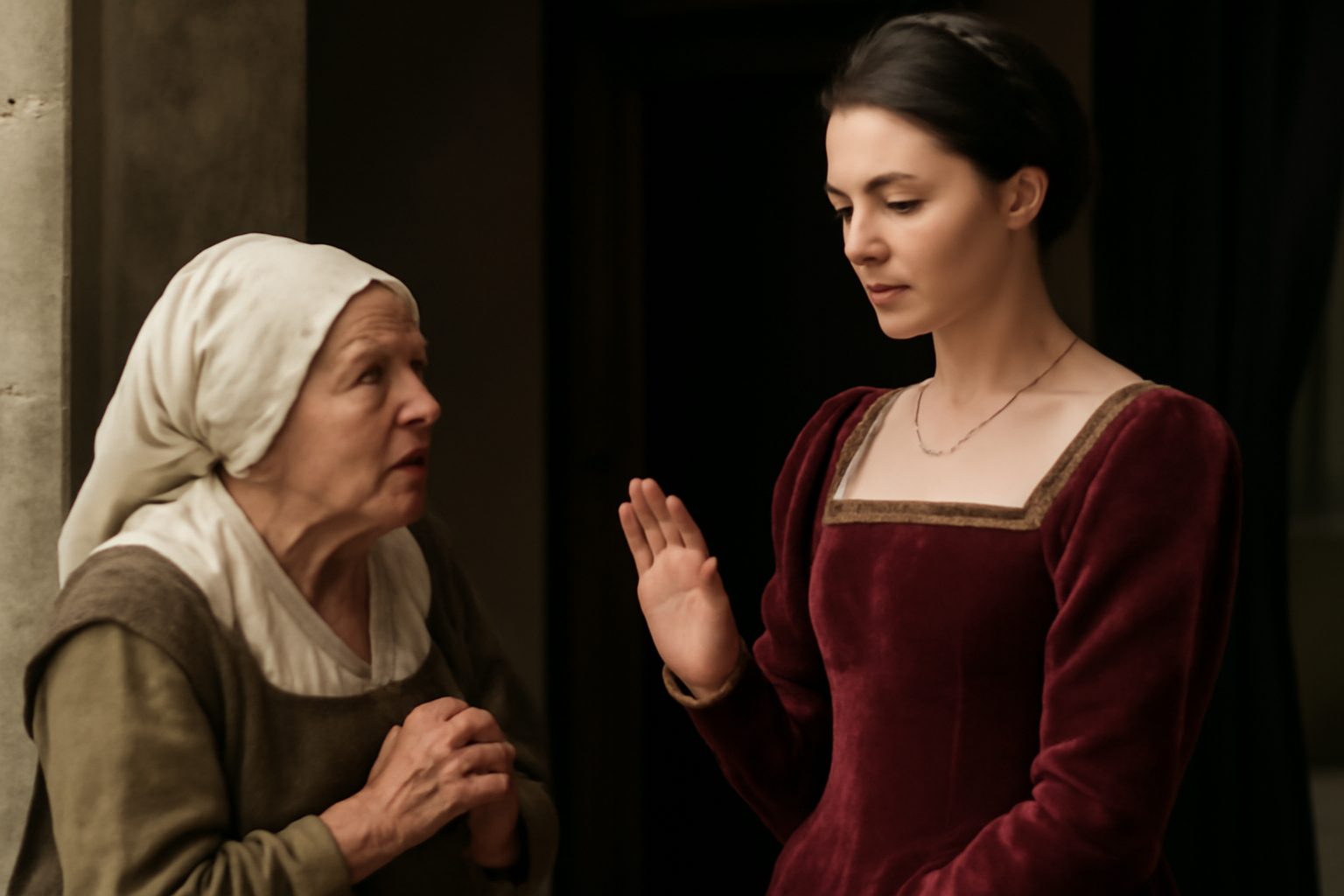
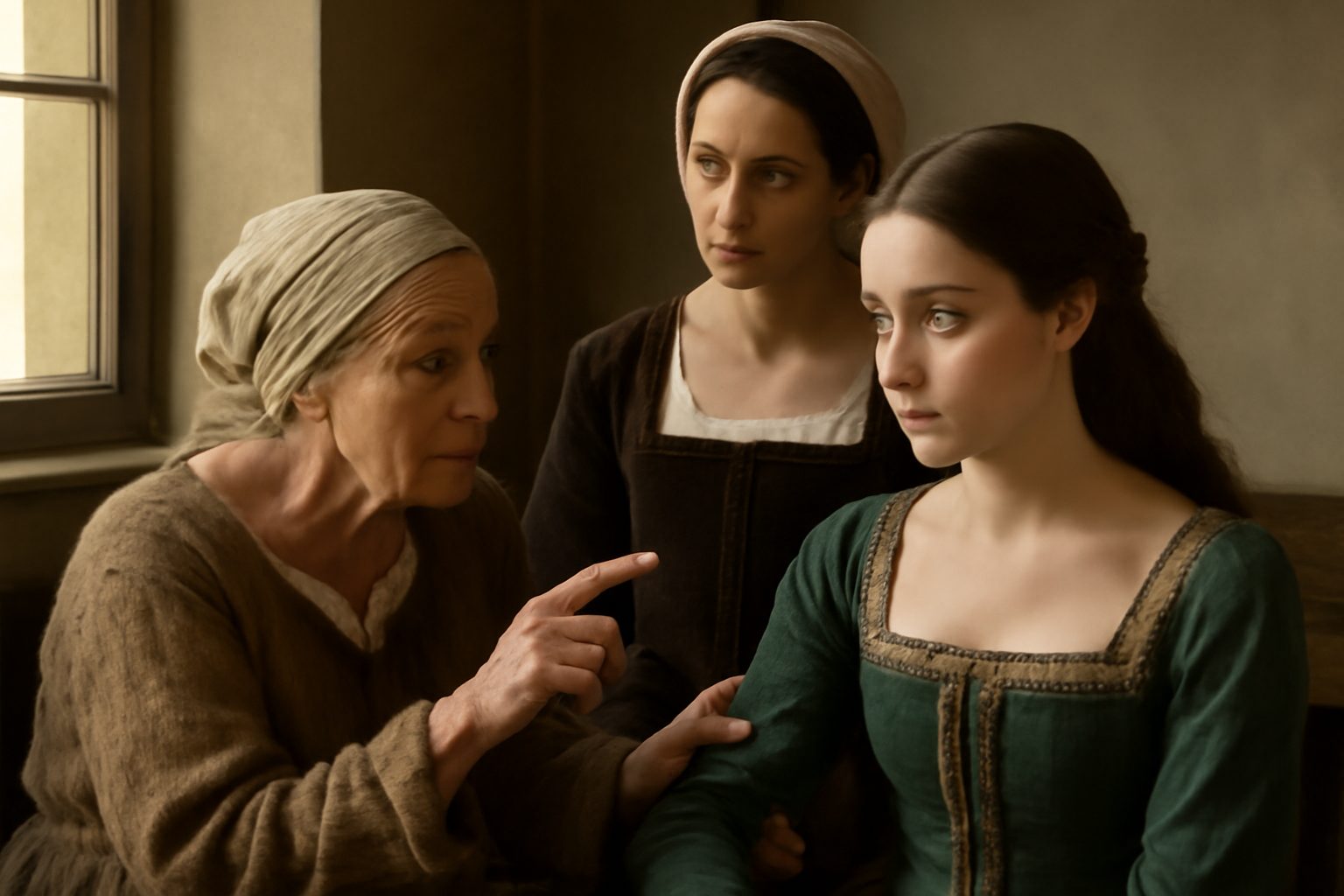
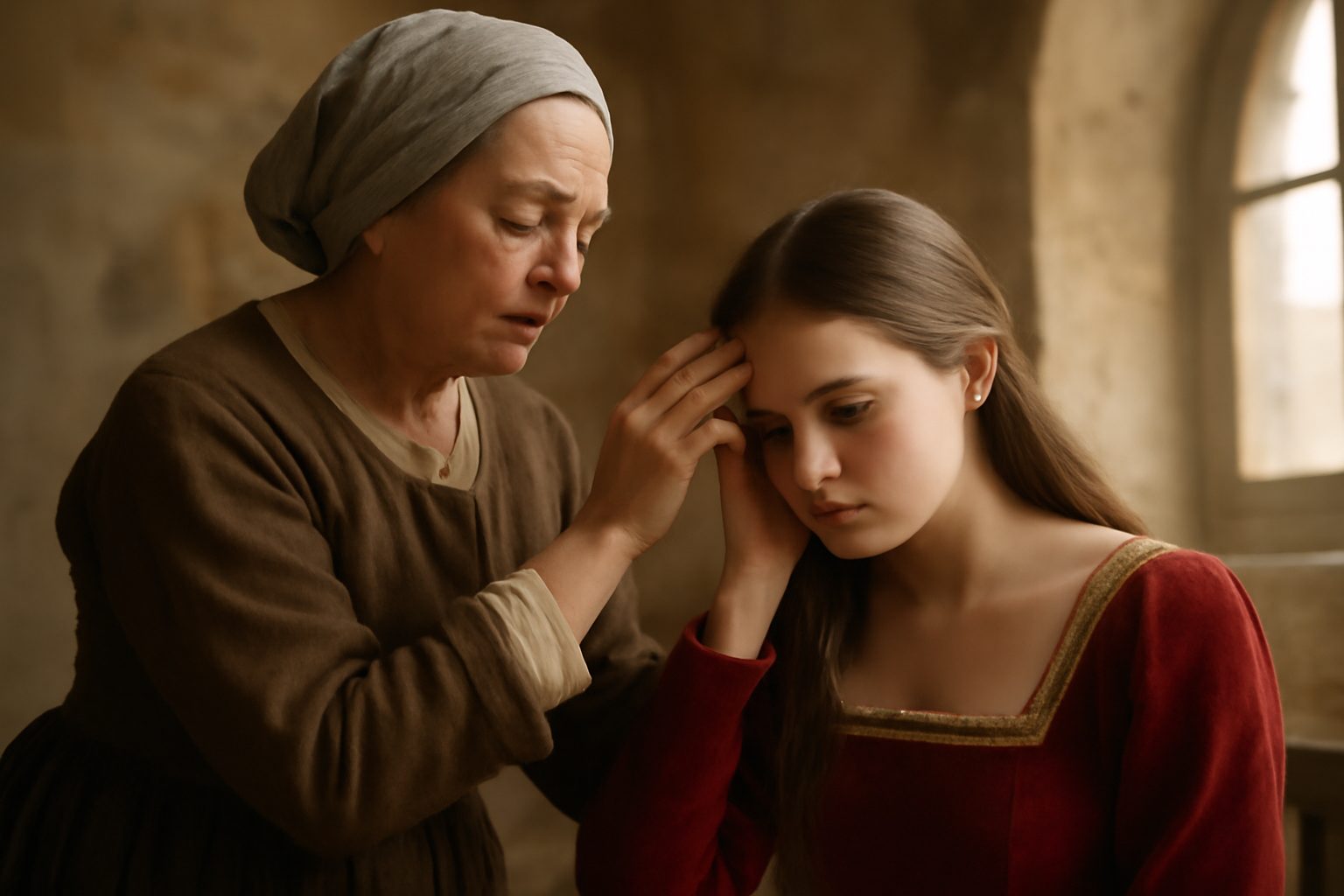
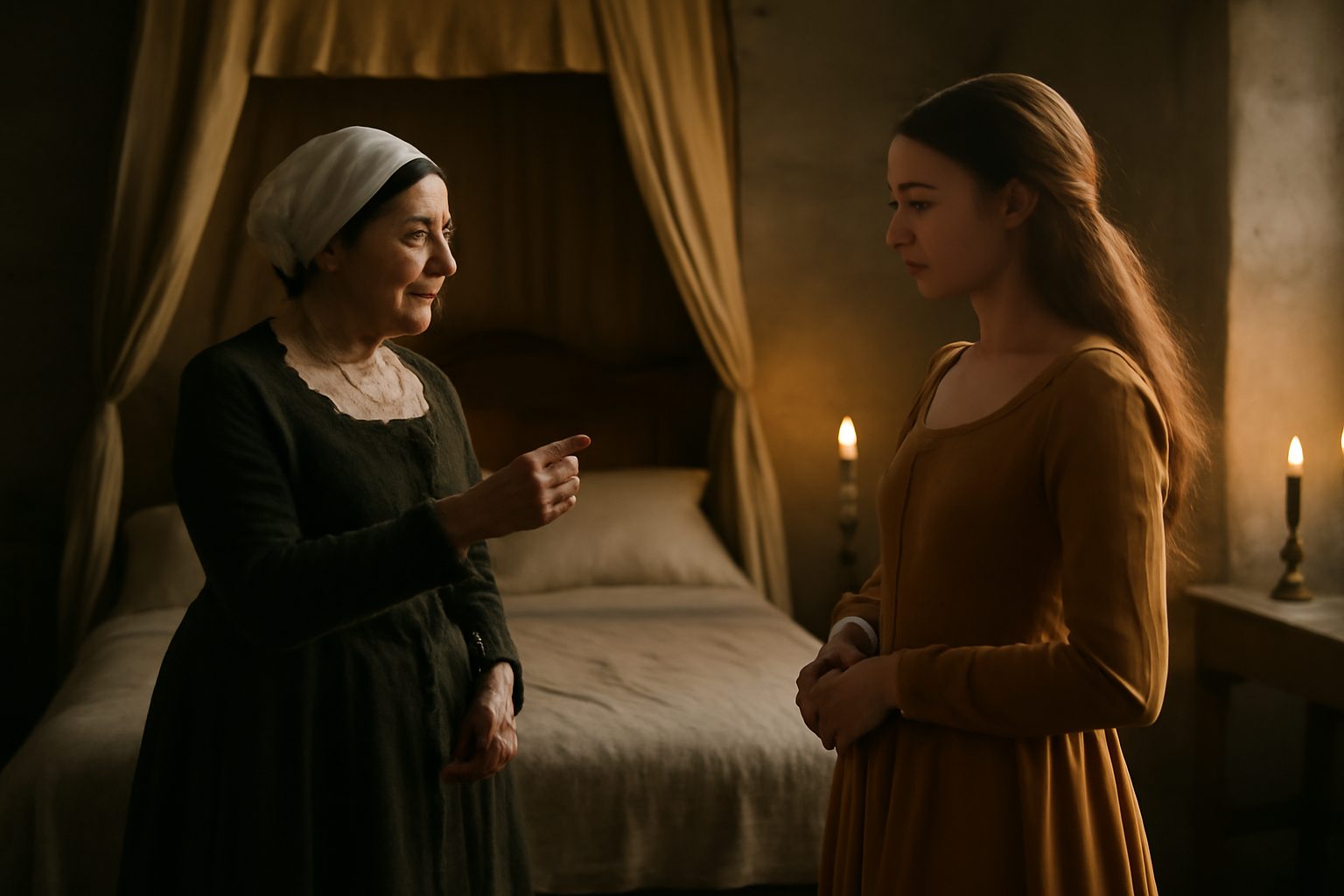
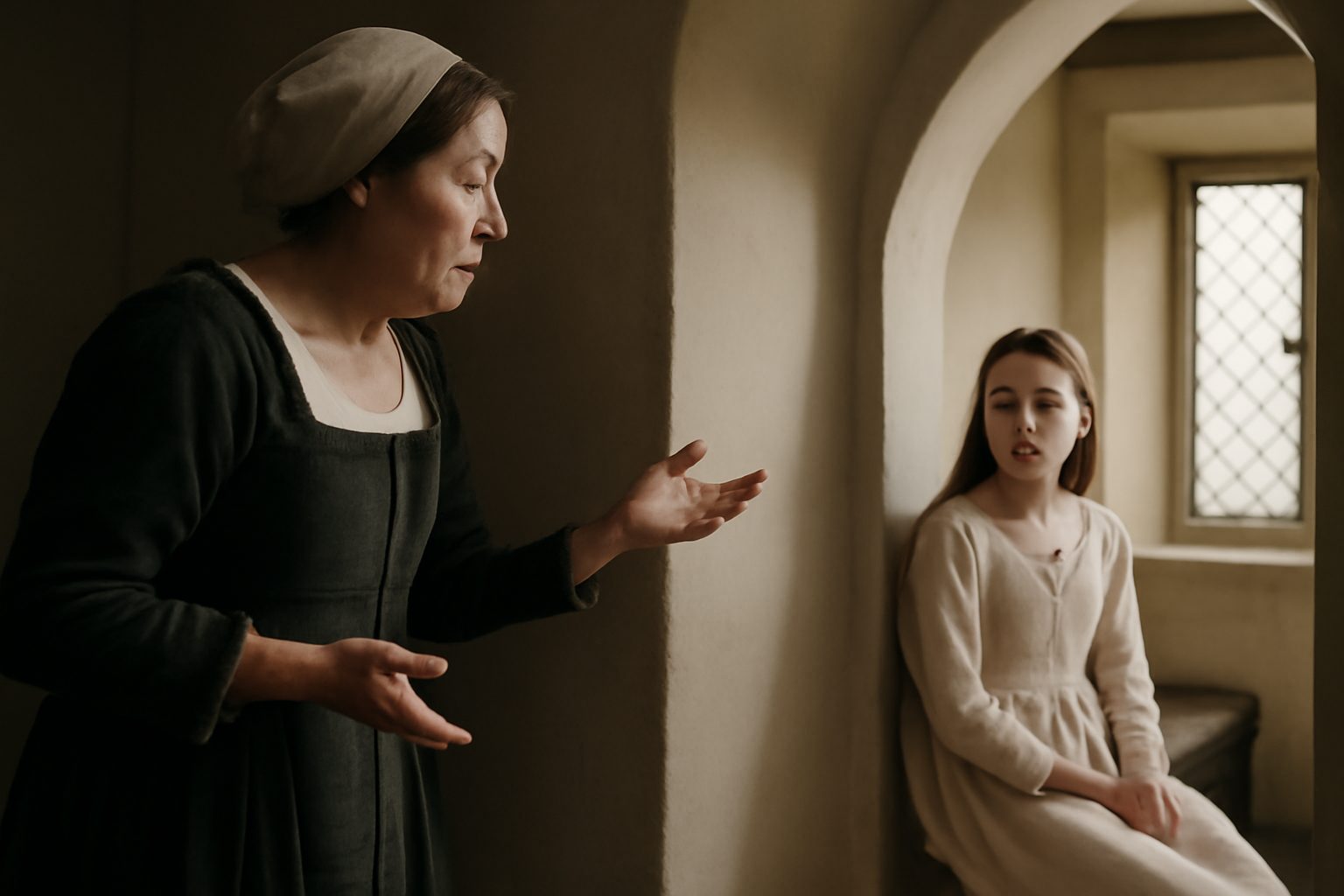
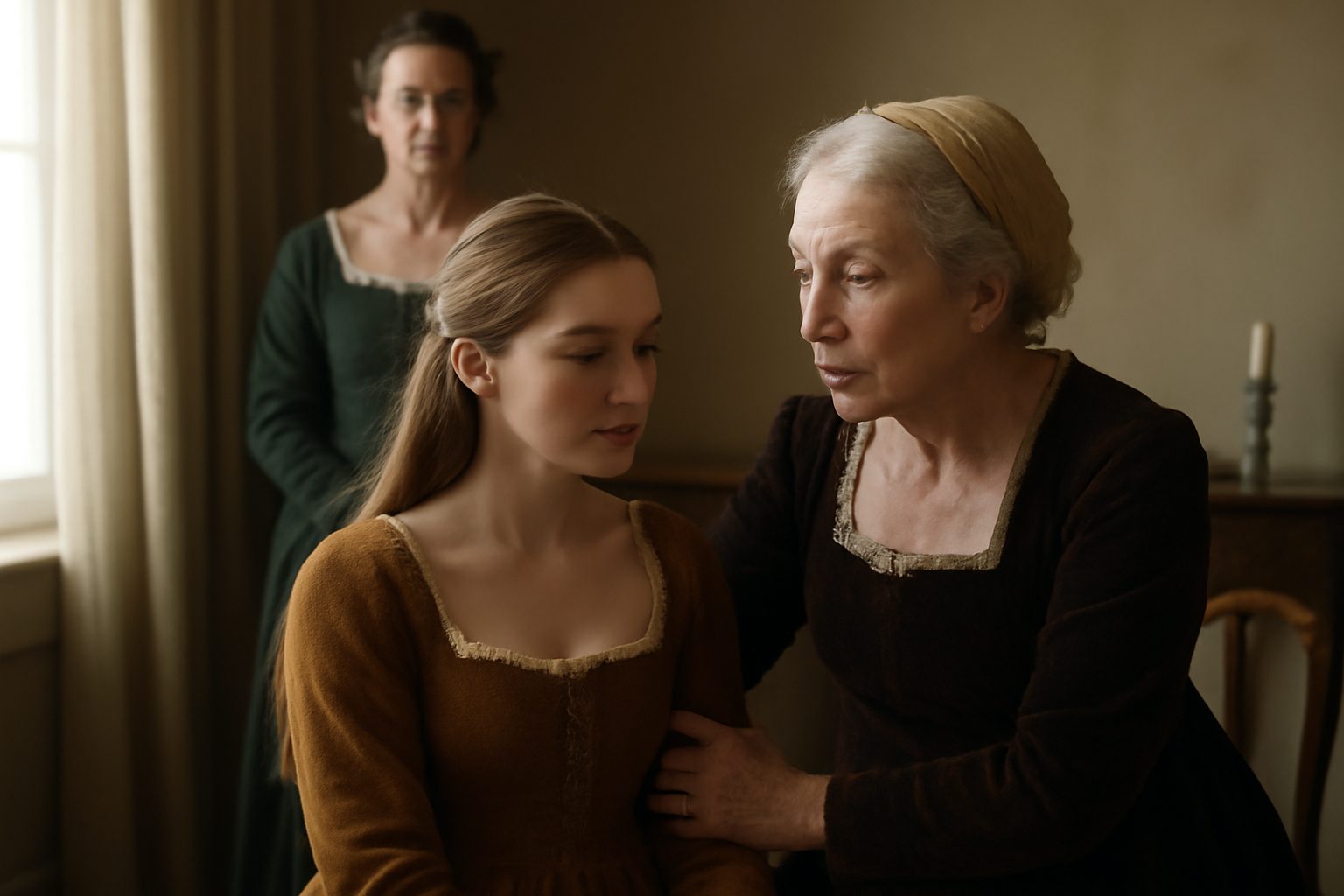
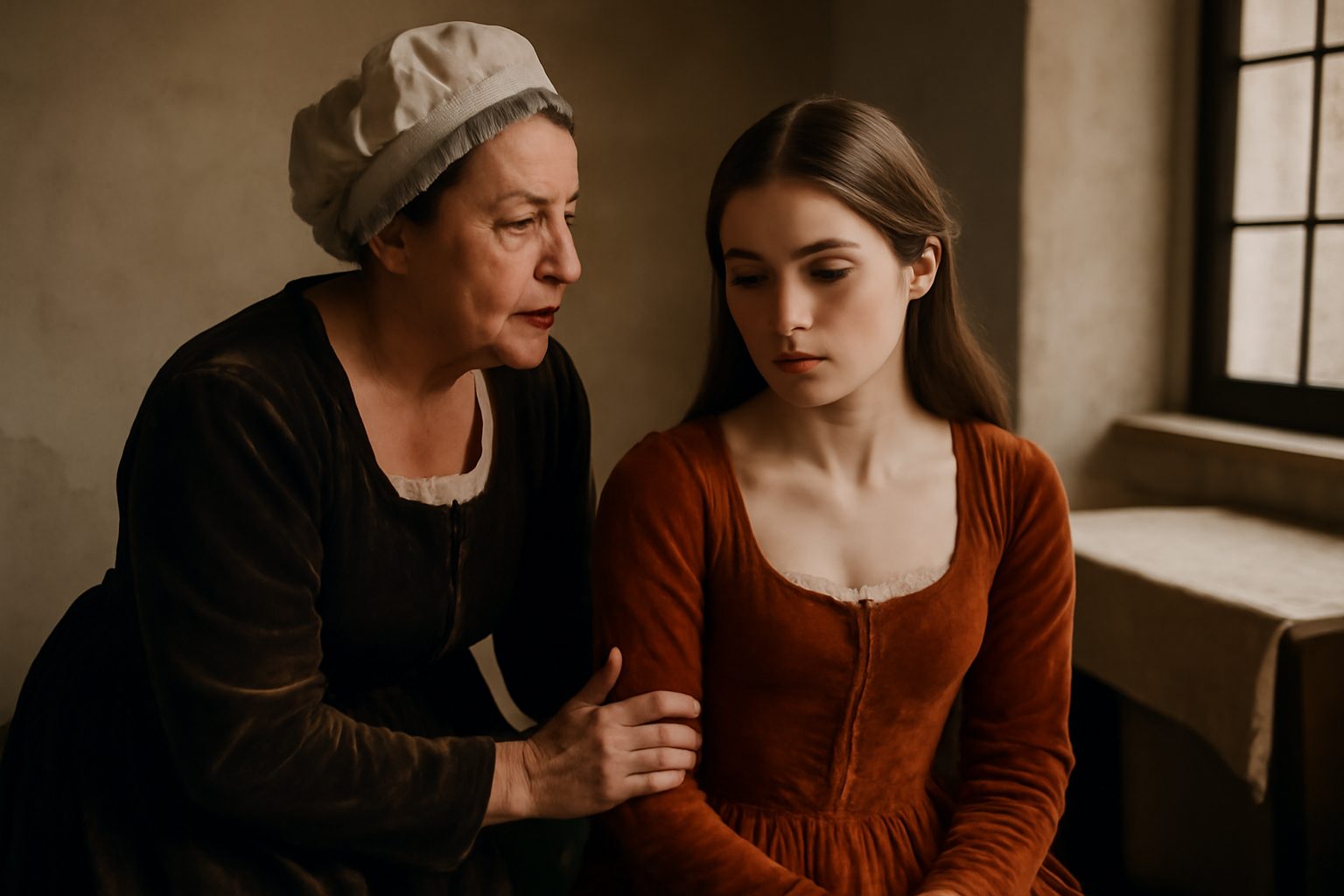
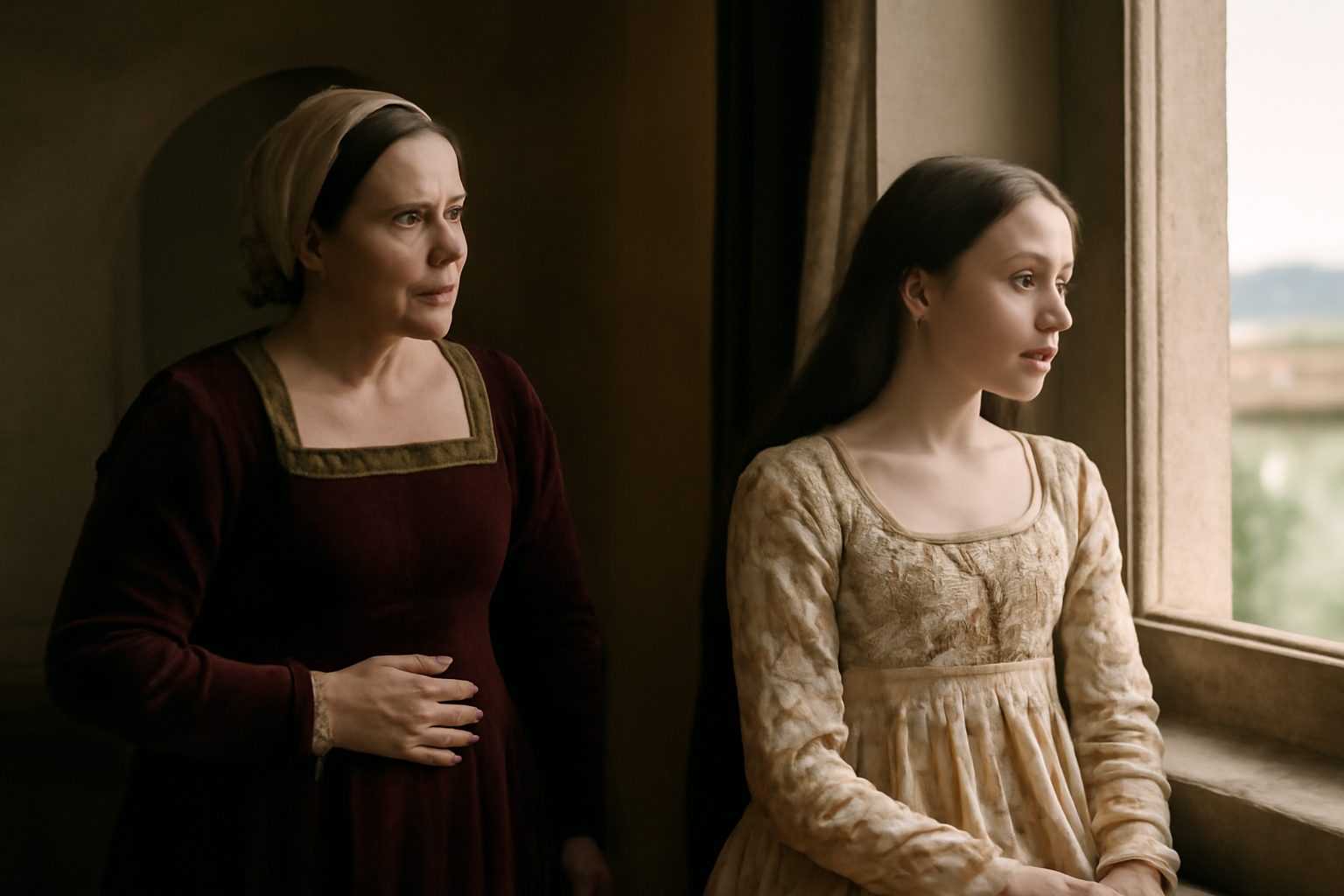
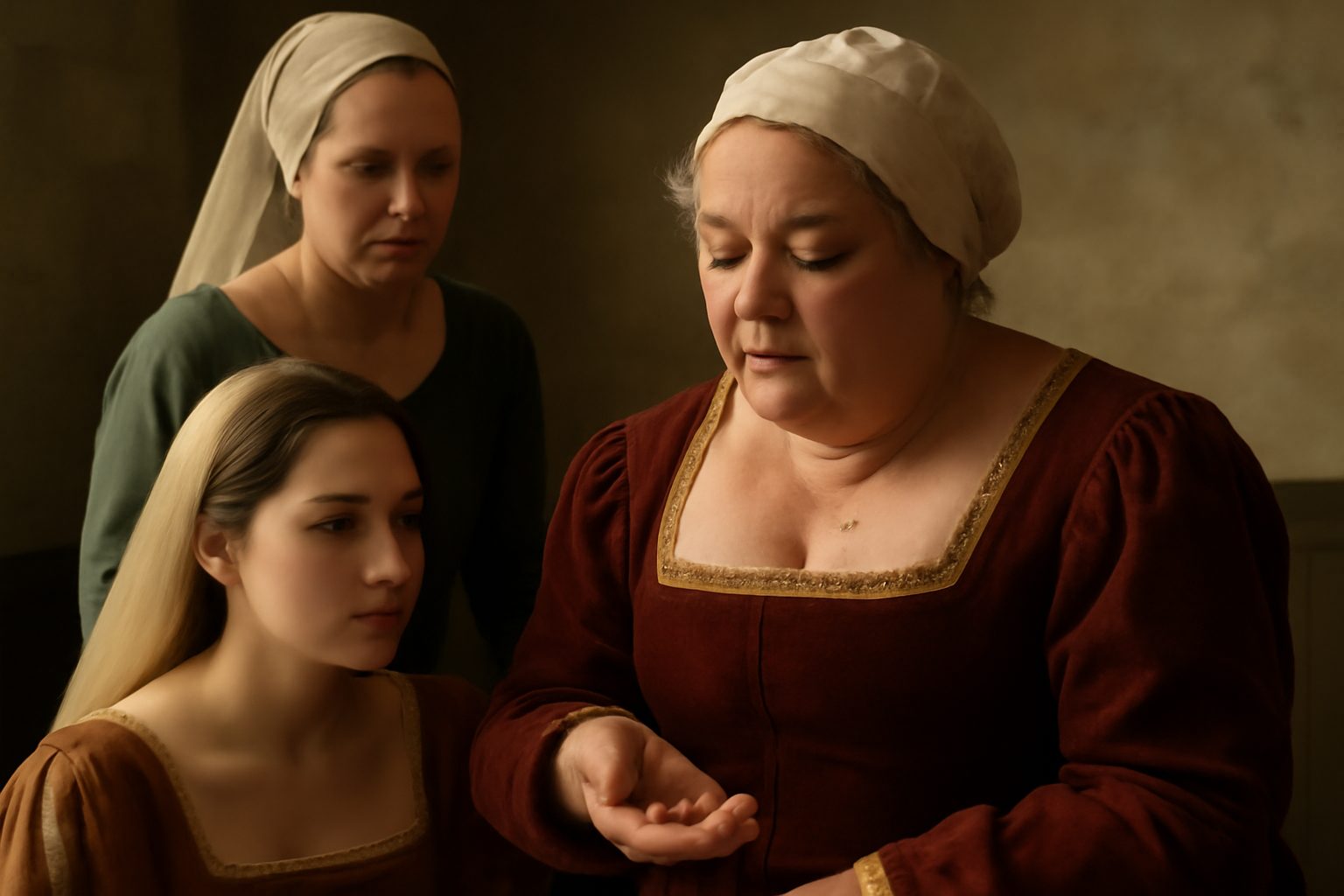
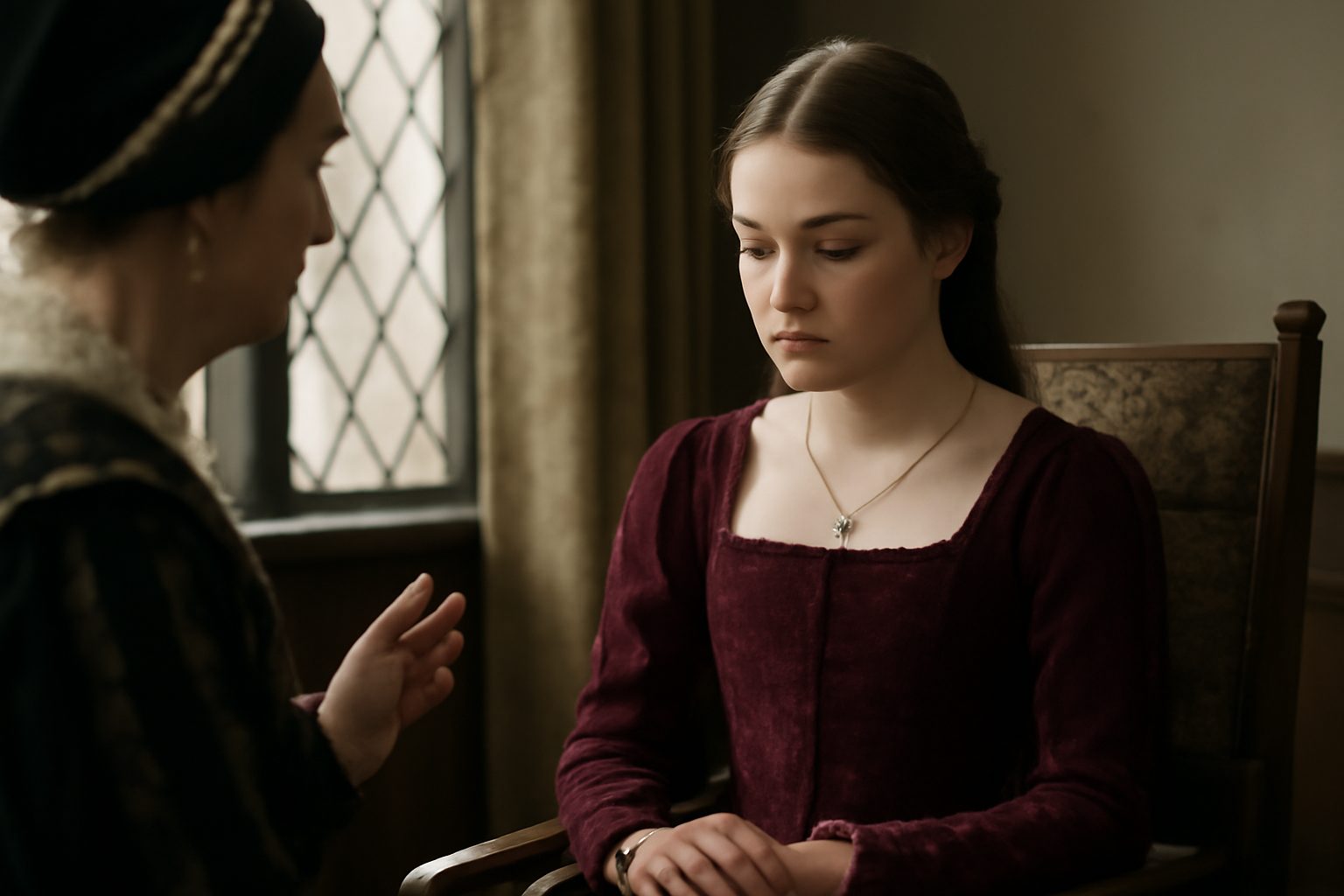
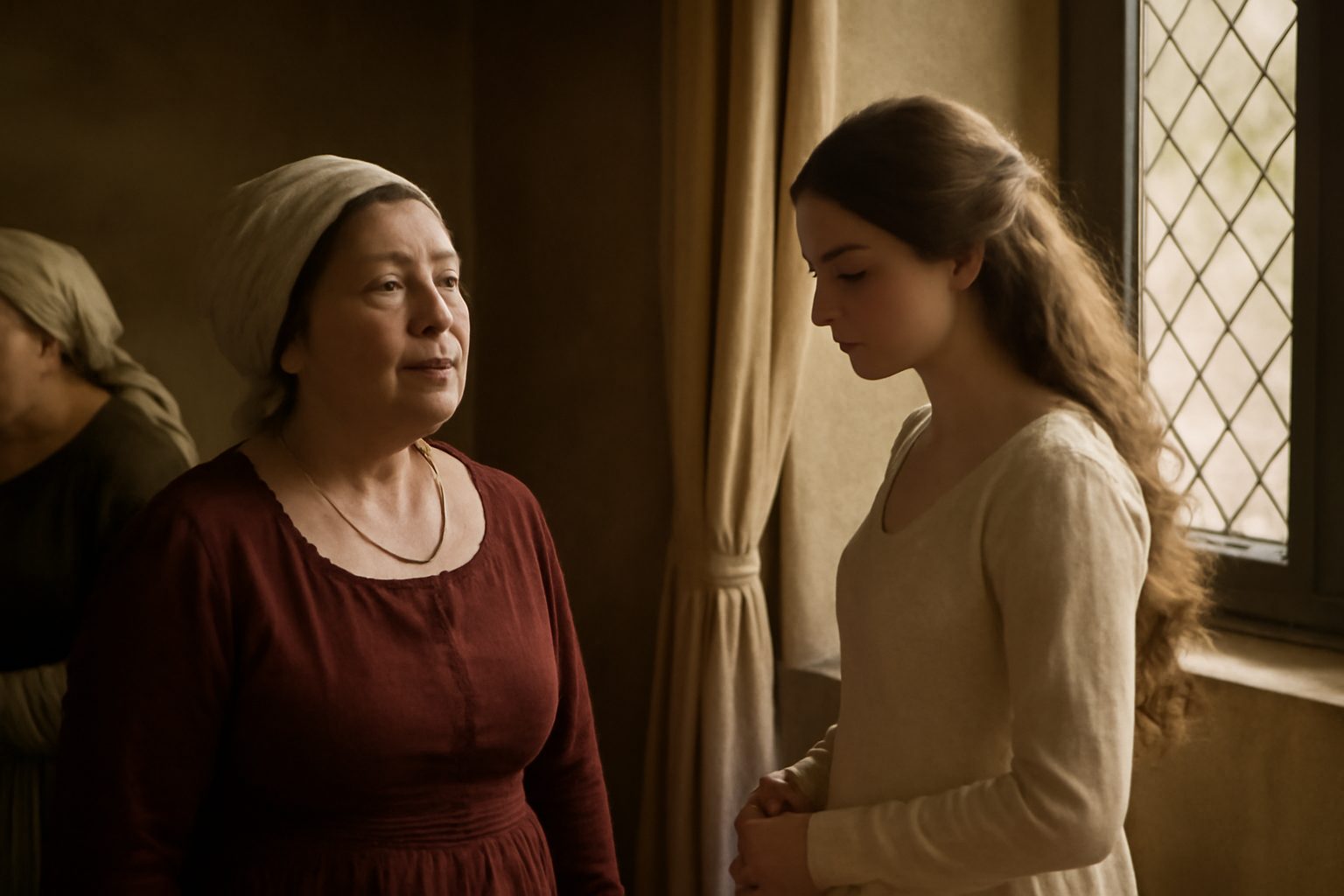
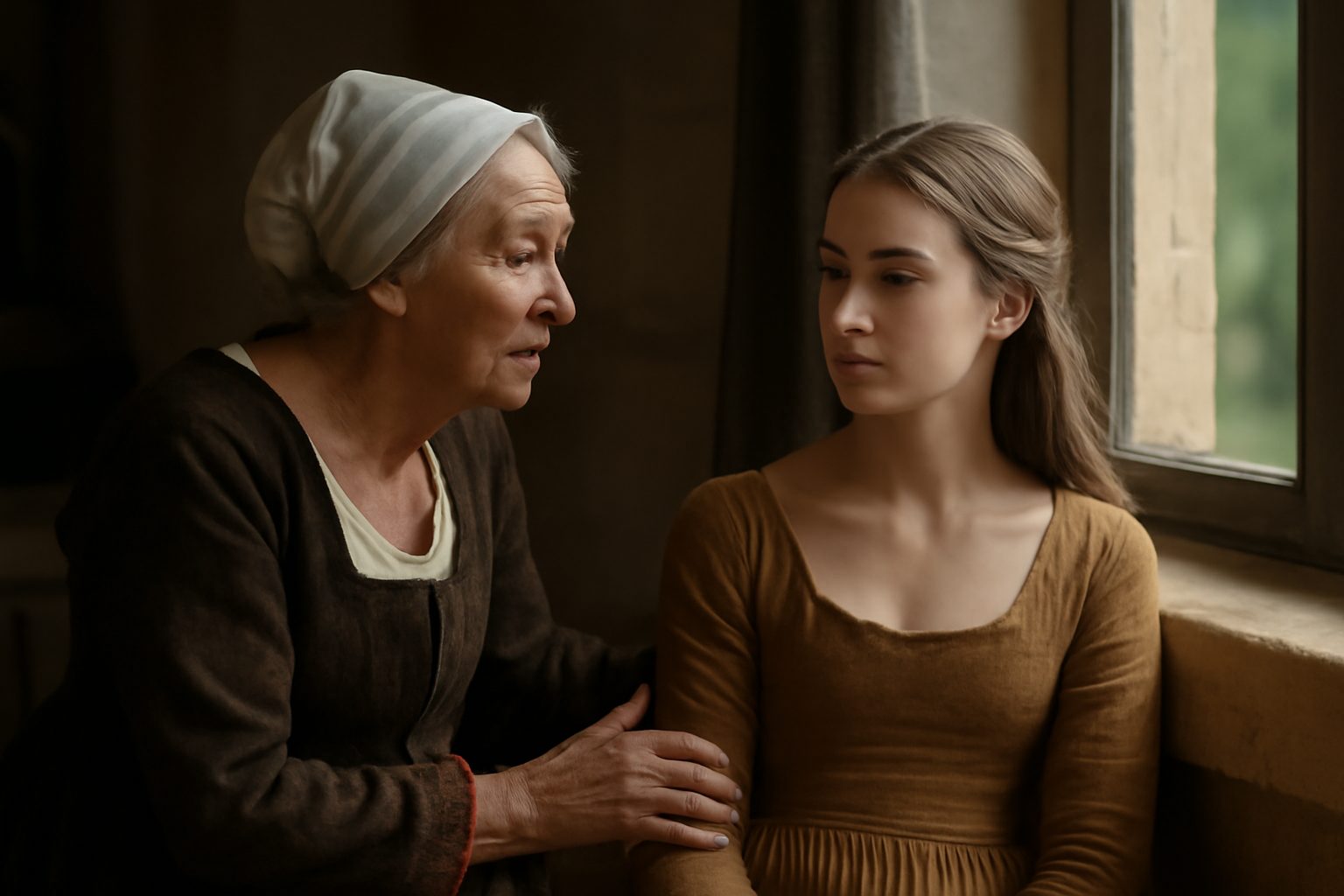
In Act 1, Scene 3 of Romeo and Juliet, Lady Capulet and the Nurse discuss Juliet's impending marriage to Paris. This line is part of a playful exchange where the Nurse suggests that women gain stature—both physically and socially—through marriage to men. The remark reflects the societal expectations placed on young women in Verona to wed and advance their status.
Nurse: "No less! nay, bigger; women grow by men."
In modern day english, we would say:
Not just equal, but greater—women become more through men.
Frequently Asked Questions
What does the Nurse mean when she says women grow by men?
She is joking that women physically grow larger when they become pregnant by men.
Connections to other verses:
Connections to "No less! nay, bigger; women grow by men."
The verse No less! nay, bigger; women grow by men is spoken by Lady Capulet in response to Juliet's hesitation about marriage. It suggests that women achieve greater status and maturity through marriage to men, a theme echoed throughout the scene.
Marriage as Growth and Honor
This idea connects to So shall you share all that he doth possess, where Lady Capulet emphasizes that marrying Paris will elevate Juliet's social standing. Similarly, By having him, making yourself no less reinforces the notion that union with a man enhances a woman's identity.
Contrast with Juliet's Innocence
Juliet's youthful reluctance, expressed in It is an honour that I dream not of, highlights her innocence and contrasts with Lady Capulet's pragmatic view of marriage as necessary for growth. The Nurse's bawdy recollection of Juliet's childhood, such as Thou wilt fall backward when thou comest to age, underscores Juliet's transition from girlhood to womanhood, aligning with the "growth" theme.
Idealization of Paris
Lady Capulet's praise of Paris in As all the world--why, he's a man of wax and Nay, he's a flower; in faith, a very flower positions him as the ideal means for Juliet's growth, reinforcing the connection between marriage and personal elevation.
Motherly Perspective
Lady Capulet's own experience, noted in I was your mother much upon these years, provides a personal basis for her advice, suggesting she sees marriage as a natural and beneficial step in a woman's life.