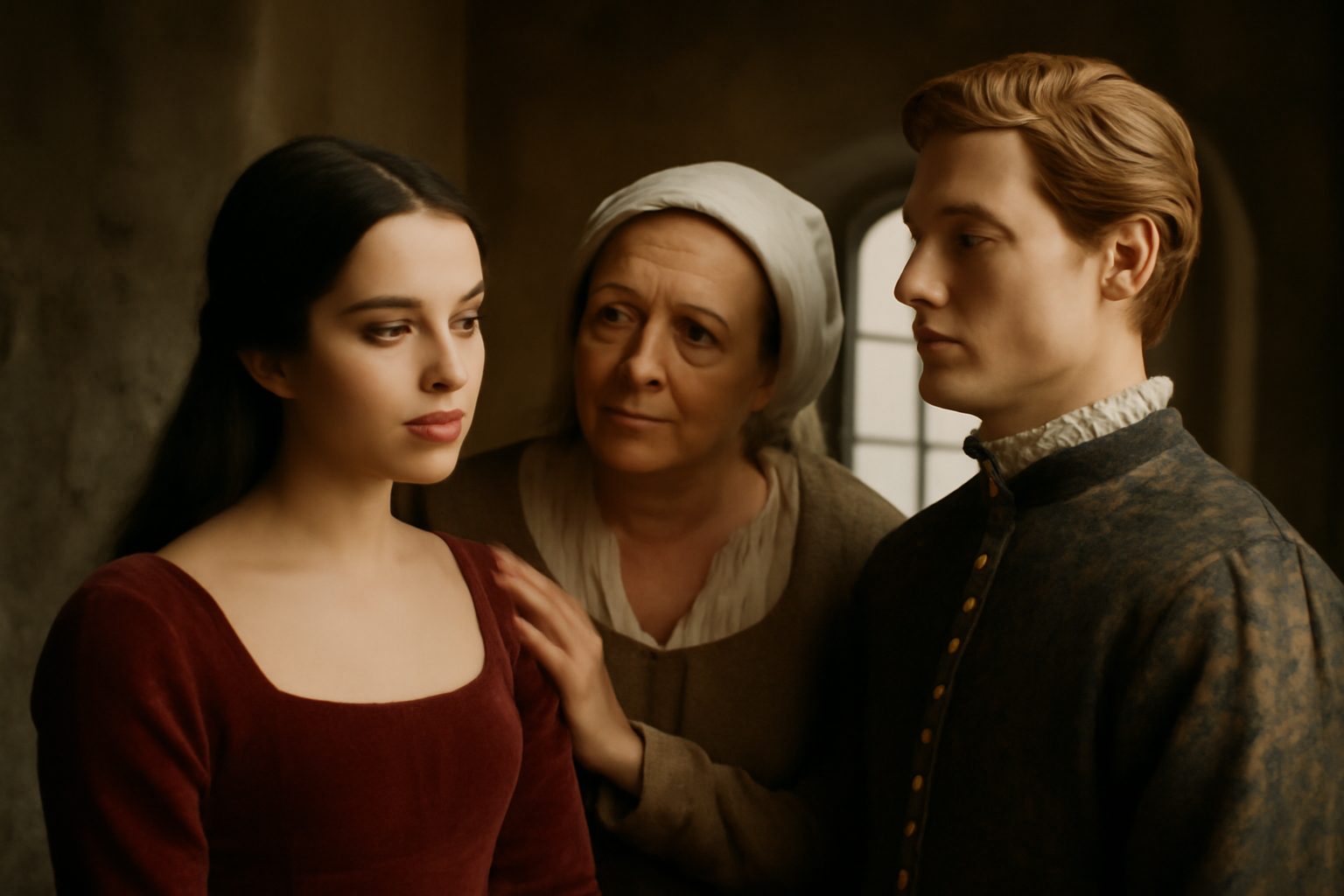
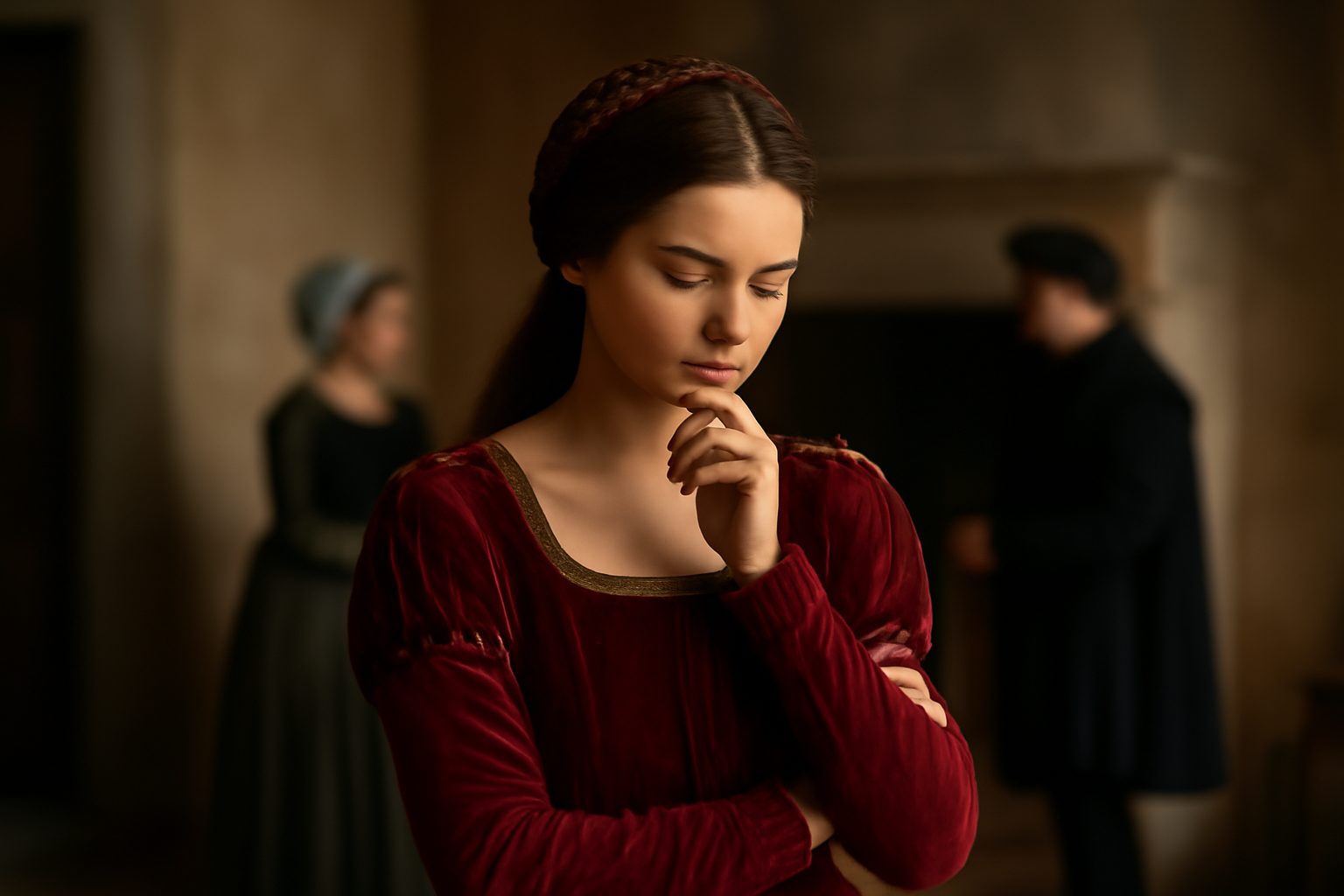
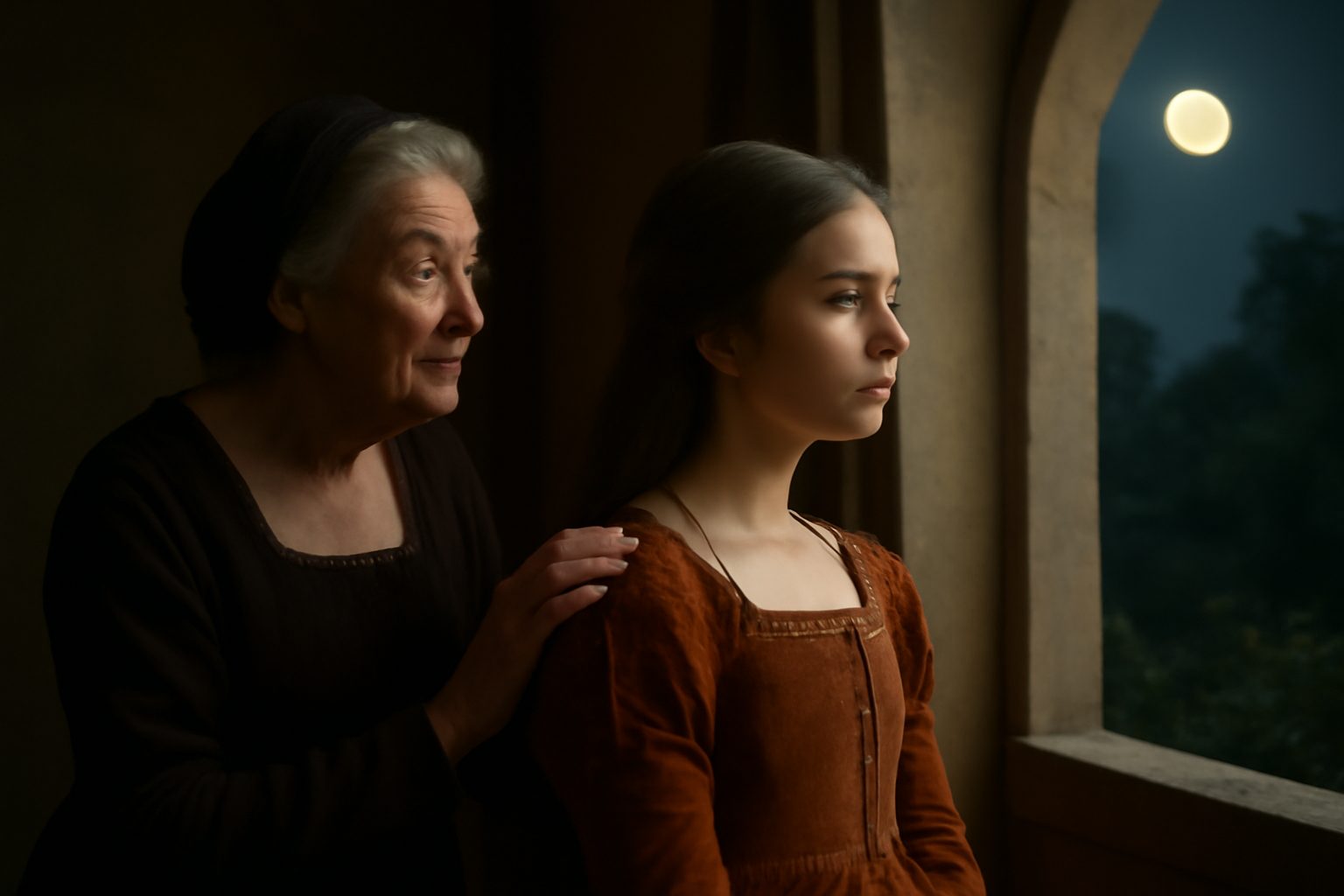
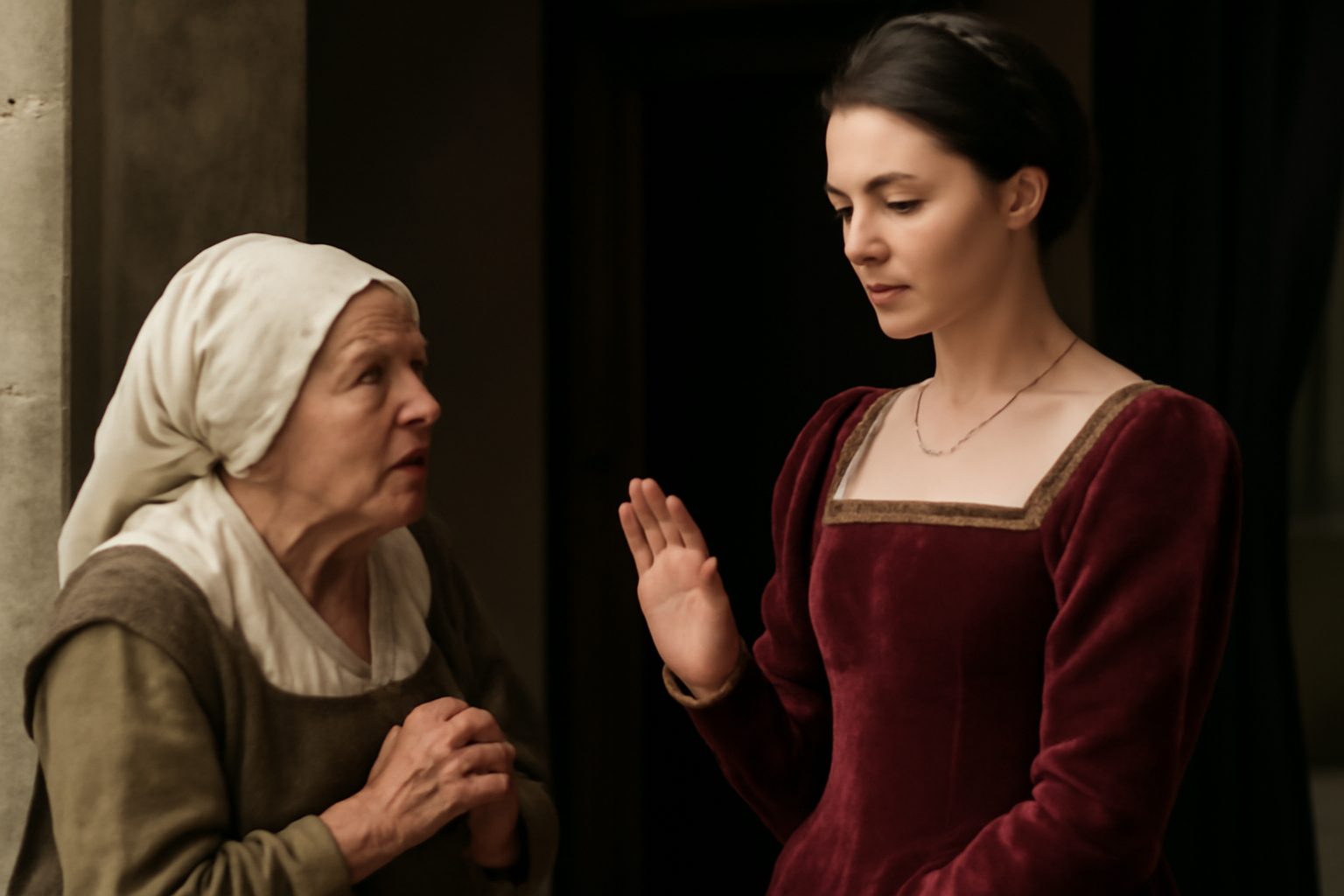
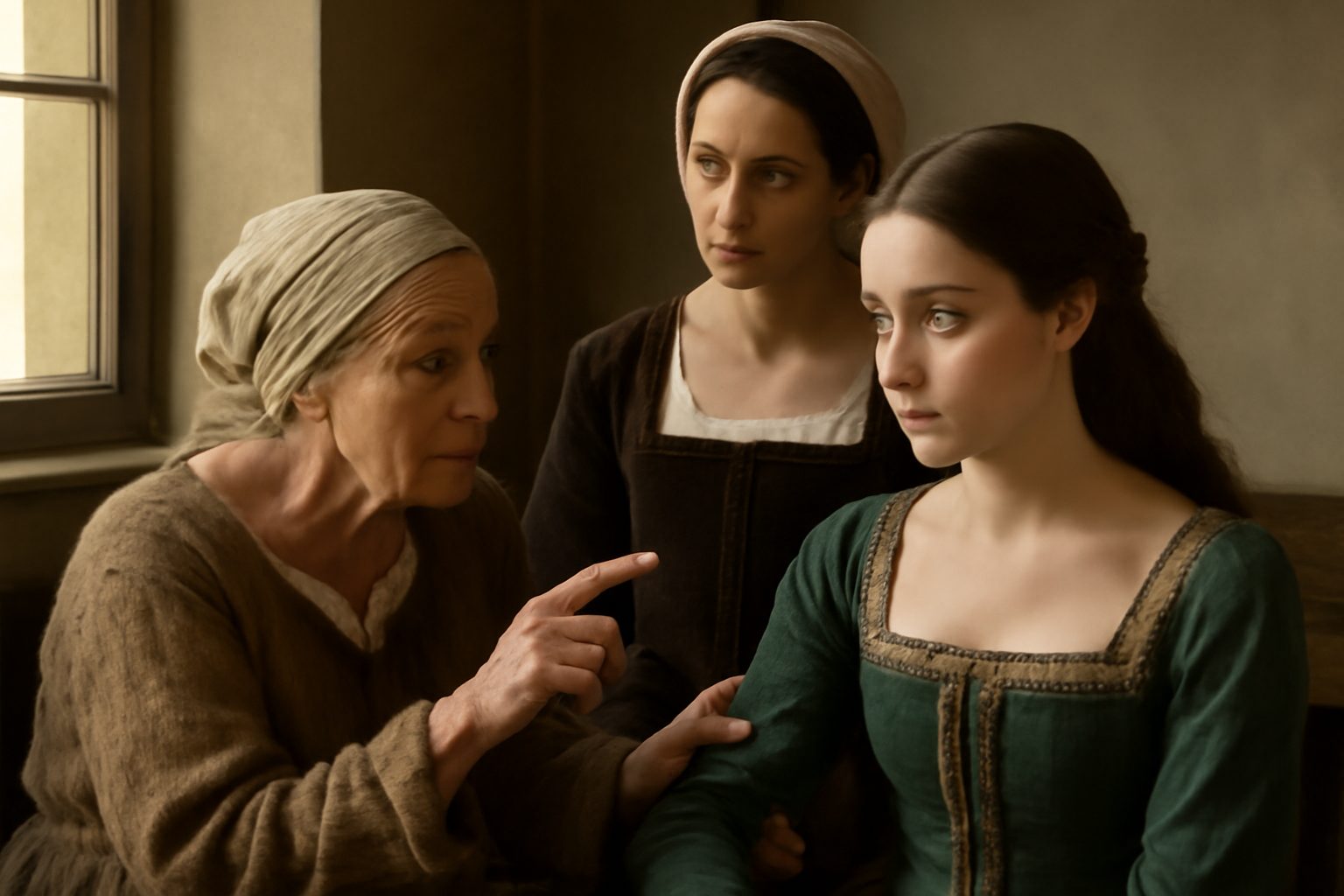
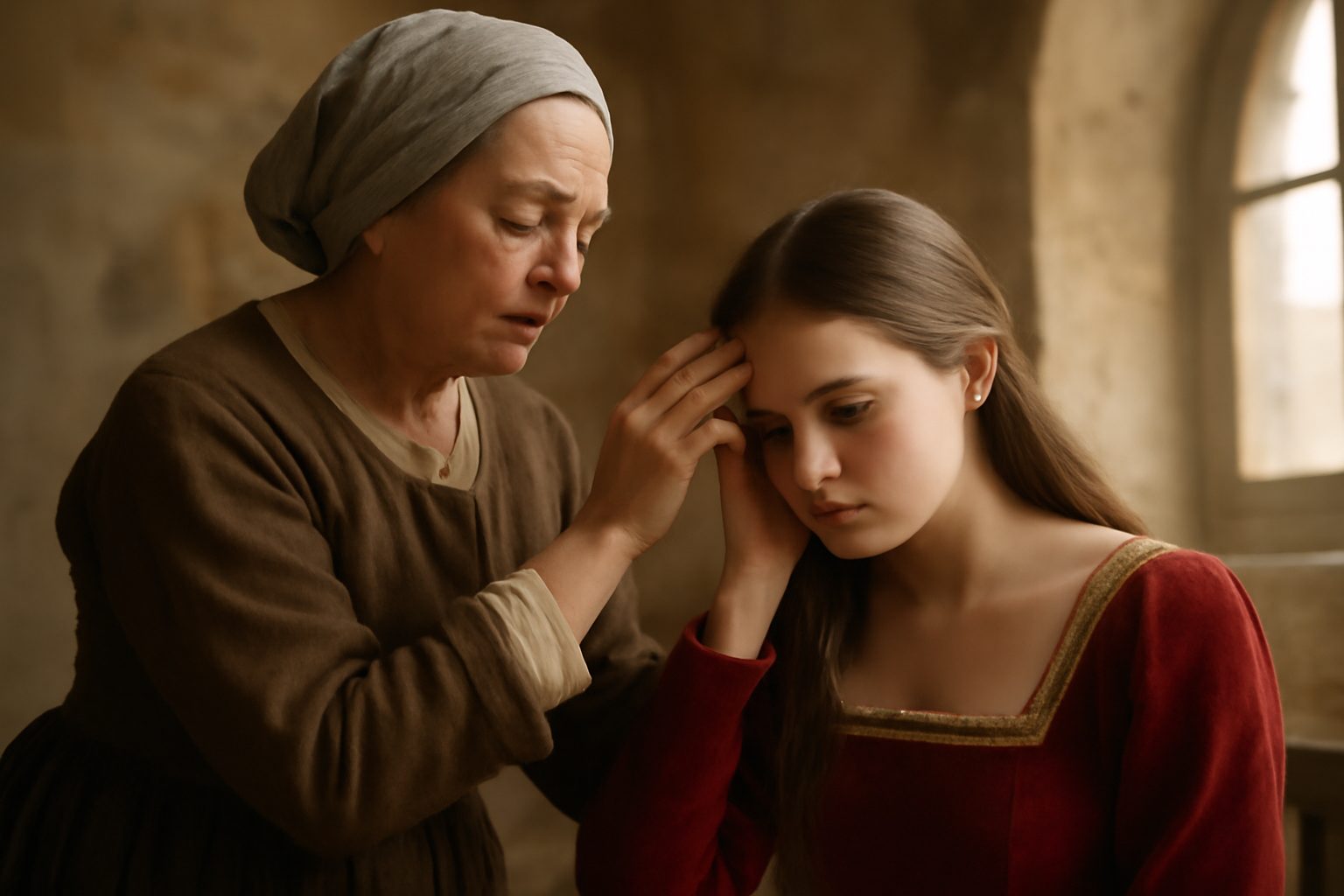
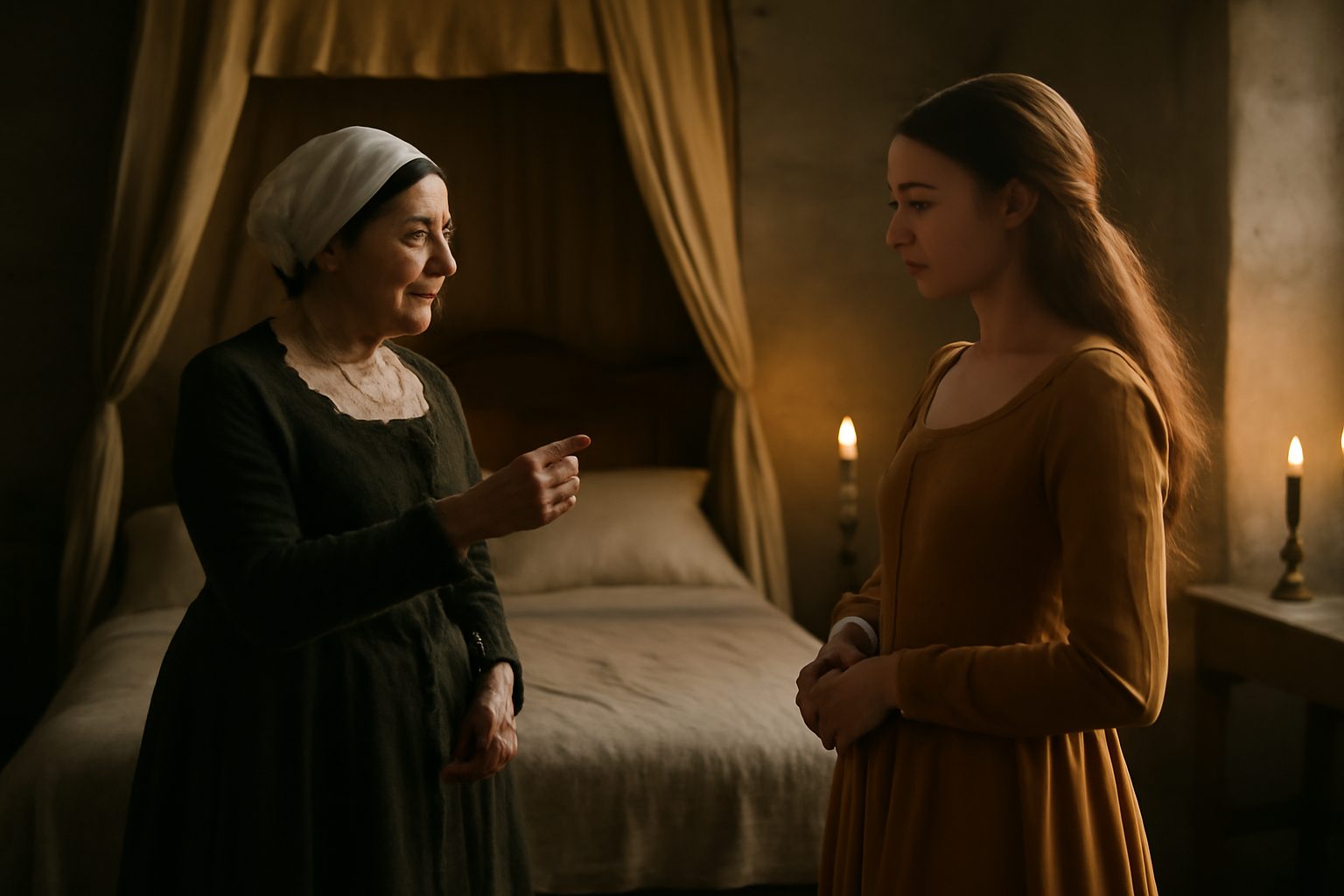
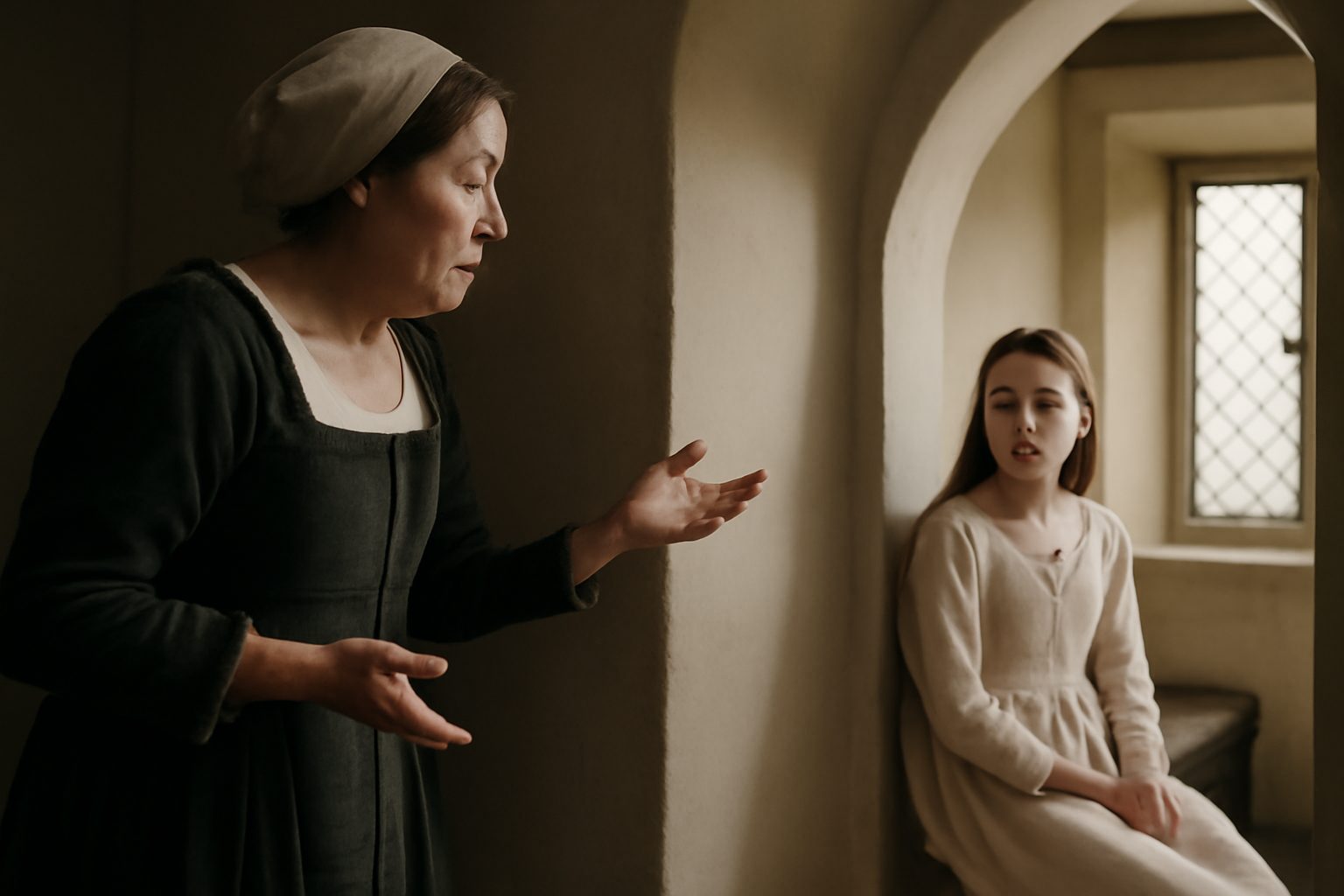
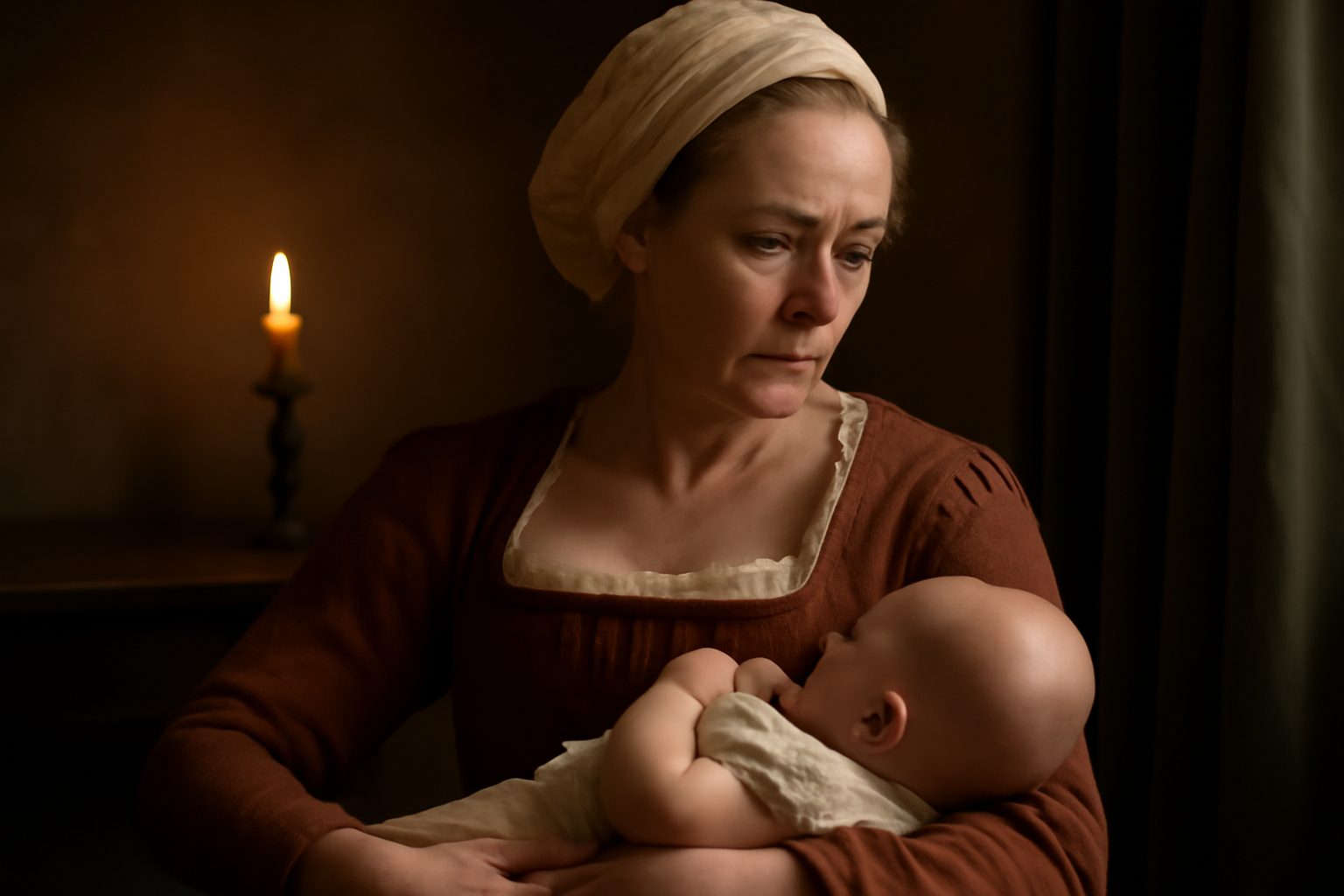
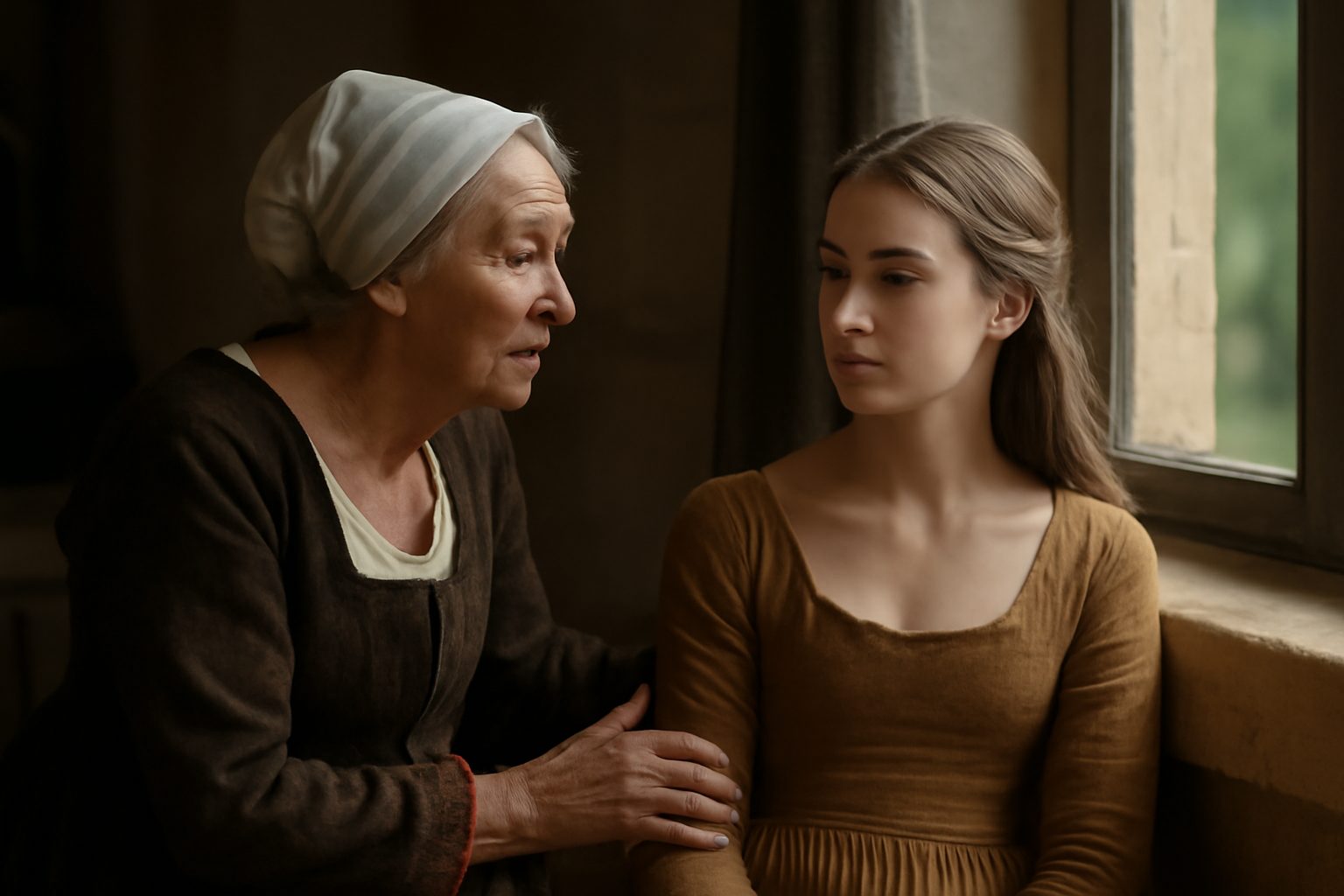
In Act 1, Scene 3 of Romeo and Juliet, Lady Capulet tries to persuade her daughter Juliet to consider marrying Paris, a wealthy and noble suitor. She argues that accepting Paris would elevate Juliet's status rather than diminish it, suggesting that such a union would bring honor without sacrifice. The line reflects the societal expectations placed on young women to secure advantageous marriages.
Lady Capulet: "By having him, making yourself no less."
In modern day english, we would say:
By being with him, you won’t lose any status or worth.
Frequently Asked Questions
What does Lady Capulet mean when she says that marrying Paris would not make Juliet any less?
She means that marrying Paris would not lower Juliet's status or worth; instead, it would be a good match that maintains or even improves her social standing.
Connections to other verses:
Connections to "By having him, making yourself no less."
The verse "By having him, making yourself no less." is spoken by Lady Capulet as she encourages Juliet to consider marrying Paris. This line suggests that by marrying Paris, Juliet would gain status and wealth without diminishing her own worth. It connects thematically and contextually to several other verses in the scene.
Connection to Marriage and Status
This idea is directly challenged by the Nurse in "No less! nay, bigger; women grow by men.", implying that marriage actually enhances a woman's social standing. Lady Capulet earlier praises Paris's qualities in "As all the world--why, he's a man of wax." and "Nay, he's a flower; in faith, a very flower.", emphasizing his perfection and how association with him would benefit Juliet.
Connection to Material and Social Gain
The notion of gaining through marriage is reinforced in "So shall you share all that he doth possess,", which explicitly mentions the material advantages. Lady Capulet also uses the metaphor of a book to describe Paris in "This precious book of love, this unbound lover,", suggesting that he is a valuable prospect to be "bound" in marriage.
Connection to Juliet's Age and Readiness
This advice comes amid discussions of Juliet's youth, such as the Nurse's recollection of Juliet's age in "Come Lammas-eve at night shall she be fourteen." and Lady Capulet's mention in "Well, think of marriage now; younger than you,", highlighting the societal pressure on young women to marry.
Connection to Obedience and Choice
Juliet's response in "I'll look to like, if looking liking move:" shows her conditional agreement, contrasting with her mother's assertive encouragement. The scene begins with Lady Capulet's authoritative summoning in "Nurse, where's my daughter? call her forth to me.", setting the tone for the parental pressure Juliet faces.