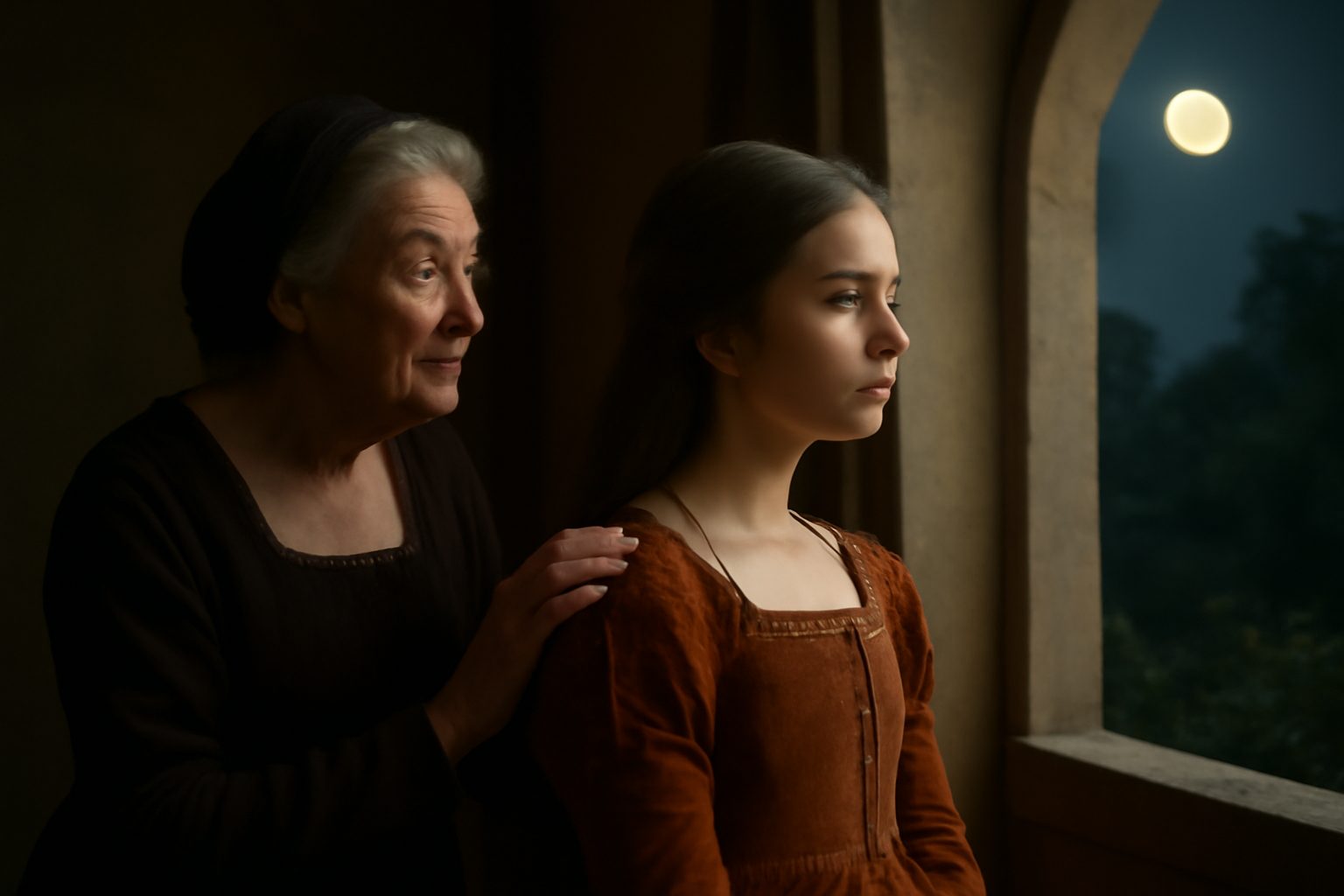
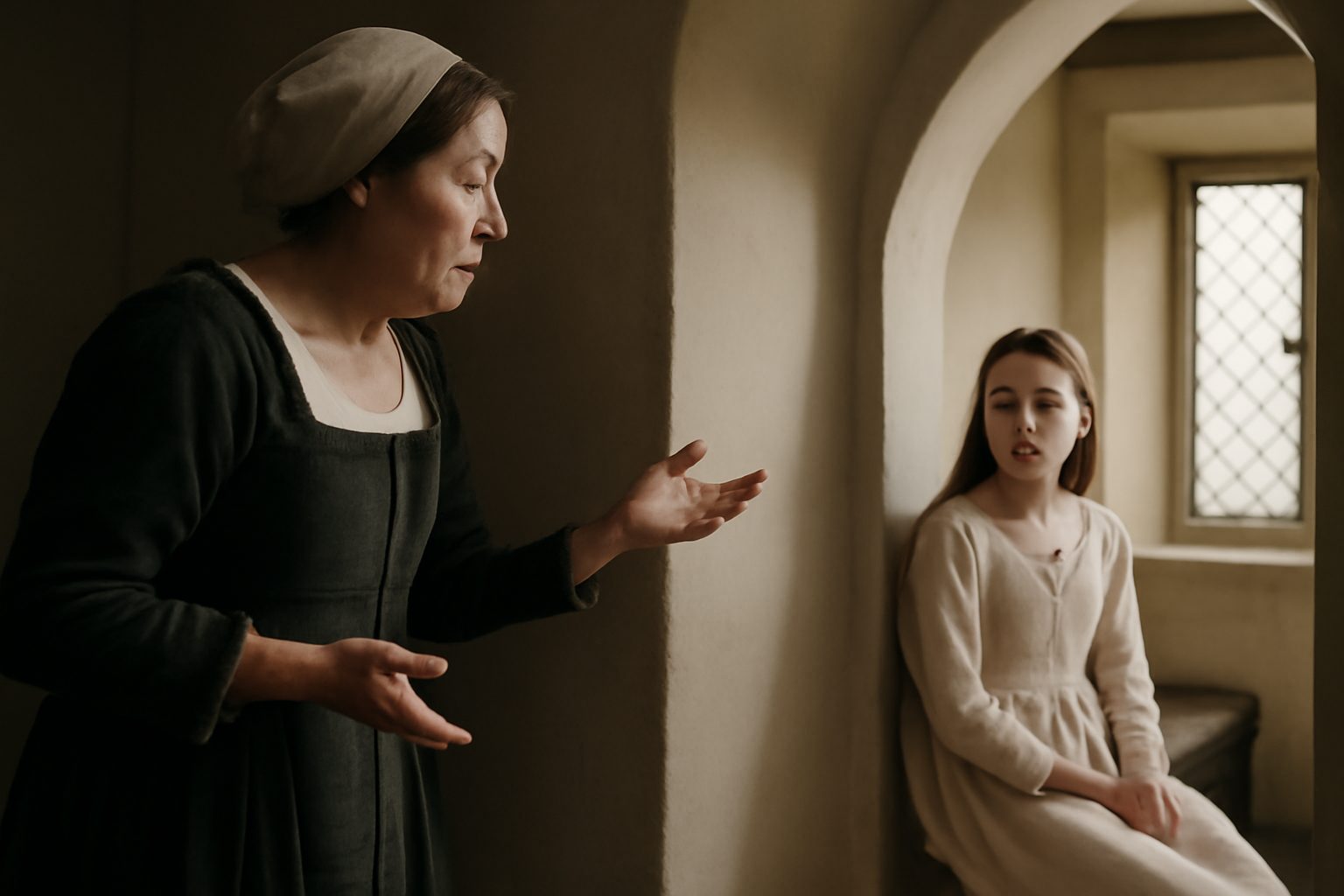
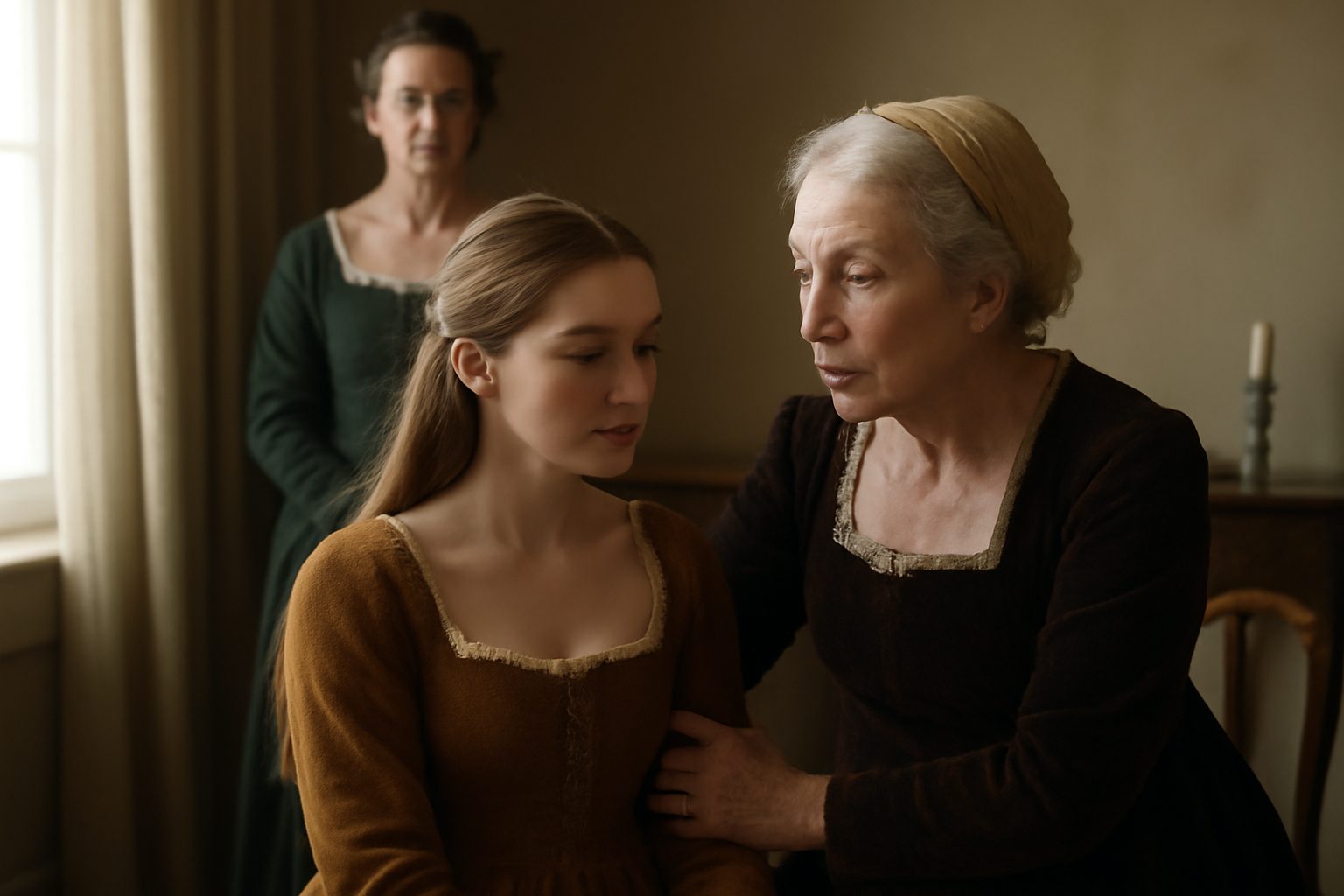
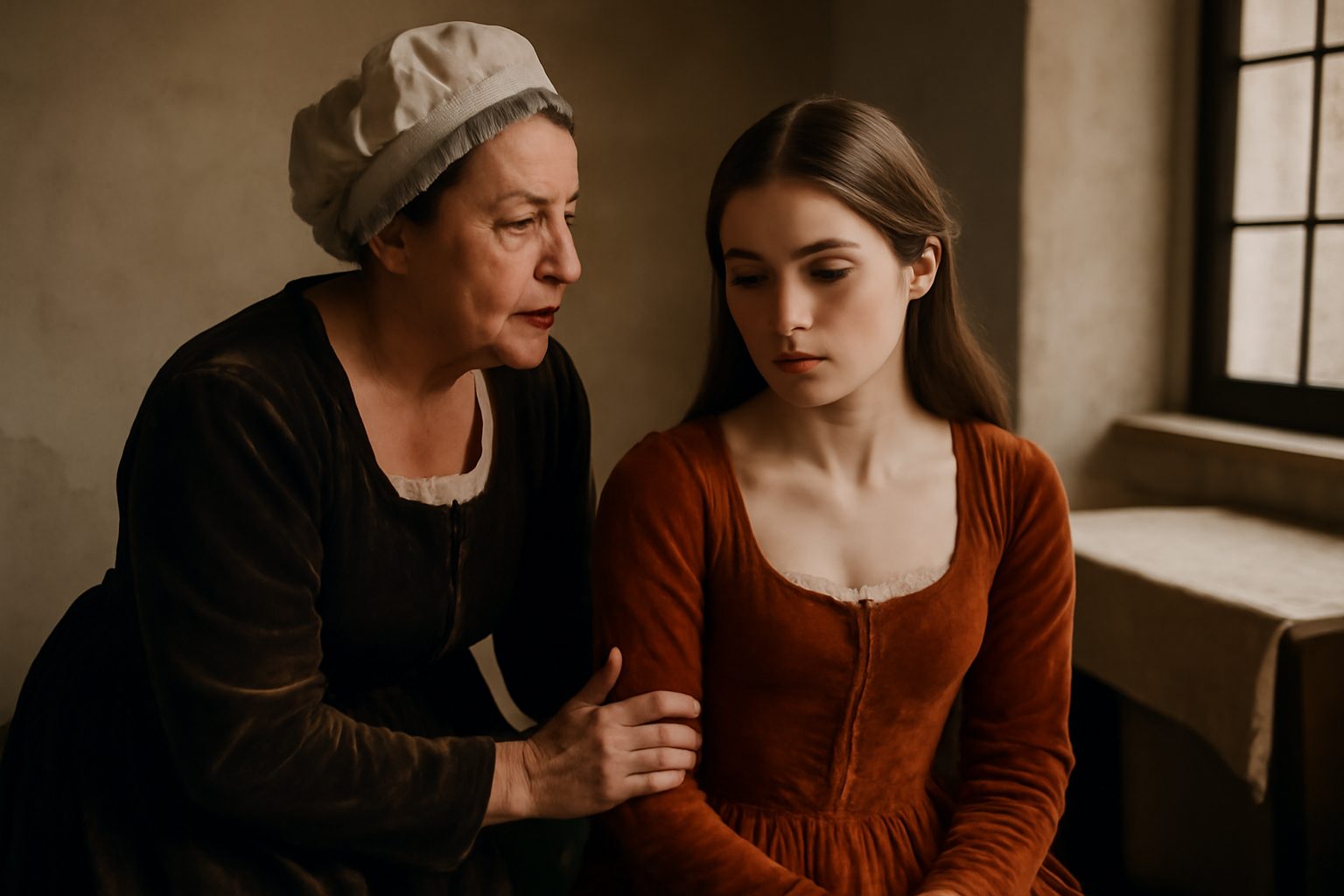
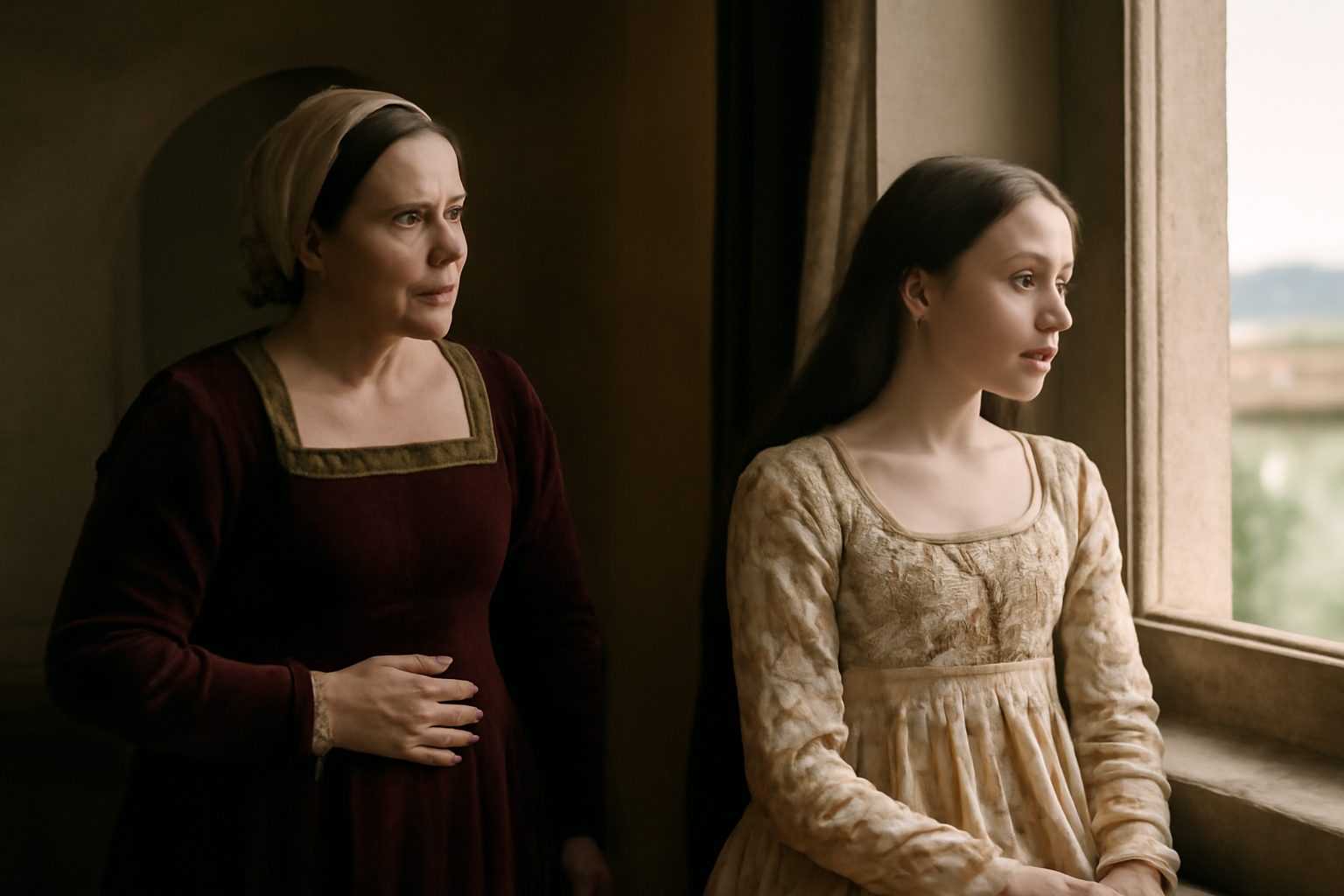
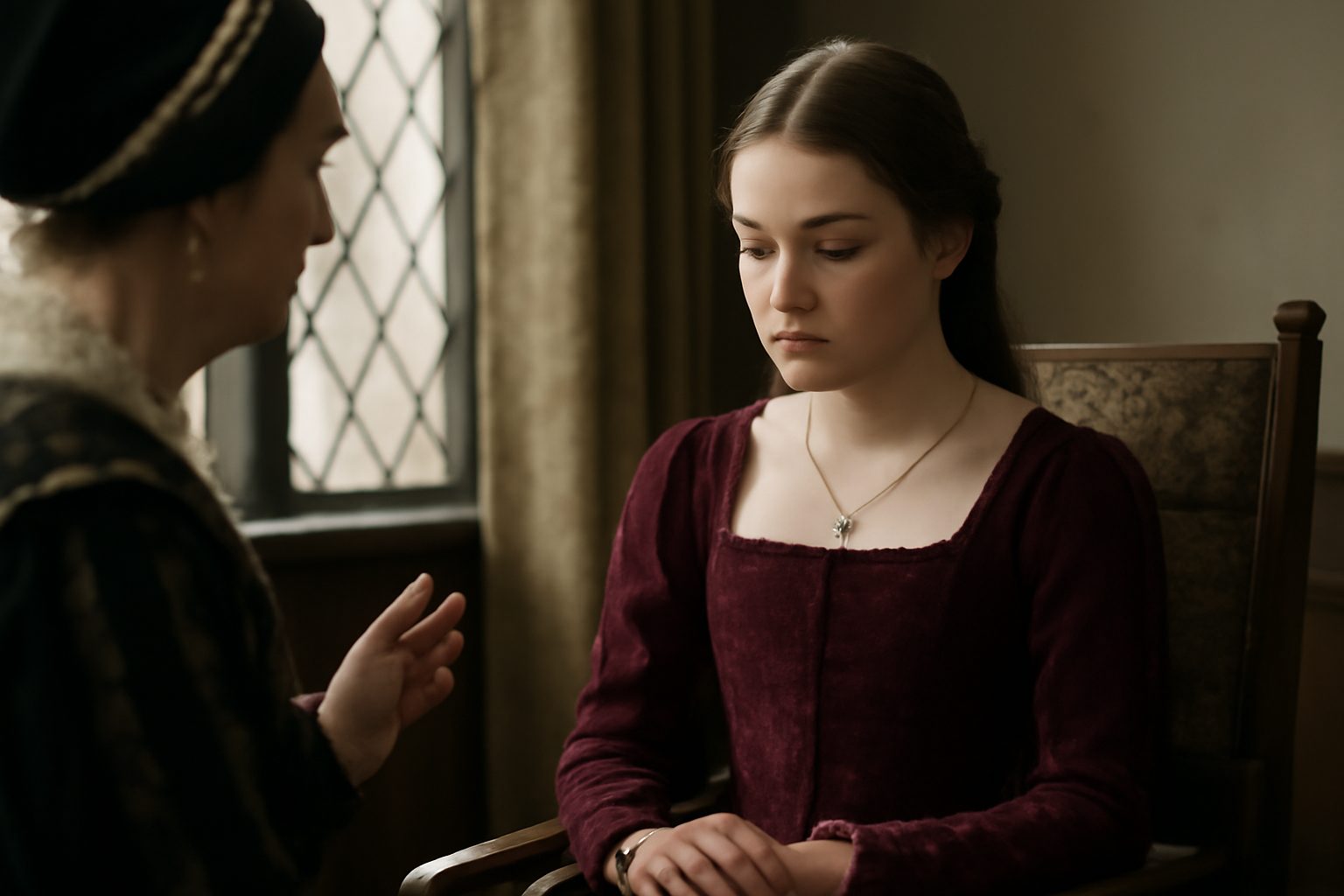
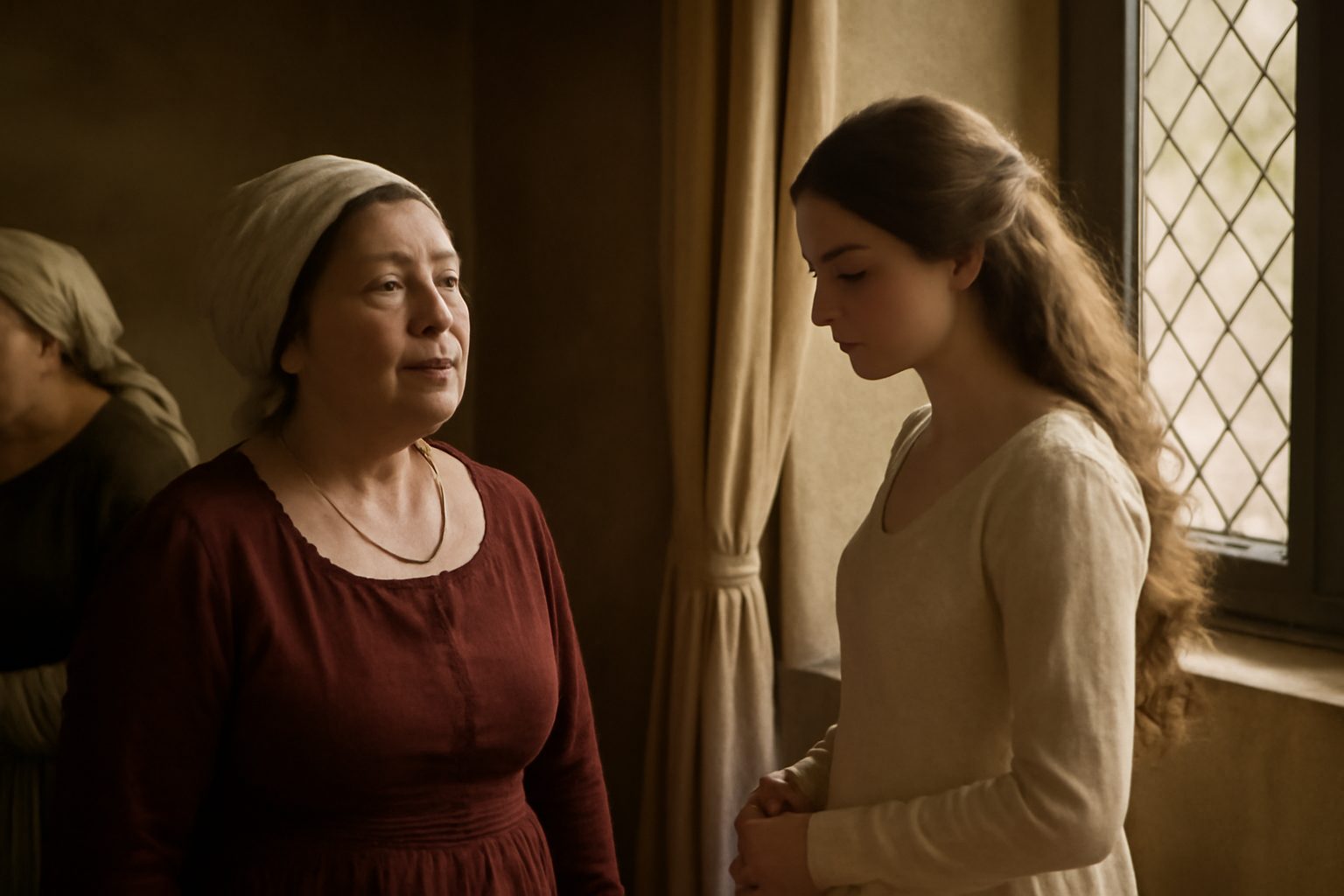
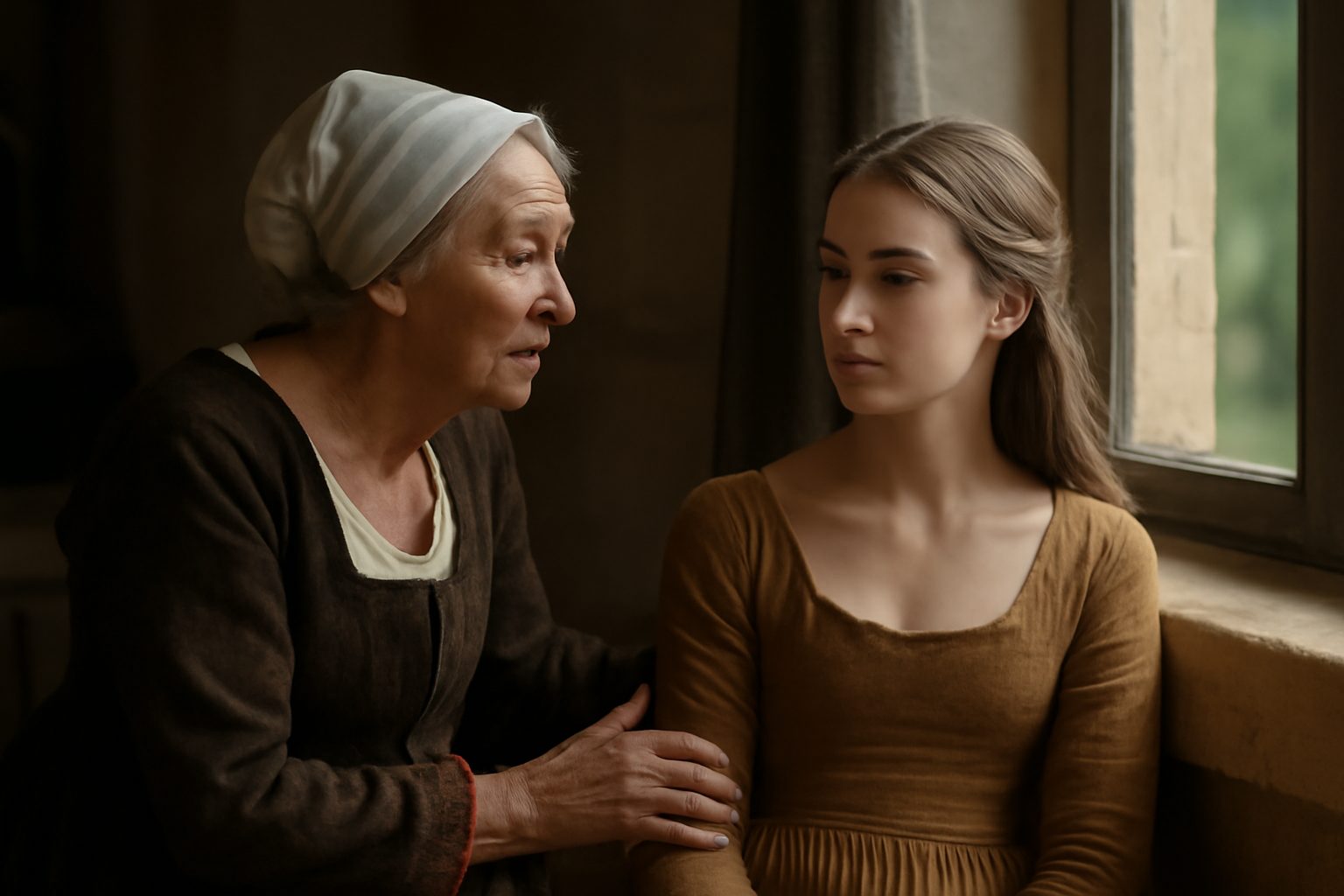
In Act 1, Scene 3 of Romeo and Juliet, the Nurse reminisces about Juliet's childhood in a long, affectionate monologue. This particular line refers to the moment Juliet was weaned, a memory the Nurse recalls with sentimental vividness. Her anecdote reveals her deep, almost motherly attachment to Juliet, contrasting with Lady Capulet's more formal relationship with her daughter.
Nurse: "And she was wean'd,--I never shall forget it,--"
In modern day english, we would say:
The Nurse remembers the exact time Juliet stopped breastfeeding and says she’ll never forget it.
Frequently Asked Questions
What does the Nurse remember about Juliet as a baby?
The Nurse remembers the time when Juliet was weaned as a baby.
Connections to other verses:
Connections to Juliet's Weaning
The verse And she was wean'd,--I never shall forget it,-- is part of the Nurse's nostalgic recollection of Juliet's infancy, which serves to establish her deep, maternal bond with Juliet. This memory is directly tied to several other verses in the scene that continue the Nurse's anecdote.
Immediate Context and Details
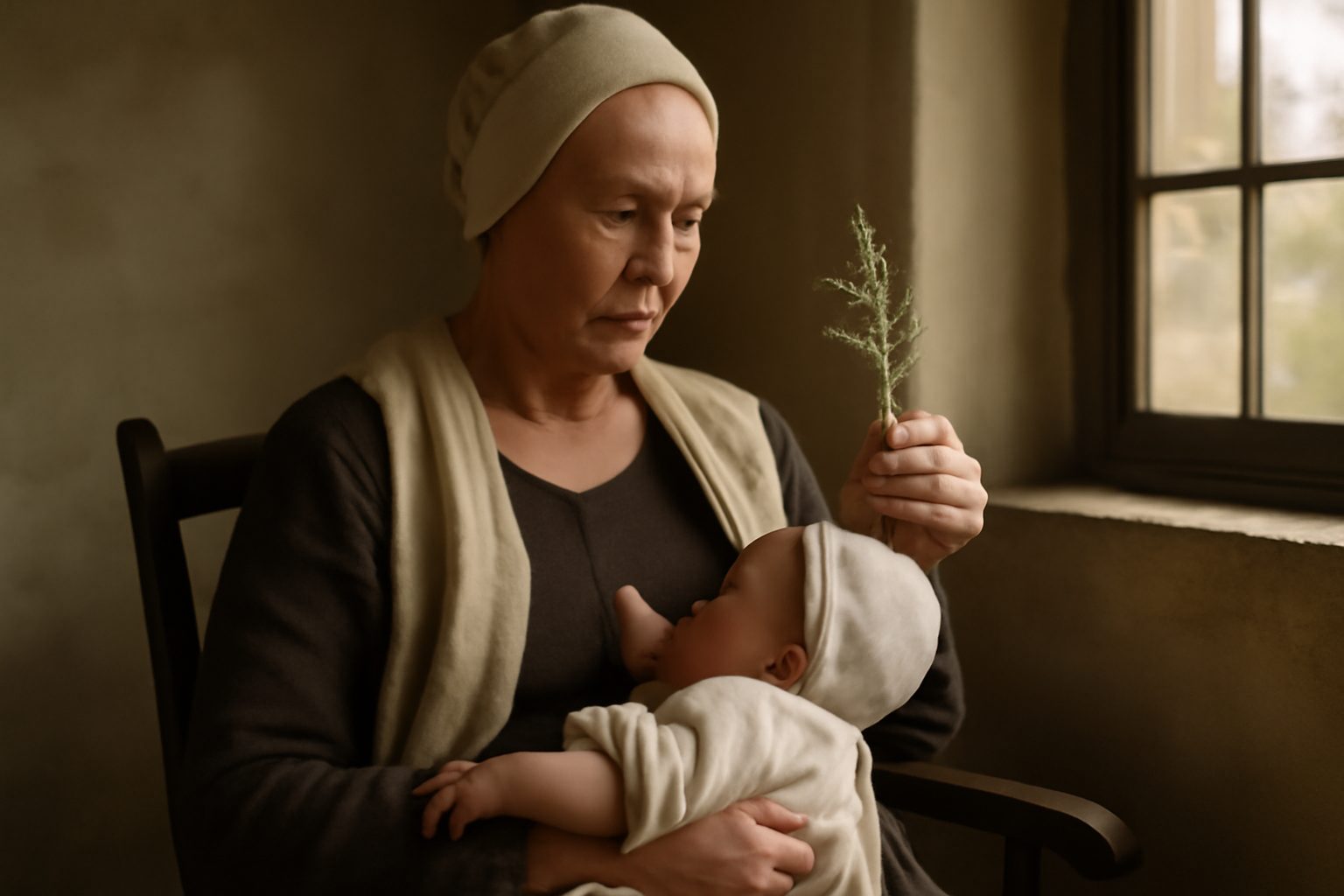
The weaning is set Of all the days of the year, upon that day:, emphasizing its significance. The Nurse recalls applying wormwood to my dug to facilitate weaning, and describes Juliet's reaction When it did taste the wormwood on the nipple and felt it bitter, pretty fool. This leads into the humorous incident where the Nurse's husband jokes, Yea,' quoth he, 'dost thou fall upon thy face? and Thou wilt fall backward when thou hast more wit;, which Juliet responds to by saying 'Ay.'.
Chronological and Emotional Links
The Nurse places this event in time, noting 'Tis since the earthquake now eleven years; and since that time it is eleven years;, connecting it to Juliet's current age. Her affectionate reminiscence culminates in Thou wast the prettiest babe that e'er I nursed:, reinforcing her emotional attachment. This fondness contrasts with Lady Capulet's more pragmatic approach to Juliet's future, as seen when she asks How stands your disposition to be married? and describes Paris as a man of wax..
Structural and Thematic Echoes
The Nurse's vivid storytelling, including the weaning memory, showcases her character's earthy humor and provides a backdrop for the theme of youth and transition central to the scene. This personal history contrasts with the formality of the marriage proposal discussed, such as when Lady Capulet advises Juliet to Read o'er the volume of young Paris' face and I'll look to like, if looking liking move:. The Nurse's interjections, like stint thou too, I pray thee, nurse, say I., highlight her persistent presence in Juliet's life, rooted in memories like the weaning.