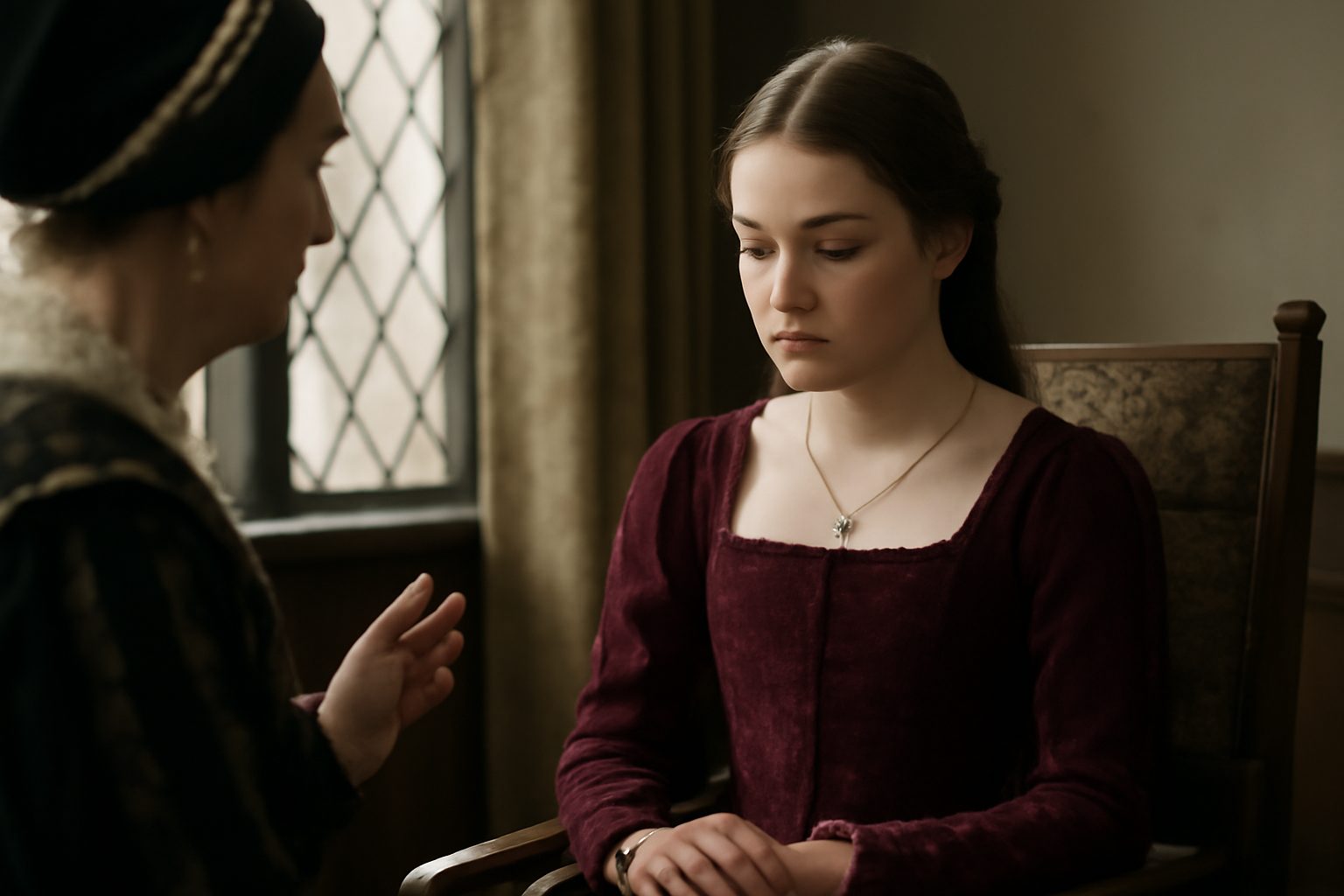
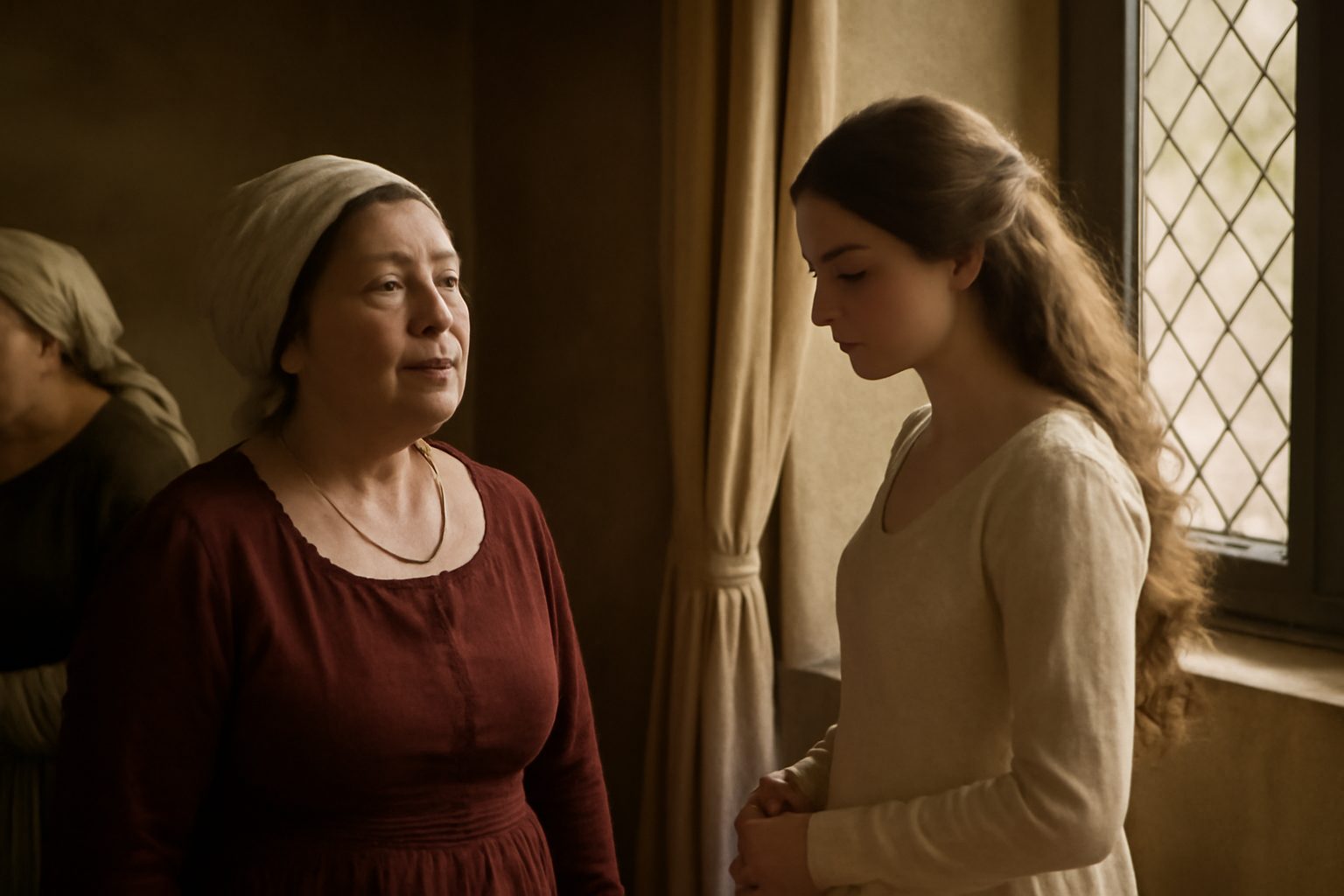
In Act 1, Scene 3 of Romeo and Juliet, the Nurse reminisces about Juliet's childhood with fond exaggeration. Her speech is lively and humorous, filled with affectionate anecdotes as she addresses Lady Capulet. The line in question reflects her tendency to hyperbole as she claims she could never forget a particular moment, even if she lived for centuries.
Nurse: "I warrant, an I should live a thousand years,"
In modern day english, we would say:
I’m sure, even if I lived a thousand years, I wouldn’t forget it.
Frequently Asked Questions
What does the Nurse mean when she says she could live a thousand years?
She is exaggerating to emphasize how certain she is about something.
Connections to other verses:
Connections to Other Verses in Act 1 Scene 3
The verse "I warrant, an I should live a thousand years" is spoken by the Nurse, reflecting her deep, almost maternal connection to Juliet and her vivid, often humorous recollections of the past. This line emphasizes the Nurse's long-standing role in Juliet's life and her tendency to dwell on memories, which is a recurring theme in her dialogue throughout the scene.
Connection to Juliet's Infancy
This verse ties directly to the Nurse's nostalgic stories about Juliet's childhood, such as when she recalls "And she was wean'd,--I never shall forget it,--" and the humorous incident where Juliet fell and the Nurse's husband joked, "Yea,' quoth my husband,'fall'st upon thy face?". These anecdotes highlight the Nurse's affectionate, if somewhat bawdy, remembrance of Juliet's early years.
Reflection on Time and Age
The Nurse's mention of living "a thousand years" contrasts with her precise reckoning of Juliet's age elsewhere, such as "Faith, I can tell her age unto an hour" and the specific reference to "Come Lammas-eve at night shall she be fourteen". This juxtaposition underscores the Nurse's perception of time both in grand, hyperbolic terms and in minute detail.
Emotional Bonds and Hyperbole
The hyperbolic nature of "a thousand years" mirrors other exaggerated claims by the Nurse, like "I'll lay fourteen of my teeth", showcasing her colorful and emphatic speech patterns. It also complements her deep emotional investment in Juliet, as seen when she says "Thou wast the prettiest babe that e'er I nursed".
Foreshadowing and Irony
Ironically, the Nurse's wish to live "a thousand years" to remember Juliet's childhood contrasts with the tragic brevity of Juliet's actual life, hinted at when Lady Capulet discusses marriage prospects with "The valiant Paris seeks you for his love". This adds a layer of dramatic irony to the Nurse's affectionate reminiscences.