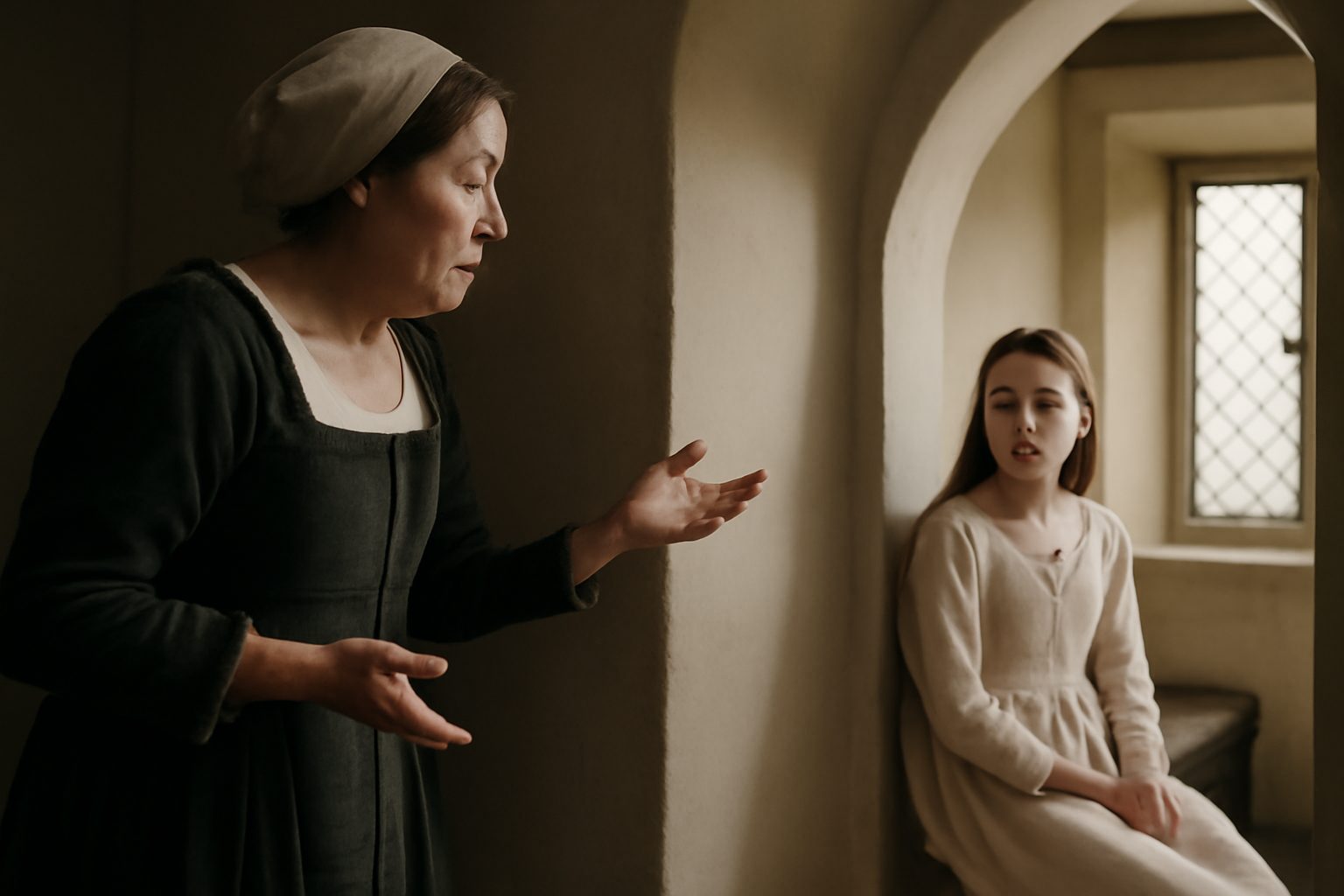
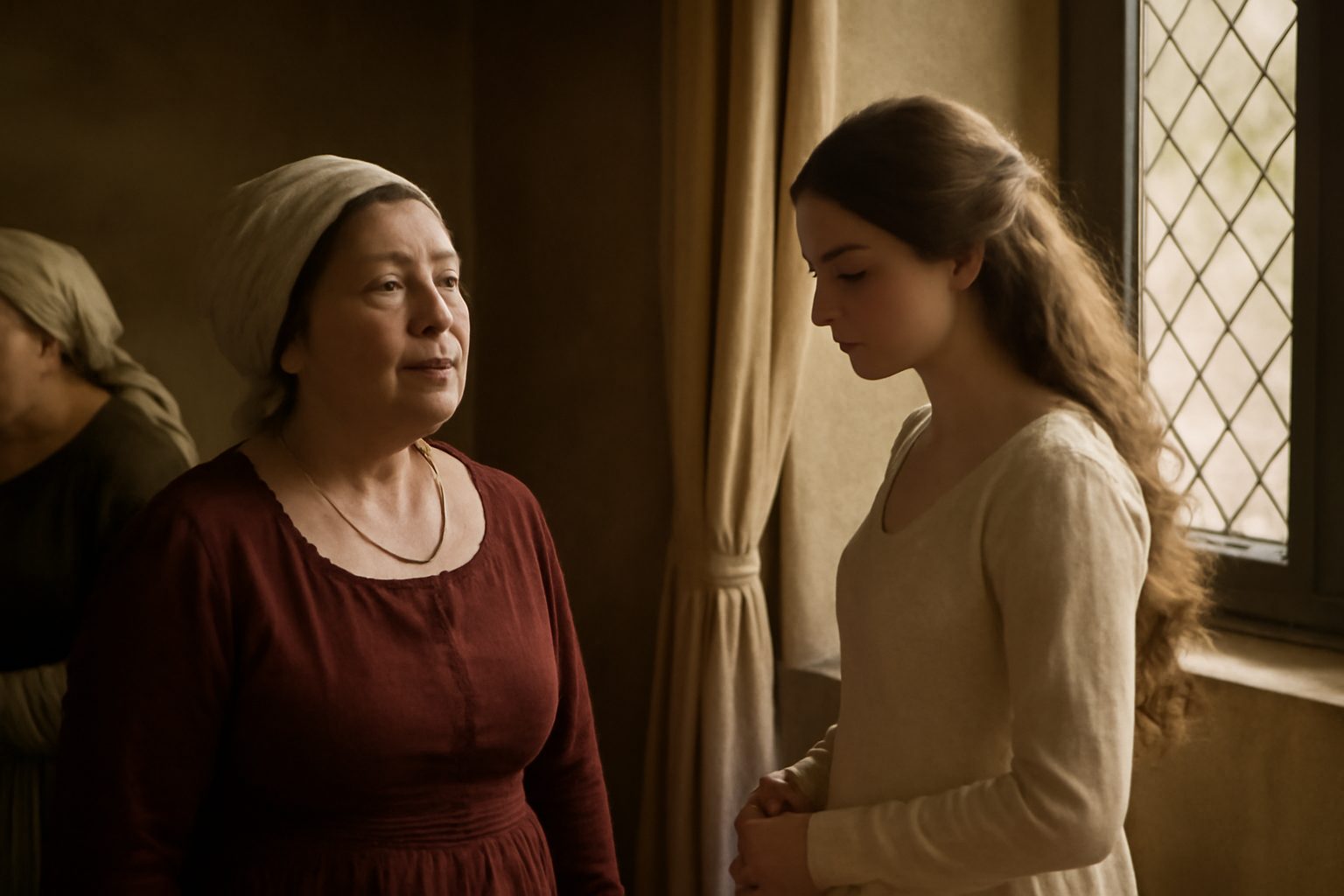
In Act 1, Scene 3 of Romeo and Juliet, the Nurse reminisces about Juliet's infancy, sharing a humorous and tender memory. She recalls weaning Juliet by applying bitter-tasting herbs to her breast, playfully calling her a pretty fool for reacting to the unpleasant flavor. This moment reveals the Nurse's affectionate, earthy humor and her deep bond with Juliet.
Nurse: "Of my dug and felt it bitter, pretty fool,"
In modern day english, we would say:
The nurse is saying that when Juliet was a baby, she suckled at her breast but found the milk bitter and reacted like a silly little thing.
Frequently Asked Questions
What is the nurse referring to when she mentions her dug?
The nurse is referring to her breast, which she used to nurse Juliet when she was a baby.
Why does the nurse call Juliet a pretty fool in this line?
The nurse calls Juliet a pretty fool affectionately, recalling her as a baby who didn't like the taste of her milk.
Connections to other verses:
Connections to "Of my dug and felt it bitter, pretty fool"
The verse "Of my dug and felt it bitter, pretty fool" is part of the Nurse's vivid recollection of Juliet's infancy, specifically referencing the moment when Juliet tasted wormwood on the Nurse's breast. This memory is deeply intertwined with other verses in the scene that recount Juliet's early years and the Nurse's personal history.
Direct Context and Weaning
This line directly follows "When it did taste the wormwood on the nipple", which sets up the action of Juliet tasting the bitter substance. The Nurse explains in "For I had then laid wormwood to my dug" that she applied wormwood to her breast to wean Juliet, making the child find it unpalatable. This process of weaning is further detailed in "And she was wean'd,--I never shall forget it,--", emphasizing the Nurse's strong emotional attachment to this memory.
Juliet's Reaction and the Nurse's Humor
The phrase "pretty fool" is a term of endearment the Nurse uses for the infant Juliet, which appears again in "And, pretty fool, it stinted and said 'Ay.'", where Juliet stops crying and agrees playfully. The Nurse finds humor in these memories, as seen in "Yes, madam: yet I cannot choose but laugh", reflecting on how comical Juliet's reactions were.
Broader Narrative of Juliet's Childhood
This memory is part of a larger anecdote that includes Juliet's early mobility, noted in "For then she could stand alone; nay, by the rood" and "She could have run and waddled all about". The earthquake mentioned in "Tis since the earthquake now eleven years" and "And since that time it is eleven years" dates these events, showing how the Nurse ties Juliet's growth to specific moments in time.
Connection to the Nurse's Personal Loss
The Nurse's recounting also touches on her own life, such as the loss of her child Susan, referenced in "Susan and she--God rest all Christian souls!--" and "Were of an age: well, Susan is with God;". This personal connection deepens her affection for Juliet, whom she nursed in place of her own daughter.
Transition to Present Themes
While the Nurse dwells on the past, Lady Capulet uses this conversation to transition to the present topic of marriage, as seen in "I came to talk of. Tell me, daughter Juliet" and "How stands your disposition to be married?". The Nurse's memories of Juliet's infancy contrast with the current discussion of her maturity and marriage prospects.