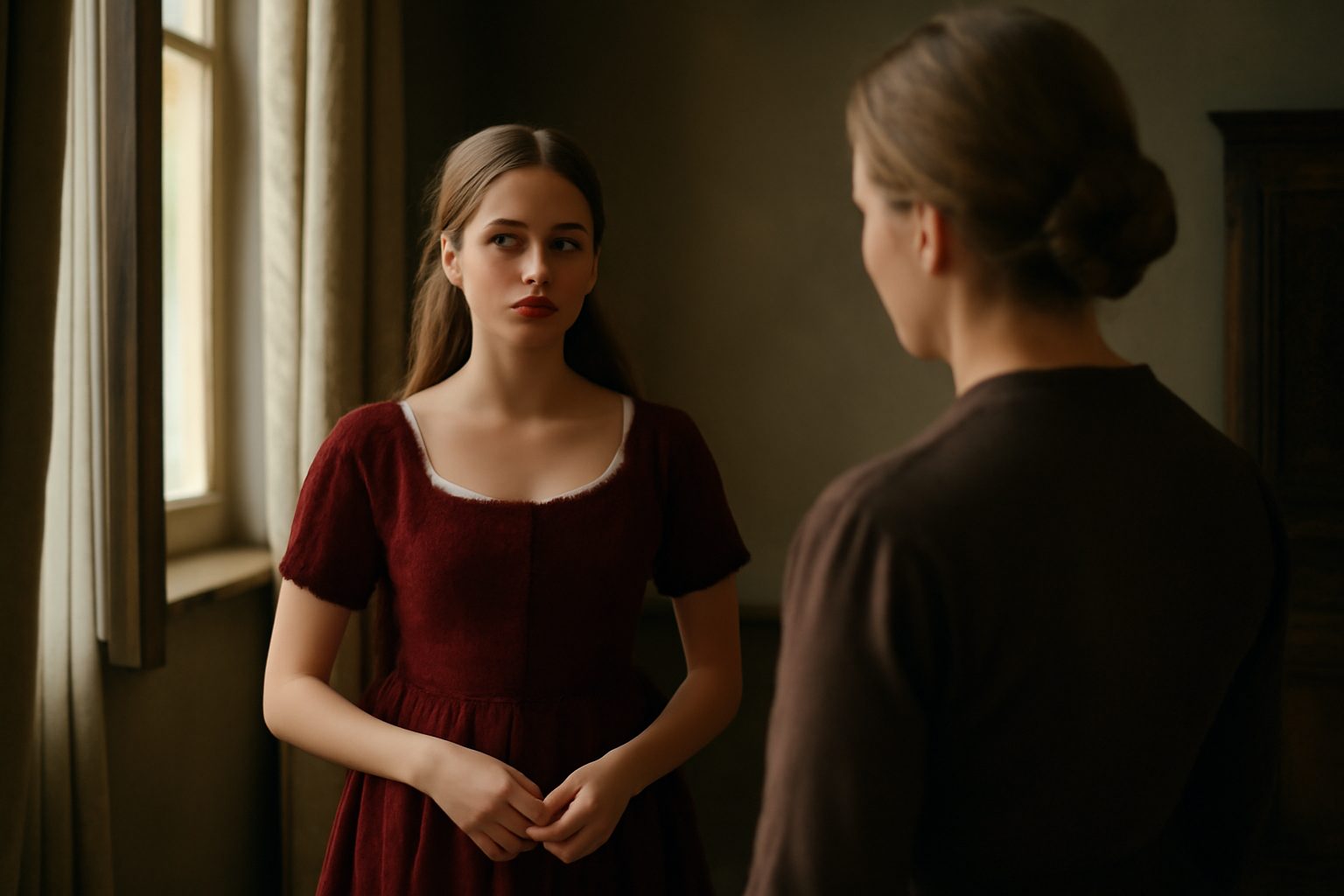
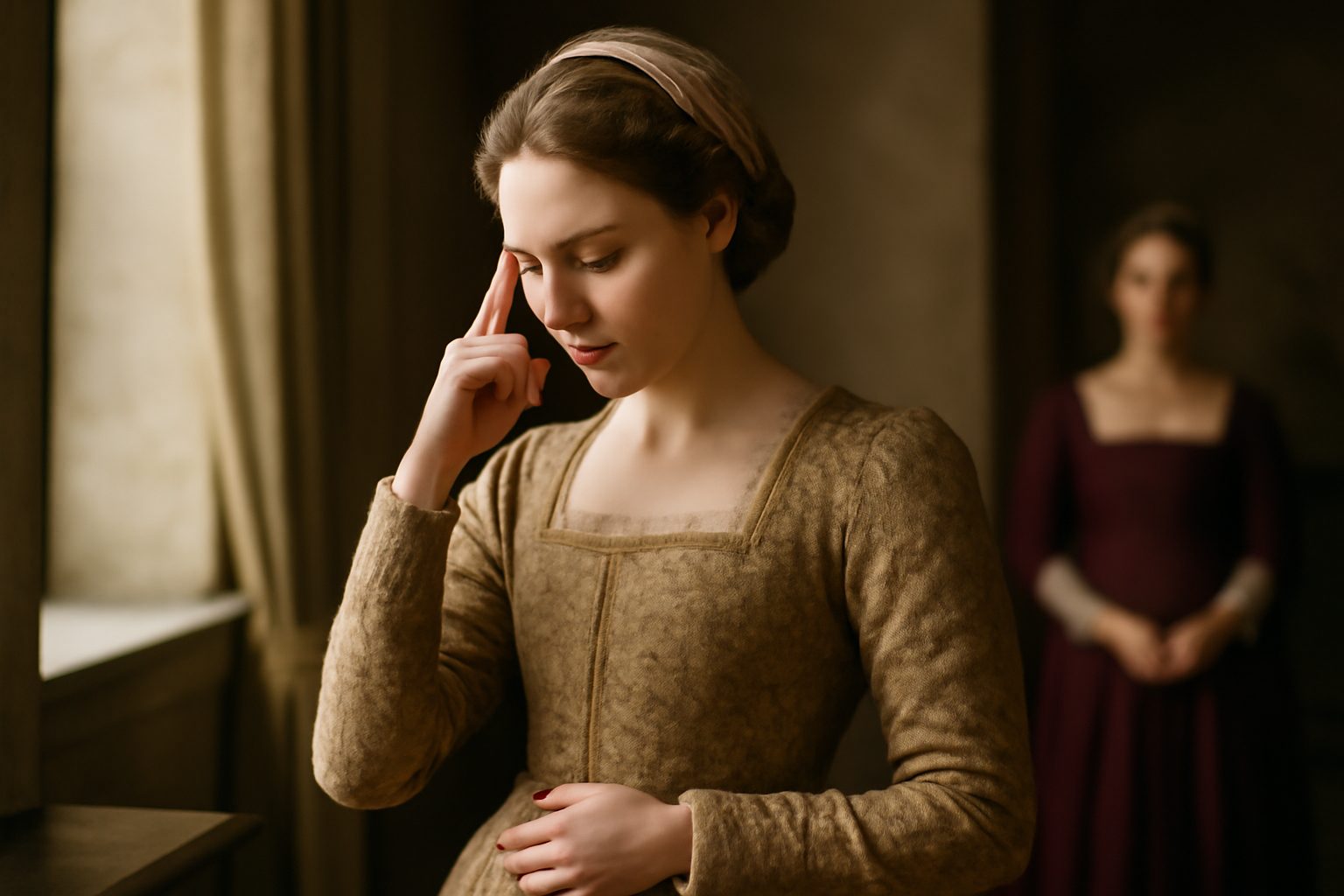
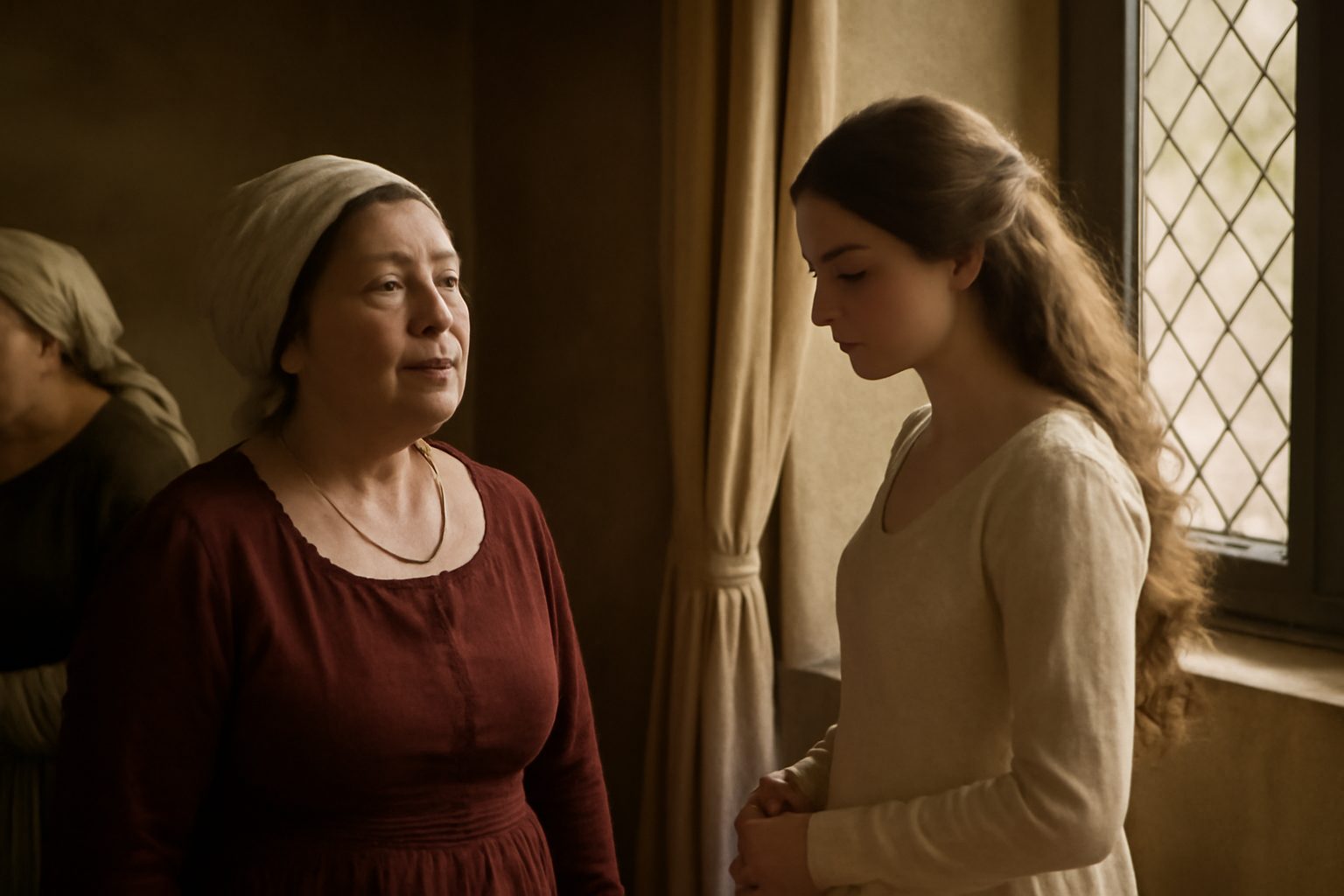
In Act 1, Scene 3 of Romeo and Juliet, Lady Capulet and the Nurse discuss Paris as a potential suitor for Juliet. The Nurse enthusiastically praises Paris, comparing him to a flawless figure molded from wax, suggesting he is the ideal man. This moment highlights the Nurse's playful yet earnest admiration for Paris, contrasting with Juliet's later disinterest in the arranged match.
Nurse: "As all the world--why, he's a man of wax."
In modern day english, we would say:
Nurse is saying that Paris is so perfect he could be a model, like a man made of wax.
Frequently Asked Questions
What does the Nurse mean when she says Romeo is a man of wax?
She means that Romeo is as perfect and handsome as a wax statue.
Connections to other verses:
Connections to "As all the world--why, he's a man of wax."
The verse "As all the world--why, he's a man of wax." is spoken by the Nurse in praise of Paris, describing him as an ideal, handsome man, almost like a perfect sculpture. This line connects thematically and contextually to several other verses in the same scene, which collectively build the case for Paris as a worthy suitor and highlight the Nurse's and Lady Capulet's perspectives on marriage and beauty.
Physical and Idealized Descriptions of Paris
The description of Paris as a "man of wax" (a metaphor for perfection) is immediately reinforced by the Nurse's subsequent exclamation, "Nay, he's a flower; in faith, a very flower.", emphasizing his youth and beauty. Lady Capulet further elevates this by stating "Verona's summer hath not such a flower.", suggesting that Paris is unmatched in Verona. These verses collectively idealize Paris, presenting him as the epitome of desirability.
Marriage Proposal and Social Expectations
This praise ties directly into the scene's central theme: the proposal of marriage to Juliet. Lady Capulet introduces the subject with "The valiant Paris seeks you for his love.", positioning the "man of wax" as a serious contender. She encourages Juliet to "Read o'er the volume of young Paris' face" and find "delight writ there with beauty's pen", framing his appearance as a book to be admired—a metaphor that extends the wax figure idea into a readable, perfect text. The connection between external beauty and marital worth is underscored when Lady Capulet notes that by marrying him, Juliet would "share all that he doth possess" and become no less, but rather "bigger; women grow by men."
Contrast with the Nurse's Earthy Humor
The Nurse's idealized description of Paris contrasts with her earlier, more humorous and visceral recollections of Juliet's childhood, such as her memory of Juliet falling and the Nurse's husband joking, "Yea,' quoth my husband,'fall'st upon thy face?". This shift from earthy anecdotes to lofty praise highlights the Nurse's role in both nurturing and now promoting Juliet's socially advantageous marriage.
Juliet's Reserved Response
Despite the effusive praise for Paris, Juliet's response is measured and non-committal. When asked "What say you? can you love the gentleman?", she replies cautiously with "I'll look to like, if looking liking move", indicating that she will try to like him based on his appearance (the "man of wax" quality), but makes no promises. This introduces a subtle tension between the external idealization of Paris and Juliet's internal, yet-to-be-awakened feelings.