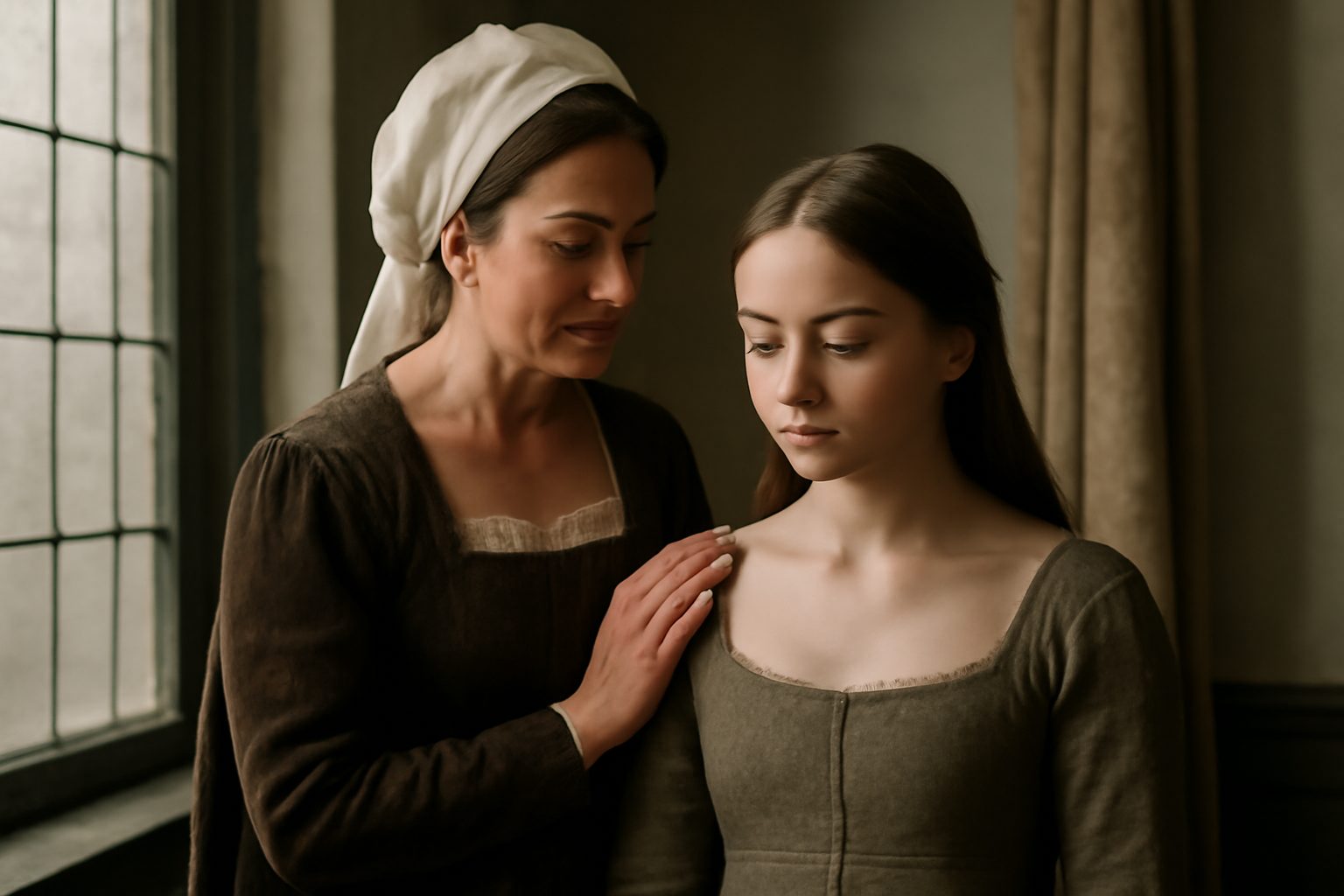
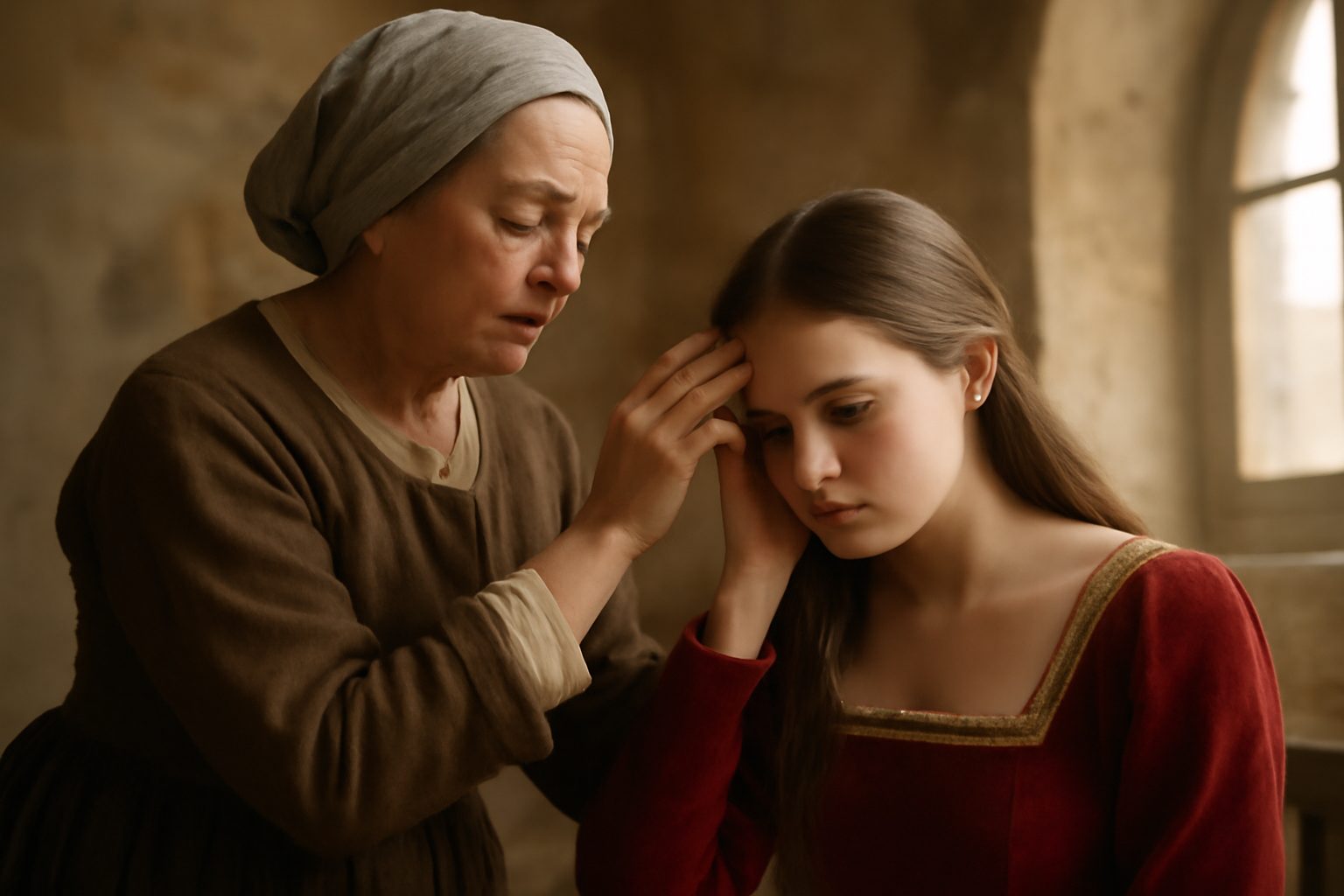
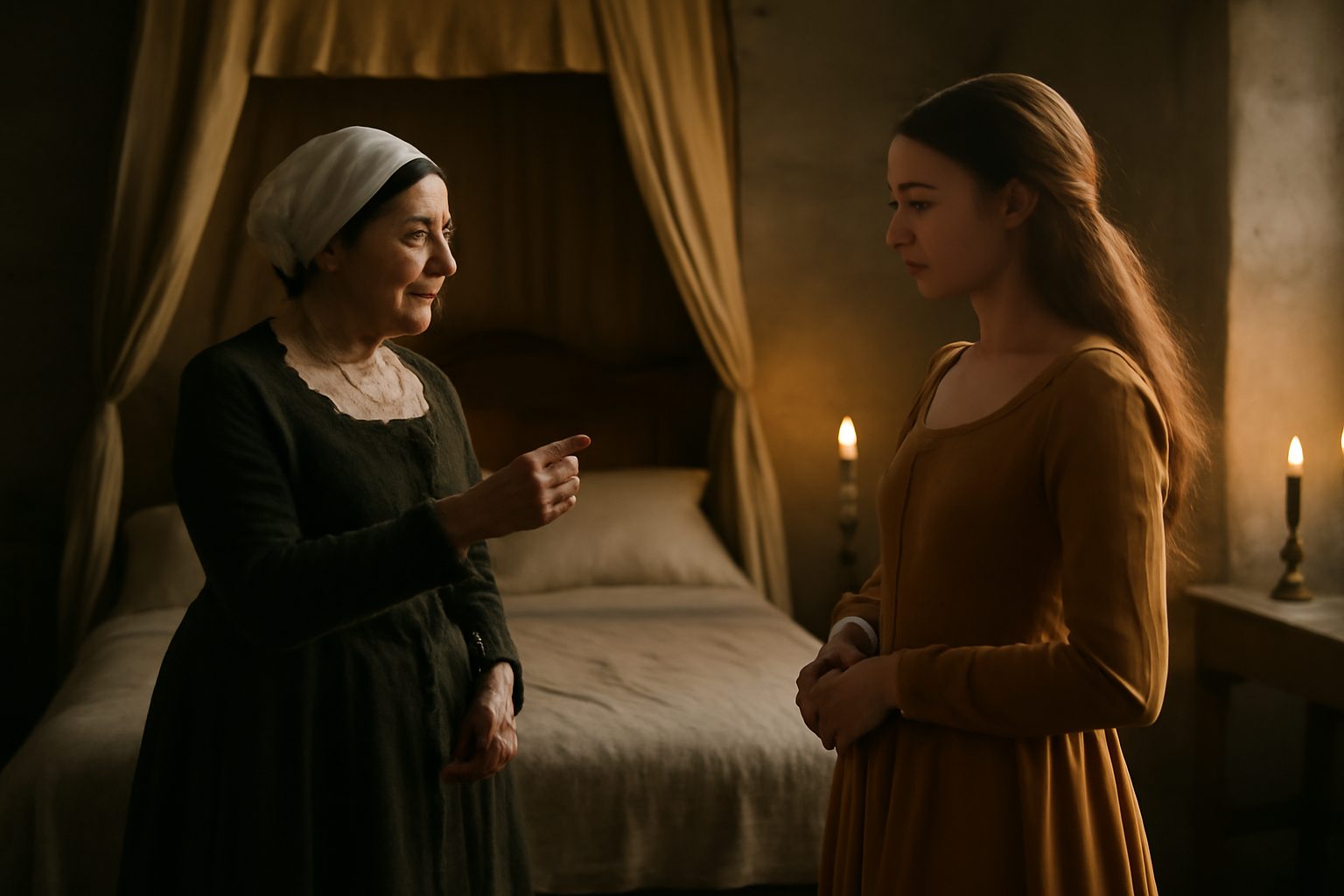
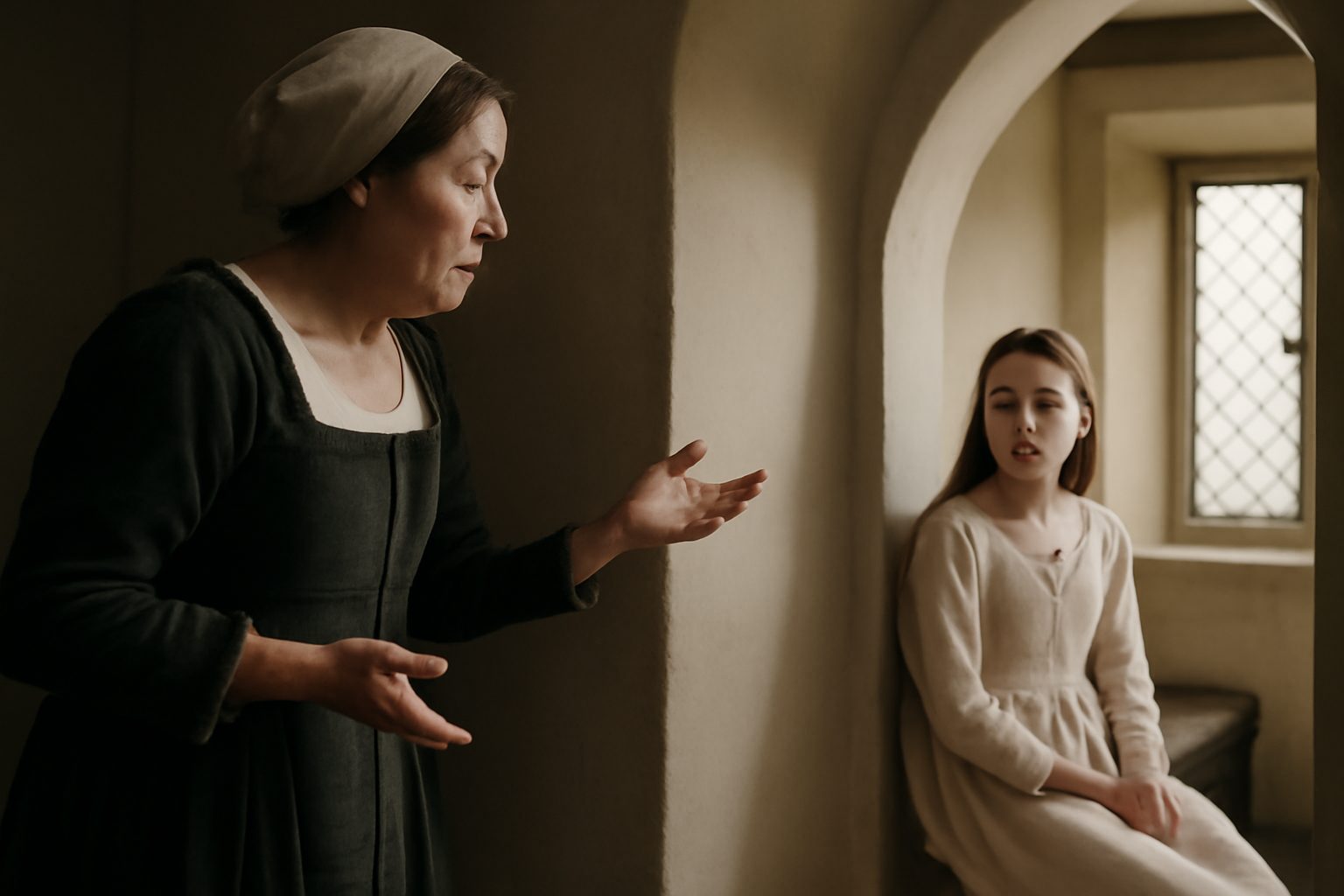
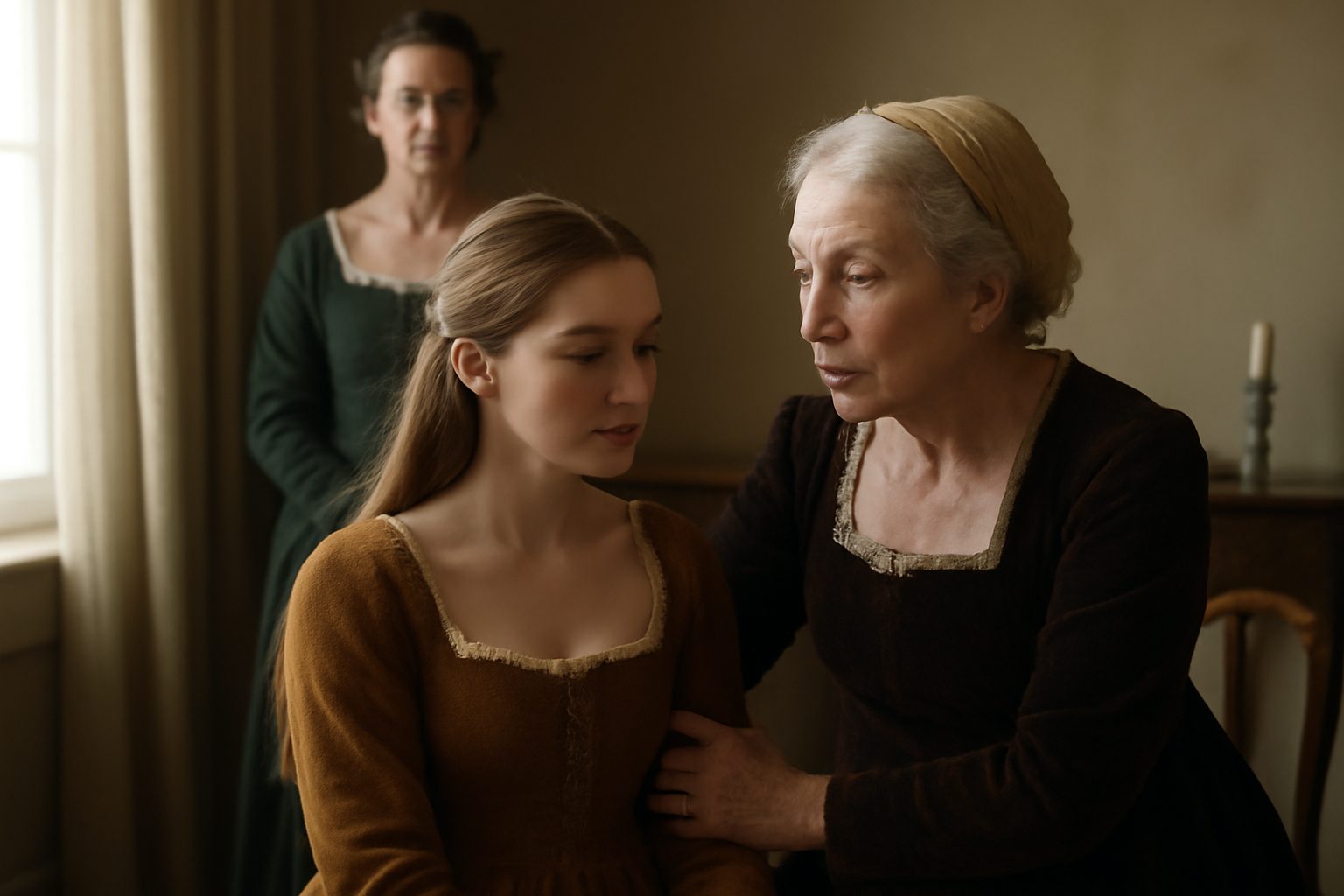
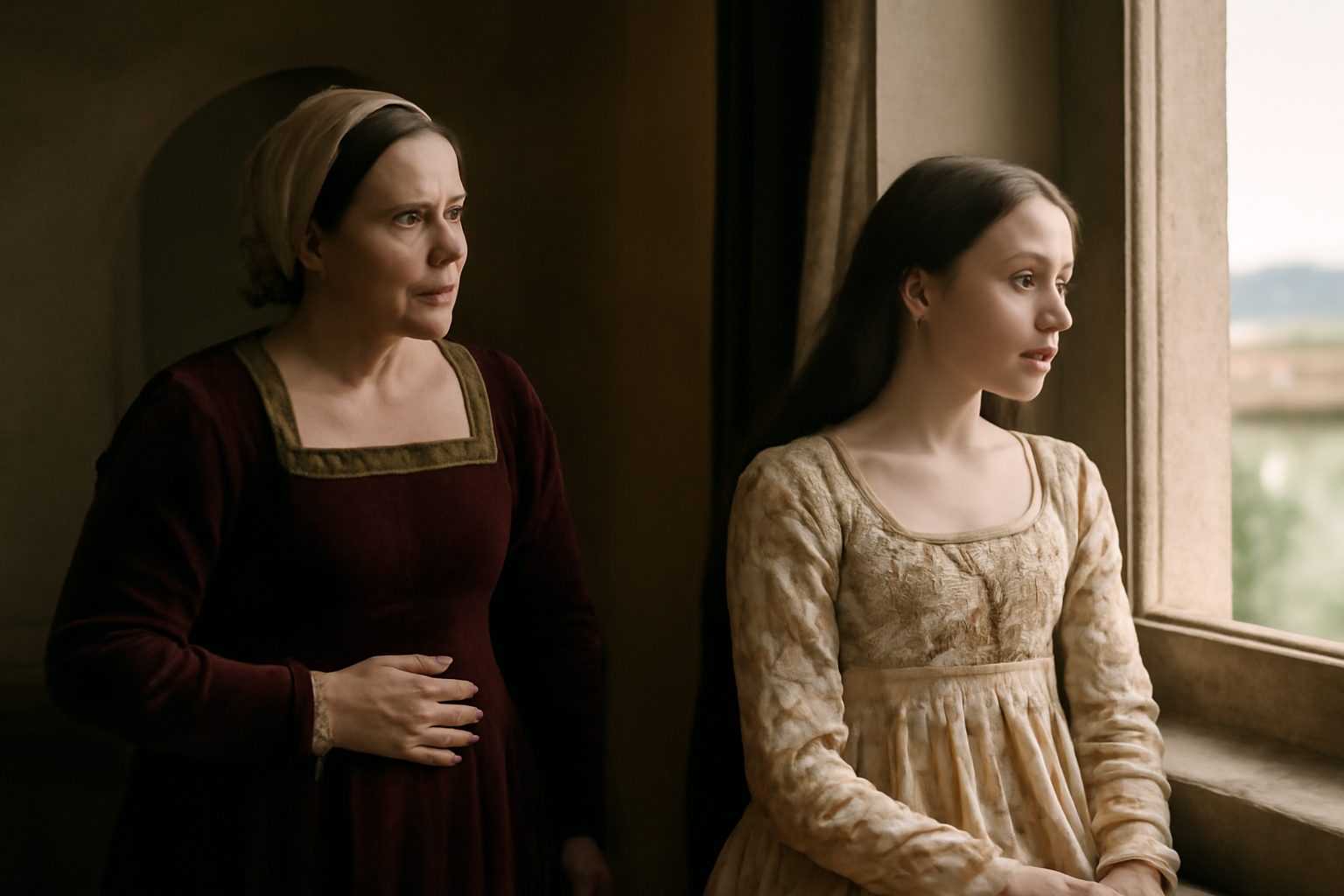
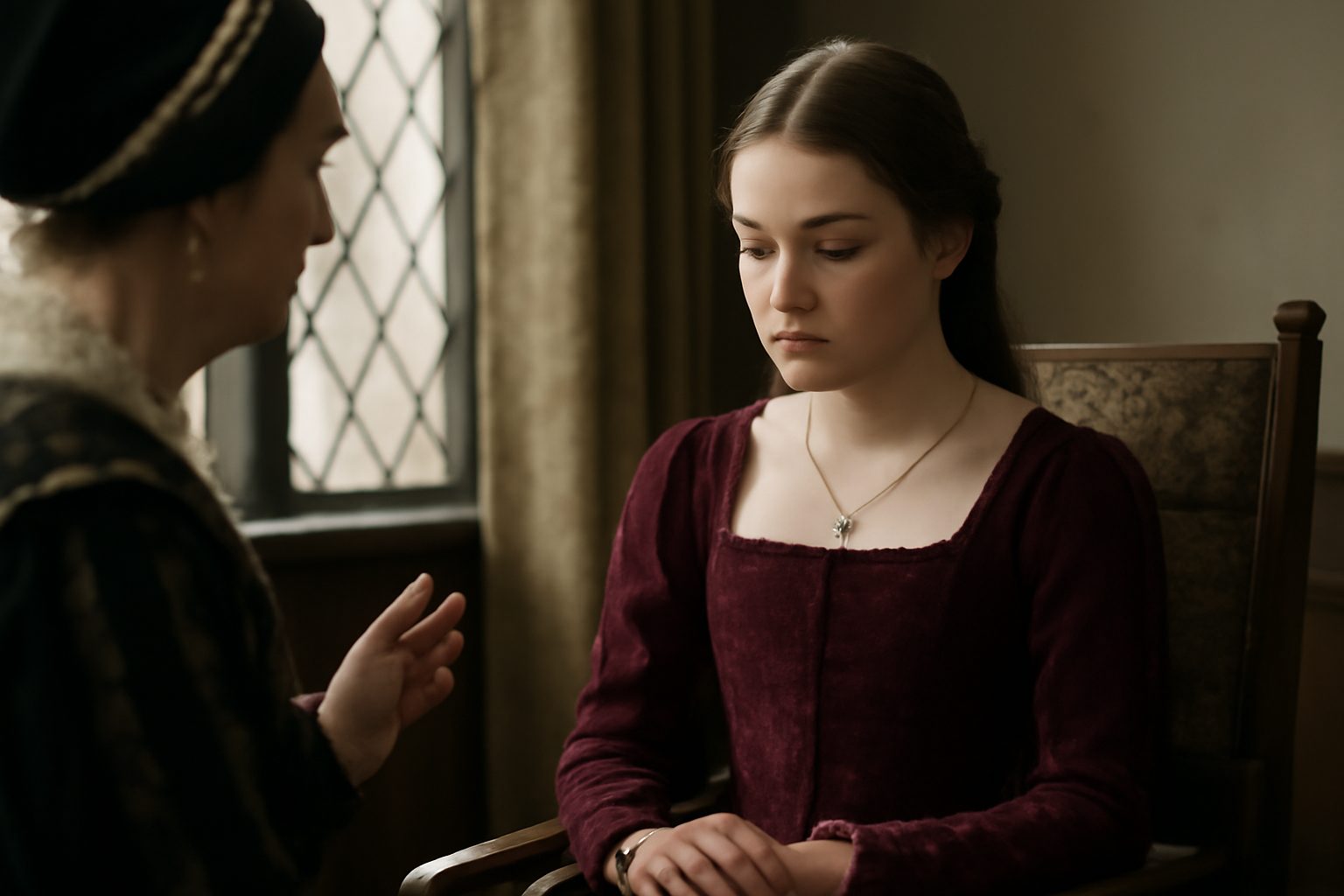
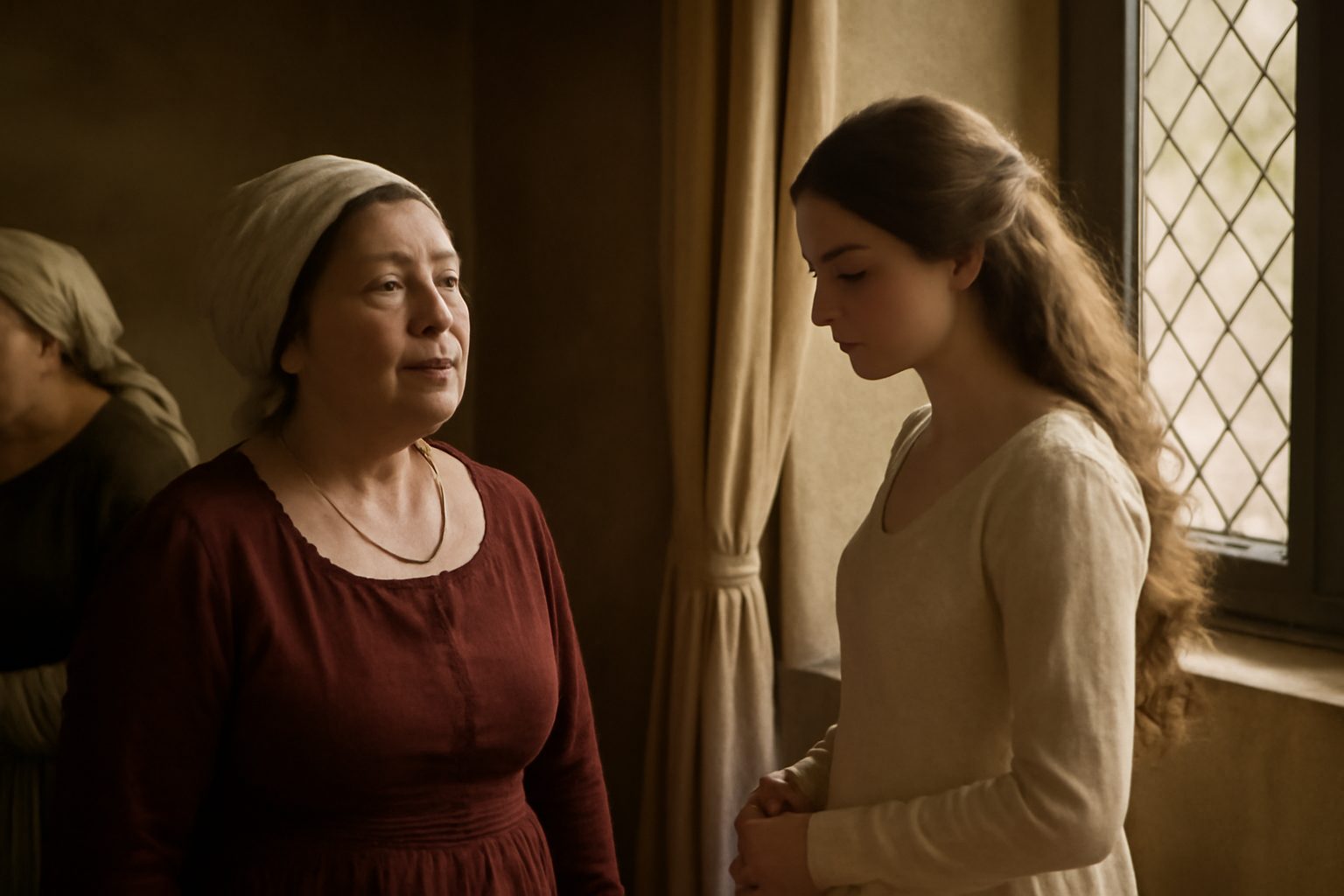
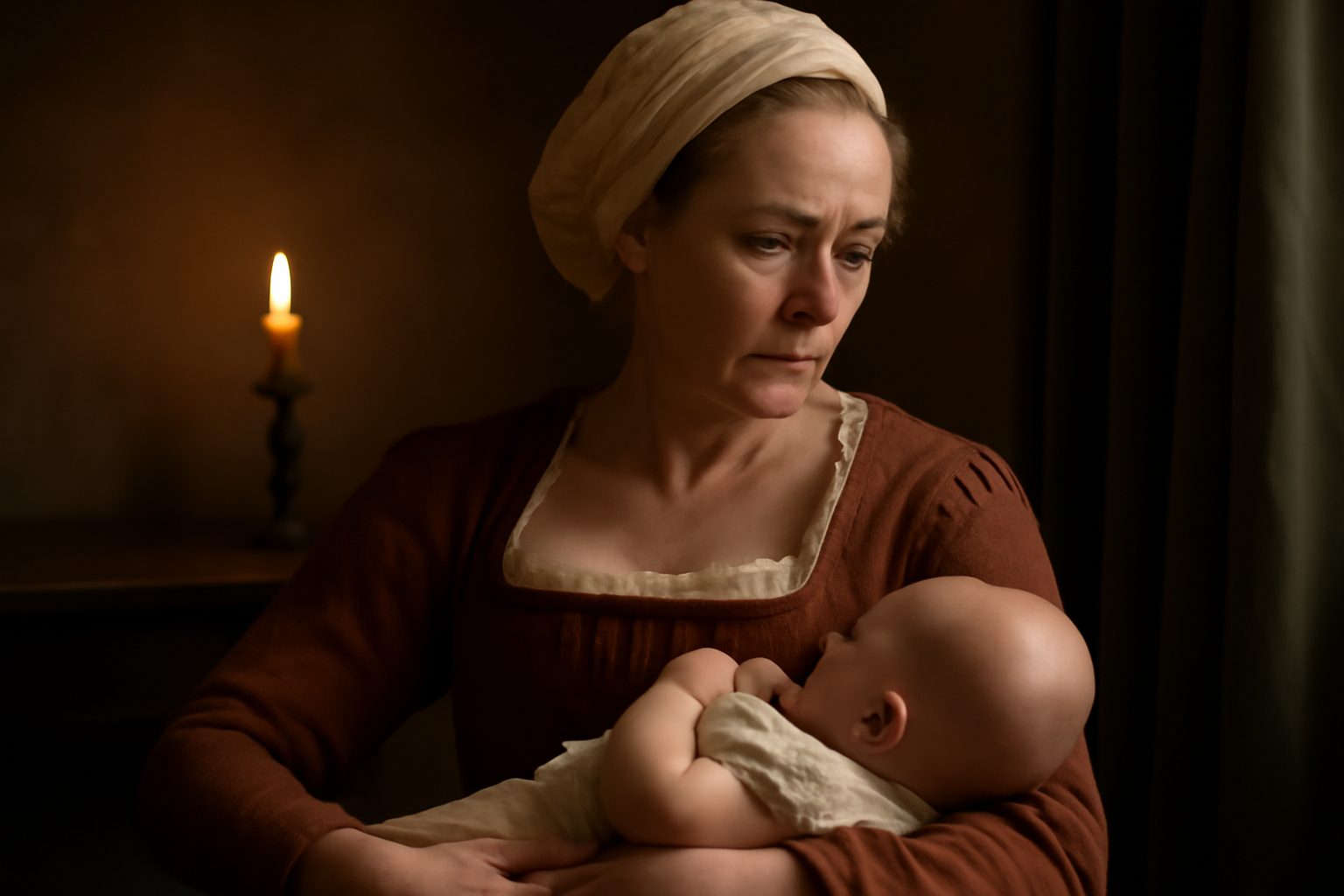
In Act 1, Scene 3 of Romeo and Juliet, Lady Capulet speaks to her daughter Juliet about the prospect of marriage to Paris. This line refers to a specific day—the night of the Capulets' feast—which will later become fateful for the young lovers. The mention of this day subtly foreshadows the pivotal events that unfold when Romeo and Juliet first meet.
Nurse: "Of all the days of the year, upon that day:"
In modern day english, we would say:
Out of every day in the year, on that specific day.
Frequently Asked Questions
What is the nurse referring to when she says 'Of all the days of the year, upon that day'?
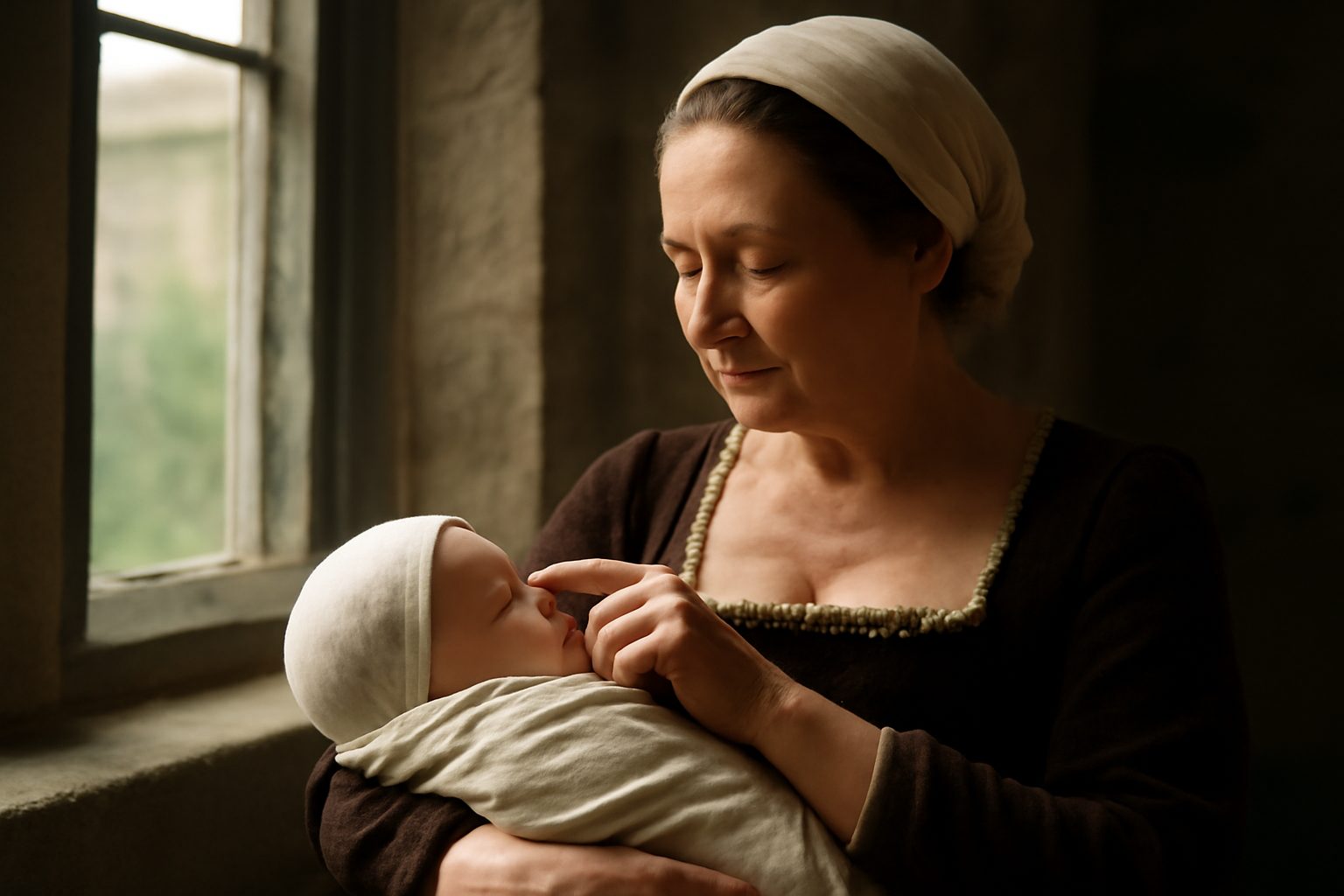
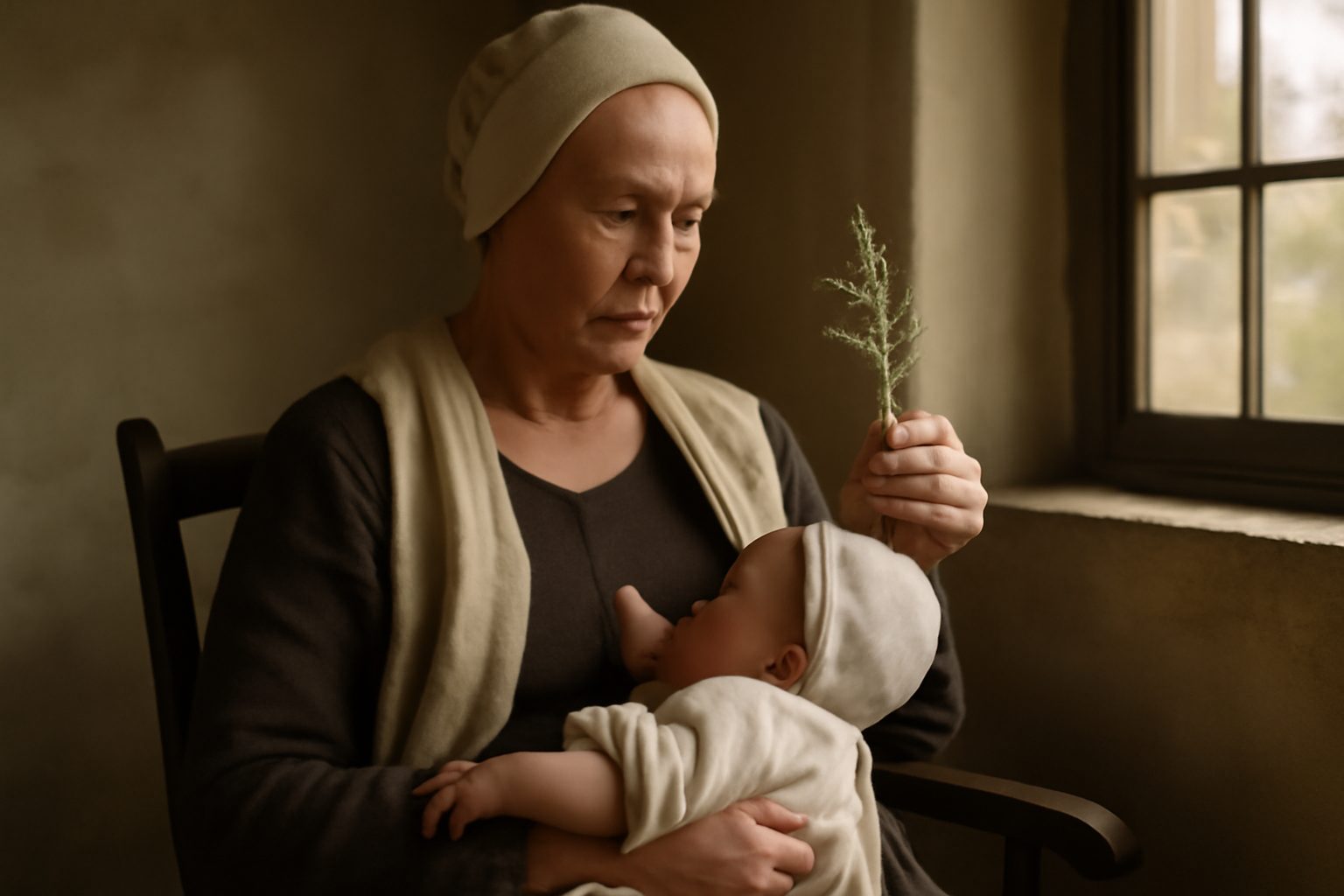
She is talking about the specific day Juliet was weaned as a baby.
Connections to other verses:
Connections to "Of all the days of the year, upon that day:"
The verse "Of all the days of the year, upon that day:" refers to a specific, memorable day in Juliet's infancy, as recounted by the Nurse. This line is part of a larger narrative about Juliet's early childhood, establishing her age and the Nurse's deep, personal connection to her.
Connection to Juliet's Age and Lammas-tide
This verse is directly linked to "Come Lammas-eve at night shall she be fourteen." and "On Lammas-eve at night shall she be fourteen;", which specify that Juliet will soon turn fourteen on Lammas Eve. The Nurse's recollection of "that day" ties into the precise timing of Juliet's birth and weaning, emphasizing her youth and the passage of time.
Connection to the Earthquake and Timeline
The Nurse connects this day to a significant event, the earthquake, mentioned in "Tis since the earthquake now eleven years;" and "And since that time it is eleven years;". This establishes a timeline, showing that the day of Juliet's weaning occurred around the time of the earthquake, eleven years prior.
Connection to the Weaning Incident
The verse is part of the Nurse's vivid memory of Juliet's weaning, detailed in "And she was wean'd,--I never shall forget it,--" and "For I had then laid wormwood to my dug,". The bitter taste of wormwood caused Juliet to stop nursing, a moment the Nurse fondly recalls.
Connection to Juliet's Early Actions
The Nurse's story continues with Juliet's reaction to the weaning, as seen in "When it did taste the wormwood on the nipple" and "Of my dug and felt it bitter, pretty fool,", showing her early independence and the Nurse's affectionate amusement.
Connection to the Jest and Falling
The narrative includes a humorous incident where Juliet falls, referenced in "Yea,' quoth he, 'dost thou fall upon thy face?" and "Yea,' quoth my husband,'fall'st upon thy face?". This jest adds to the personal, familial tone of the Nurse's memories.
Connection to Juliet's Response
Juliet's early ability to speak is highlighted in "The pretty wretch left crying and said 'Ay.'" and "And, pretty fool, it stinted and said 'Ay.'", showing her precociousness even as a toddler.
Overall Significance
These connections illustrate the Nurse's role as a maternal figure and provide background on Juliet's character, emphasizing her youth and the familial bonds that will later contrast with the tragic events of the play. The specific day recalled serves as a anchor for these memories, enriching the scene's depth.