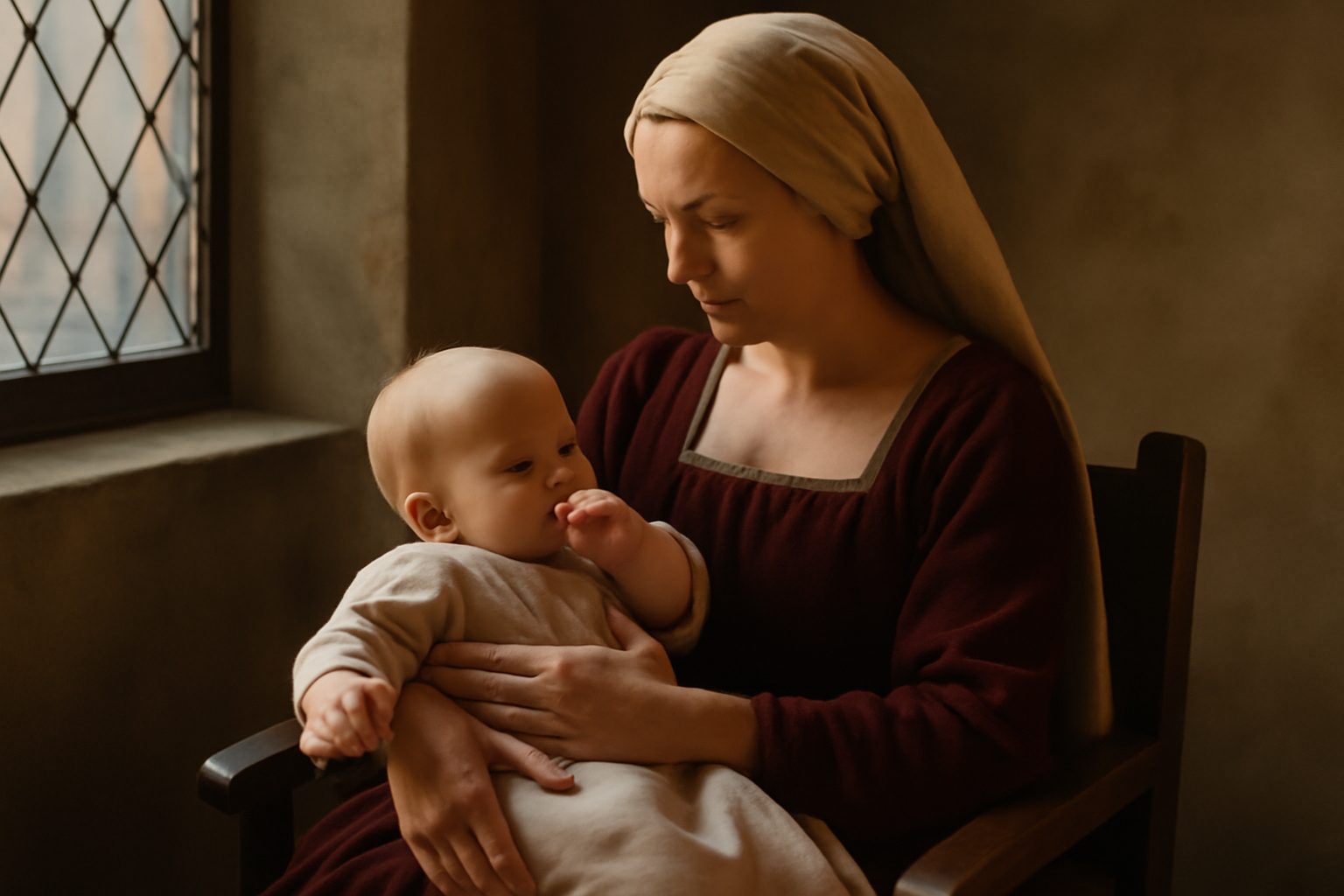
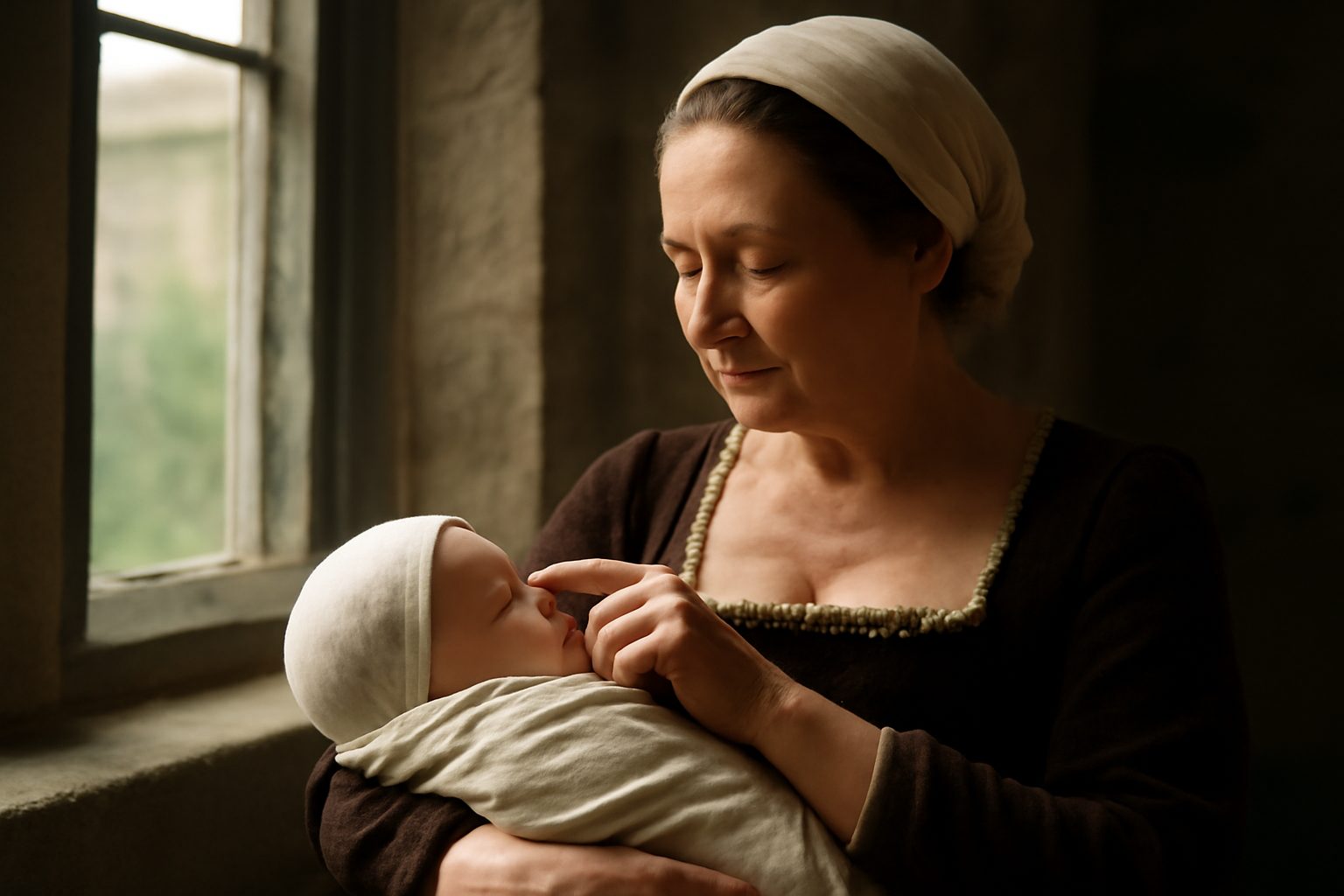
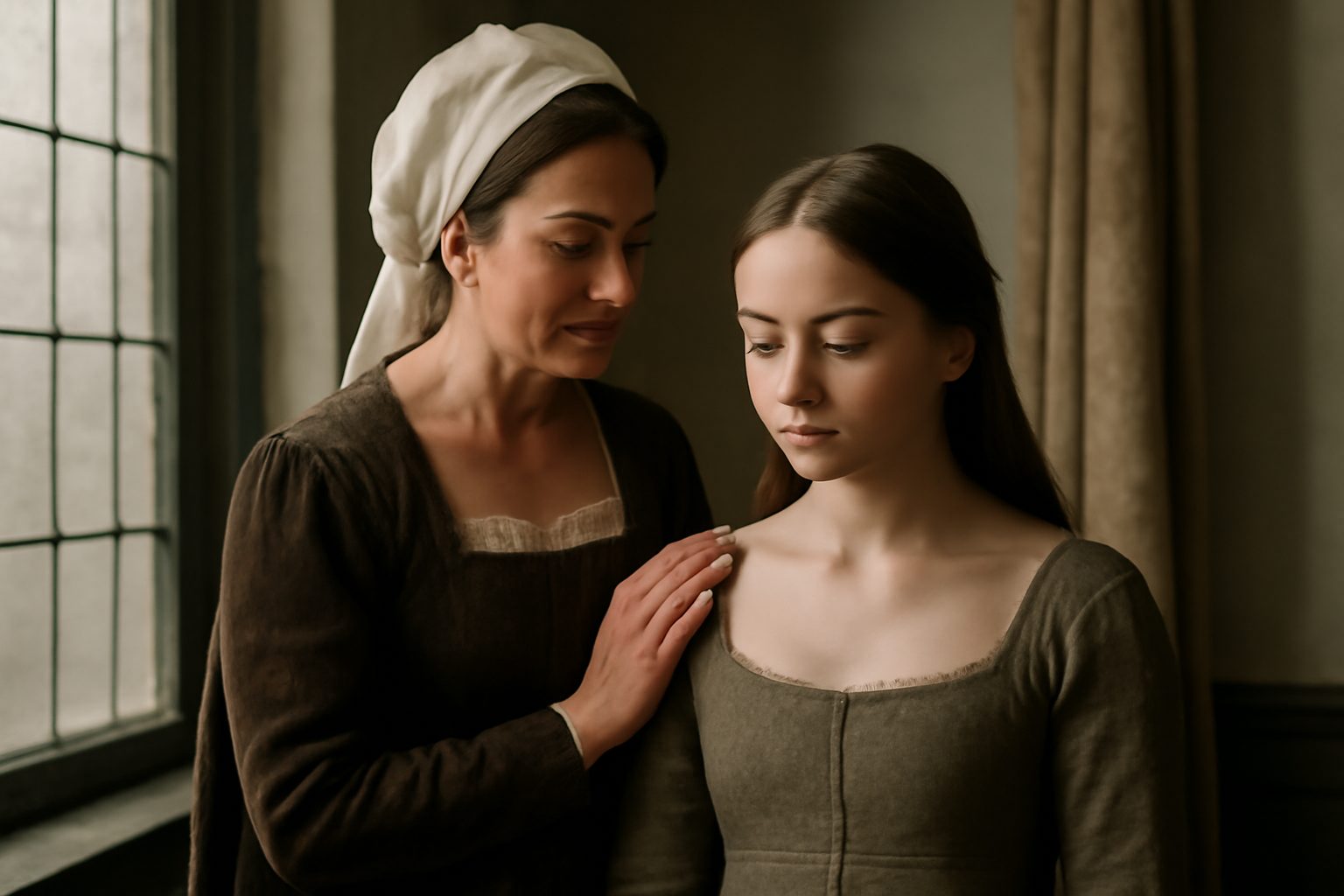
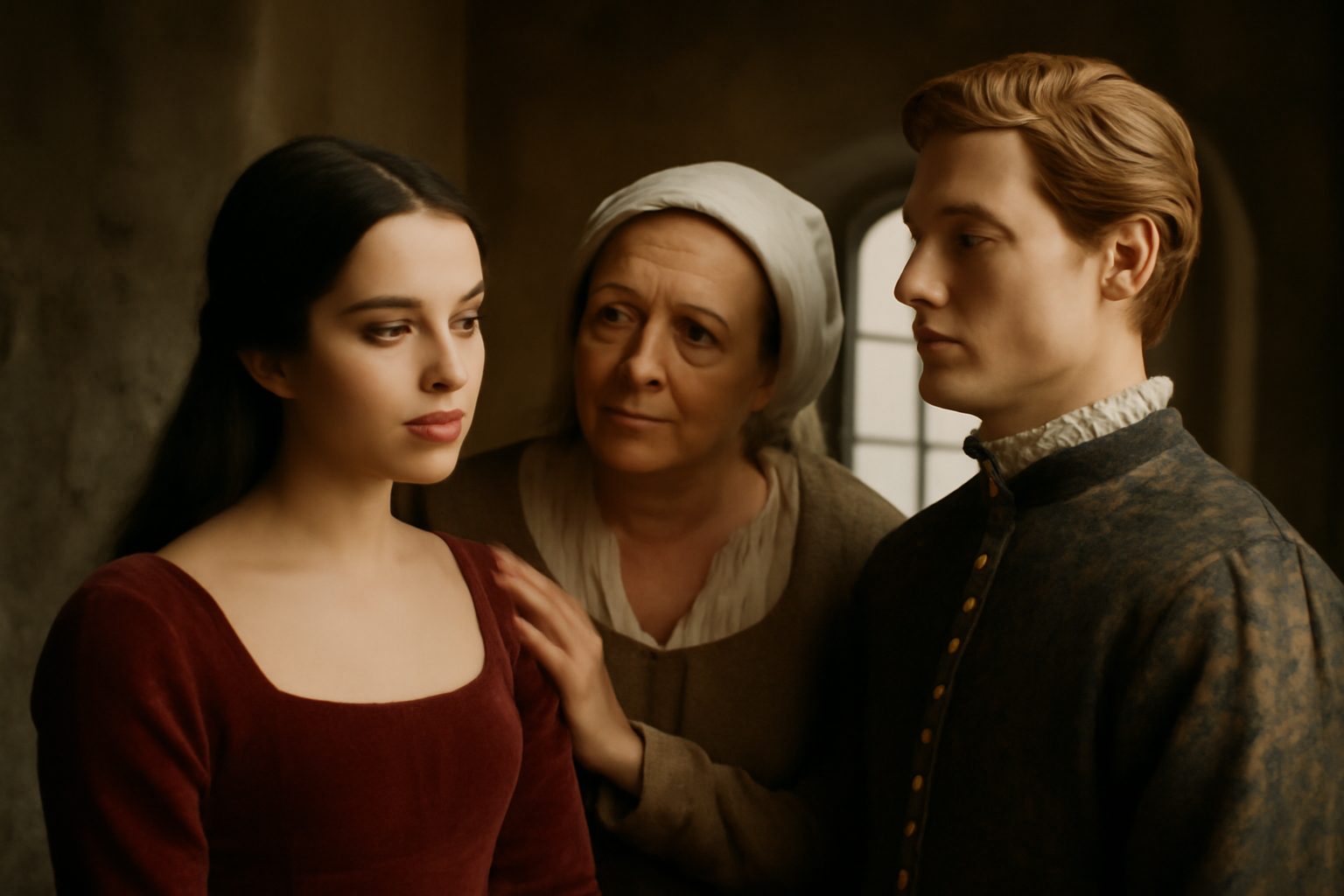
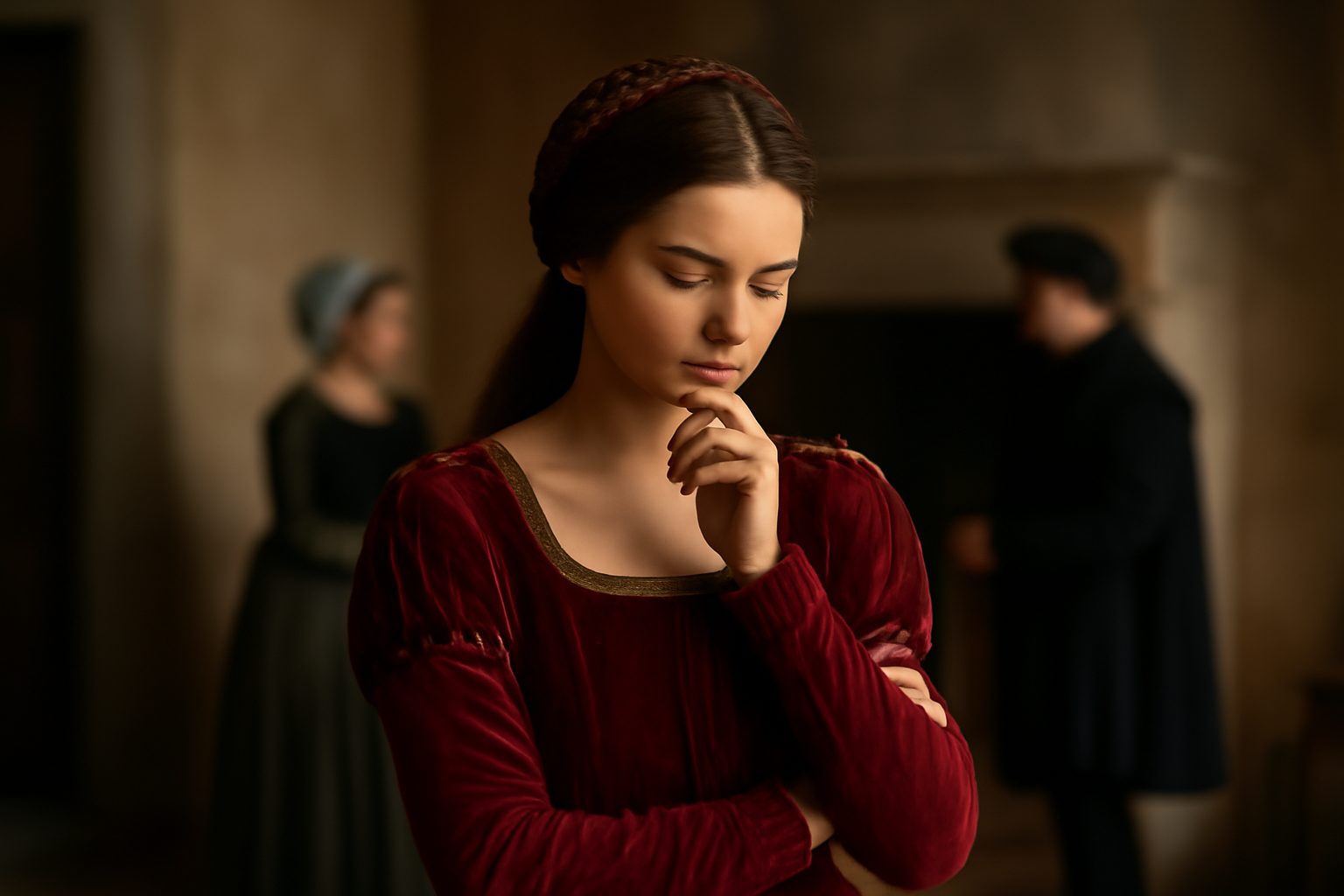
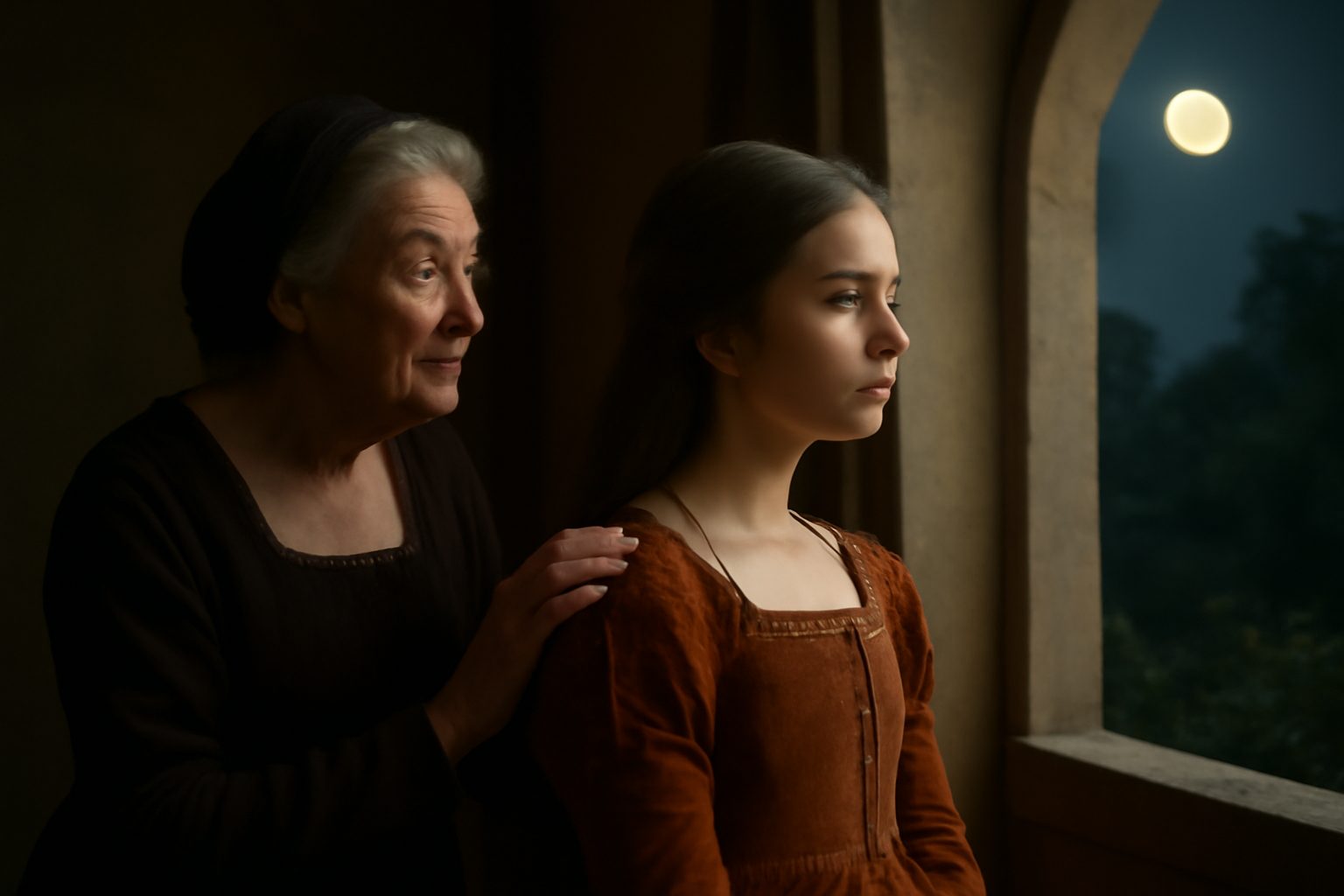
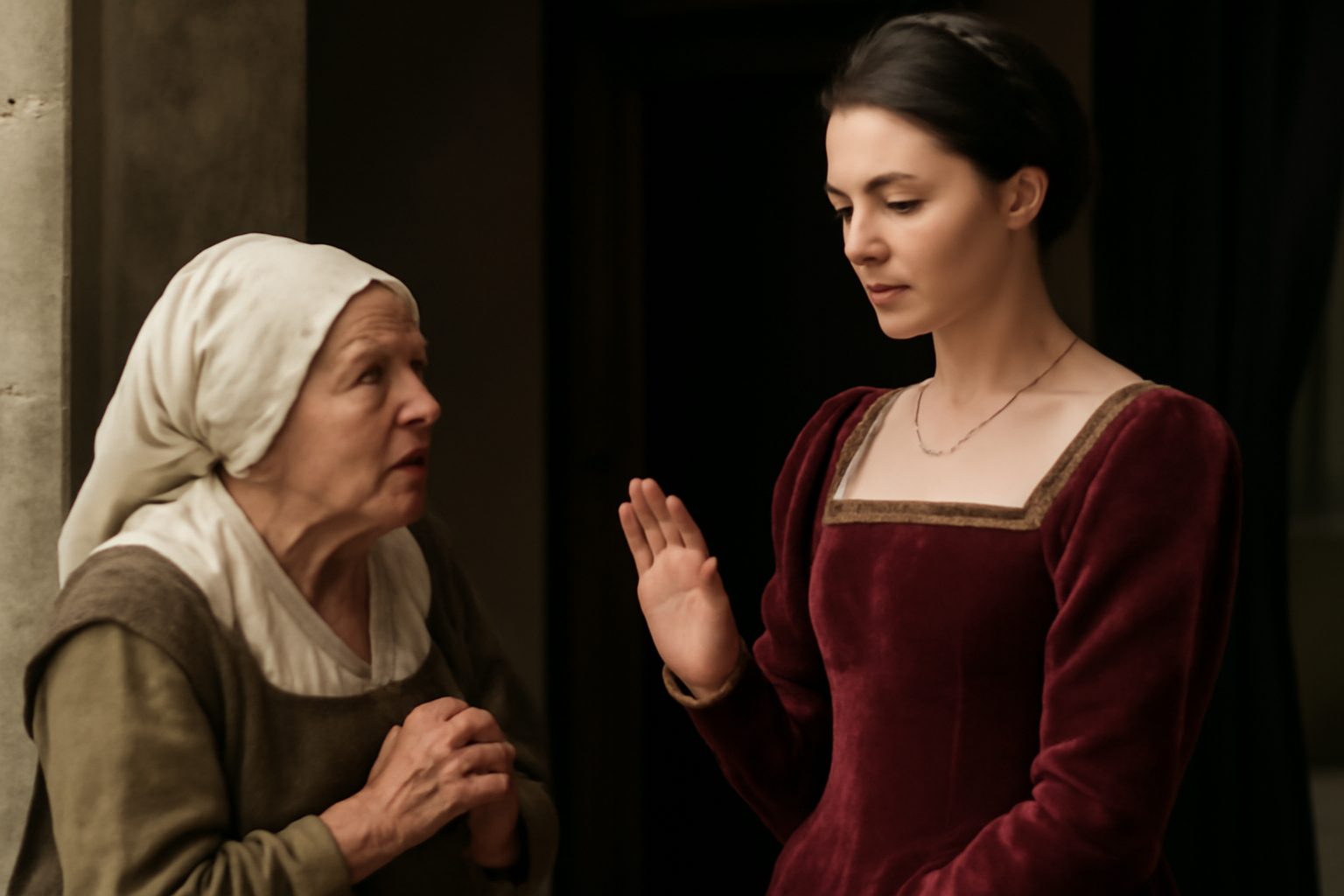
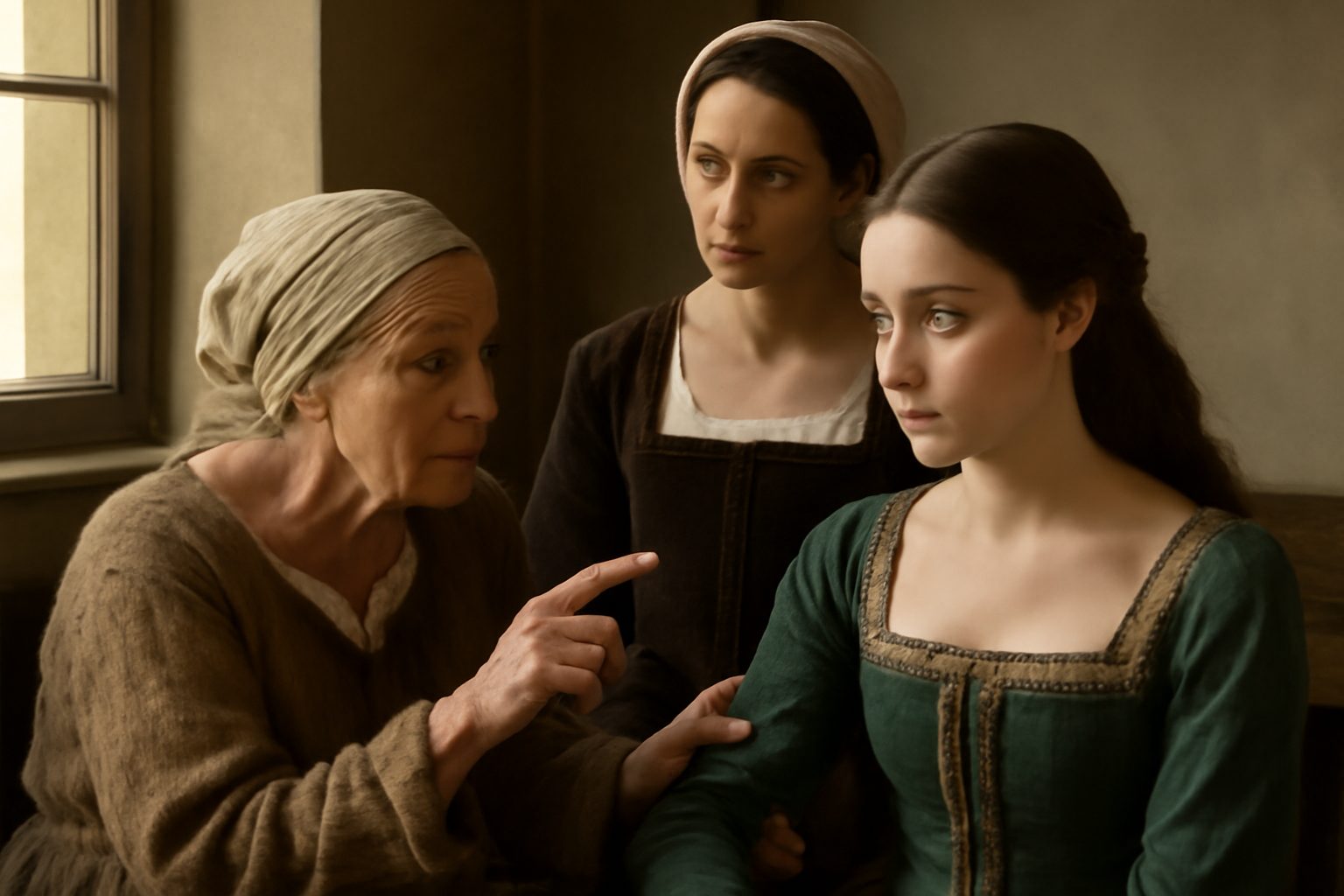
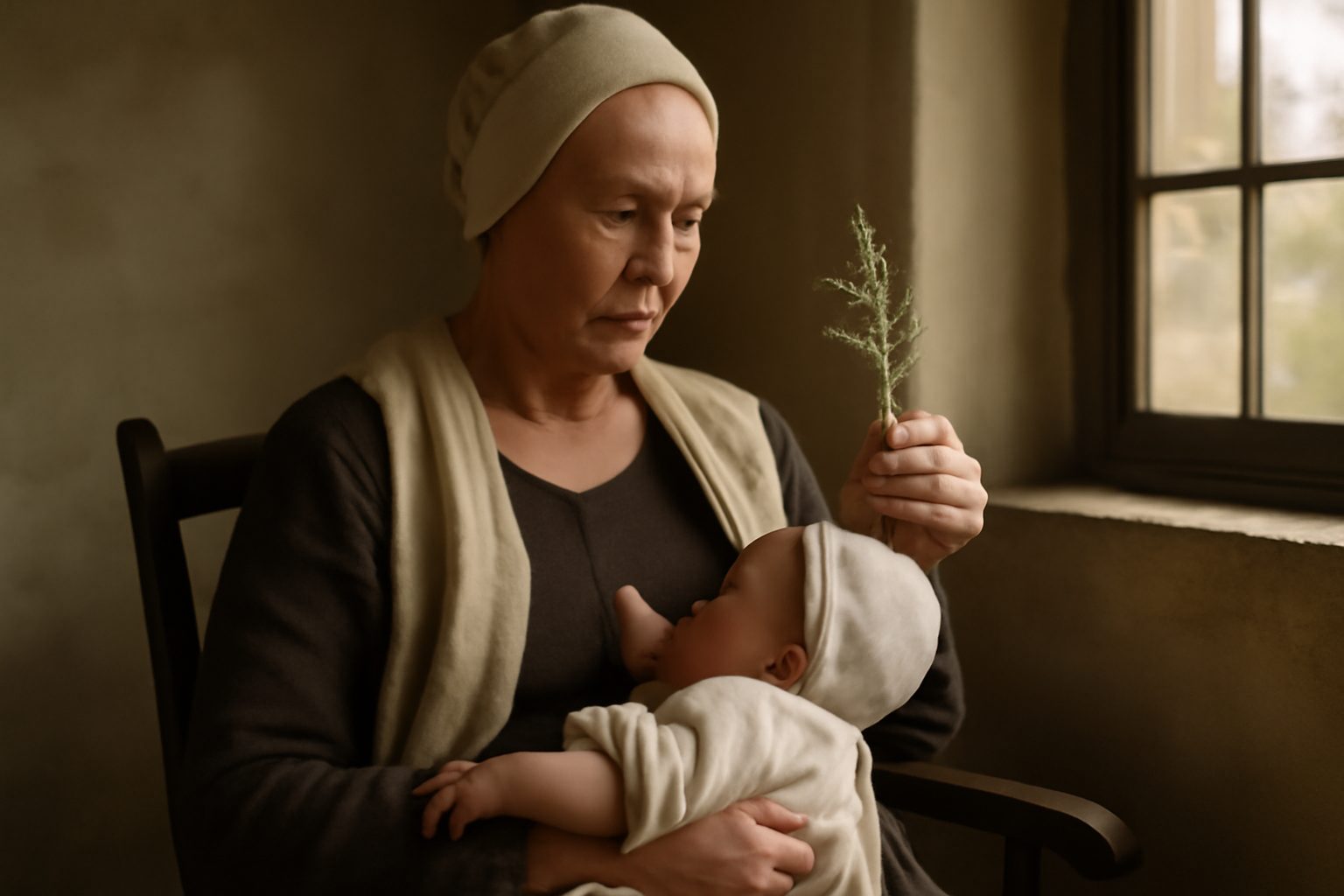
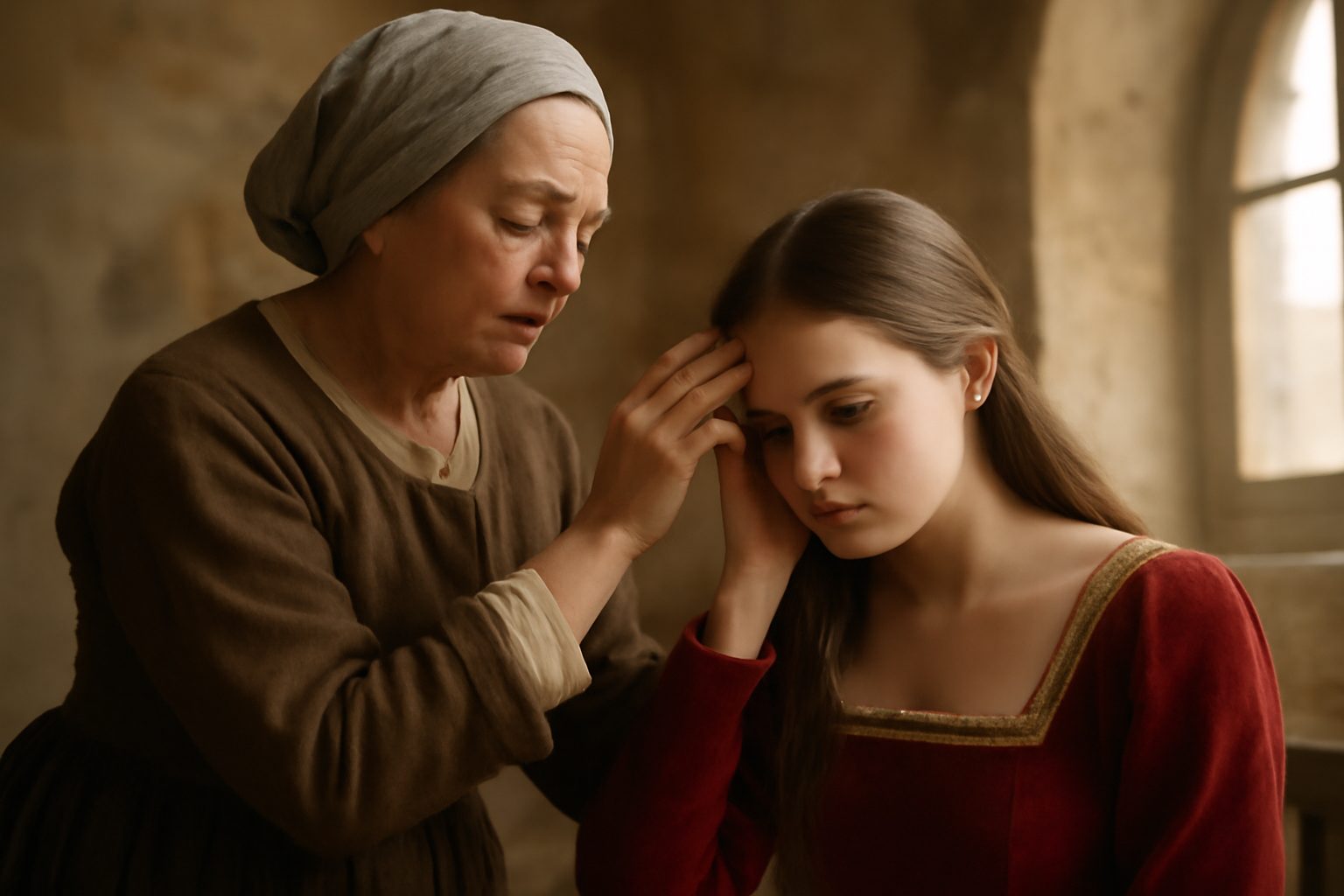
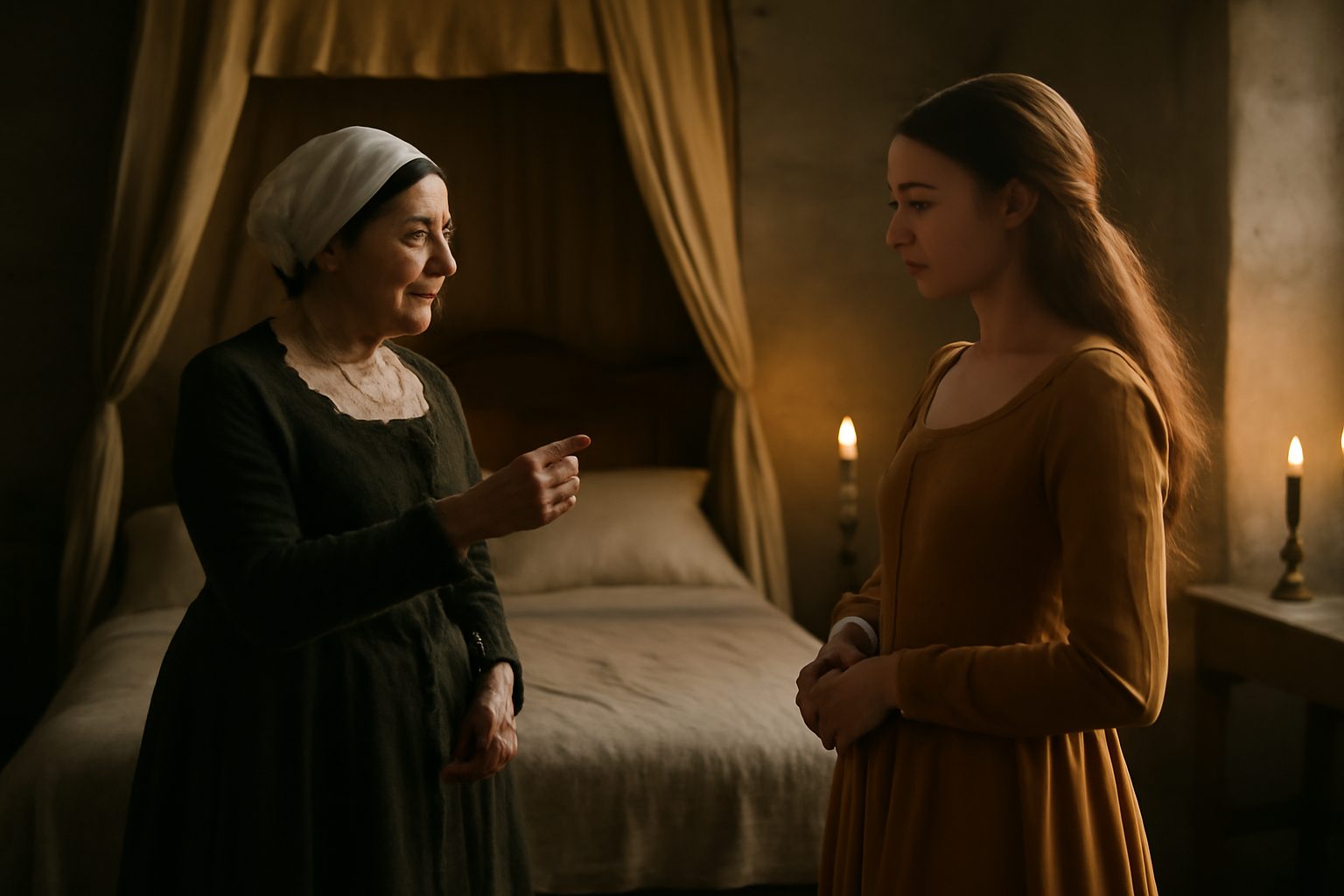
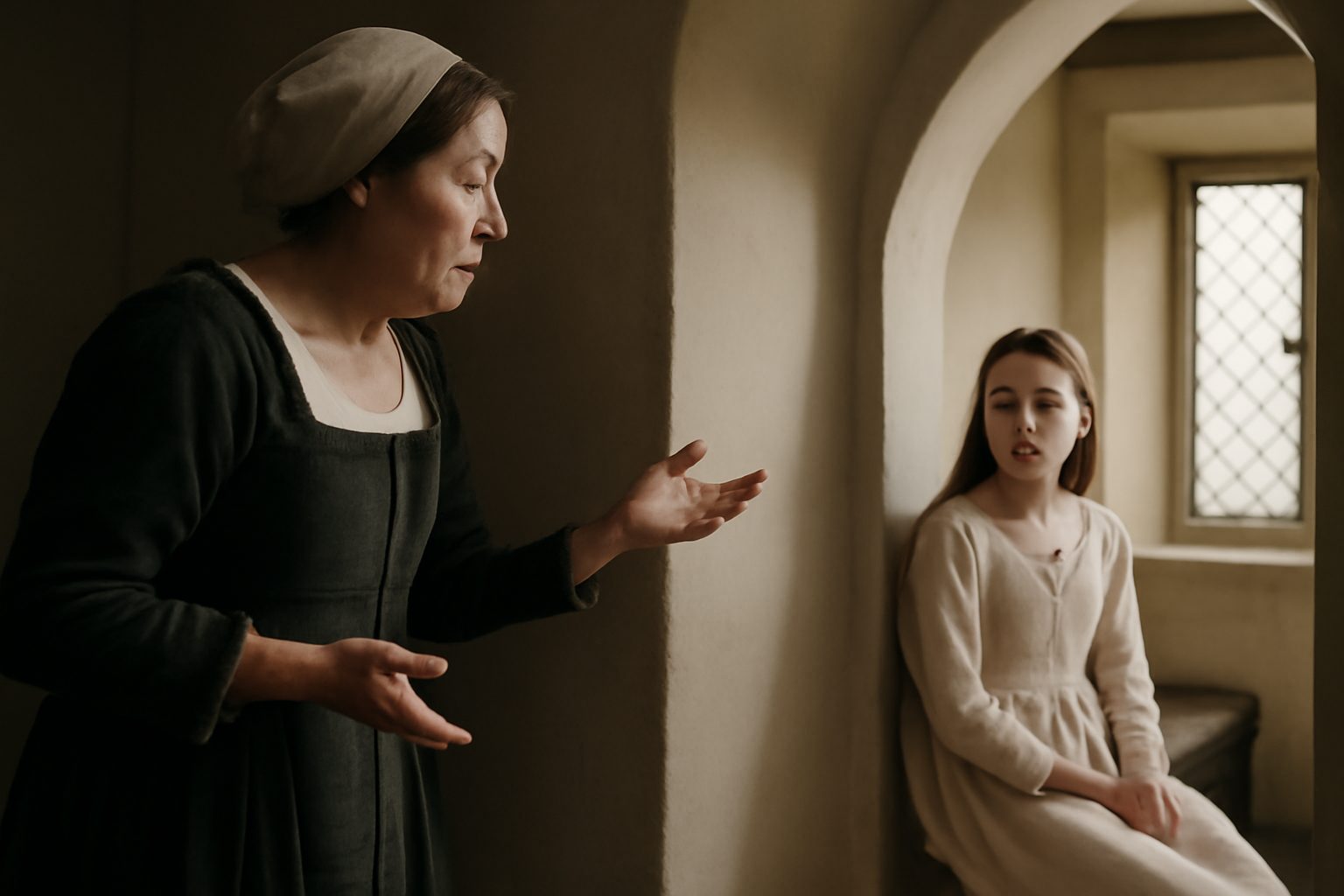
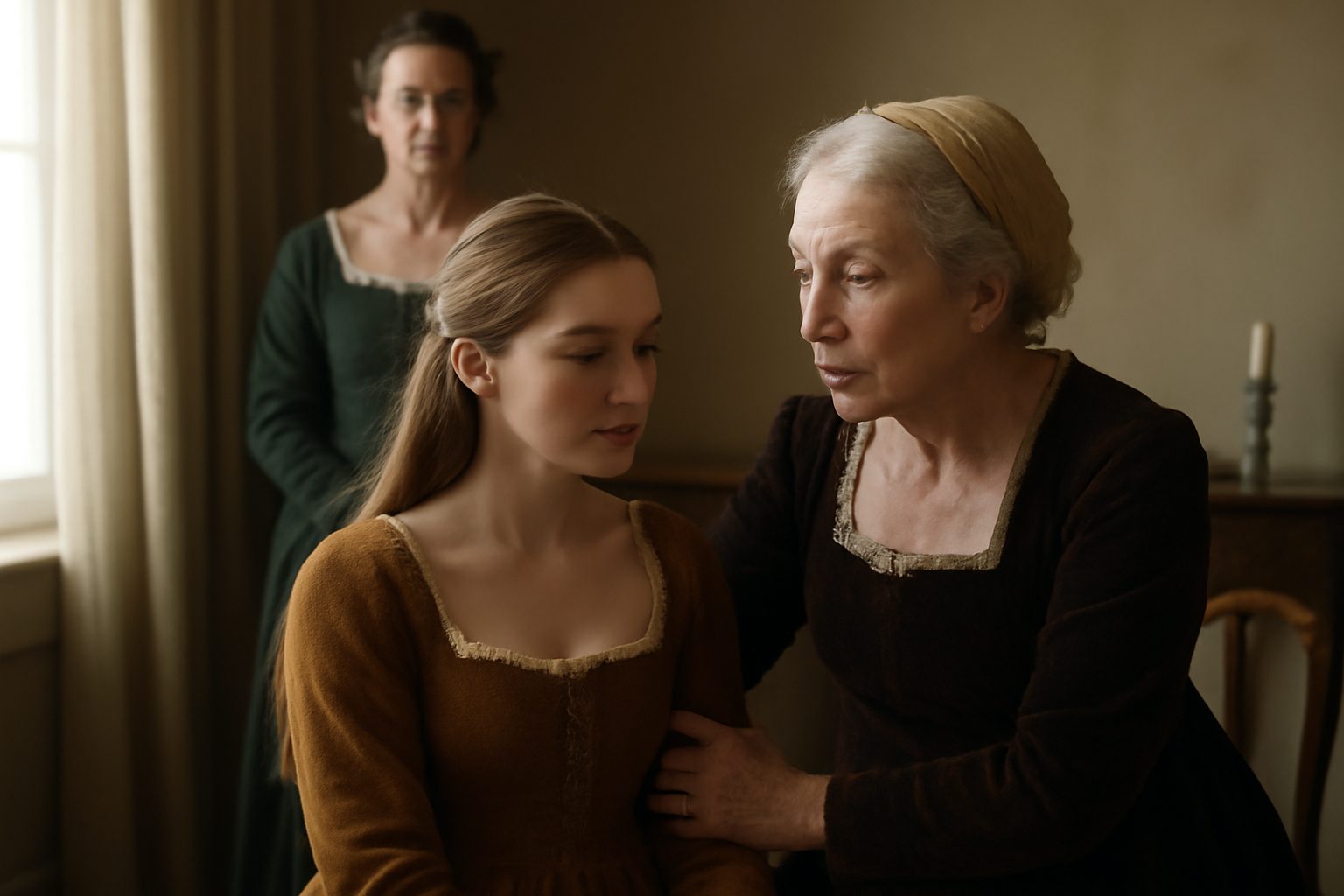
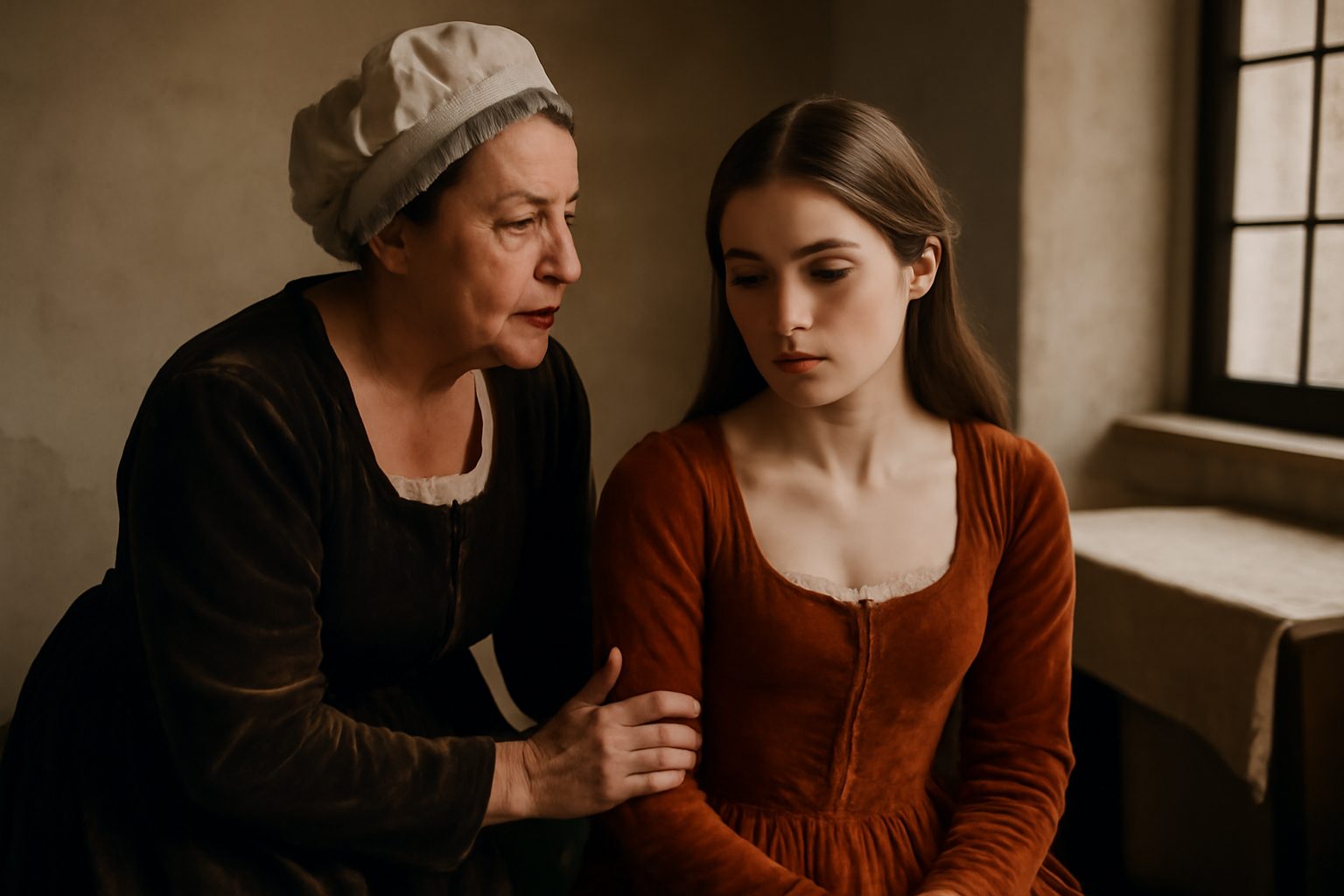
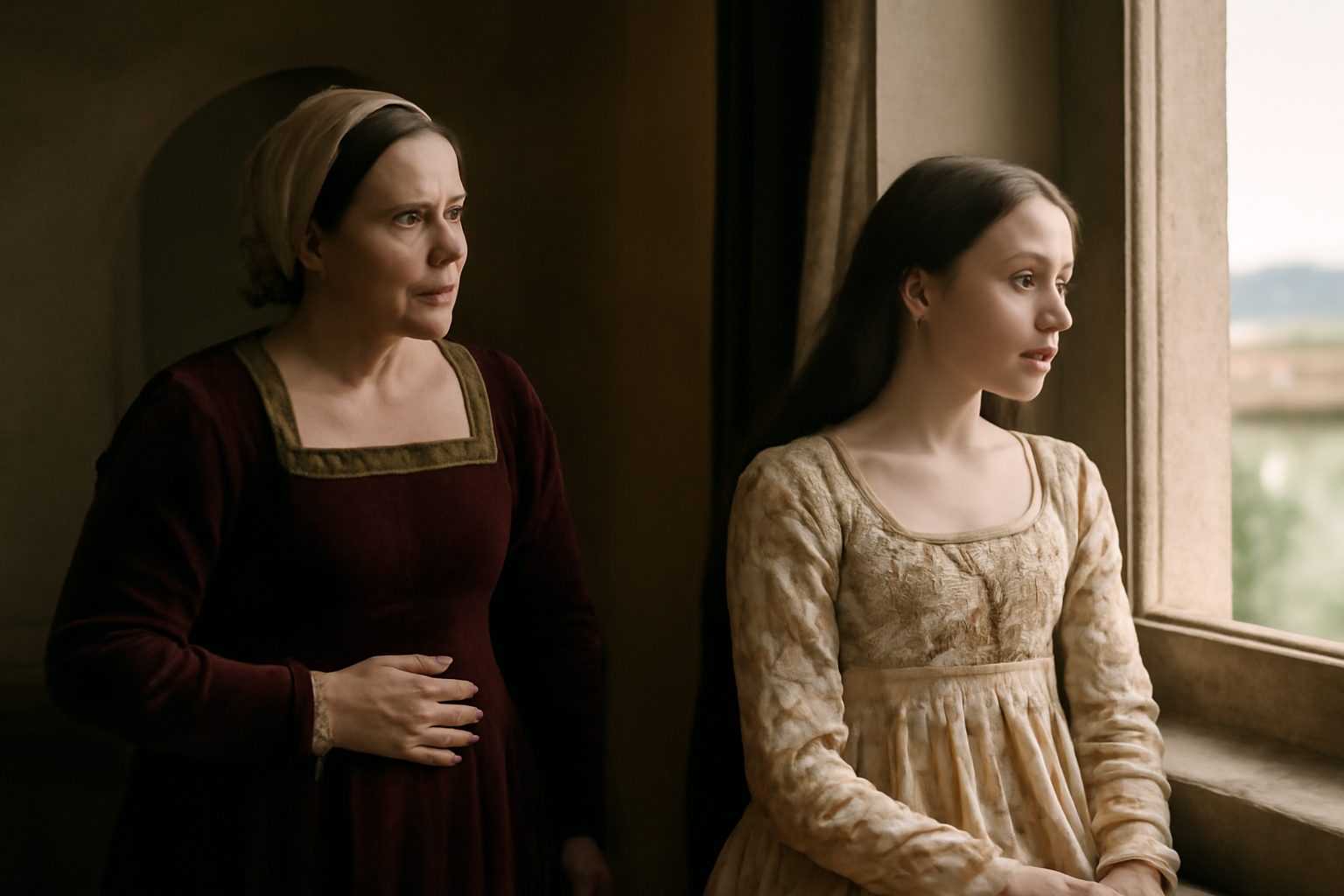
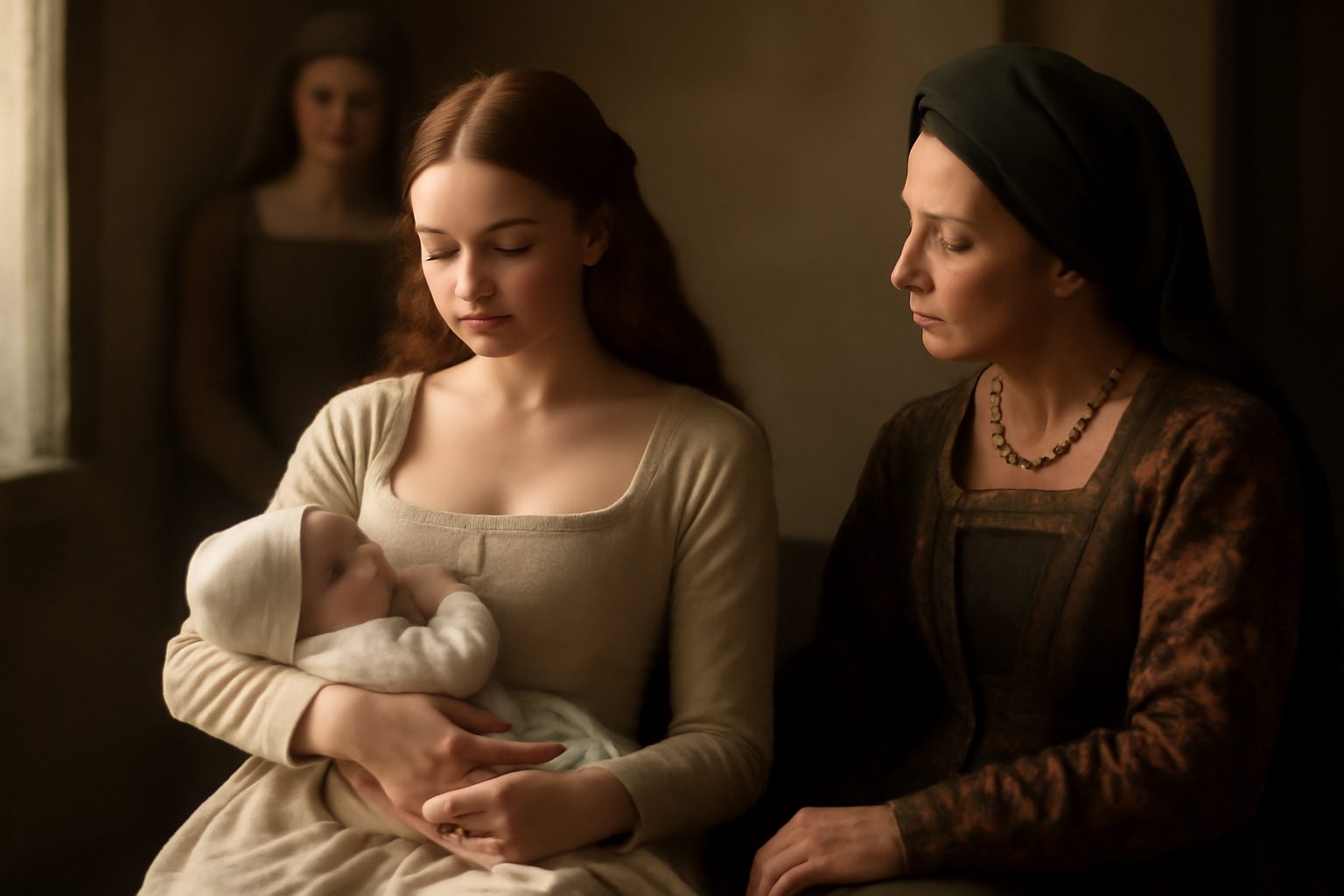
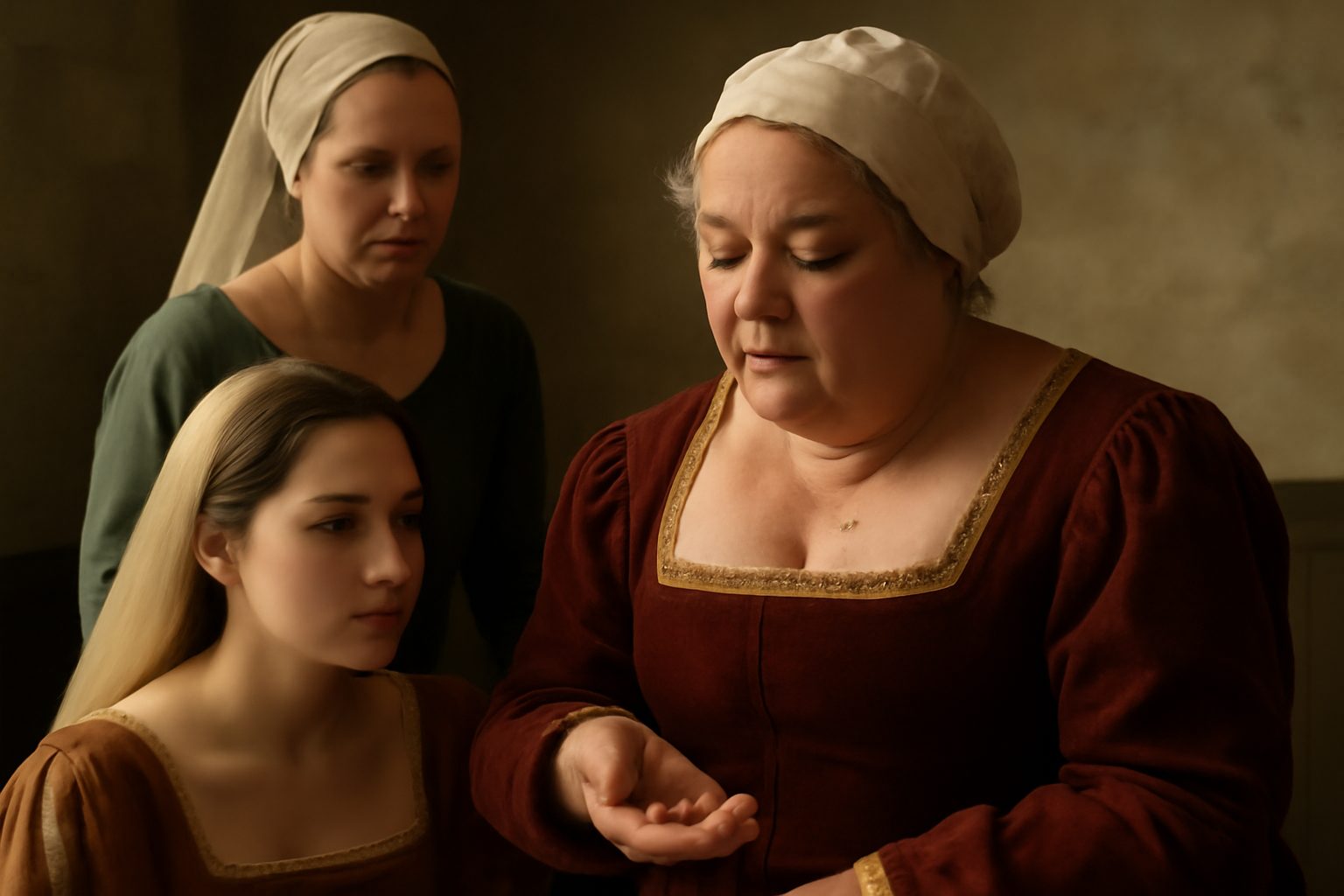
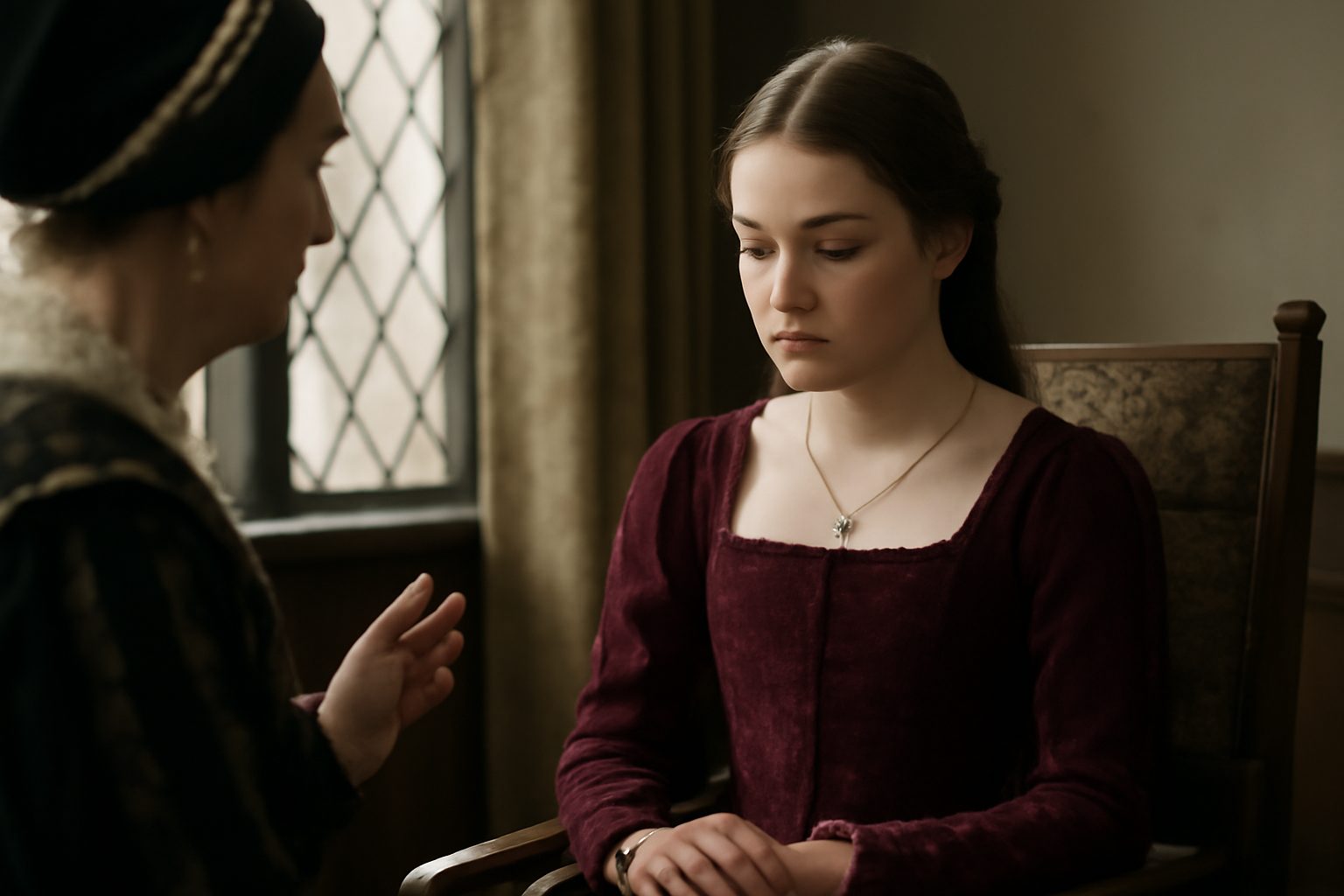
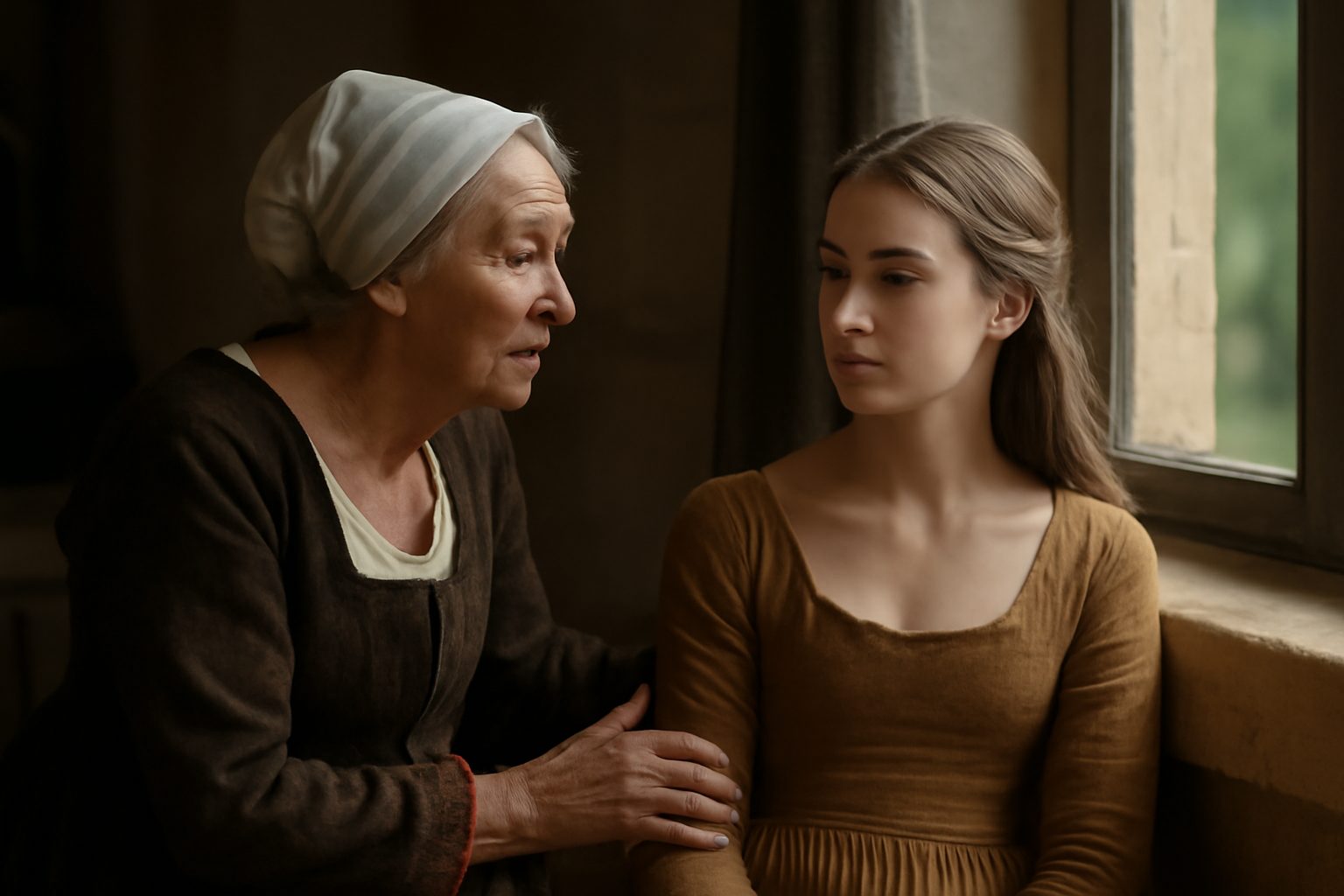
In Act 1, Scene 3 of Romeo and Juliet, Lady Capulet speaks to Juliet about Count Paris's proposal of marriage. She recounts a time when Paris and Lord Capulet were together in Mantua, subtly praising Paris's noble standing. This line serves to reinforce Paris's suitability as a match for Juliet, setting up the tension between parental expectations and Juliet's own desires.
Nurse: "My lord and you were then at Mantua:--"
In modern day english, we would say:
Back then, you and my husband were in Mantua.
Frequently Asked Questions
Where were the lord and the person the nurse is speaking to at the time she mentions?
They were in Mantua.
Connections to other verses:
Connections to "My lord and you were then at Mantua:--"
Geographical and Temporal Context
The verse My lord and you were then at Mantua:-- situates the Nurse's memory in a specific place and time. This geographical reference connects to Tis since the earthquake now eleven years;, which anchors the timeline to a past event, reinforcing the narrative's temporal framework. Additionally, And since that time it is eleven years; echoes this duration, emphasizing how long ago these events occurred.
Personal and Familial Recollections
The Nurse's reminiscence about Mantua is part of a broader pattern of personal storytelling. It ties to And then my husband--God be with his soul!, where she reflects on her late husband, and A' was a merry man--took up the child:, illustrating his character and their shared history with Juliet. These verses collectively paint a vivid picture of the Nurse's past and her emotional connections.
Juliet's Infancy and Development
The reference to Mantua occurs within the Nurse's detailed account of Juliet's childhood. It relates to And she was wean'd,--I never shall forget it,--, which marks a milestone in Juliet's early life, and For then she could stand alone; nay, by the rood,, highlighting her physical growth. These elements underscore the Nurse's intimate knowledge and care for Juliet.
Humor and Anecdotal Elements
The Nurse's storytelling often includes humorous or poignant anecdotes. The Mantua reference is followed by Nay, I do bear a brain:--but, as I said,, where she boasts of her memory while digressing, adding a comedic touch. This connects to To see, now, how a jest shall come about!, reflecting on the playful nature of past events.
Structural and Thematic Links
The verse serves as a narrative pivot, linking past events to the present discussion of marriage. It aligns with How stands your disposition to be married?, where Lady Capulet shifts the conversation to Juliet's future, and I was your mother much upon these years, which contrasts past youth with present expectations. These connections highlight the scene's exploration of time, memory, and maturation.