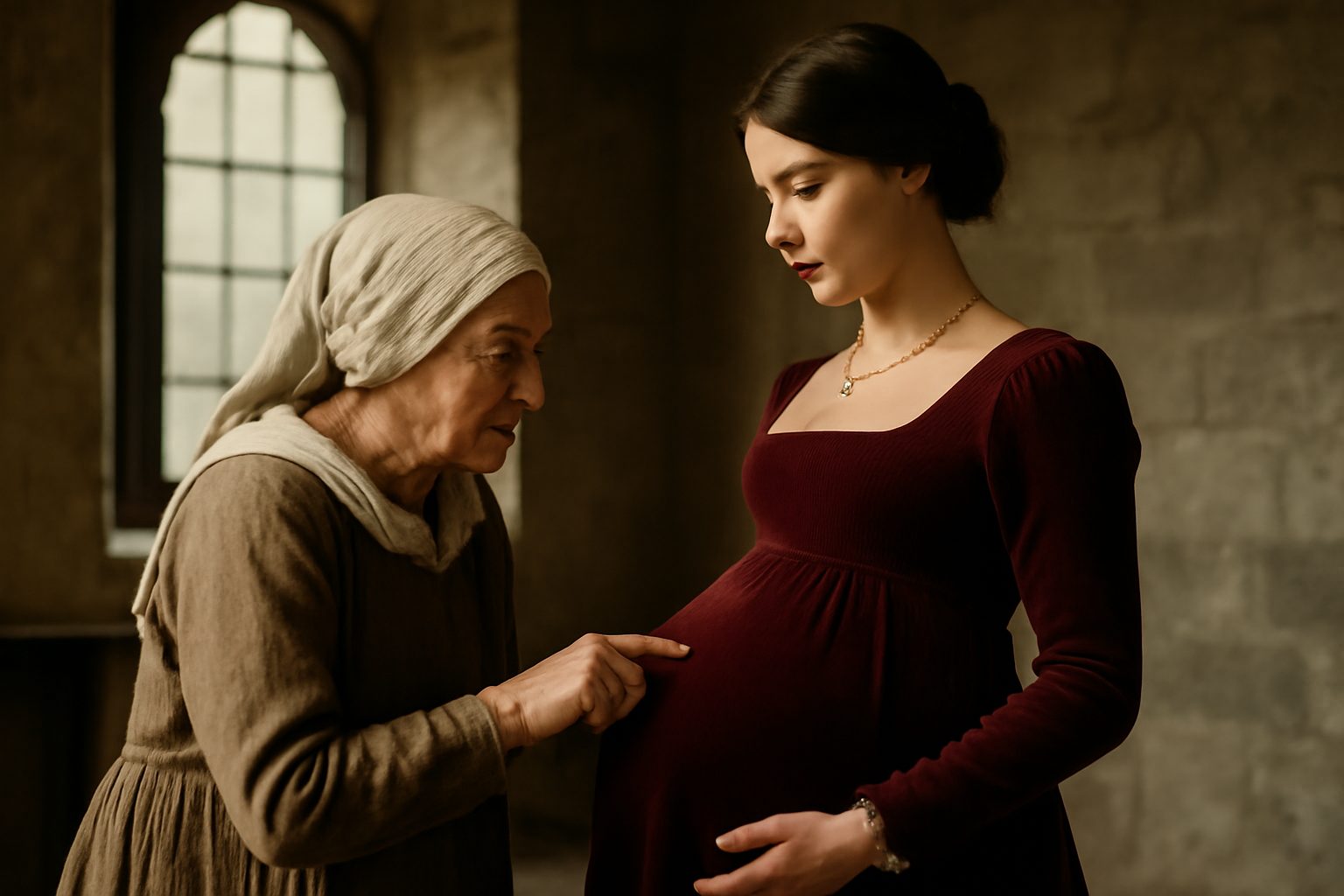
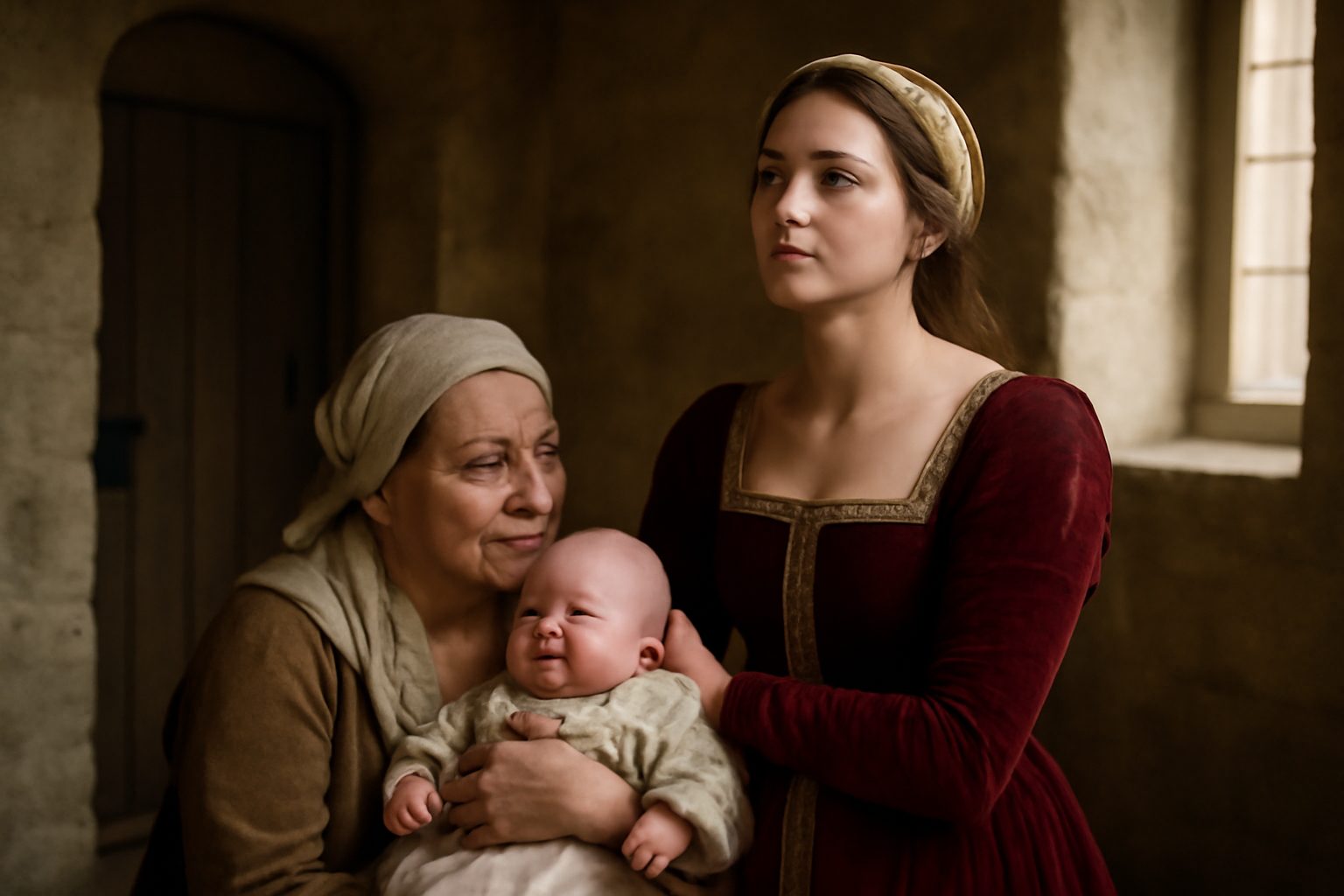
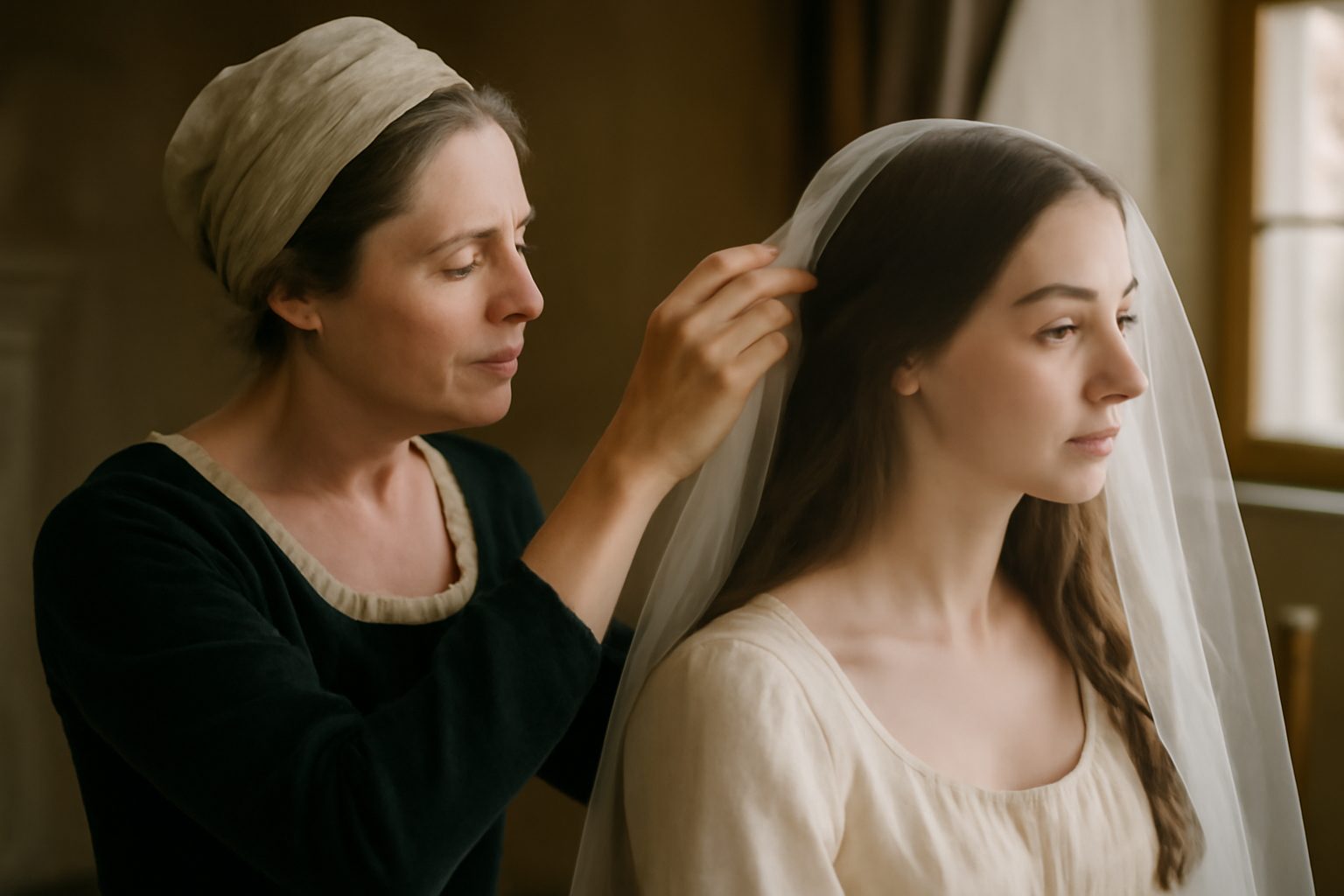
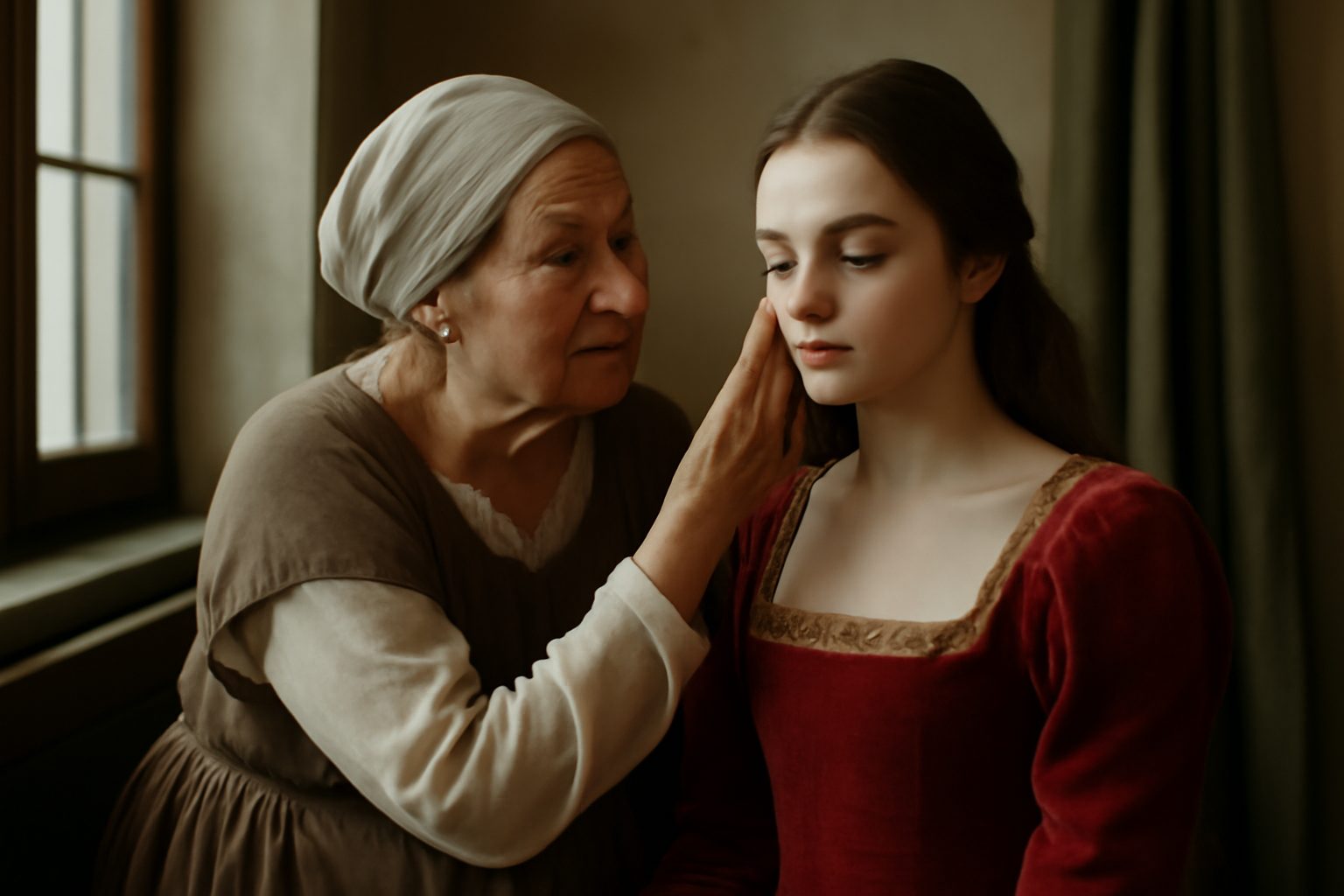
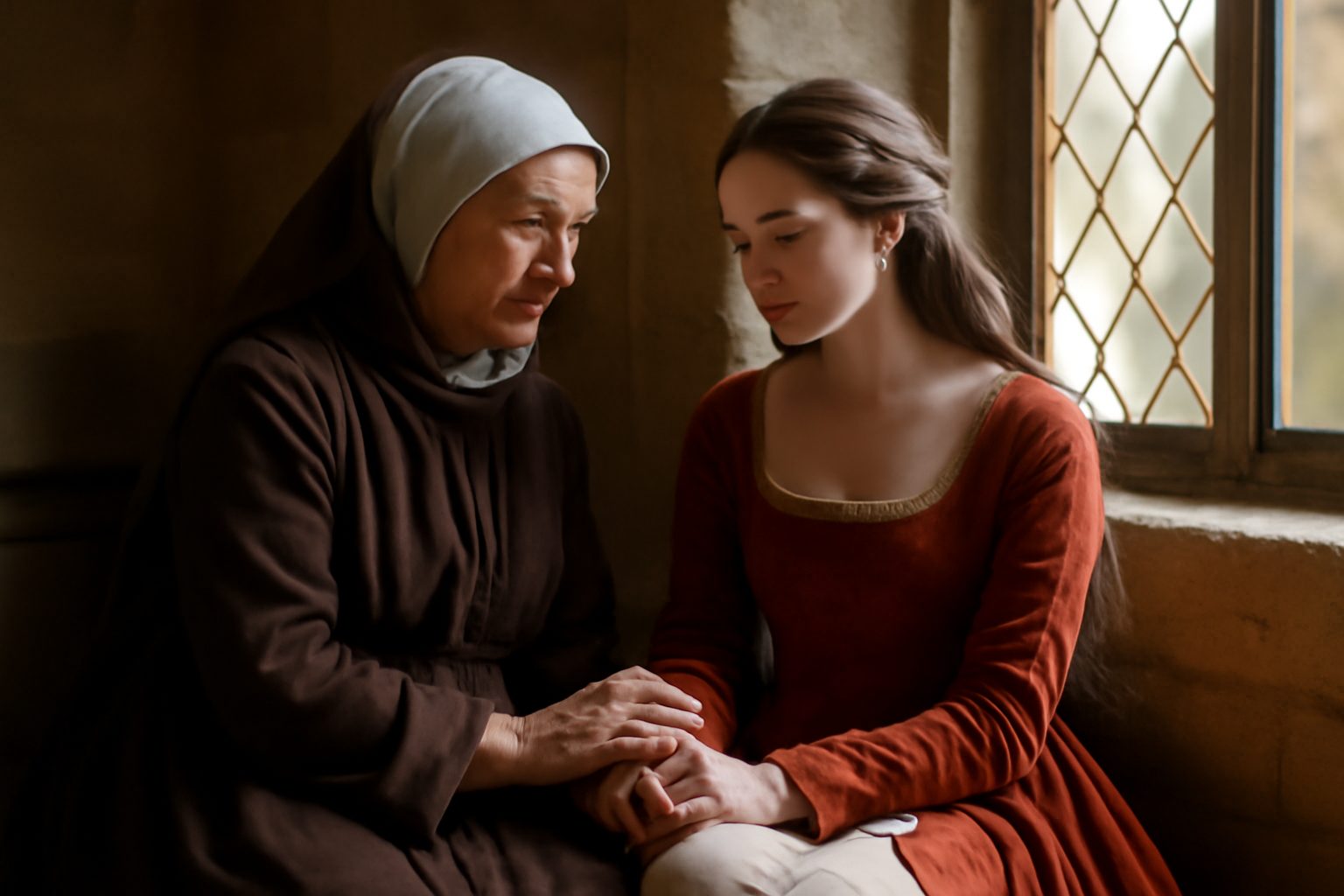
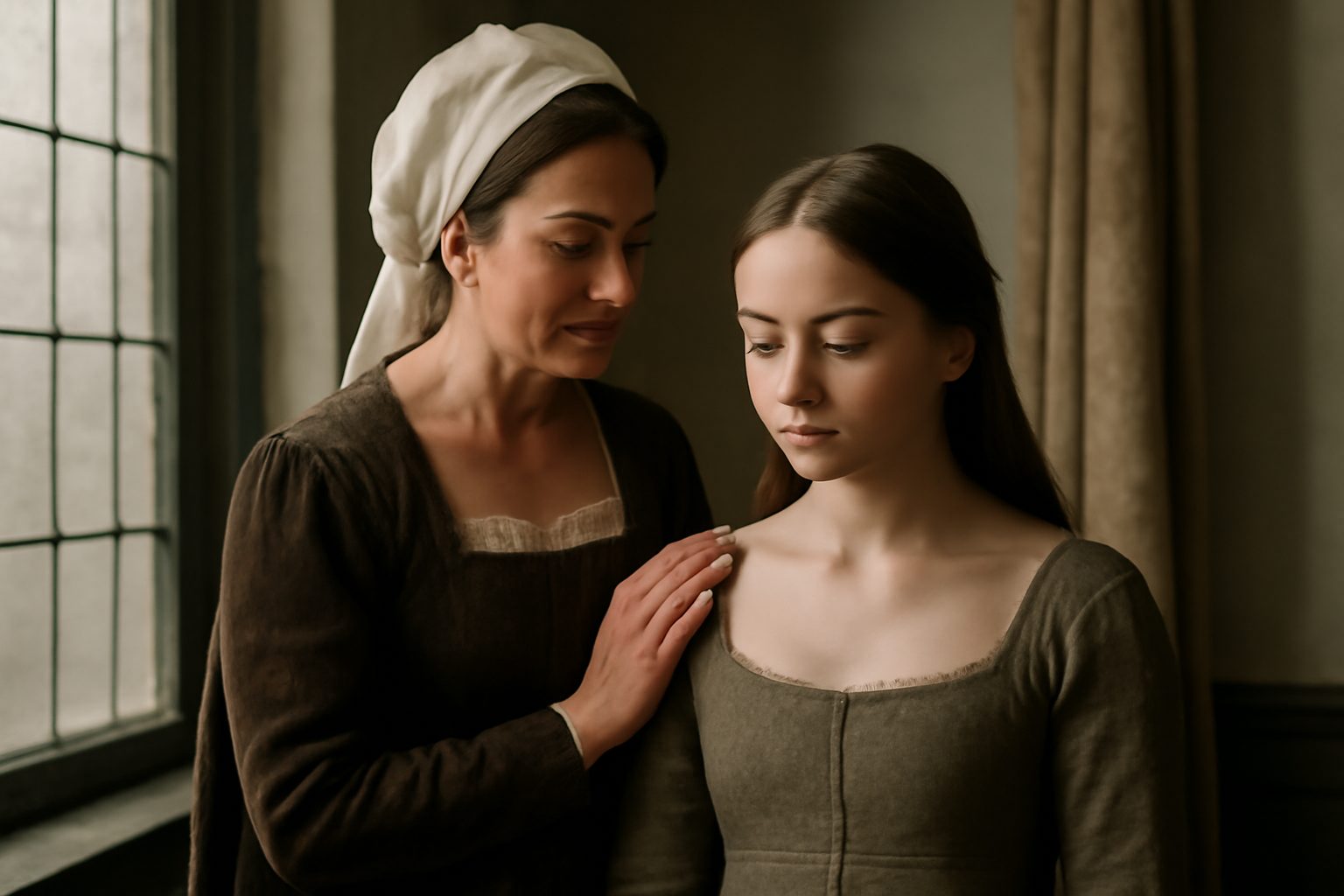
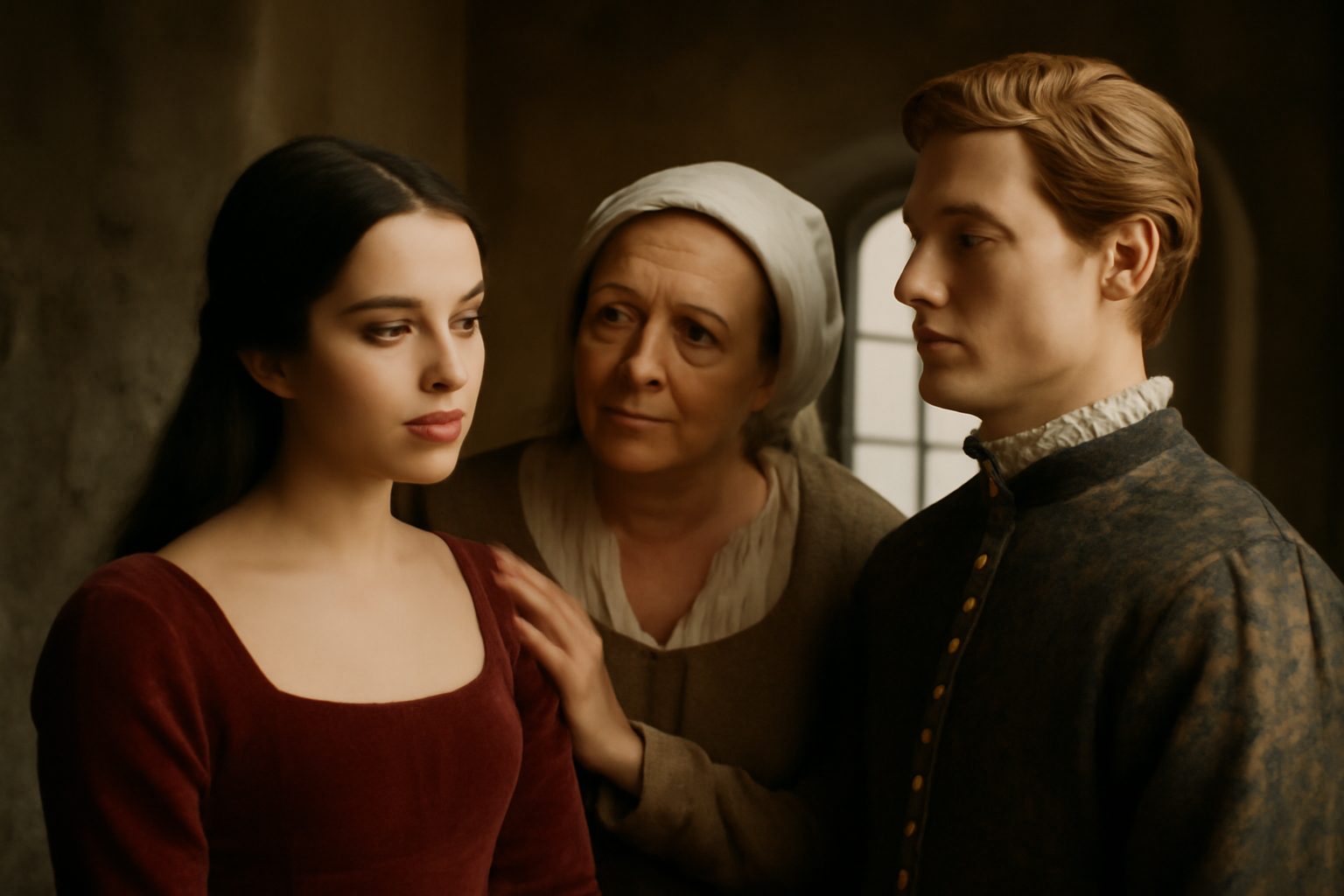
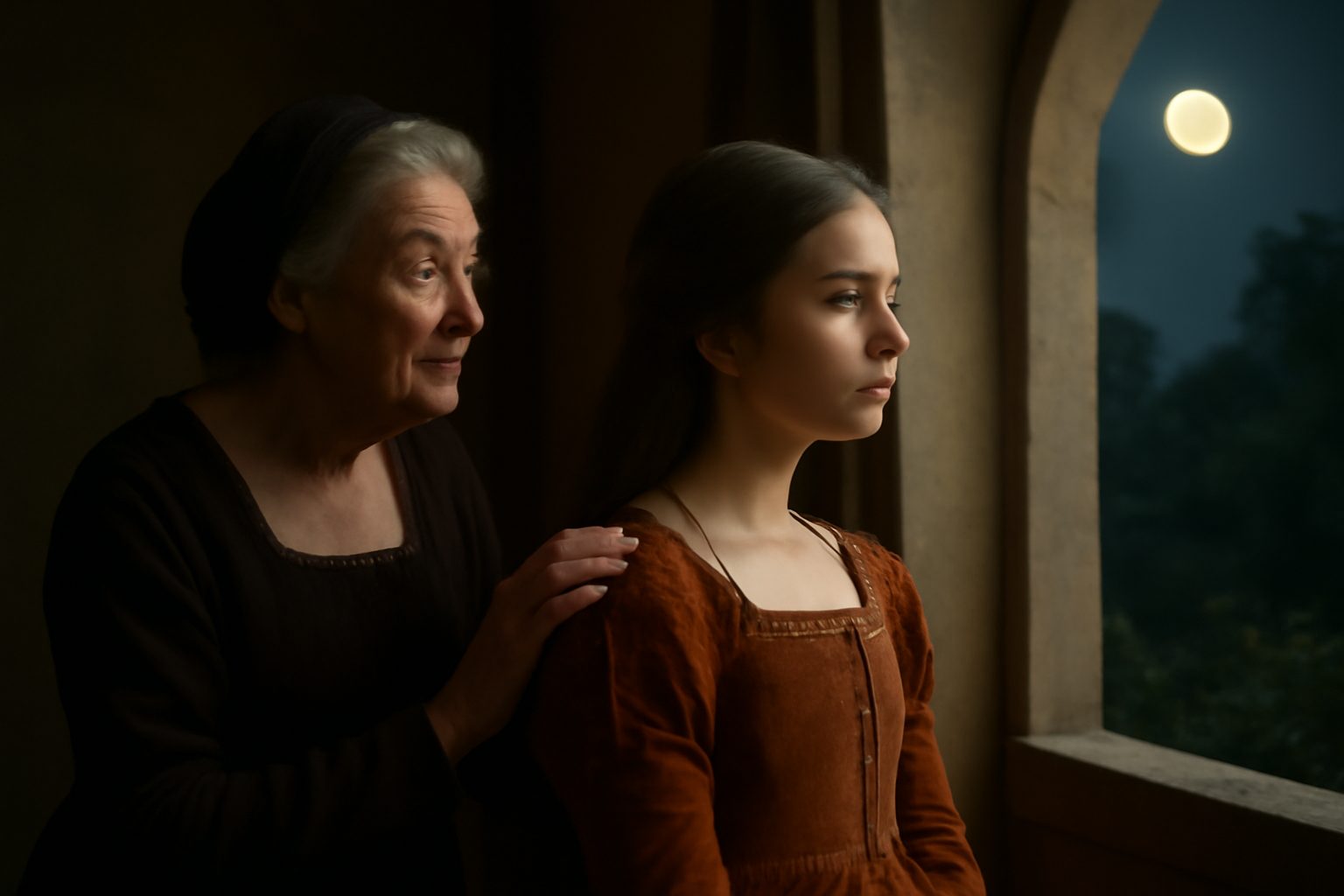
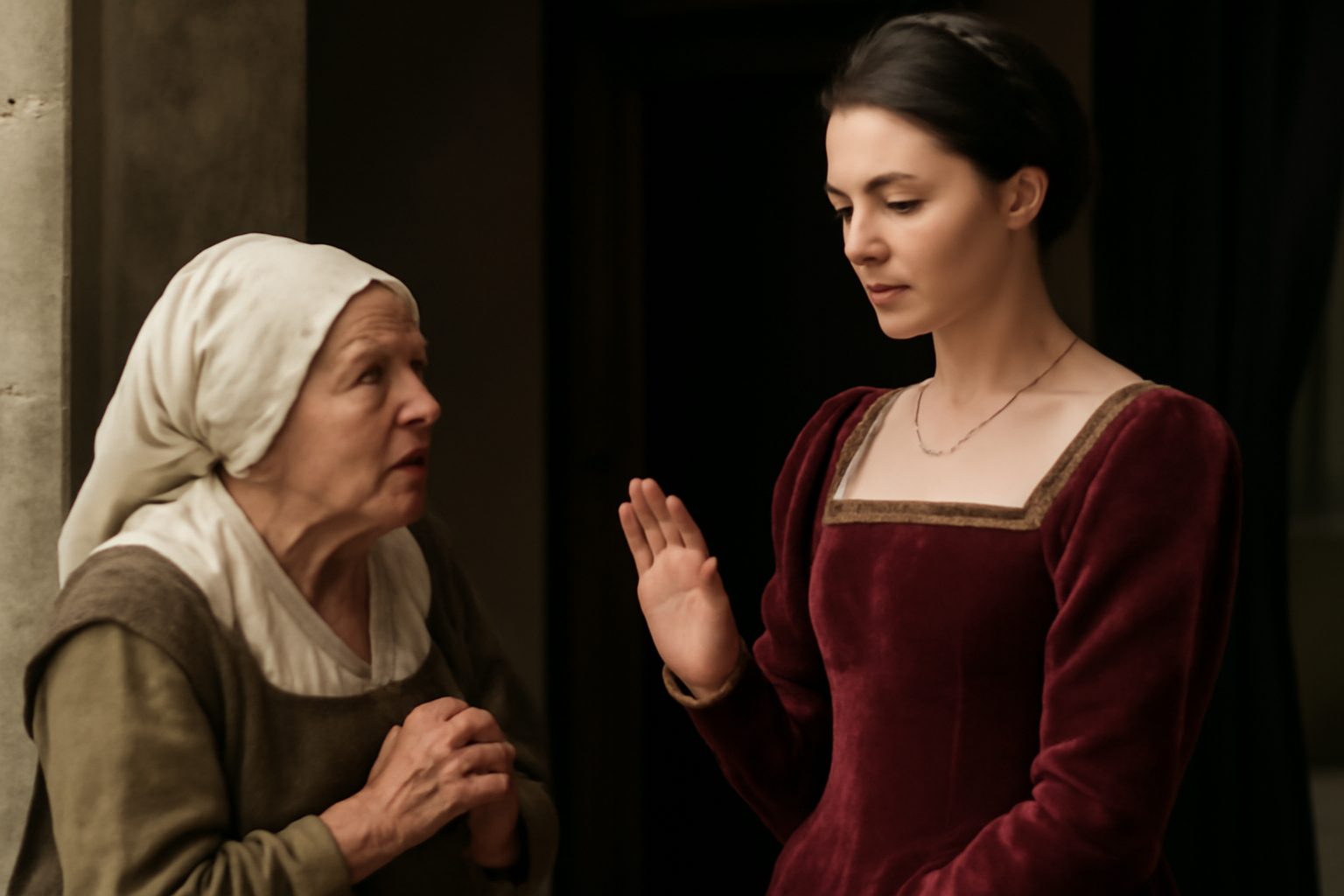
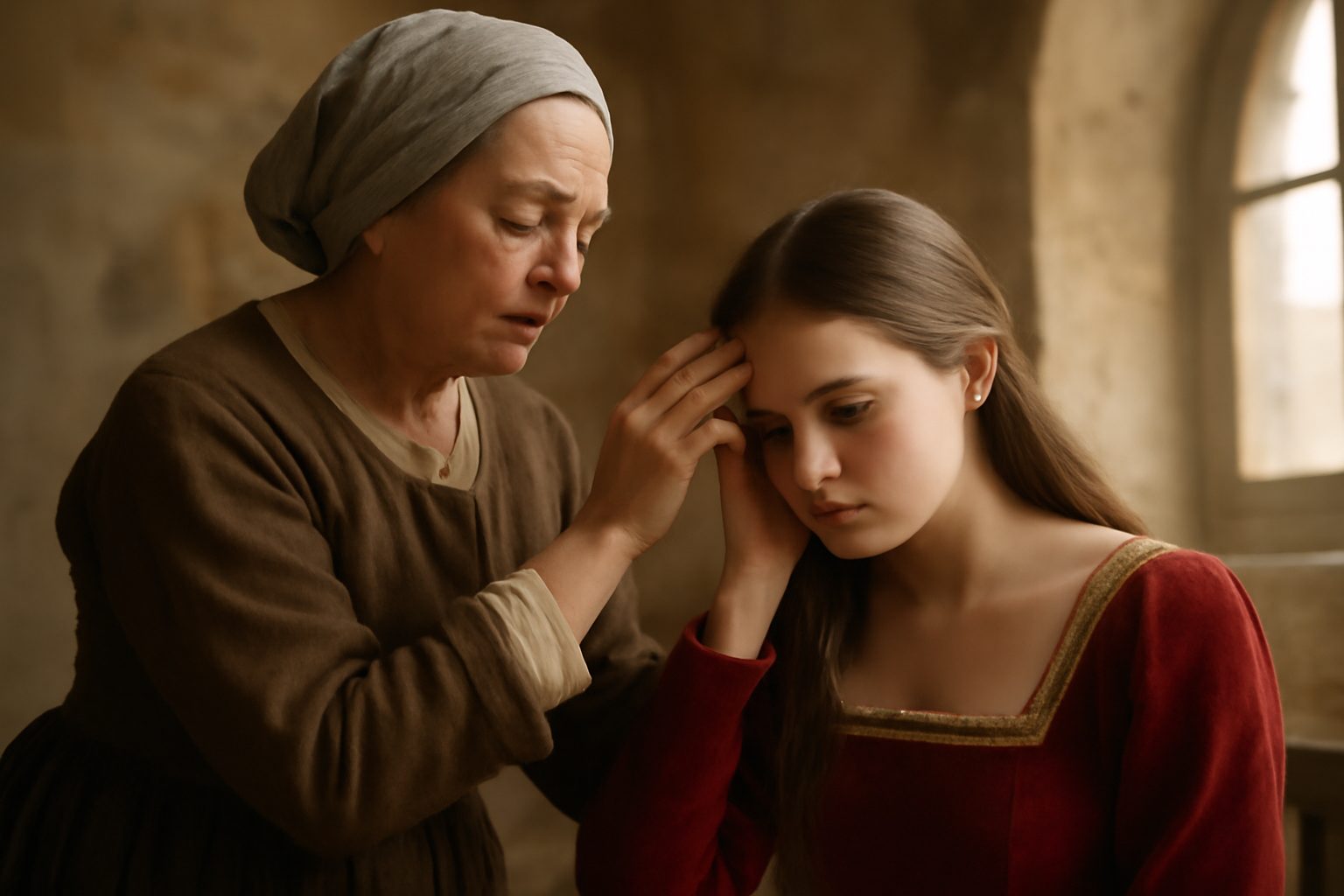
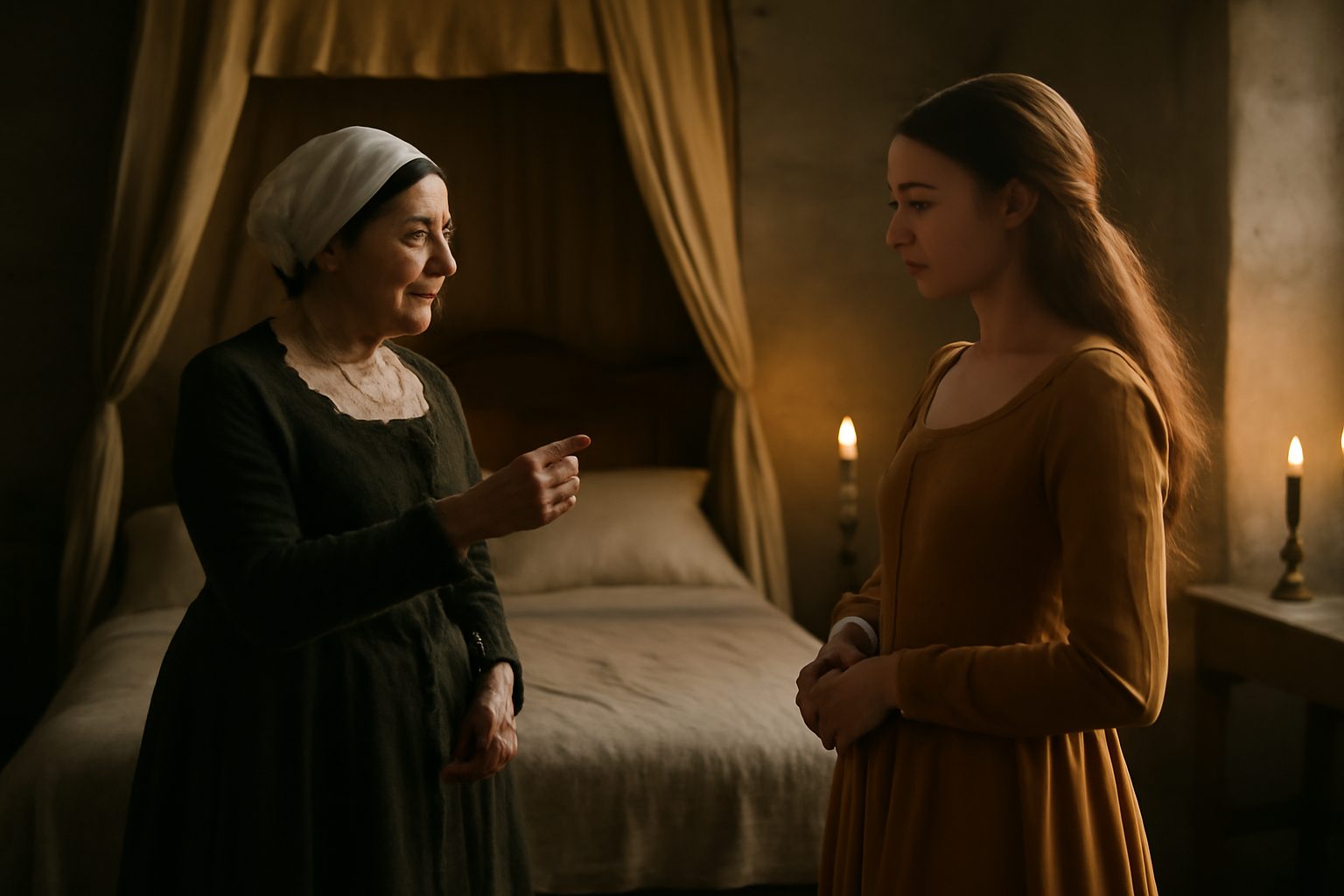
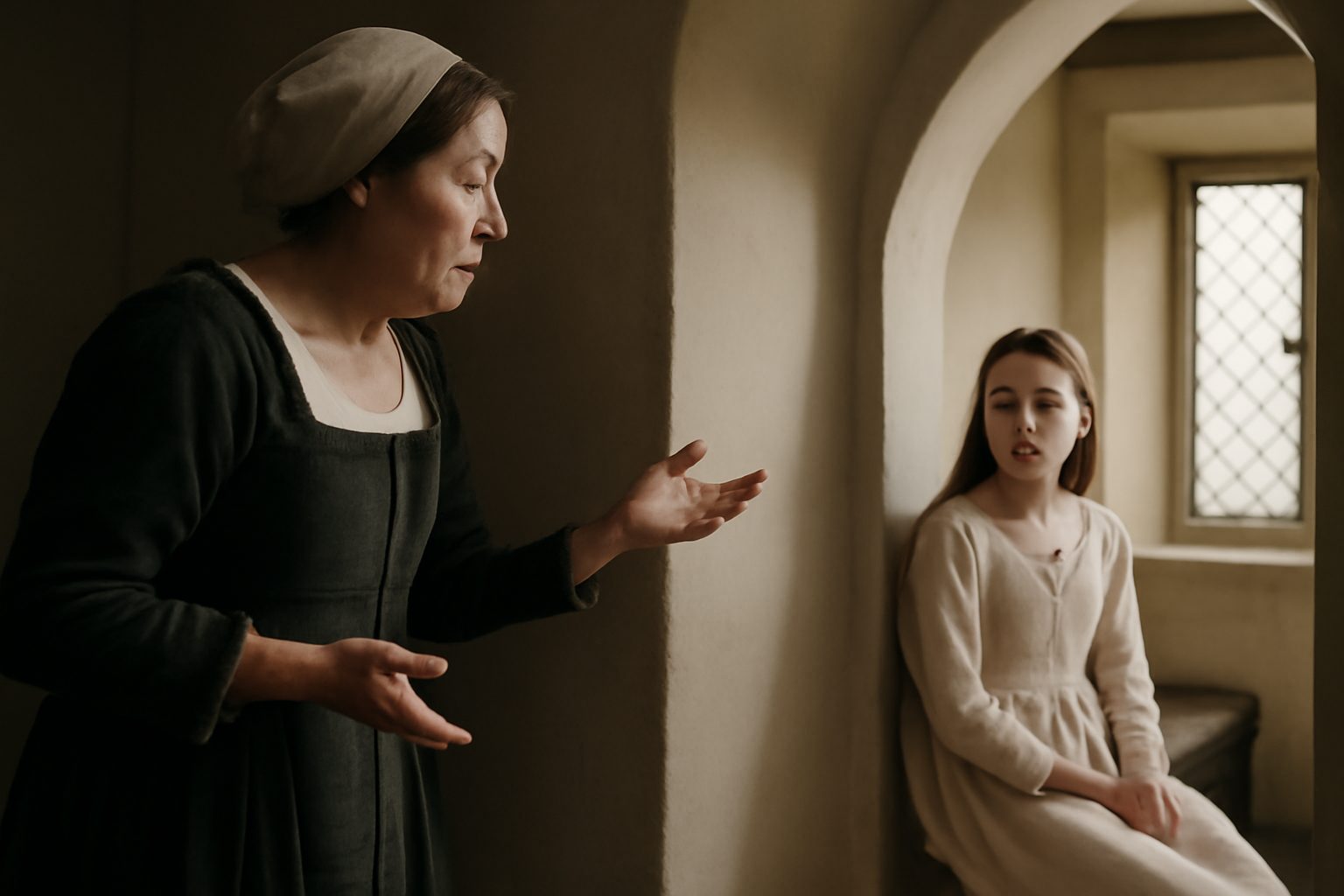
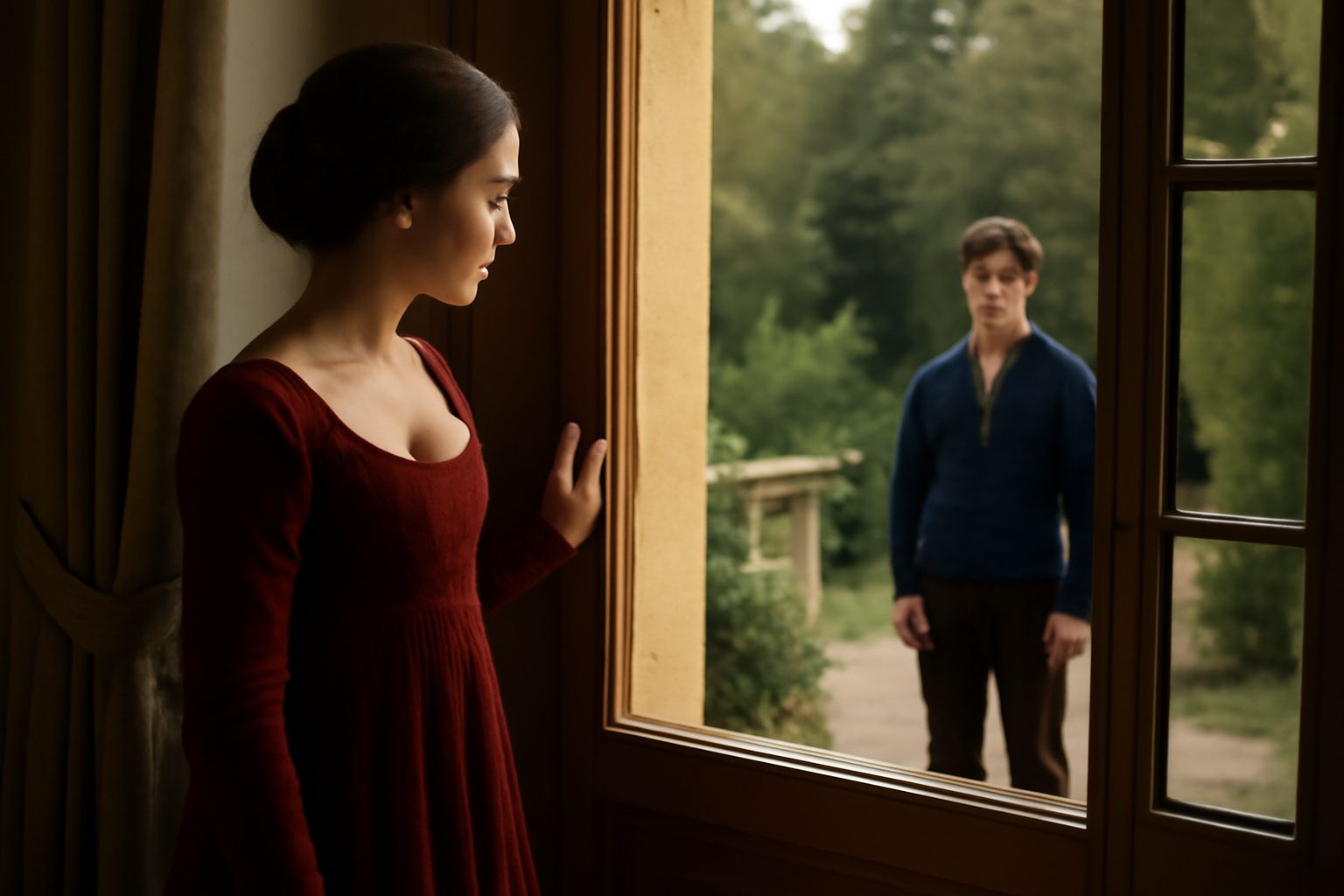
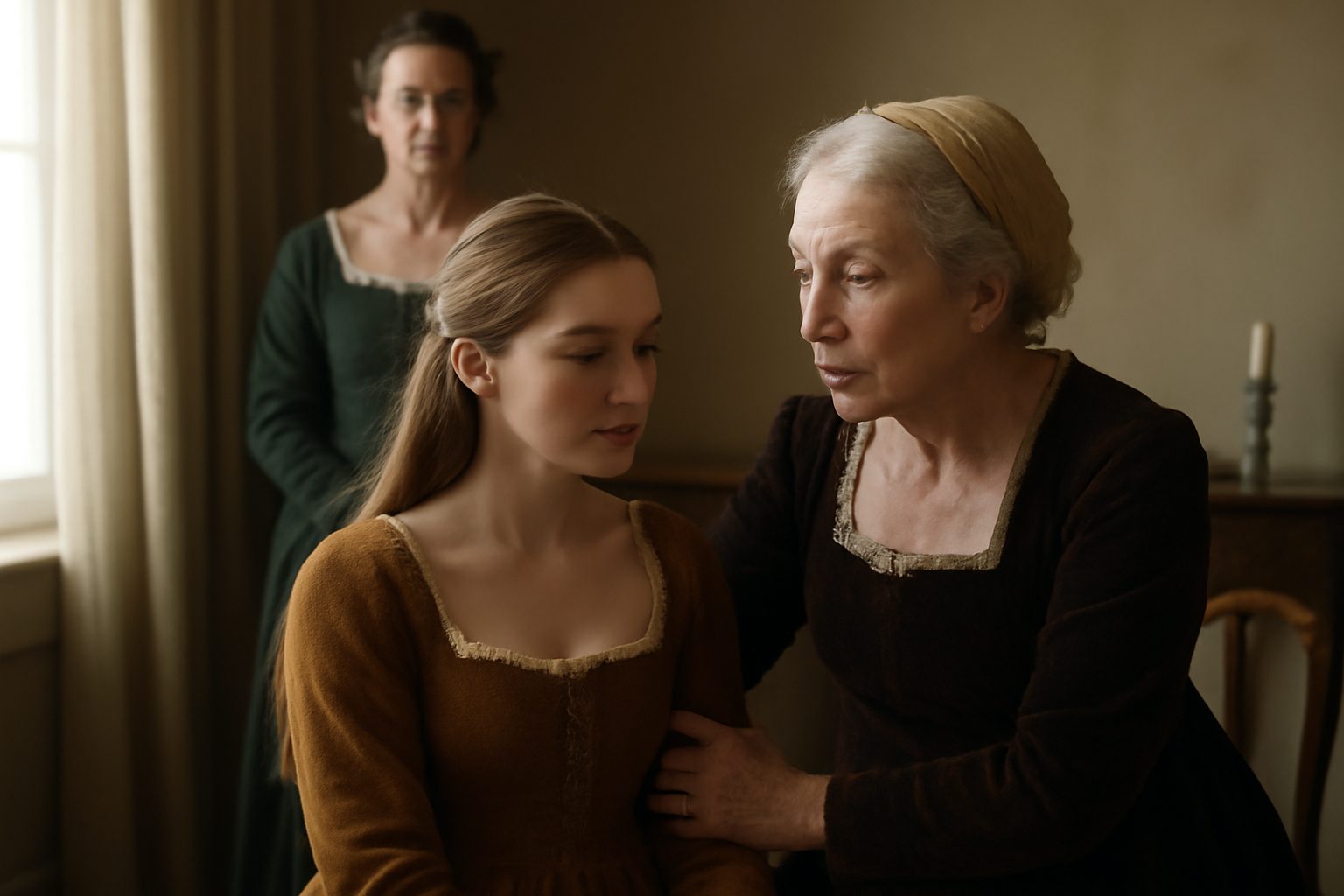
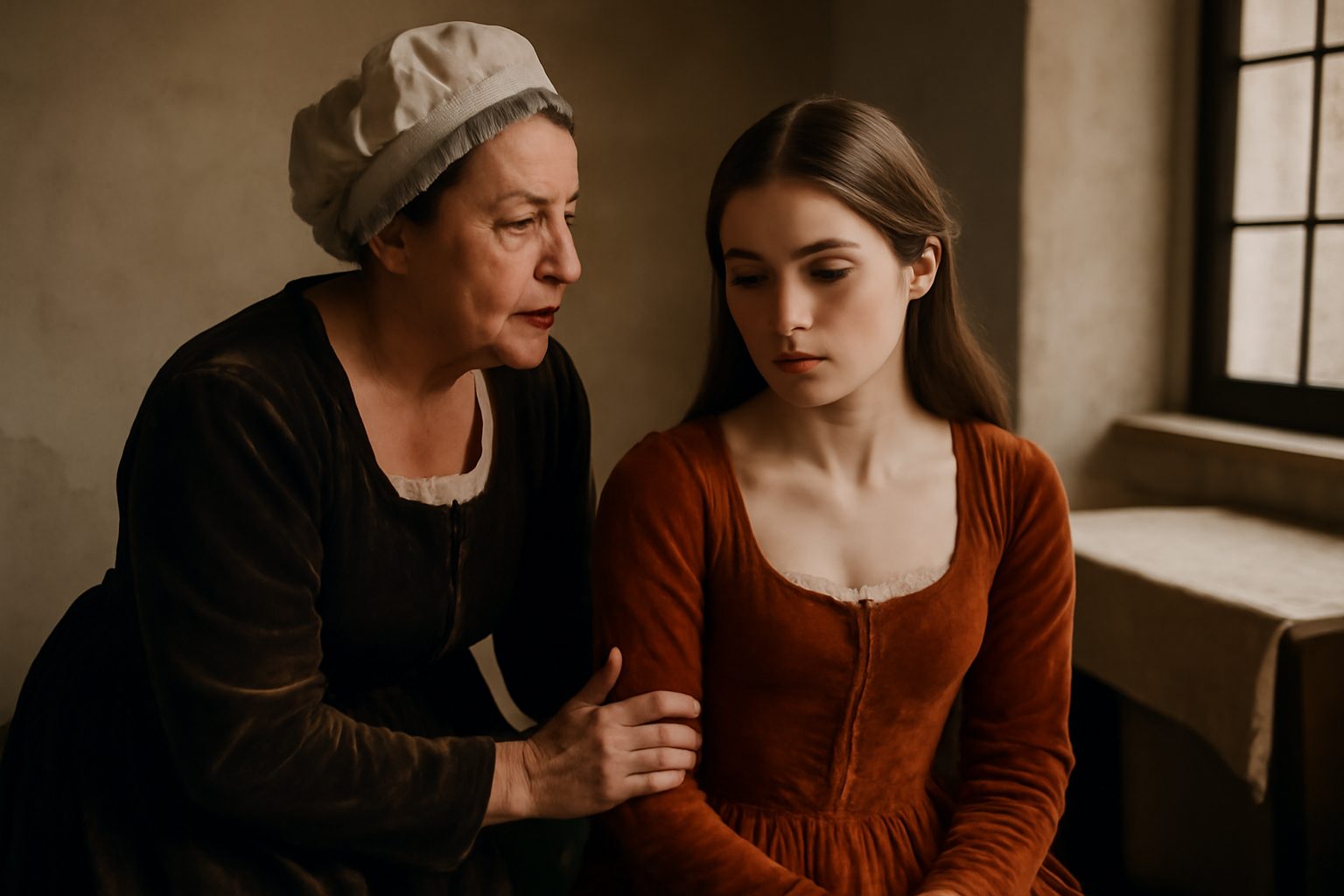
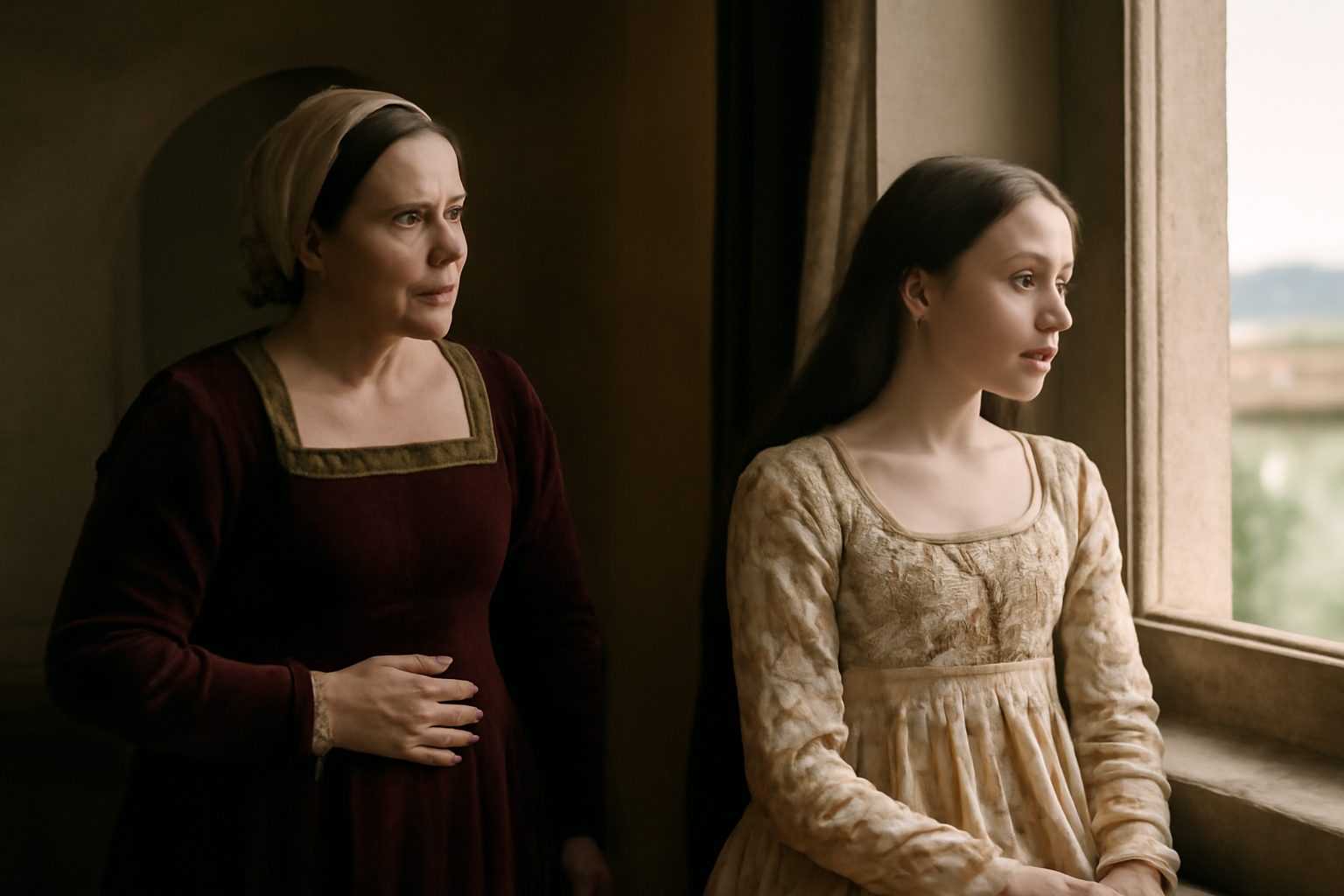
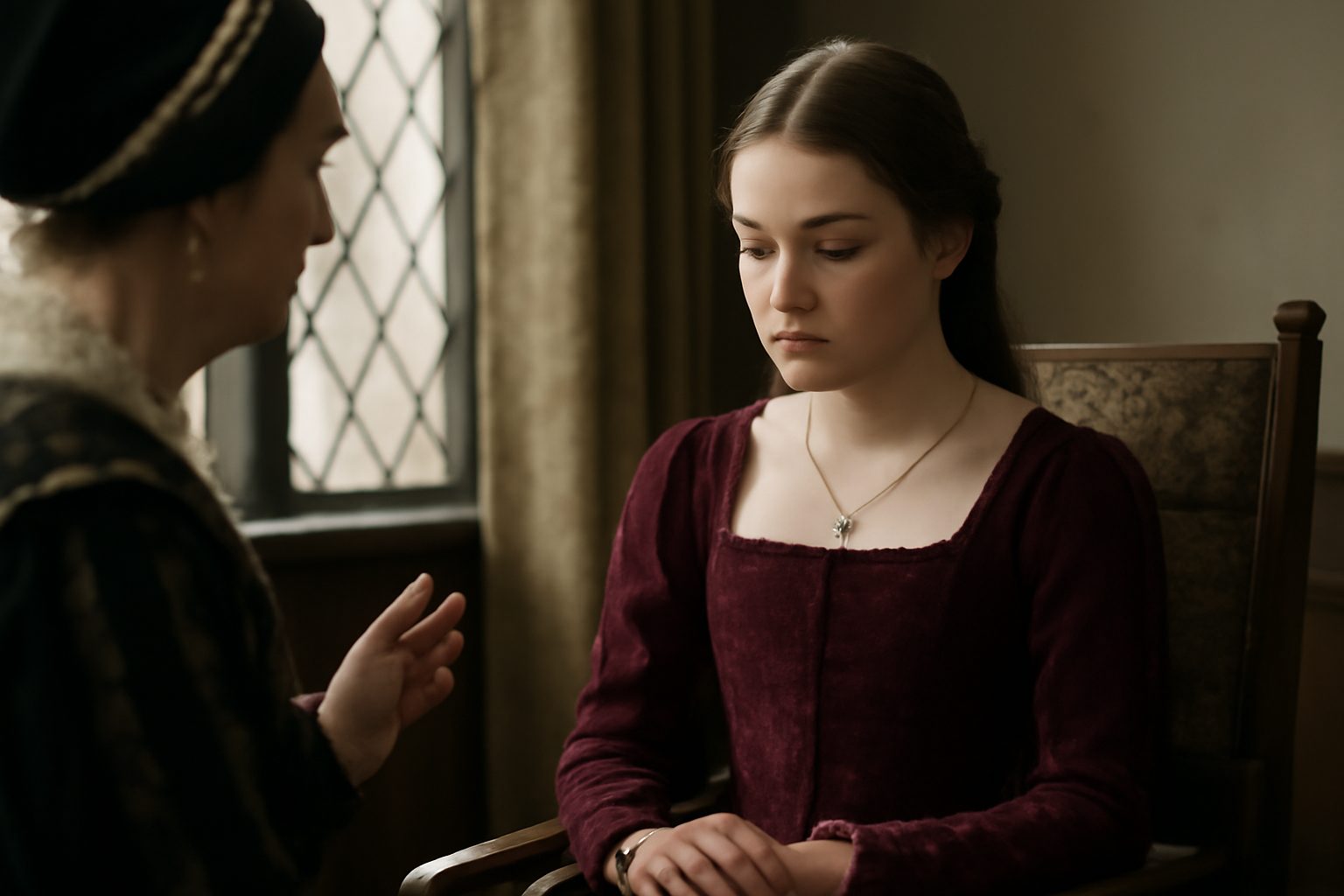
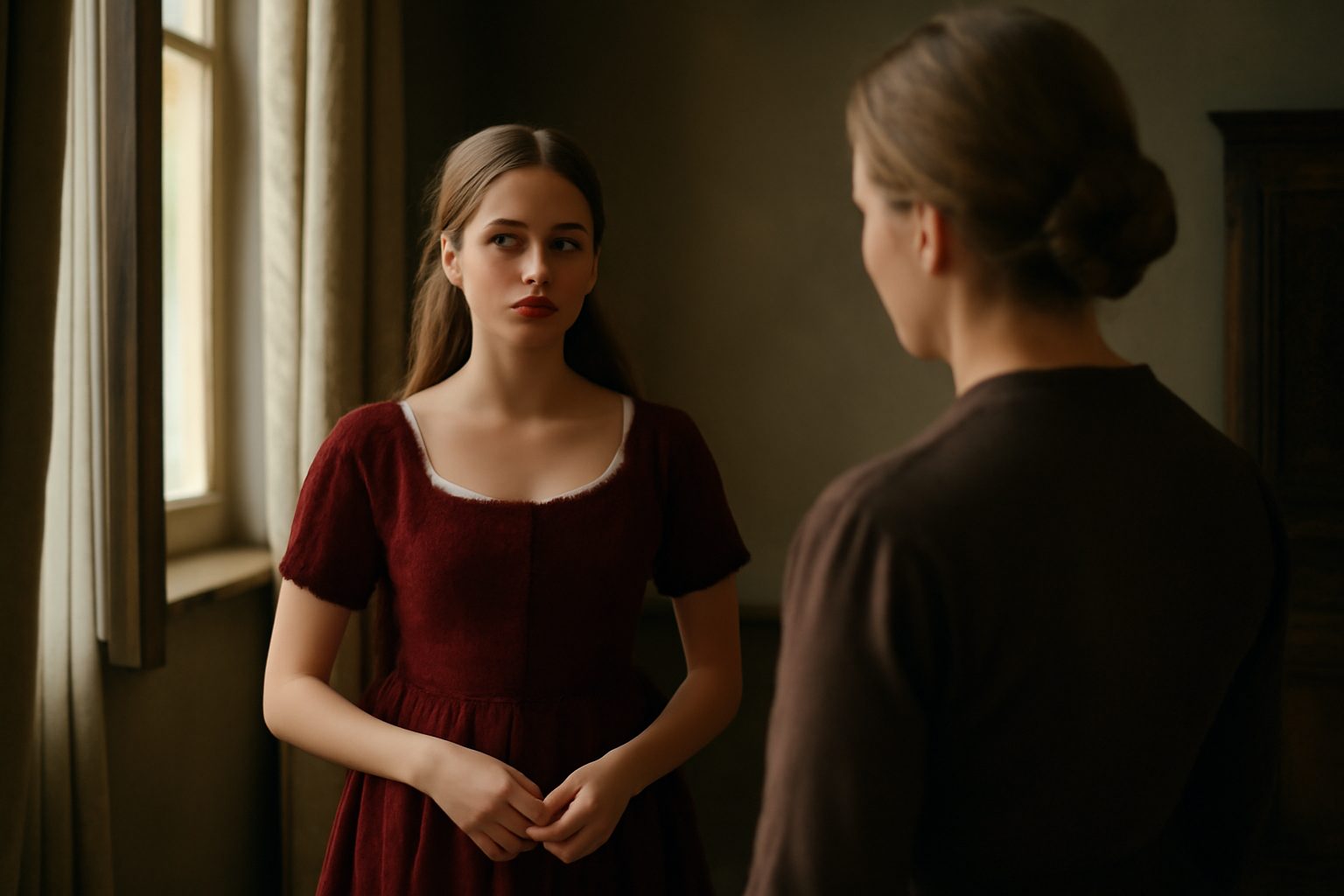
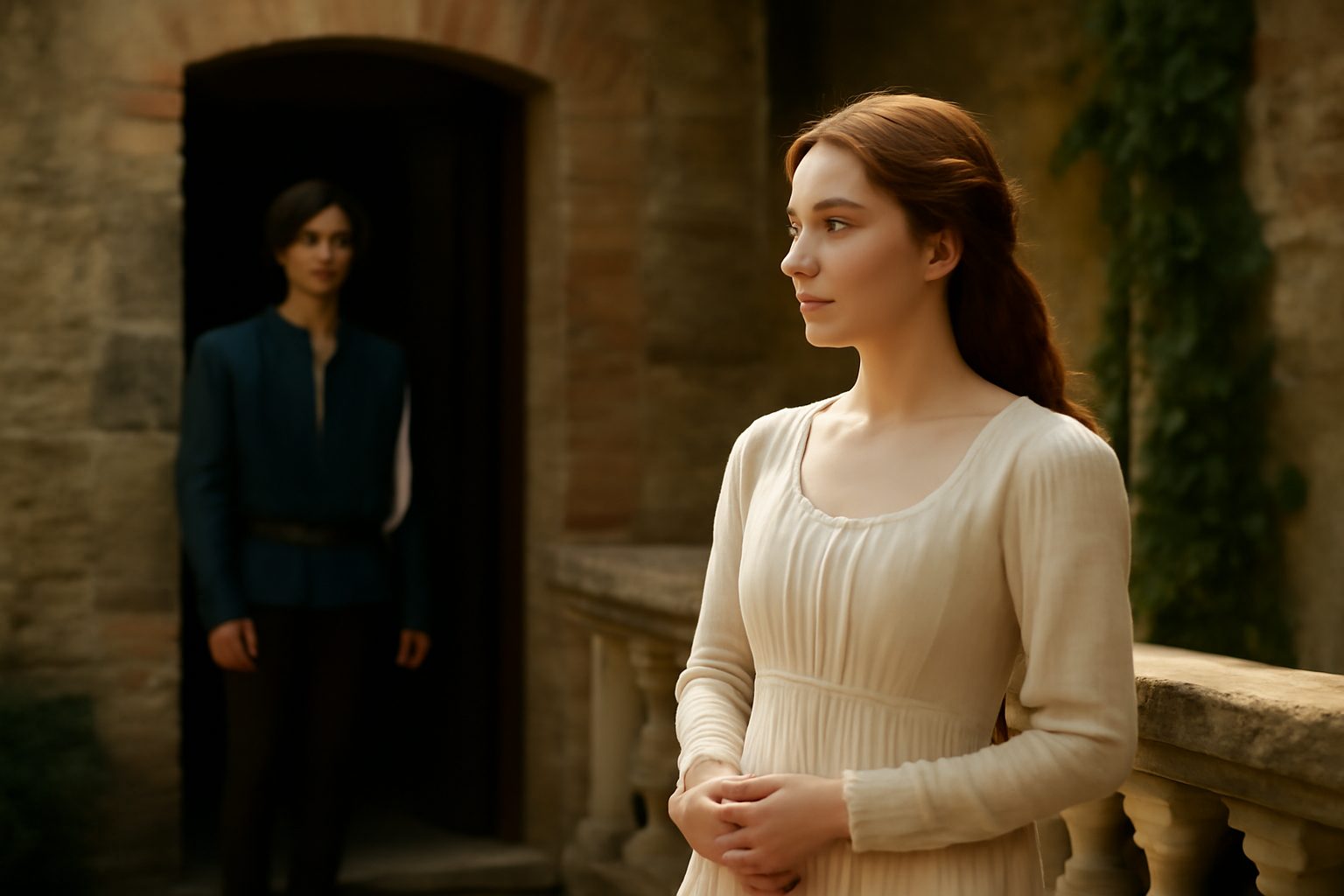
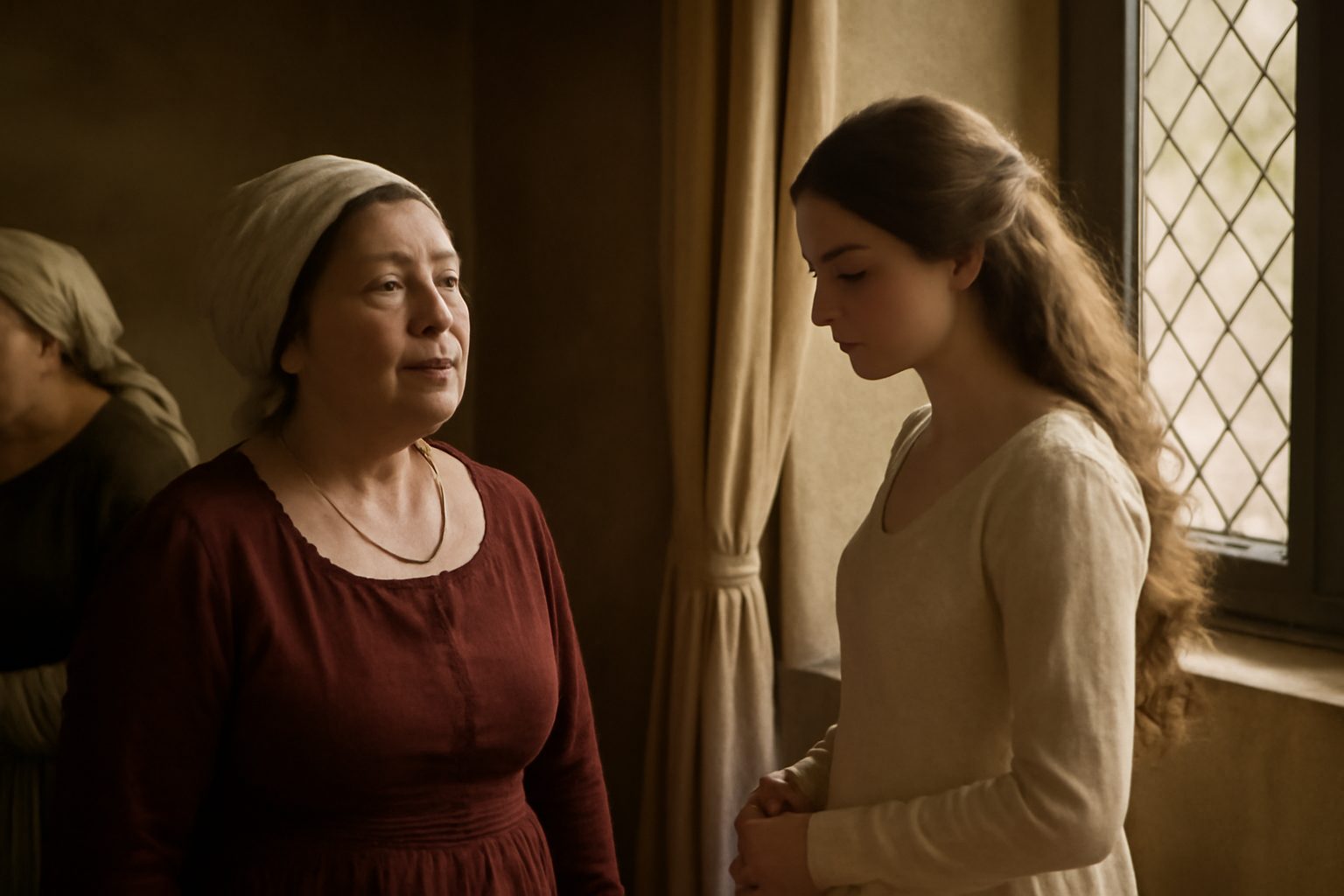
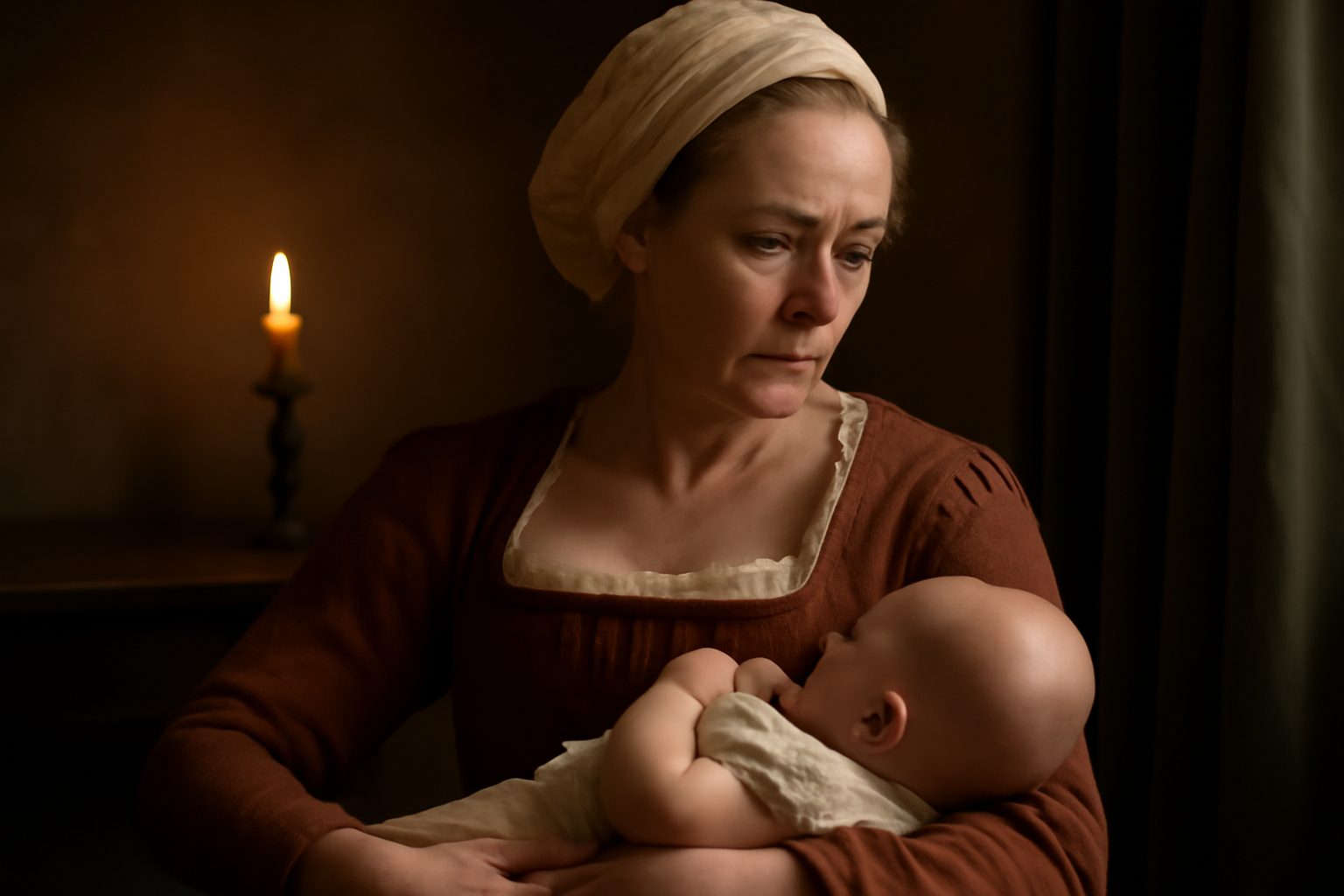
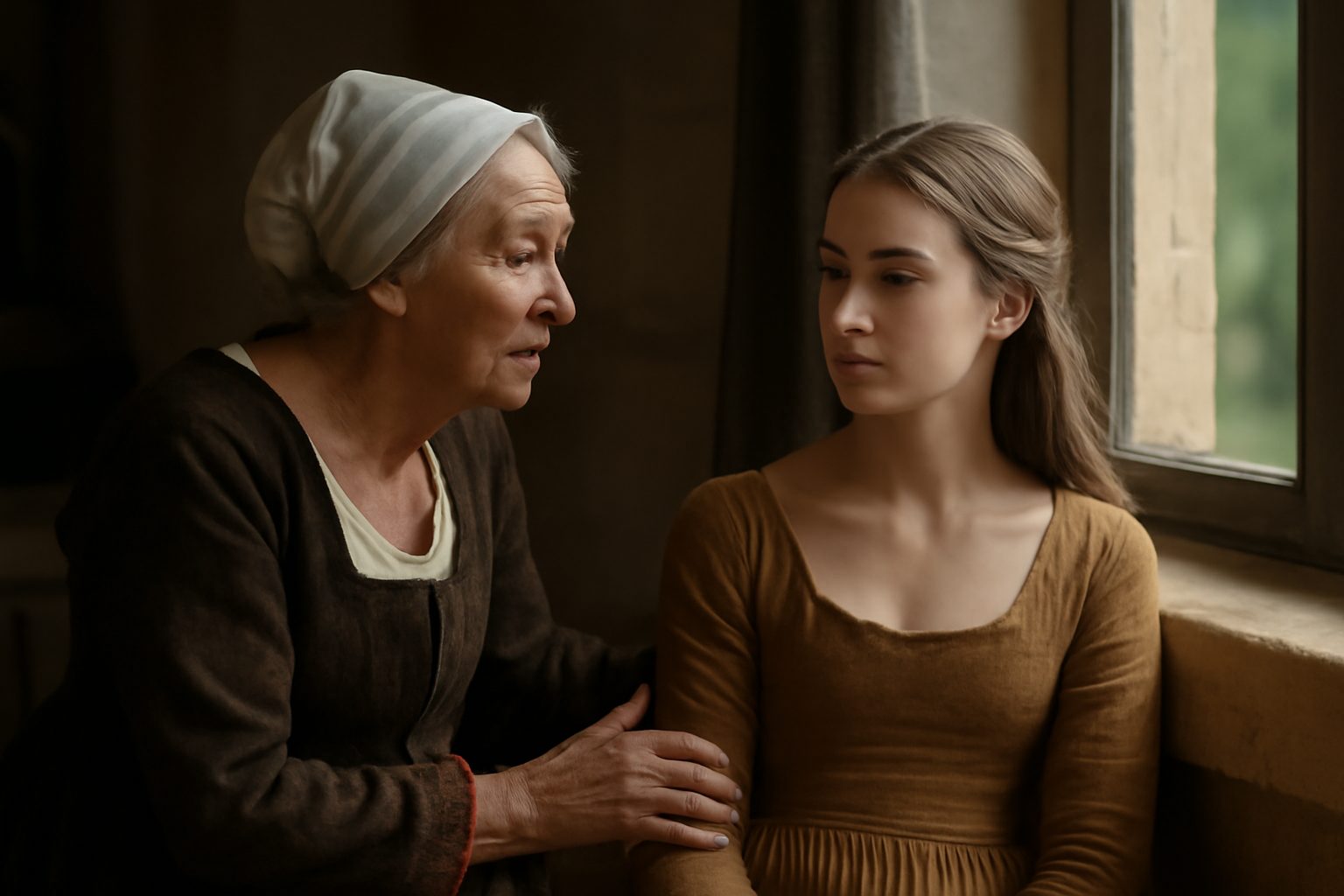
In Act 1 Scene 3 of Romeo and Juliet, Lady Capulet and the Nurse are preparing Juliet for the Capulet feast when they discuss Paris, the wealthy count who has expressed interest in marrying her. The line refers to Paris waiting for Juliet, emphasizing the urgency and expectation placed upon her to meet him. This moment highlights the societal pressures Juliet faces as her family encourages the match, setting up future conflicts in the play.
Lady Capulet: "Juliet, the county stays."
In modern day english, we would say:
The count is waiting for you, Juliet.
Frequently Asked Questions
Who is Lady Capulet talking to in this line?
She is talking to Juliet.
What is Lady Capulet telling Juliet in this line?
She is telling Juliet that the county (Paris) is waiting for her.
Connections to other verses:
Connections to "Juliet, the county stays."
The verse "Juliet, the county stays." serves as a direct prompt from the Nurse, urging Juliet to join the festivities where Paris awaits. This line is closely tied to the Nurse's earlier announcement in "Madam, the guests are come, supper served up, you", which sets the scene for the urgency of Juliet's presence. It also connects to Lady Capulet’s instruction in "hence to wait; I beseech you, follow straight.", emphasizing the social expectations placed upon Juliet.
Context of Marriage and Social Pressure
This urgency is rooted in the broader discussion of marriage in the scene. Lady Capulet introduces the topic with "Marry, that 'marry' is the very theme", and directly asks Juliet about her feelings toward Paris in "What say you? can you love the gentleman?". The pressure culminates in Juliet’s obedient yet noncommittal response in "I'll look to like, if looking liking move:", showing her acquiescence to the situation referenced by the Nurse’s prompt.
Nurse's Role and Memories
The Nurse’s familiarity and informal tone in urging Juliet stem from her long-standing care, illustrated by her nostalgic recollections, such as "Thou wast the prettiest babe that e'er I nursed:" and the anecdote in "Wilt thou not, Jule?' it stinted and said 'Ay.'". These memories highlight her maternal role, making her催促 in "Juliet, the county stays." feel both affectionate and insistent.
Symbolism and Foreshadowing
Paris is idealized throughout the scene, described in "As all the world--why, he's a man of wax." and "Nay, he's a flower; in faith, a very flower.", which contrasts with Juliet’s eventual meeting with Romeo. The Nurse’s line催促 Juliet to meet Paris thus foreshadows the conflict between arranged marriage and true love, emphasized by Lady Capulet’s closing wish in "Go, girl, seek happy nights to happy days.", which ironically anticipates tragedy rather than happiness.