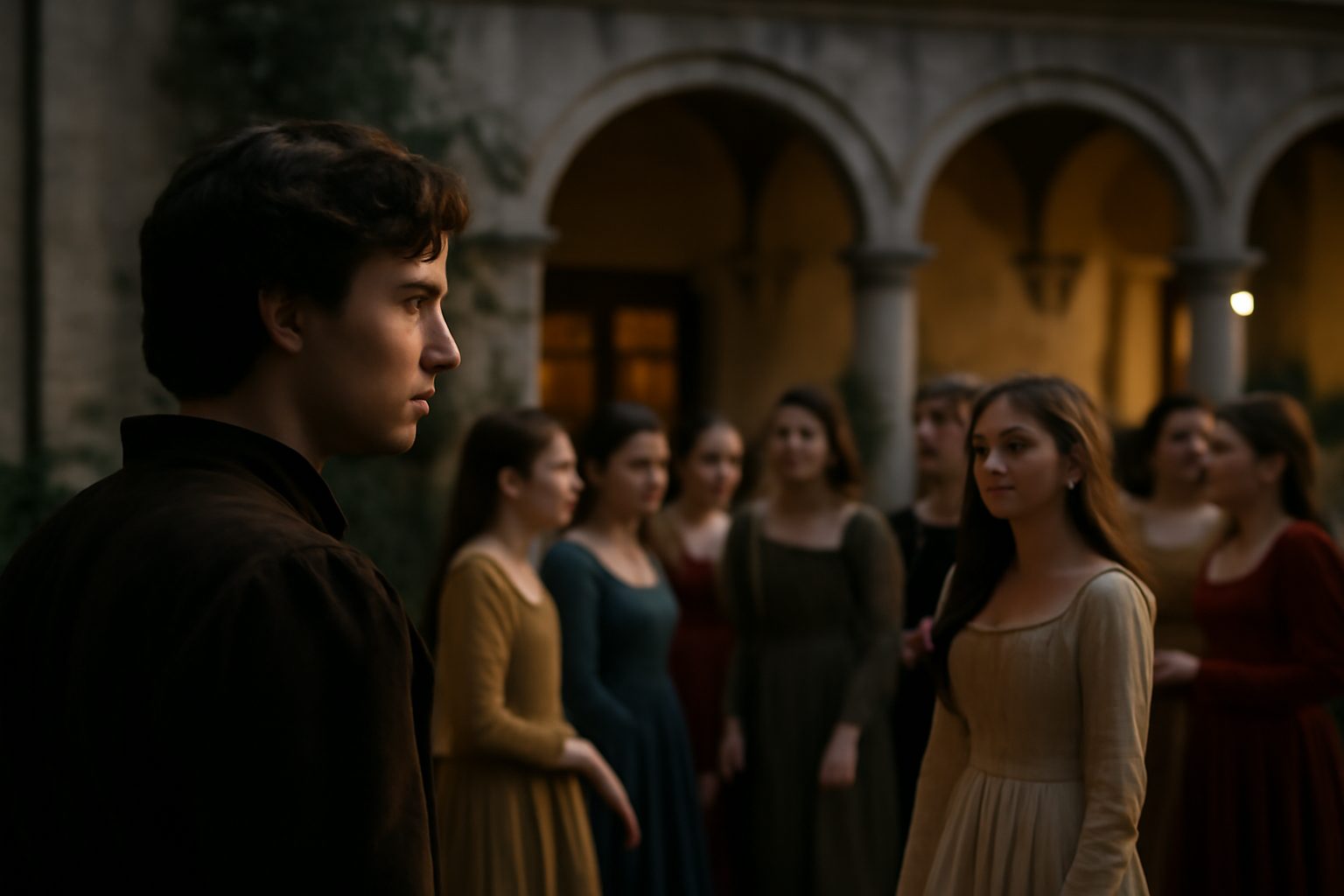
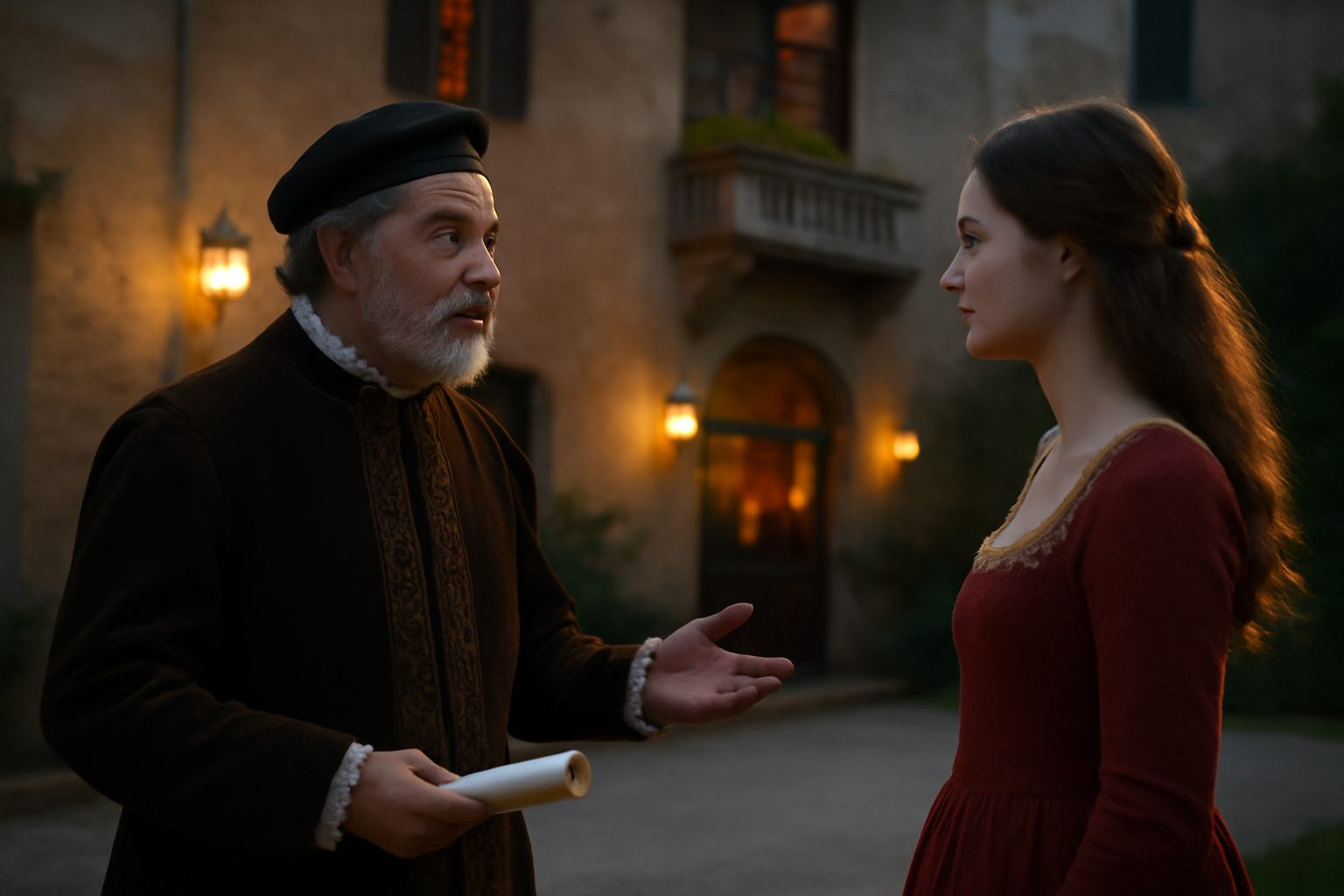
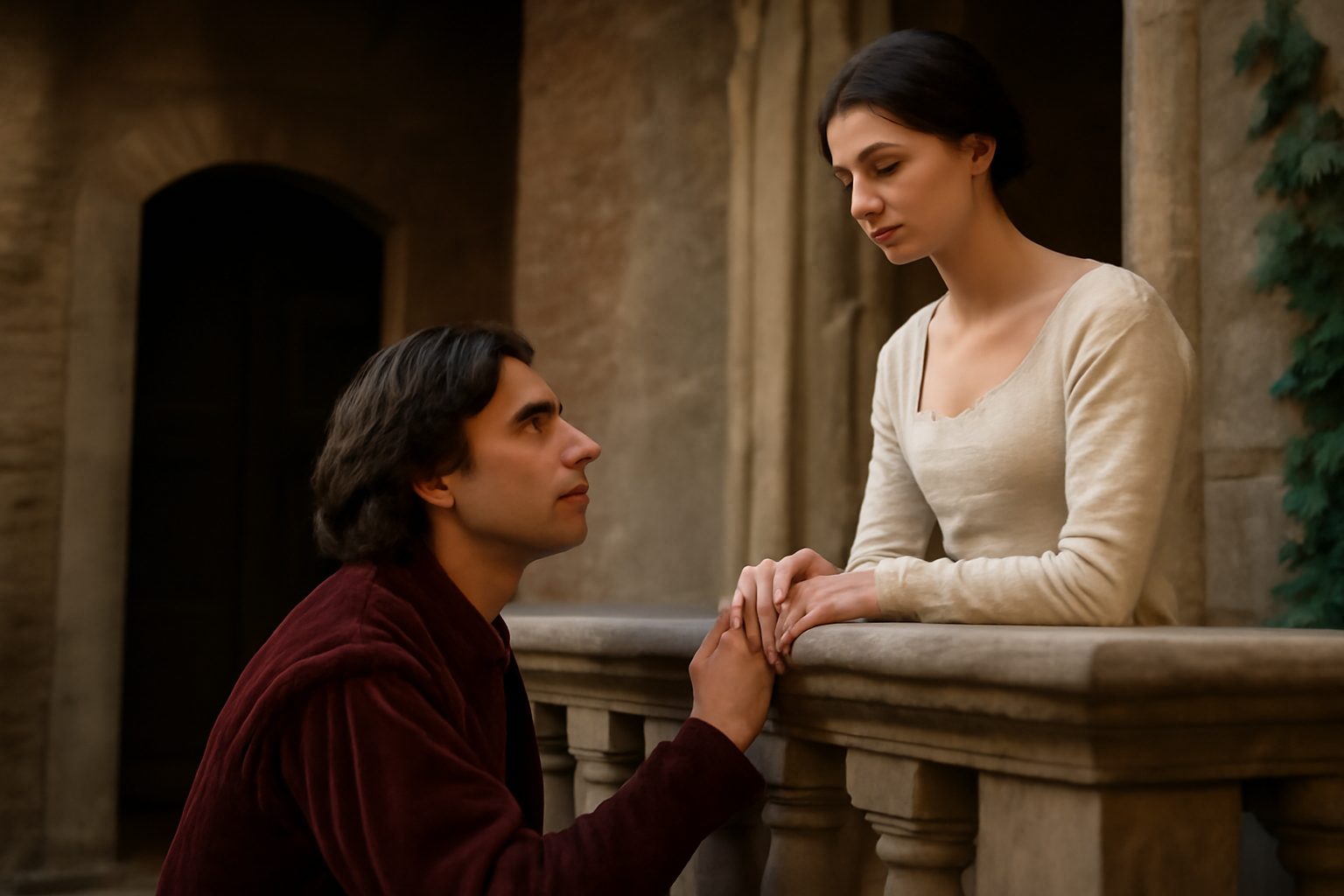
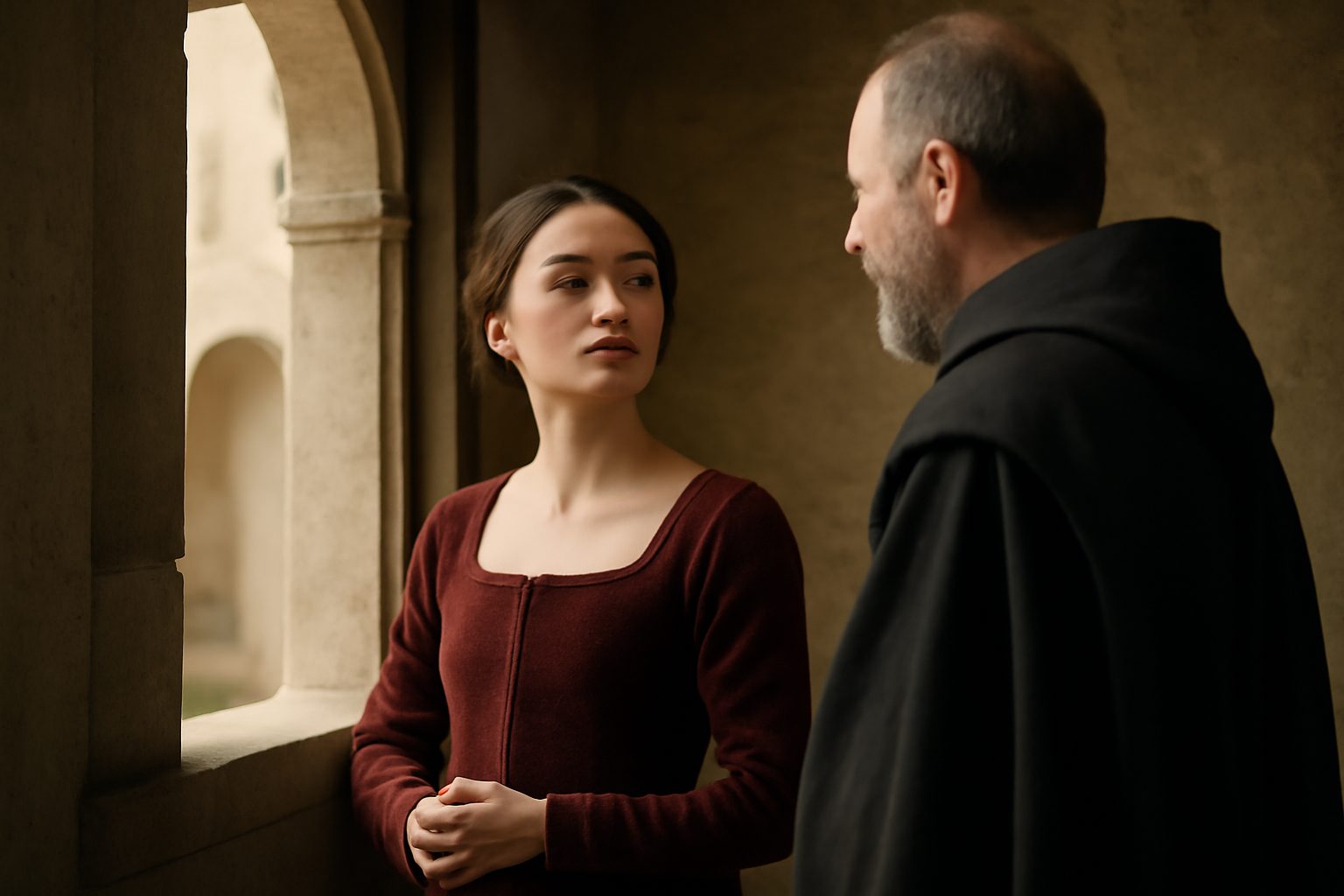
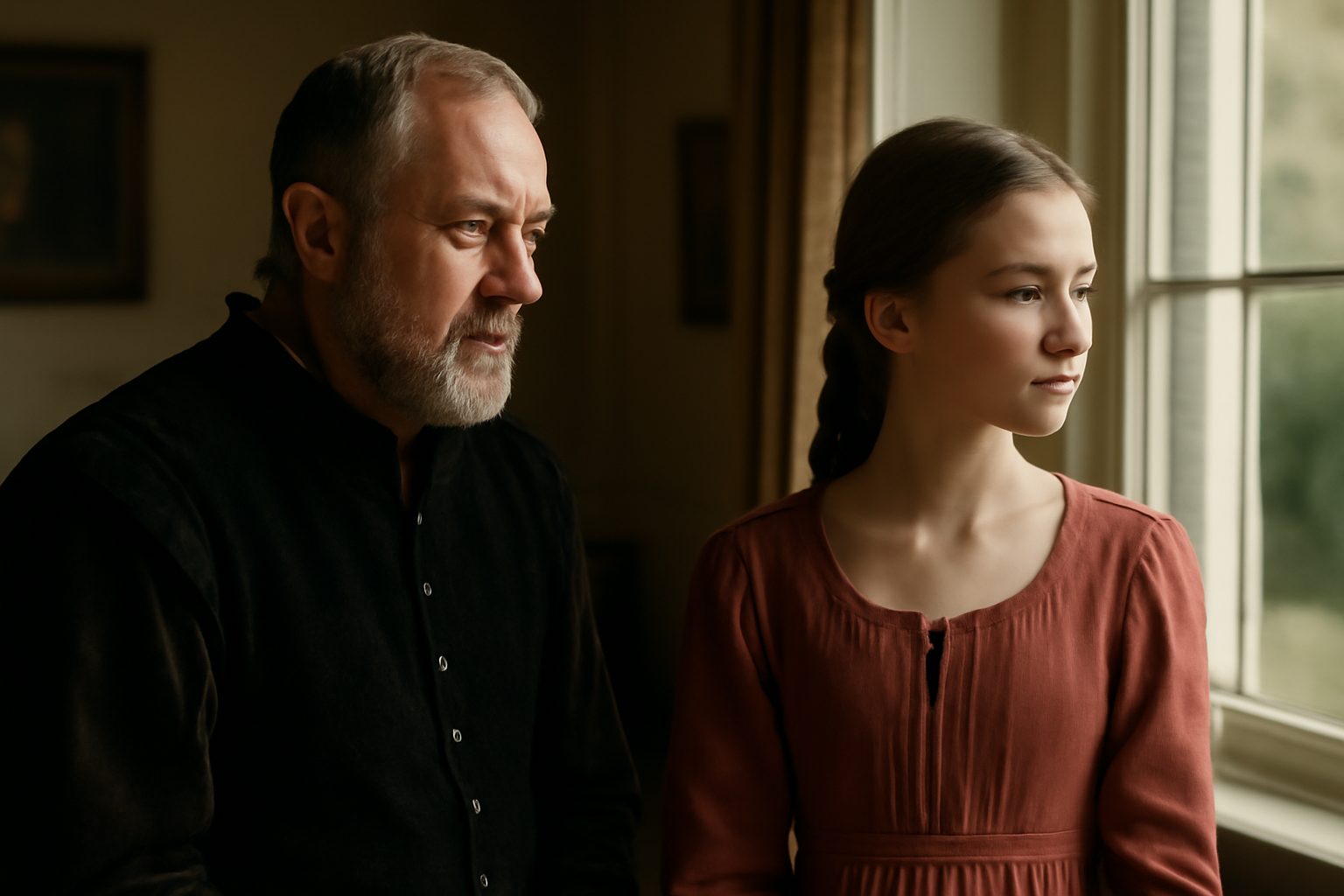
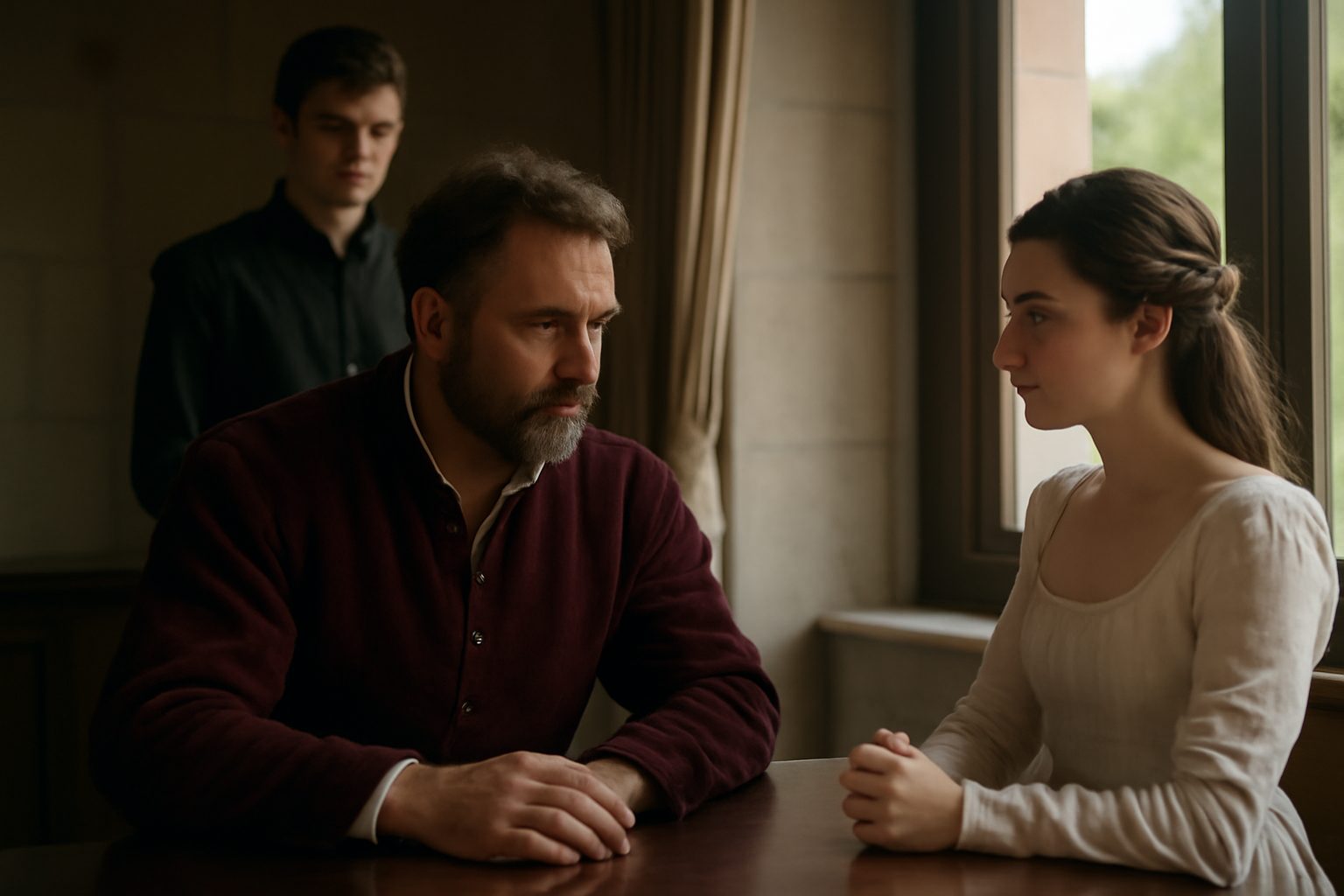
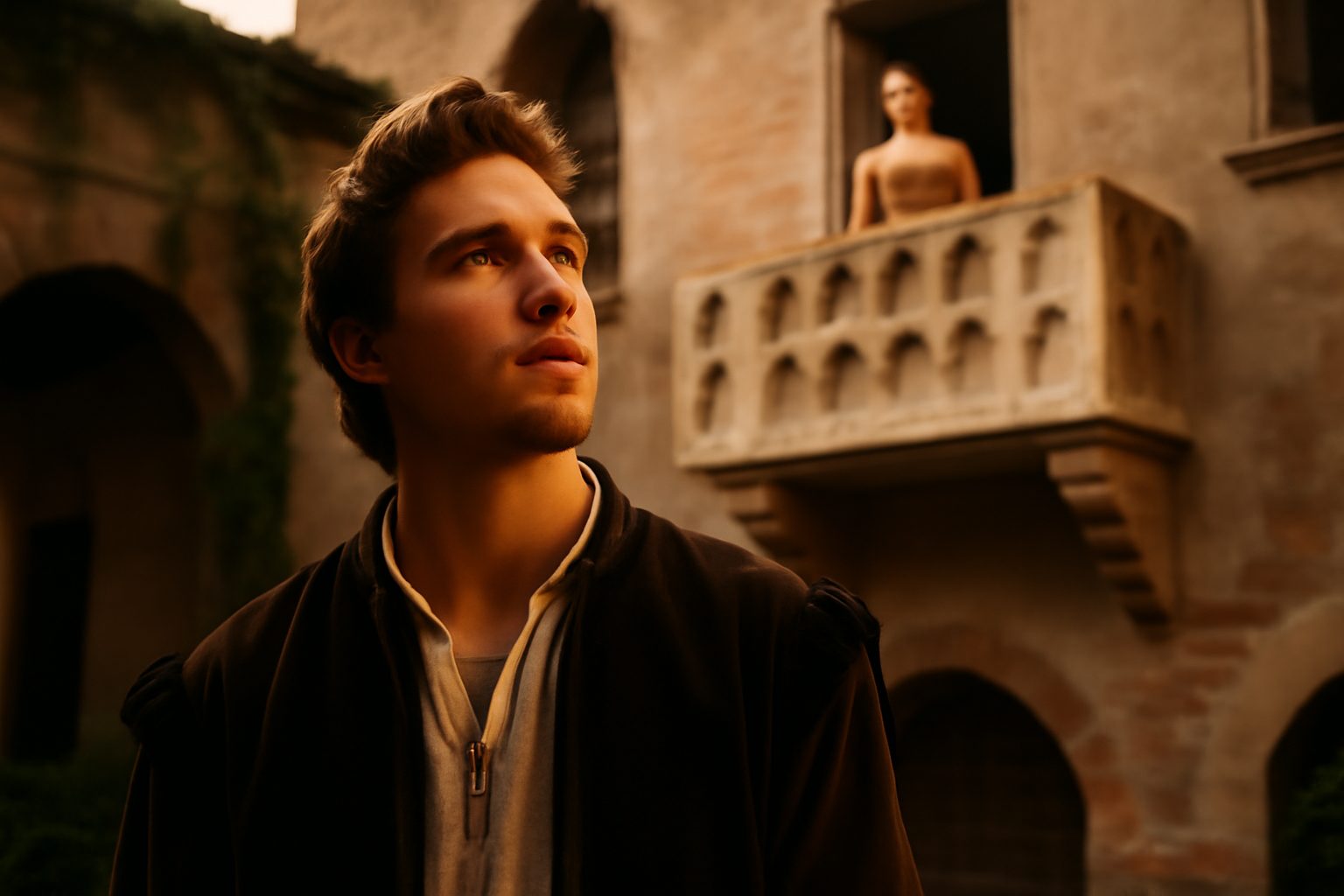
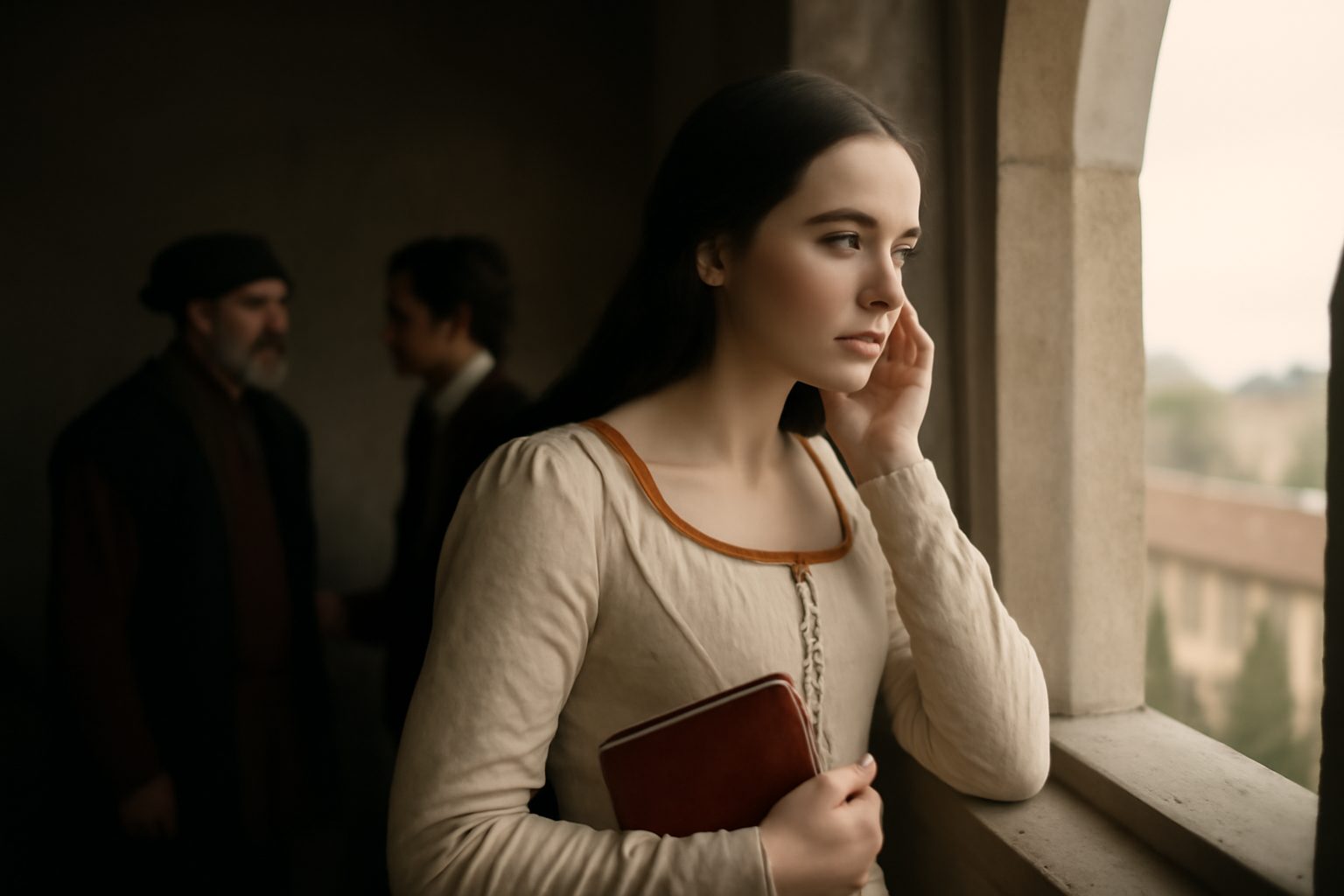
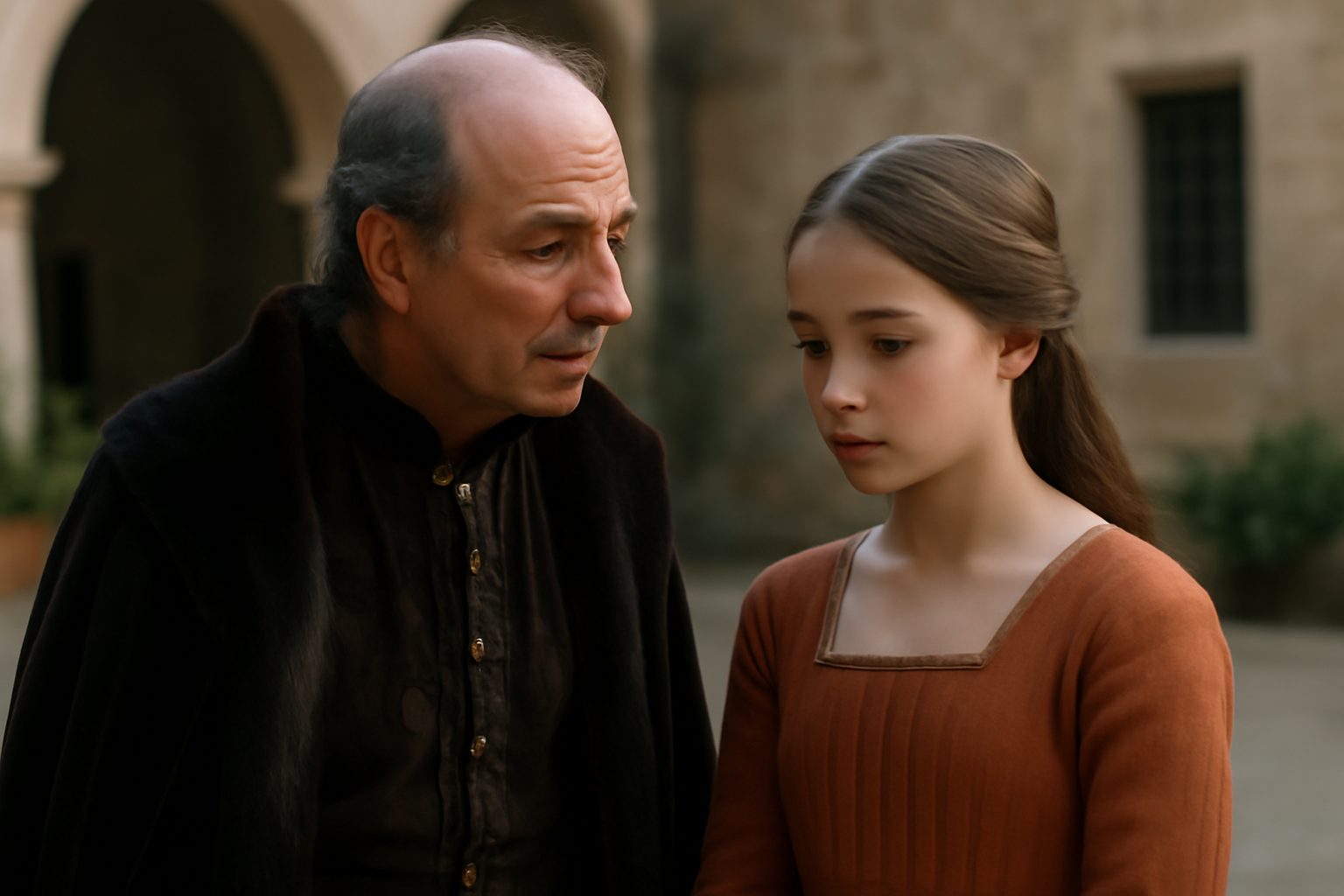
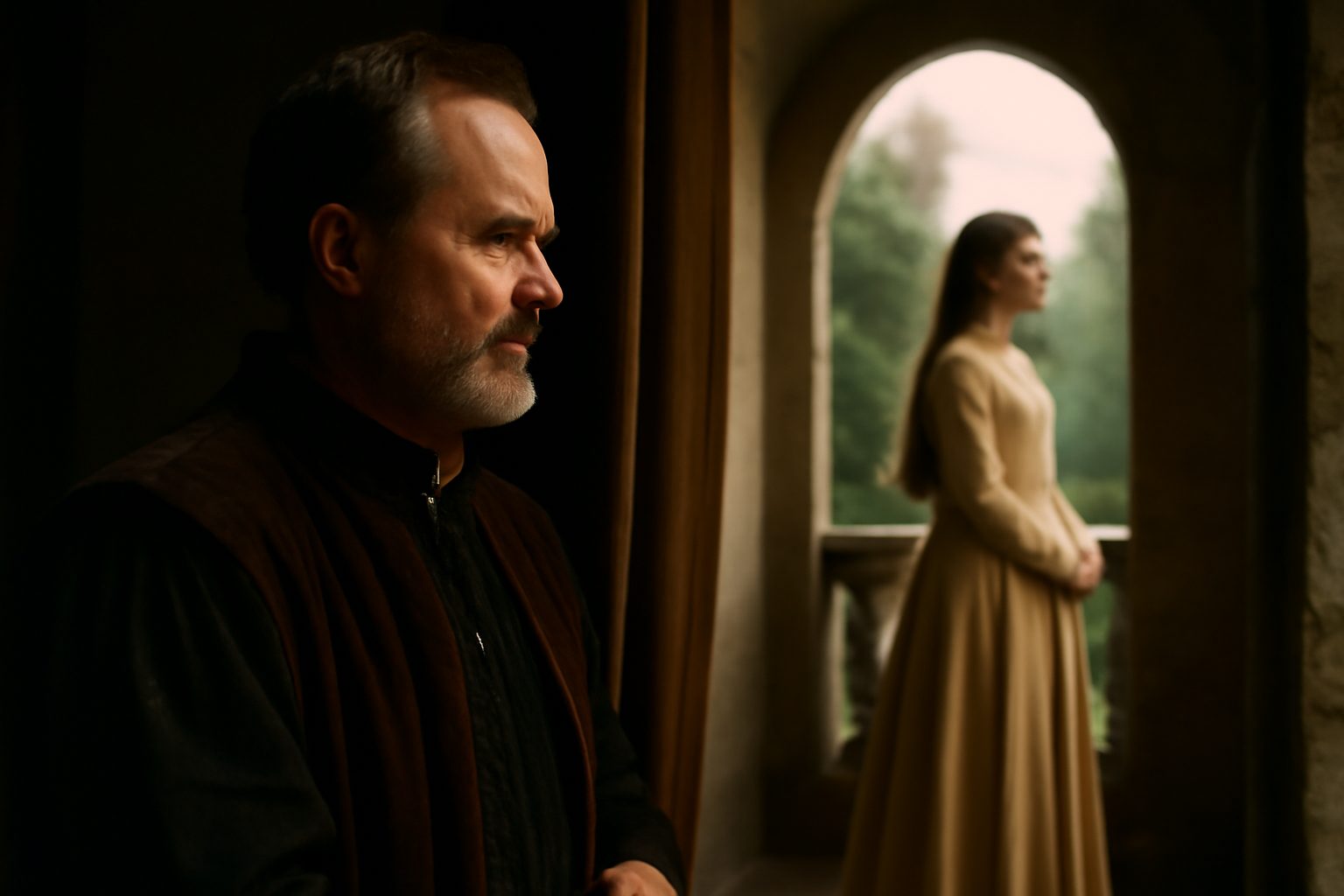
In Act 1, Scene 2 of Romeo and Juliet, Paris presses Capulet for an answer regarding his proposal to marry Juliet. Capulet, though hesitant, responds warmly to Paris's persistence, suggesting that his presence adds to the joy of the gathering. This line reflects Capulet's polite but noncommittal attitude toward the match at this early stage.
Capulet: "One more, most welcome, makes my number more."
In modern day english, we would say:
Having one more person join us is a pleasure and adds to our group.
Frequently Asked Questions
What does Capulet mean when he says that one more person is welcome to make his number more?
Capulet is saying that he is happy to have another guest at his party, as it will increase the total number of attendees.
Connections to other verses:
Connections to the Feast Invitation
The verse "One more, most welcome, makes my number more" is spoken by Capulet as he invites Paris to his feast, emphasizing the growing list of esteemed guests. This directly relates to This night I hold an old accustom'd feast, where Capulet announces the event, and Whereto I have invited many a guest, which underscores the scale of the gathering. The welcoming tone is echoed in At my poor house look to behold this night, reinforcing Capulet's hospitality.
Links to Juliet and Paris's Courtship
Capulet’s remark about increasing his guest number ties into his earlier dialogue with Paris about Juliet. In But woo her, gentle Paris, get her heart, Capulet encourages Paris to win Juliet’s affection, and the feast serves as an opportunity for this. The idea of choice and consent in An she agree, within her scope of choice aligns with Capulet’s inclusive approach to the guest list, suggesting Juliet’s future is among these attendees.
Atmosphere and Imagery of the Feast
The phrase "makes my number more" contributes to the vibrant imagery of the feast described elsewhere. Earth-treading stars that make dark heaven light poetically depicts the guests, while Among fresh female buds shall you this night hints at the young women present, including Juliet. The celebratory mood is reinforced in Such comfort as do lusty young men feel, connecting the growing number of guests to the joy of the event.
Contrast with Romeo’s Melancholy
While Capulet celebrates his expanding guest list, Romeo’s sorrow over Rosaline provides a stark contrast. Benvolio’s advice in Take thou some new infection to thy eye and Compare her face with some that I shall show urges Romeo to attend the feast and see other women, indirectly linking to Capulet’s welcome. The idea of "number" in guests juxtaposes with Romeo’s fixation on one love, emphasized in One fairer than my love! the all-seeing sun, where he doubts any could surpass Rosaline.
Structural and Thematic Echoes
Capulet’s line about welcoming more guests structurally mirrors the servant’s task in Through fair Verona; find those persons out, who is also adding to the list of invitees. The theme of inclusion recurs in Such as I love; and you, among the store, where Capulet groups Paris with loved ones. Additionally, the notion of abundance ties to With all the admired beauties of Verona, highlighting the feast as a microcosm of Verona’s society.