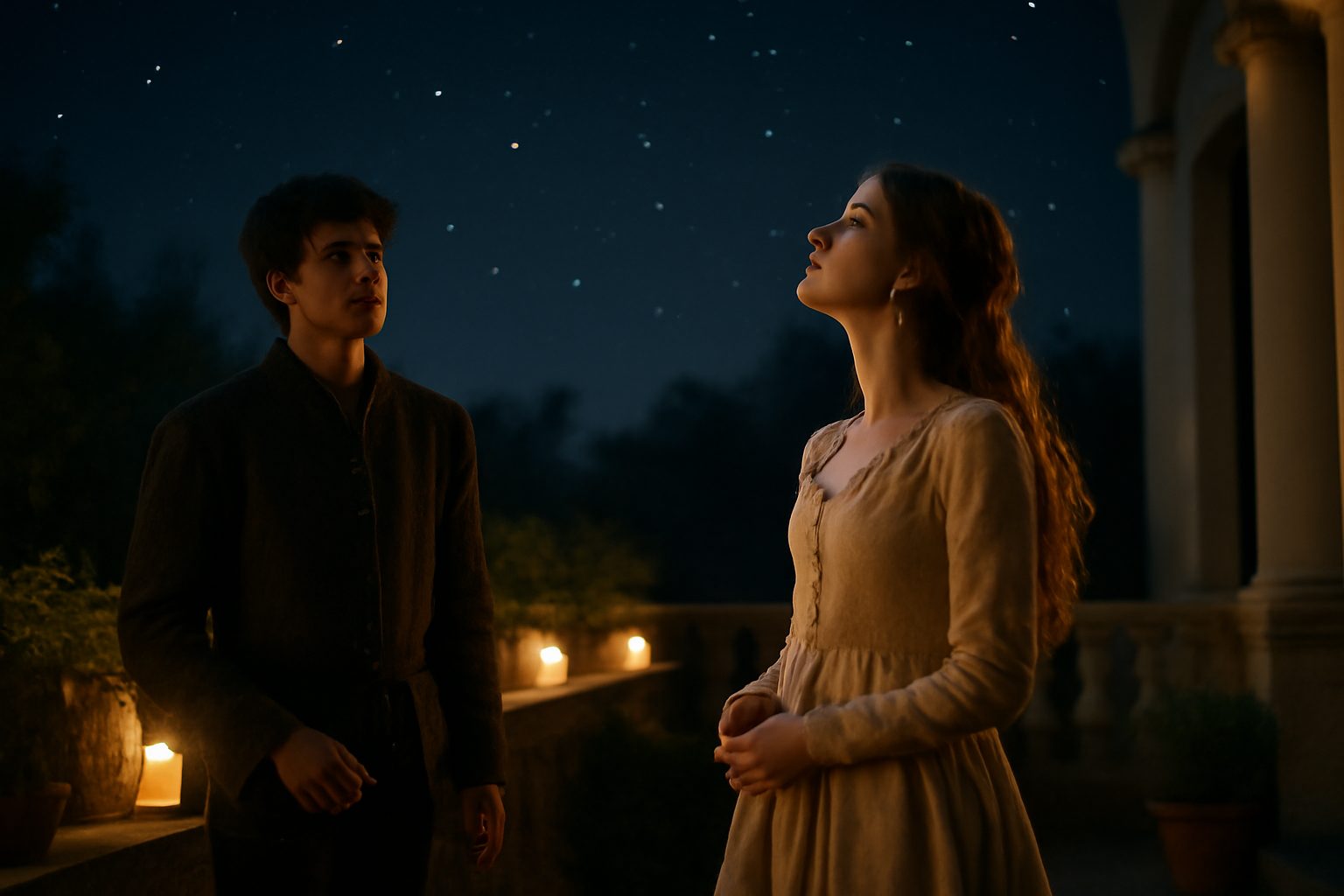
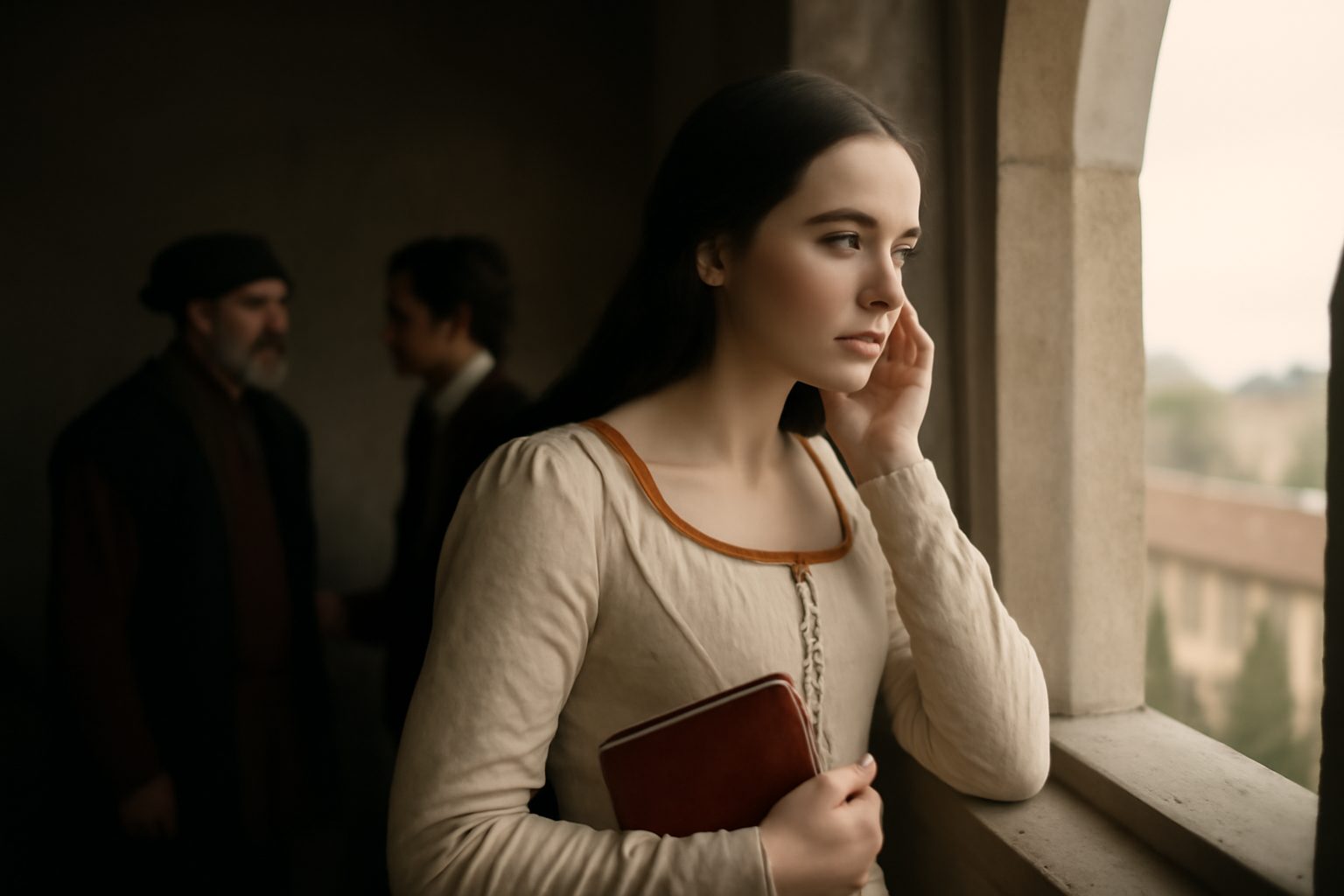
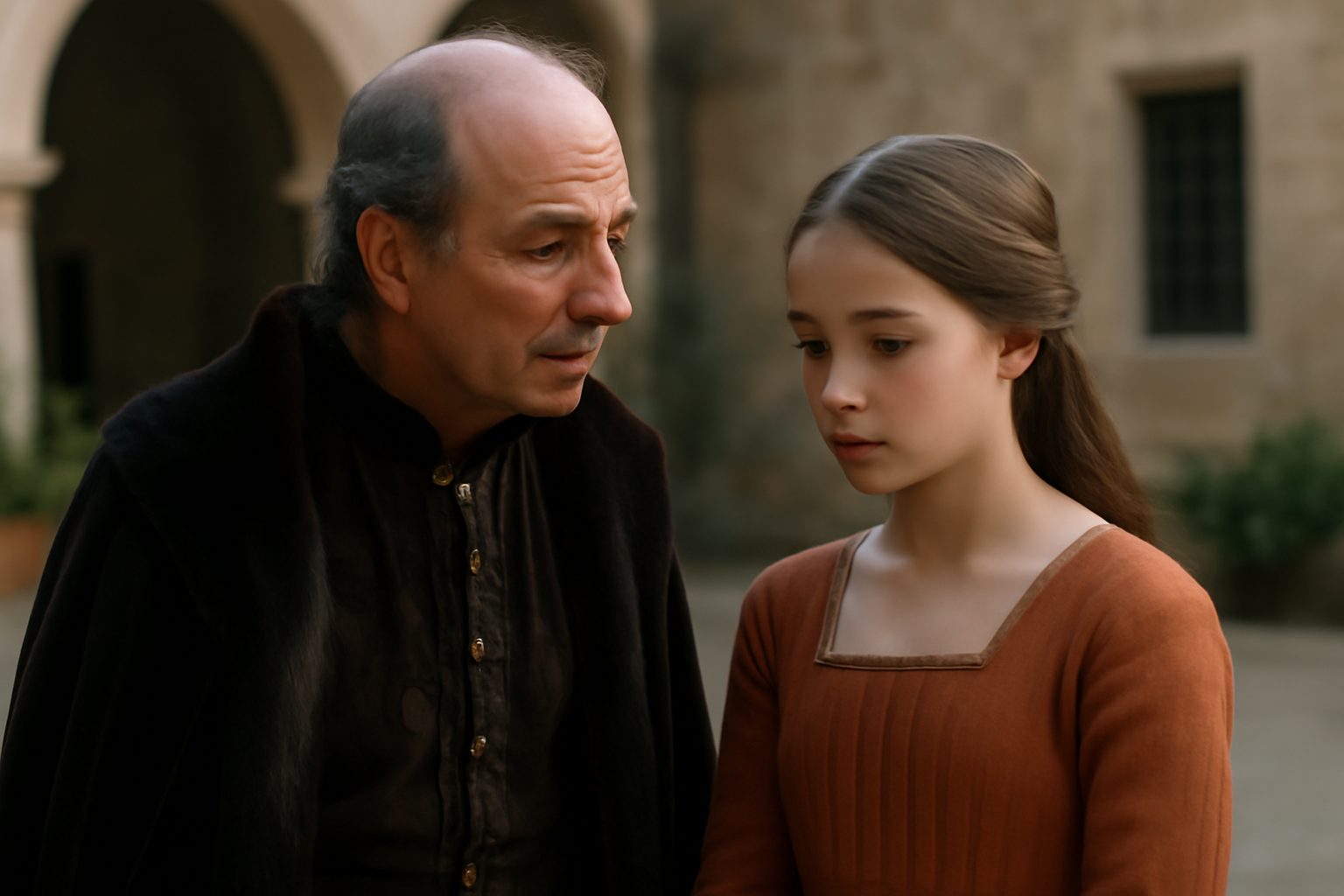
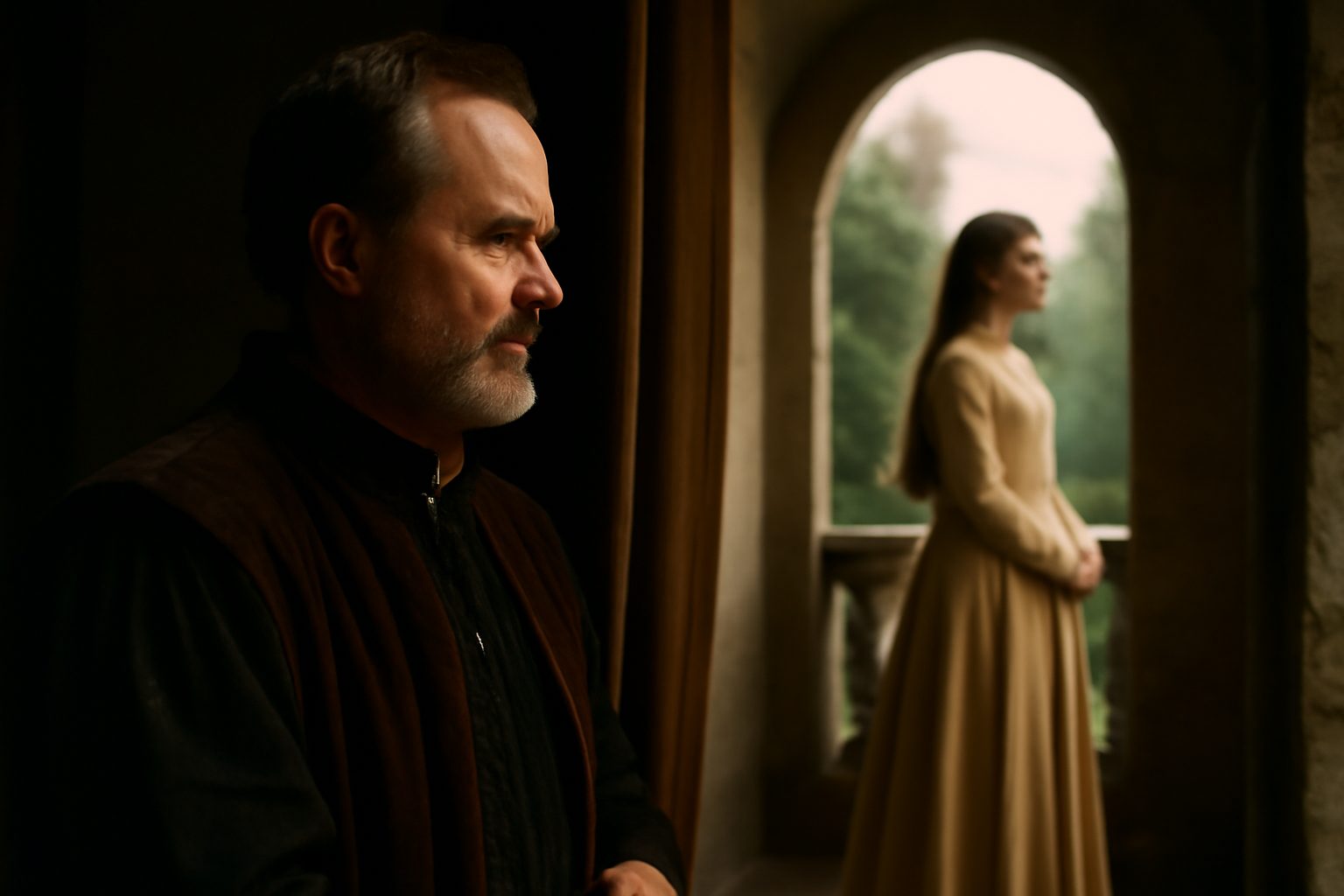
In Act 1, Scene 2 of Romeo and Juliet, Paris speaks to Capulet about his desire to marry Juliet. As Capulet hesitates, urging patience due to Juliet's youth, he compares the fleeting joys of life to the slow, fading steps of winter. This metaphor underscores his cautious approach, suggesting that rushing into things may spoil the natural course of love and time.
Capulet: "Of limping winter treads, even such delight"
In modern day english, we would say:
Even the slow, fading days of winter bring as much joy as this.
Frequently Asked Questions
What does Capulet compare to the joy of winter ending in this line?
Capulet compares the joy of seeing young people at his party to the delight of winter coming to an end.
Connections to other verses:
Connections to "Of limping winter treads, even such delight"
The verse Of limping winter treads, even such delight is part of Capulet's invitation to Paris, describing the joy of spring's arrival after winter. It connects thematically and structurally to several other lines in the scene.
Seasonal and Imagery Links
This line directly follows When well-apparell'd April on the heel, creating a continuous seasonal metaphor where April's elegance displaces winter's limp. The delight mentioned anticipates Such comfort as do lusty young men feel, connecting natural renewal to human vitality.
Feast and Social Context
The delight leads into Capulet's description of his feast, particularly Among fresh female buds shall you this night, where "female buds" extends the spring metaphor to young women. The gathering is further detailed in This night I hold an old accustom'd feast and Whereto I have invited many a guest, emphasizing the social joy mirroring seasonal change.
Character and Choice Themes
Capulet's emphasis on delight and choice resonates with An she agree, within her scope of choice and Lies my consent and fair according voice, showing his willingness to let Juliet decide, much as nature transitions seamlessly.
Contrast with Romeo's Perspective
While Capulet celebrates renewal, Romeo's despair contrasts sharply. His lines like One desperate grief cures with another's languish and Take thou some new infection to thy eye present love as affliction, opposing Capulet's natural delight. Benvolio's advice in Go thither; and, with unattainted eye urges Romeo to embrace the feast's joy, directly challenging his melancholy.