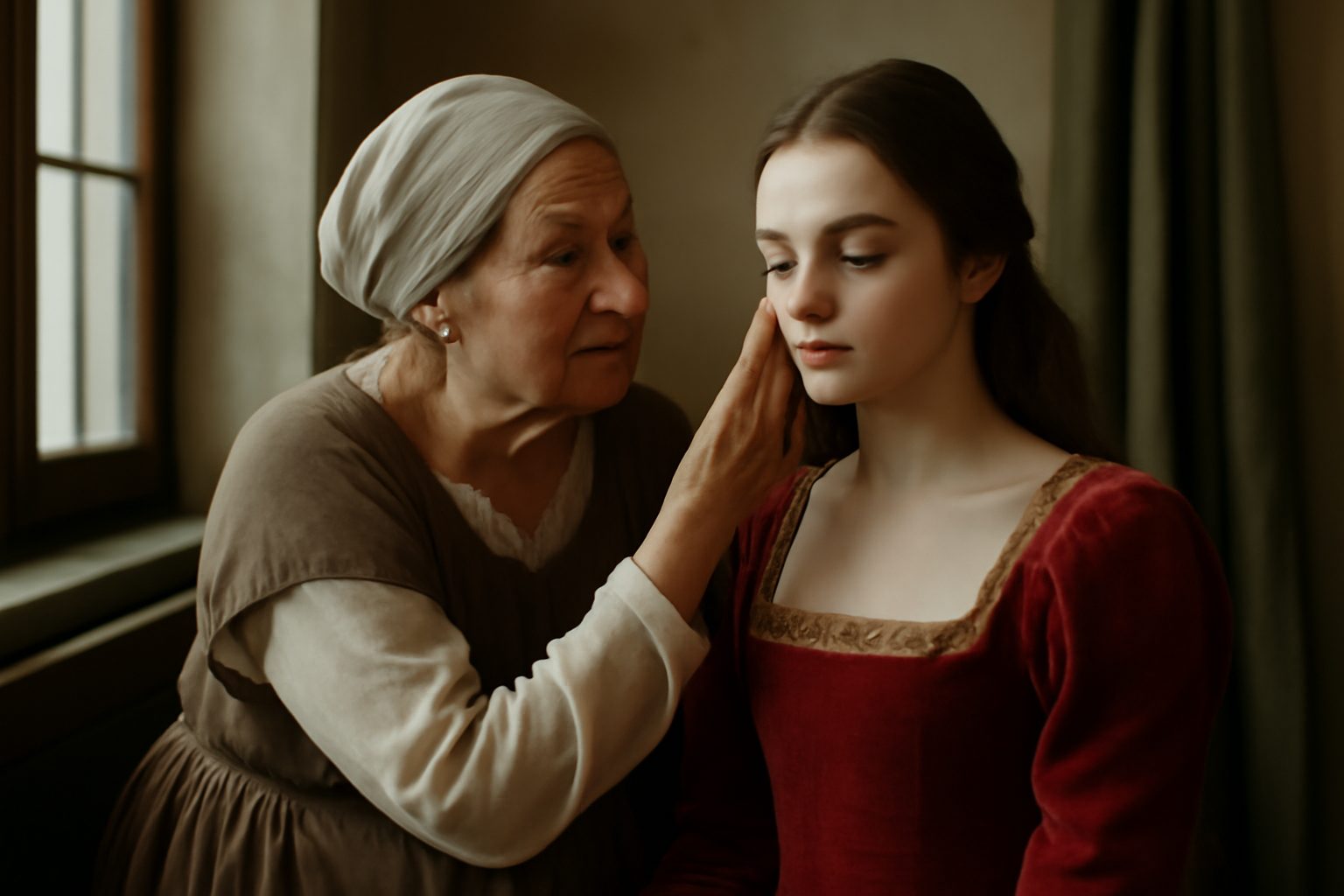
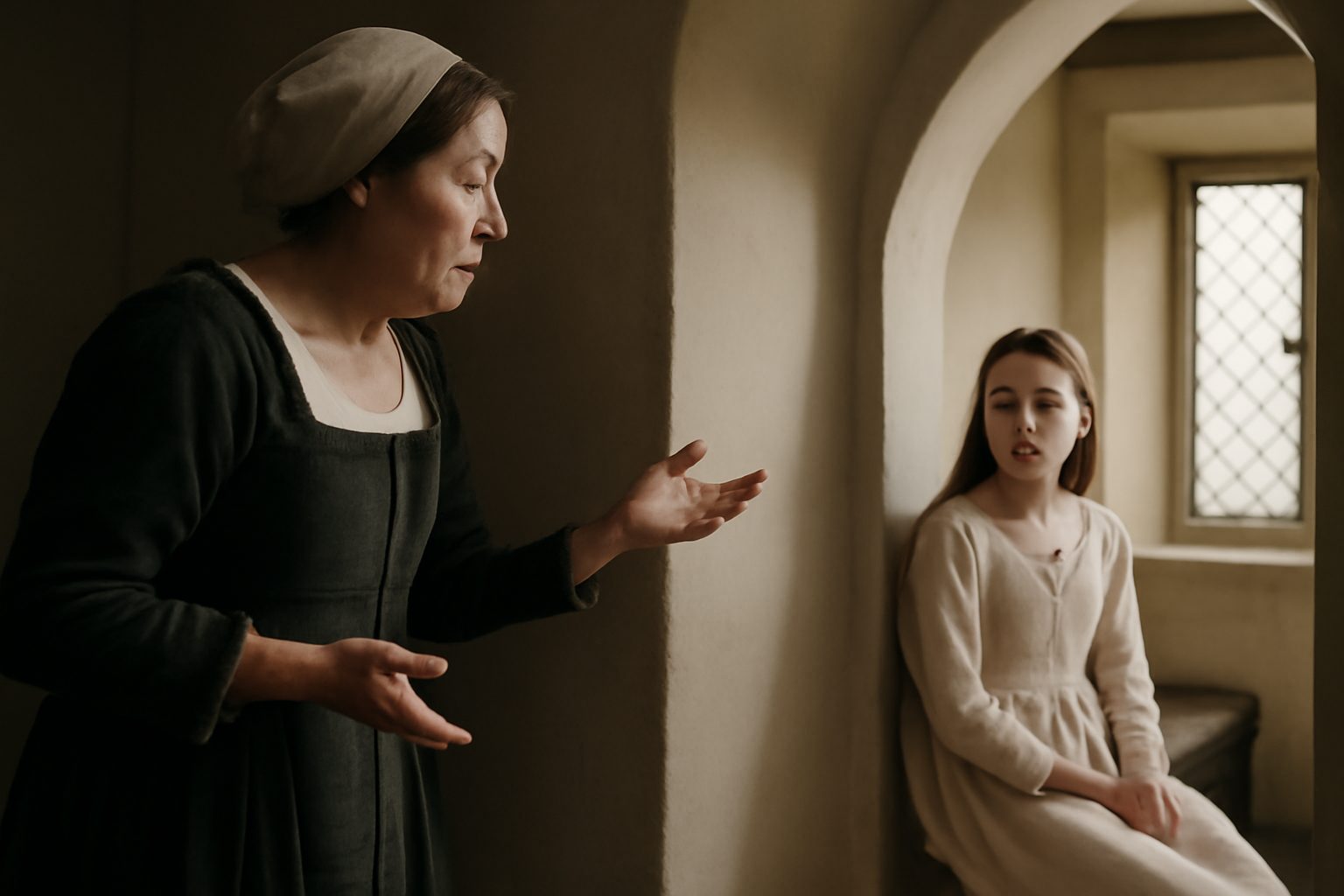
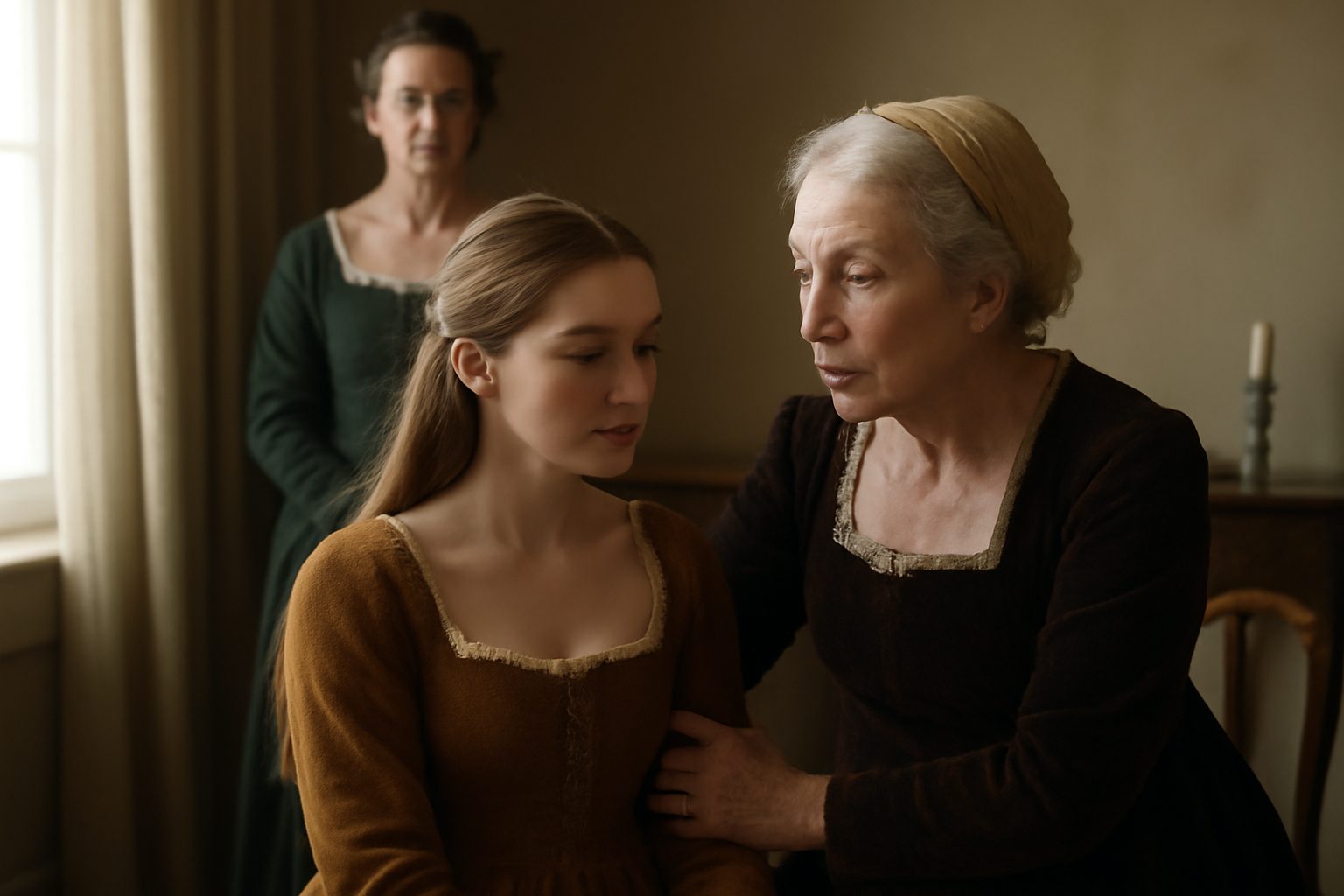
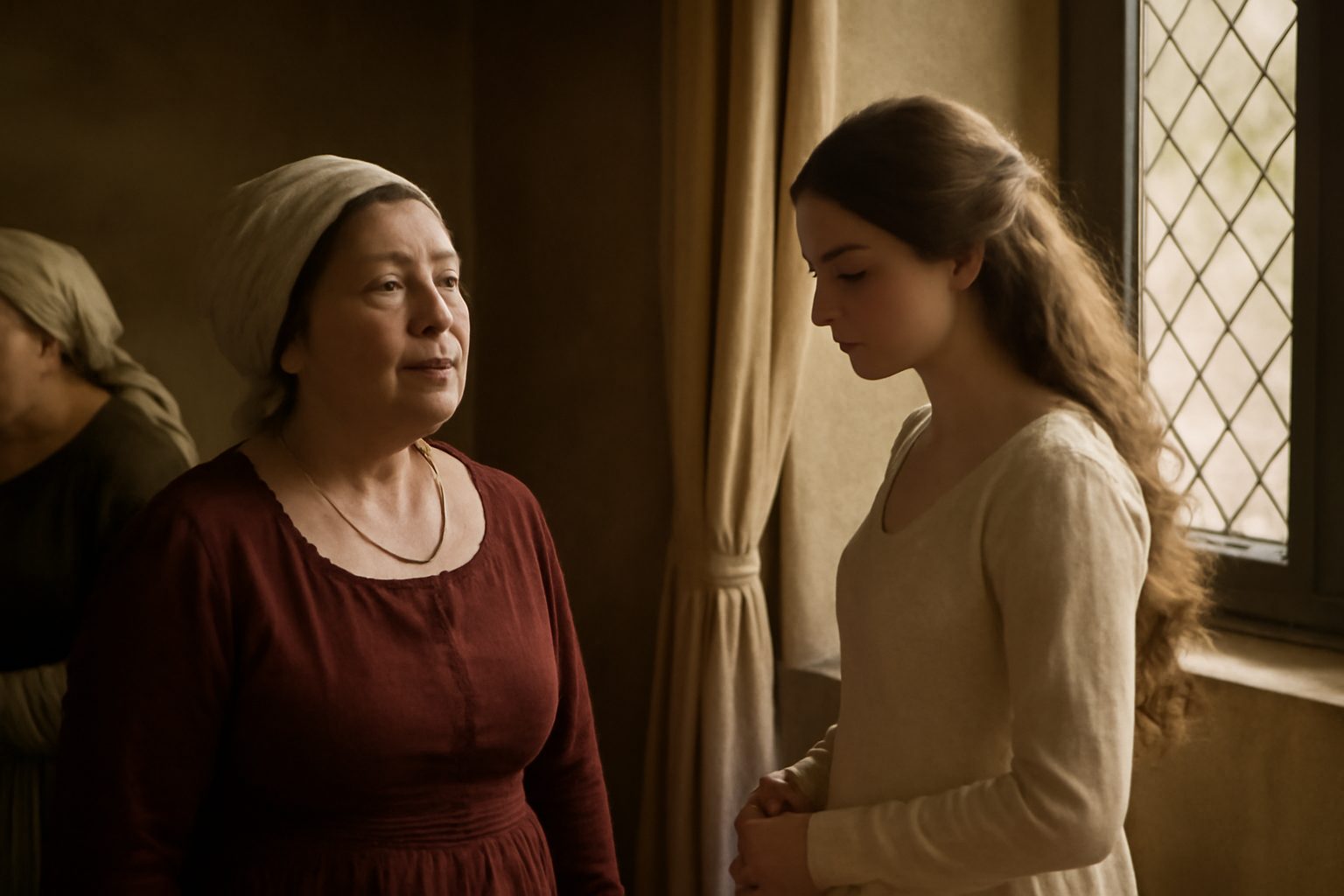
In Act 1, Scene 3 of Romeo and Juliet, the Nurse reminisces about Juliet's childhood, sharing a fond yet comical memory. She recalls an incident where young Juliet fell and injured her forehead, an event she brings up to highlight Juliet's growth and resilience. This brief anecdote adds warmth to the Nurse's character while subtly foreshadowing Juliet's later struggles.
Nurse: "For even the day before, she broke her brow:"
In modern day english, we would say:
Just the day before, she had cut her forehead.
Frequently Asked Questions
What happened to Juliet the day before the nurse mentions in this line?
Juliet hurt her forehead.
Connections to other verses:
Connections to "For even the day before, she broke her brow:"
The verse "For even the day before, she broke her brow:" is part of the Nurse's nostalgic recounting of Juliet's childhood. It connects thematically and narratively to several other verses in the scene, particularly those detailing Juliet's infancy and the Nurse's personal memories.
Connection to Juliet's Age and Milestones
This line is immediately preceded by the Nurse's mention of Juliet's weaning in "And she was wean'd,--I never shall forget it,--", situating the injury within the timeline of Juliet's early development. The Nurse's precise recollection of Juliet's age, emphasized in "Faith, I can tell her age unto an hour.", frames the anecdote as part of her intimate knowledge of Juliet's life.
Connection to the Earthquake Reference
The Nurse contextualizes the event by noting it occurred "eleven years" prior, aligning with the earthquake mentioned in "Tis since the earthquake now eleven years;" and "And since that time it is eleven years;". This temporal marker ties Juliet's childhood mishap to a significant event in Verona's history, blending personal and communal memory.
Connection to the Nurse's Anecdotal Style
The Nurse's humorous and vivid storytelling is evident in related verses, such as "Yea,' quoth he, 'dost thou fall upon thy face?" and "Yea,' quoth my husband,'fall'st upon thy face?", which directly reference the same incident. Her husband's jest about Juliet falling forward (resulting in the brow injury) is echoed here, highlighting the Nurse's fondness for recounting this playful moment.
Connection to Juliet's Physical Development
The injury is mentioned alongside Juliet's ability to stand alone, as noted in "For then she could stand alone; nay, by the rood," and "She could have run and waddled all about;". These verses collectively paint a picture of a toddling Juliet, active and prone to childhood accidents, reinforcing the Nurse's role as a witness to her growth.
Connection to the Nurse's Emotional Tone
The Nurse's affectionate and somewhat boastful tone in "Thou wast the prettiest babe that e'er I nursed:" complements her focus on Juliet's early years, including the brow injury. Her pride in Juliet's resilience and charm permeates these recollections.