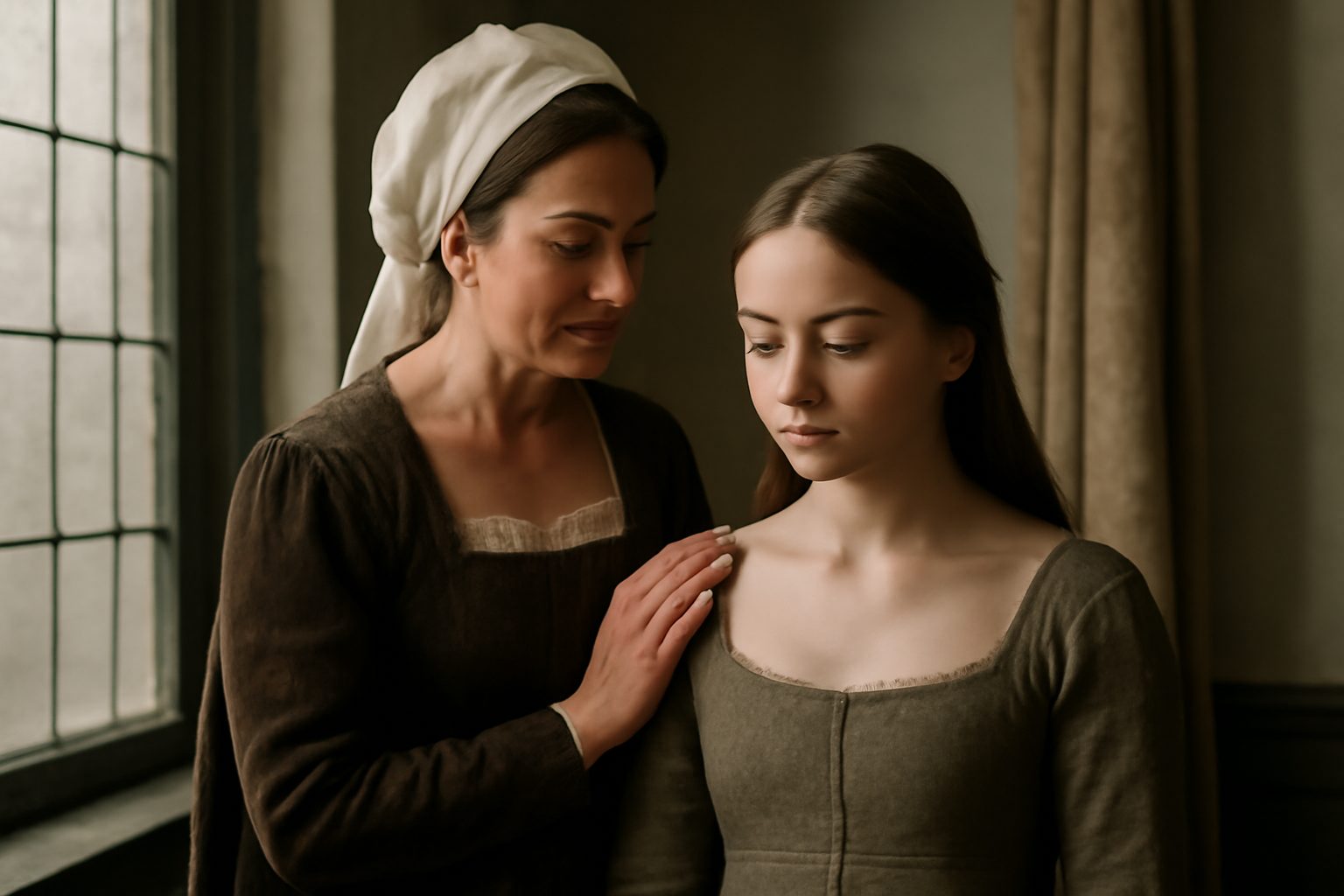
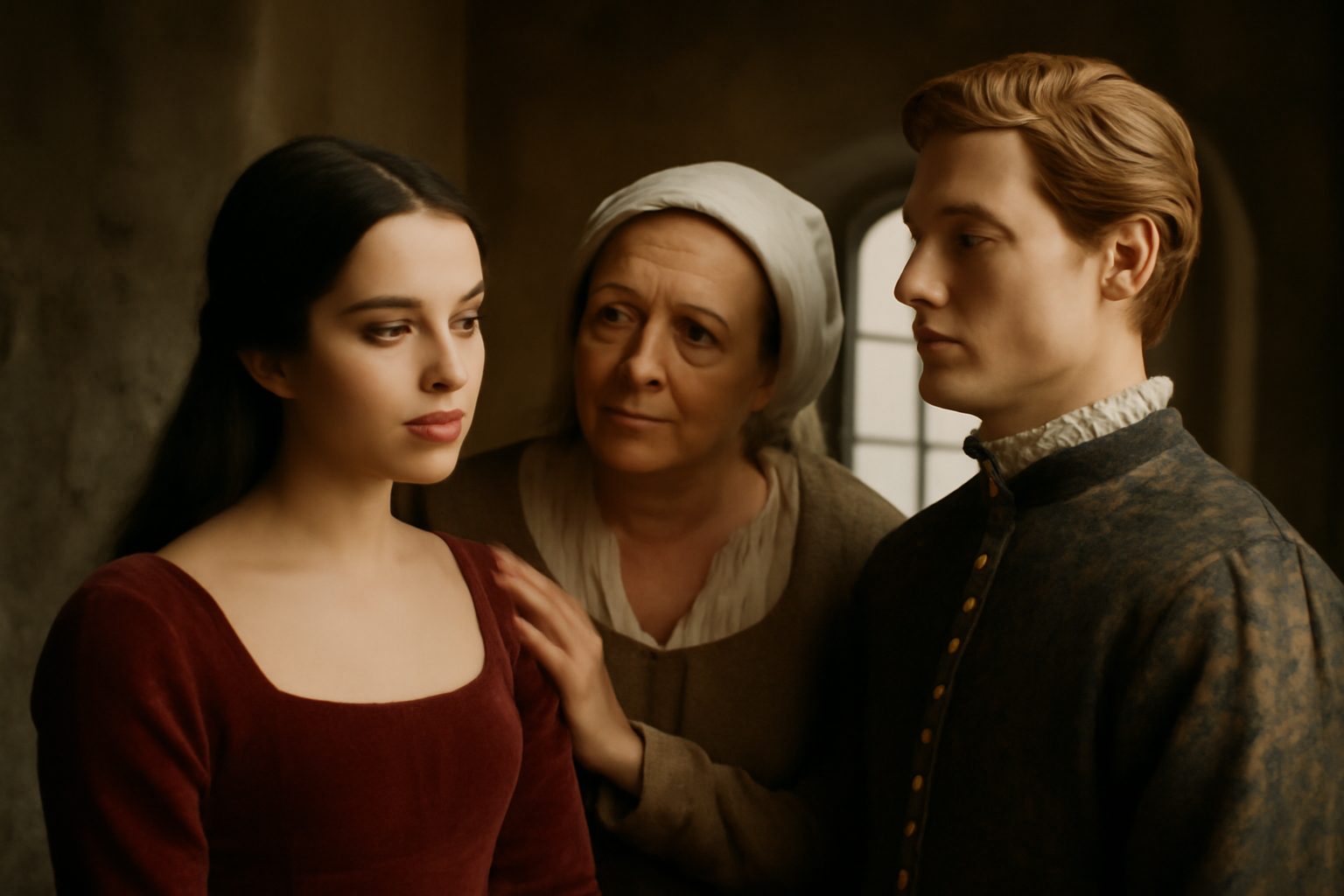
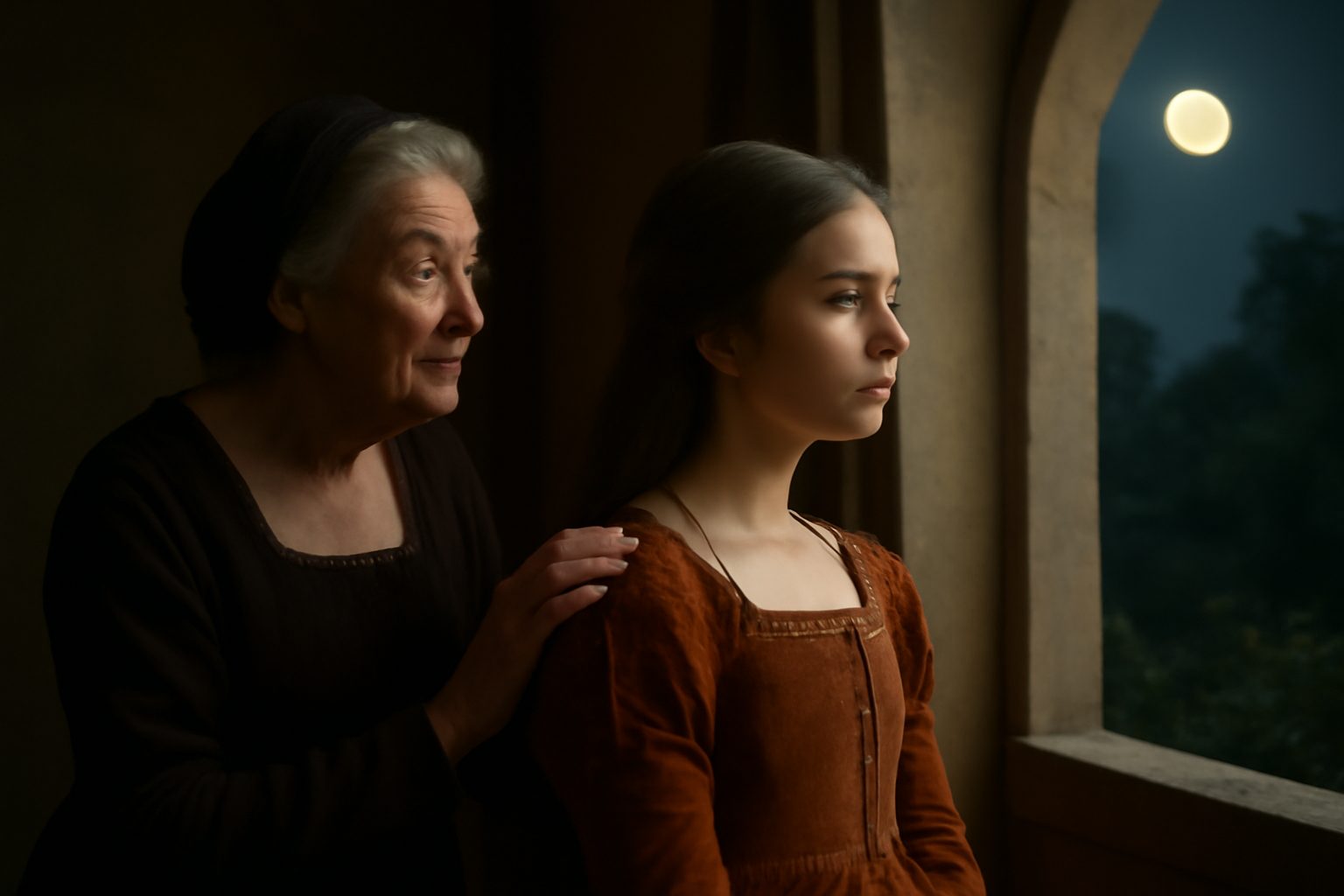
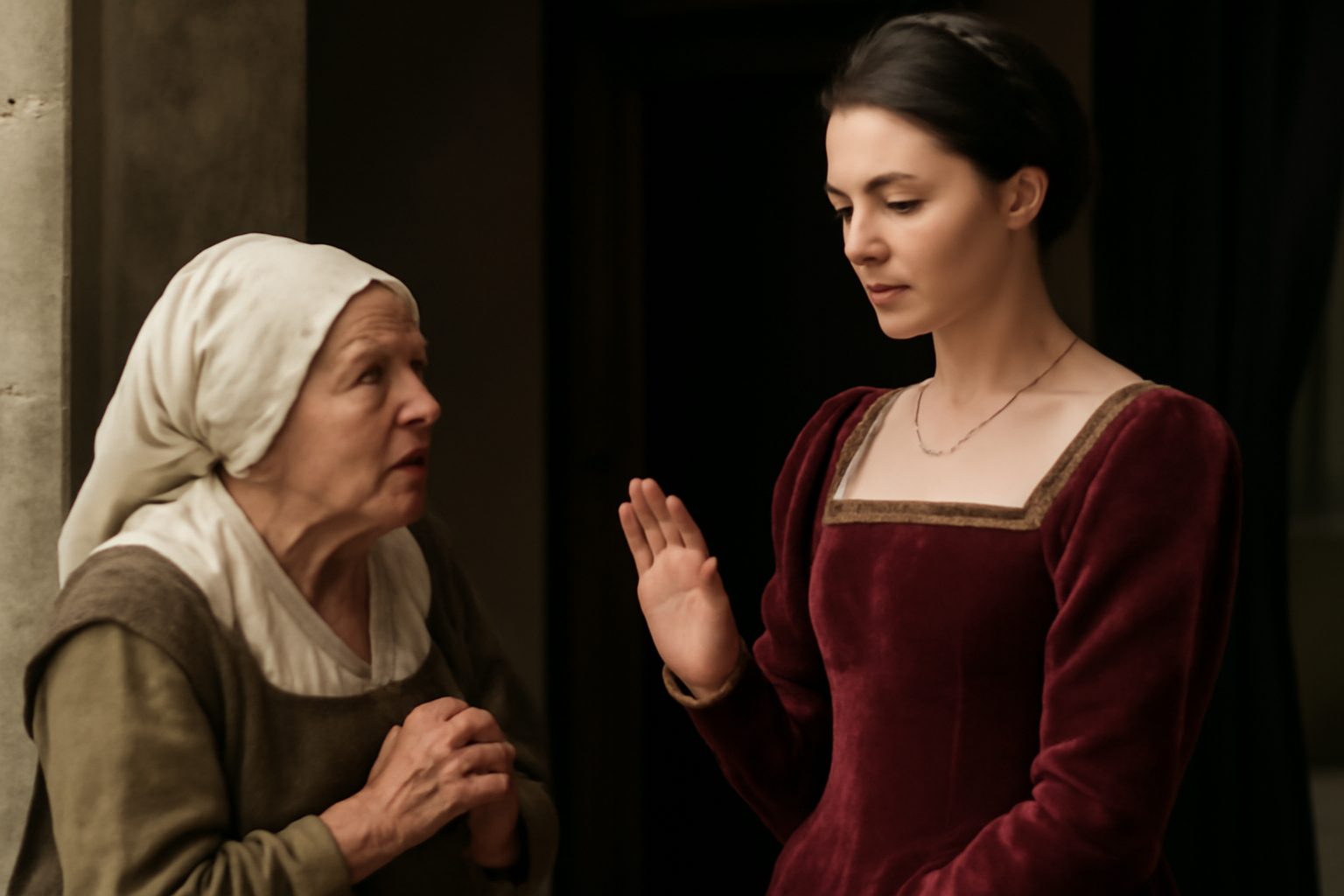
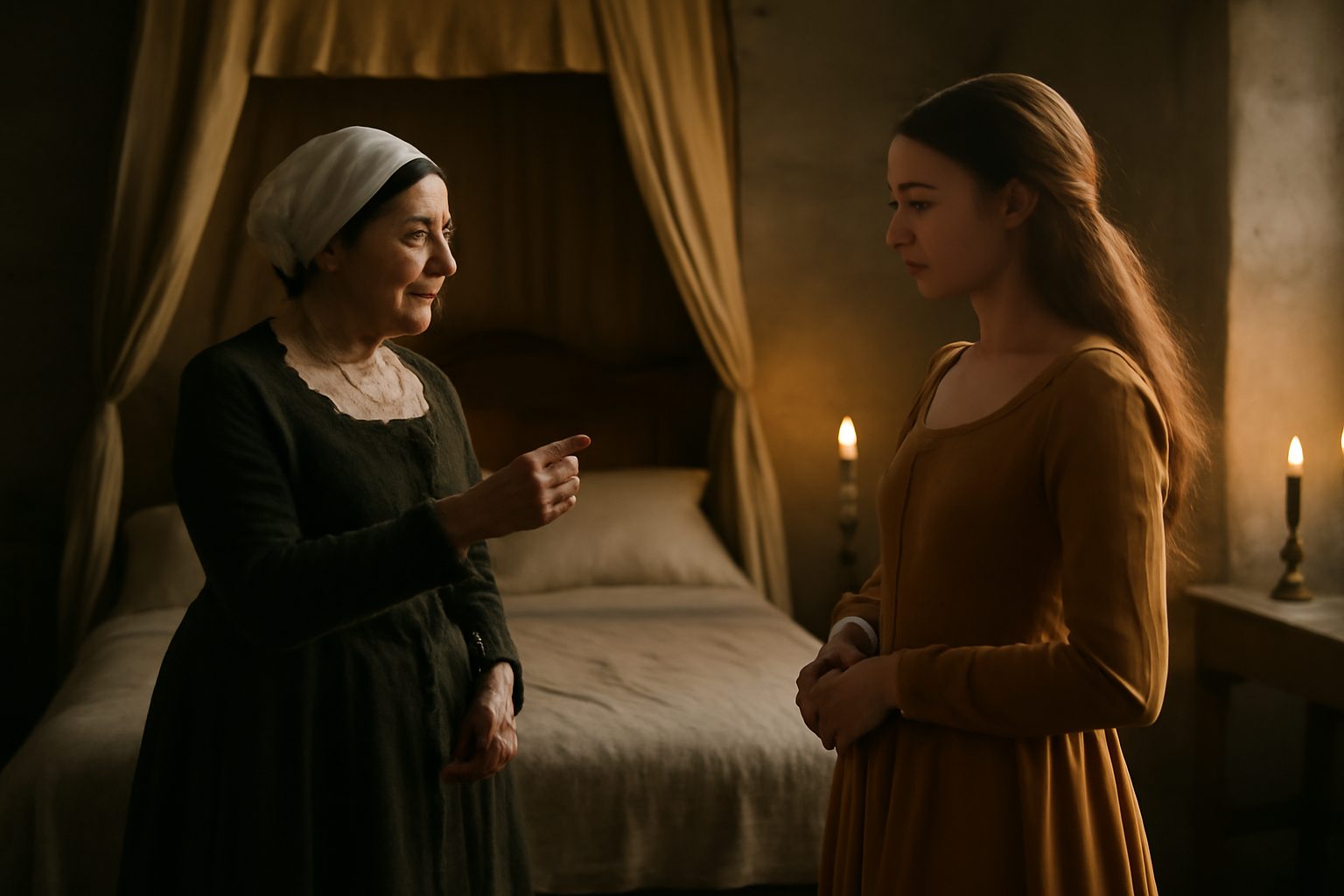
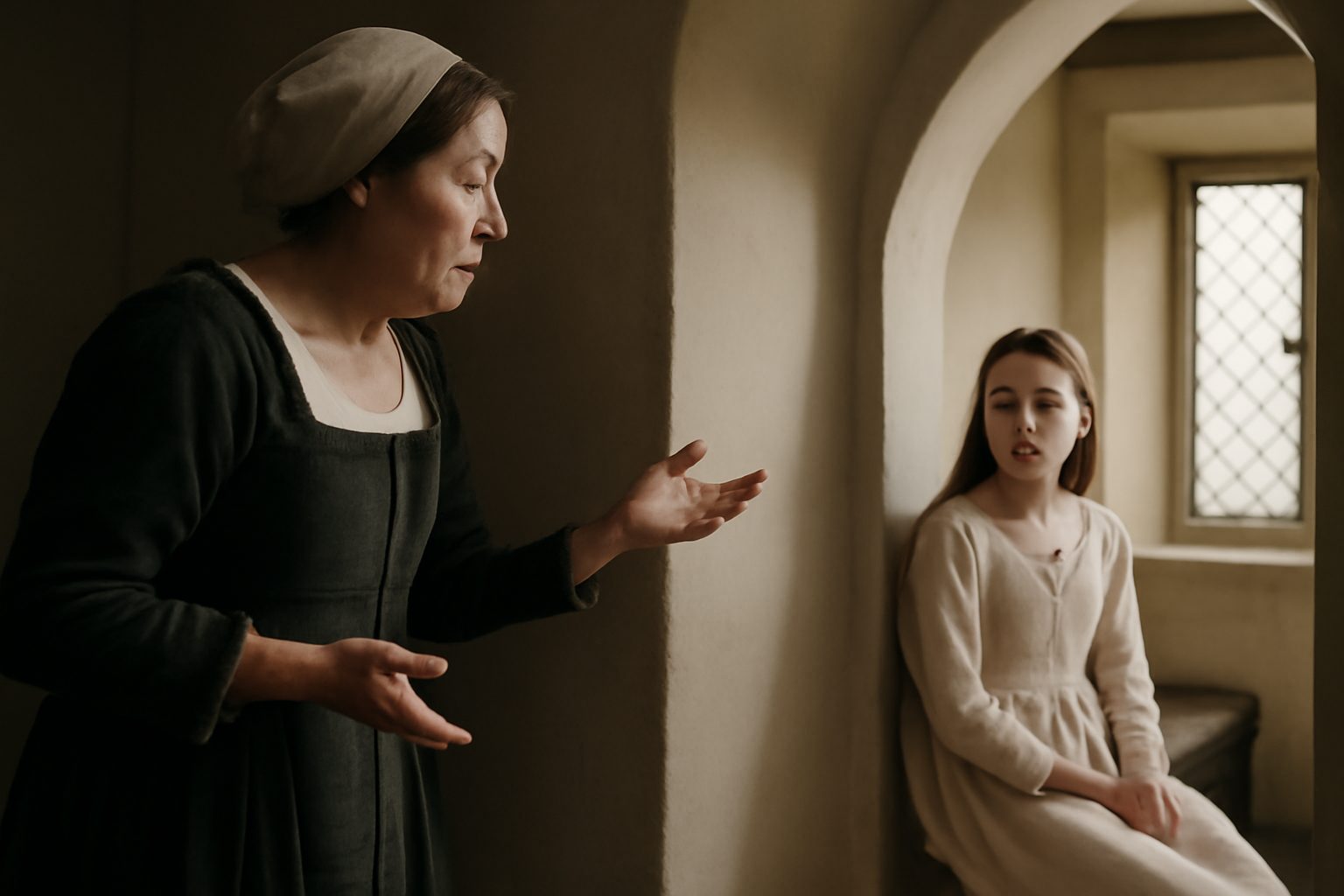
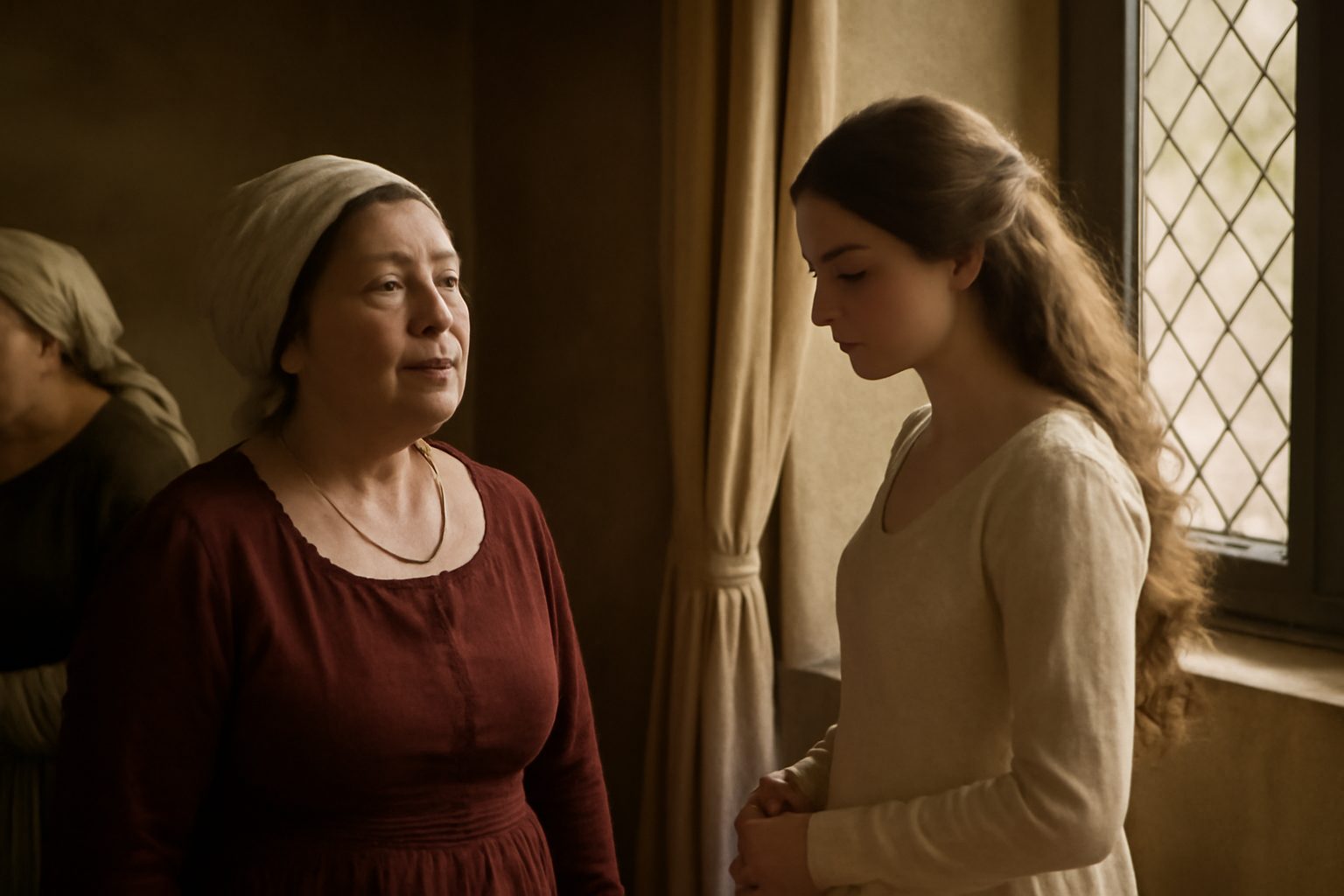
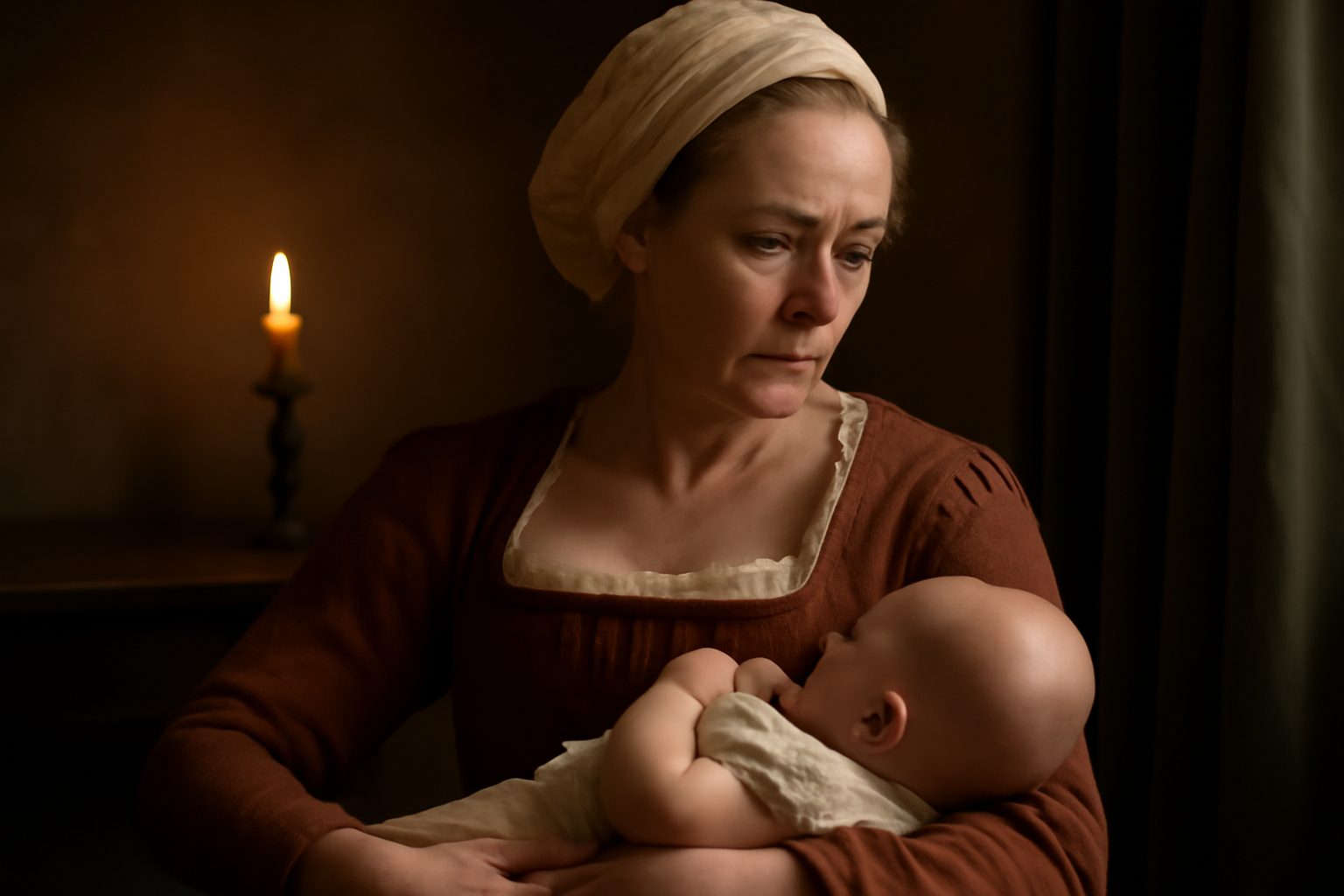
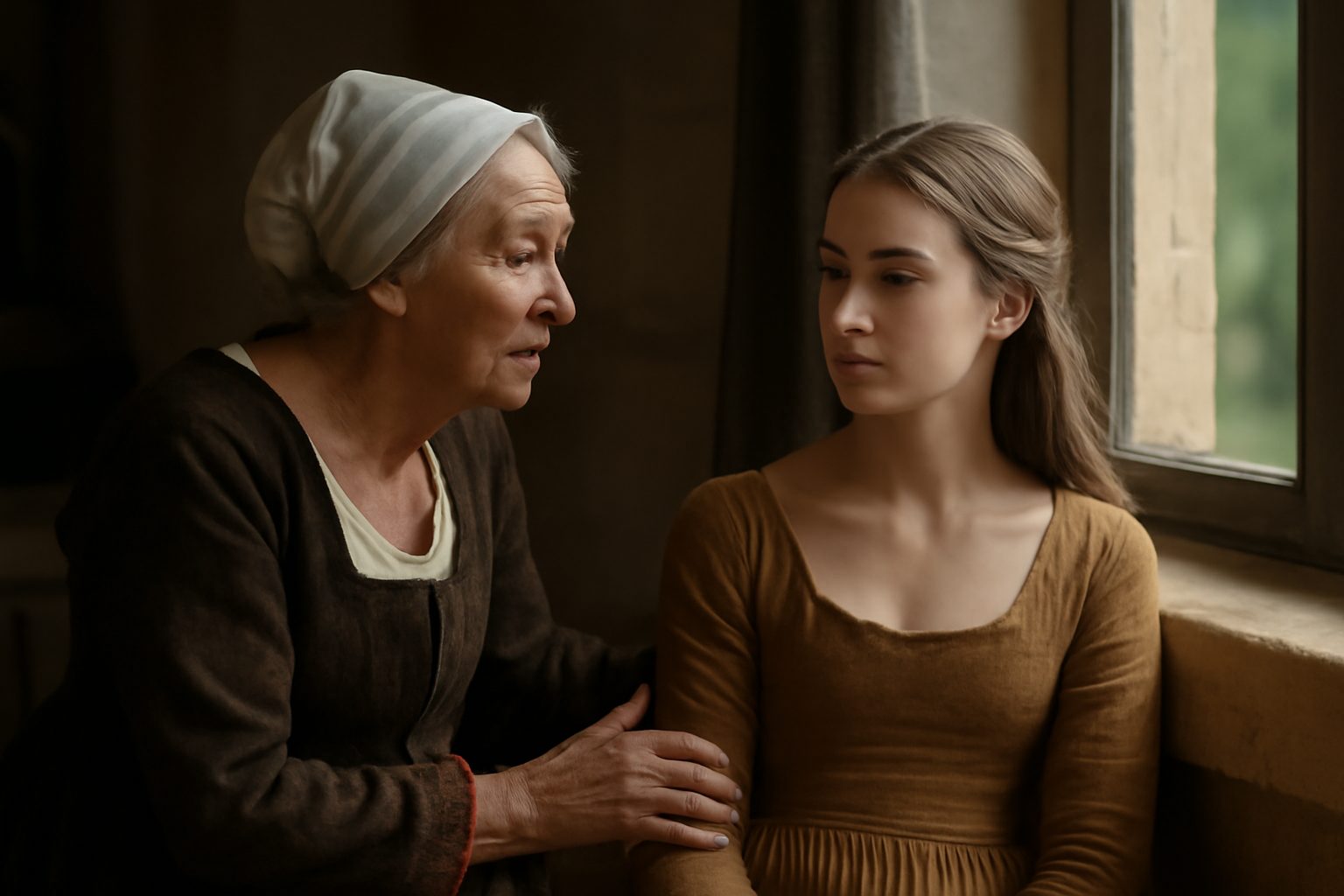
In Act 1, Scene 3 of Romeo and Juliet, the Nurse reminisces about her late husband and his playful nature. She recalls a fond memory of him joking with Juliet as a toddler, highlighting his cheerful personality. This brief anecdote adds warmth to the Nurse’s character while offering a glimpse into Juliet’s childhood.
Nurse: "A' was a merry man--took up the child:"
In modern day english, we would say:
He was a cheerful guy—he picked up the baby.
Frequently Asked Questions
What does the Nurse say about the man who took up the child?
She says he was a merry man.
Connections to other verses:
Connections to "A' was a merry man--took up the child:"
This verse, found at /romeo-and-juliet/one/1-3/act-1-scene-3-44/, is part of the Nurse's nostalgic recounting of Juliet's infancy. It connects thematically and narratively to several other verses in the scene.
Connection to Juliet's Infancy and the Nurse's Husband
The verse directly follows "And then my husband--God be with his soul!", establishing the "merry man" as the Nurse's late husband. It also precedes "Yea,' quoth he, 'dost thou fall upon thy face?", continuing the anecdote about his playful interaction with young Juliet.
Connection to Juliet's Early Words and Actions
The Nurse's memory of Juliet saying "Ay" in response to her husband's jest links to "The pretty wretch left crying and said 'Ay.'" and "To think it should leave crying and say 'Ay.'", emphasizing Juliet's early verbalization.
Connection to the Earthquake Reference
The Nurse's recollection is temporally anchored by the earthquake mentioned in "Tis since the earthquake now eleven years;" and "And since that time it is eleven years;", providing context for the timing of these childhood memories.
Connection to Weaning and Early Development
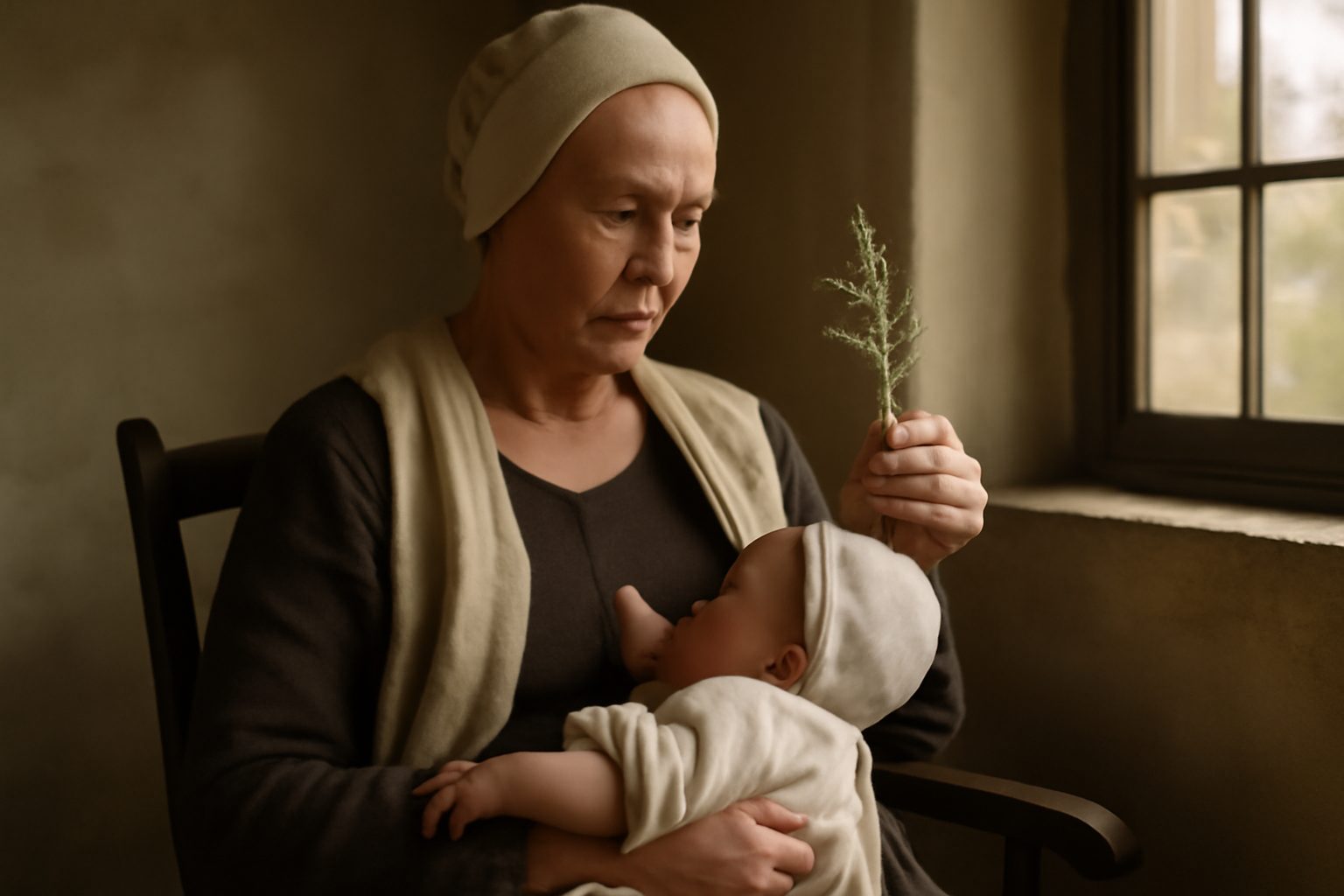
This playful moment contrasts with earlier verses about Juliet's weaning, such as "And she was wean'd,--I never shall forget it,--" and "For I had then laid wormwood to my dug,", showing different aspects of her infancy.
Connection to the Nurse's Character
The Nurse's fond remembrance of her husband's merriment illustrates her sentimental nature, also seen in "Thou wast the prettiest babe that e'er I nursed:", highlighting her deep affection for Juliet.