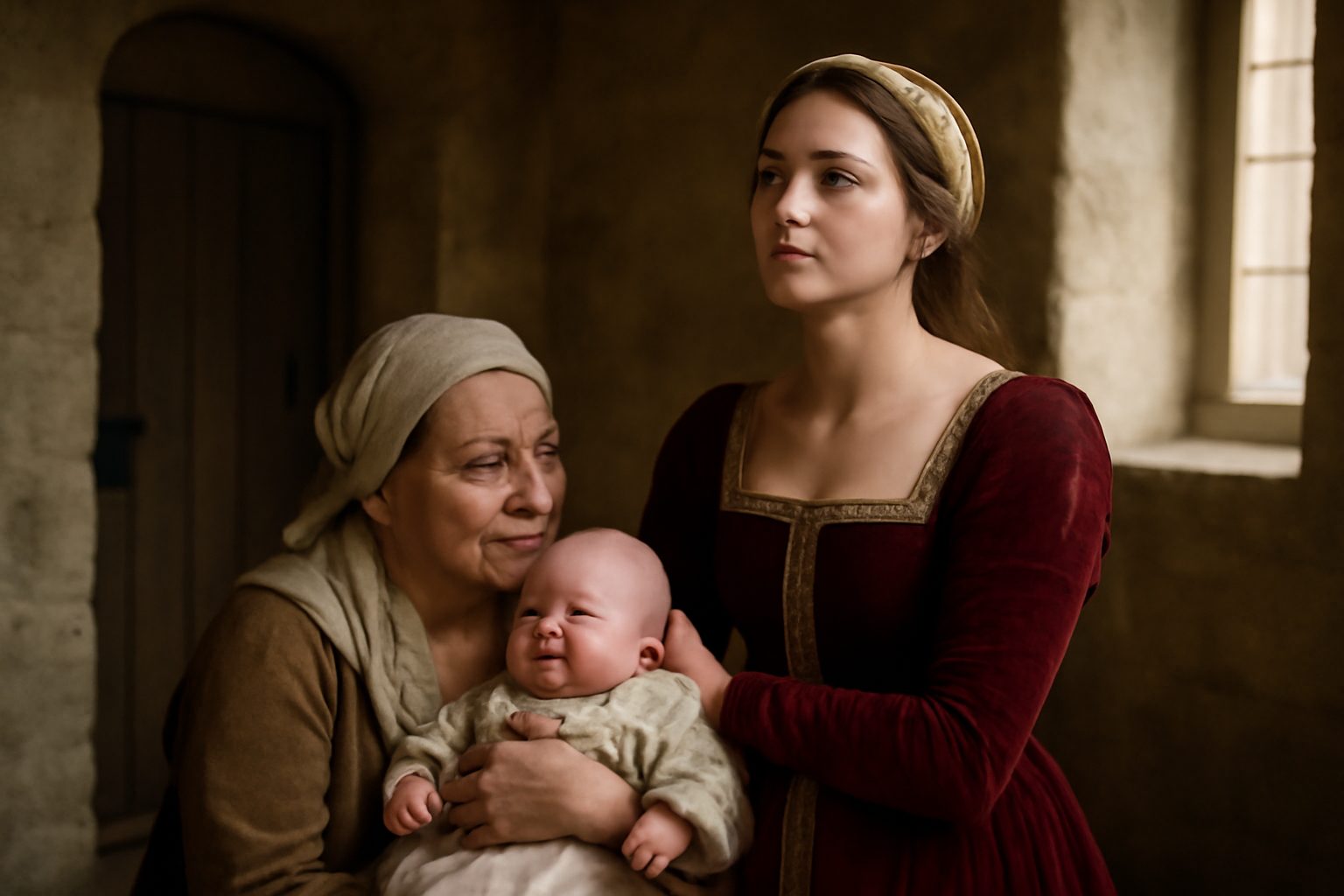
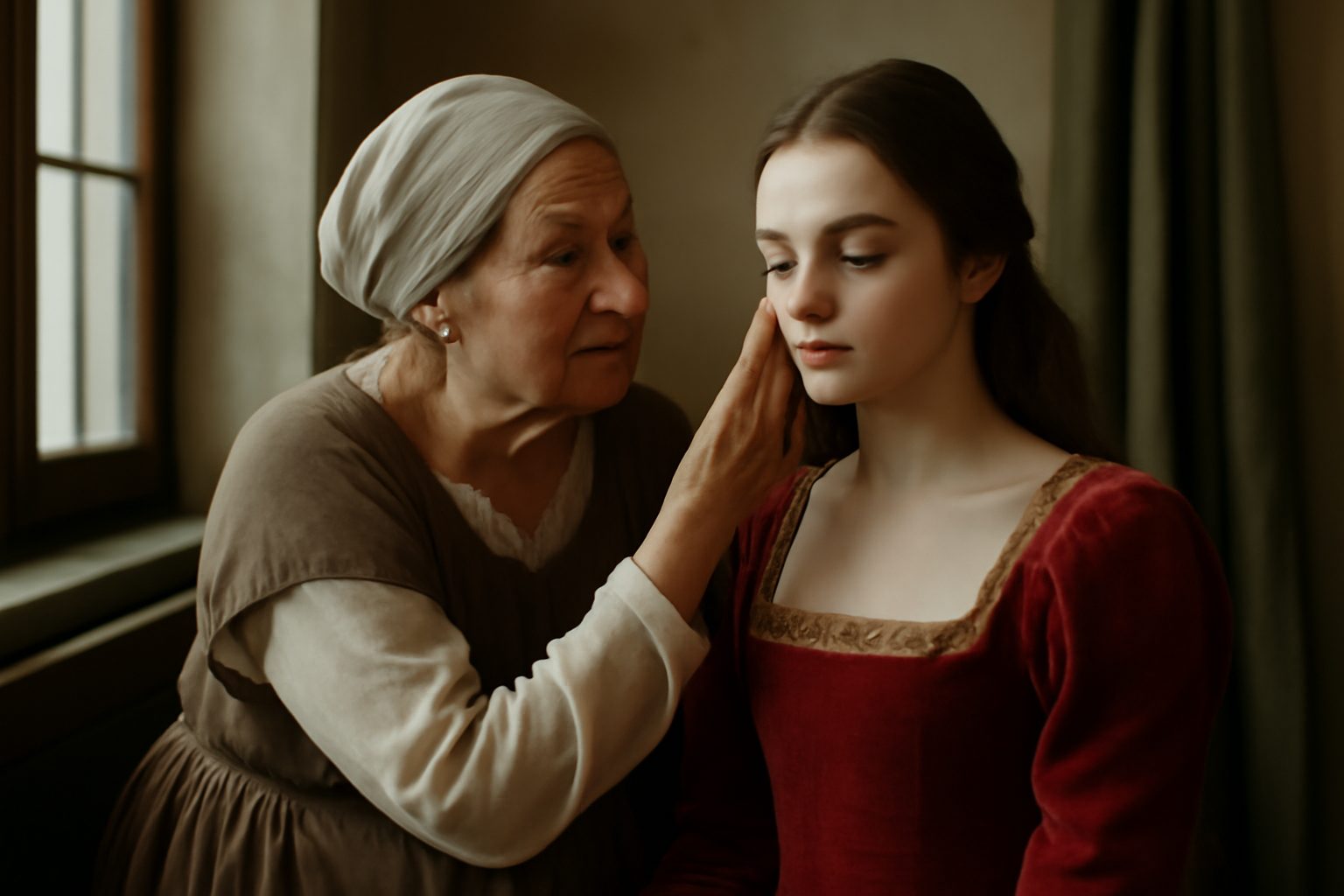
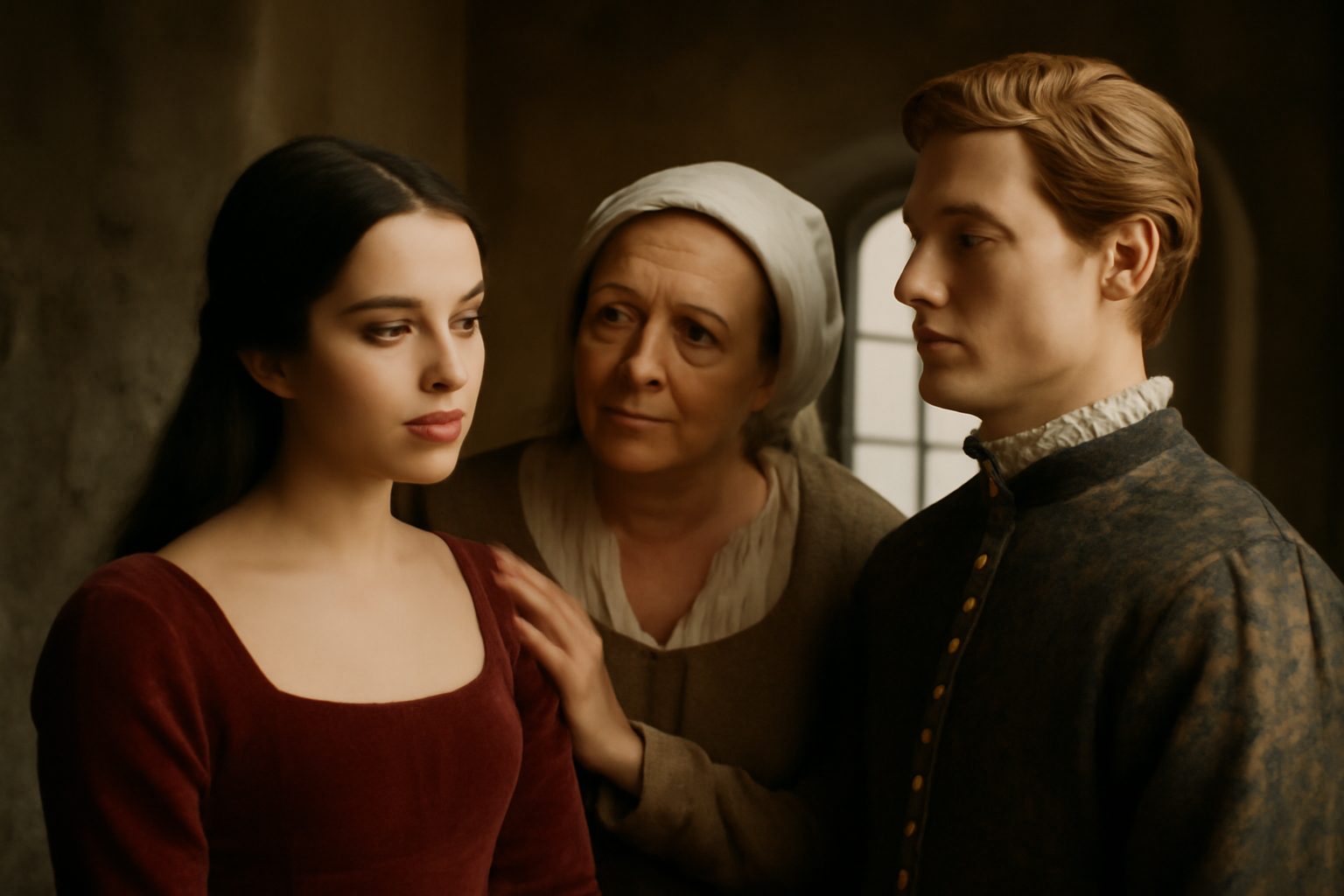
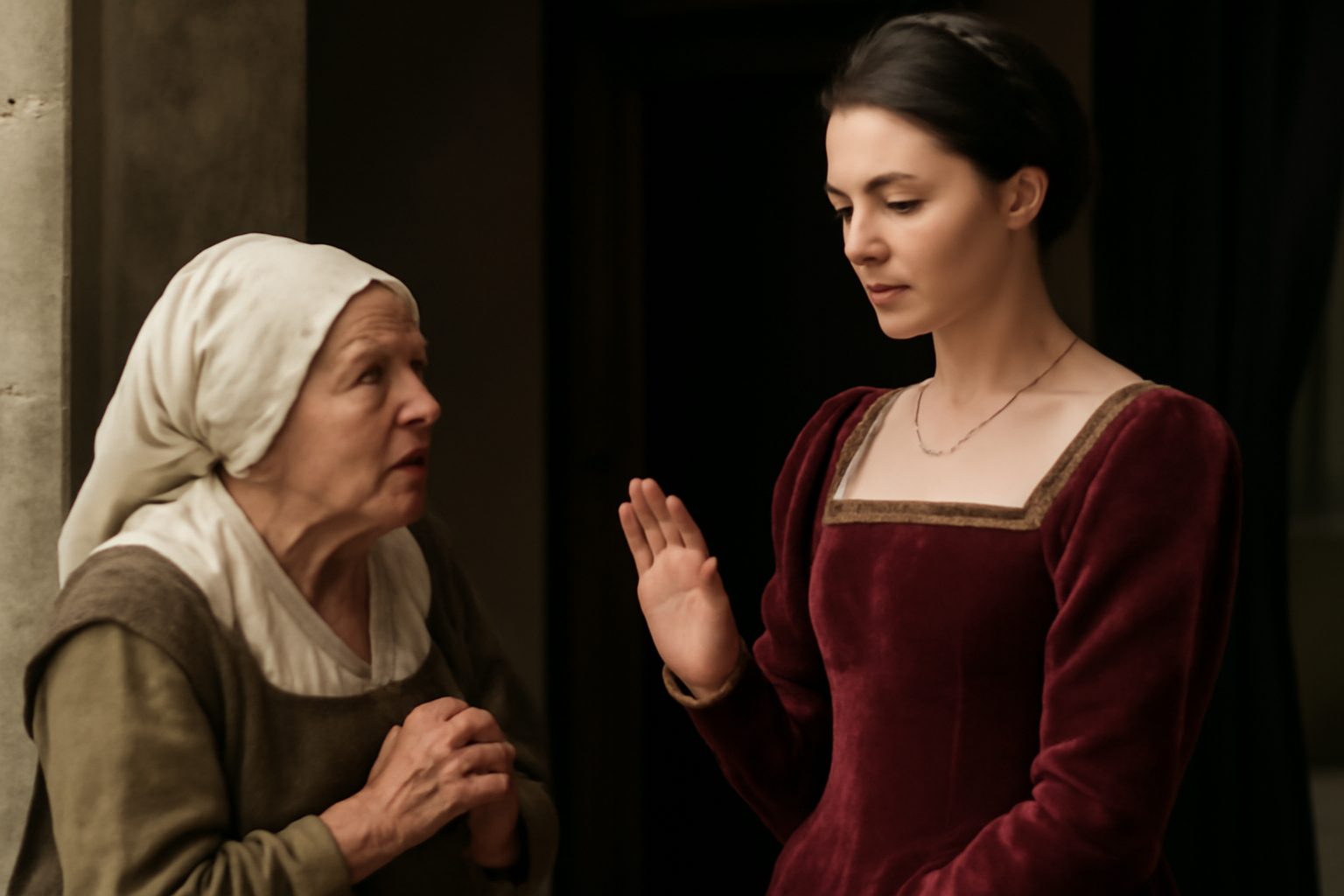
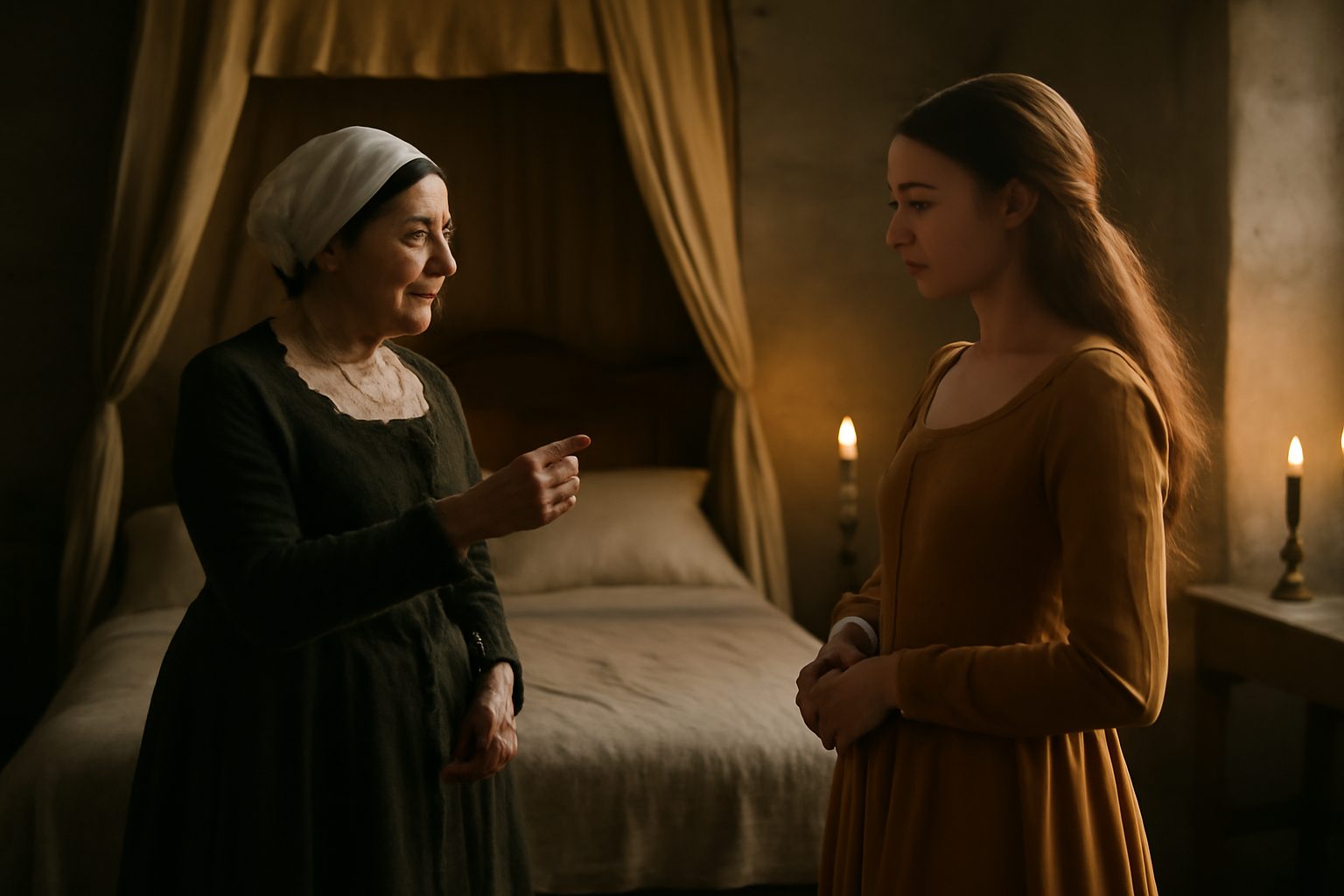
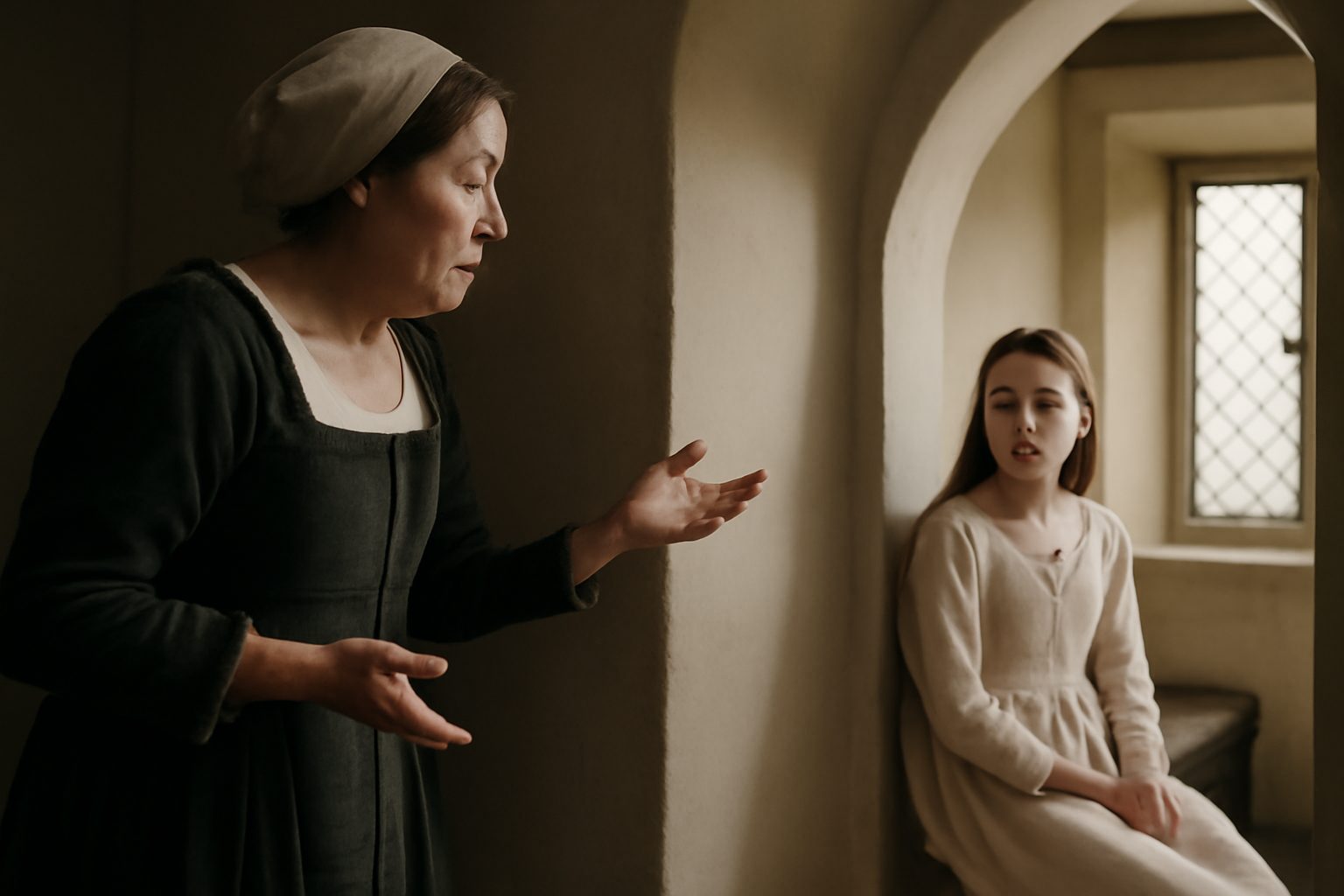
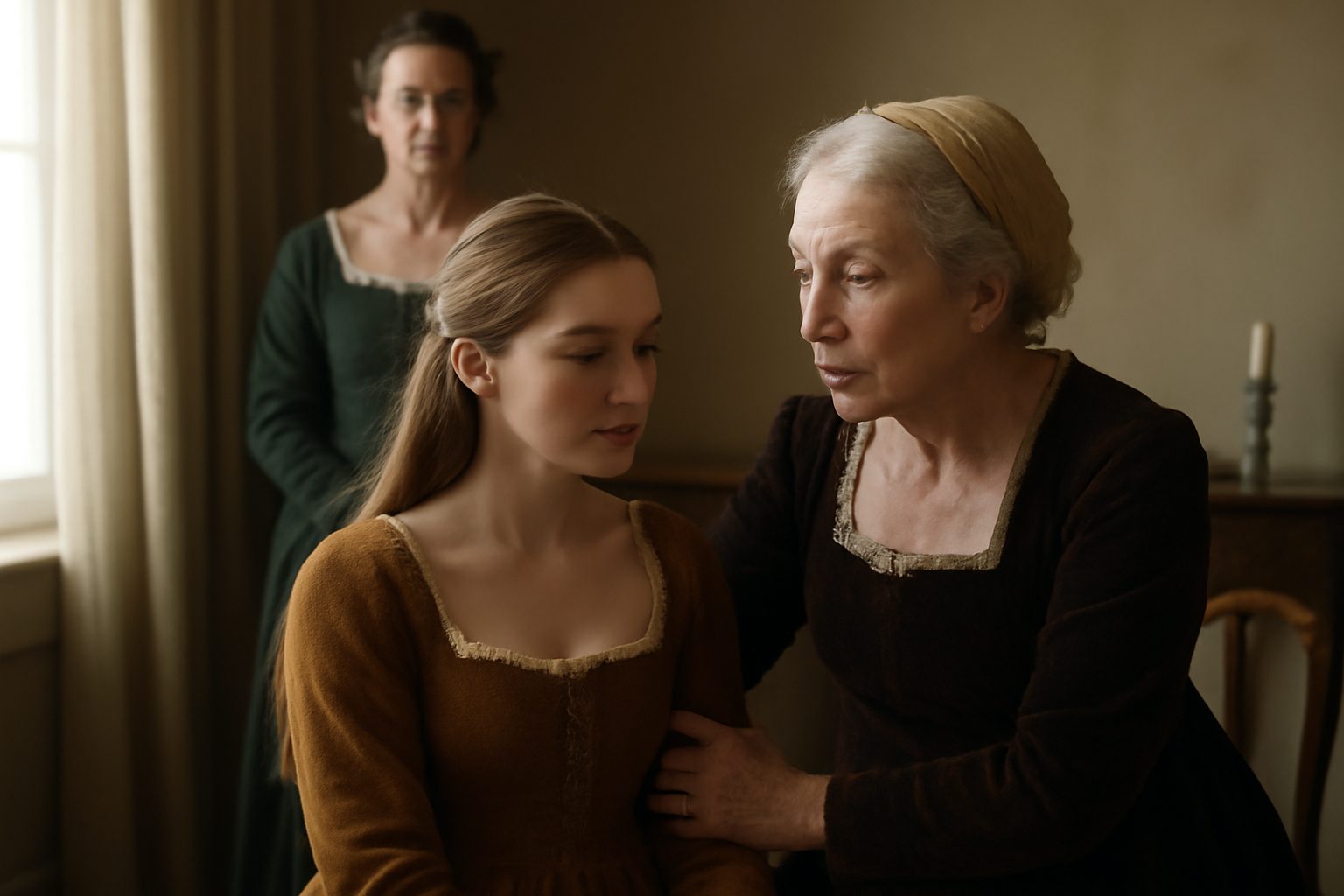
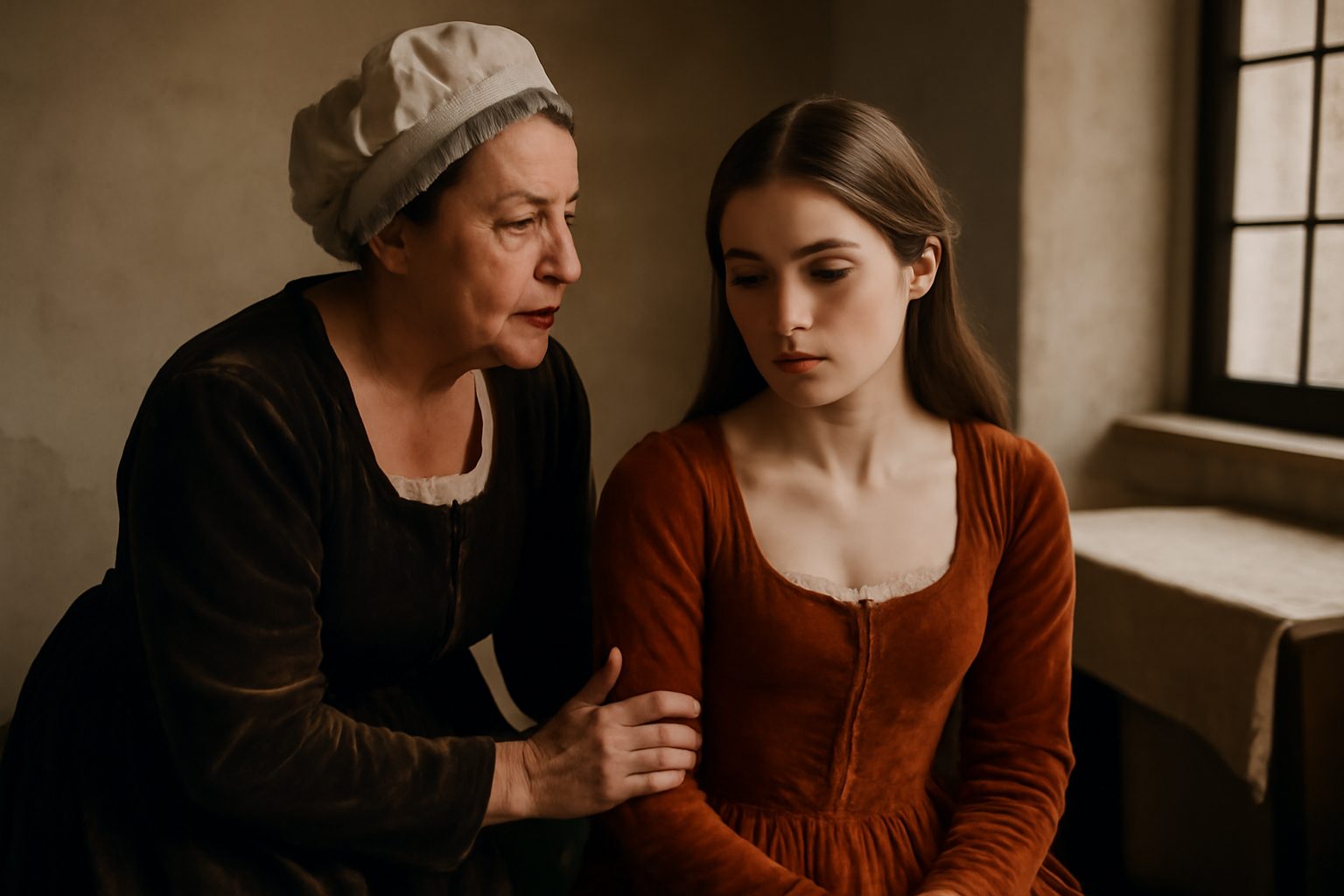
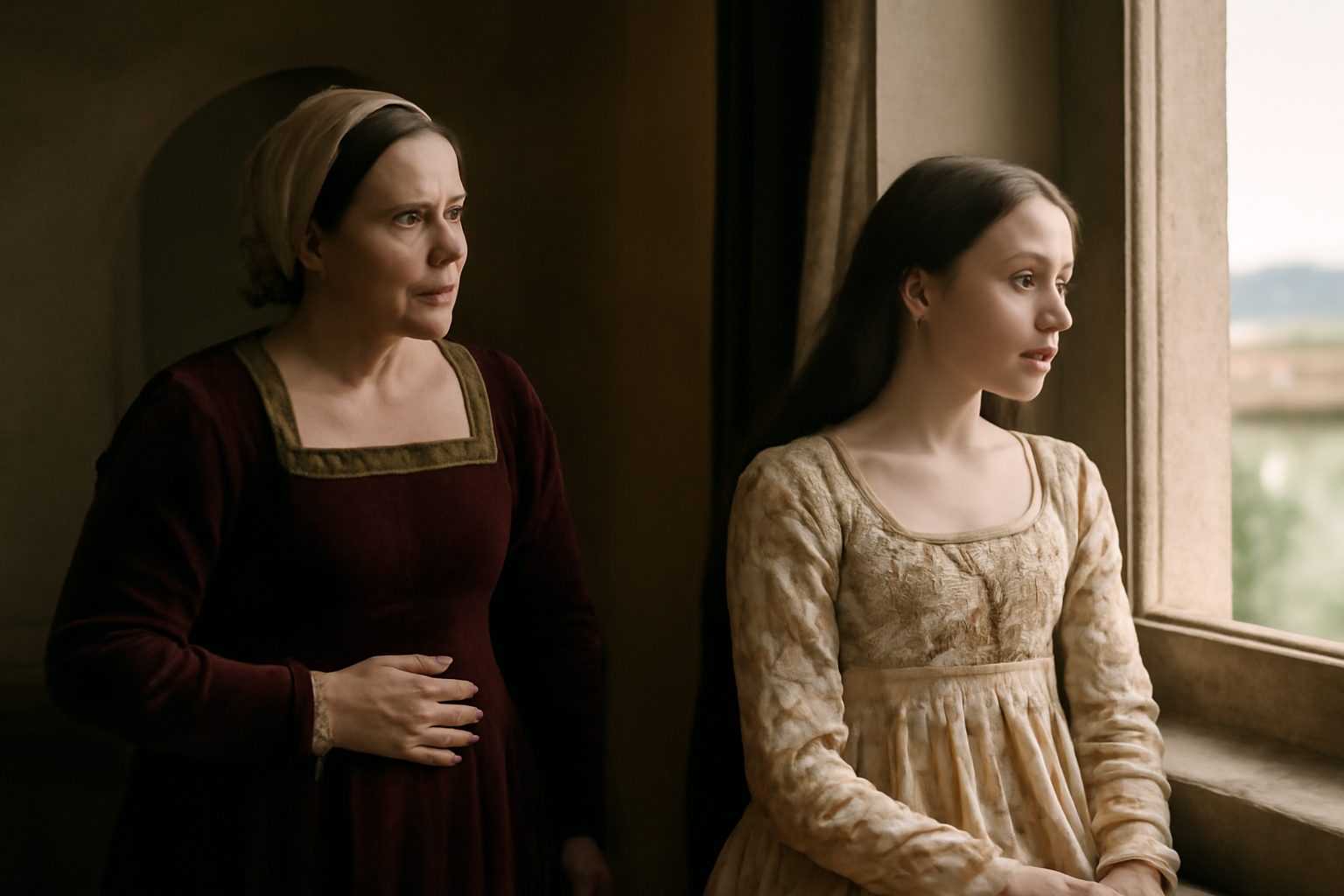
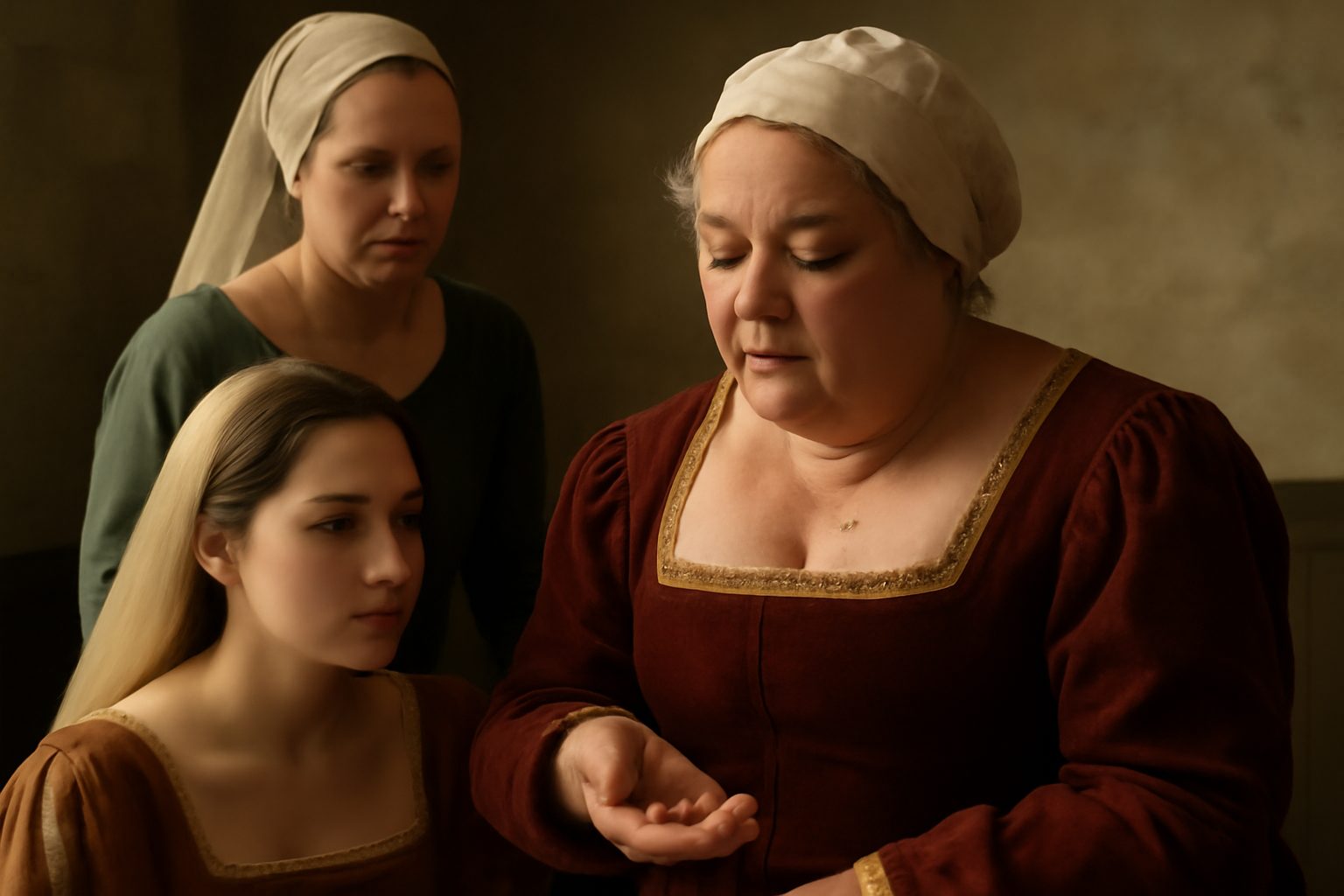
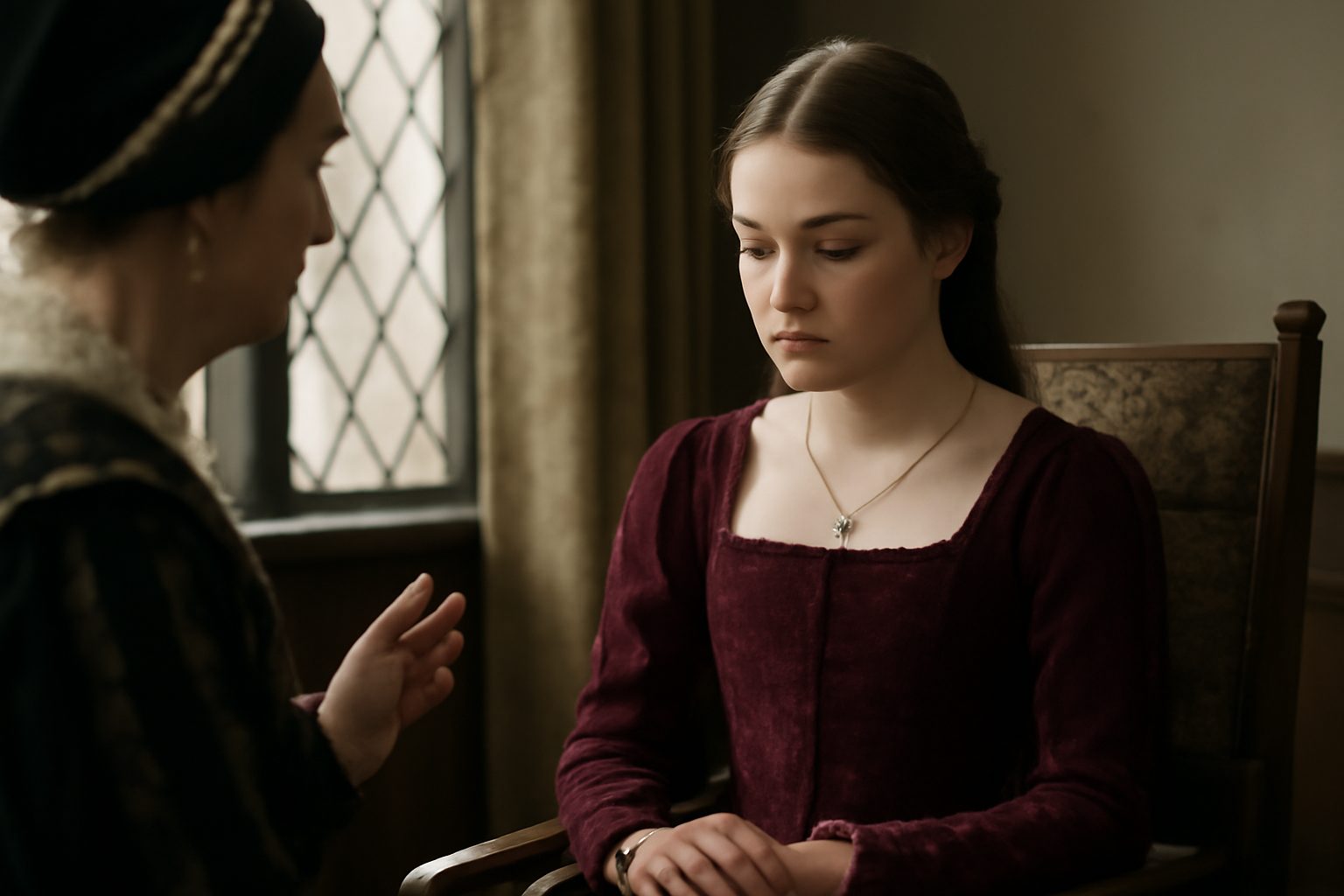
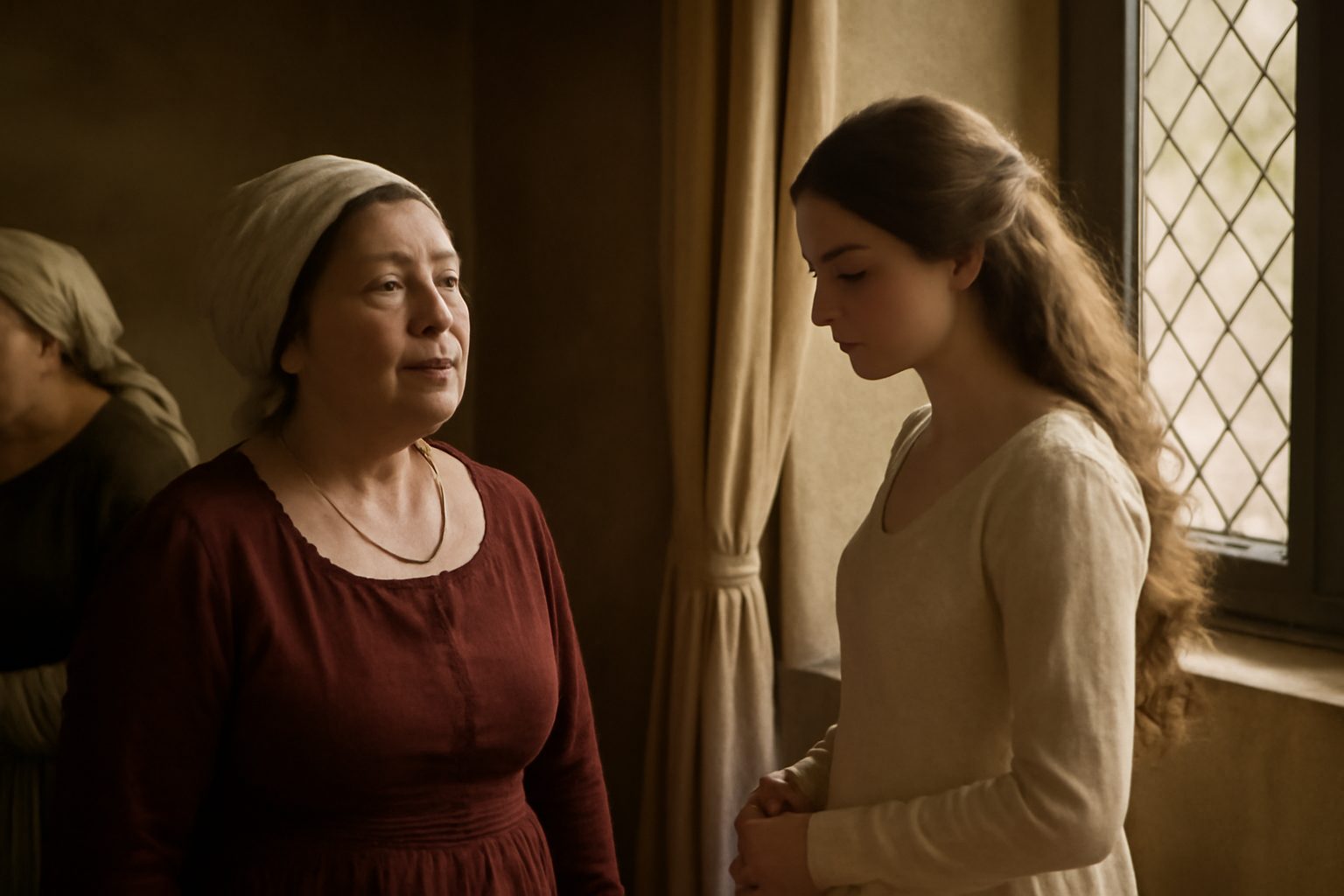
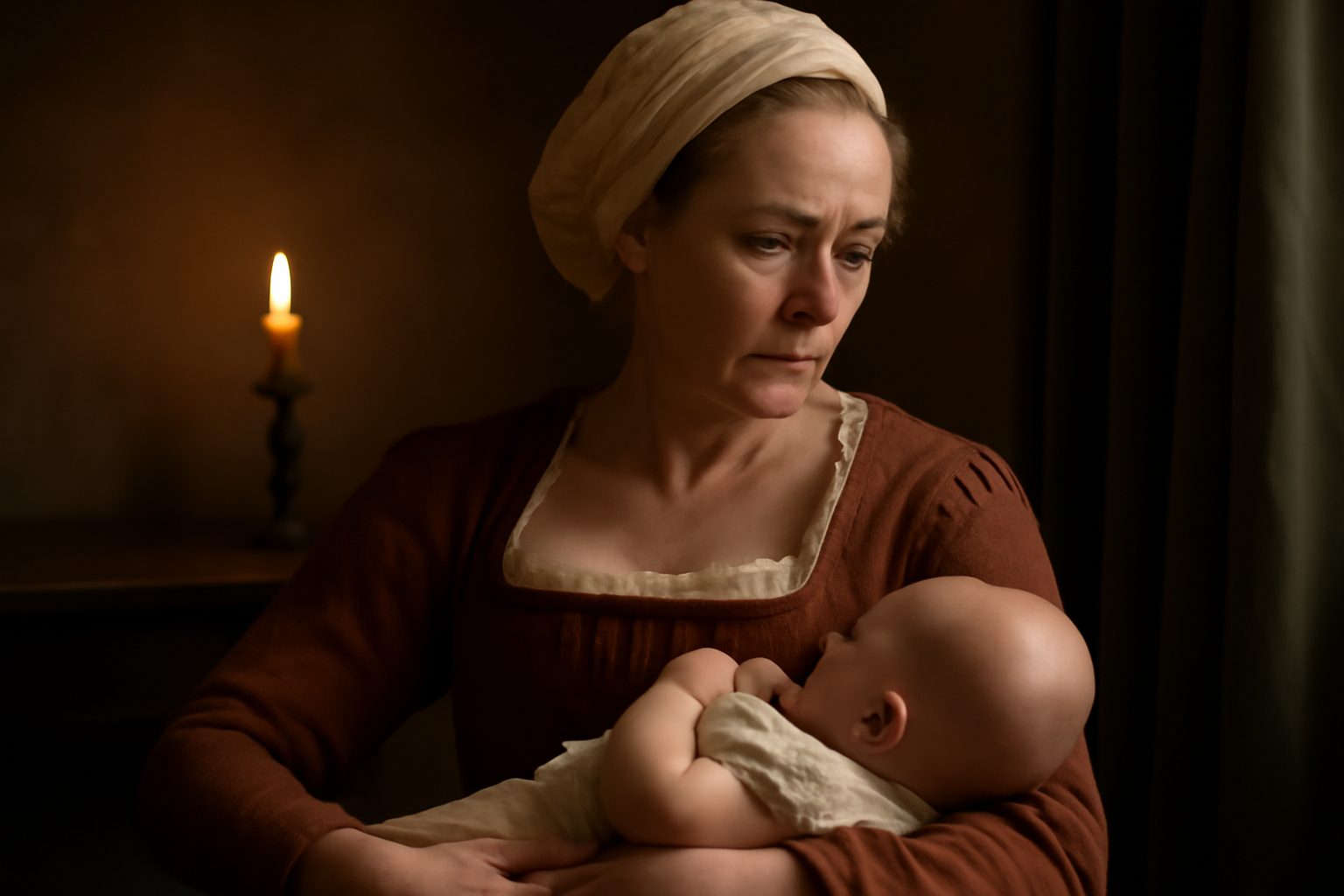
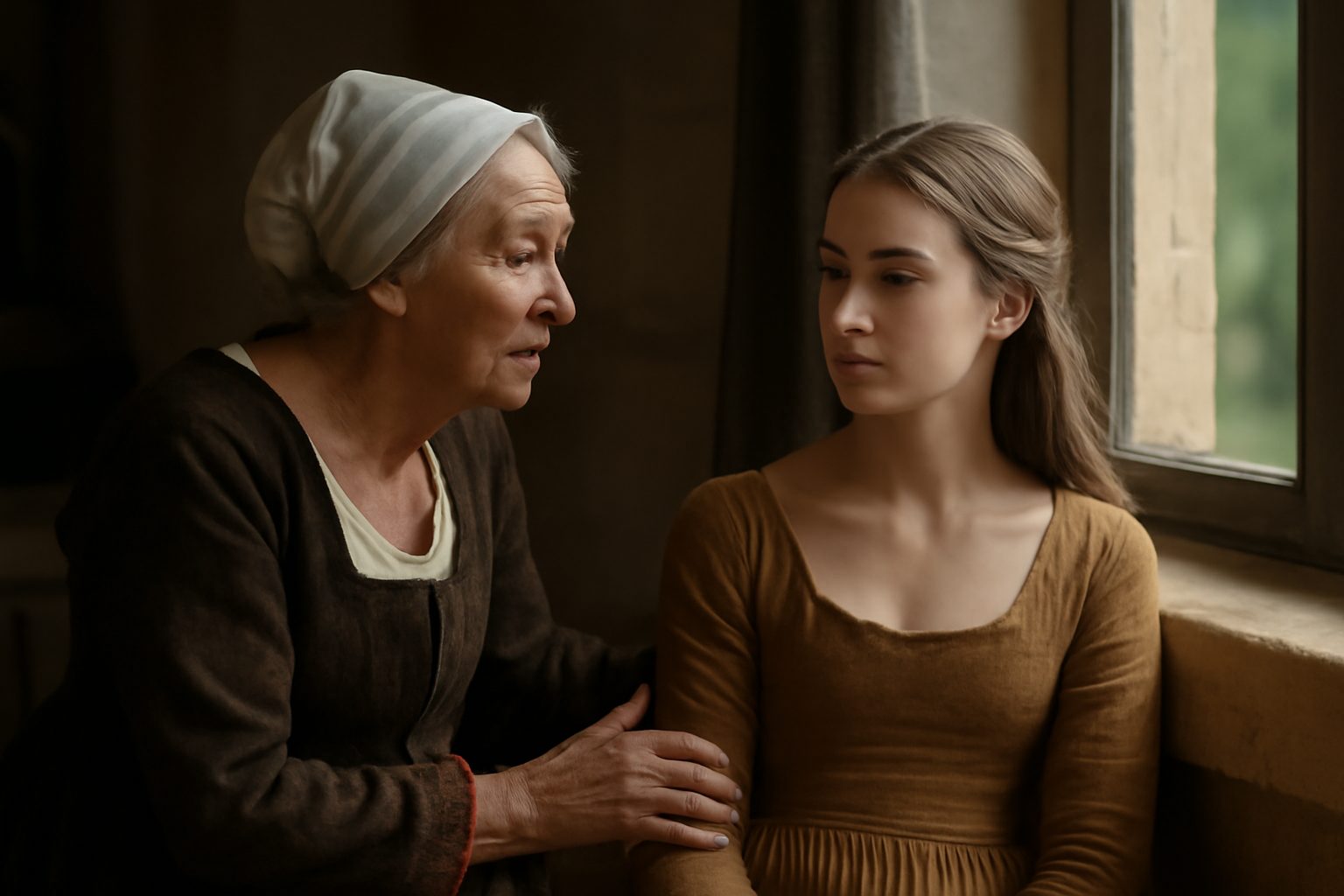
In Act 1, Scene 3 of Romeo and Juliet, Lady Capulet is discussing Juliet's potential marriage to Paris with the Nurse. The Nurse, known for her talkative and sometimes rambling nature, begins to share a lengthy anecdote. Lady Capulet, impatient to return to the matter at hand, interrupts her with this line, urging the Nurse to be brief.
Juliet: "And stint thou too, I pray thee, nurse, say I."
In modern day english, we would say:
Please stop talking, Nurse, and let me speak.
Frequently Asked Questions
What is Juliet asking the nurse to do in this line?
Juliet is asking the nurse to stop talking or to be quiet.
Connections to other verses:
Connections to "And stint thou too, I pray thee, nurse, say I."
The verse "And stint thou too, I pray thee, nurse, say I." is spoken by Lady Capulet, urging the Nurse to stop talking or to agree with her. This reflects the Nurse's tendency to ramble and reminisce, which is a recurring theme in the scene.
Connection to the Nurse's Rambling
Earlier in the scene, the Nurse goes into a long, detailed memory about Juliet's childhood, such as in "And she was wean'd,--I never shall forget it,--" and "A' was a merry man--took up the child:". Lady Capulet's plea for the Nurse to "stint" (stop) directly responds to this verbosity.
Repetition of "Stint" and "Ay"
The word "stint" is echoed in "And, pretty fool, it stinted and said 'Ay.'", where the Nurse recalls Juliet as a baby stopping her crying to say "yes." This repetition highlights the Nurse's fondness for this memory and Lady Capulet's impatience with it.
Lady Capulet's Impatience
Lady Capulet's frustration is also seen in "Enough of this; I pray thee, hold thy peace.", another direct command for the Nurse to be quiet, reinforcing her desire to focus on the matter of Juliet's marriage to Paris.
Contrast with the Nurse's Affection
While Lady Capulet is impatient, the Nurse shows deep affection for Juliet, as in "Thou wast the prettiest babe that e'er I nursed:". This contrast emphasizes the different relationships each woman has with Juliet.
Return to the Main Topic
After Lady Capulet's plea, the conversation shifts back to the proposal of marriage, as seen in "I came to talk of. Tell me, daughter Juliet,", showing Lady Capulet's determination to steer the discussion toward Paris.