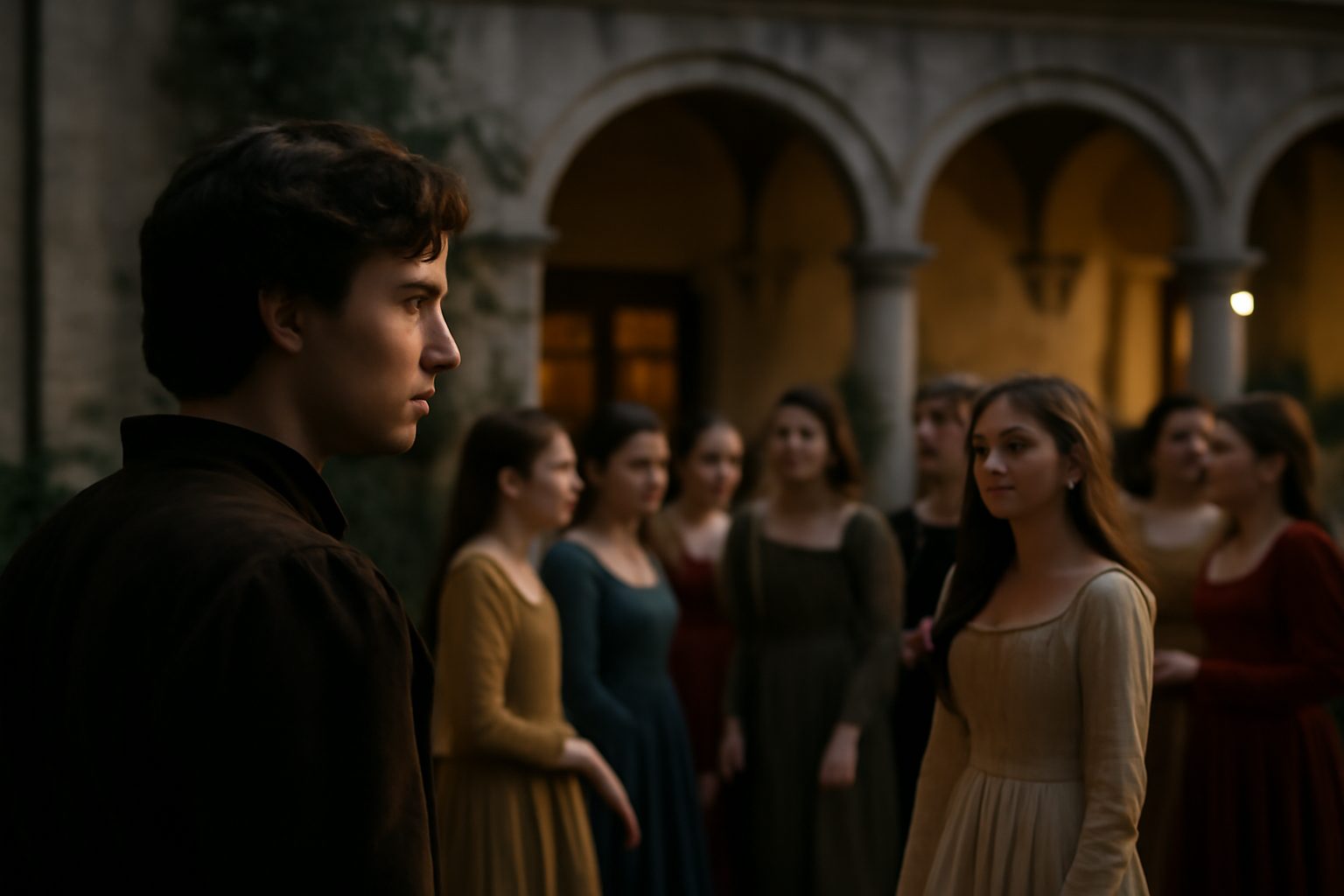
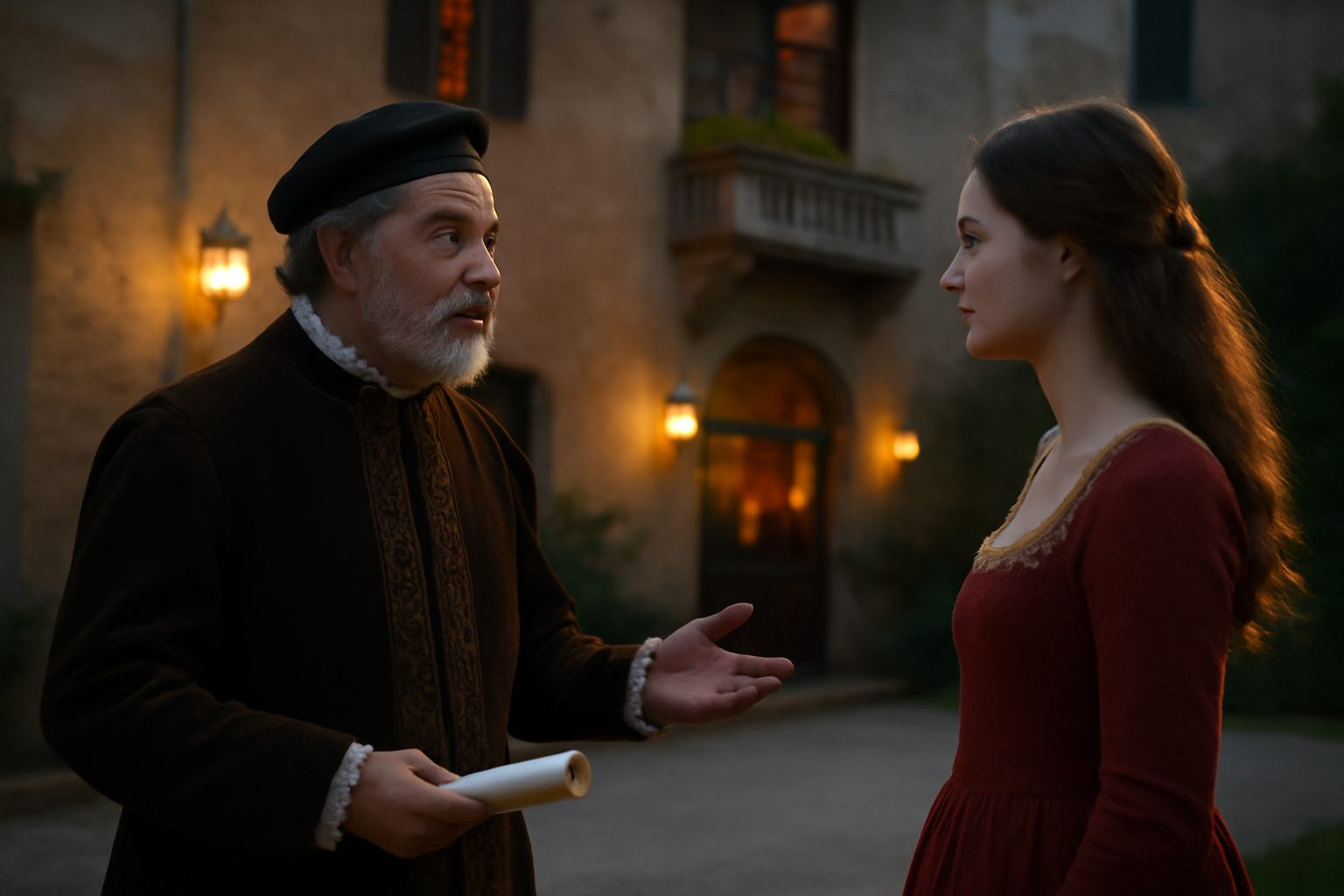
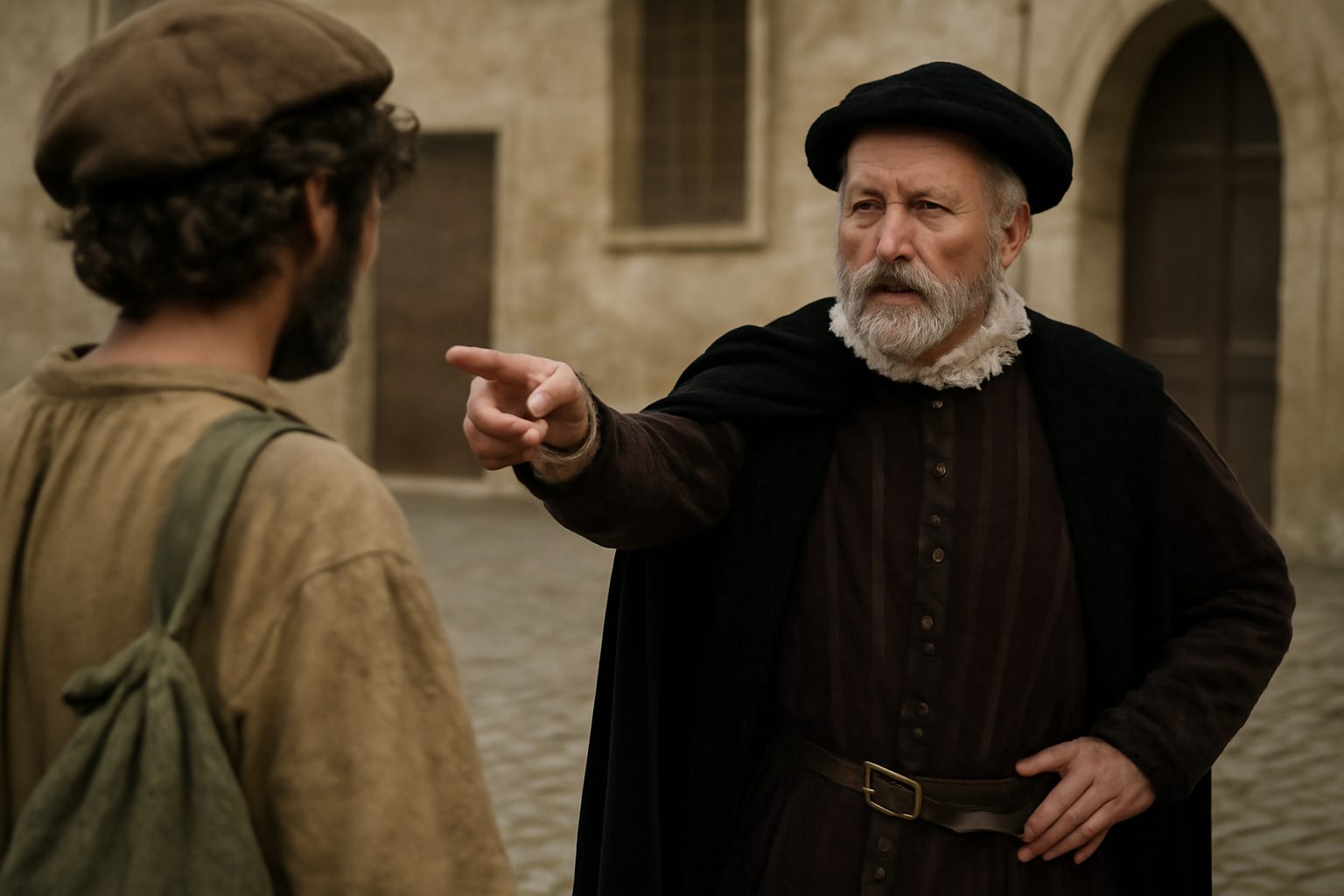
In Act 1, Scene 2 of Romeo and Juliet, Capulet’s servant is tasked with delivering invitations to a feast but cannot read the guest list. He encounters Romeo and Benvolio, asking for their help to decipher the names. The line reflects the servant’s urgency and relief upon finding someone literate to assist him.
Servant: "person hath here writ. I must to the learned.--In good time."
In modern day english, we would say:
Someone has written here—I need to take this to someone who can read it. Perfect timing.
Frequently Asked Questions
What does the servant need to do with the letter he has?
The servant needs to take the letter to someone who can read it for him.
Connections to other verses:
Connections to Other Verses in Act 1 Scene 2
The verse person hath here writ. I must to the learned.--In… is spoken by the illiterate servant who has been tasked with delivering invitations to Capulet's feast. This moment highlights themes of literacy, social class, and the unfolding plot that brings Romeo and Juliet together.
Literacy and Communication
This verse connects directly to God gi' god-den. I pray, sir, can you read?, where the servant first approaches Romeo and Benvolio for help. It also relates to pray, can you read any thing you see?, emphasizing the servant's struggle with written language. Romeo's ability to read the list, shown in Stay, fellow; I can read., becomes the catalyst for his attendance at the feast.
Invitations and the Feast
The servant's mission to find guests is detailed in sent to find those persons whose names are here and Find them out whose names are written here!. Capulet's instructions in Go, sirrah, trudge about and Through fair Verona; find those persons out set this task in motion, while Whose names are written there, and to them say, specifies the message to deliver.
Social Commentary
The servant's illiteracy is contrasted with the learned, as noted in writ, and can never find what names the writing, and Shakespeare uses this for comedic effect in lines like written, that the shoemaker should meddle with his and yard, and the tailor with his last, the fisher…, which humorously question why he was given this task.
Plot Advancement
This interaction leads Romeo to learn of the feast in At this same ancient feast of Capulet's, where Benvolio encourages him to Go thither; and, with unattainted eye, compare Rosaline to other beauties. This sets the stage for Romeo and Juliet's meeting, fulfilling Capulet's earlier promise in This night I hold an old accustom'd feast, and Whereto I have invited many a guest,.