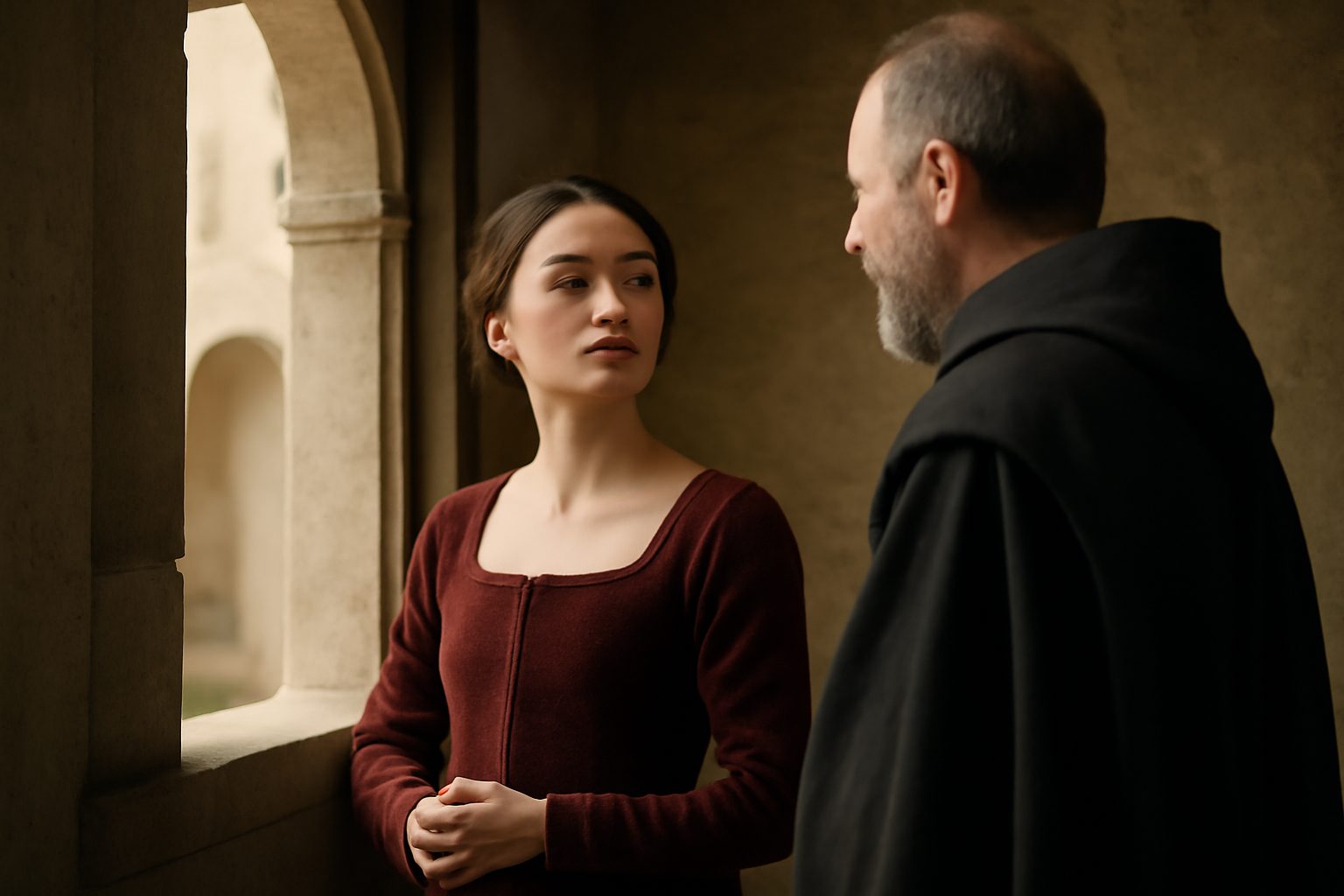
In Act 1, Scene 2 of Romeo and Juliet, Paris asks Capulet for permission to marry Juliet, but Capulet suggests they wait and invites him to a feast that night. A servant is then given a list of guests to summon, though he cannot read the names—leading him to seek help from Romeo and Benvolio. This moment sets the stage for Romeo's encounter with Juliet, as the servant's task inadvertently brings the two lovers together.
Servant: "sent to find those persons whose names are here"
In modern day english, we would say:
A servant is supposed to go and locate the people listed on this paper.
Frequently Asked Questions
What is the servant trying to do in this part of the play?
The servant is trying to find the people whose names are written on a list.
Connections to other verses:
Connections to "sent to find those persons whose names are here"
The verse sent to find those persons whose names are here is part of a servant's task to deliver invitations to Capulet's feast. This instruction directly follows the servant's admission that he cannot read the list, as seen in writ, and can never find what names the writing and person hath here writ. I must to the learned, highlighting his illiteracy and need for assistance.
Capulet's Feast and Invitations
The task is set in motion by Capulet's announcement of his feast in This night I hold an old accustom'd feast, where he has invited many a guest. The servant is instructed to Through fair Verona; find those persons out and tell them Whose names are written there, and to them say they are welcome at his house, as noted in My house and welcome on their pleasure stay.
Encounter with Romeo and Benvolio
The servant's inability to read leads him to seek help, resulting in his meeting with Romeo and Benvolio. He asks, God gi' god-den. I pray, sir, can you read?, and after Romeo reads the list, the servant invites them to the feast, saying of Montagues, I pray, come and crush a cup of wine, unaware of their identity. This accidental invitation sets the stage for Romeo to meet Juliet.
Contrast with Other Themes
While the servant deals with practical matters, other verses explore themes like young love and haste, such as Capulet's concern that too soon marr'd are those so early made and Paris's wooing of Juliet, where Capulet insists But woo her, gentle Paris, get her heart. The servant's task, though mundane, becomes a critical plot device that contrasts with these deeper emotional currents.