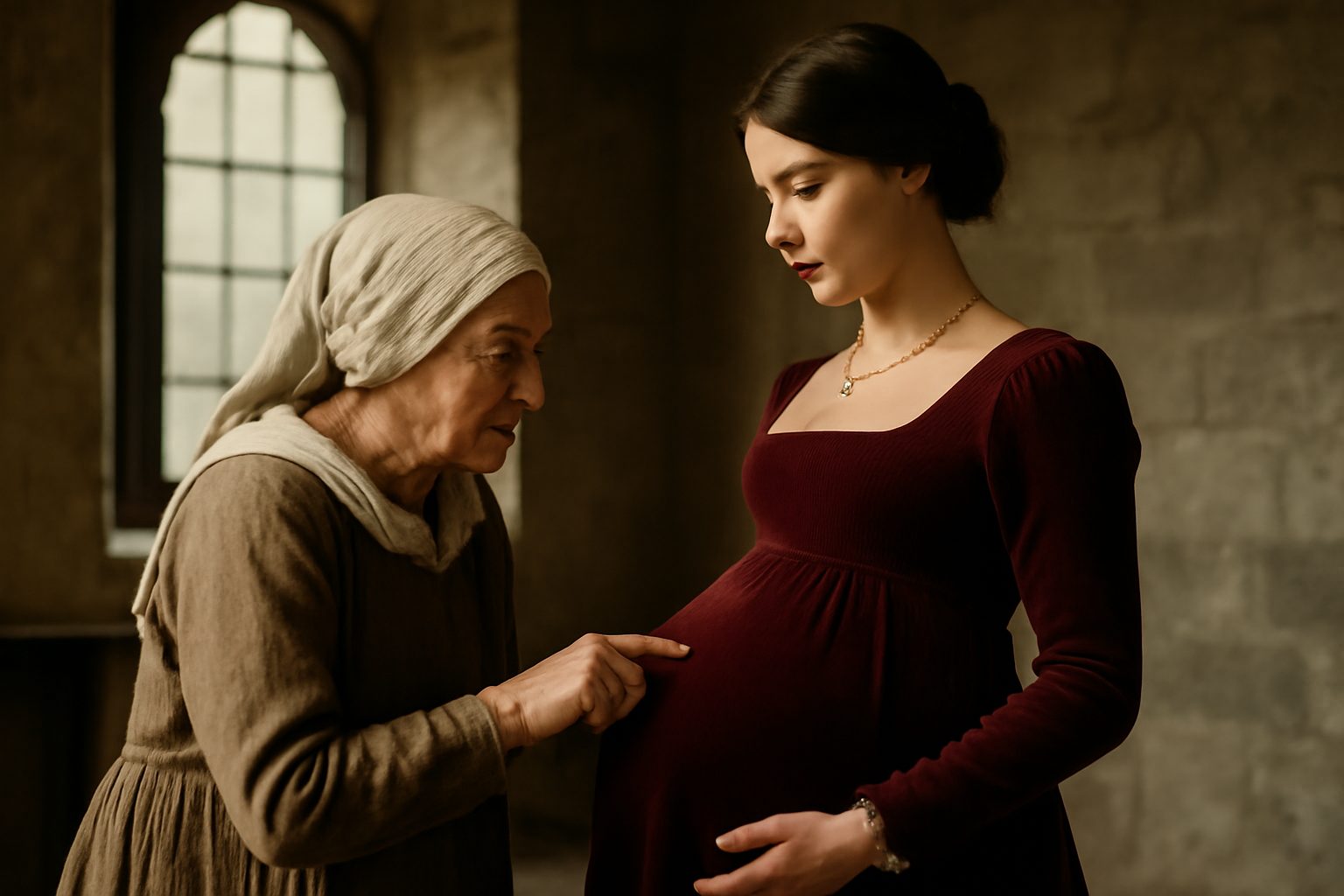
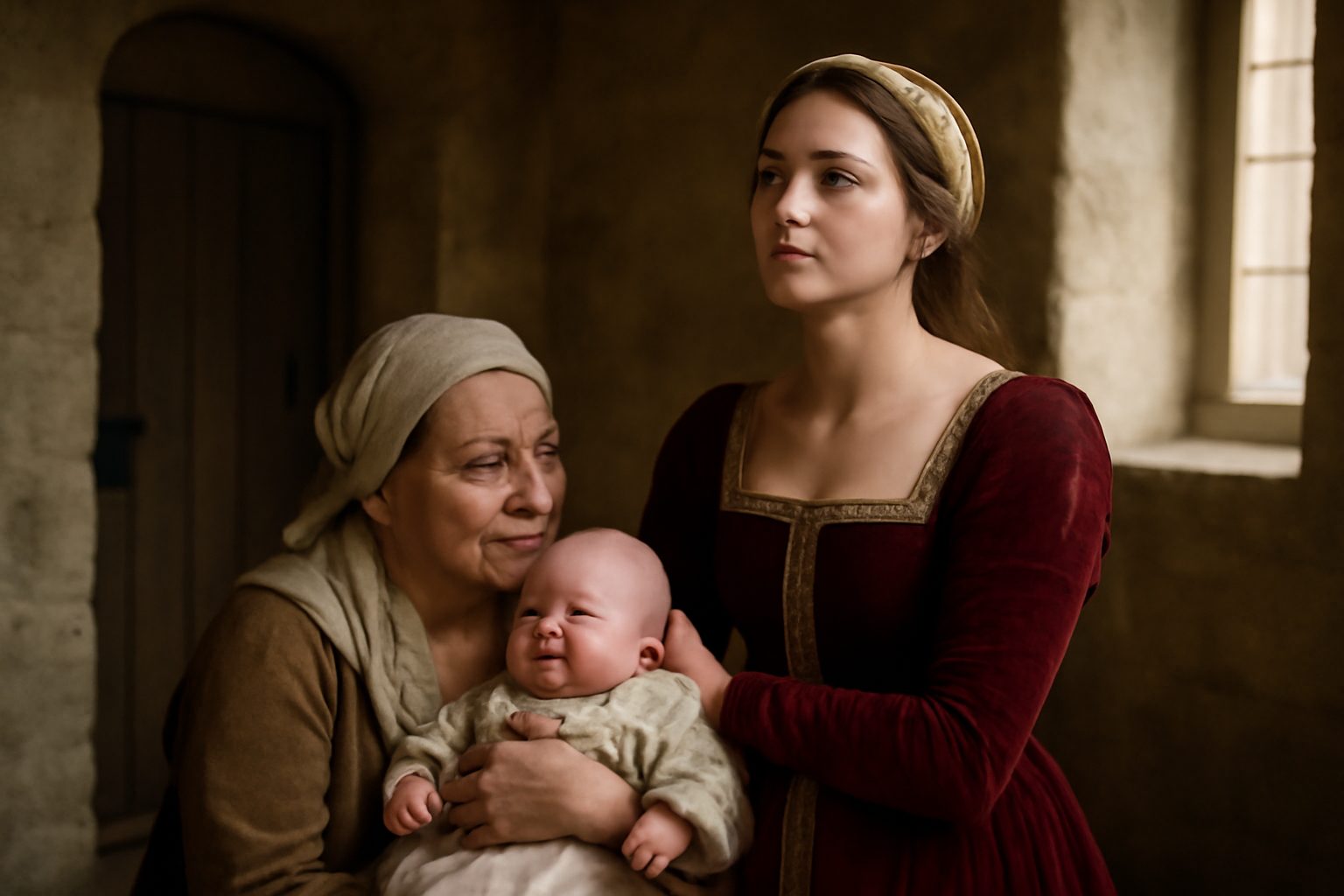
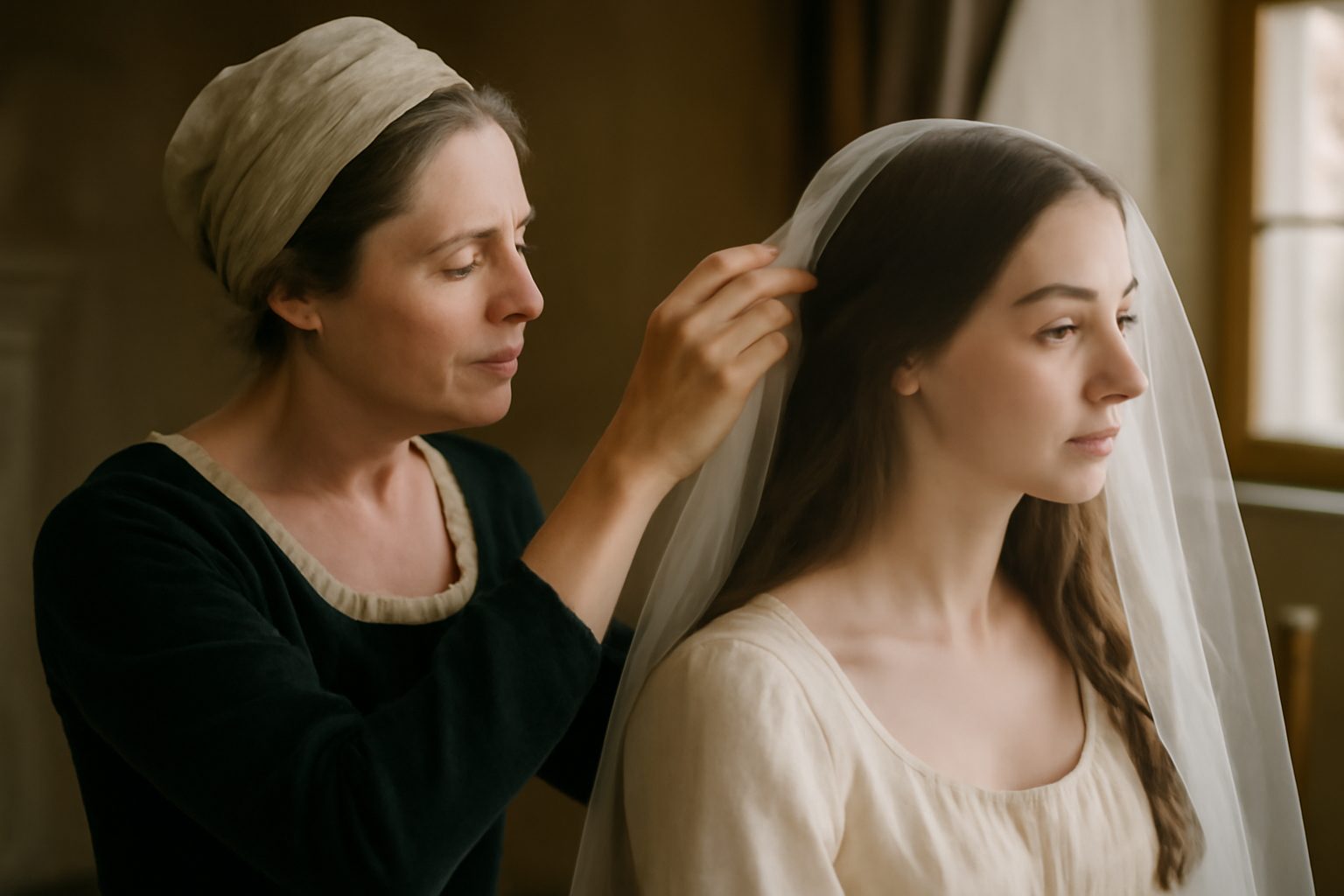
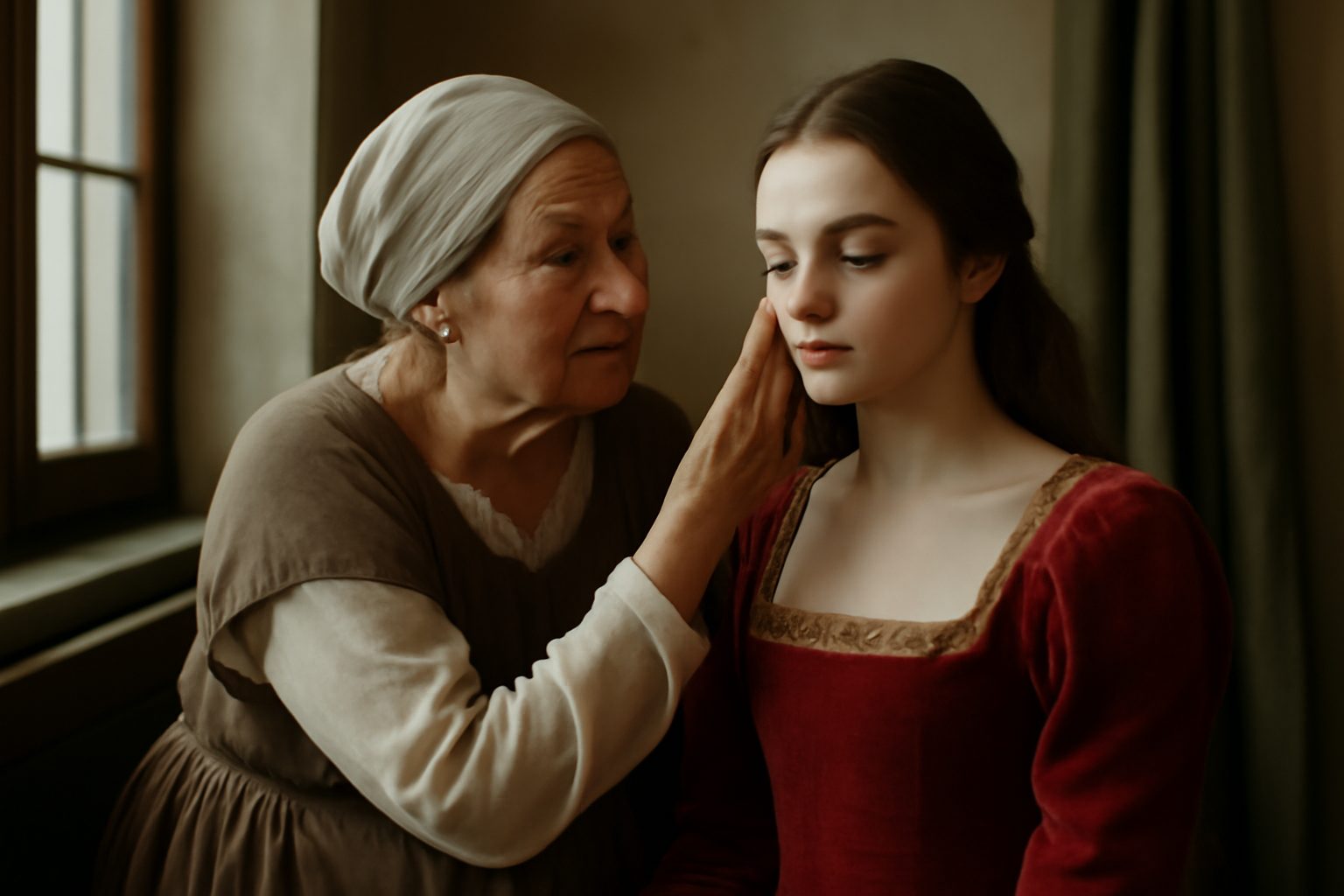
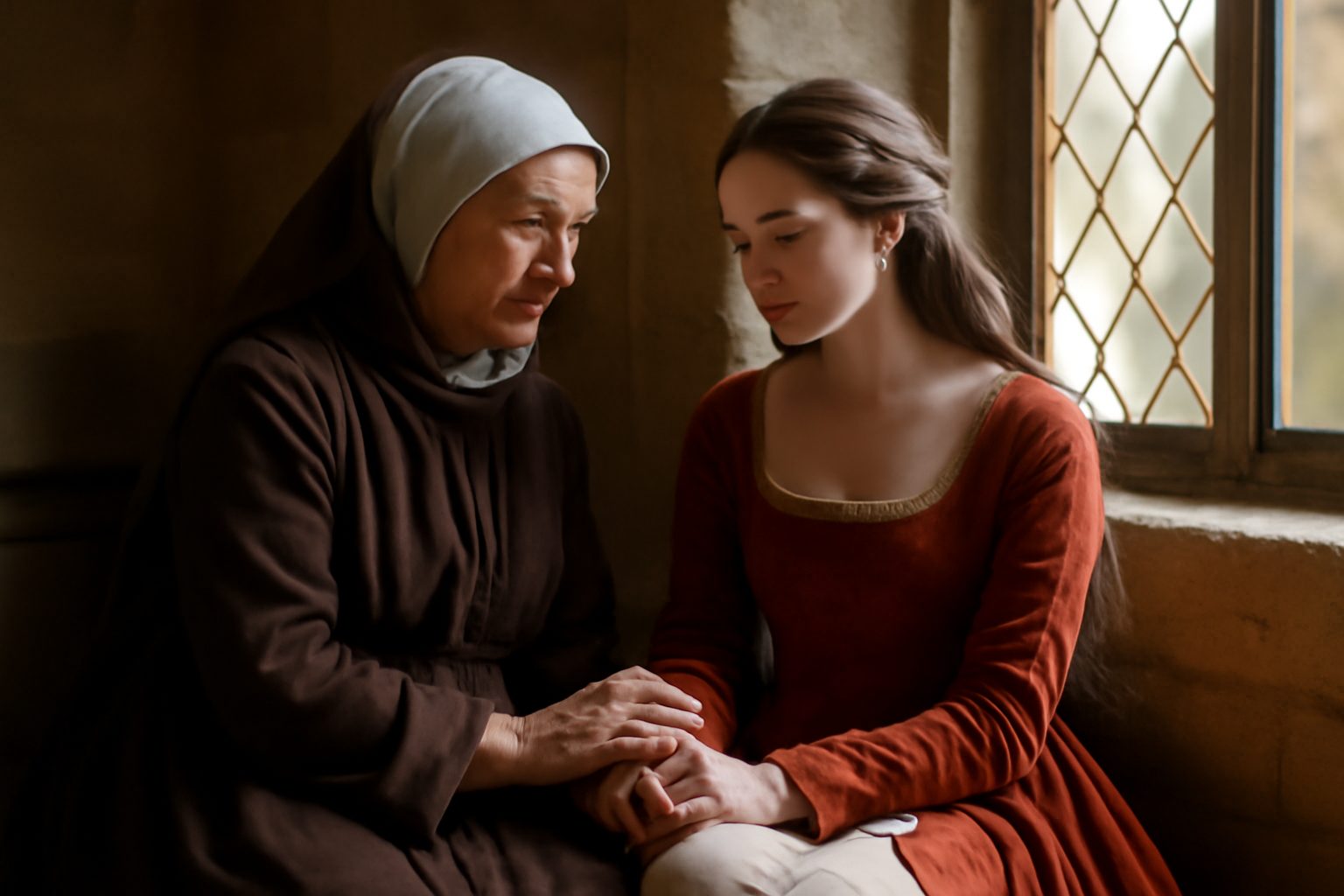
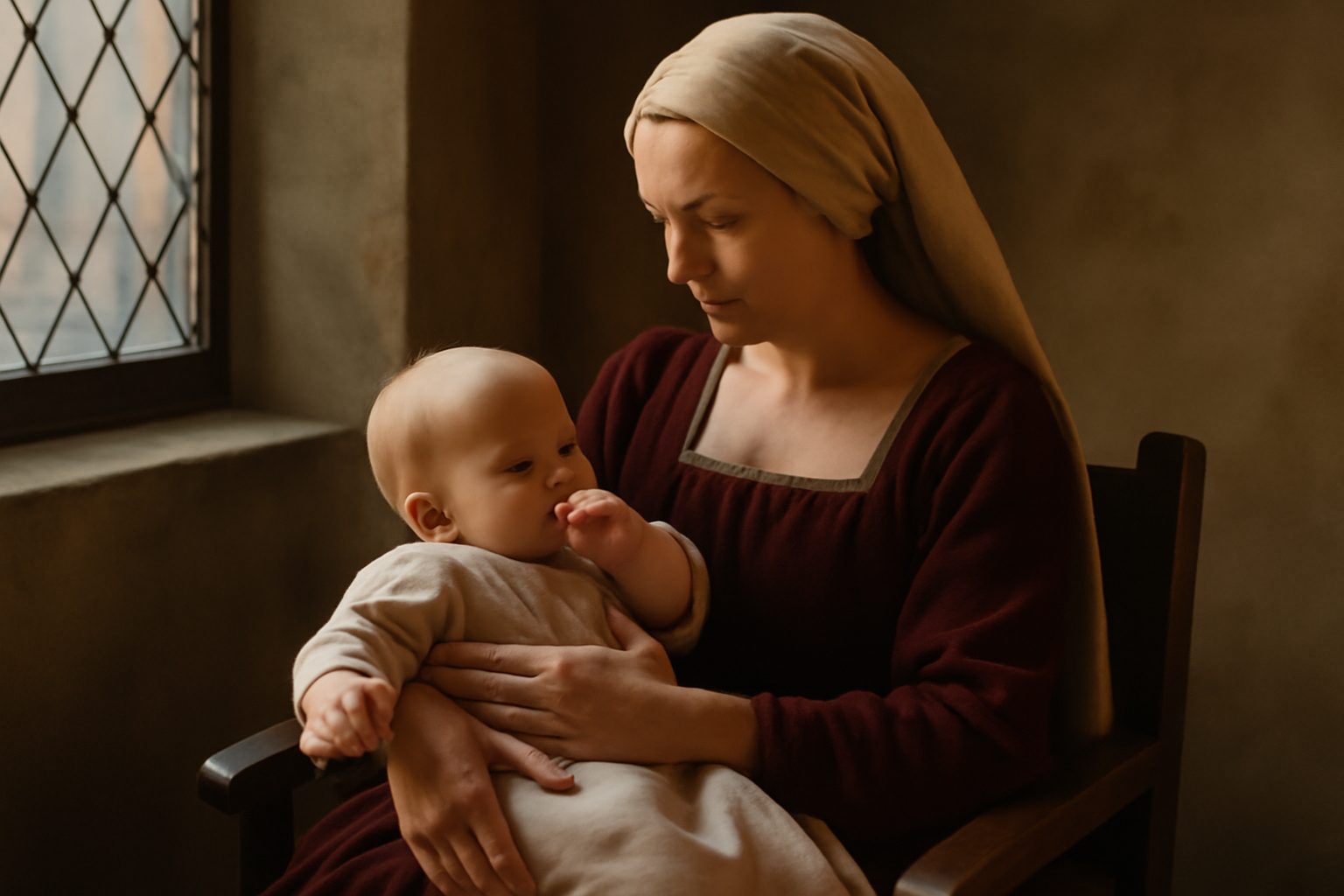
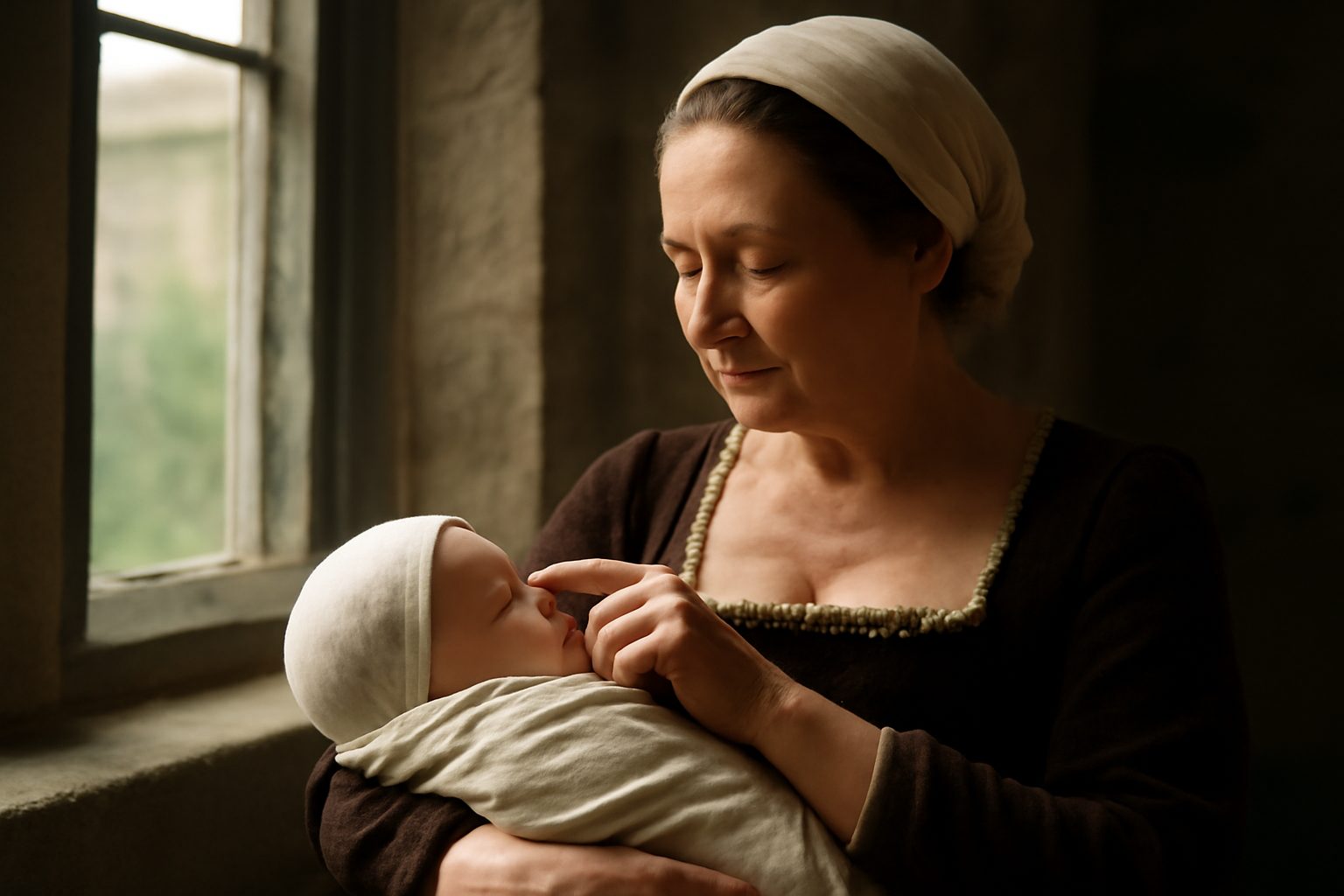
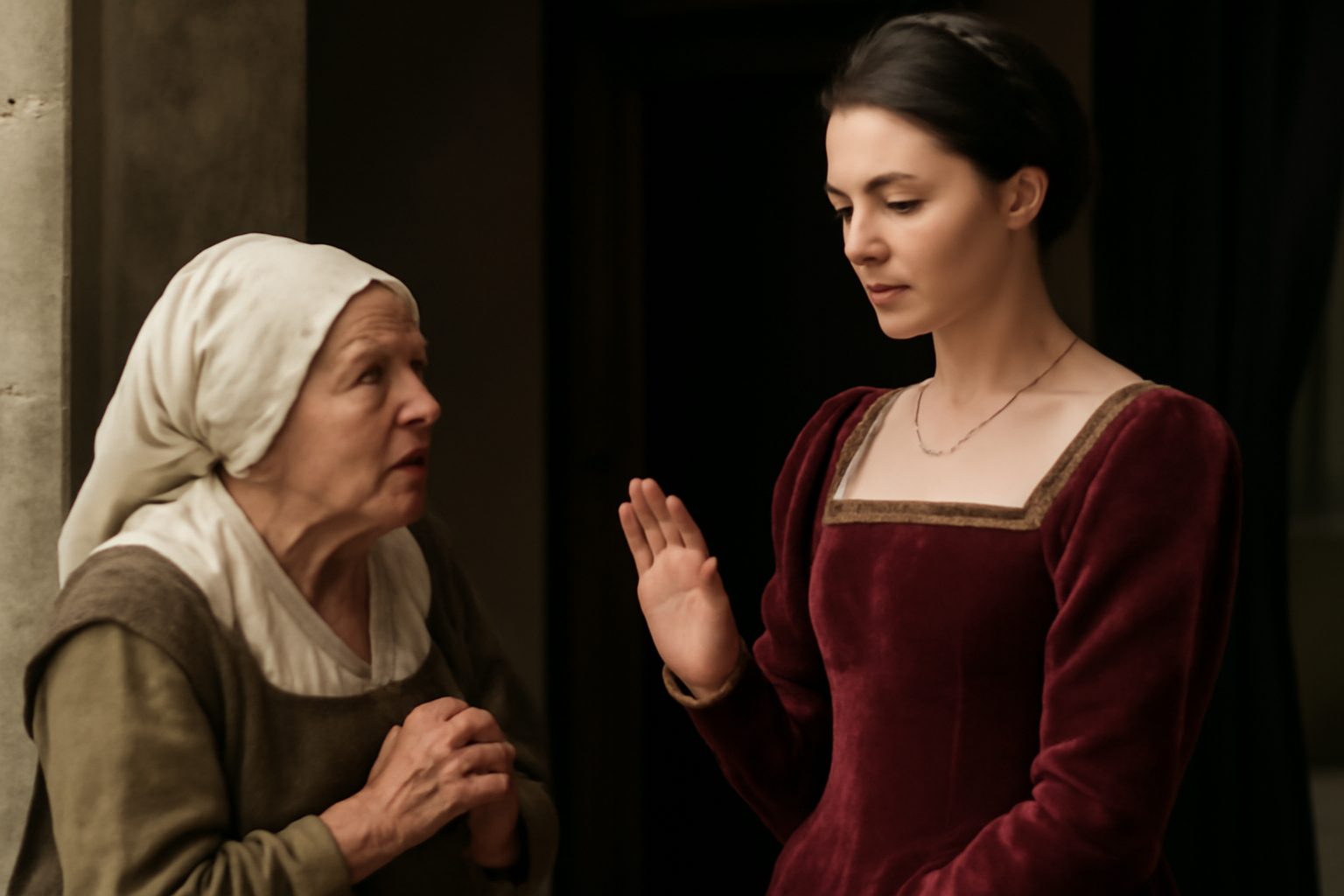
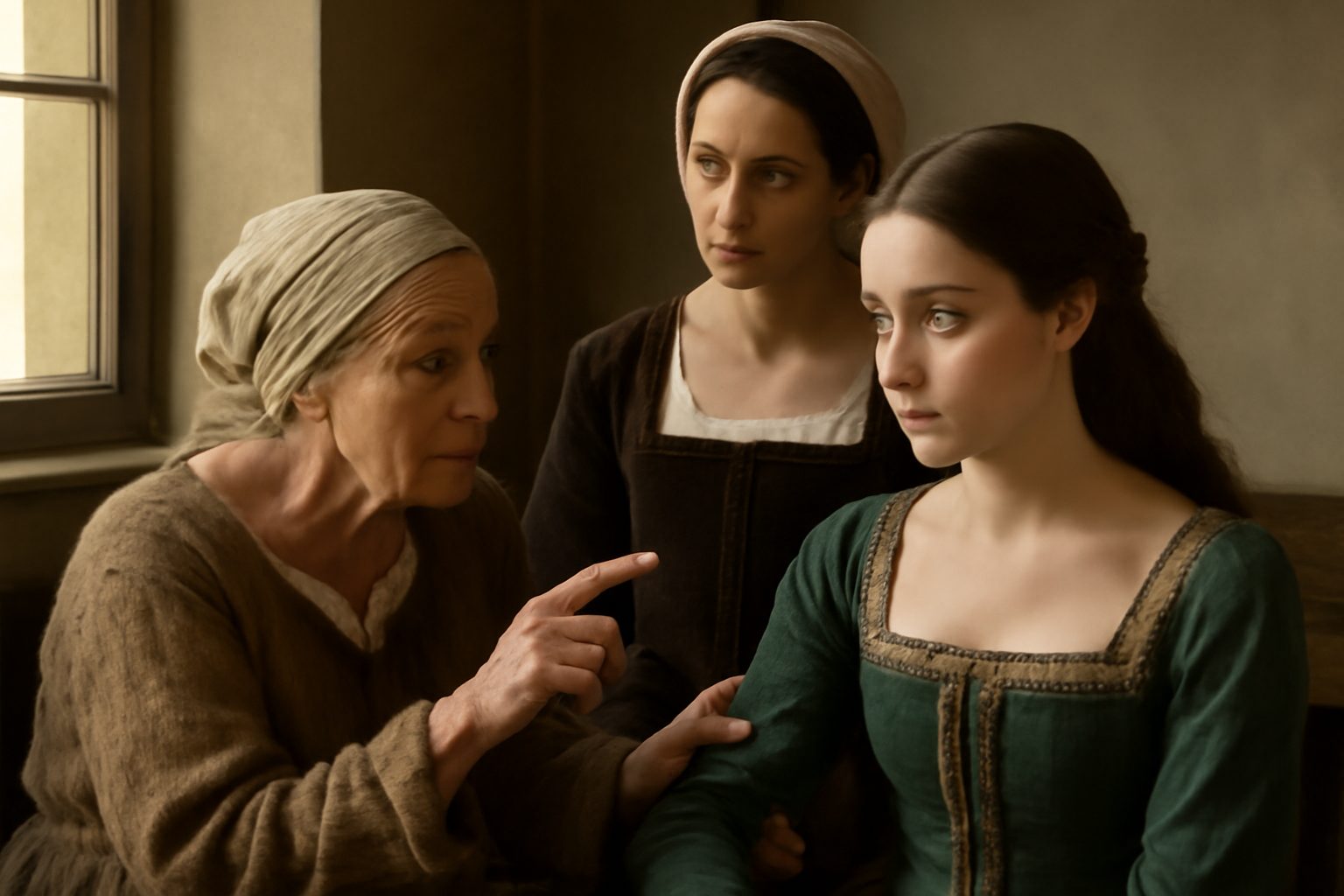
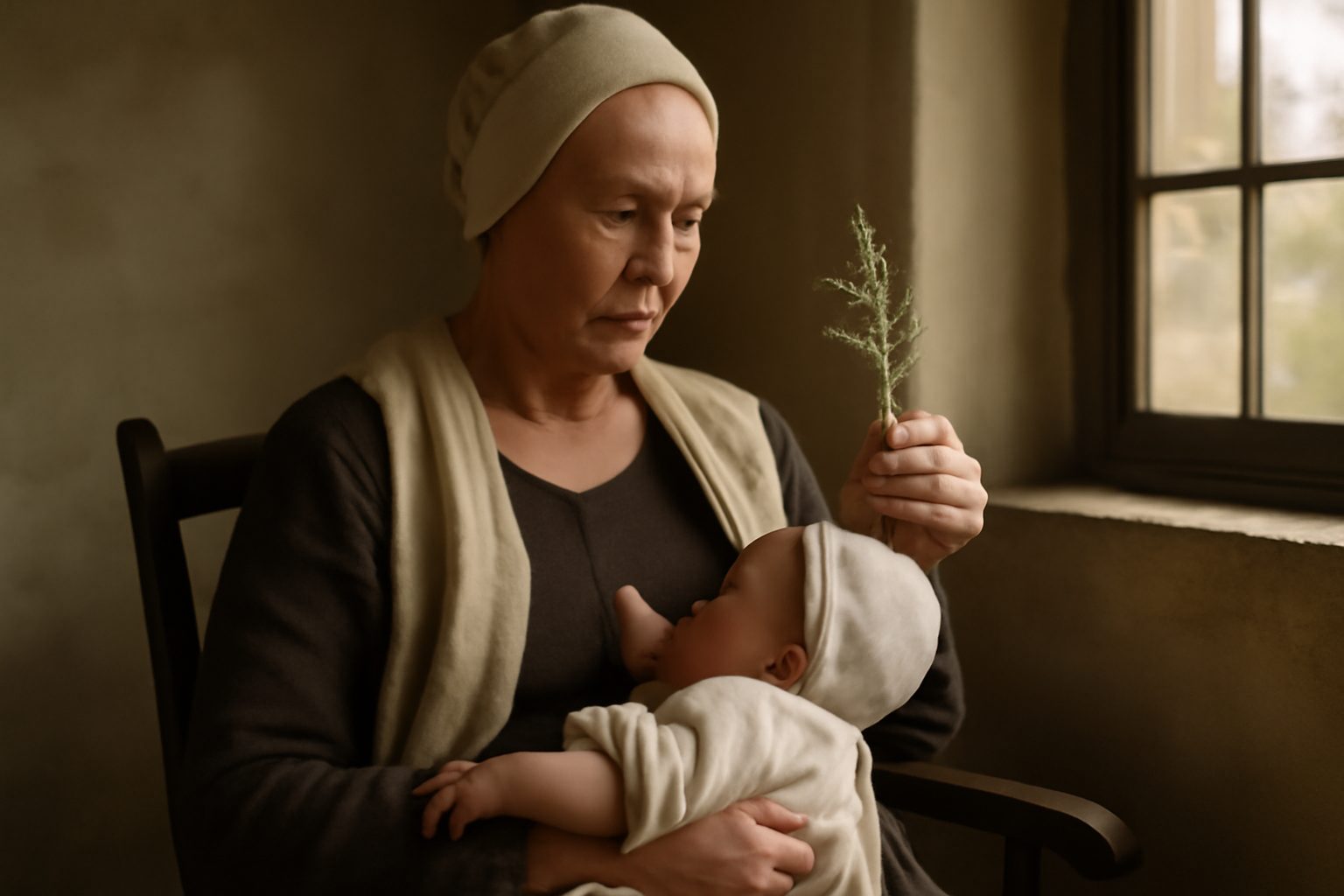
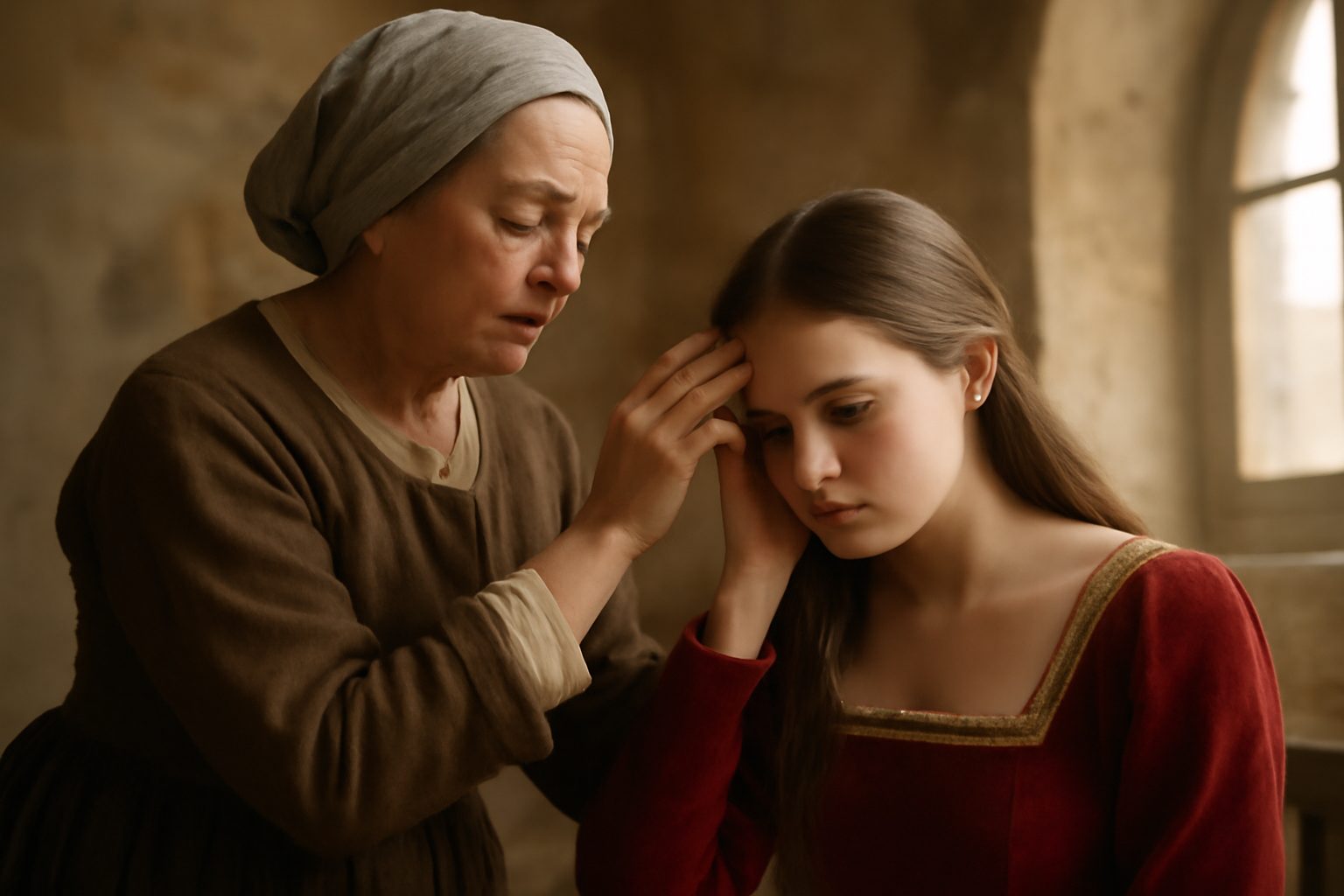
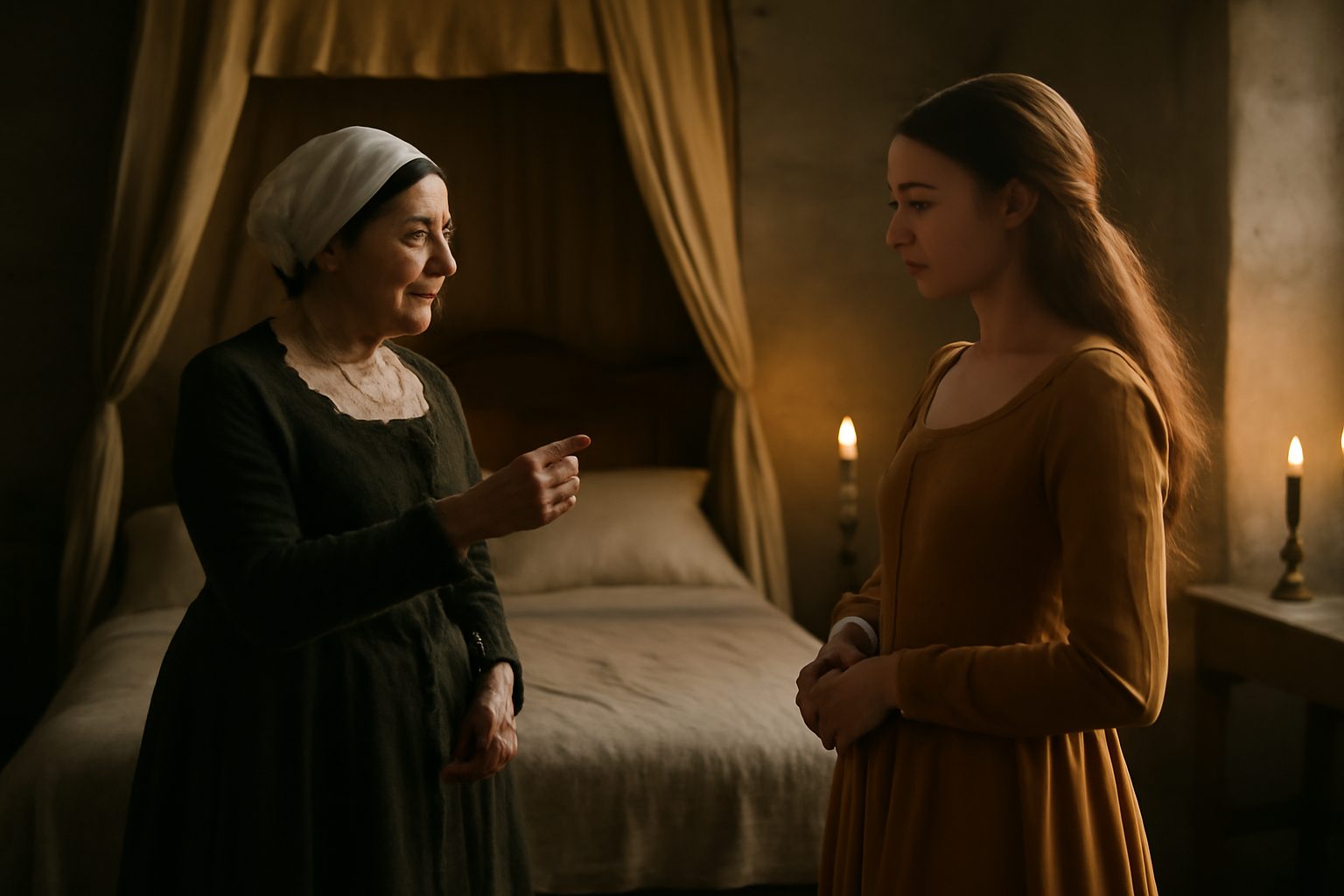
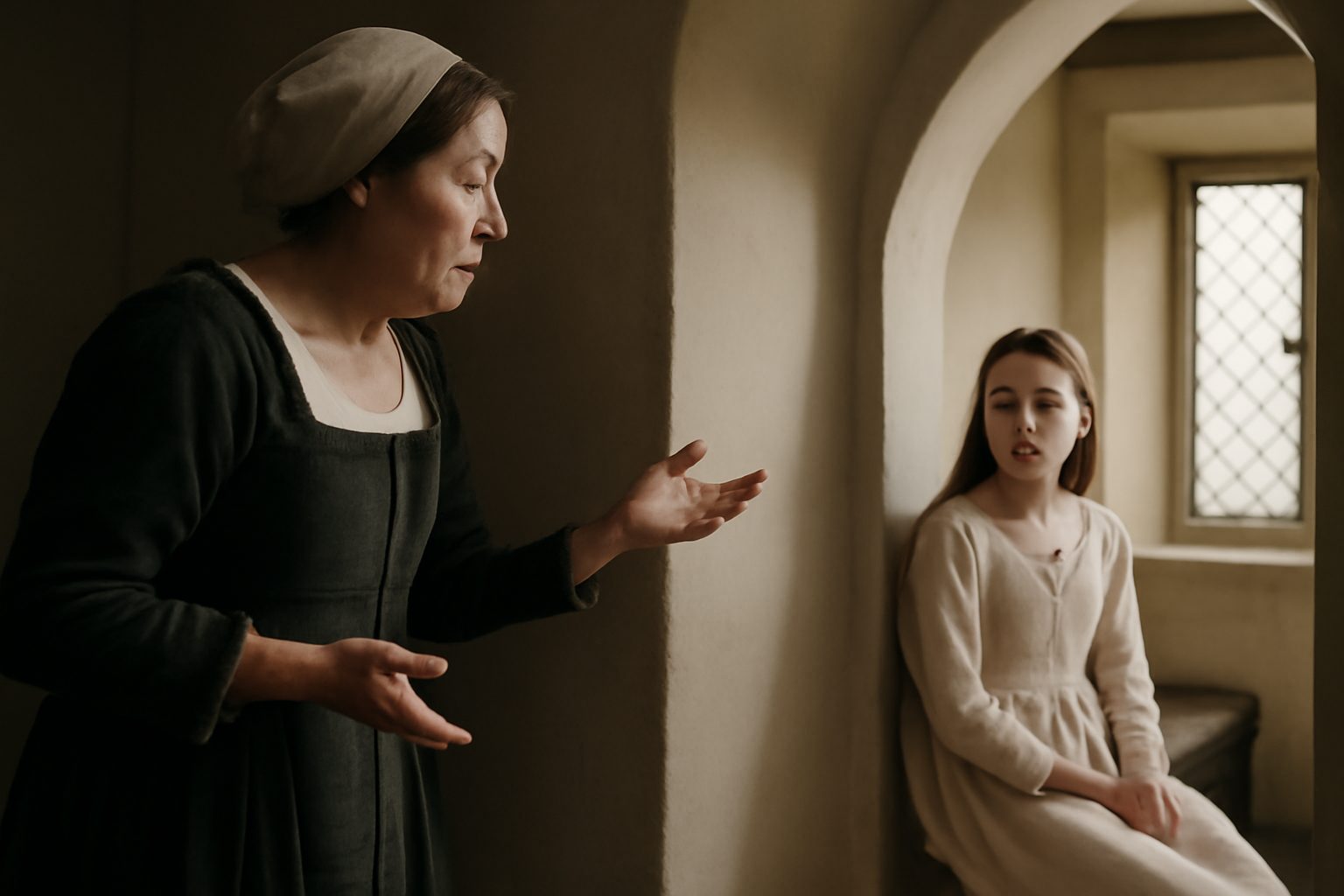
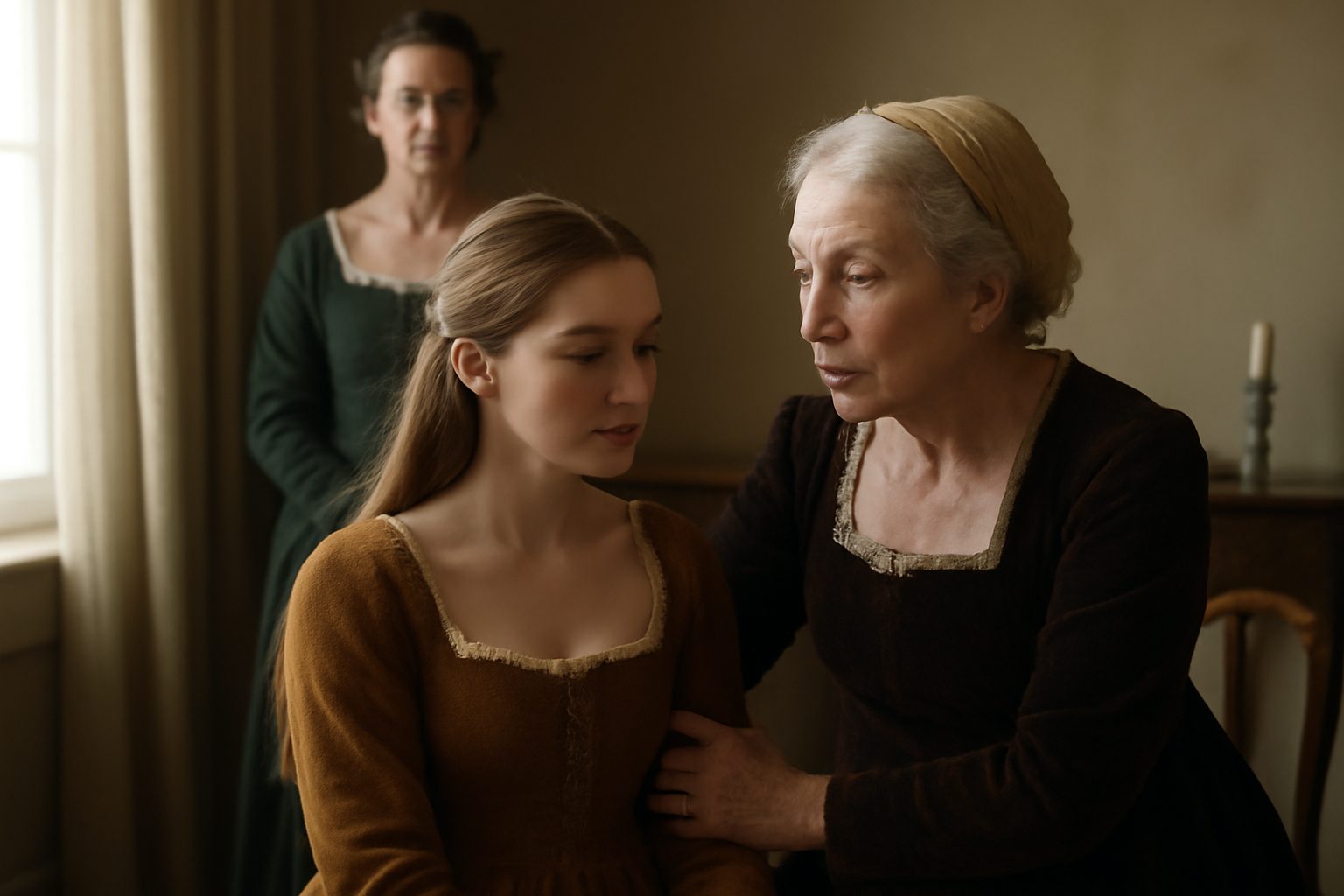
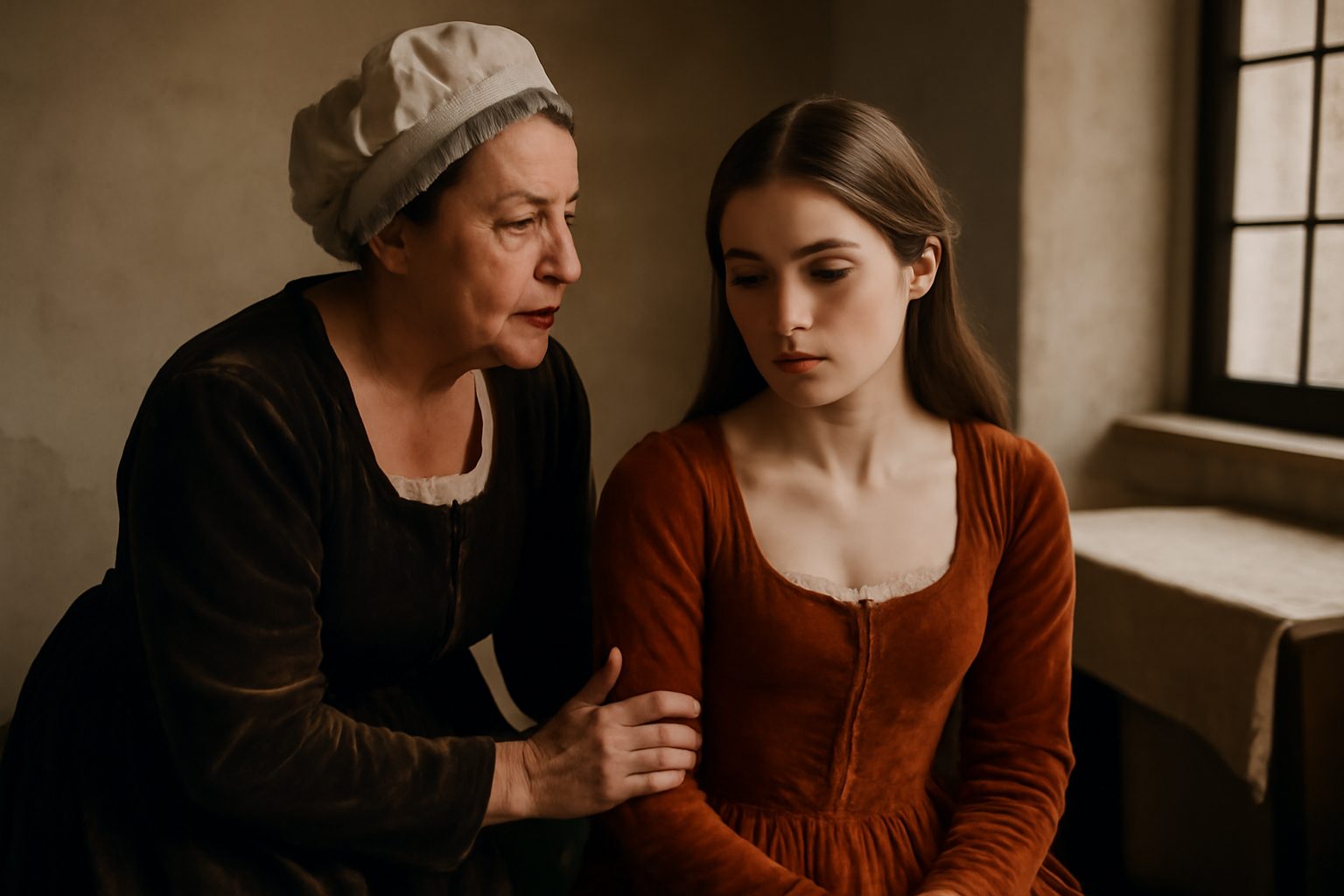
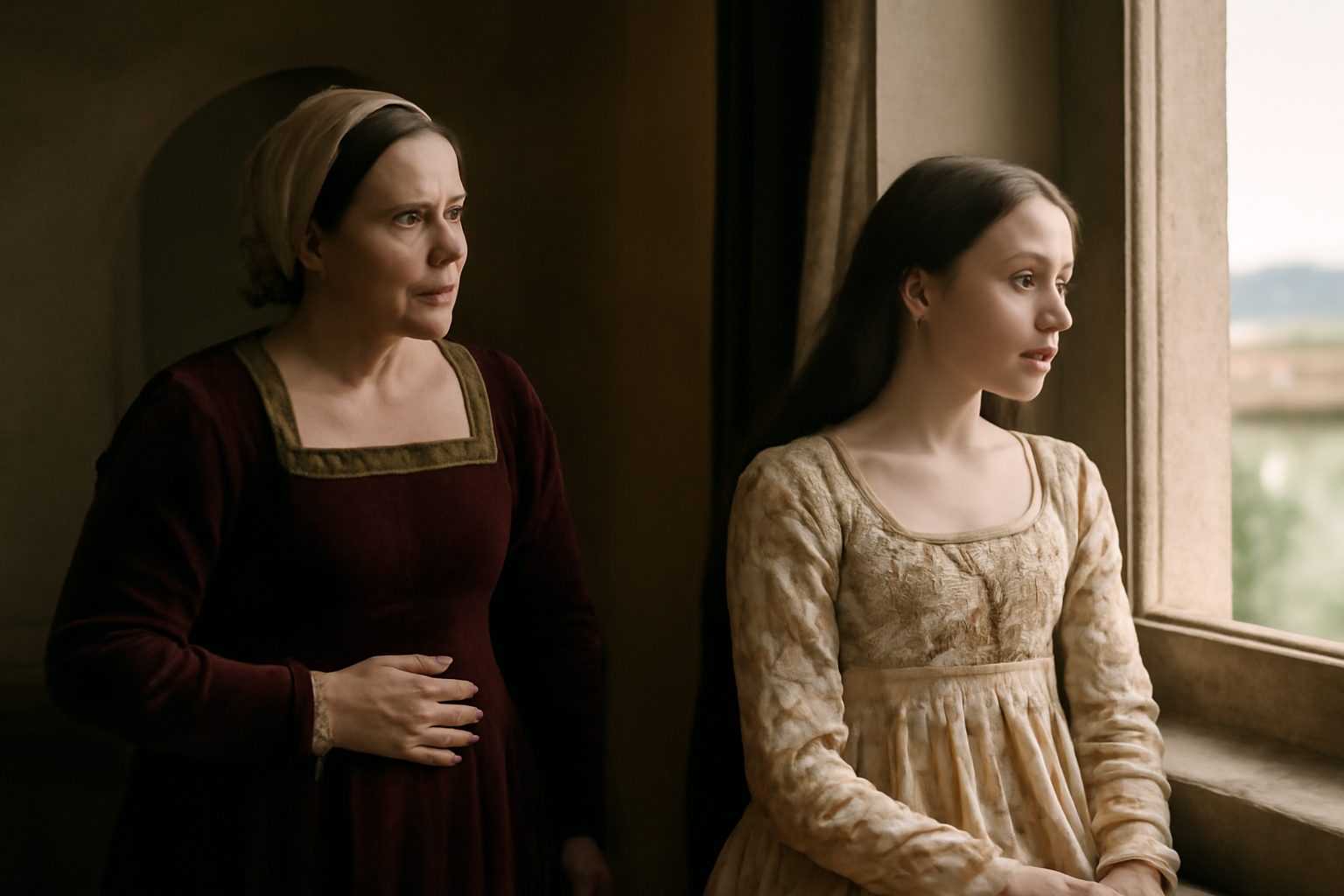
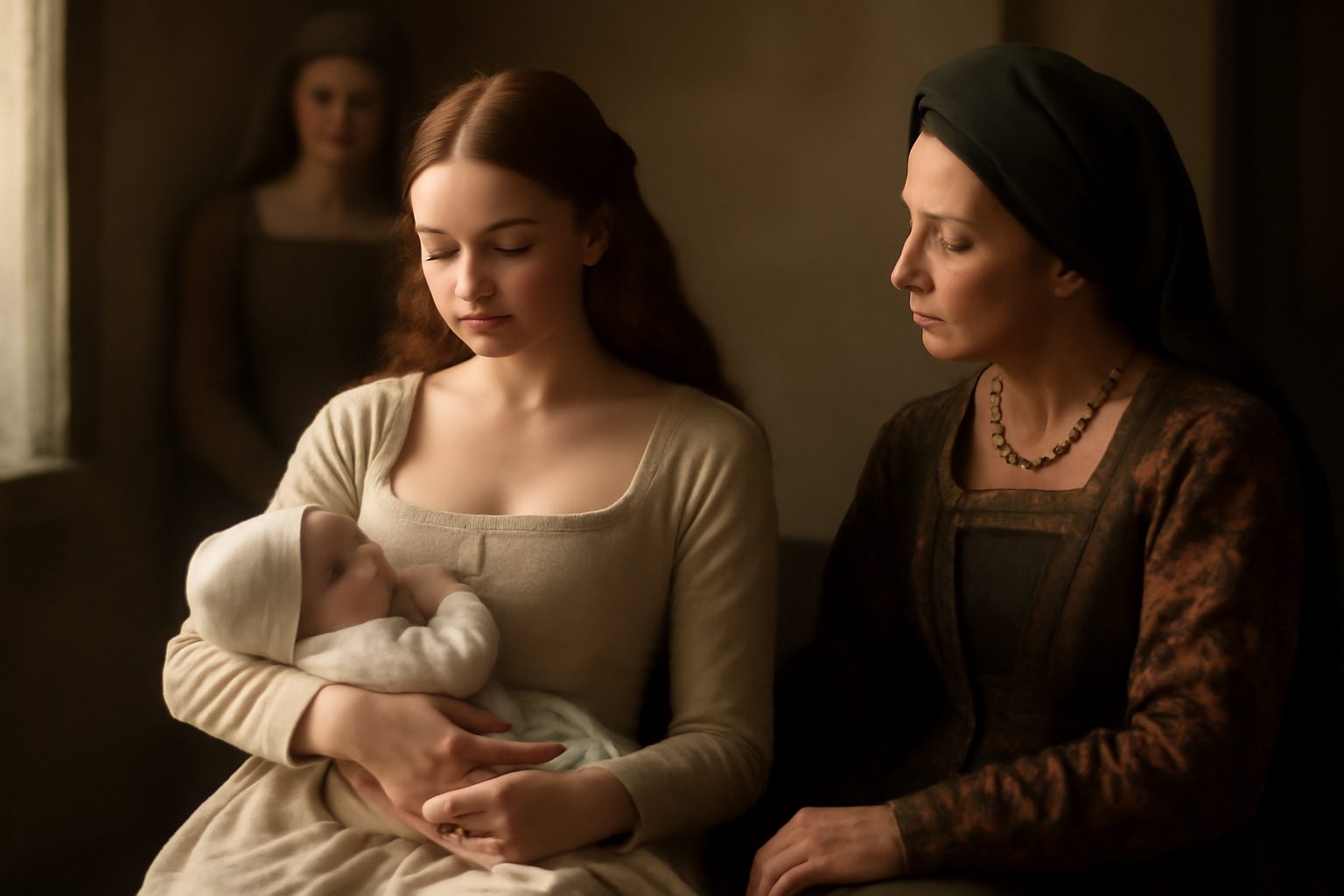
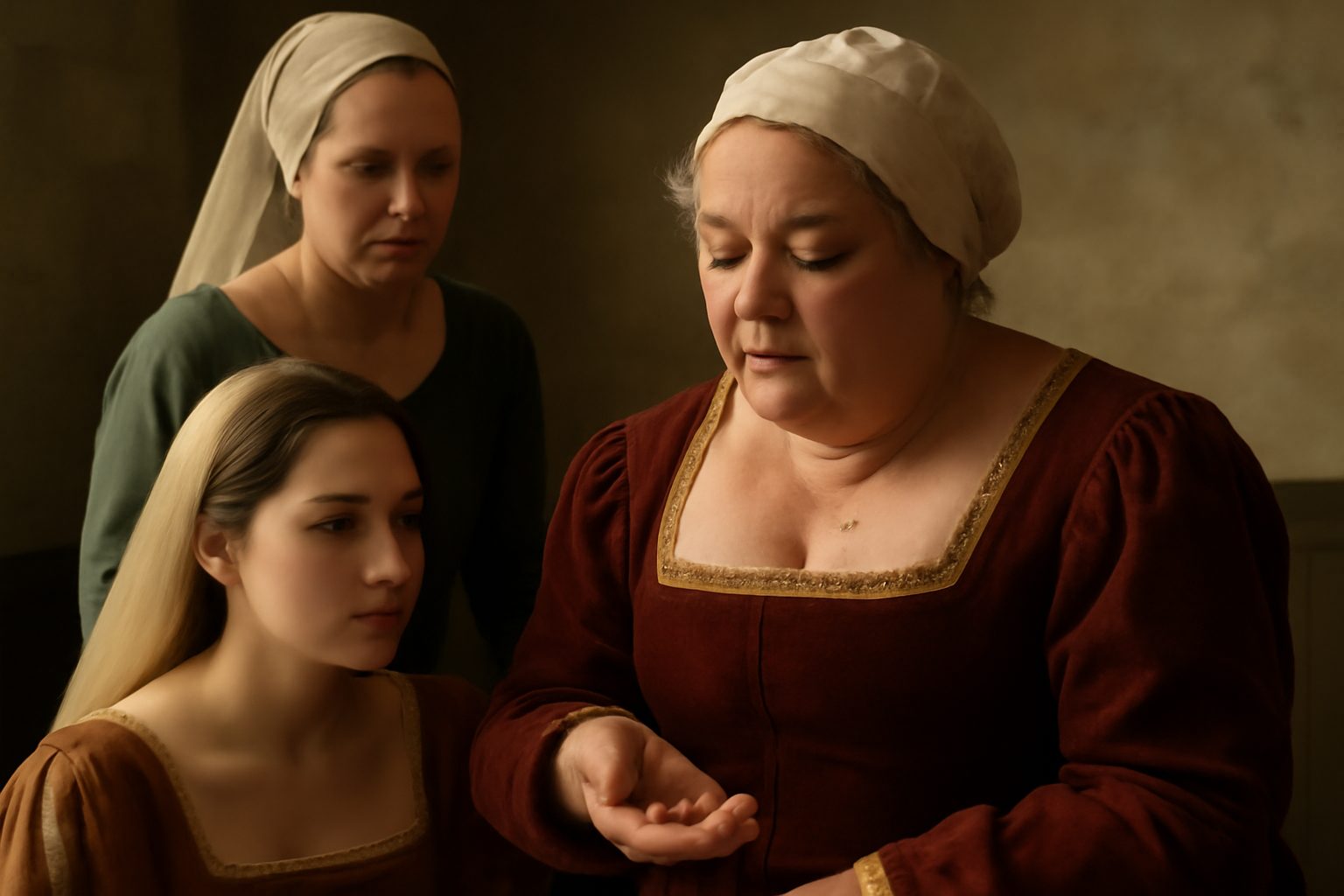
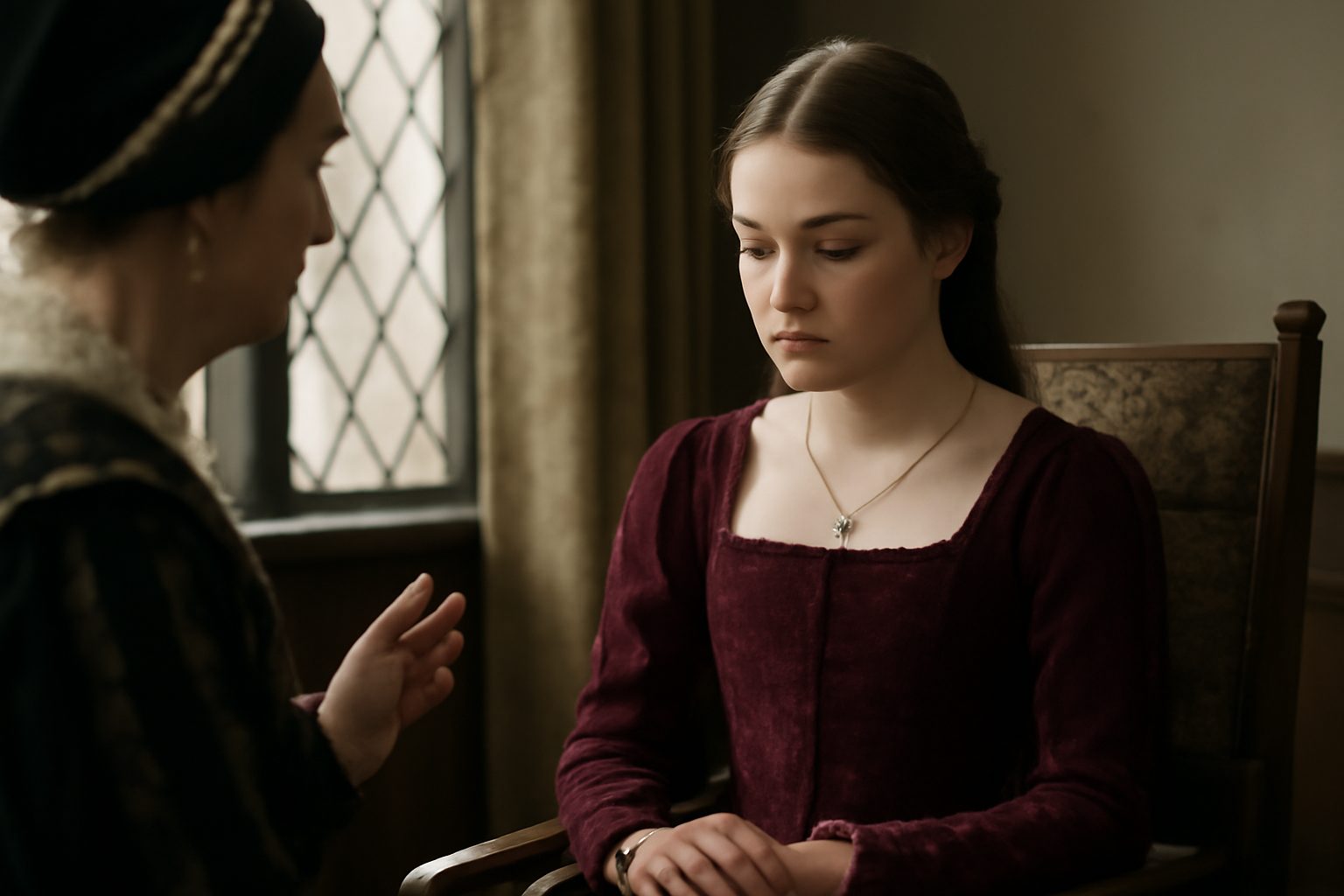
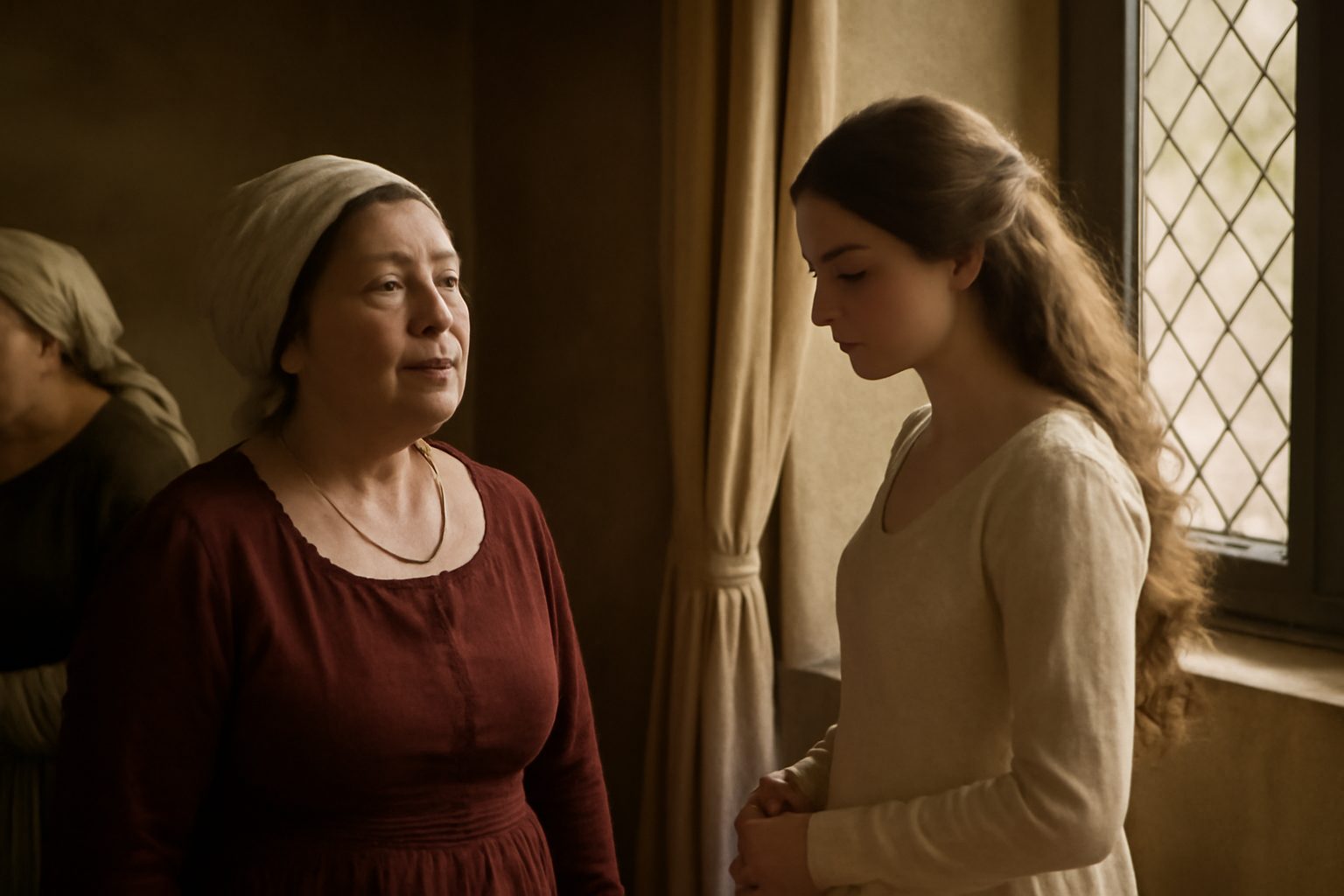
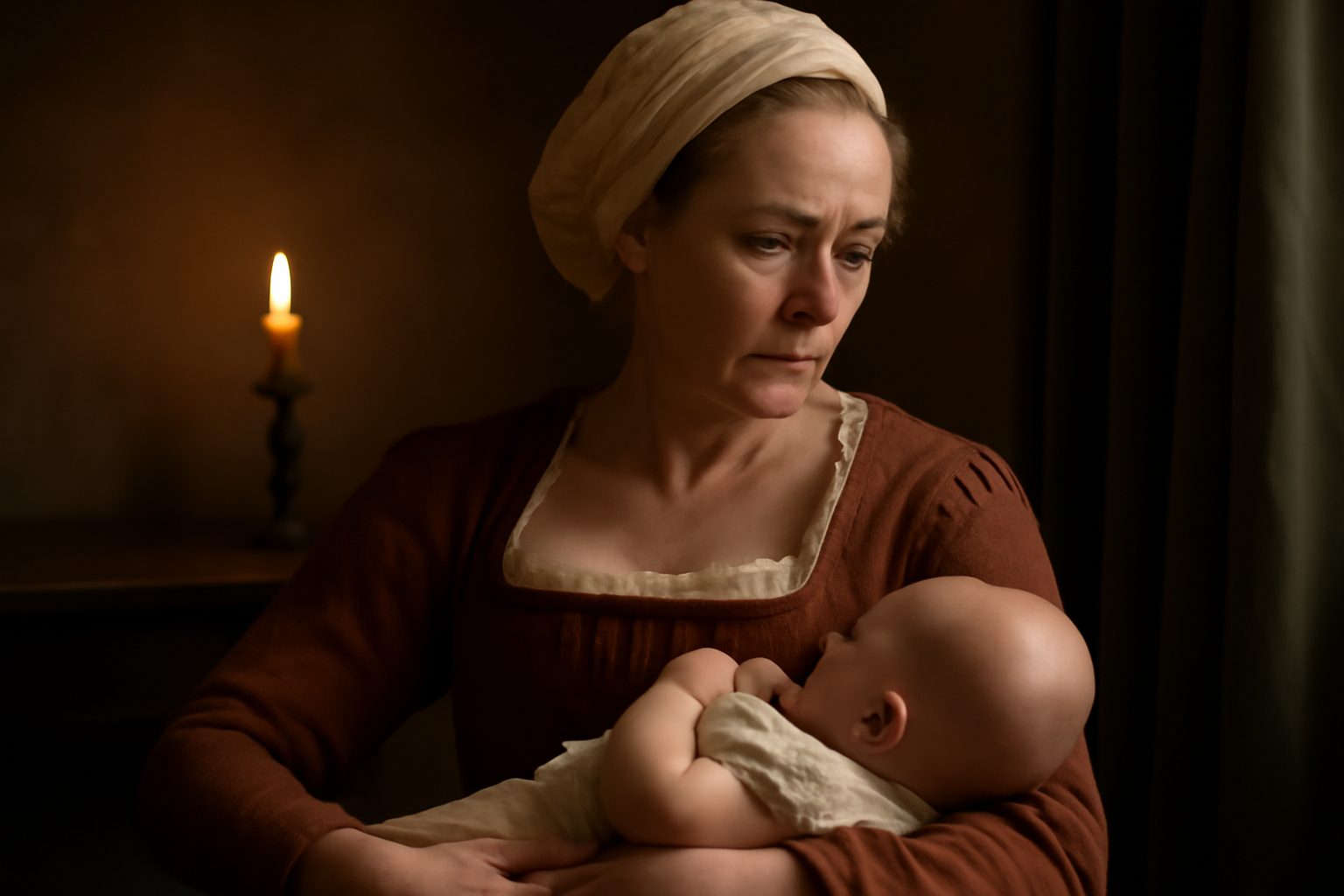
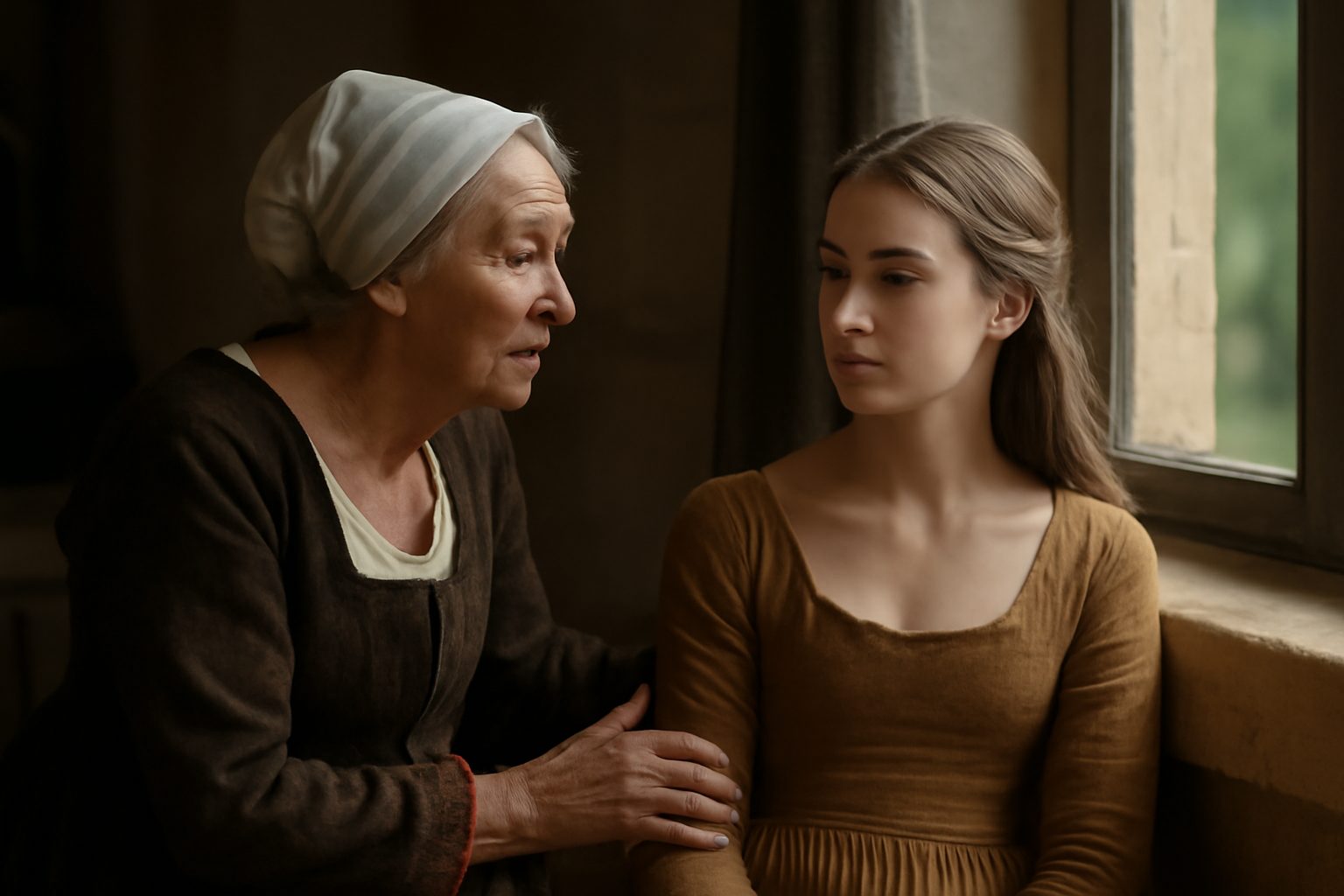
In Act 1, Scene 3 of Romeo and Juliet, the Nurse reminisces about Juliet's childhood while speaking to Lady Capulet. This line refers to the upcoming Lammas Eve, a harvest festival, marking Juliet's fourteenth birthday. The Nurse's fond recollection highlights her close bond with Juliet and sets the stage for the discussion of Juliet's impending marriage to Paris.
Nurse: "Come Lammas-eve at night shall she be fourteen."
In modern day english, we would say:
On the night before Lammas Day, she will turn fourteen.
Frequently Asked Questions
How old will Juliet be on Lammas-eve?
Juliet will be fourteen years old on Lammas-eve.
Connections to other verses:
Connections to "Come Lammas-eve at night shall she be fourteen"
The verse "Come Lammas-eve at night shall she be fourteen" is spoken by the Nurse and serves as a key reference point for Juliet's age, connecting to several other lines in the scene that explore her childhood, development, and the Nurse's personal memories.
Age and Time References
This line directly relates to "She is not fourteen. How long is it now" and "She's not fourteen", where Lady Capulet and the Nurse confirm Juliet's age. The specificity of Lammas-eve ties to "To Lammas-tide?", showing the Nurse's precise recollection of time.
Nurse's Personal Memories
The Nurse's vivid memory of Juliet's infancy connects this verse to her anecdote about weaning Juliet, found in "And she was wean'd,--I never shall forget it,--". Her husband's joking remark in "Thou wilt fall backward when thou hast more wit;" and Juliet's childish response in "And, pretty fool, it stinted and said 'Ay.'" further illustrate the Nurse's fond, detailed memories of Juliet's early years.
Historical Context
The Nurse contextualizes Juliet's age relative to past events, such as the earthquake mentioned in "Tis since the earthquake now eleven years;", reinforcing the timeline that leads to Juliet being nearly fourteen.
Transition to Marriageable Age
This emphasis on Juliet's approaching fourteenth birthday sets the stage for Lady Capulet's discussion of marriage, particularly in "Well, think of marriage now; younger than you" and "Are made already mothers: by my count,", highlighting the societal expectations for young women of her age.