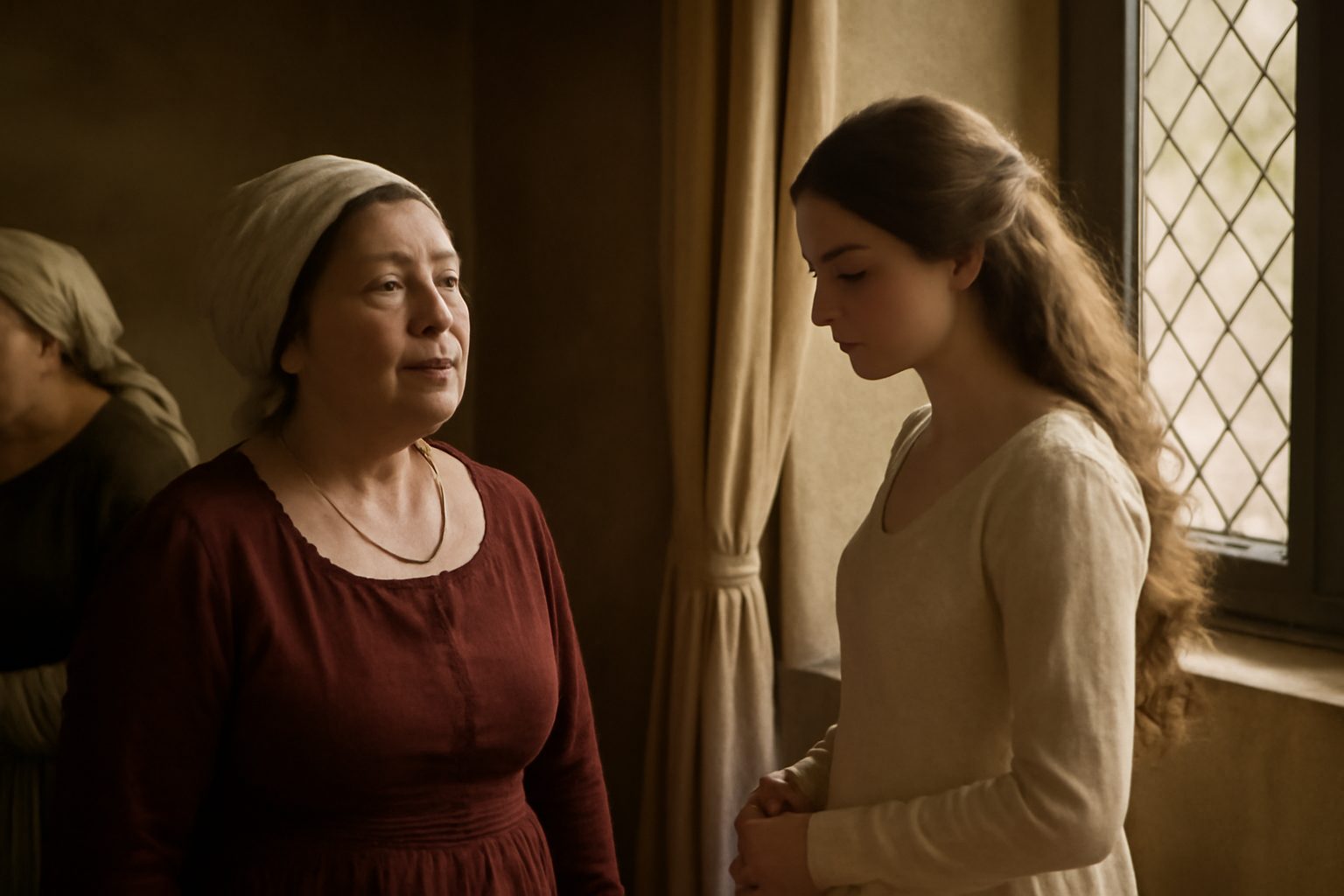
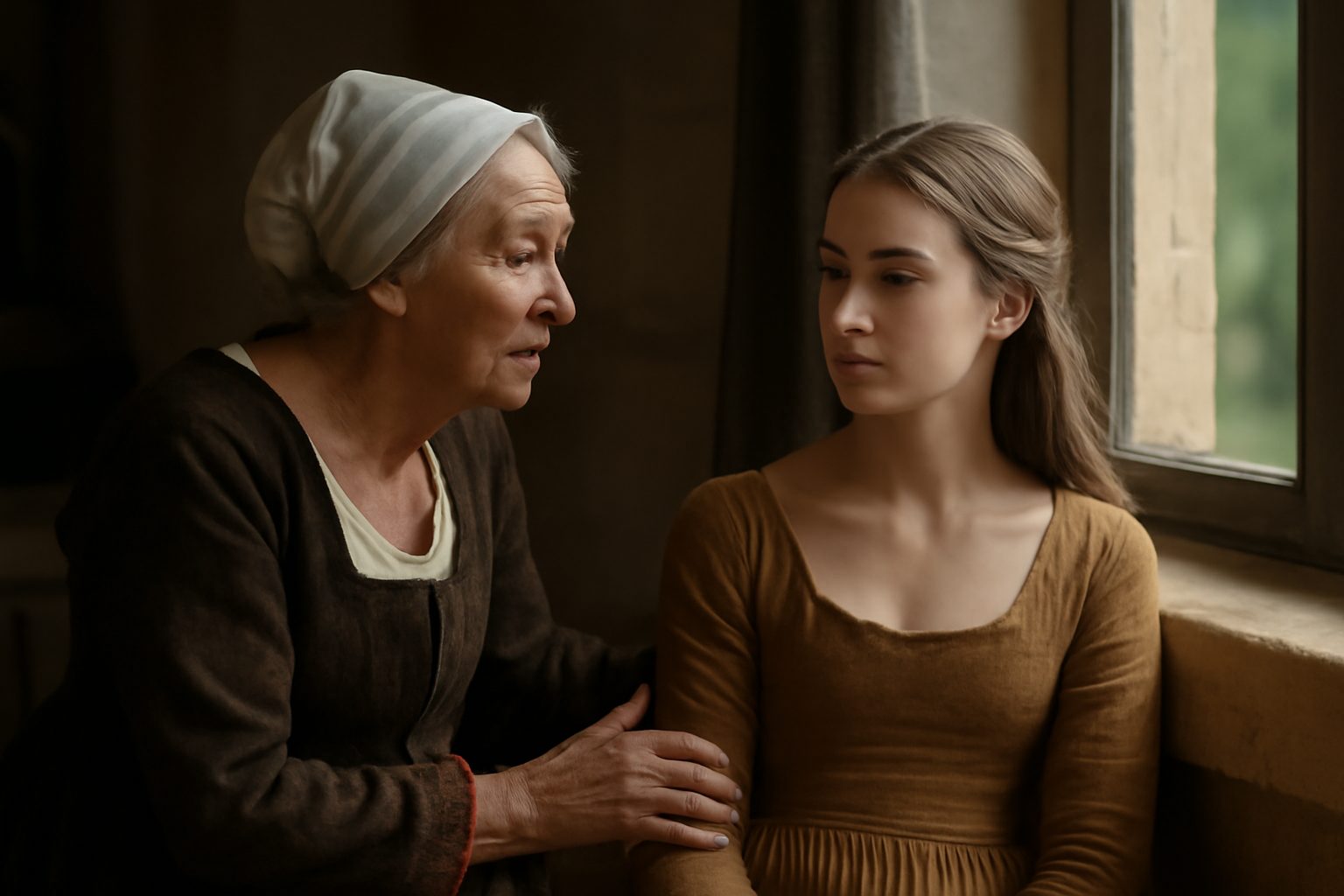
In Act 1, Scene 3 of Romeo and Juliet, the Nurse reminisces about Juliet's childhood, sharing a fond and humorous memory. She recalls a moment when young Juliet, having just learned to speak, responded with a childish yet endearing reply. This line captures the Nurse's affectionate nostalgia as she reflects on Juliet's innocence before the play's tragic events unfold.
Nurse: "And, pretty fool, it stinted and said 'Ay.'"
In modern day english, we would say:
The silly thing stopped crying and said yes.
Frequently Asked Questions
What does the Nurse say the child did after stopping?
The Nurse says the child said 'Ay' after stopping.
Connections to other verses:
Connections to "And, pretty fool, it stinted and said 'Ay.'"
The verse "And, pretty fool, it stinted and said 'Ay.'" is part of the Nurse's nostalgic recollection of Juliet's infancy, specifically referencing a moment when the child stopped crying and responded affirmatively. This moment is echoed and expanded upon in several other lines within the same scene.
Direct Repetition and Context
This line is directly repeated in "Wilt thou not, Jule?' it stinted and said 'Ay.'", reinforcing the Nurse's vivid memory and the humor she finds in the infant Juliet's actions. The phrase "stinted and said 'Ay'" appears again in "The pretty wretch left crying and said 'Ay.'", further emphasizing the Nurse's fond, anecdotal tone.
Narrative Continuation
The preceding line, "I never should forget it: 'Wilt thou not, Jule?'…", sets up the moment captured in the queried verse, highlighting the Nurse's enduring attachment to these childhood memories.
Juxtaposition with Other Infant Memories
The Nurse's recounting of Juliet's early years includes other vivid details, such as the weaning incident described in "And she was wean'd,--I never shall forget it,--" and the humorous fall mentioned in "Yea,' quoth my husband,'fall'st upon thy face?". These anecdotes collectively paint a picture of Juliet's lively infancy and the Nurse's deep emotional investment.
Contrast with Present Themes
While the Nurse dwells on the past, Lady Capulet's lines, such as "I came to talk of. Tell me, daughter Juliet," shift the focus to Juliet's future, particularly the prospect of marriage. This creates a thematic contrast between Juliet's innocent childhood and her impending transition into adulthood.
Reflection on Juliet's Age
The Nurse's precise recollection of Juliet's age, noted in "Faith, I can tell her age unto an hour.", underscores her role as a caretaker since infancy, providing context for the depth of her memories, including the moment in the queried verse.