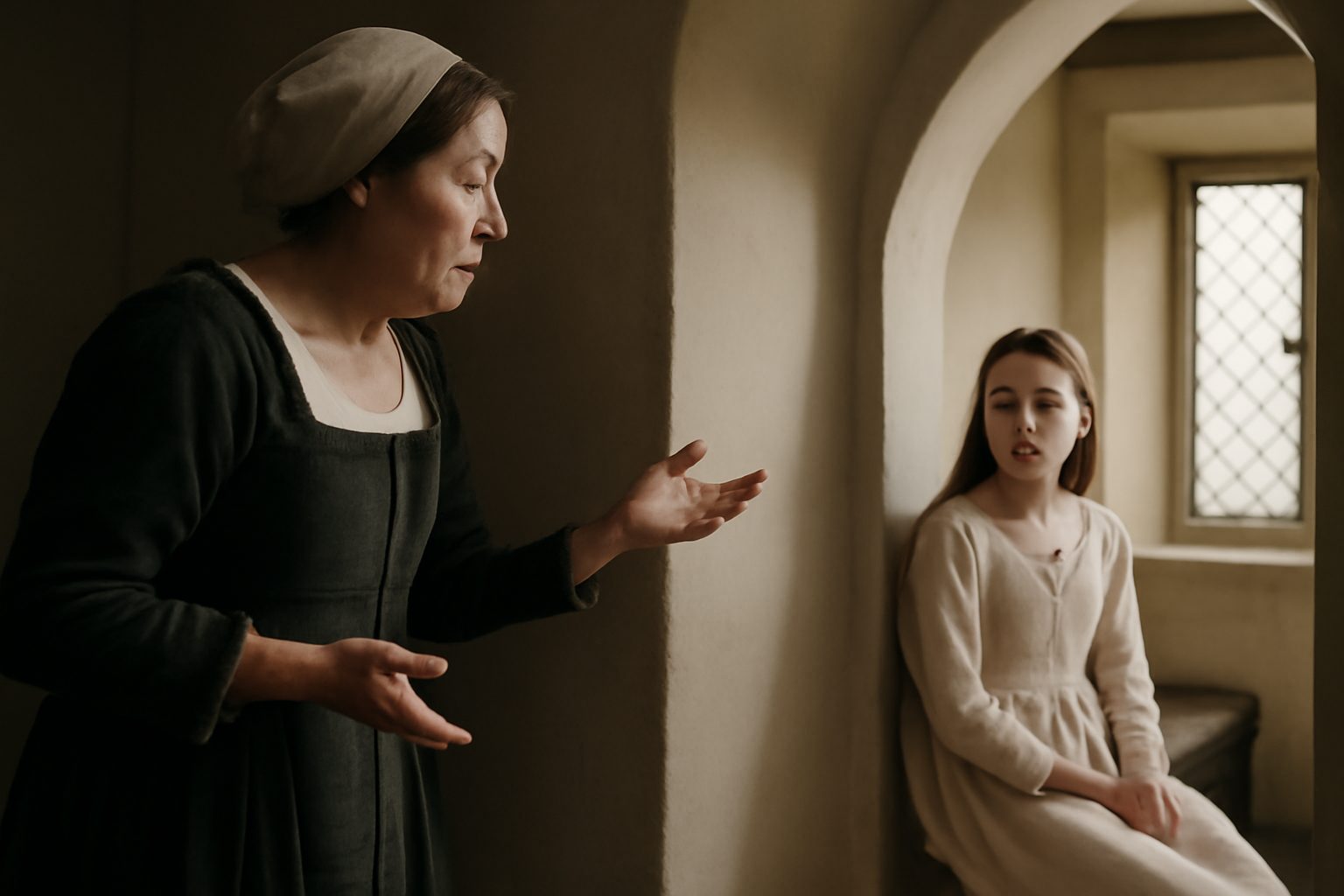
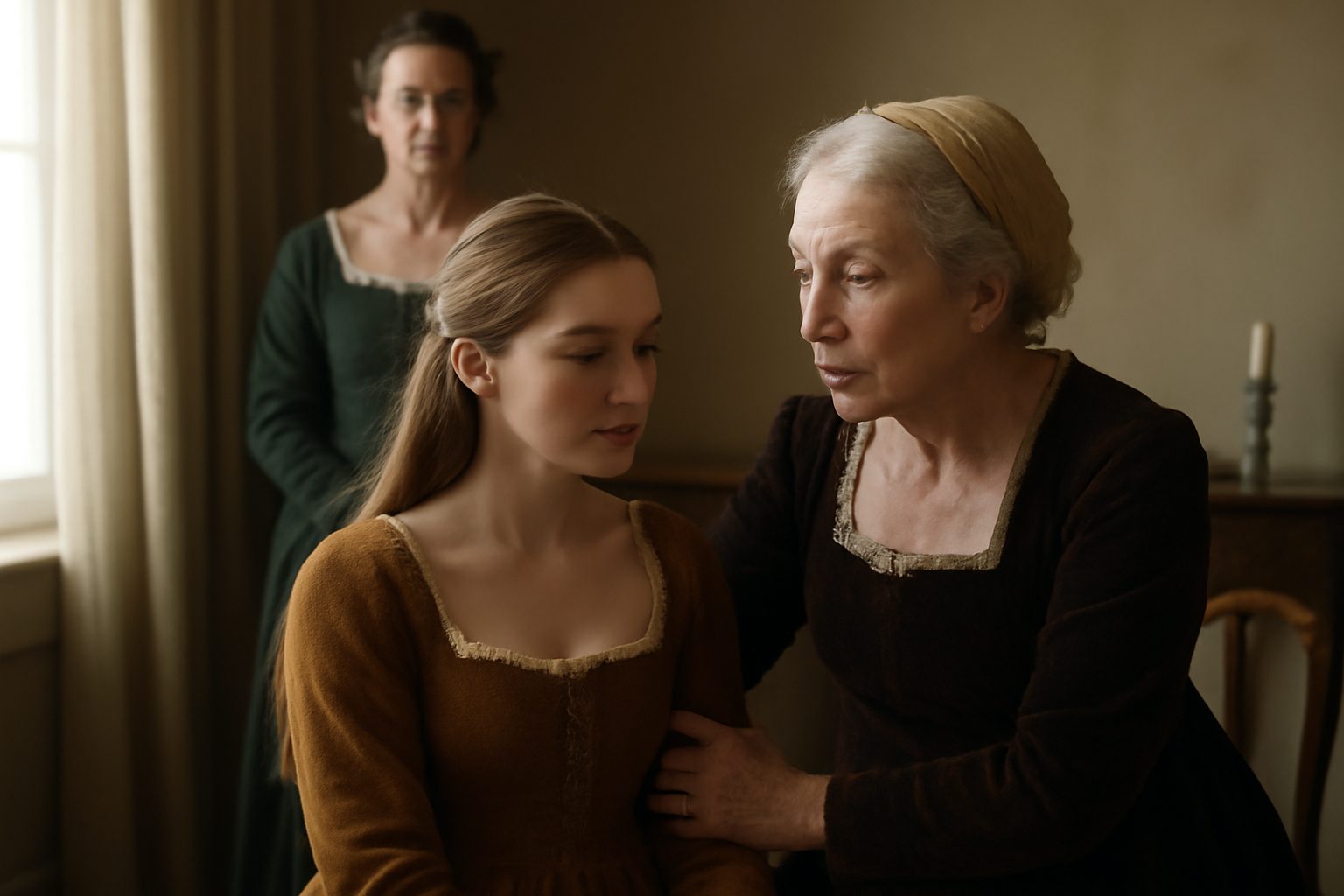
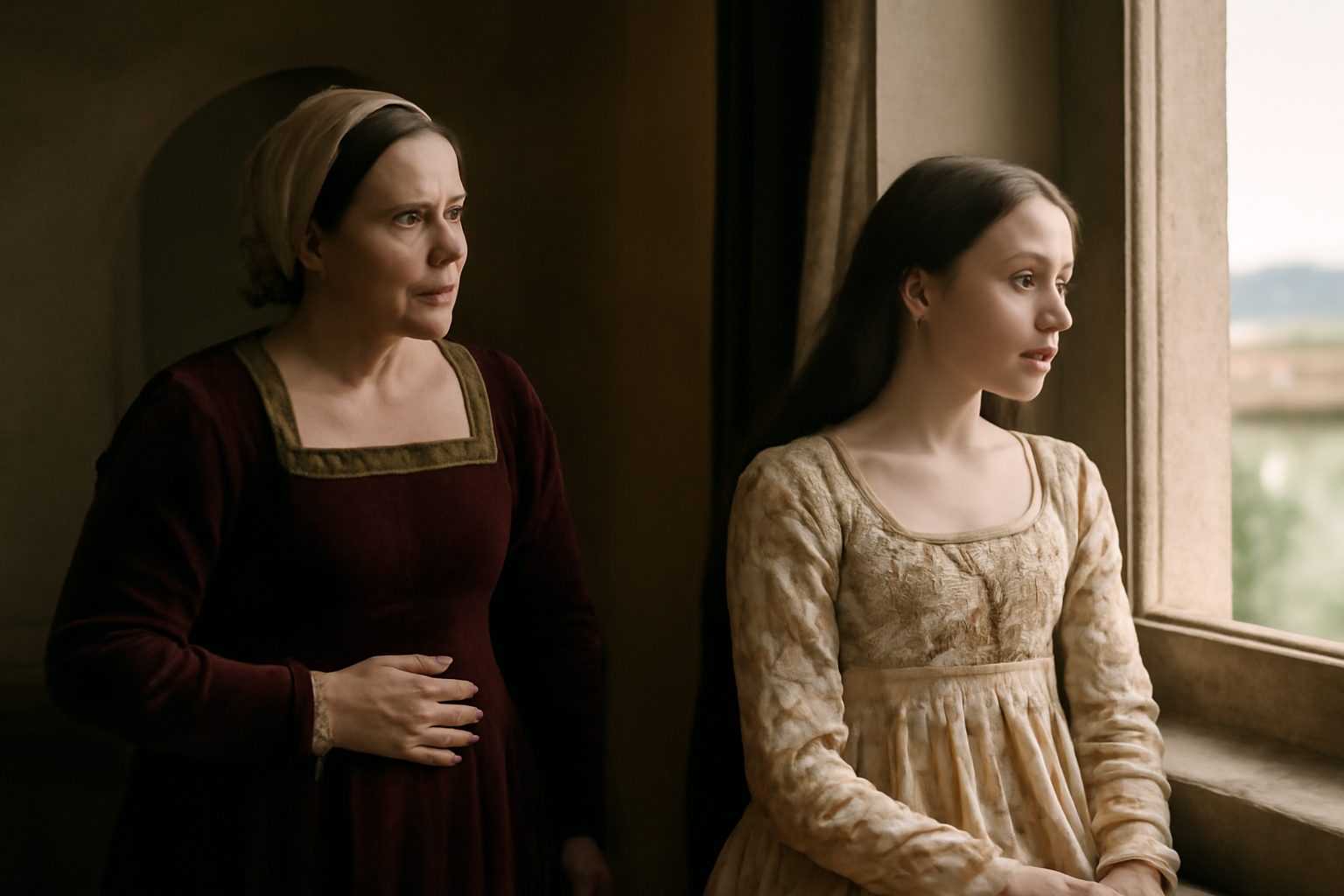
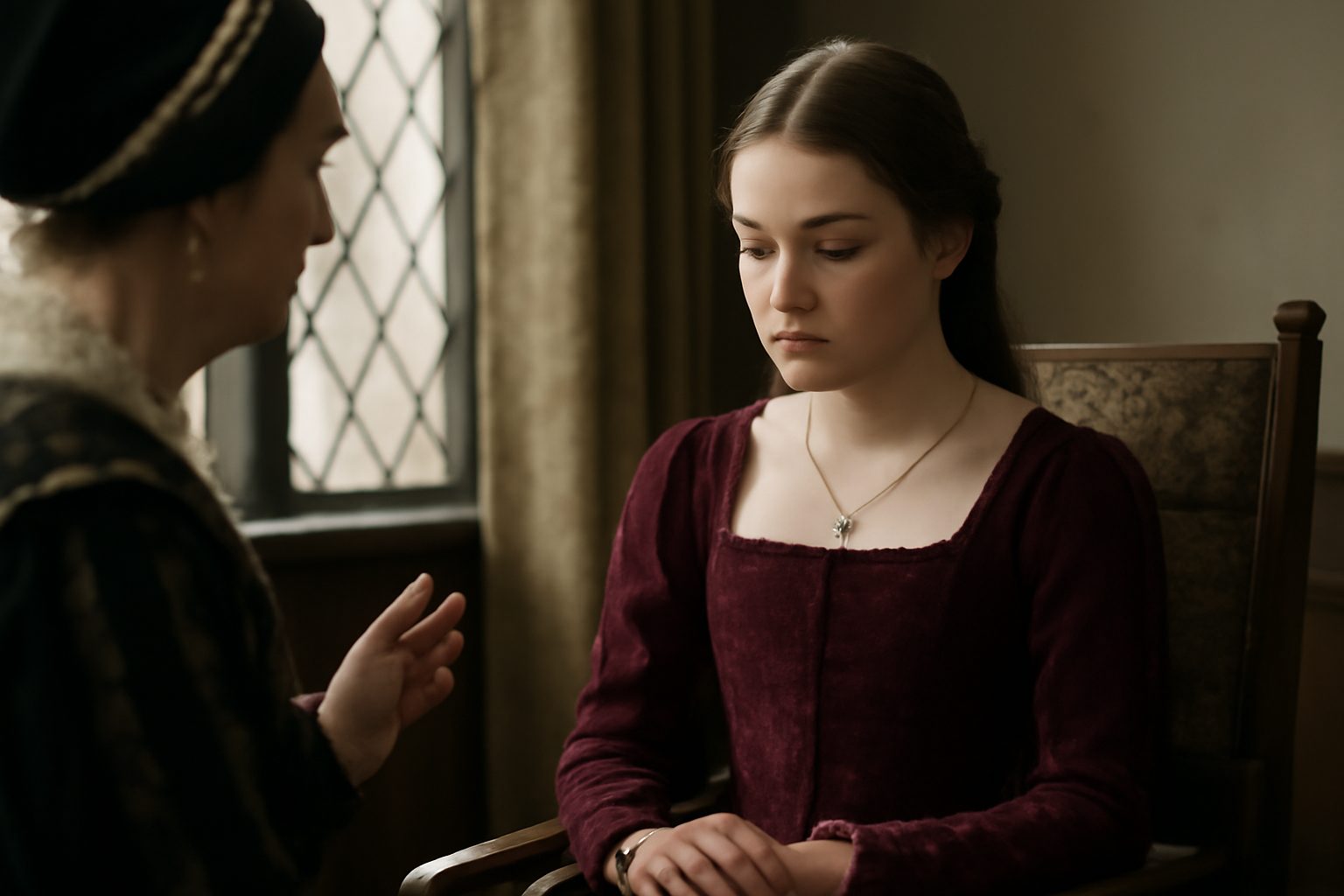
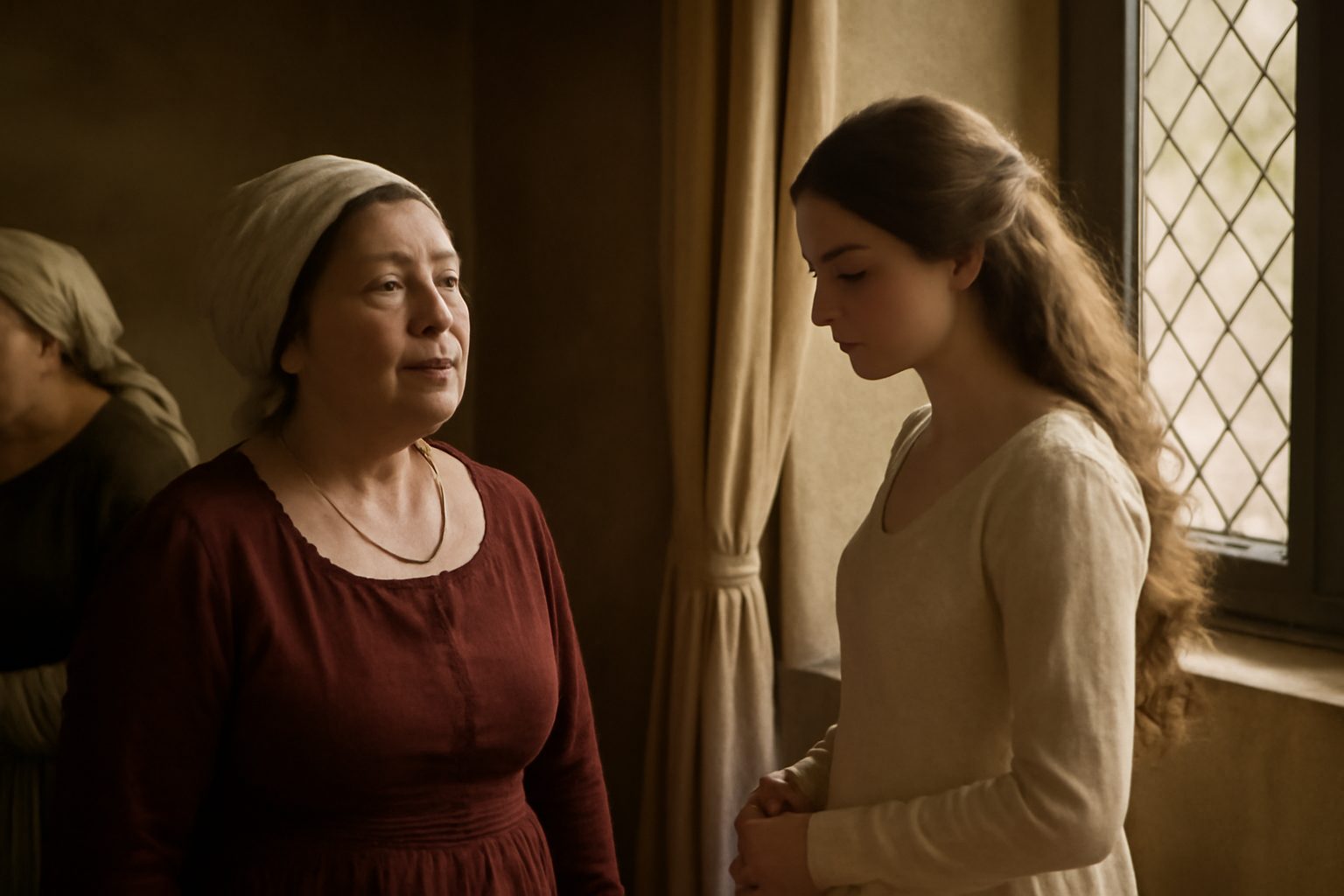
In Act 1, Scene 3 of Romeo and Juliet, the Nurse recounts a childhood memory of Juliet, revealing her fondness for storytelling and her deep affection for the young girl. This particular moment occurs as the Nurse reminisces about Juliet's weaning, humorously recalling how the toddler responded to a teasing question. The line captures the Nurse's playful, nostalgic tone while offering a glimpse into Juliet's early life before the events of the play unfold.
Nurse: "Wilt thou not, Jule?' it stinted and said 'Ay.'"
In modern day english, we would say:
The nurse stopped and said, "You won’t, Juliet?" then paused and added, "Yes."
Frequently Asked Questions
What does the Nurse say Juliet did as a child when she stopped crying?
The Nurse says that when Juliet stopped crying as a child, she said 'Ay' (meaning 'yes').
Connections to other verses:
Connections to "Wilt thou not, Jule?' it stinted and said 'Ay.'
This verse, found at /romeo-and-juliet/one/1-3/act-1-scene-3-61/, is part of the Nurse's nostalgic recollection of Juliet's infancy. It connects thematically and narratively to several other verses in the scene, particularly those detailing Juliet's early years and the Nurse's personal anecdotes.
Direct Preceding and Following Lines
The verse is directly preceded by "Thou wilt fall backward when thou comest to age;", which sets up the jest about Juliet's future. It is immediately followed by "And stint thou too, I pray thee, nurse, say I.", where Lady Capulet humorously urges the Nurse to stop her rambling story.
Recurrence of the Anecdote
The phrase "it stinted and said 'Ay'" appears earlier in the scene at "And, pretty fool, it stinted and said 'Ay.'", reinforcing the Nurse's fond memory. This is part of a longer sequence starting with "I never should forget it: 'Wilt thou not, Jule?'…", which introduces the anecdote.
Context of Juliet's Infancy
The verse ties into the Nurse's recounting of Juliet's age and early life, such as "And she was wean'd,--I never shall forget it,--" and "For I had then laid wormwood to my dug,", explaining why the infant Juliet reacted by stopping ("stinted") her crying. The earthquake reference at "Tis since the earthquake now eleven years;" provides a timeline for these memories.
Humor and Foreshadowing
The Nurse's jest about Juliet falling backward (a sexual innuendo) at "Thou wilt fall backward when thou hast more wit;" and "Thou wilt fall backward when thou comest to age;" frames the "Ay" response, linking infant innocence to future maturity. The humor is acknowledged by Lady Capulet at "Yes, madam: yet I cannot choose but laugh," and the Nurse herself at "To see, now, how a jest shall come about!", hinting at Juliet's impending romantic experiences.
Connection to Marriage Theme
This childhood story subtly introduces the scene's central theme of marriage, leading into Lady Capulet's question at "How stands your disposition to be married?" and Juliet's cautious response at "I'll look to like, if looking liking move:". The Nurse's affectionate memories contrast with the formal marriage proposal discussed later.