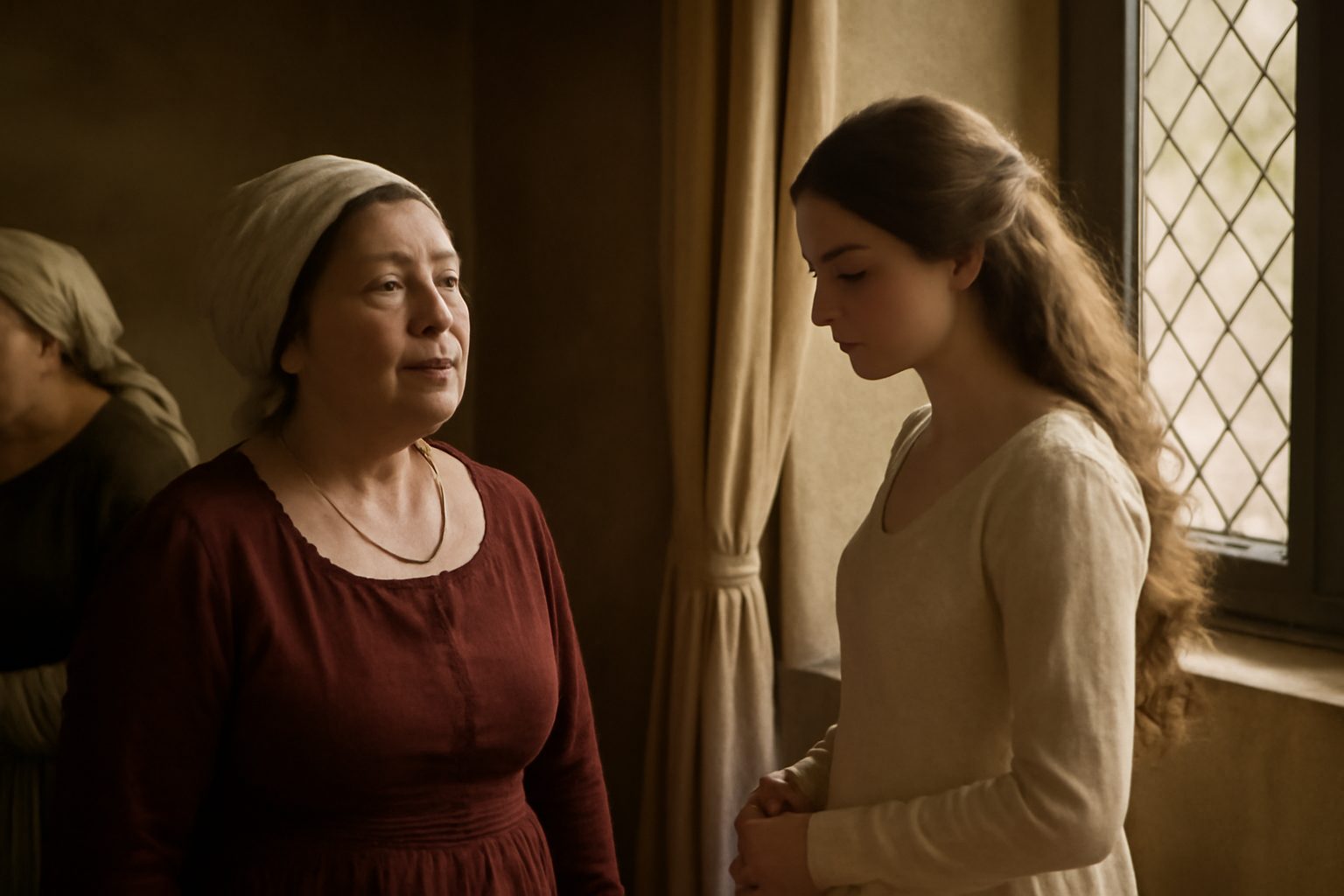
In Act 1, Scene 3 of Romeo and Juliet, Lady Capulet and the Nurse discuss Juliet's potential marriage to Paris. The Nurse reminisces about Juliet's childhood, recalling a humorous moment when the young Juliet stumbled but quickly stopped crying. This line captures the Nurse's affectionate and nostalgic tone as she recounts Juliet's spirited resilience even as a toddler.
Nurse: "To think it should leave crying and say 'Ay.'"
In modern day english, we would say:
It’s funny to imagine the baby stopping mid-cry and suddenly saying yes instead.
Frequently Asked Questions
What does the nurse find surprising about the baby in this line?
The nurse is surprised that the baby stopped crying and said 'yes' (Ay) instead.
Connections to other verses:
Connections to "To think it should leave crying and say 'Ay.'"
The verse "To think it should leave crying and say 'Ay.'" (/romeo-and-juliet/one/1-3/act-1-scene-3-55/) is part of the Nurse's nostalgic recollection of Juliet's infancy, highlighting a moment of early responsiveness and foreshadowing themes of consent and destiny. It connects thematically and narratively to several other verses in the scene.
Direct Narrative Continuation
This line directly follows and refers to the event described in "The pretty wretch left crying and said 'Ay.'", reinforcing the Nurse's amusement at Juliet's infantile agreement.
Infancy and Weaning Context
The memory is rooted in Juliet's weaning, as mentioned in "And she was wean'd,--I never shall forget it,--" and the use of wormwood in "For I had then laid wormwood to my dug", which made the breast bitter and prompted the child's reaction.
Repetition and Emphasis
The phrase "said 'Ay'" is echoed in "And, pretty fool, it stinted and said 'Ay.'" and "Wilt thou not, Jule?' it stinted and said 'Ay.'", emphasizing the Nurse's fond, repetitive storytelling.
Connection to the Nurse's Husband
The incident involving Juliet falling and the Nurse's husband's jest in "Yea,' quoth my husband,'fall'st upon thy face?" and "Yea,' quoth he, 'dost thou fall upon thy face?" precedes this response, adding to the comedic and familial tone.
Foreshadowing and Irony
The child's "Ay" ironically foreshadows Juliet's eventual consent in matters of love and marriage, contrasting with her later defiance. This connects to Lady Capulet's questioning in "What say you? can you love the gentleman?" and Juliet's cautious reply in "I'll look to like, if looking liking move:".
Structural and Thematic Links
The Nurse's anecdote serves as a humorous interlude before the serious discussion of marriage, beginning with "How stands your disposition to be married?" and Paris's introduction in "The valiant Paris seeks you for his love.", highlighting the contrast between childhood innocence and adult expectations.