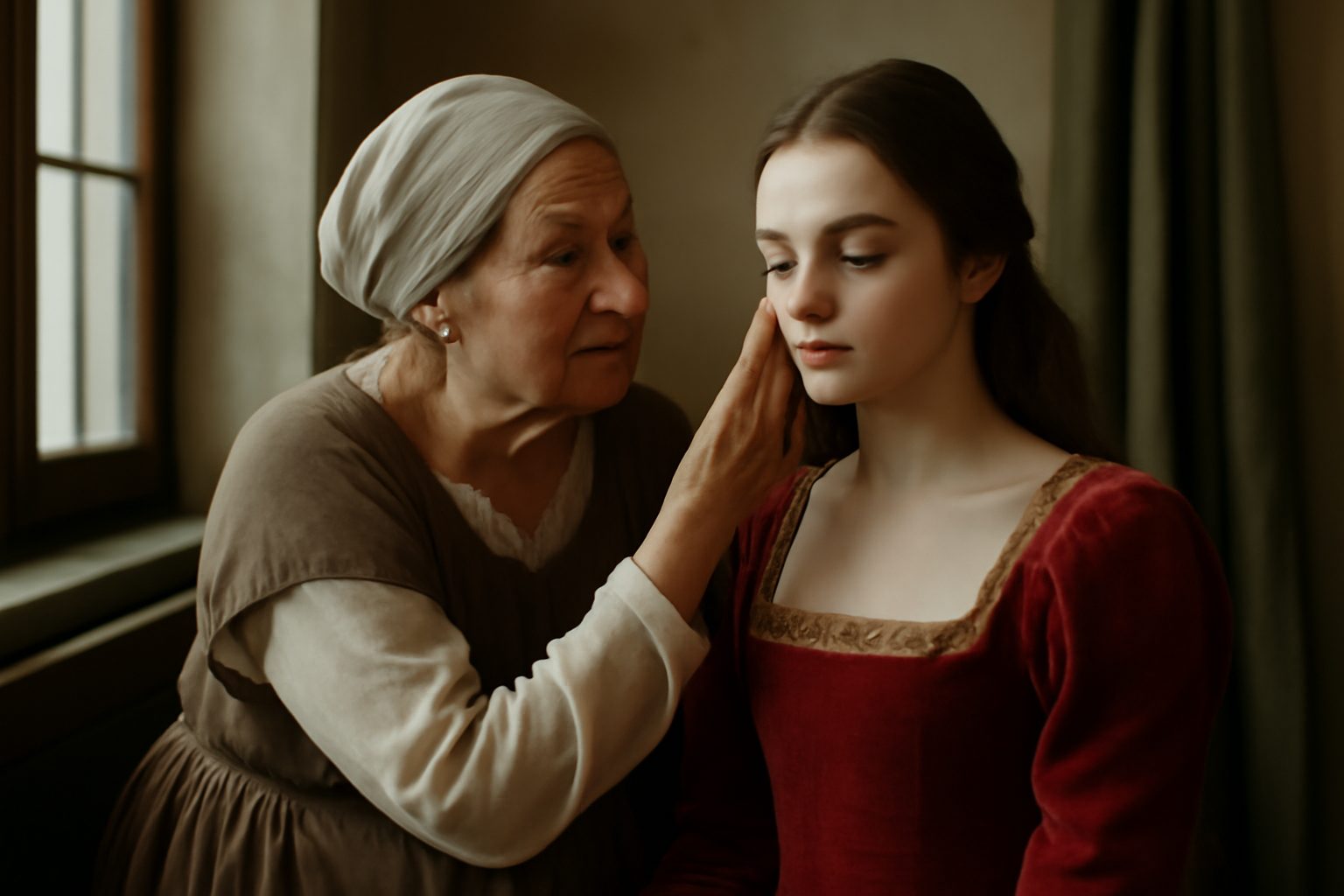
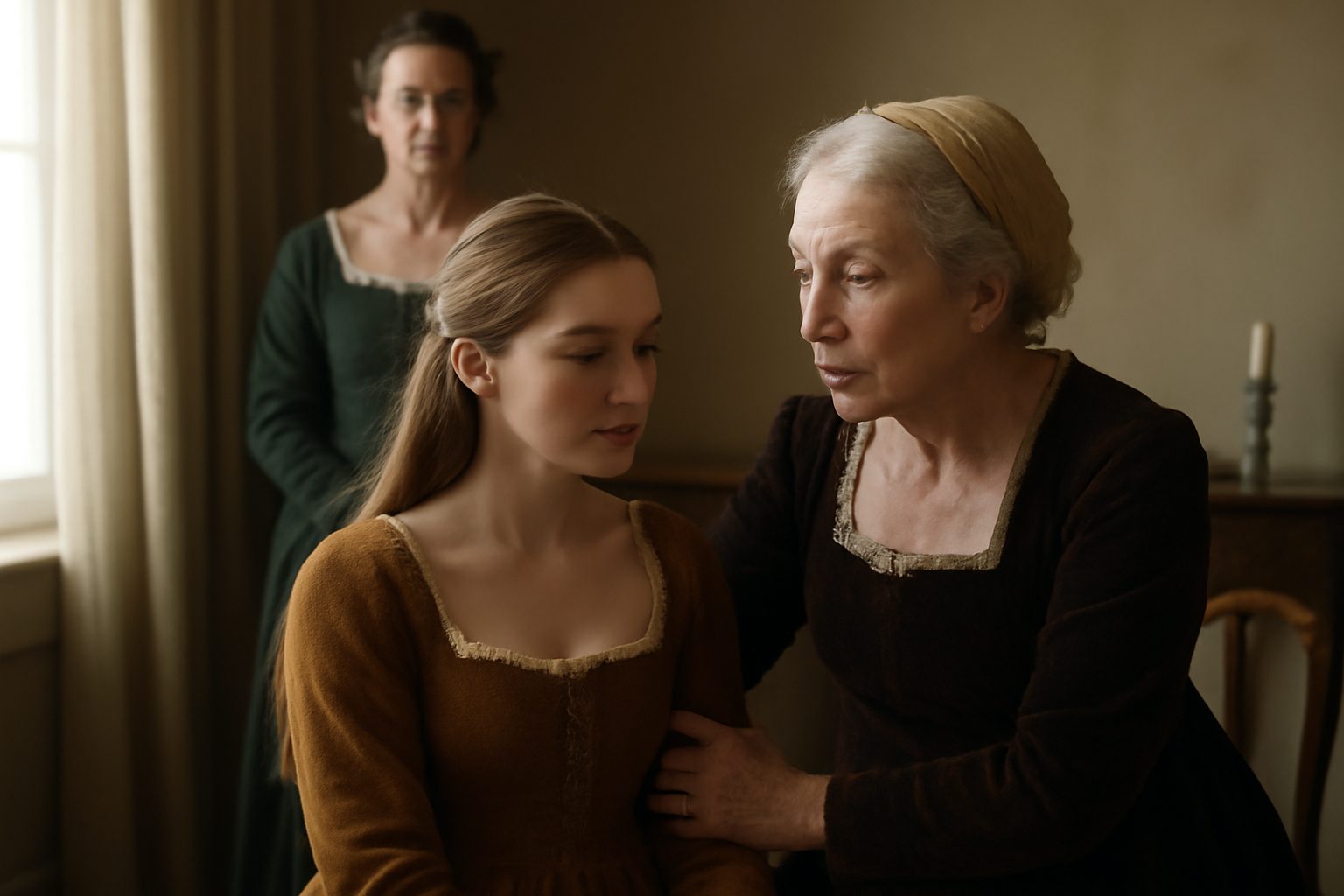
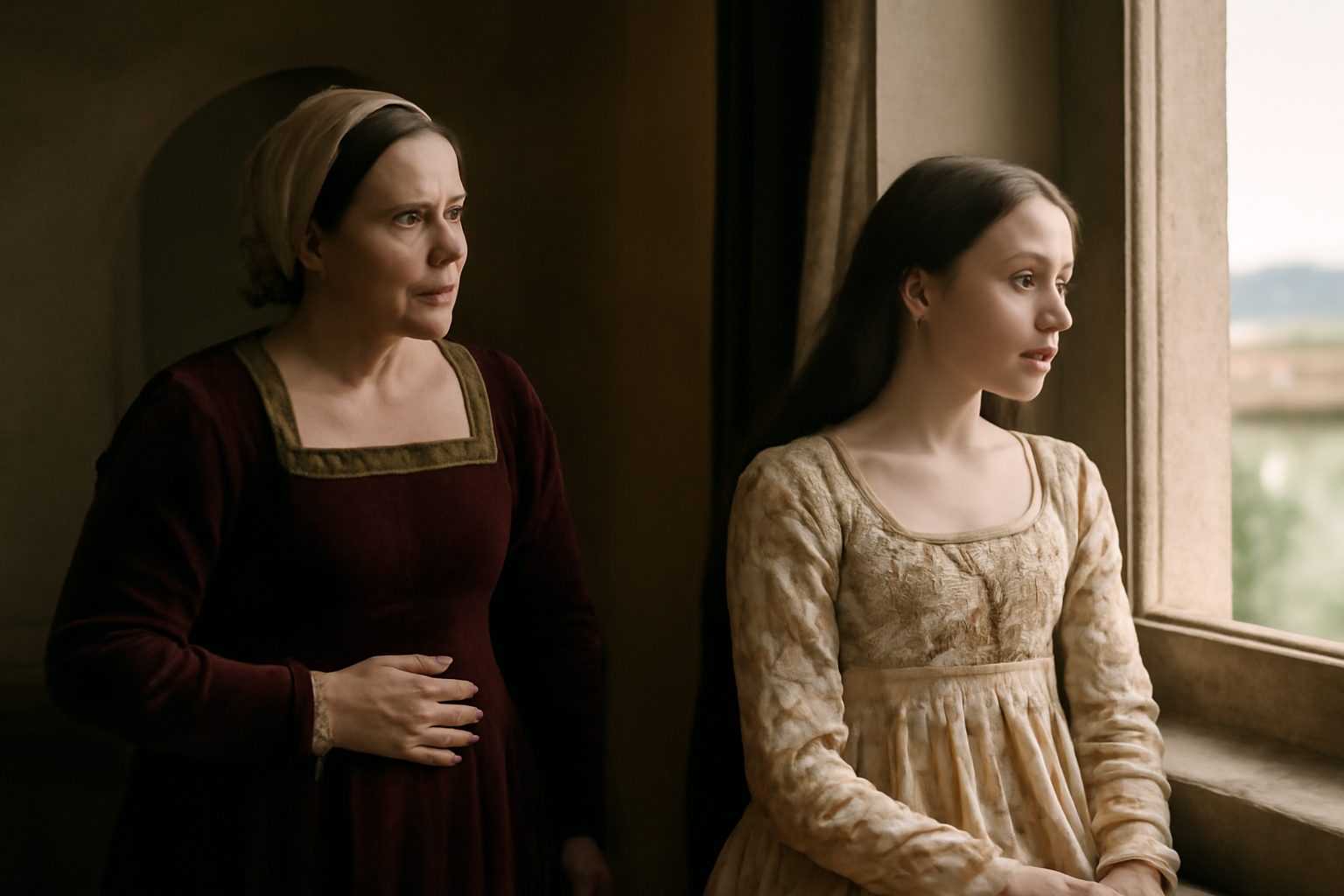
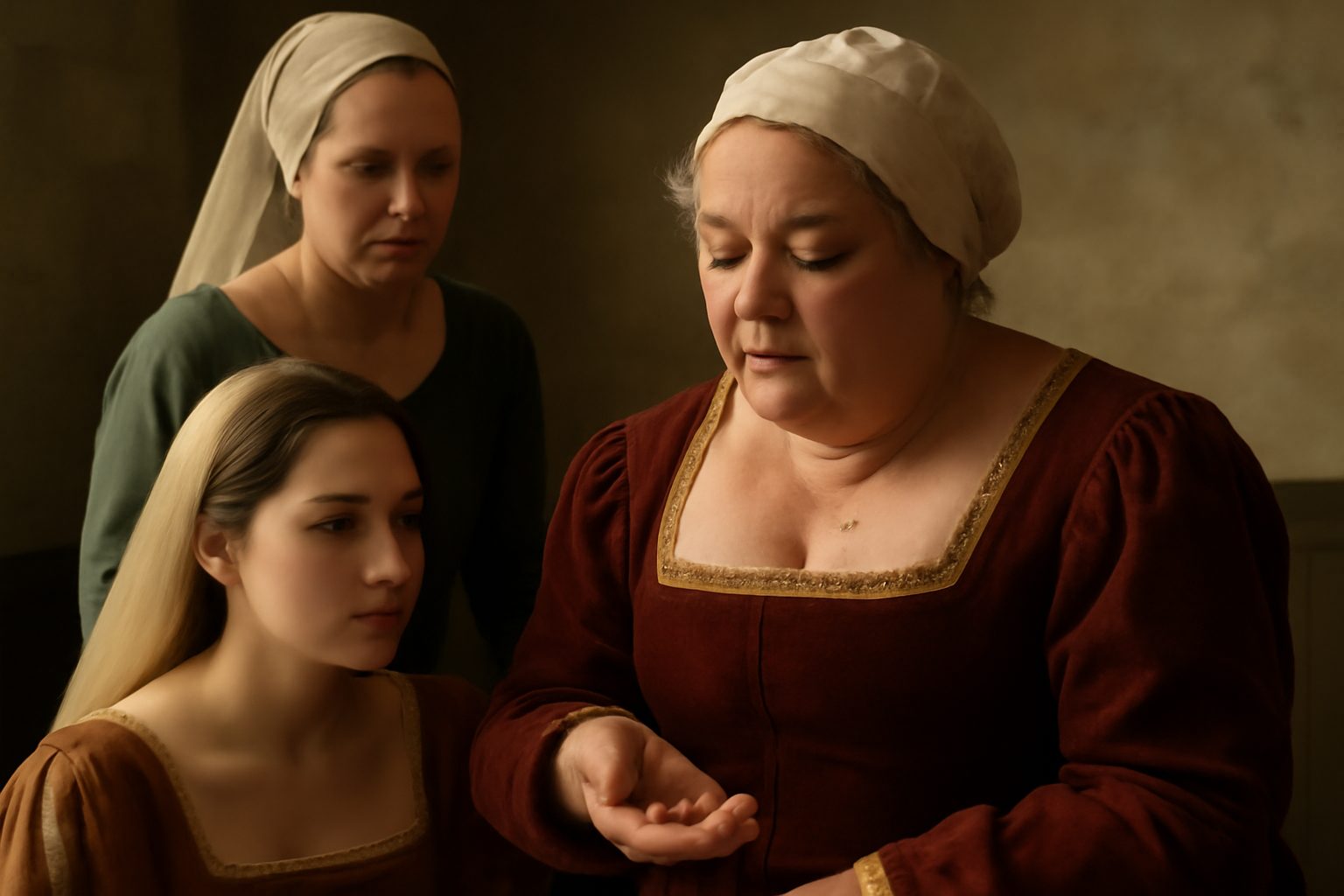
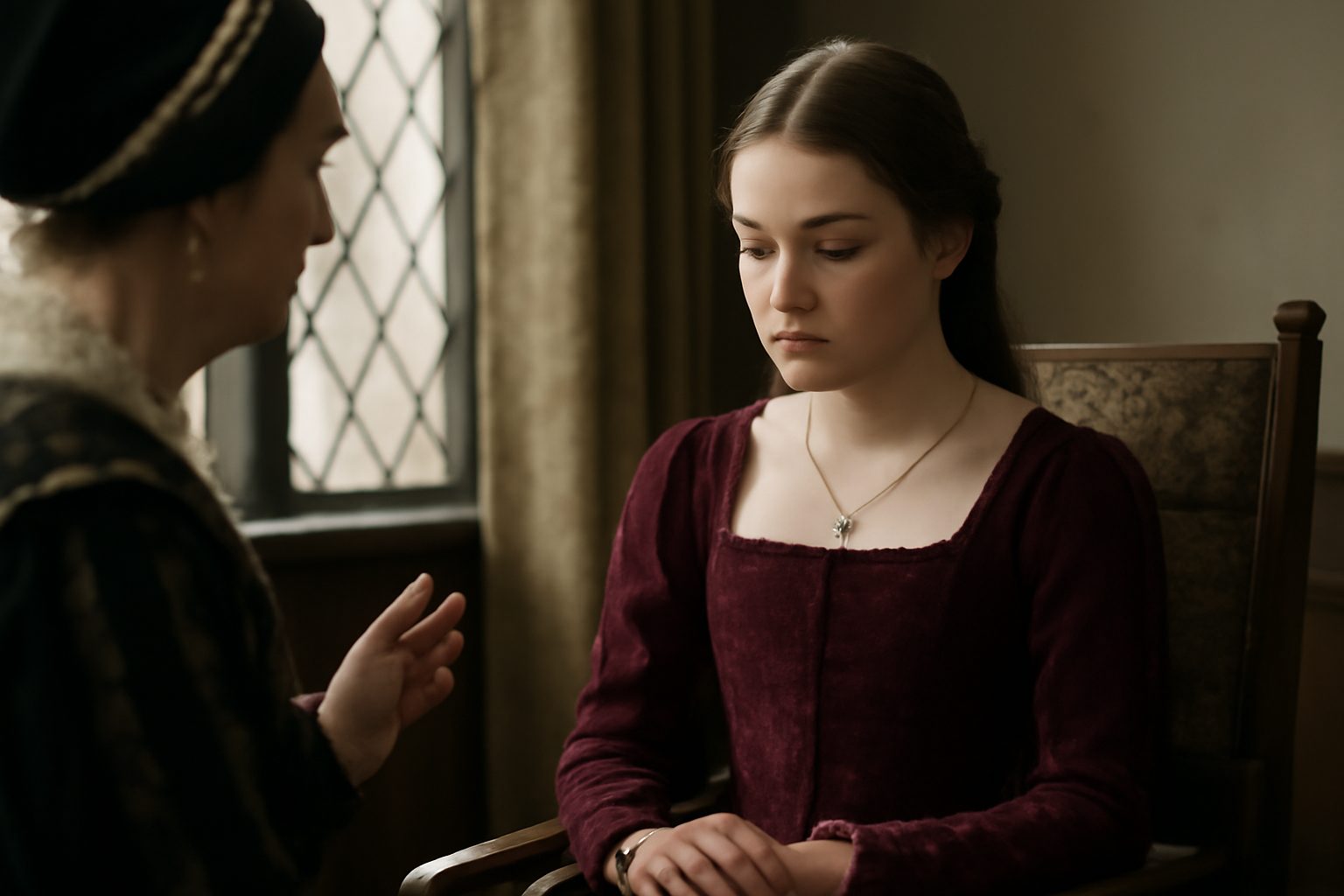
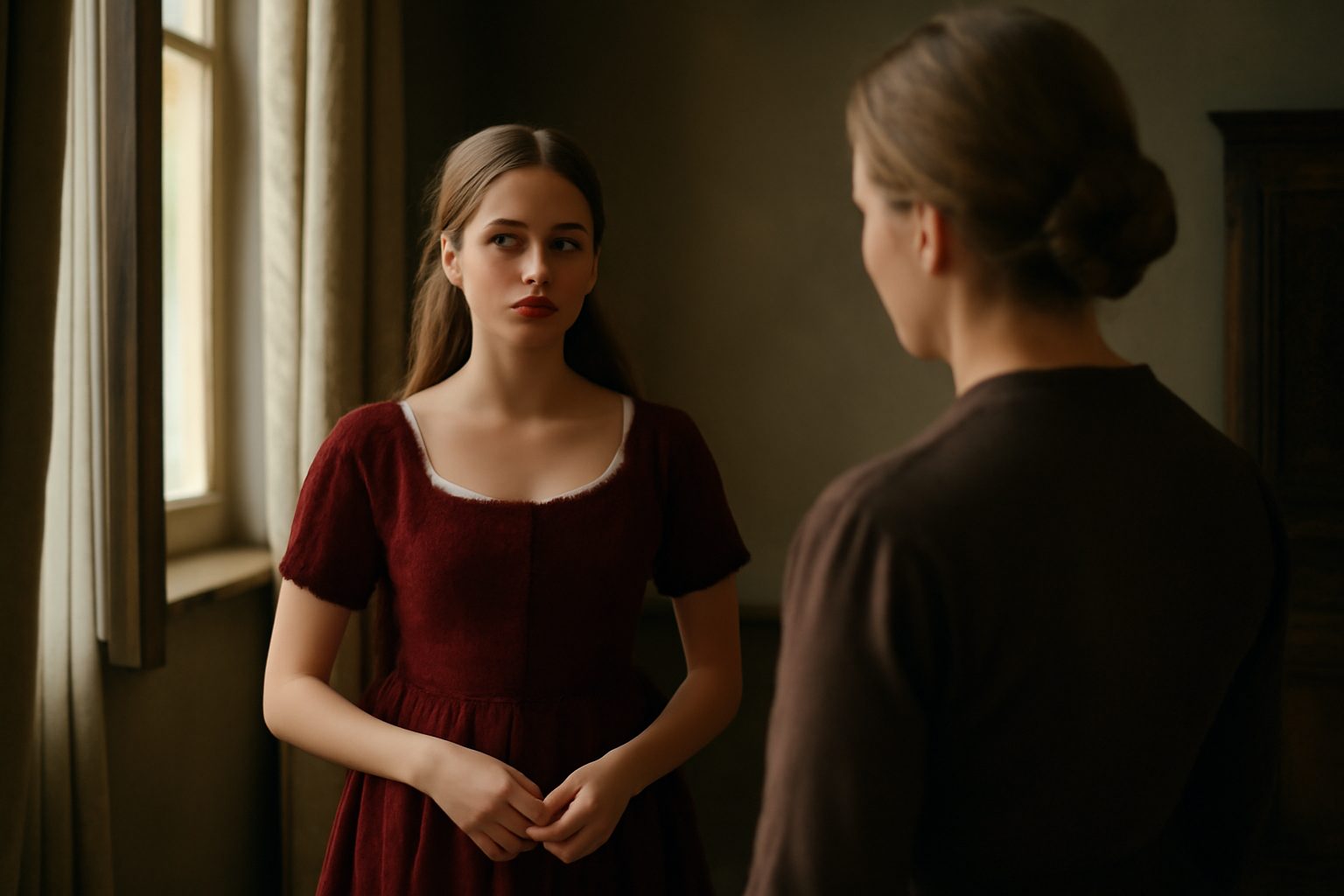
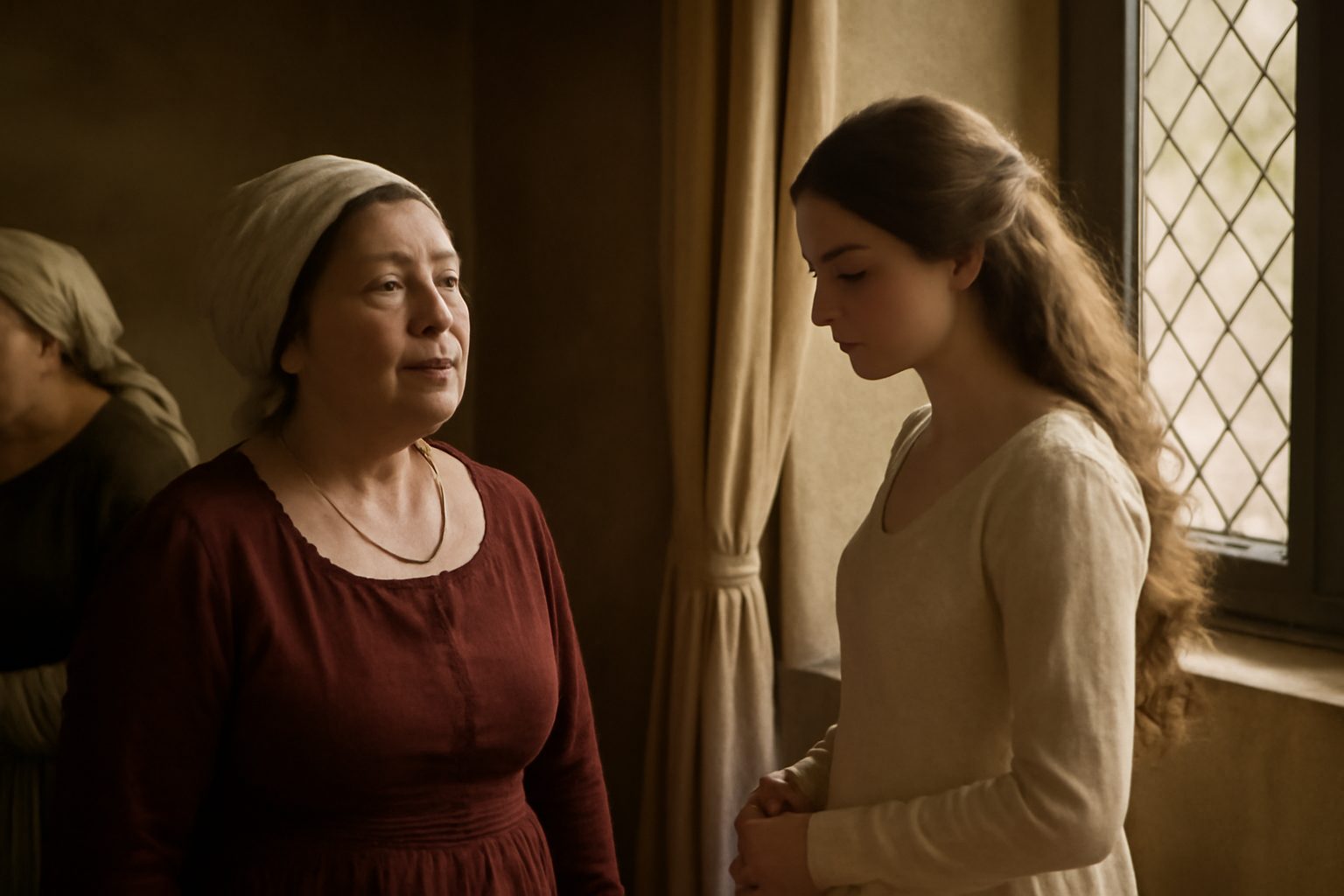
In Act 1 Scene 3 of Romeo and Juliet, the Nurse recounts a humorous yet poignant memory from Juliet's childhood. She describes a moment when young Juliet fell and got a bump on her forehead, and her husband playfully teased her about it. This line captures the Nurse's vivid storytelling as she mimics the exaggerated reaction of the child, blending comedy with a touch of nostalgia.
Nurse: "A parlous knock; and it cried bitterly:"
In modern day english, we would say:
That was a dangerous knock, and it sounded like someone was really hurt.
Frequently Asked Questions
What does the nurse say about the knock in this line?
The nurse says the knock was dangerous and the person who did it cried a lot.
Connections to other verses:
Connections to "A parlous knock; and it cried bitterly:"
The verse "A parlous knock; and it cried bitterly:" is part of the Nurse's vivid recollection of a childhood incident involving Juliet. This line describes a moment when the young Juliet fell and received a significant injury, which the Nurse recounts with a mix of humor and nostalgia.
Immediate Context and Humor
This verse follows "And yet, I warrant, it had upon its brow", which sets up the description of the bump Juliet got from her fall. The Nurse then elaborates with "A bump as big as a young cockerel's stone;", using a crude and humorous comparison to emphasize the size of the injury, which contrasts with the tender concern in "it cried bitterly".
Recurring Themes of Childhood and Memory
The Nurse's anecdote is part of a longer speech where she nostalgically recalls Juliet's infancy and early childhood, connecting to verses like "And she was wean'd,--I never shall forget it,--" and "And since that time it is eleven years;", which anchor the story in a specific timeline. The fall incident is also echoed in "For even the day before, she broke her brow:", reinforcing the Nurse's focus on Juliet's physical vulnerabilities as a child.
Interaction with Other Characters
The Nurse's husband reacts to the fall with humor, as seen in "Yea,' quoth he, 'dost thou fall upon thy face?" and "Yea,' quoth my husband,'fall'st upon thy face?", which bookend the description of the injury and highlight the playful dynamic within the household. This jesting tone is capped with "To see, now, how a jest shall come about!", underscoring the Nurse's amusement at the memory.
Contrast with Juliet's Present Situation
The anecdote serves as a backdrop to the current discussion of Juliet's marriage, contrasting her past innocence with her impending adulthood. This is emphasized when Lady Capulet interrupts the Nurse's rambling with "Enough of this; I pray thee, hold thy peace.", shifting the focus back to the serious matter of Paris's proposal. The Nurse's affectionate, if bawdy, memories highlight the tension between Juliet's childhood and her role in the family's plans.