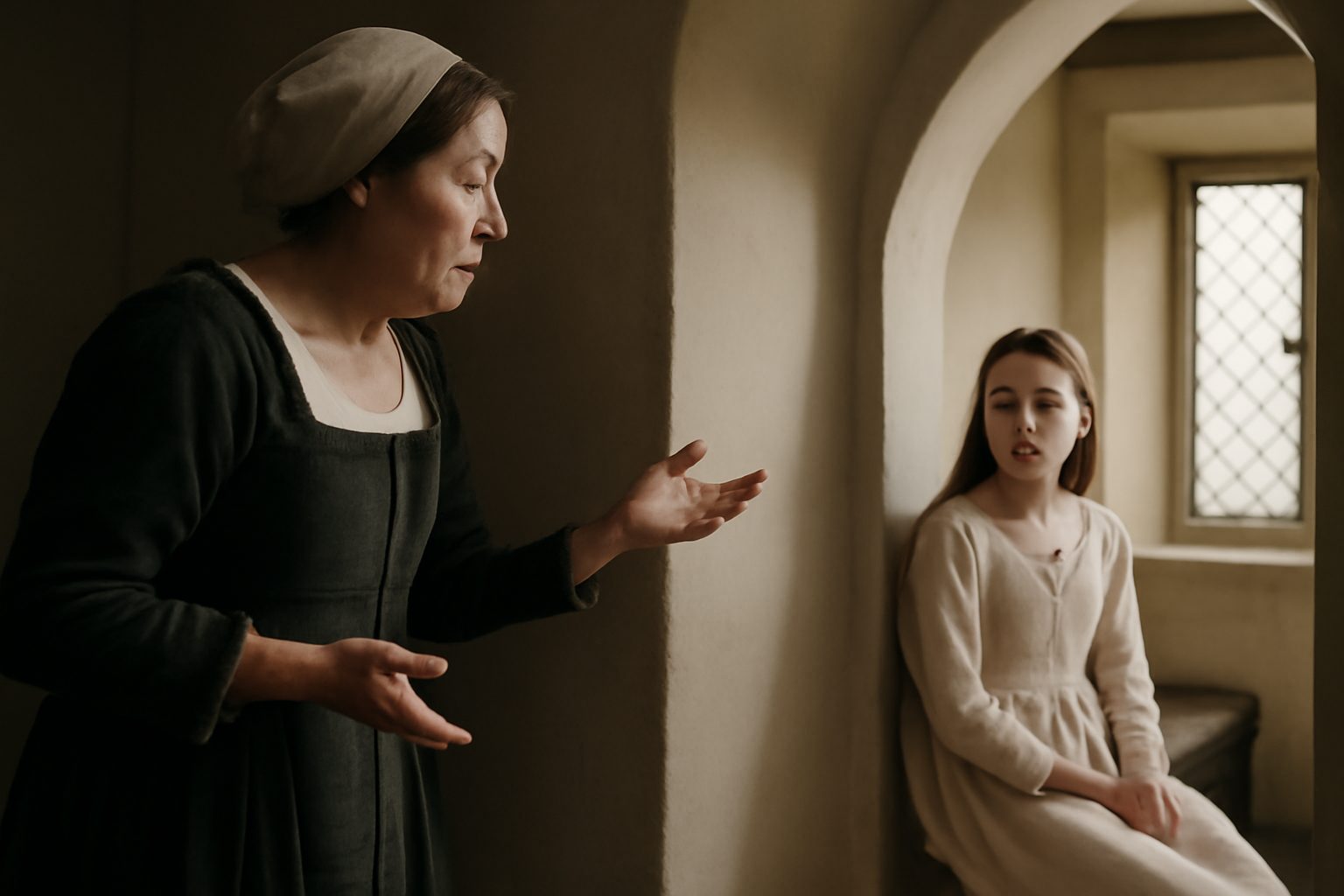
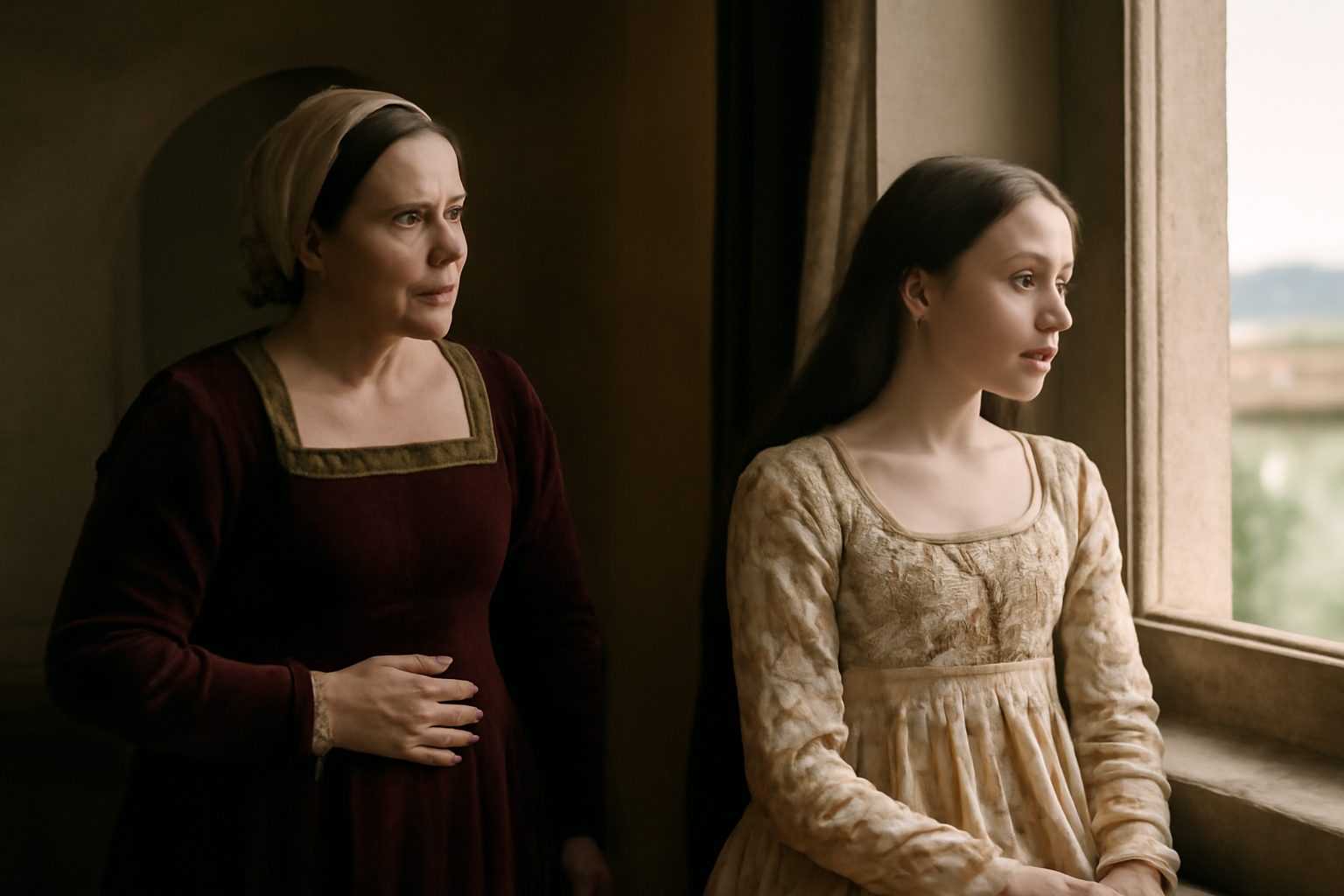
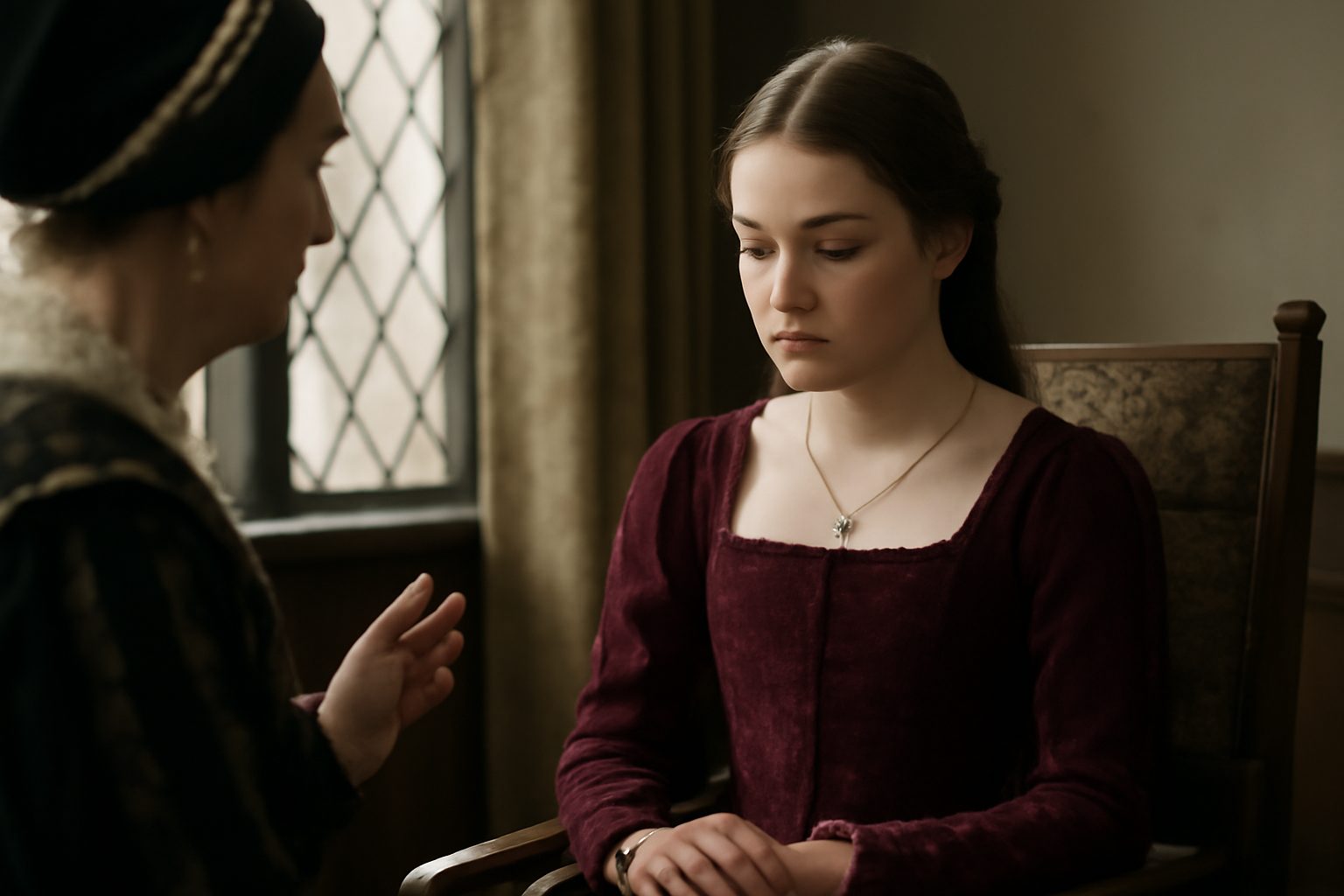
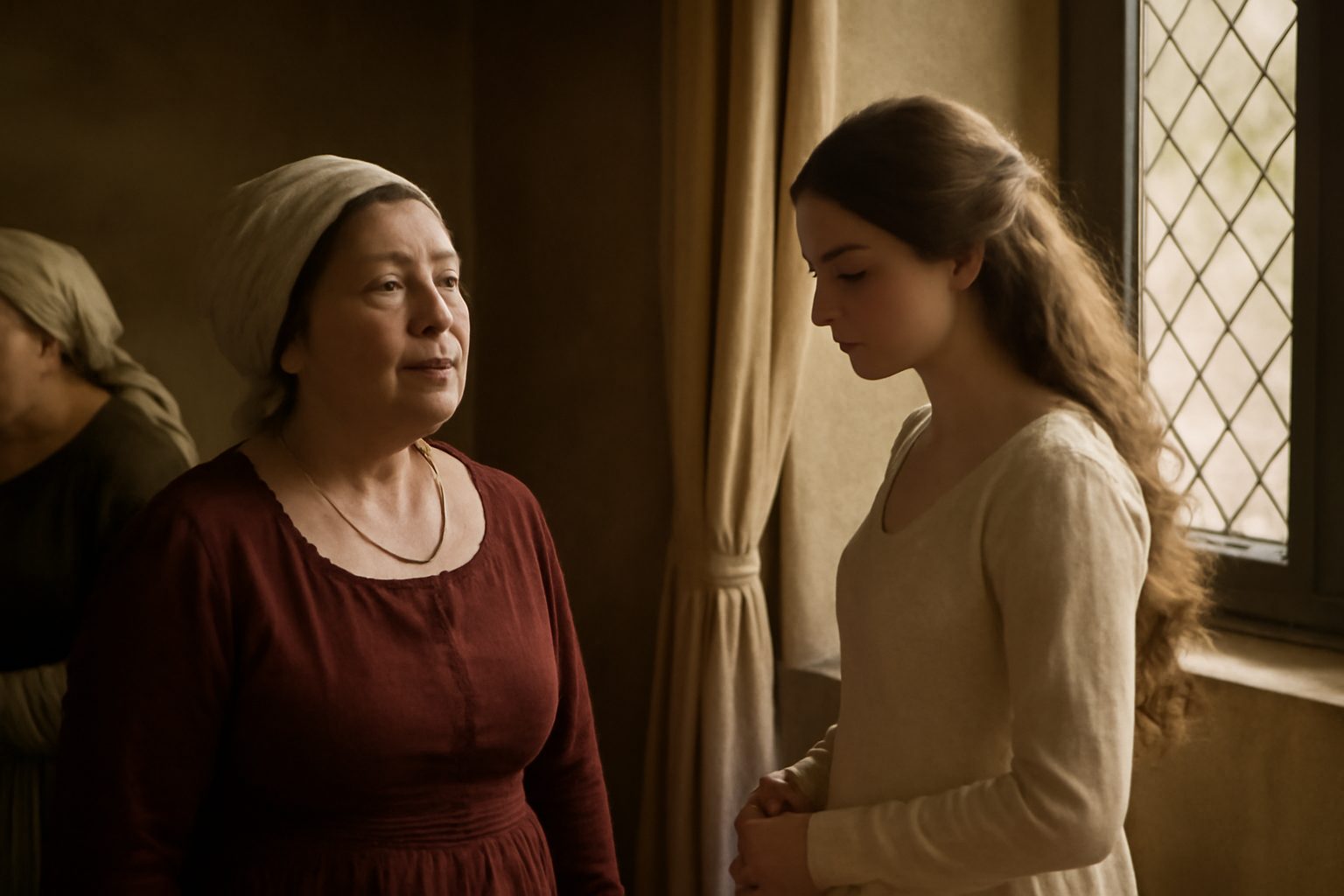
In Act 1, Scene 3 of Romeo and Juliet, the Nurse reminisces about Juliet's childhood with playful fondness, sharing a humorous anecdote. This line captures her amusement as she recalls a past incident where young Juliet stumbled, prompting a lighthearted remark from her husband. The moment underscores the Nurse's affectionate, jesting nature while offering a brief respite from the play's heavier themes.
Nurse: "To see, now, how a jest shall come about!"
In modern day english, we would say:
Now let’s see how this joke plays out!
Frequently Asked Questions
What does the Nurse mean when she says a joke will turn out in this scene?
The Nurse is suggesting that a playful comment or situation will lead to unexpected or serious consequences later on.
Connections to other verses:
Connections of "To see, now, how a jest shall come about!" in Act 1 Scene 3
The verse "To see, now, how a jest shall come about!" is spoken by the Nurse as she reflects humorously on a past incident involving Juliet as a child. This line connects to several other verses in the scene that recount the Nurse's fond, anecdotal memories and her playful, earthy character.
Connection to Juliet's Childhood Anecdotes
The jest refers to an earlier moment when the Nurse's husband playfully remarked that Juliet would "fall backward" when she grew older, implying sexual maturity. This ties directly to verses like "Thou wilt fall backward when thou comest to age" and "Thou wilt fall backward when thou hast more wit", which are part of the same humorous recollection.
Nurse's Amused Reflection
The Nurse's laughter and amusement at the memory are echoed in "Yes, madam: yet I cannot choose but laugh", where she admits her inability to hold back her mirth when reminiscing. This highlights her affectionate and jovial nature.
Juliet's Infant Reactions
The jest also connects to verses describing Juliet's reactions as a baby, such as "The pretty wretch left crying and said 'Ay.'" and "To think it should leave crying and say 'Ay.'", emphasizing the comical and tender moment that the Nurse finds so memorable.
Continuation of the Story
The Nurse's narrative continues with "Wilt thou not, Jule?' it stinted and said 'Ay.'", reinforcing the playful interaction and Juliet's innocent response, which the Nurse regards as a humorous prediction of her future.