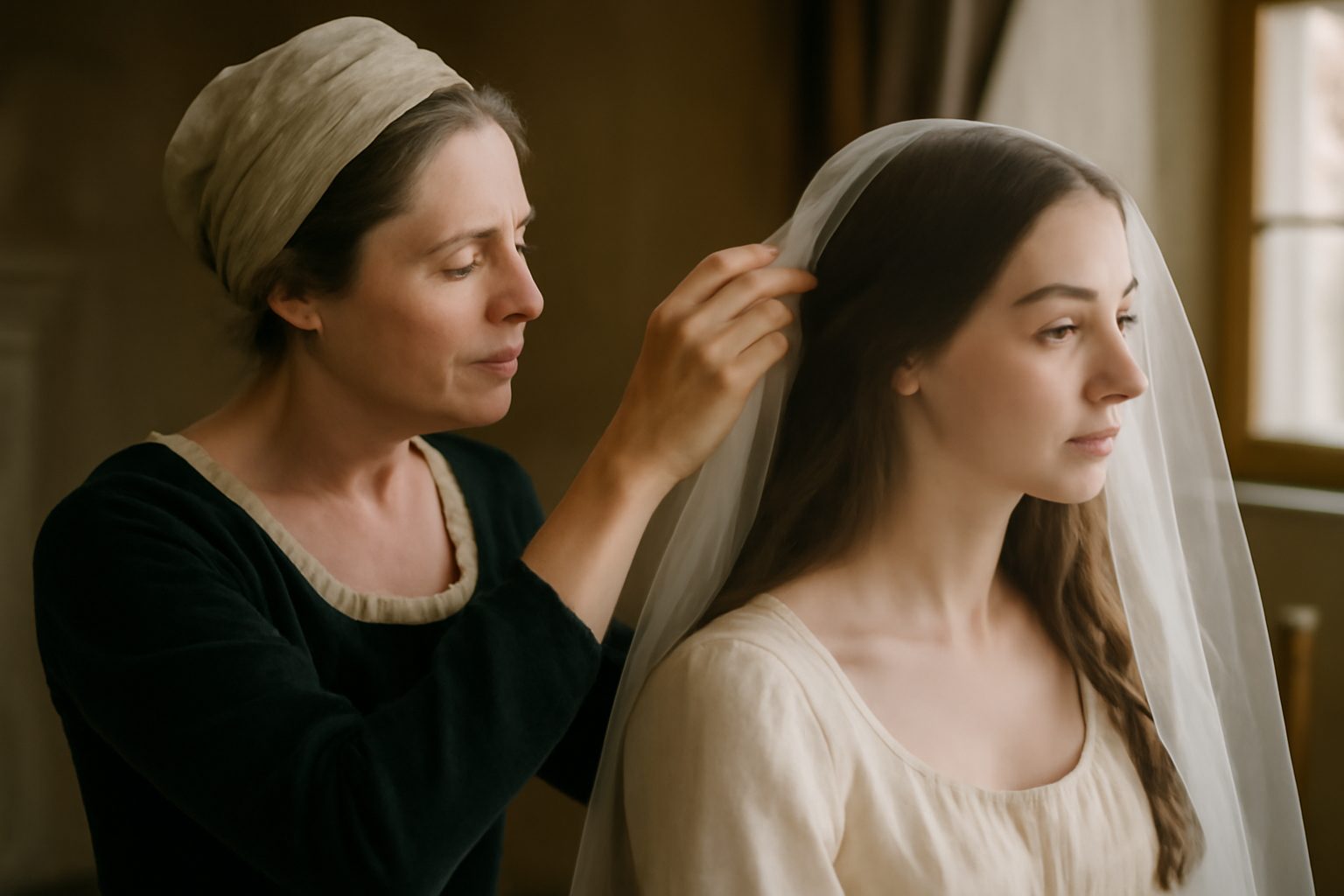
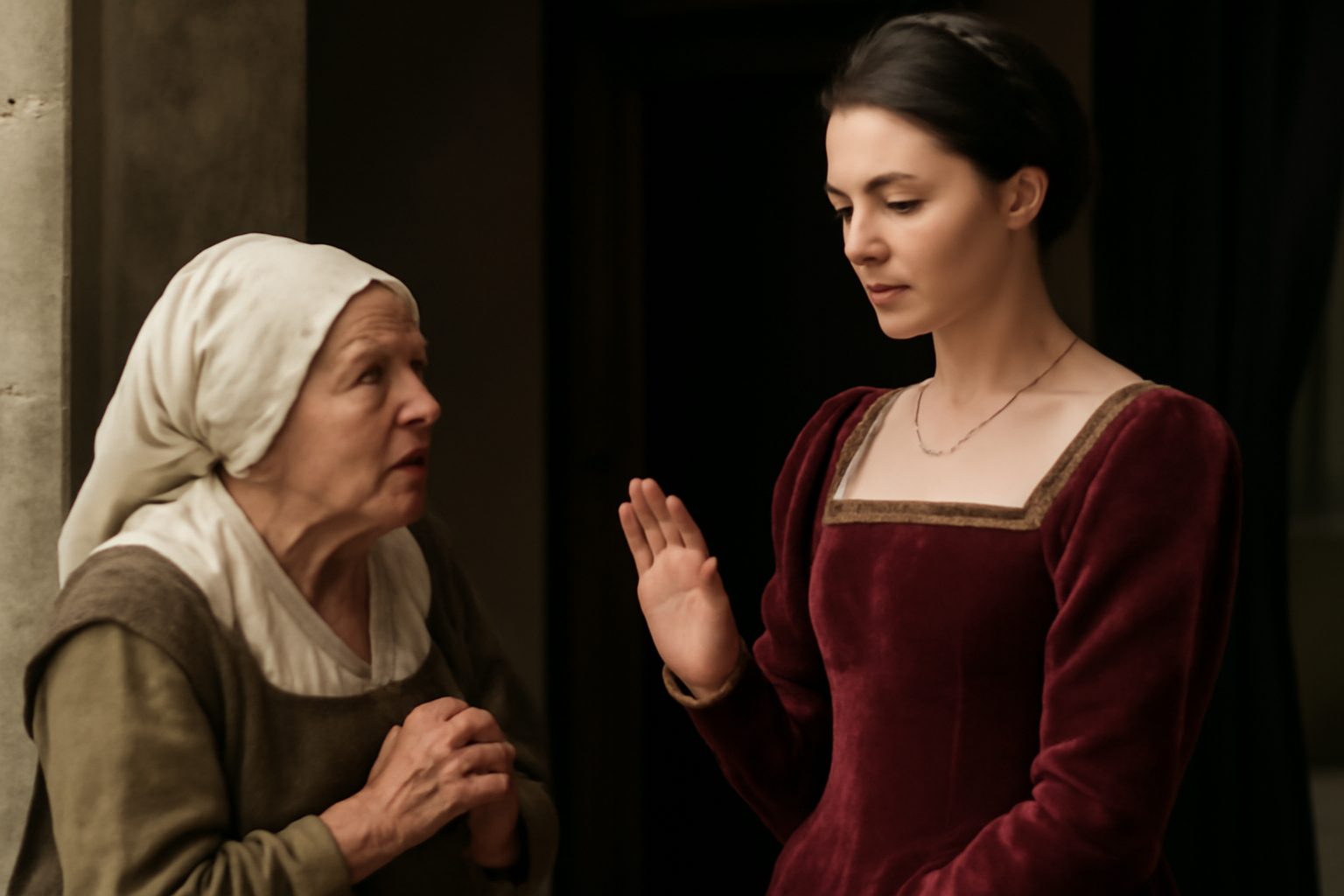
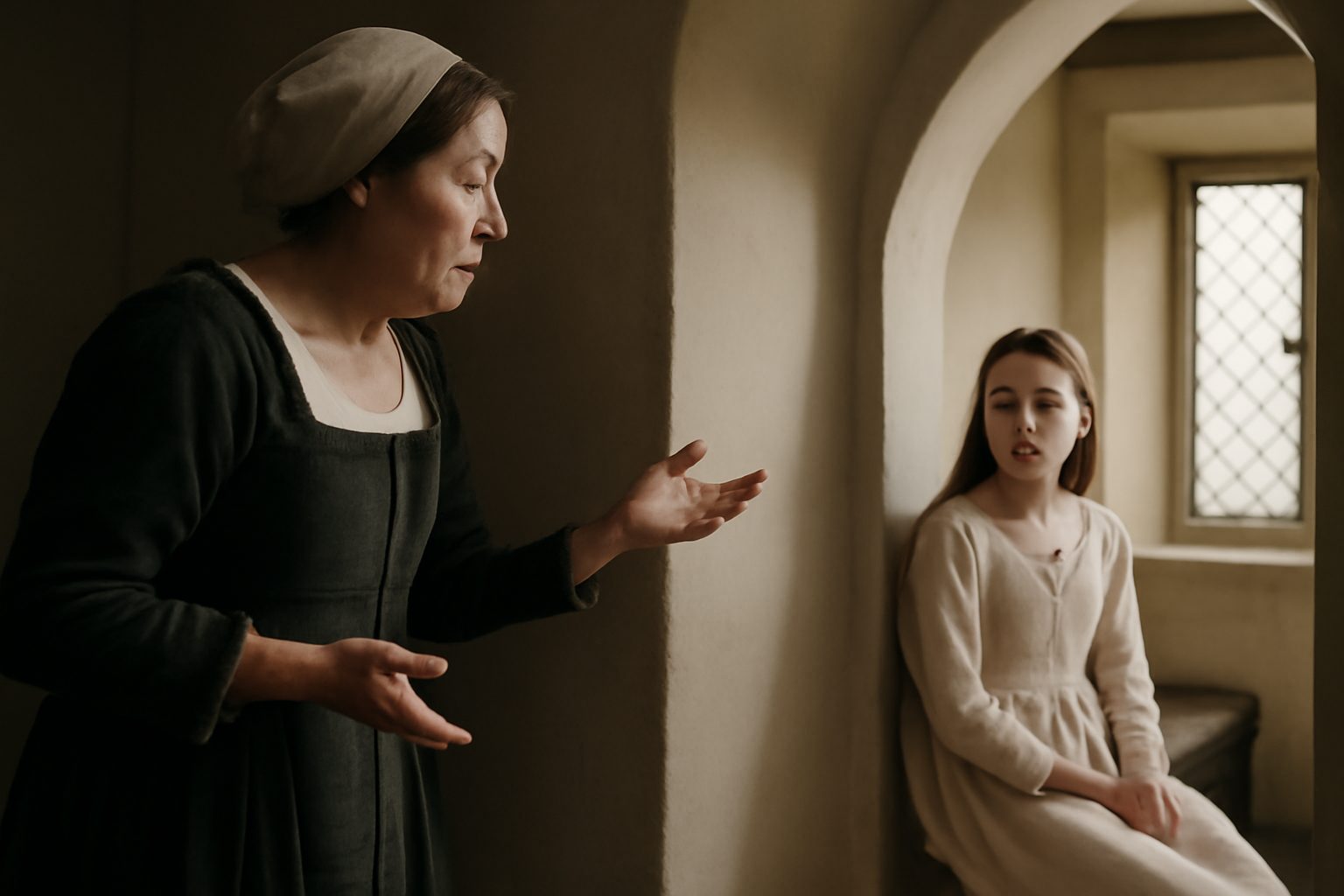
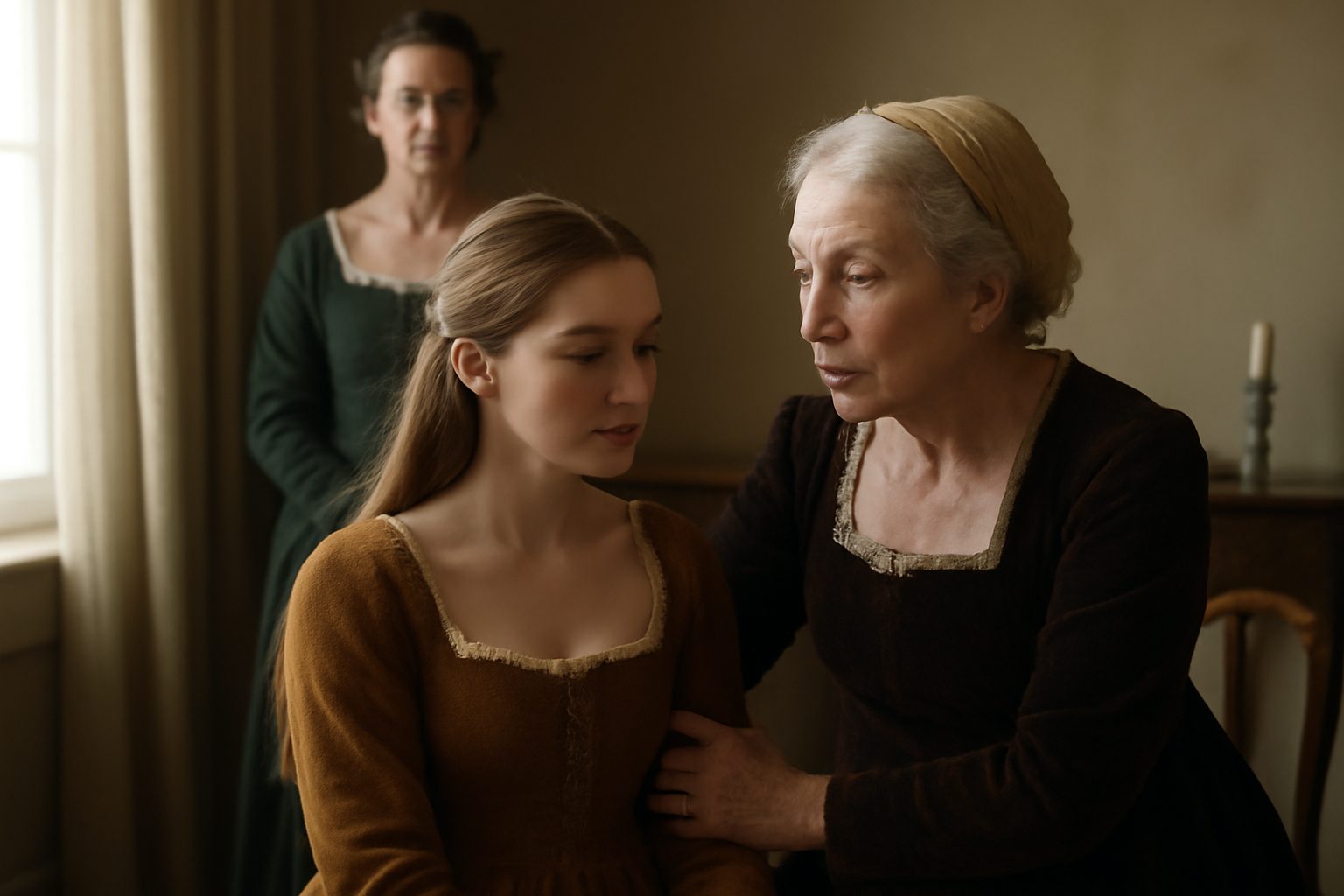
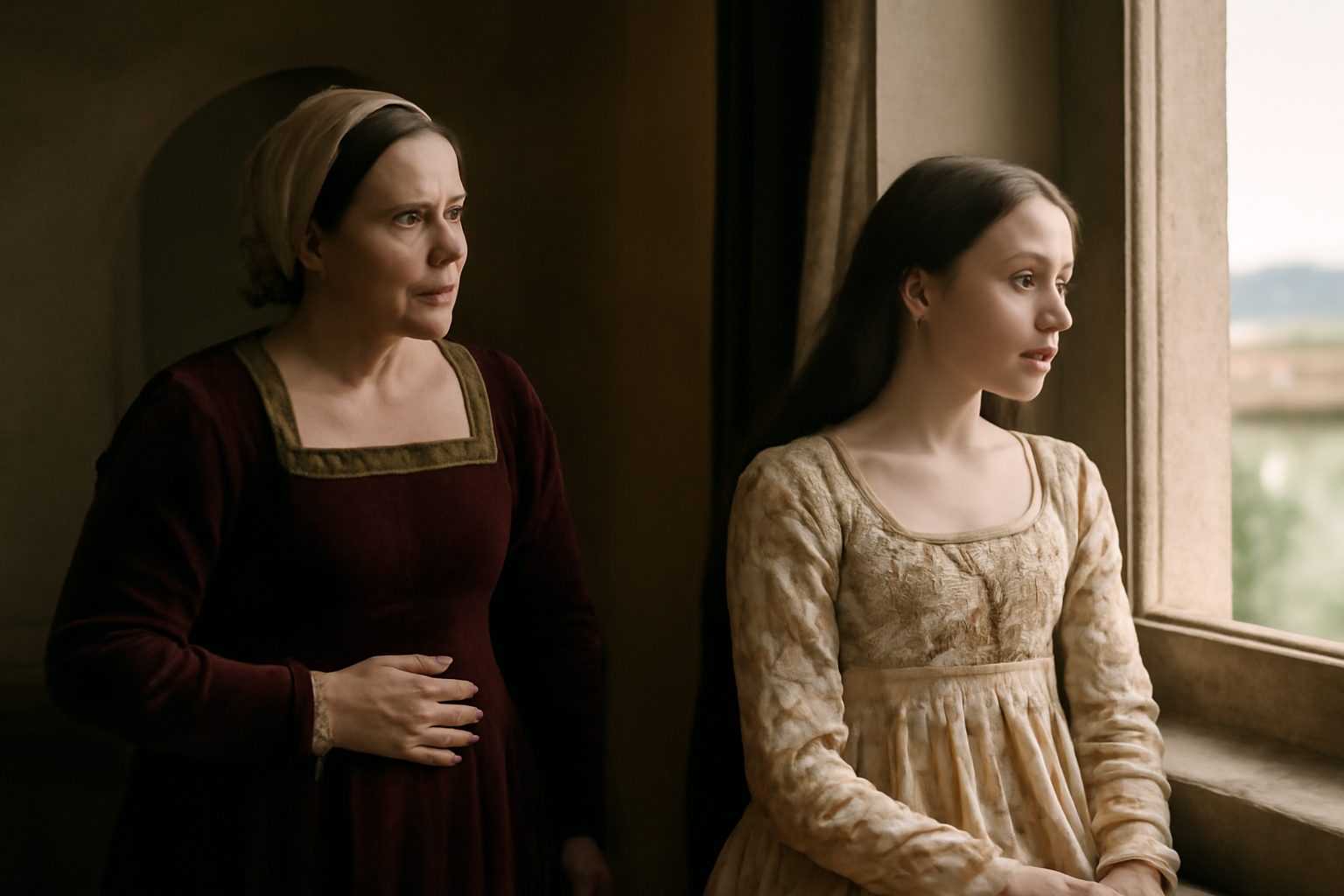
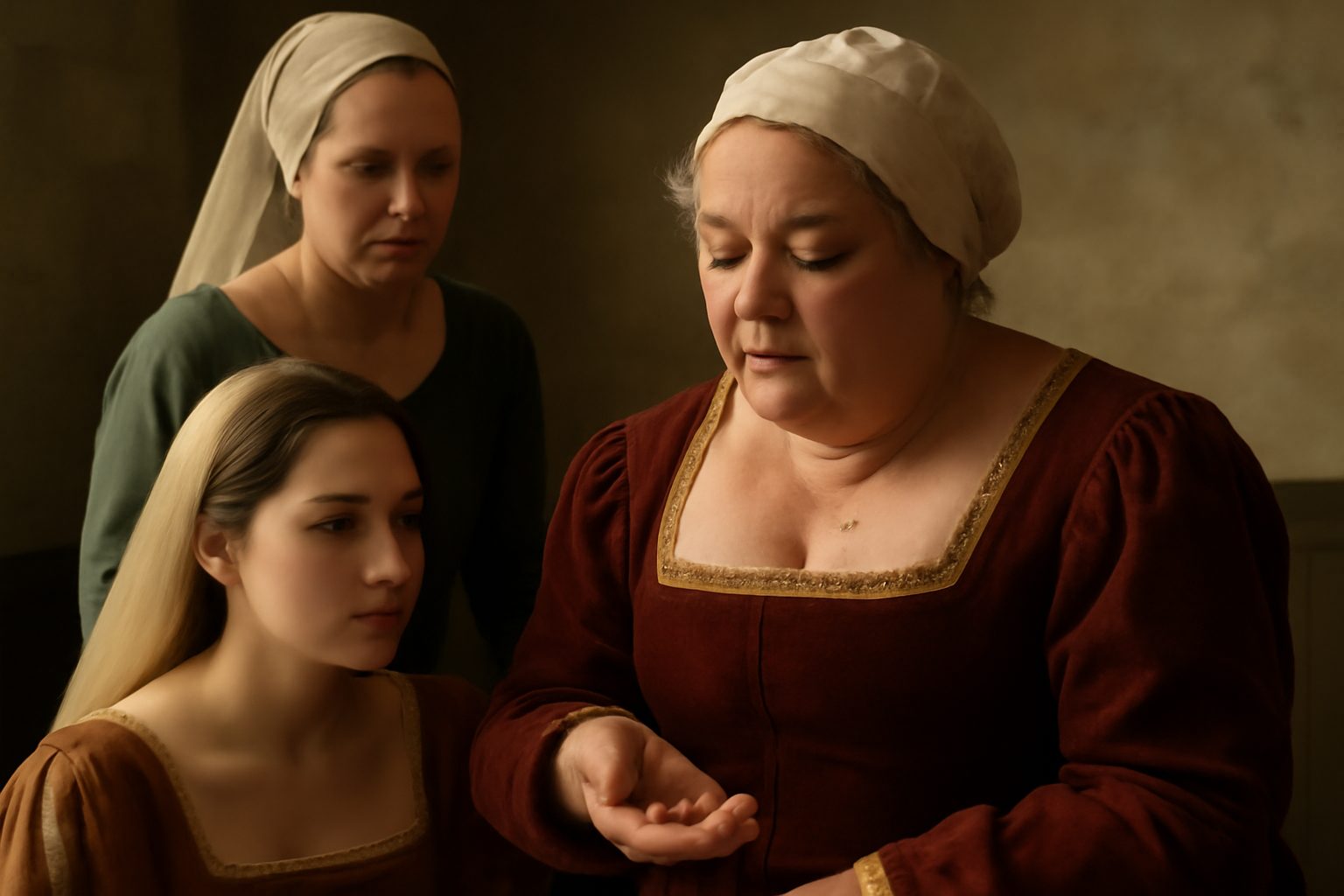
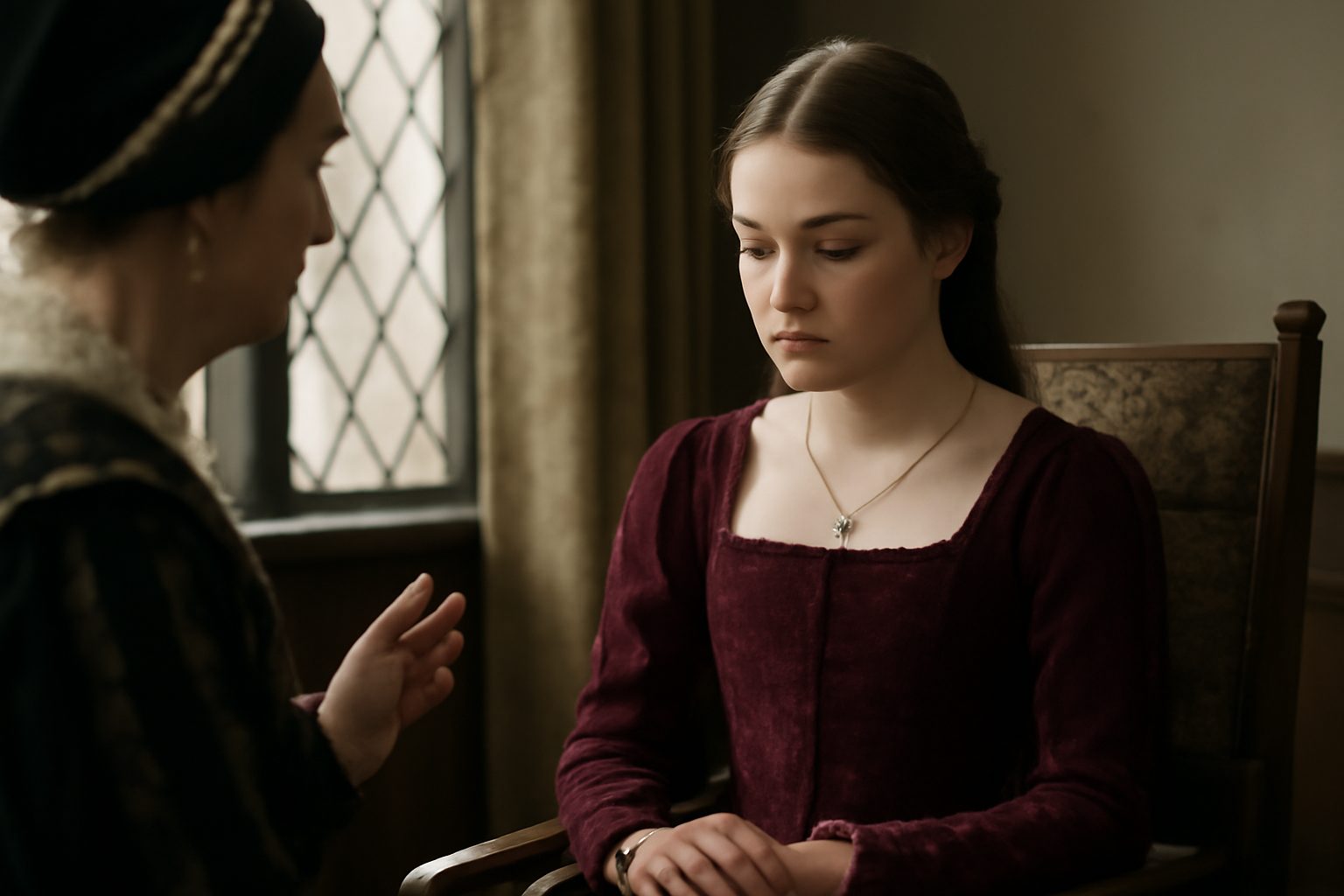
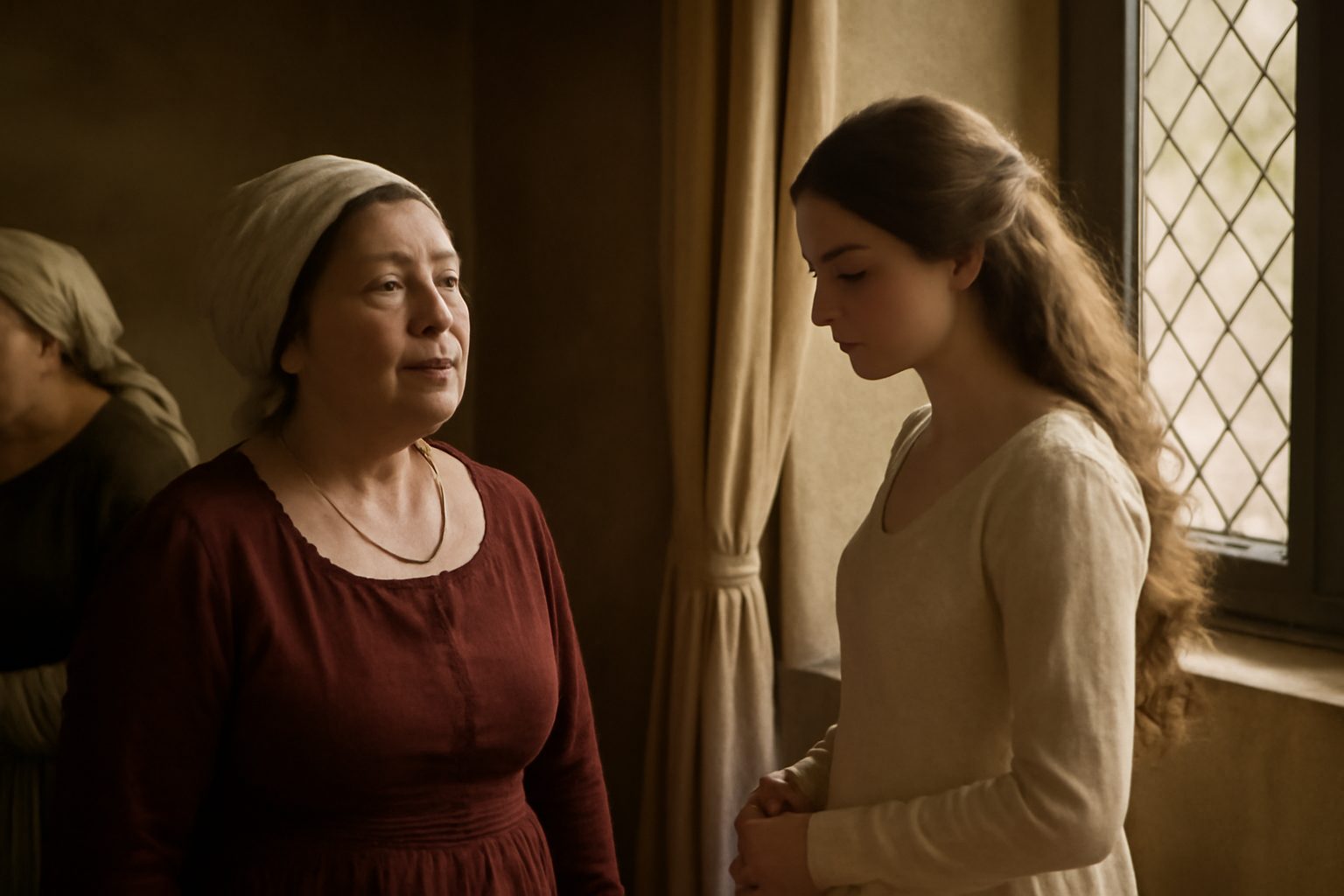
In Act 1, Scene 3 of Romeo and Juliet, Lady Capulet and the Nurse discuss Juliet's potential marriage to Paris. The Nurse, known for her talkative and sometimes bawdy nature, rambles on until Lady Capulet cuts her off with this line. The words reflect both her impatience with the Nurse and a perfunctory blessing, shifting the conversation back to the matter at hand.
Nurse: "Peace, I have done. God mark thee to his grace!"
In modern day english, we would say:
Alright, I’ll stop. May God bless you with his kindness.
Frequently Asked Questions
What does the Nurse wish for someone in this line from Romeo and Juliet?
The Nurse wishes for God to bless them with his grace.
Connections to other verses:
Connections to "Peace, I have done. God mark thee to his grace!"
The line "Peace, I have done. God mark thee to his grace!" is spoken by the Nurse, marking a transition from her humorous, rambling anecdotes to a more serious or conclusive tone. It connects thematically and structurally to several other verses in the scene.
Connection to Earlier Rambling and Humorous Anecdotes
This line serves as a capstone to the Nurse's long, comical recollection of Juliet's childhood, such as when she mentions "And yet, I warrant, it had upon its brow" referring to a bump on young Juliet's head, and "A parlous knock; and it cried bitterly", emphasizing the Nurse's fond yet gossipy storytelling. Her exclamation of "Peace, I have done" suggests she is finally ceasing her digressions.
Response to Lady Capulet's Impatience
The Nurse's declaration directly responds to Lady Capulet's earlier plea, "Enough of this; I pray thee, hold thy peace", showing the Nurse yielding to her mistress's command to stop talking and focus on the matter at hand—Juliet's potential marriage to Paris.
Transition to the Main Topic: Marriage
Following this line, the conversation shifts squarely to the subject of marriage, as seen in Lady Capulet's question, "How stands your disposition to be married?" and Juliet's cautious reply, "It is an honour that I dream not of". The Nurse’s blessing, "God mark thee to his grace", acts as a hopeful, pious conclusion to her anecdotes and a segue into the serious discussion.
Reflection of the Nurse's Affectionate Nature
The Nurse's deep care for Juliet is evident in lines like "Thou wast the prettiest babe that e'er I nursed", and her humorous yet tender memories, such as Juliet falling backward ("Thou wilt fall backward when thou comest to age"). "God mark thee to his grace" reinforces her genuine, albeit sometimes overwhelming, affection and desire for Juliet's well-being.
Contrast with Juliet's Reserved Response
While the Nurse is effusive and nostalgic, Juliet's measured and obedient response, "I'll look to like, if looking liking move", highlights the generational and temperamental differences between them. The Nurse’s outburst of "Peace, I have done" underscores her voluble personality, which contrasts with Juliet's more restrained demeanor.