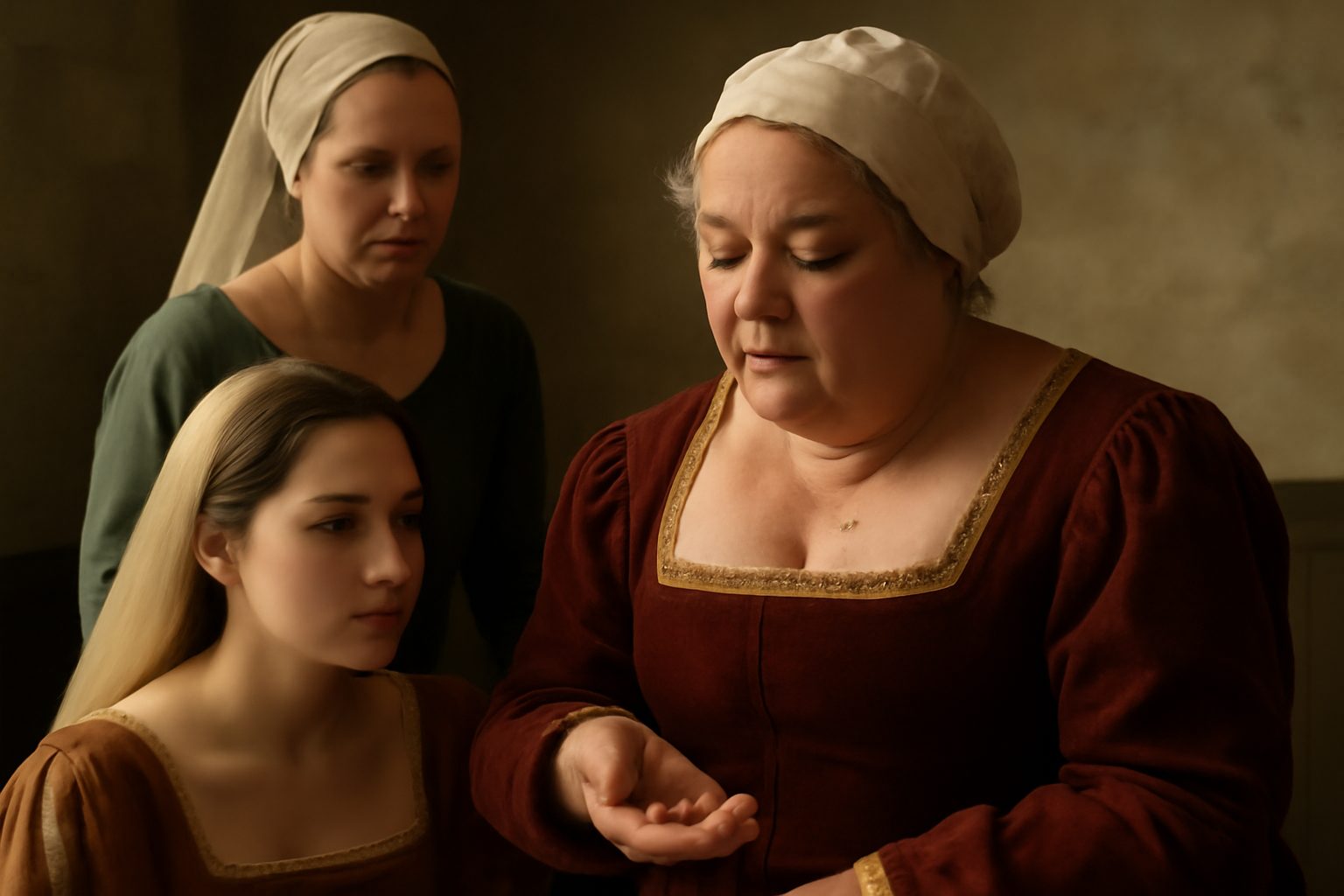
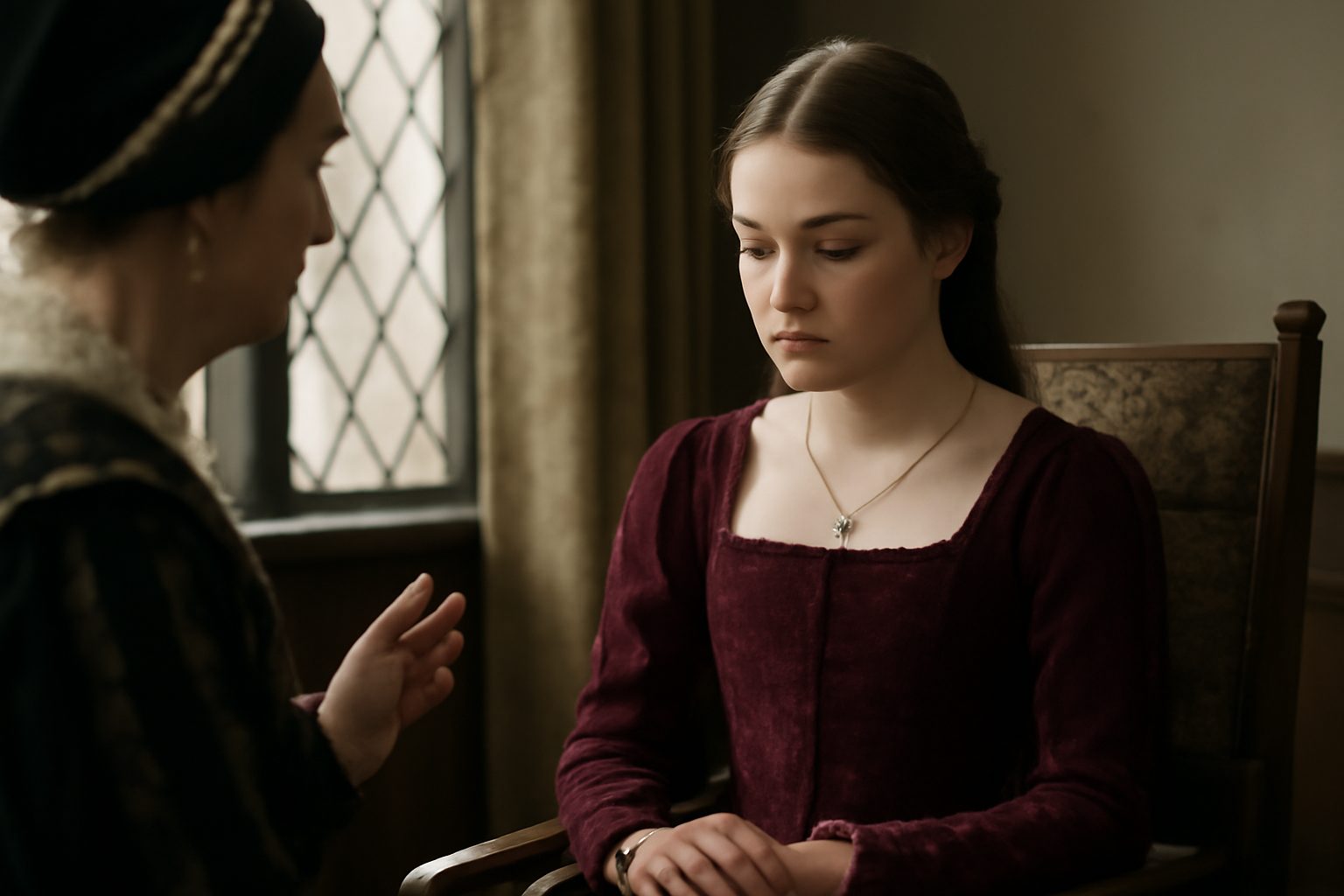
In Act 1, Scene 3 of Romeo and Juliet, the Nurse reminisces about Juliet's childhood in a playful, bawdy conversation with Lady Capulet. This line is part of a lighthearted anecdote in which the Nurse recalls a crude joke she once made about young Juliet falling backward—a suggestive remark about marriage and adulthood. The moment contrasts with the heavier themes of the play, offering a glimpse of Juliet's innocence before the tragic events unfold.
Nurse: "Thou wilt fall backward when thou comest to age;"
In modern day english, we would say:
You’ll fall backward when you’re older.
Frequently Asked Questions
What does the Nurse mean when she says Juliet will fall backward when she grows older?
The Nurse is joking that Juliet will fall backward into bed when she is older, implying she will be sexually active.
Connections to other verses:
Connections to "Thou wilt fall backward when thou comest to age"
The verse "Thou wilt fall backward when thou comest to age" is part of the Nurse's bawdy, humorous recollection of Juliet's infancy. It connects thematically and narratively to several other verses in the scene, particularly those involving the Nurse's anecdotes about Juliet's childhood and the discussion of her readiness for marriage.
Recollection of Juliet's Infancy
The Nurse's memory of Juliet's early years is a recurring motif. In "Thou wilt fall backward when thou hast more wit", she repeats a similar jest, emphasizing the playful, earthy nature of her relationship with Juliet. This jest is echoed again in "Wilt thou not, Jule?' it stinted and said 'Ay.'", where the infant Juliet's response adds to the comedic tone.
The Nurse's husband also participates in this memory, as seen in "Yea,' quoth he, 'dost thou fall upon thy face?" and "Yea,' quoth my husband,'fall'st upon thy face?", reinforcing the familial jest and highlighting the Nurse's fond, detailed recollections.
Juliet's Age and Development
The Nurse frequently references Juliet's age, such as in "She is not fourteen. How long is it now" and "Come Lammas-eve at night shall she be fourteen.", establishing Juliet's youth and the context for the "fall backward" jest as a comment on her impending maturity.
Her physical development is humorously noted in "And yet, I warrant, it had upon its brow", which refers to a bump on young Juliet's forehead, adding to the scene's focus on her growth from infancy to adolescence.
Transition to Marriage Discussion
Lady Capulet's shift to the topic of marriage in "How stands your disposition to be married?" contrasts with the Nurse's earthy humor but is underpinned by the same theme of Juliet's coming of age. The Nurse's recollection of Juliet's early years serves as a backdrop to this serious proposal, highlighting the societal expectations placed on young women.
Juliet's obedient but reserved response in "I'll look to like, if looking liking move:" shows her cautious approach to the idea of marriage, a stark contrast to the Nurse's ribald anecdotes but a natural progression from the childhood memories.