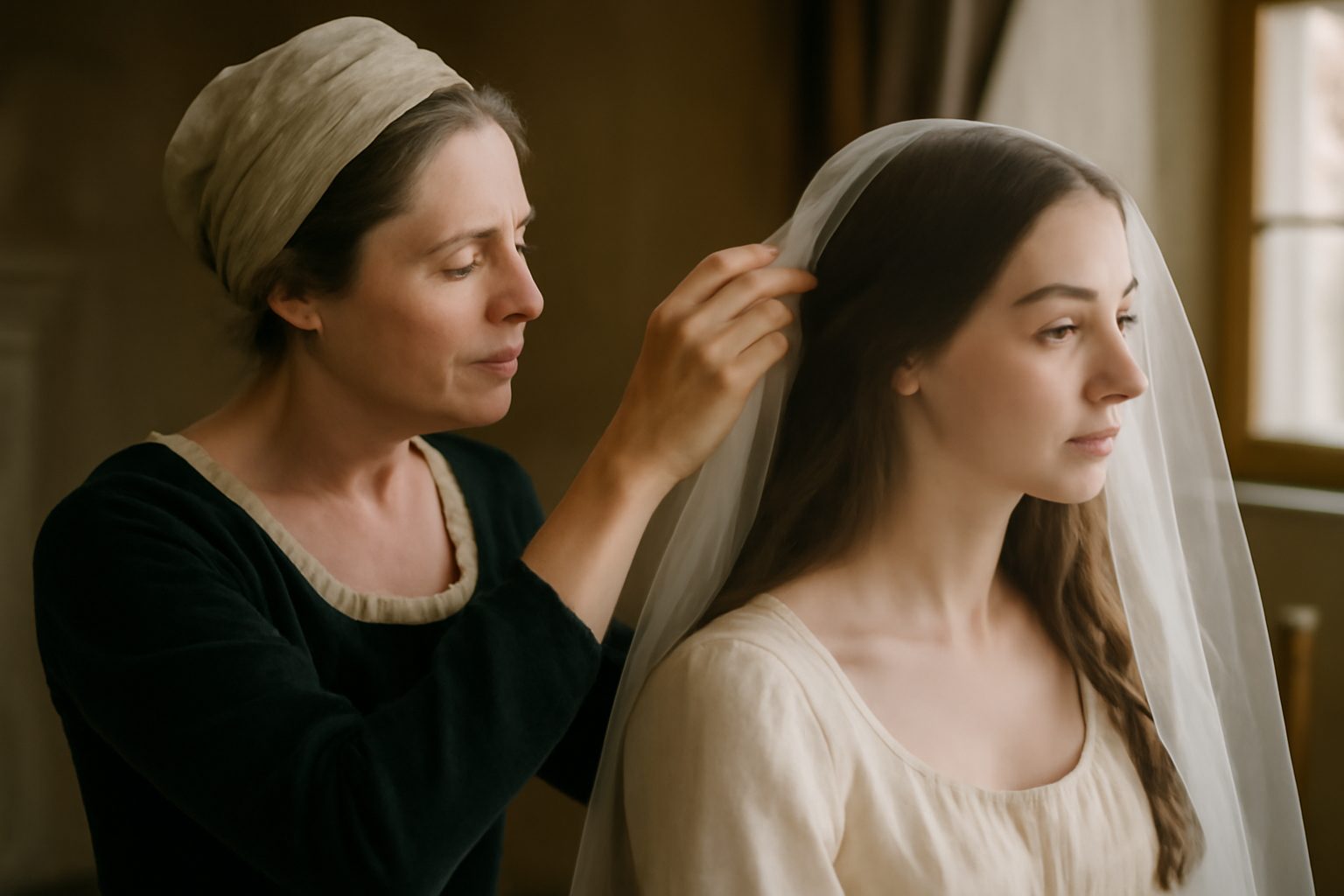
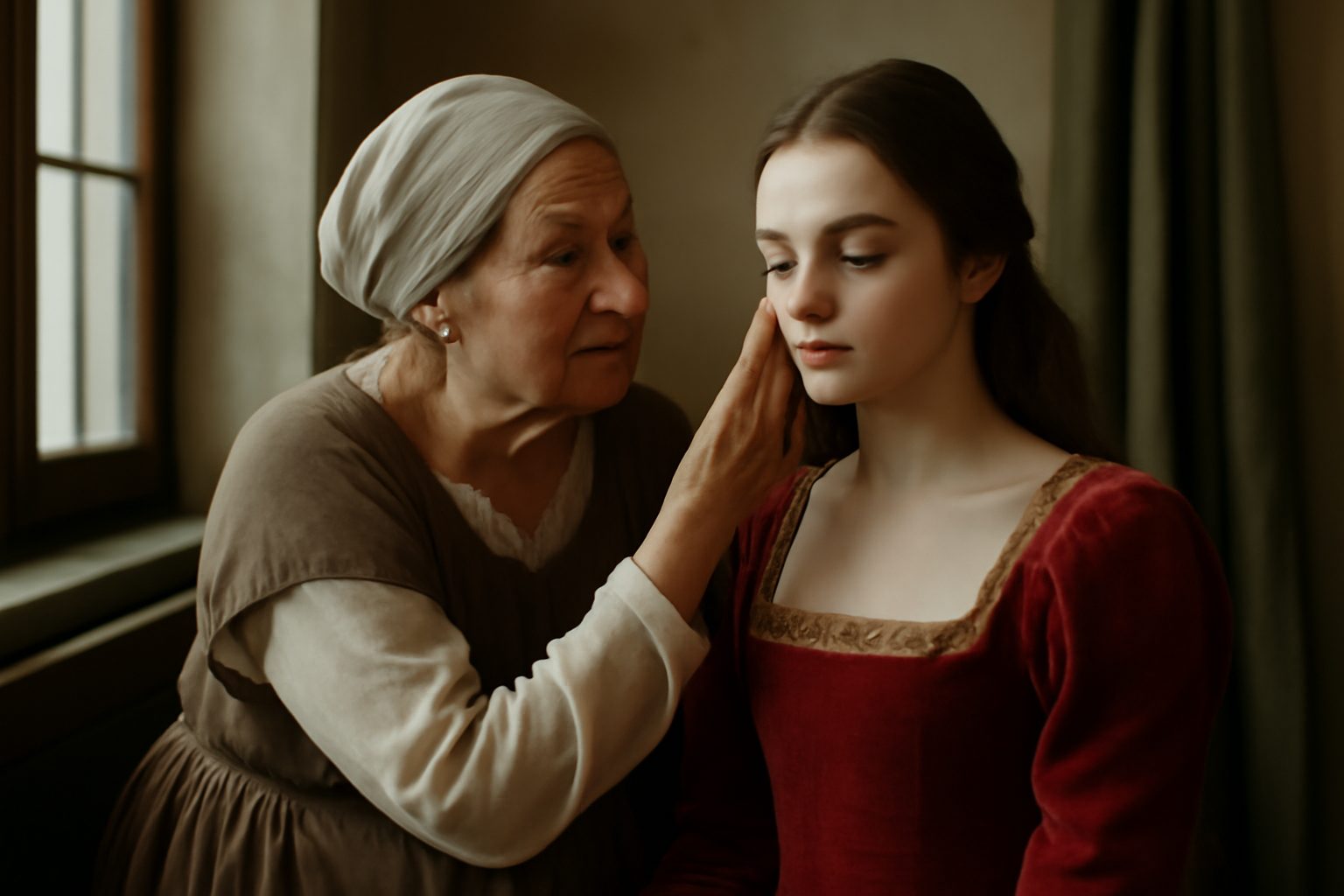
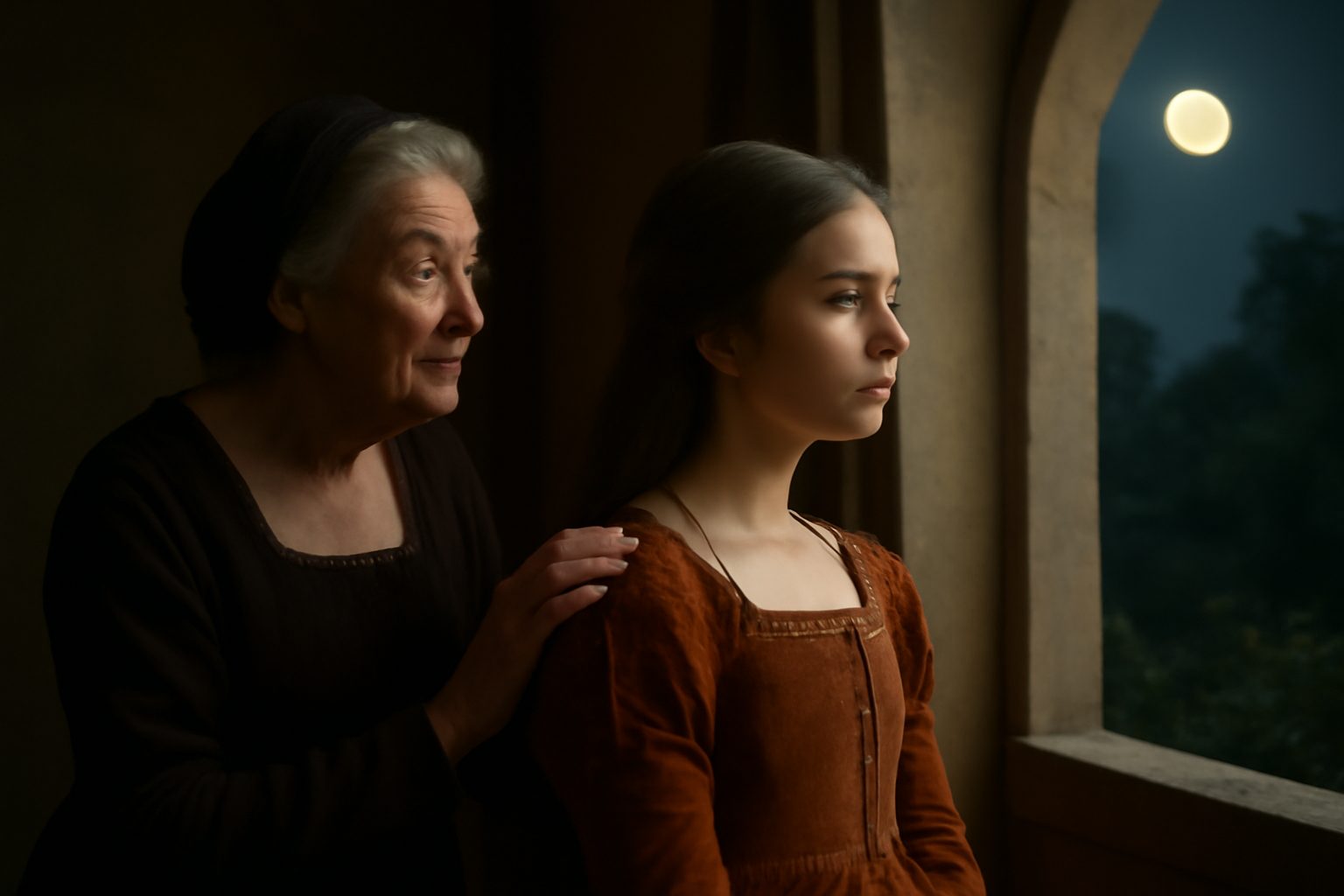
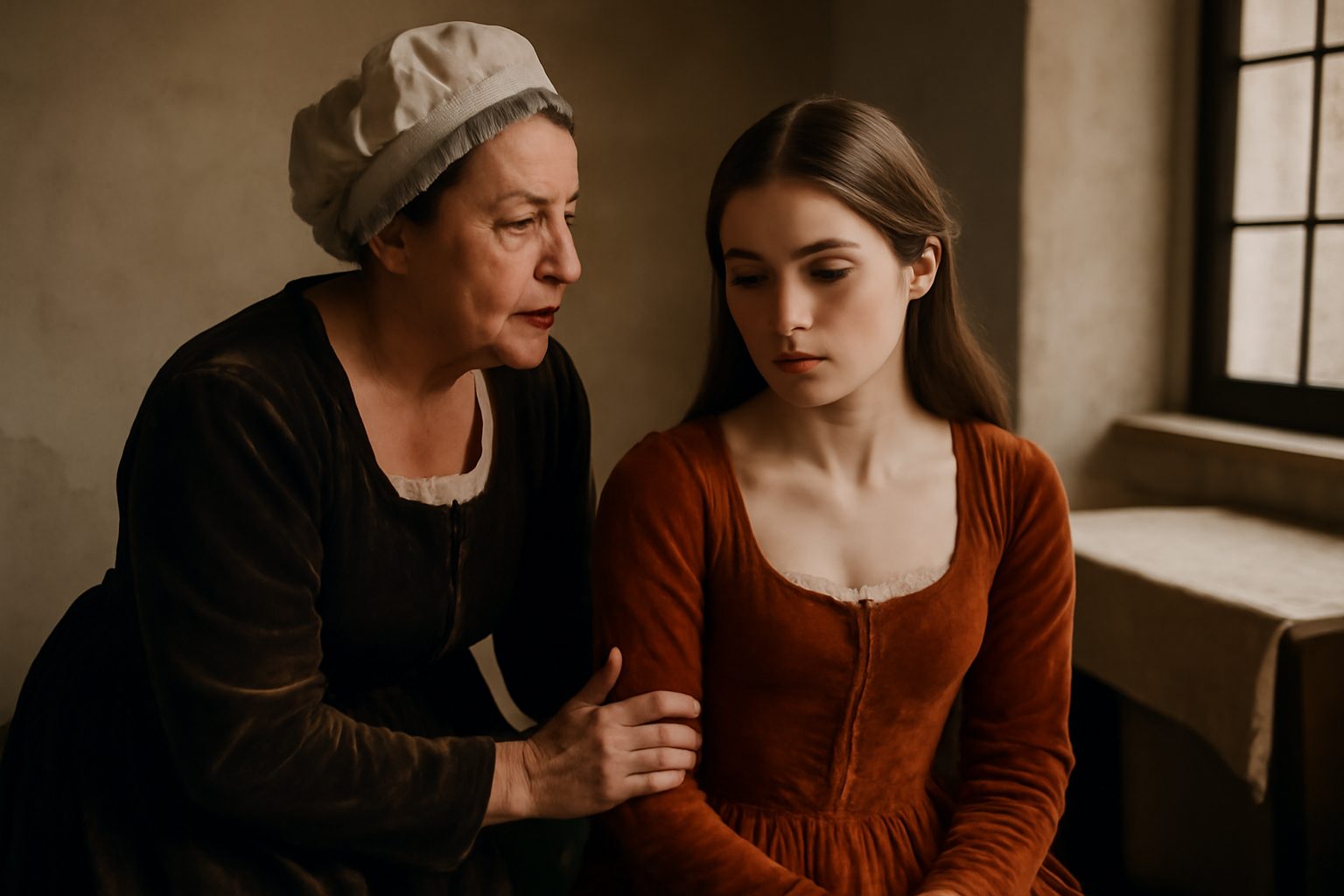
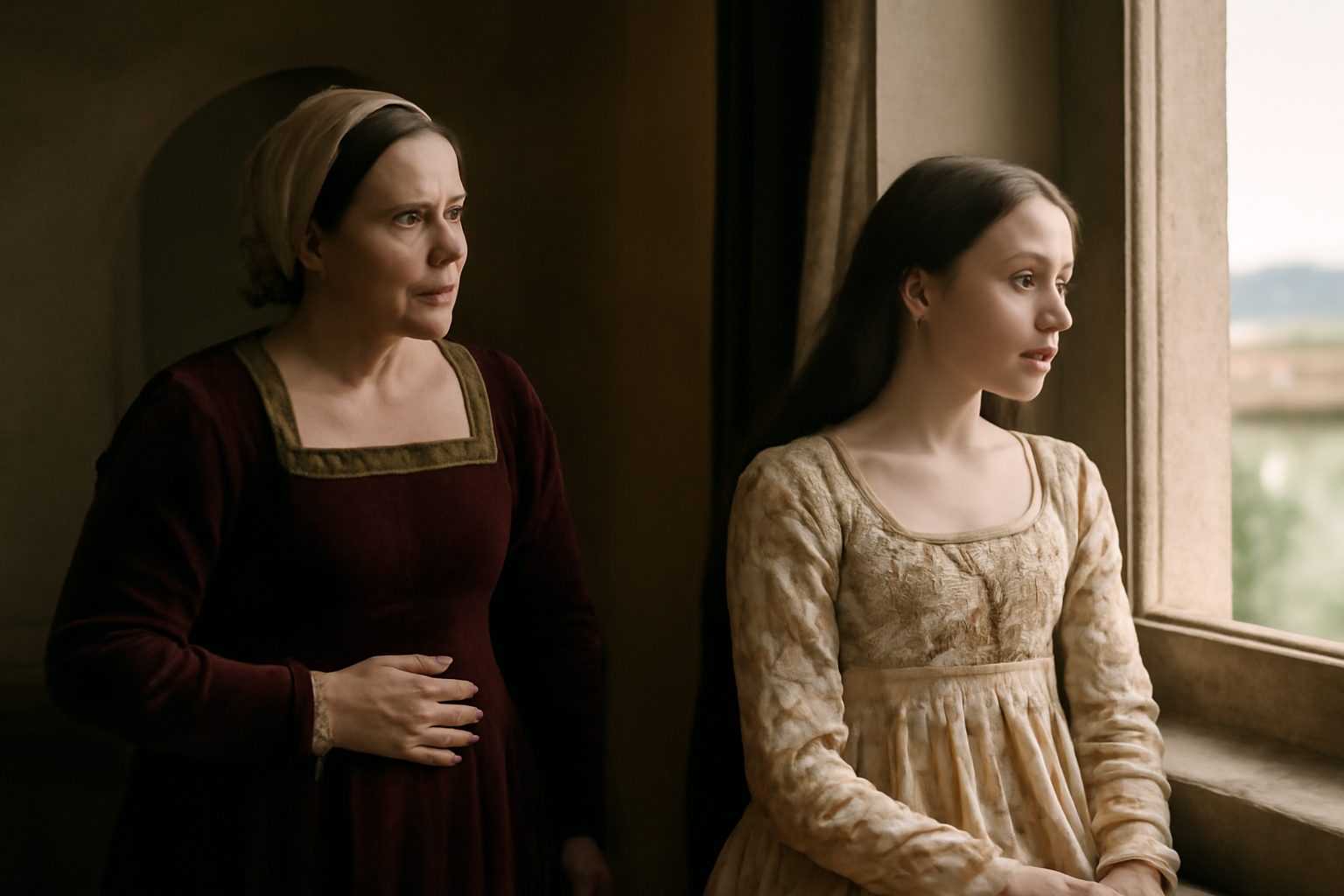
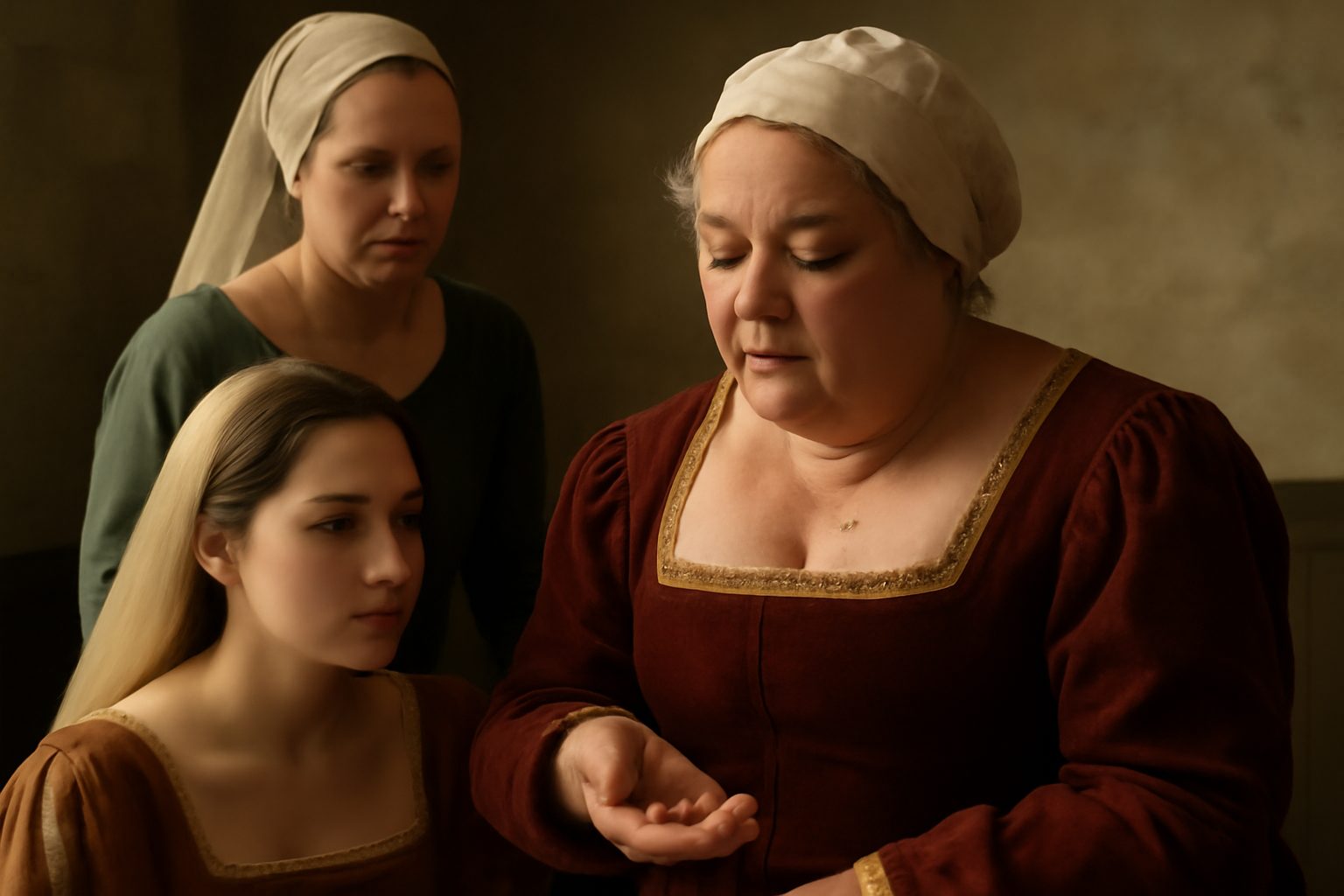
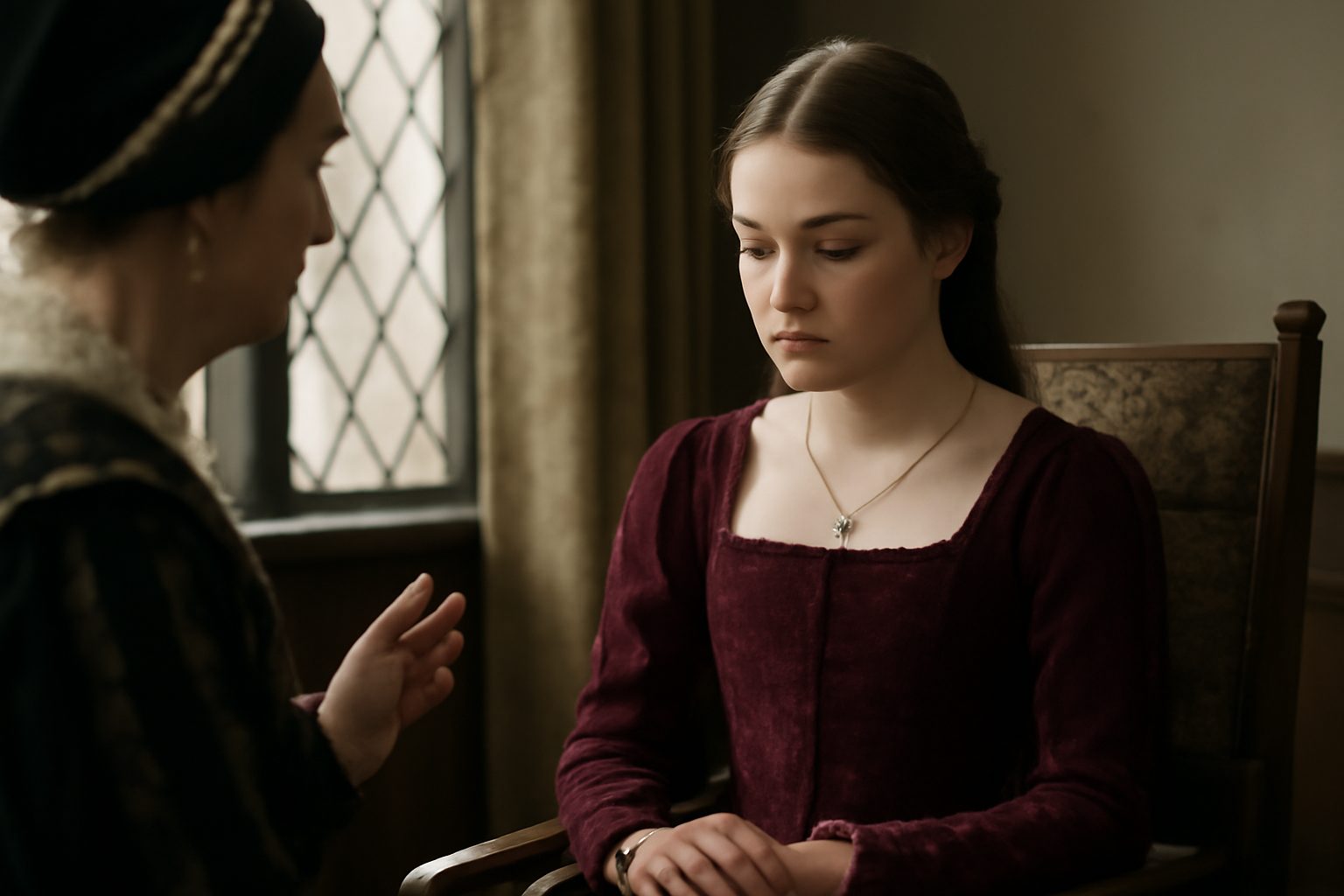
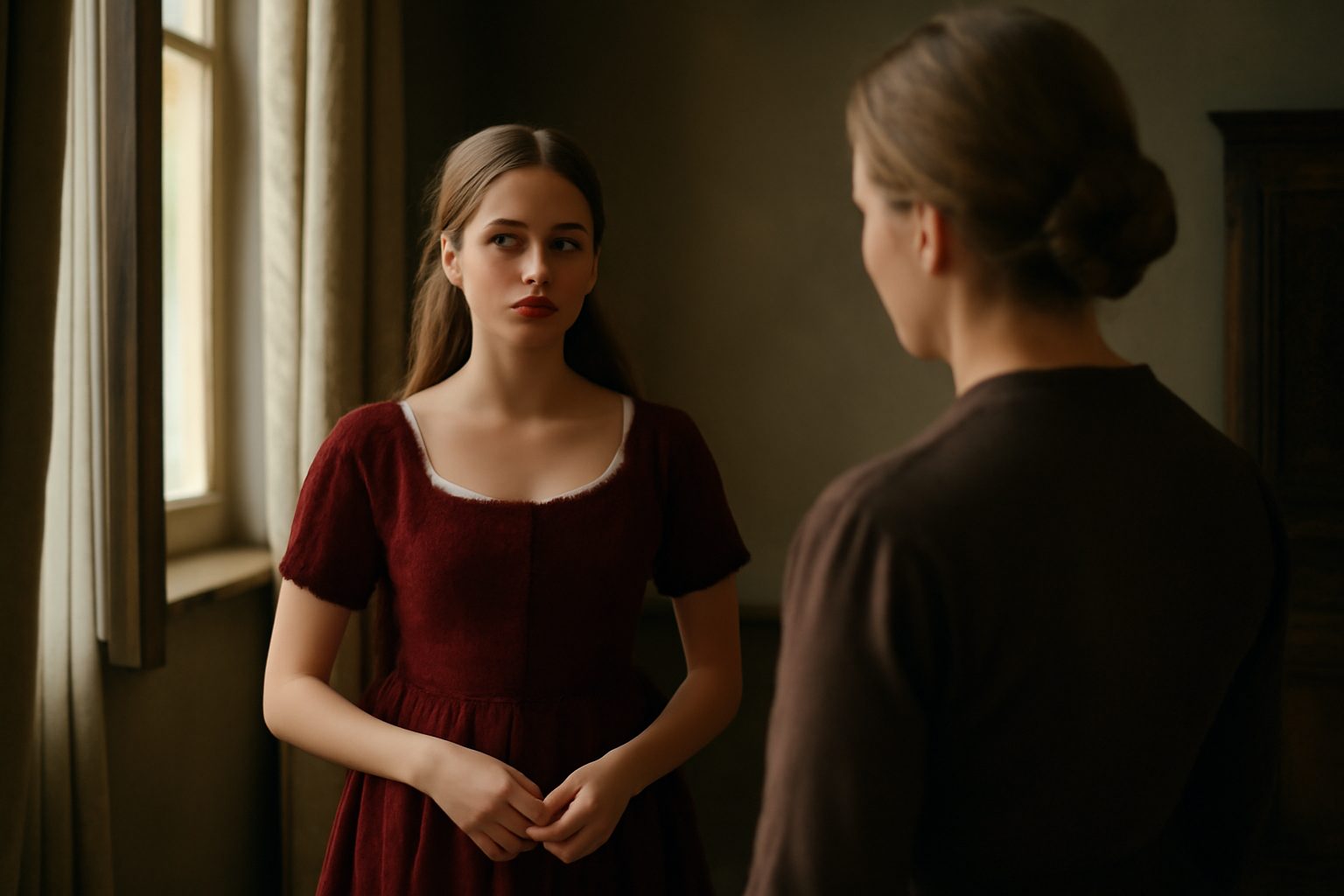
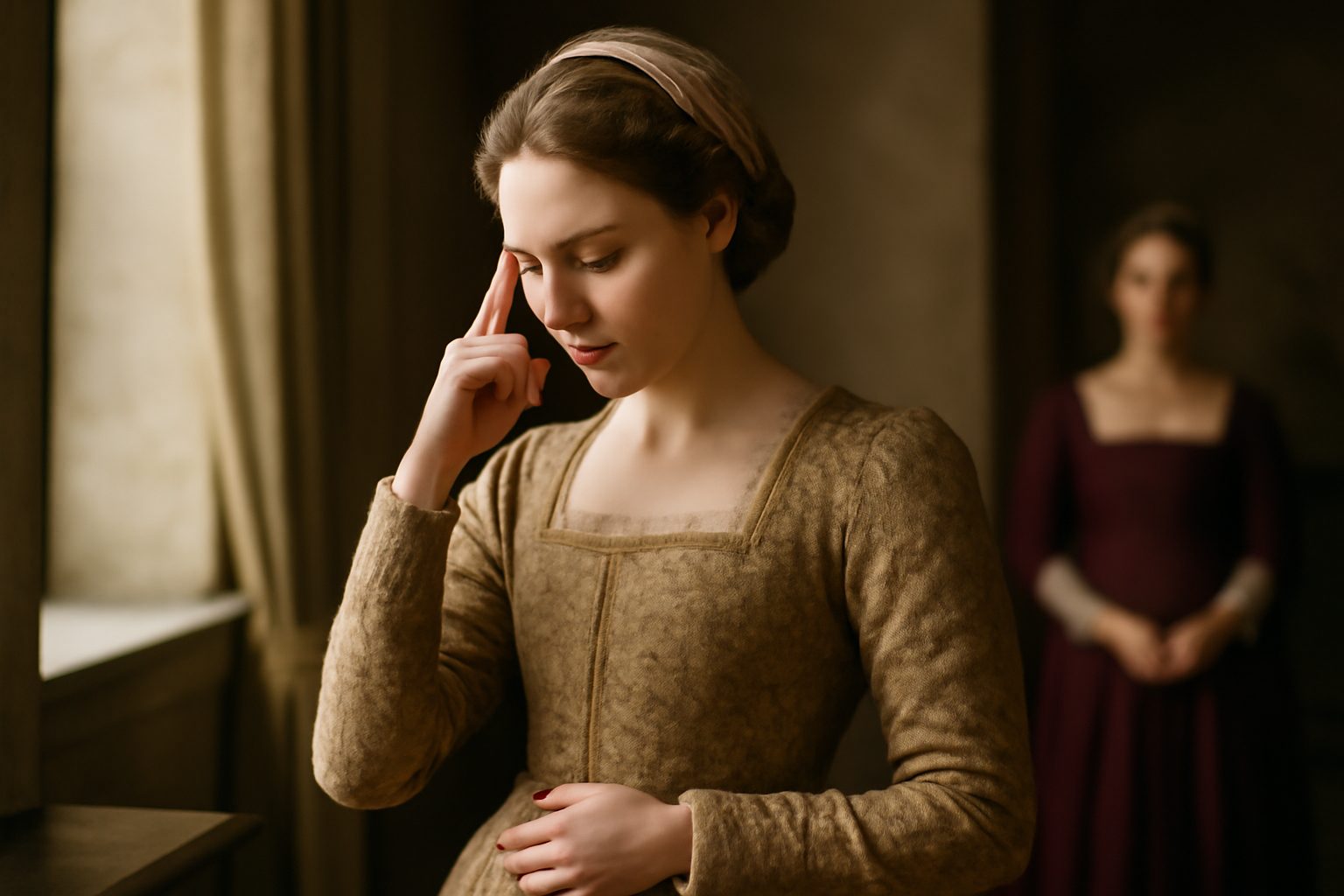
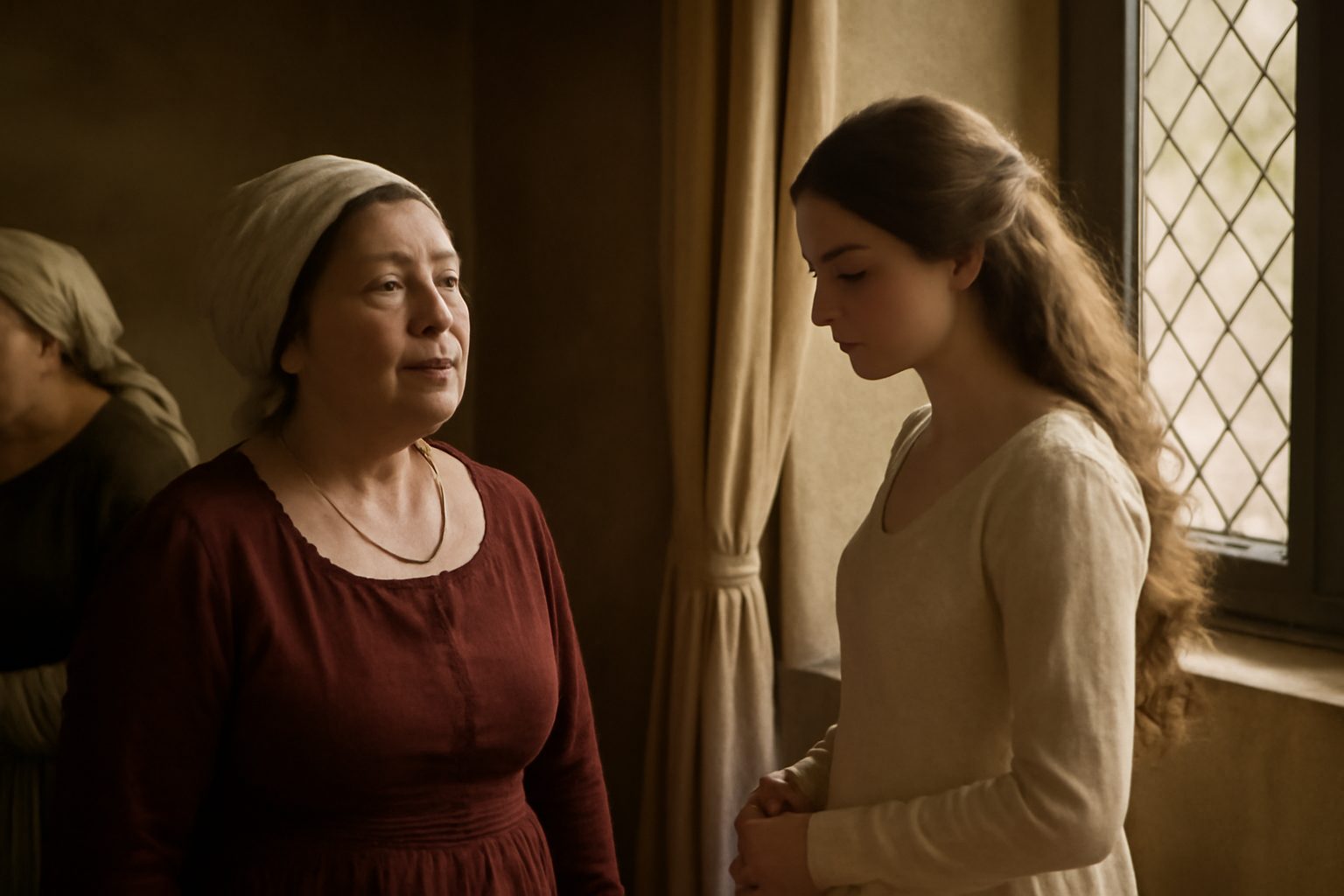
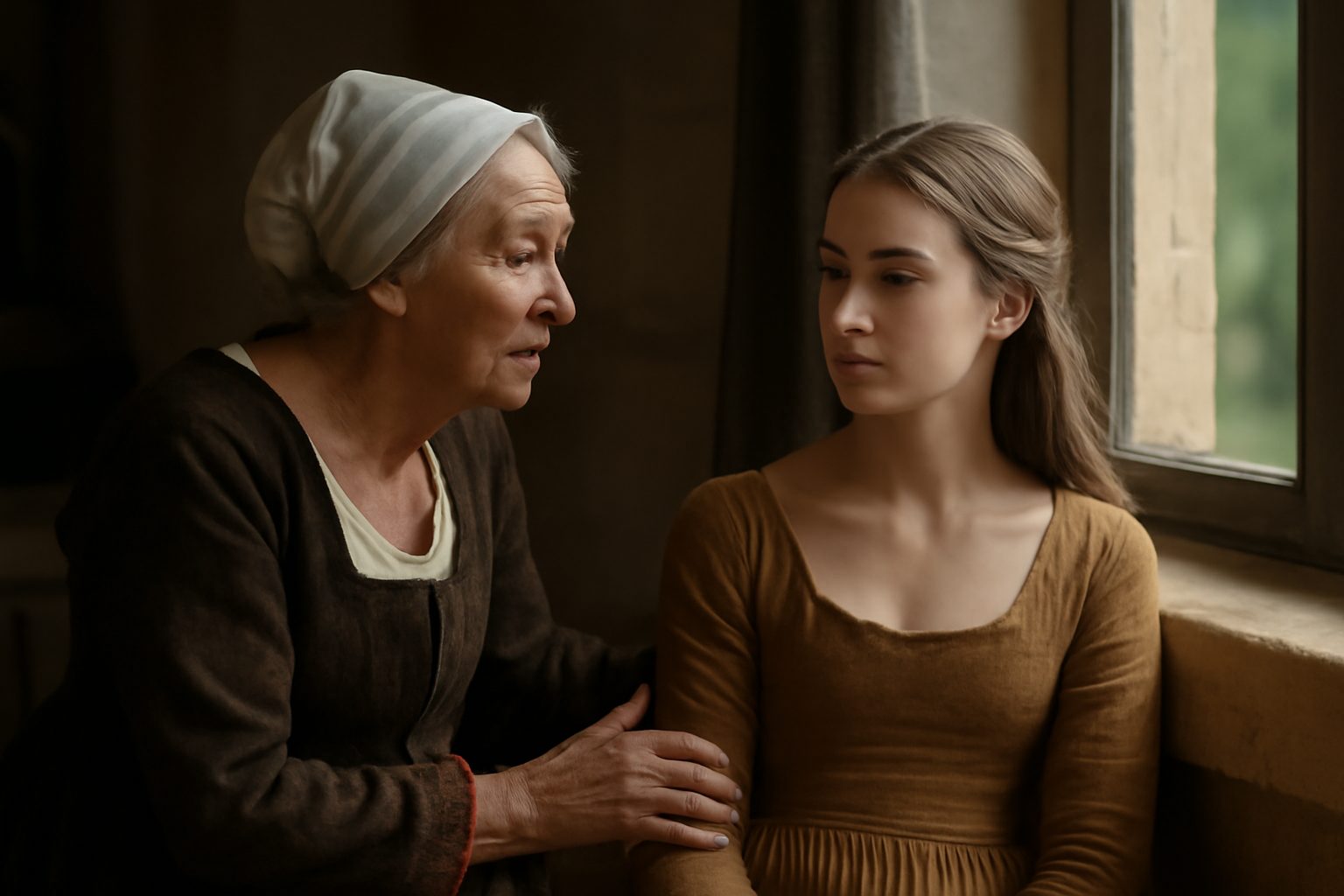
In Act 1, Scene 3 of Romeo and Juliet, Lady Capulet and the Nurse discuss Juliet's potential marriage to Paris. The line comes as Lady Capulet urges Juliet to observe other noblewomen who have embraced marriage, suggesting they find fulfillment in their unions. It reflects the societal expectations placed on young women to wed for status and mutual benefit.
Lady Capulet: "And see how one another lends content"
In modern day english, we would say:
Look at how each thing complements the others.
Frequently Asked Questions
What does Lady Capulet mean when she says that one thing lends content to another?
She means that things complement each other and make each other more enjoyable or complete.
Connections to other verses:
Connections to "And see how one another lends content"
The verse And see how one another lends content serves as a thematic bridge, emphasizing the interplay and mutual enhancement between different elements in the scene. It connects particularly to the Nurse's nostalgic storytelling and Lady Capulet's persuasive rhetoric about Paris.
Connection to the Nurse's Anecdotes
This line resonates with the Nurse's vivid recollections of Juliet's childhood, such as And she was wean'd,--I never shall forget it,-- and The pretty wretch left crying and said 'Ay.'. These memories lend emotional depth and context, illustrating how past and present narratives enrich each other.
Link to Lady Capulet's Persuasion
Lady Capulet's description of Paris as a man of wax and a very flower complements the idea of "lending content," as she builds a compelling image by layering praises. The metaphor of reading Paris like a book in Read o'er the volume of young Paris' face directly ties to this verse, suggesting how external beauty and inner virtue enhance one another.
Juxtaposition with Juliet's Reserved Response
Juliet's cautious reply in I'll look to like, if looking liking move contrasts with the enthusiastic endorsements, highlighting how differing perspectives contribute to a richer dialogue. Similarly, her humble It is an honour that I dream not of adds nuance, showing how contrasting attitudes interweave to create thematic complexity.
Narrative and Thematic Unity
The collective voices in the scene—from the Nurse's earthy humor to Lady Capulet's lofty ideals—demonstrate how "one another lends content," weaving a tapestry that foreshadows Juliet's impending choices and the play's exploration of love, duty, and identity.