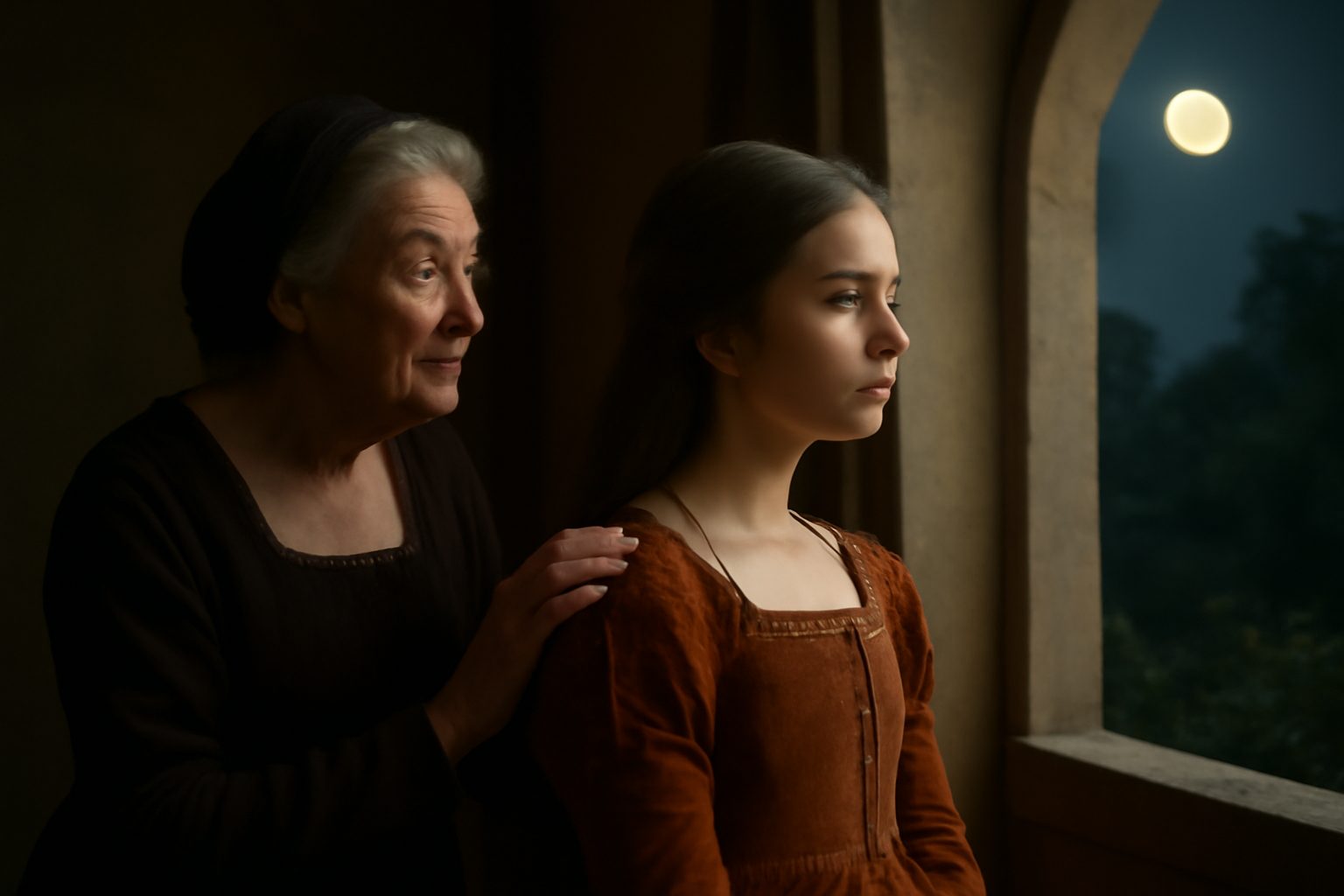
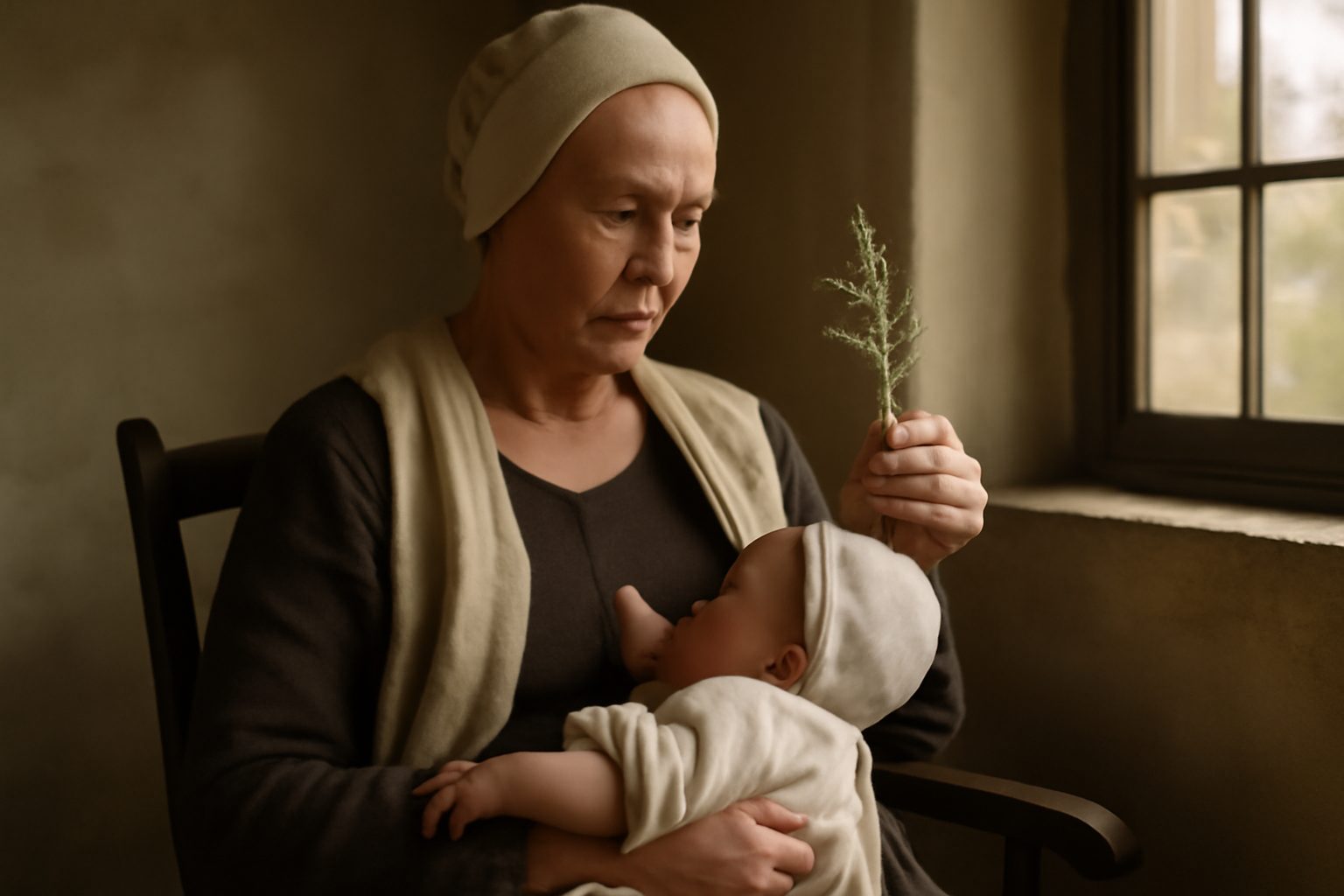
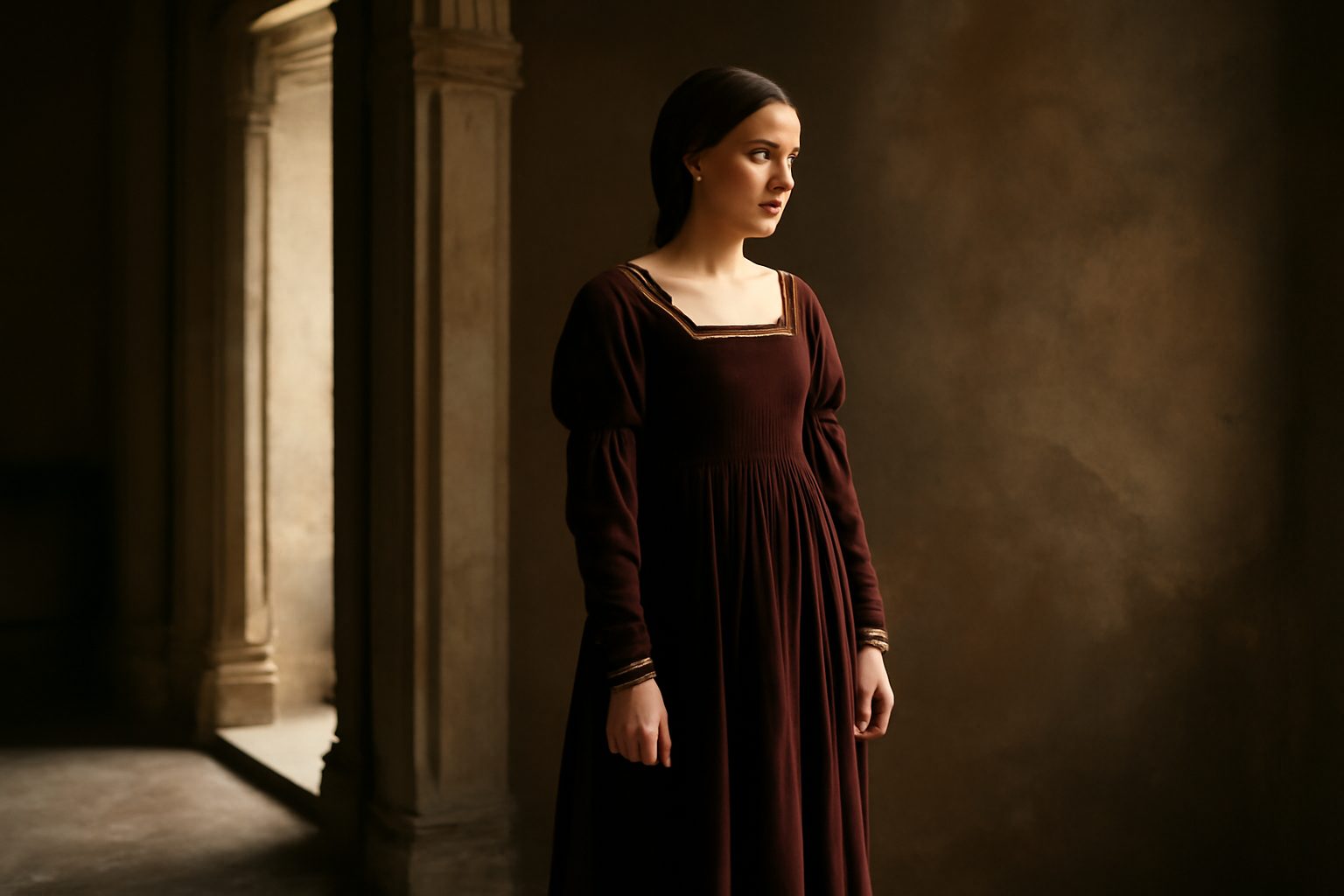
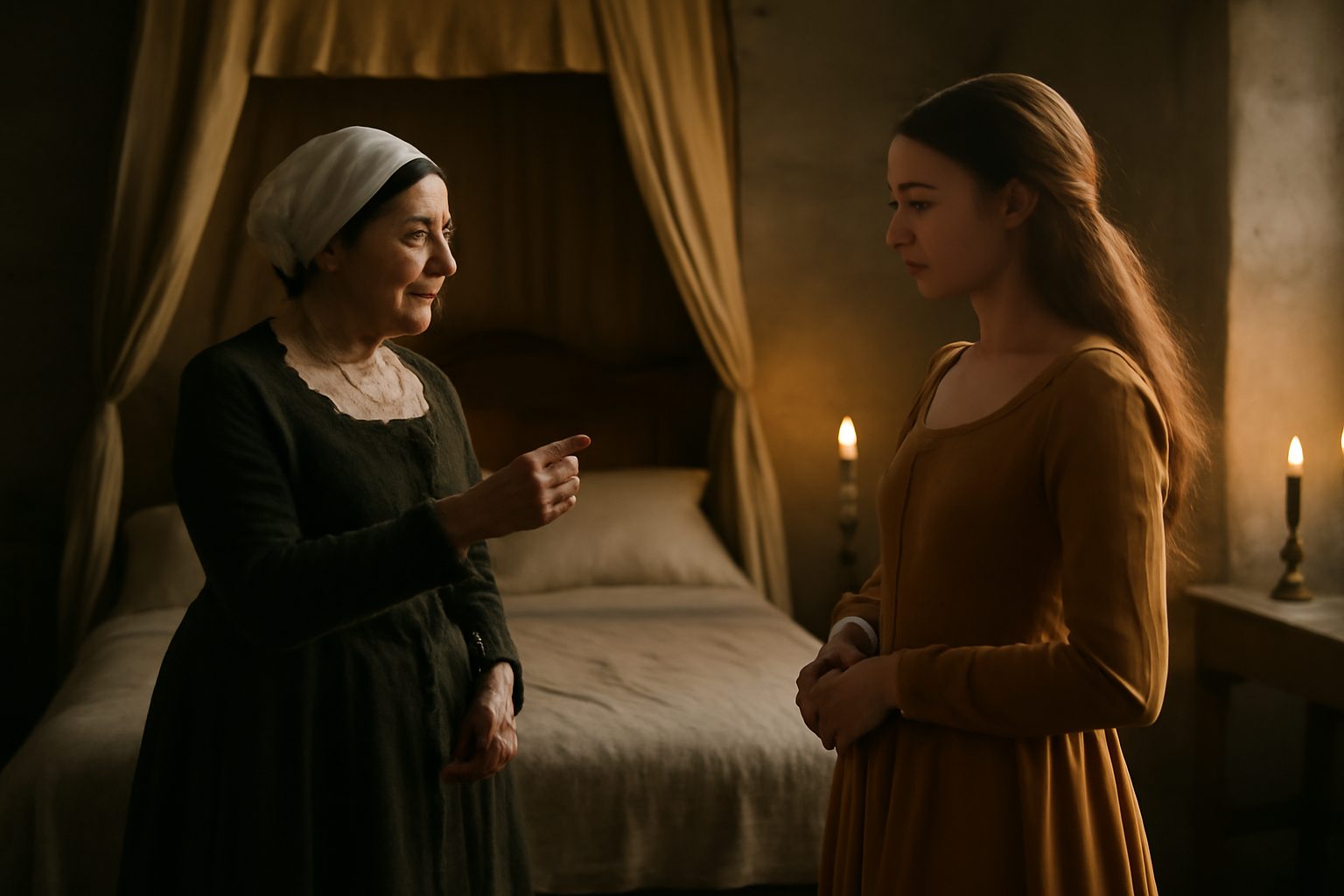
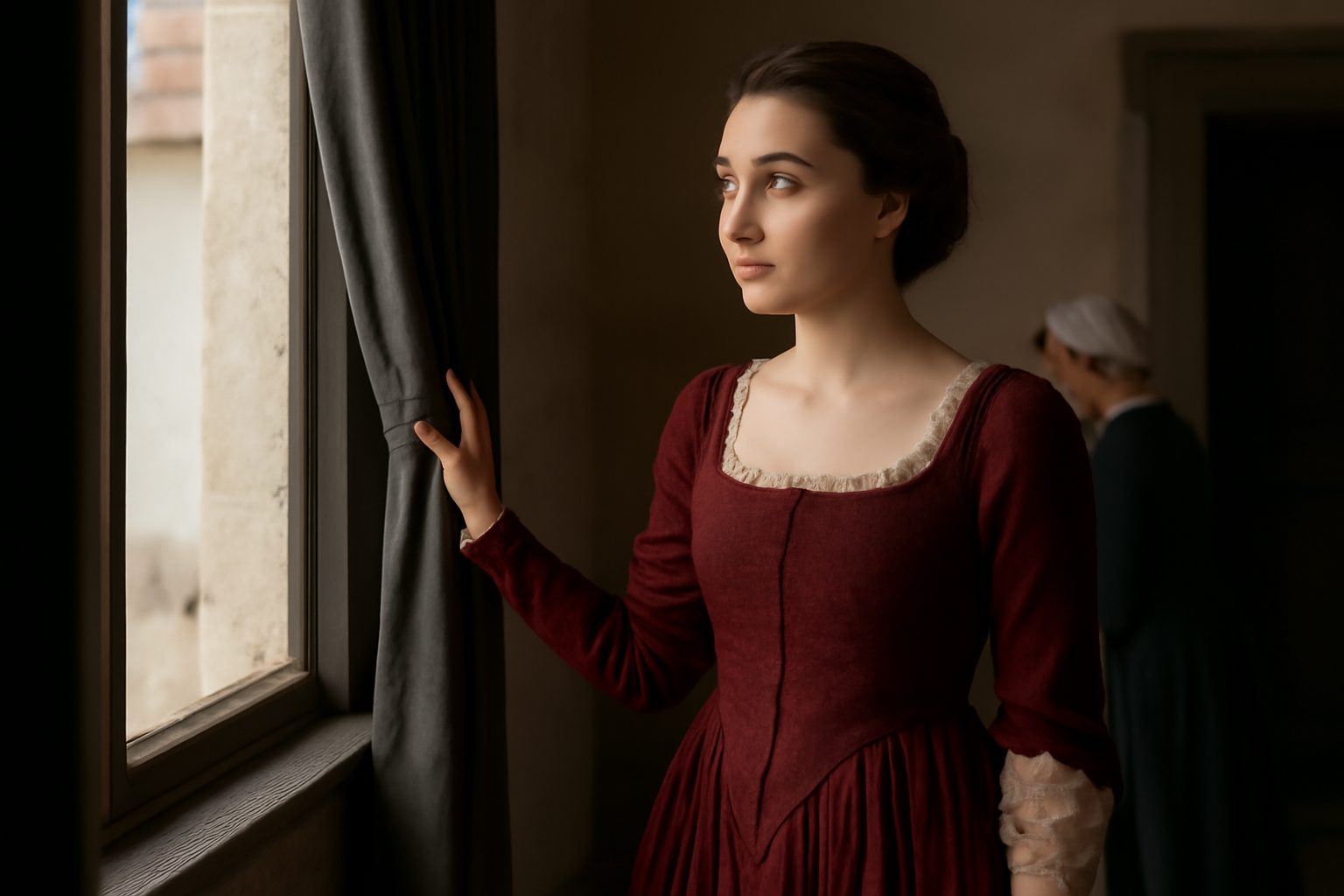
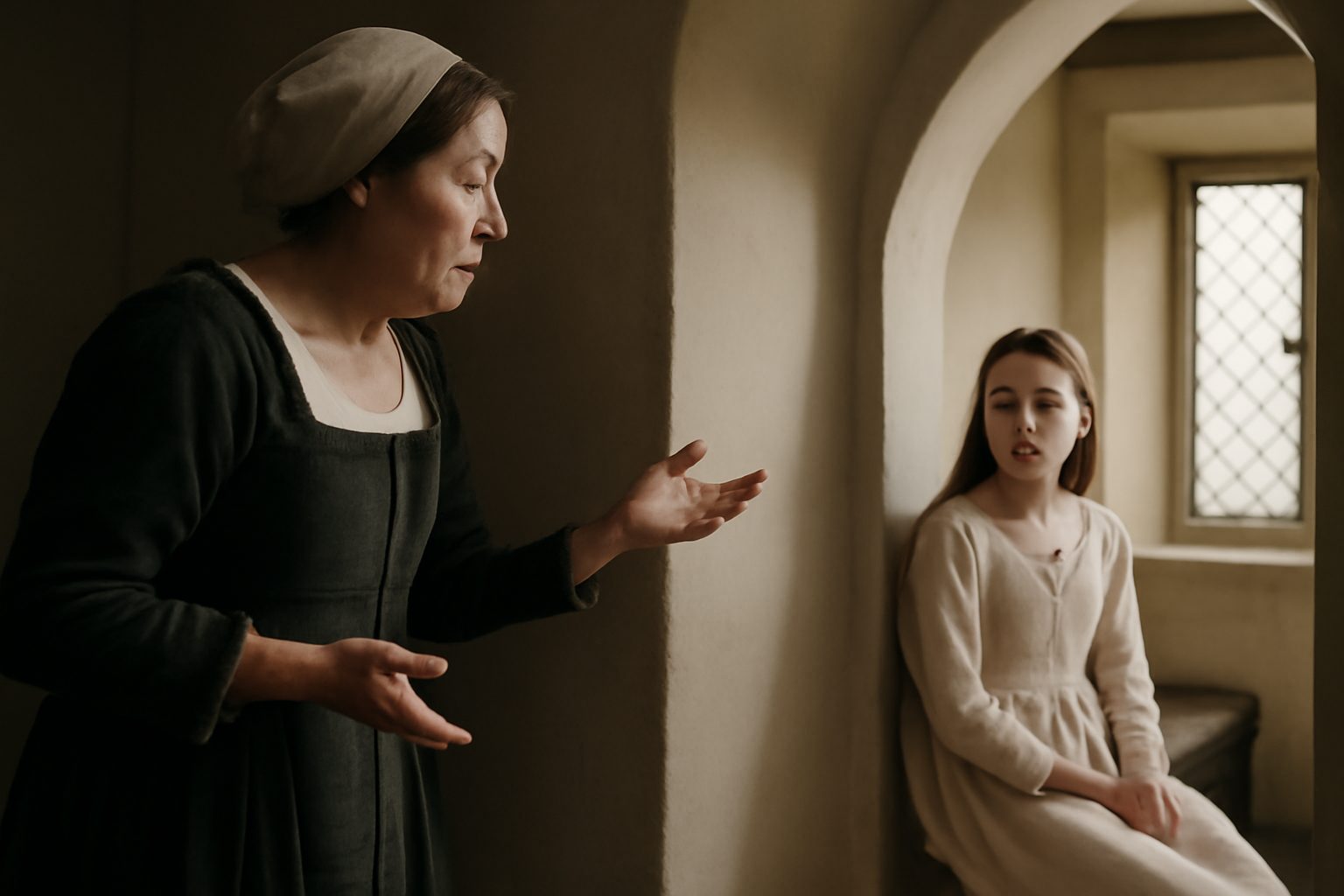
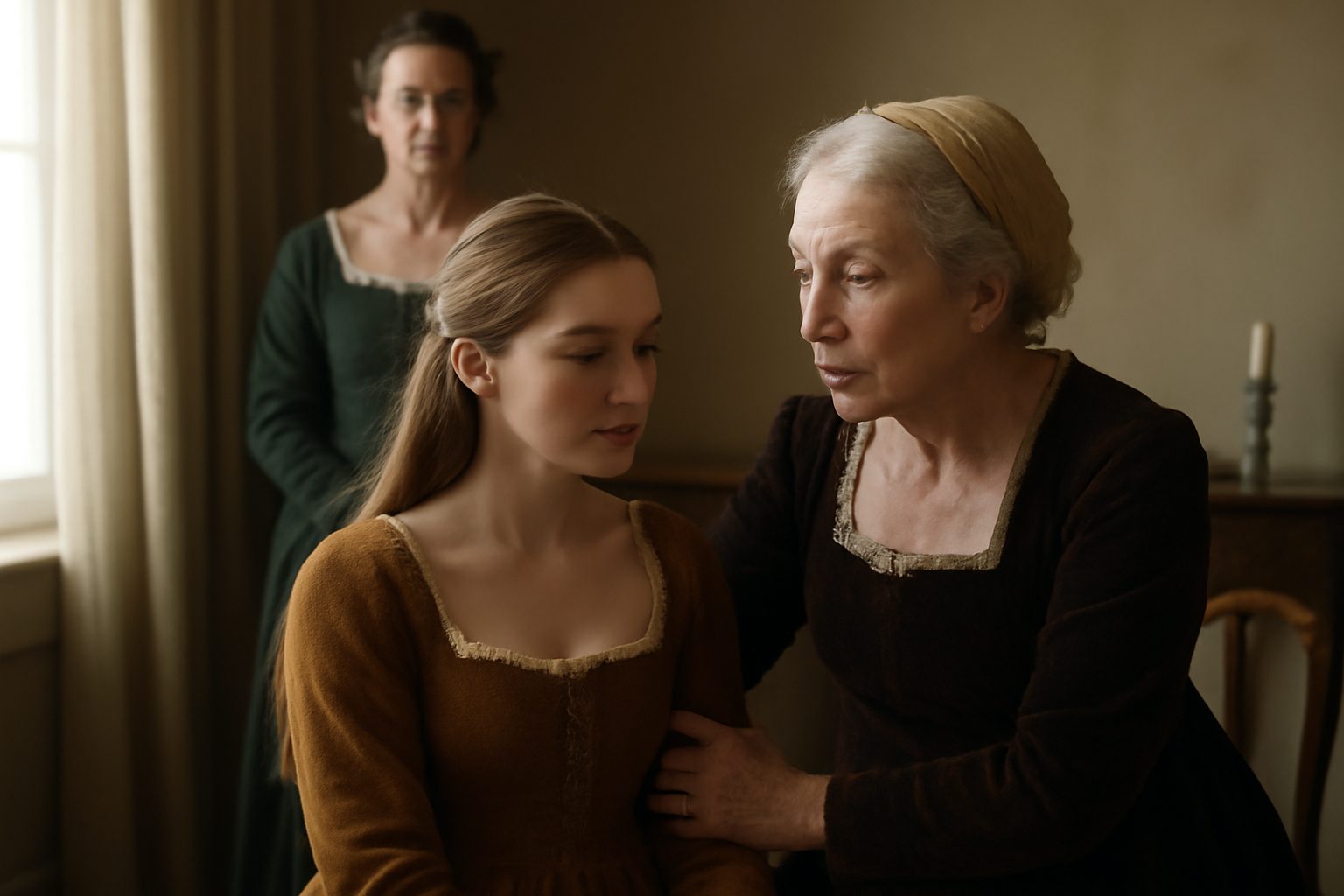
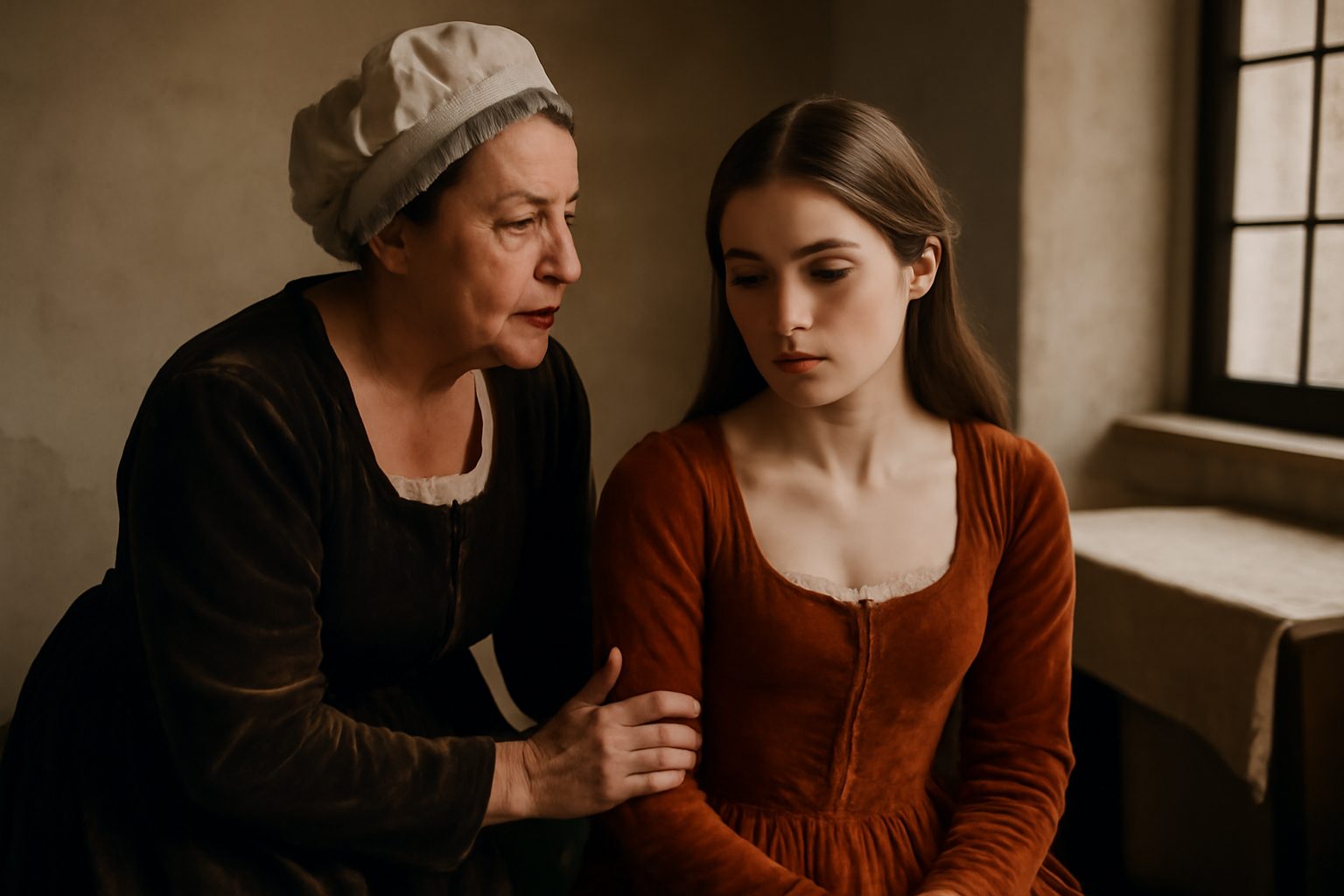
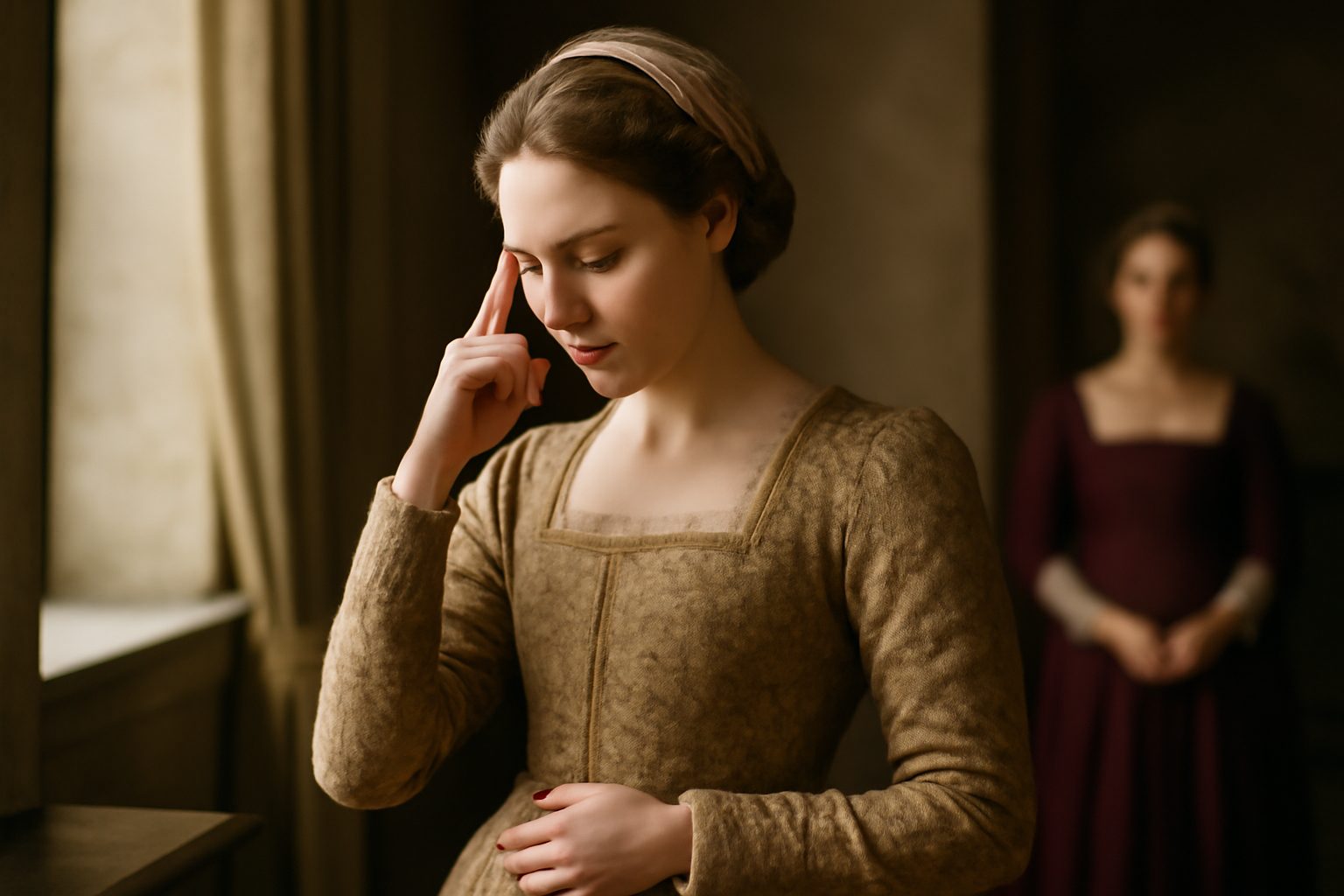
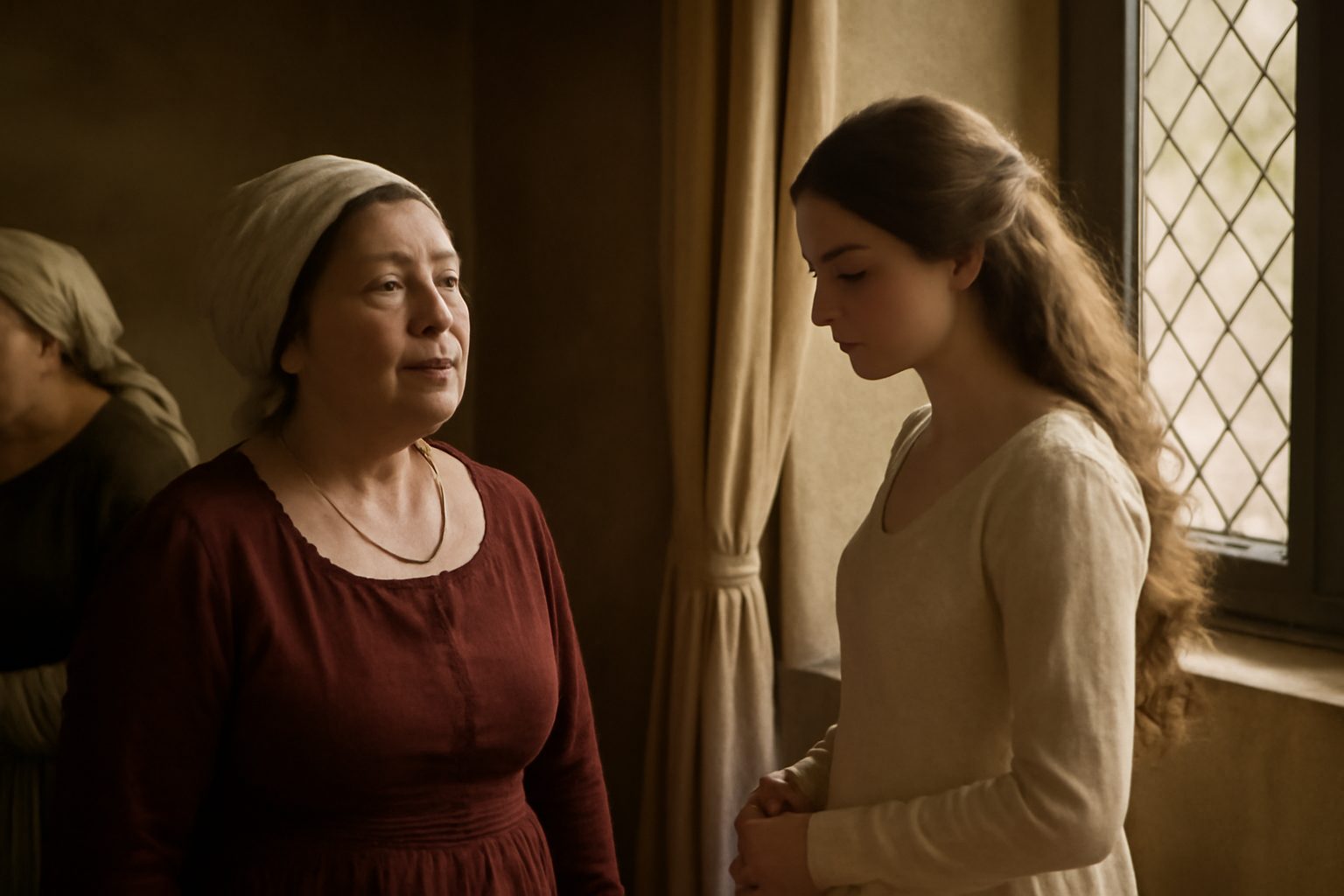
In Act 1, Scene 3 of Romeo and Juliet, Lady Capulet speaks to her daughter Juliet about the prospect of marriage, urging her to consider Paris as a suitor. The line refers to the idea that one's deepest emotions and truths can be read in their eyes, like notes written in the margins of a book. This moment highlights Lady Capulet's attempt to persuade Juliet by suggesting Paris's affection is visibly clear.
Lady Capulet: "Find written in the margent of his eyes."
In modern day english, we would say:
You can see it written in the edges of his eyes.
Frequently Asked Questions
What does Lady Capulet mean when she says that something is written in the margin of his eyes?
She means that his feelings or thoughts can be seen or understood by looking at his eyes, as if they were words written in the margins of a book.
Connections to other verses:
Connections to "Find written in the margent of his eyes"
The verse "Find written in the margent of his eyes" is part of Lady Capulet's extended metaphor describing Paris as a book that Juliet should "read." This imagery connects to several other verses in the scene that elaborate on the themes of beauty, worth, and the act of observation or judgment.
Metaphorical and Descriptive Links
- It directly follows "And what obscured in this fair volume lies", continuing the book metaphor and suggesting that Paris's inner qualities are as valuable as his appearance.
- It is preceded by "Read o'er the volume of young Paris' face", which initiates the metaphor and instructs Juliet to study his features.
- The idea of finding delight in observation is echoed in "And find delight writ there with beauty's pen", emphasizing the pleasure and beauty in Paris's appearance.
- It relates to "Examine every married lineament", which urges a detailed assessment of Paris's harmonious features.
- The theme of mutual enhancement is present in "And see how one another lends content", suggesting that each of Paris's qualities complements the others.
Thematic and Contextual Links
- Lady Capulet's praise of Paris as "a man of wax" and "a flower" reinforces the idea of his perfection, which is "written" in his eyes.
- The Nurse's earthy anecdotes, such as Juliet's weaning in "And she was wean'd", provide a contrast to Lady Capulet's refined metaphors, highlighting different perspectives on growth and maturity.
- Juliet's cautious response in "I'll look to like, if looking liking move" shows her willingness to observe Paris, aligning with the instruction to find meaning in his eyes.