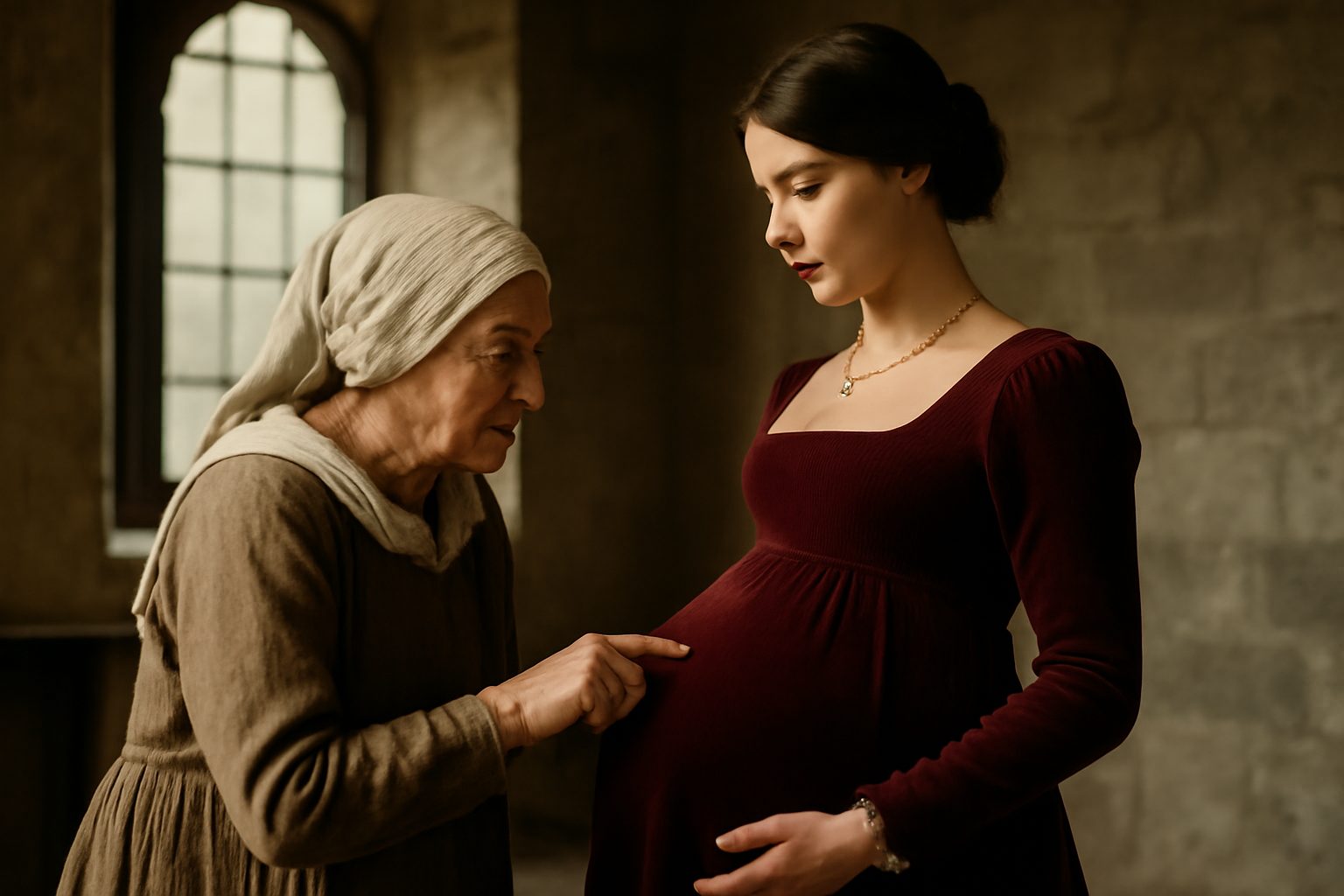
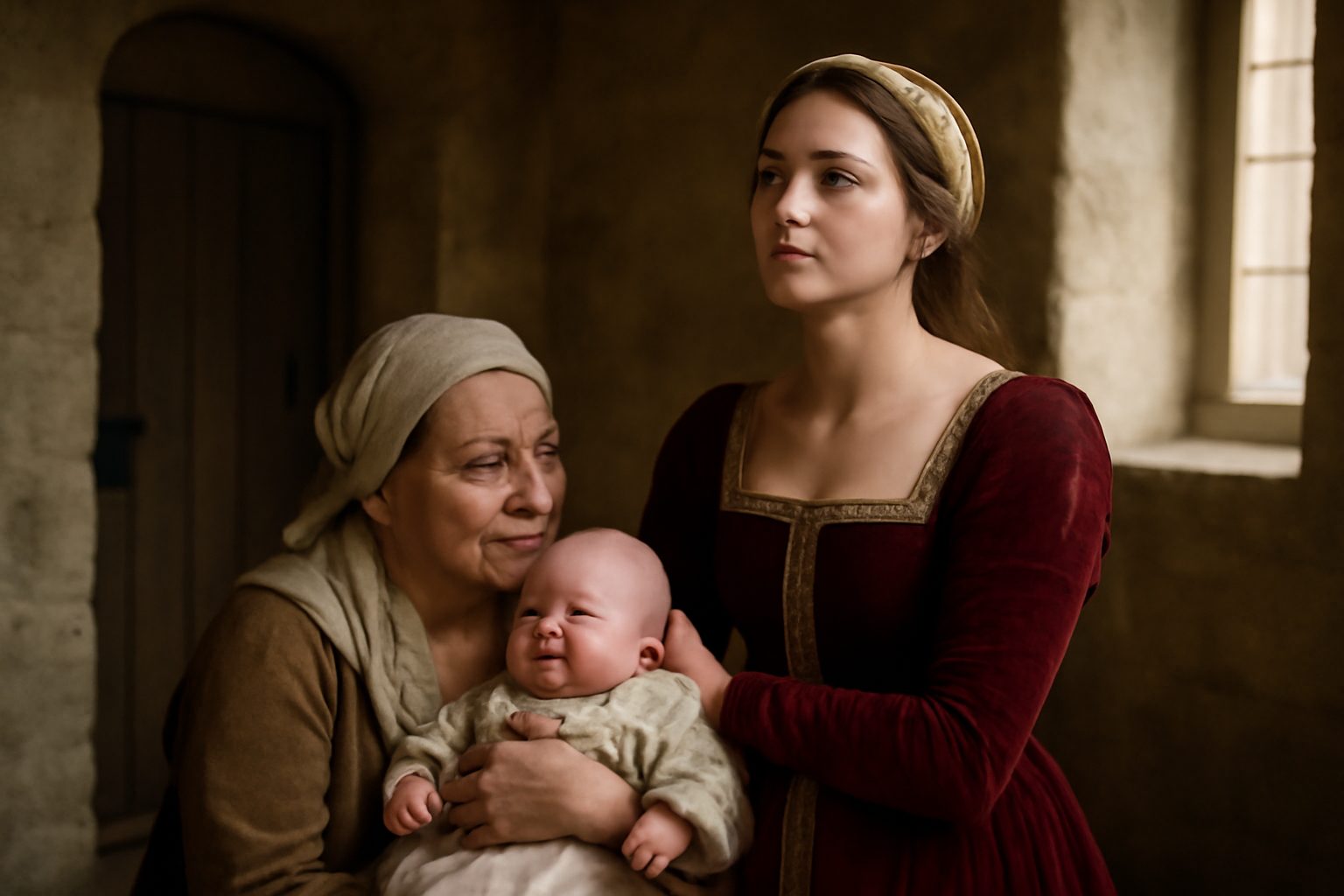
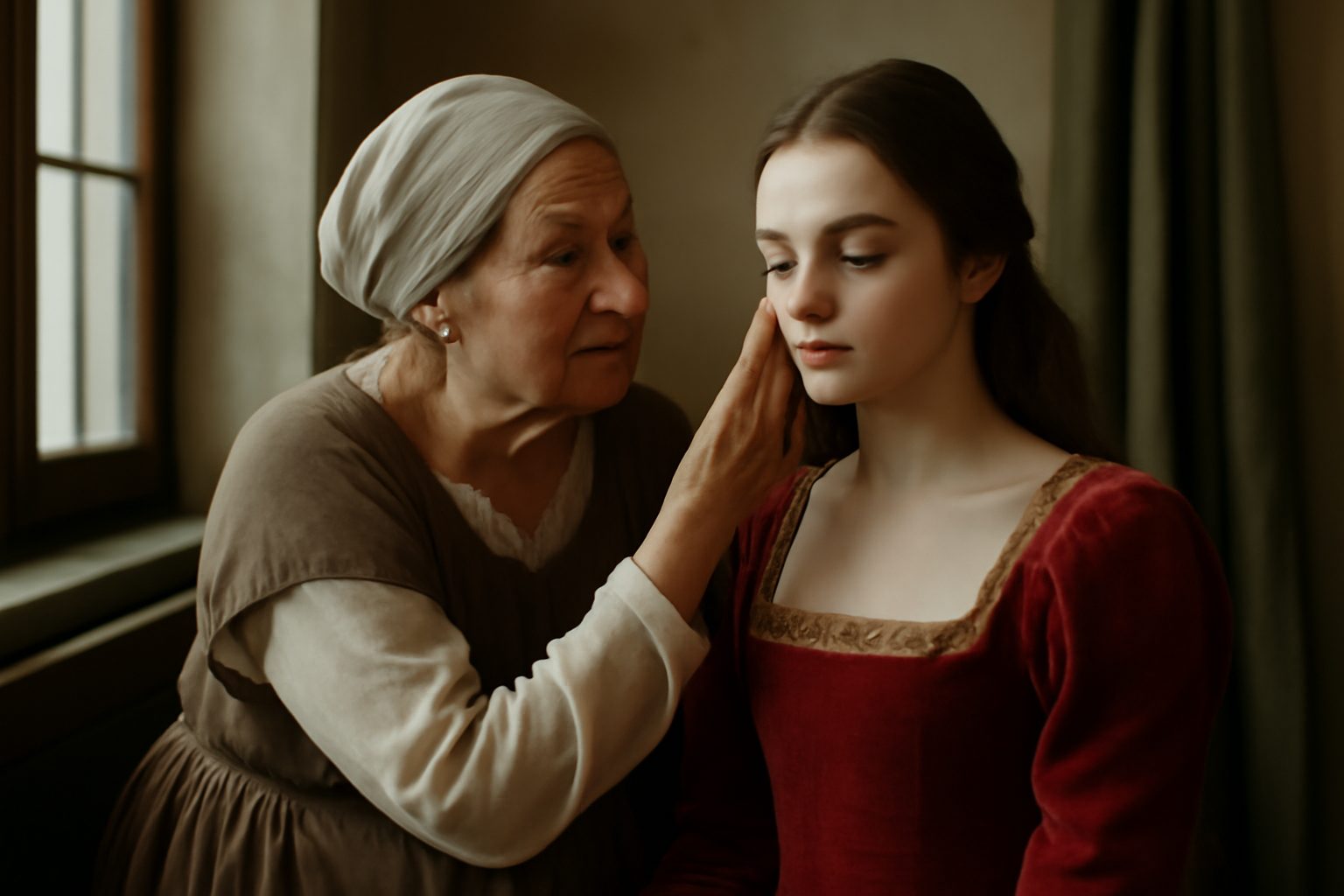
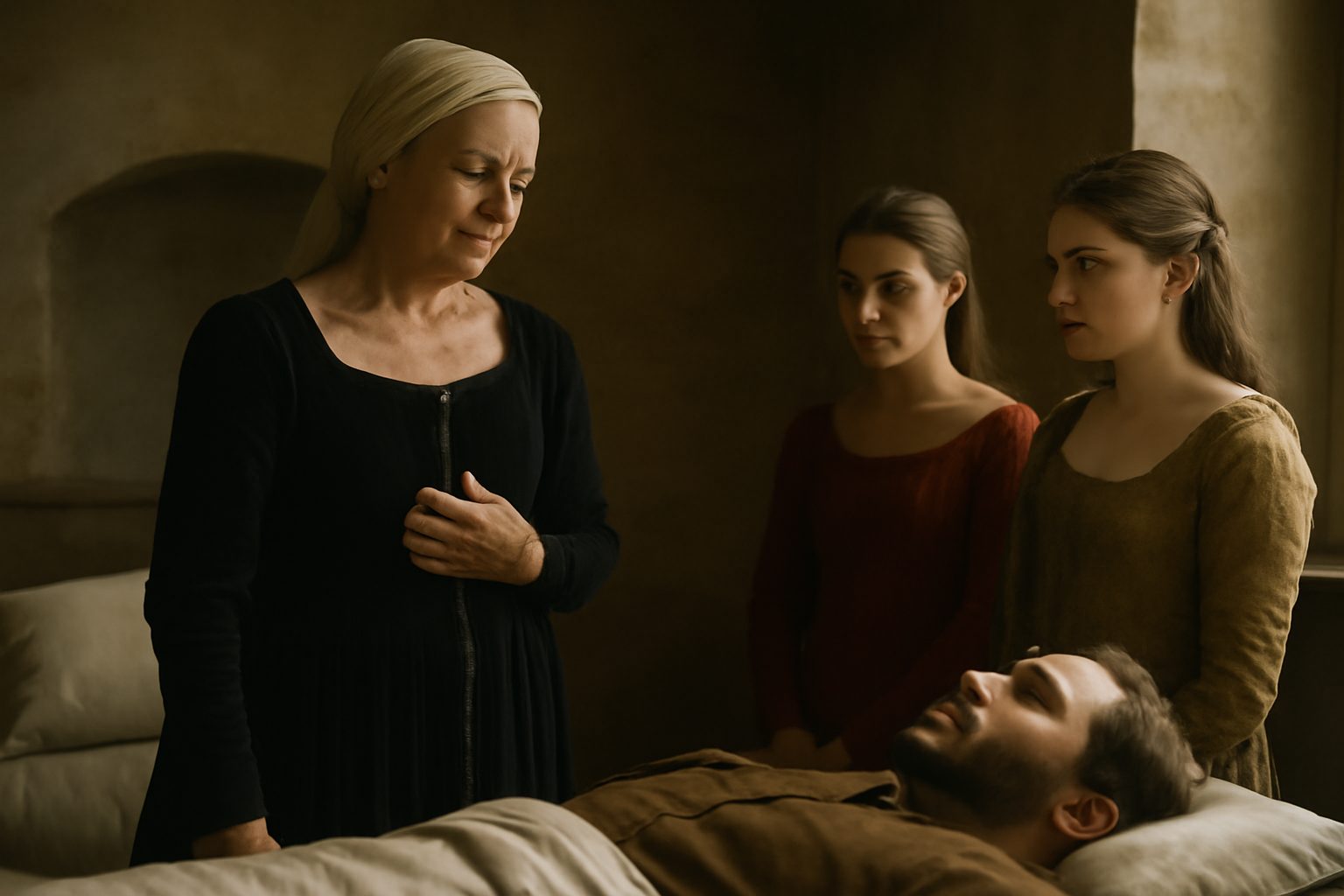
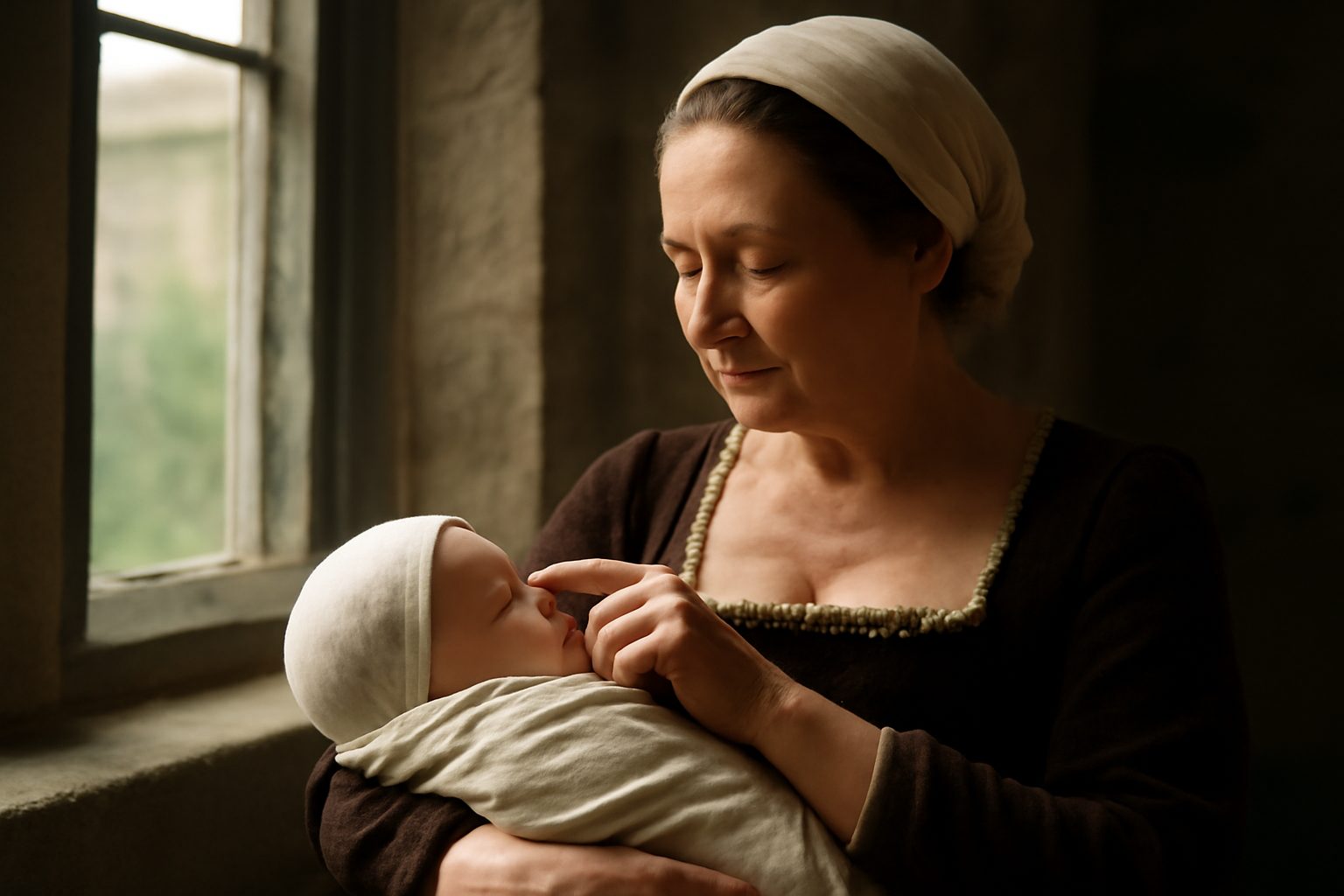
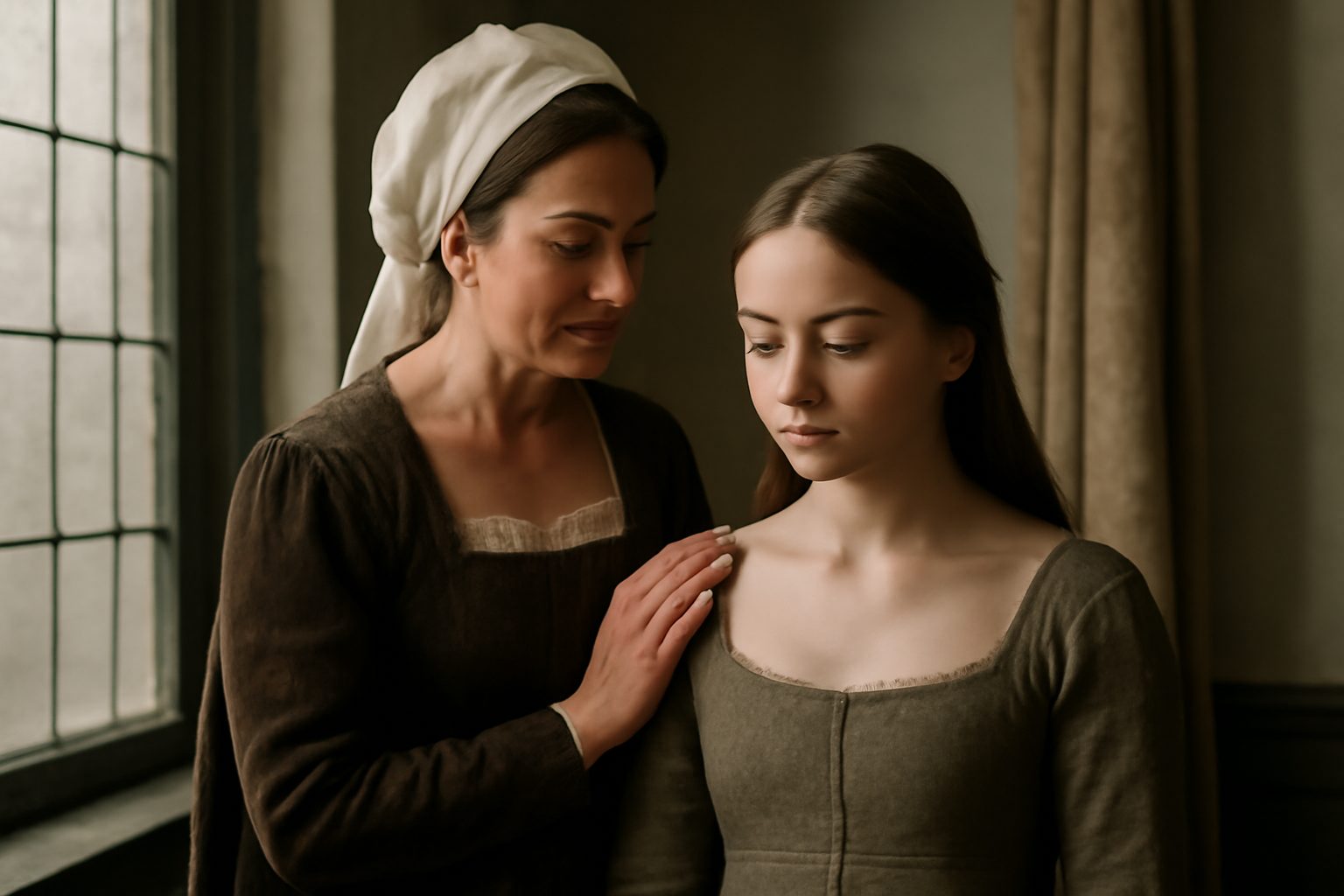
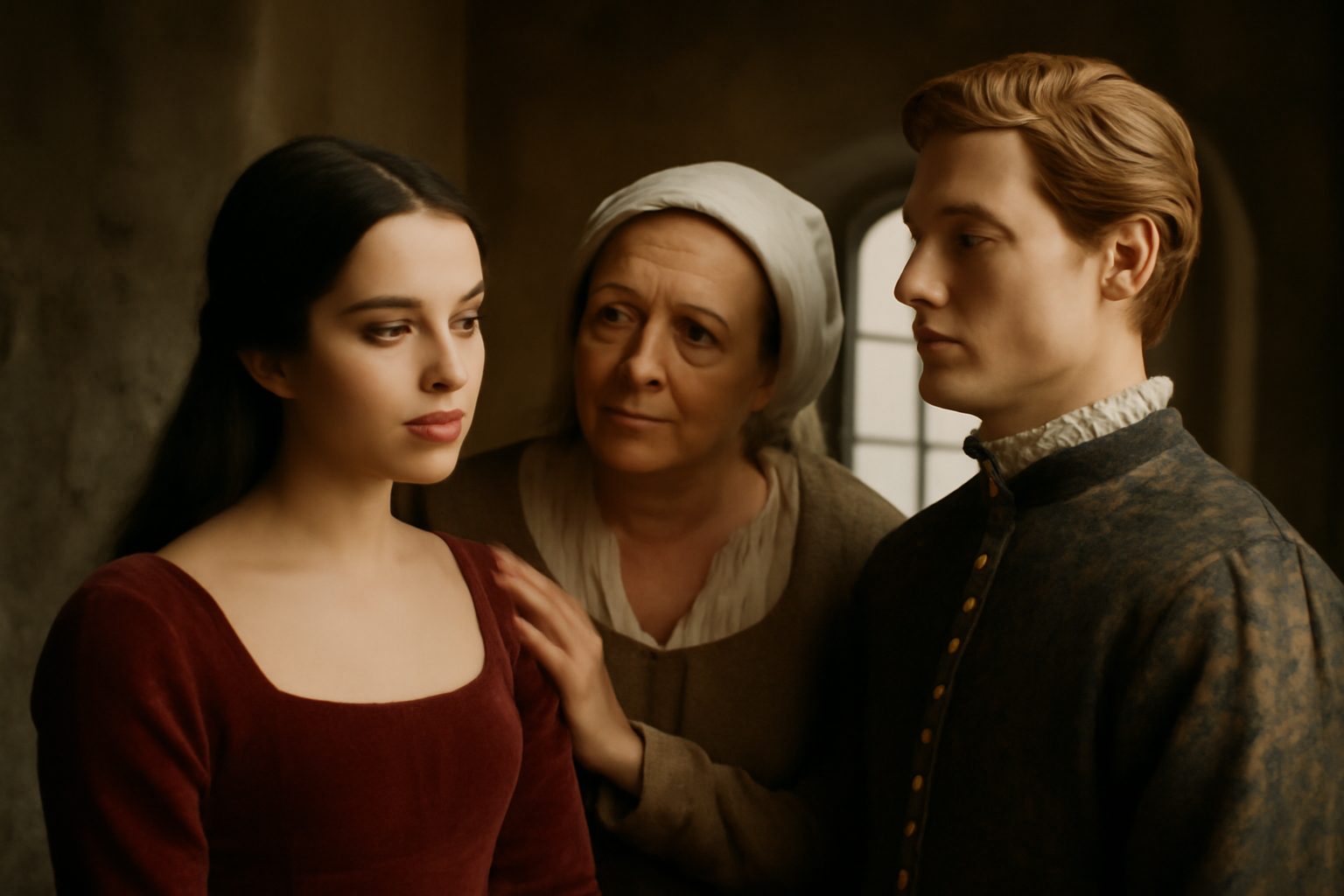
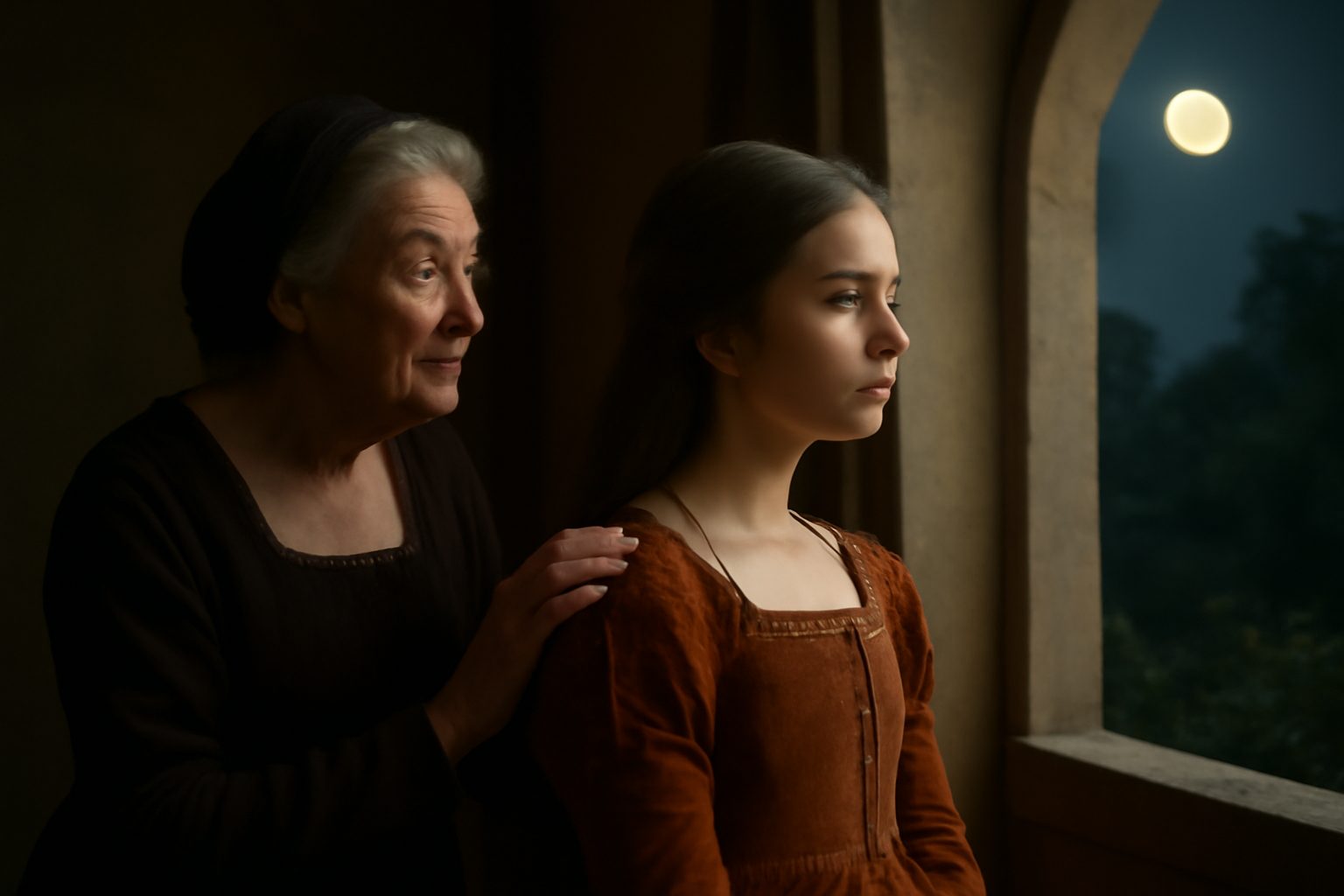
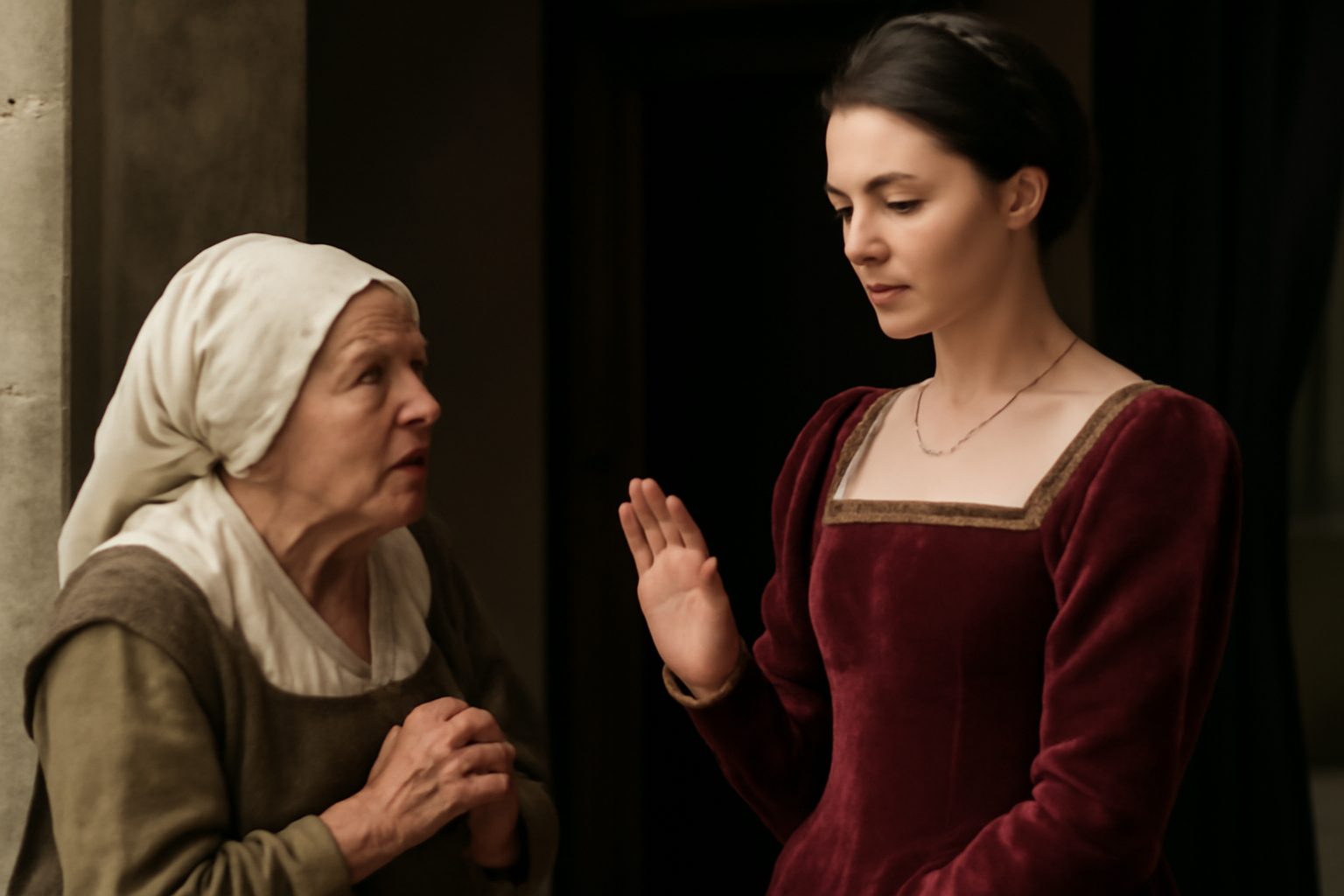
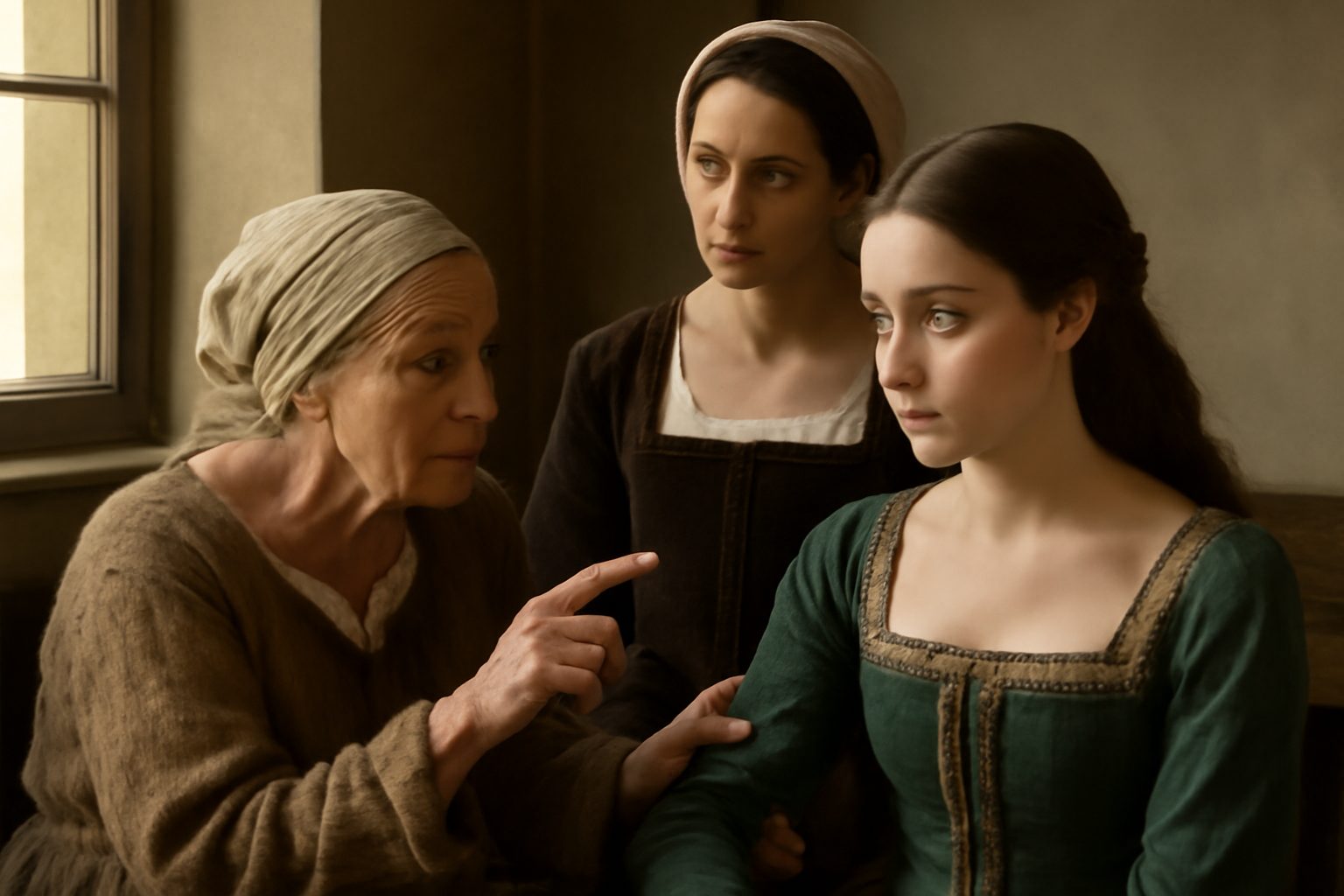
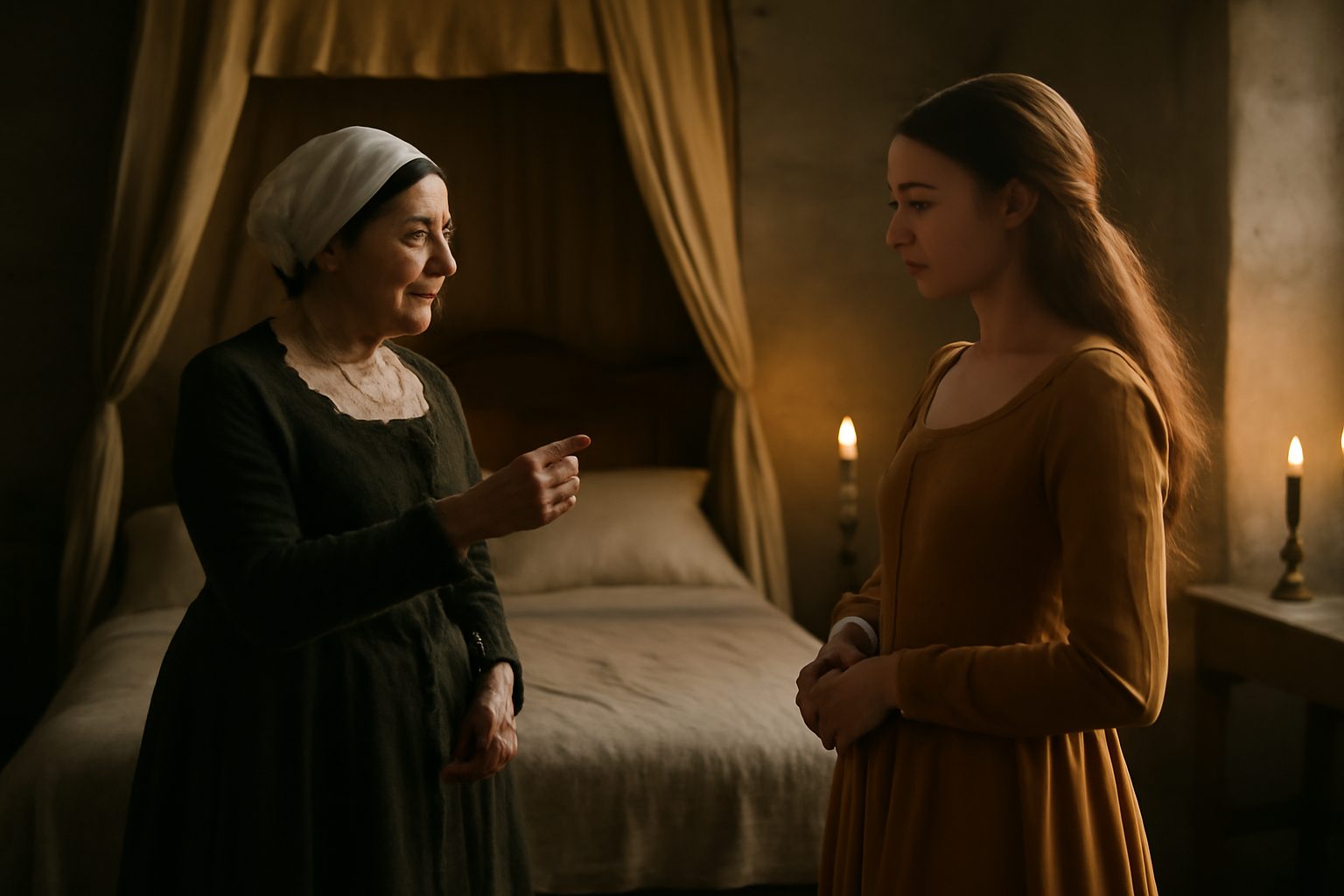
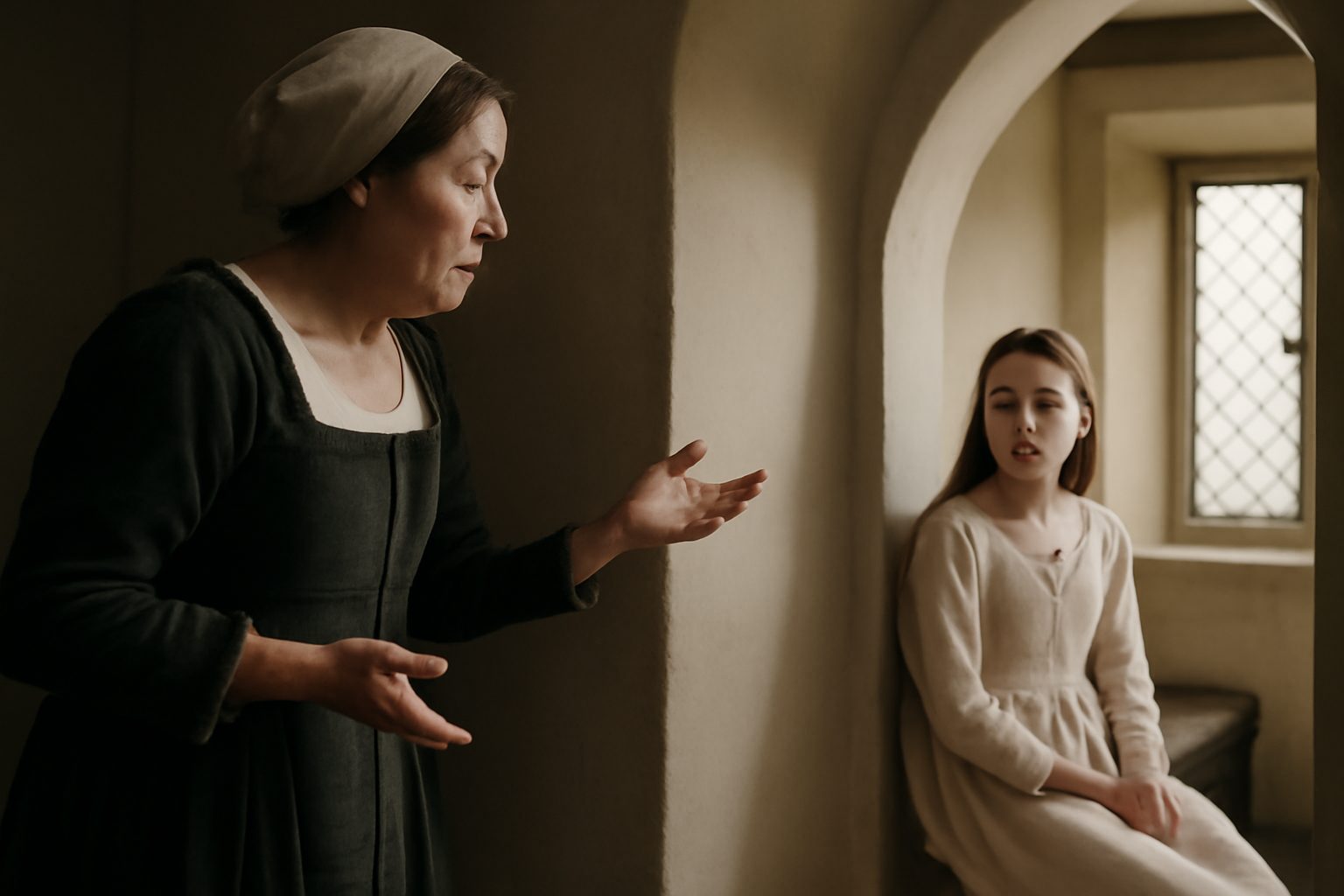
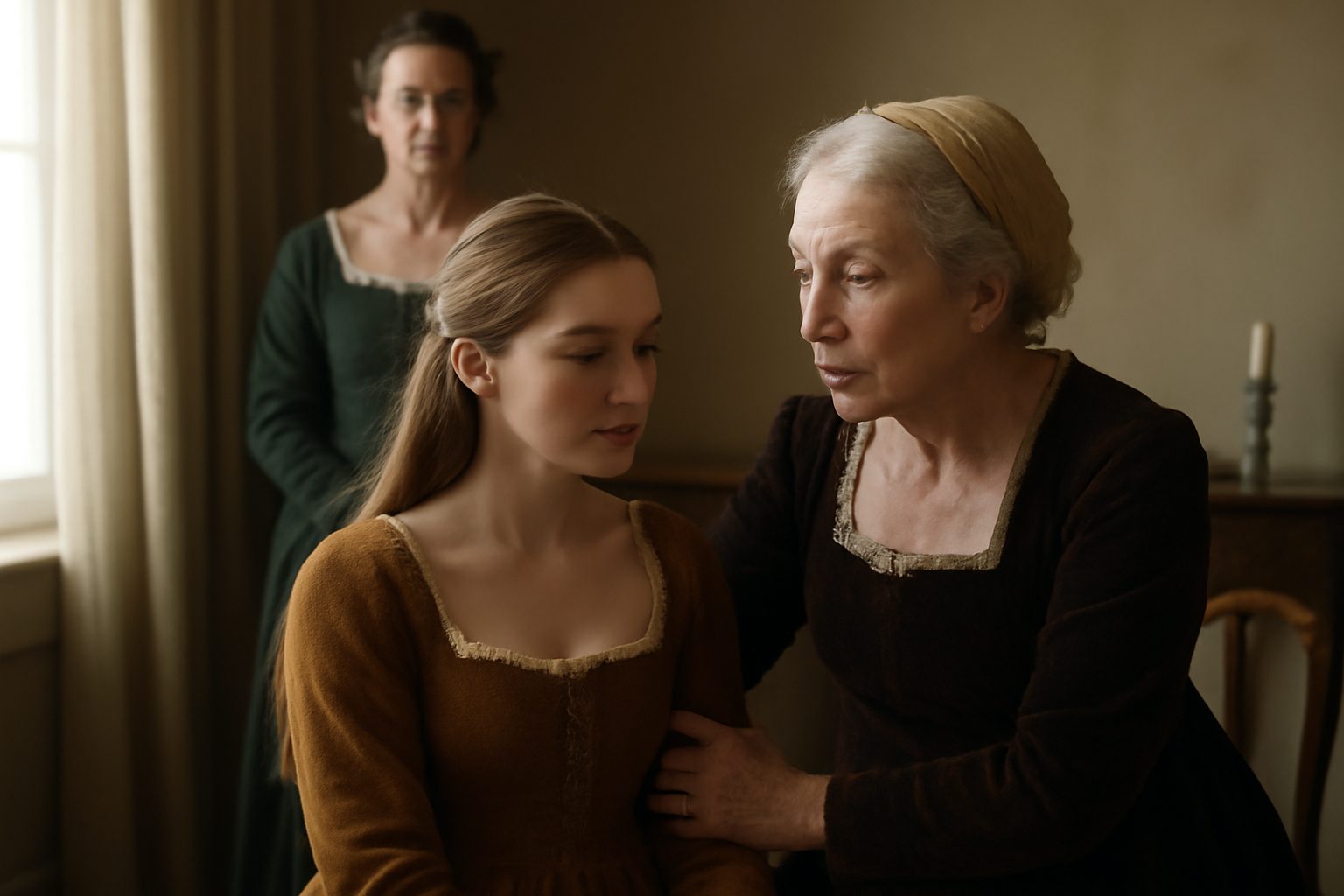
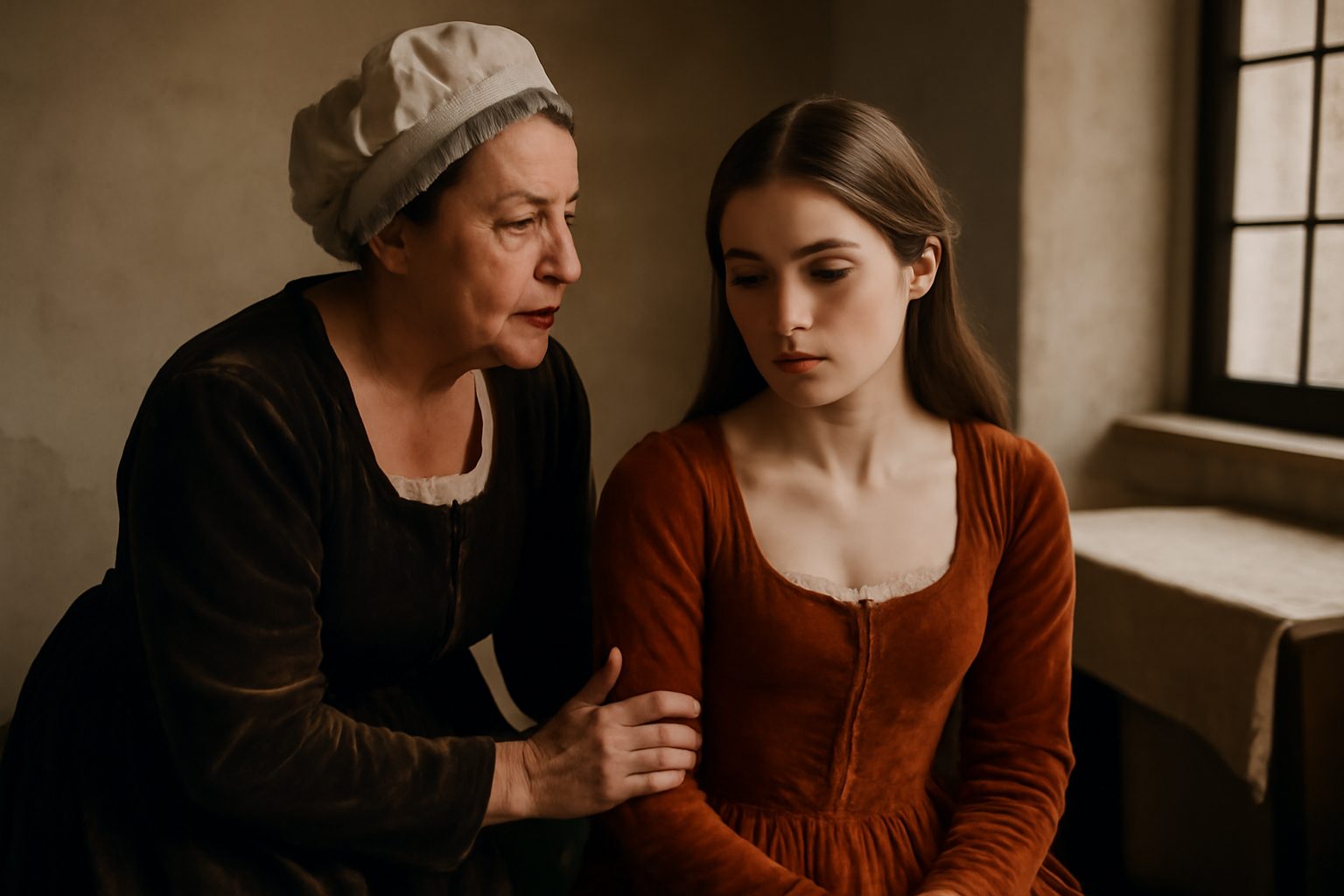
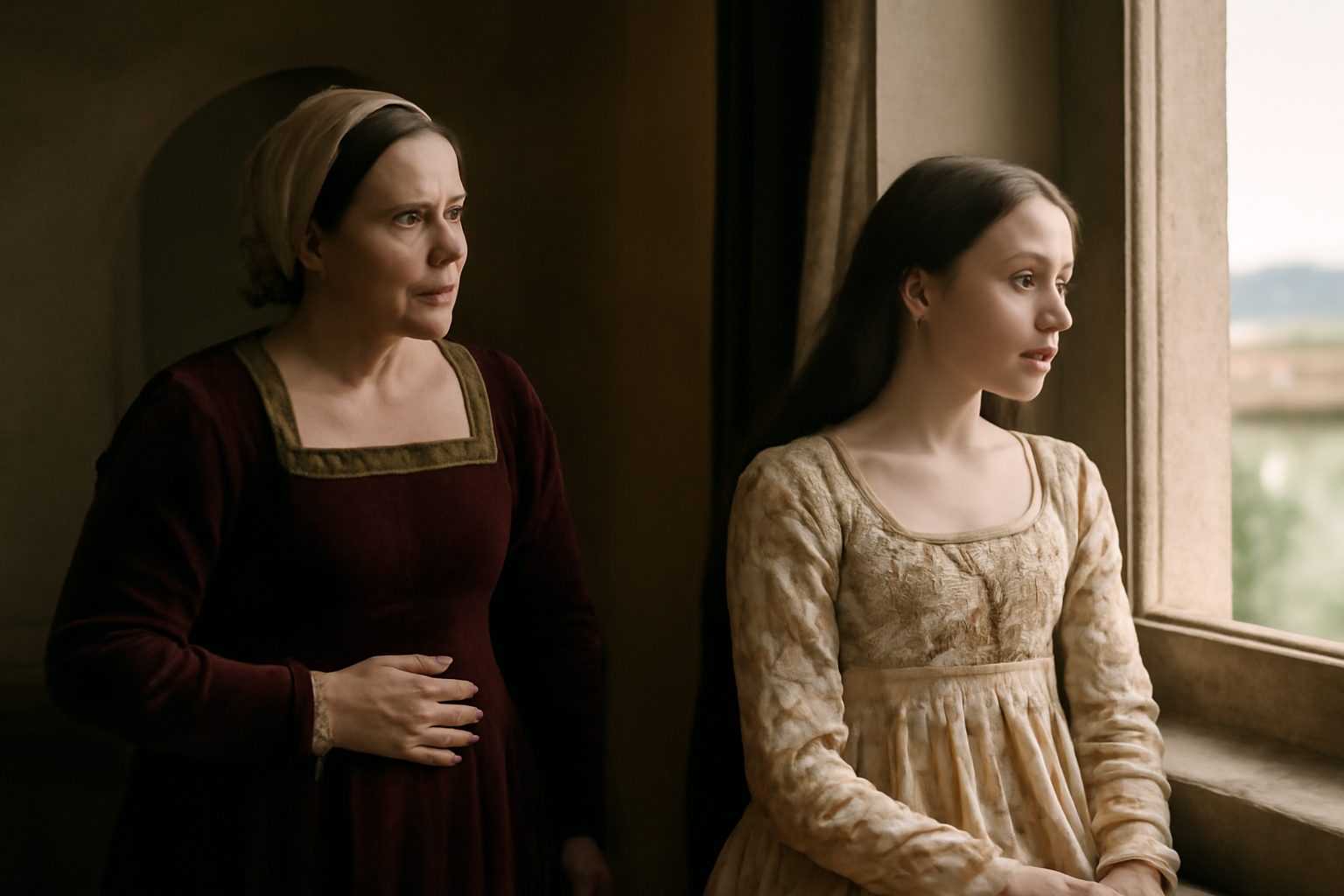
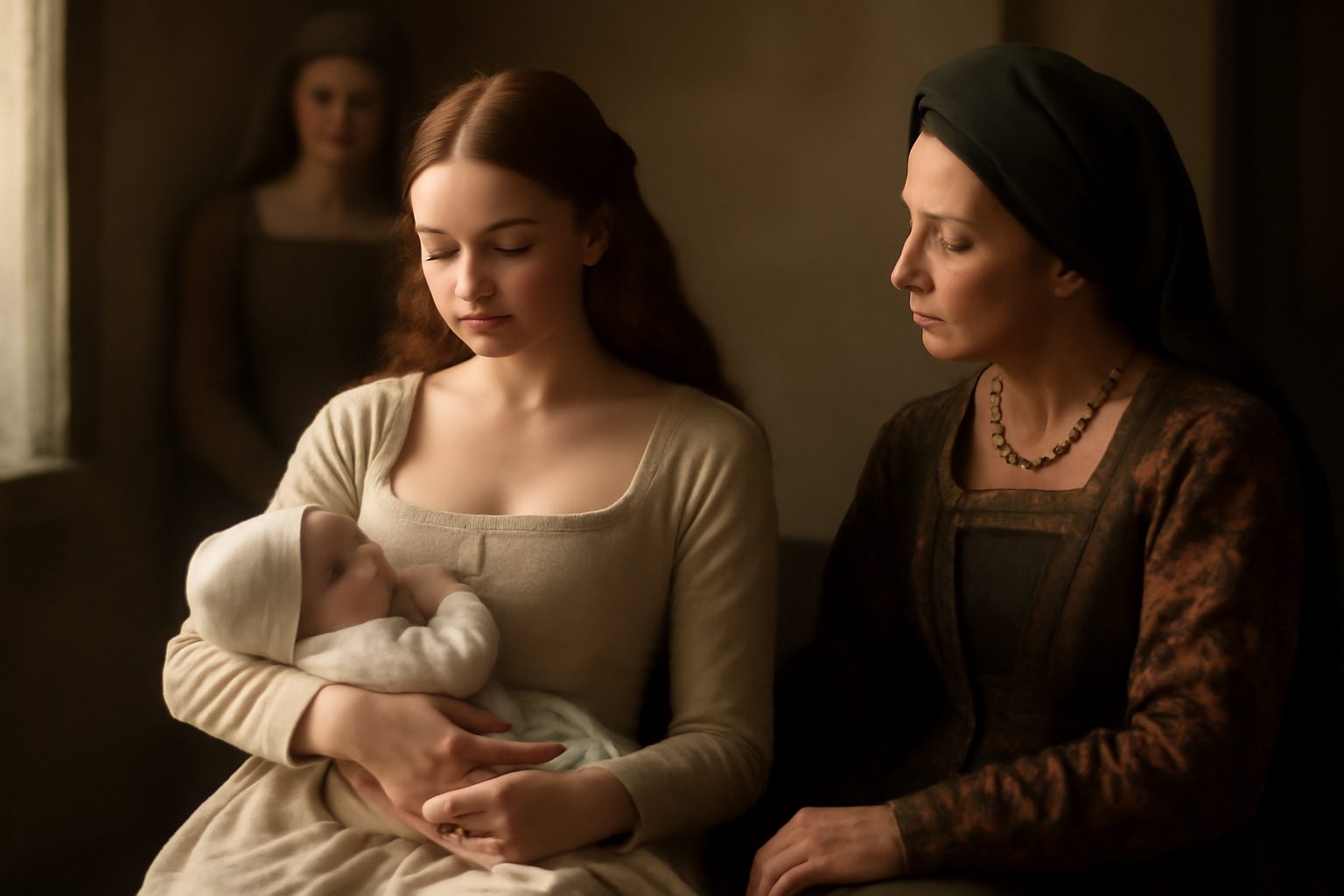
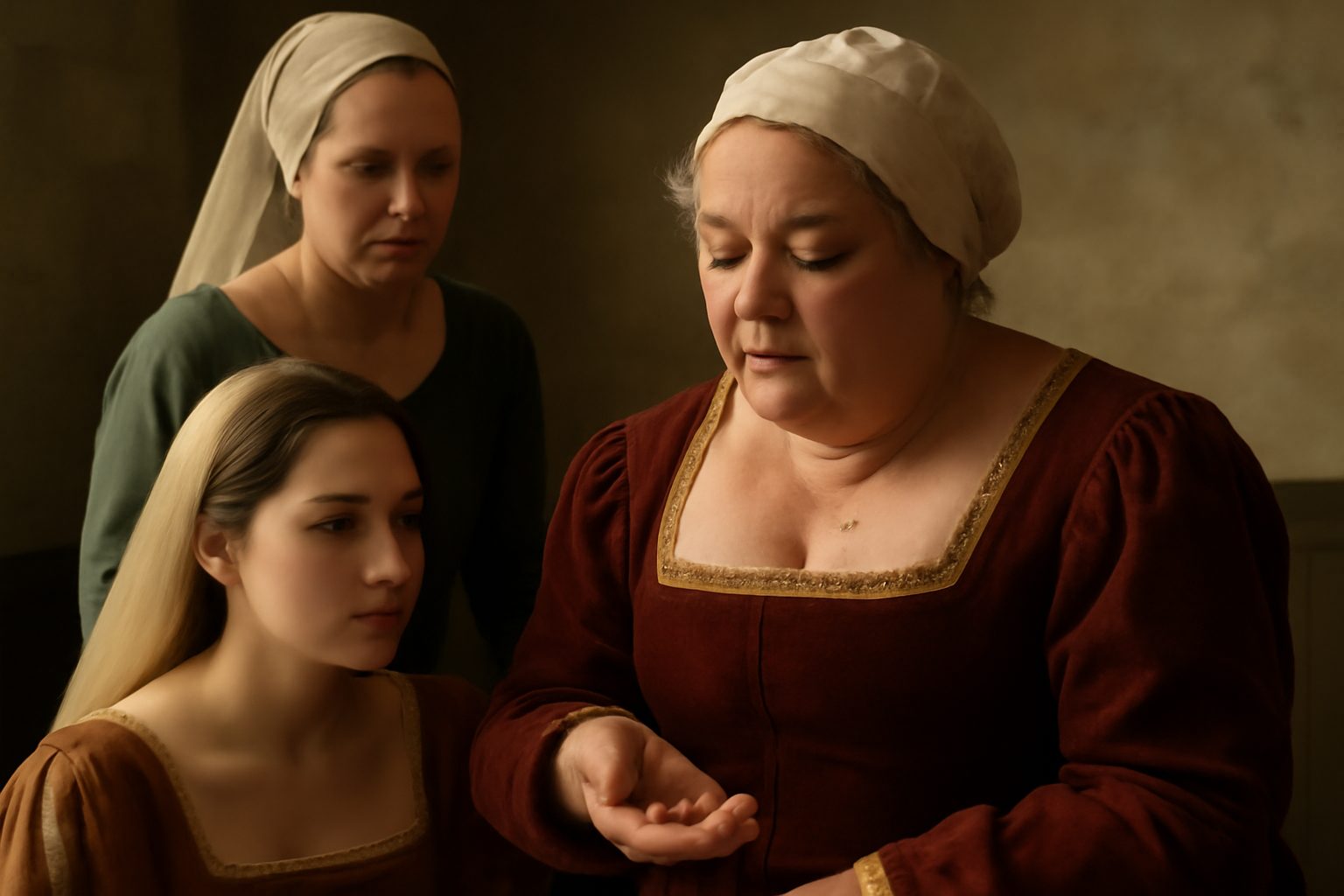
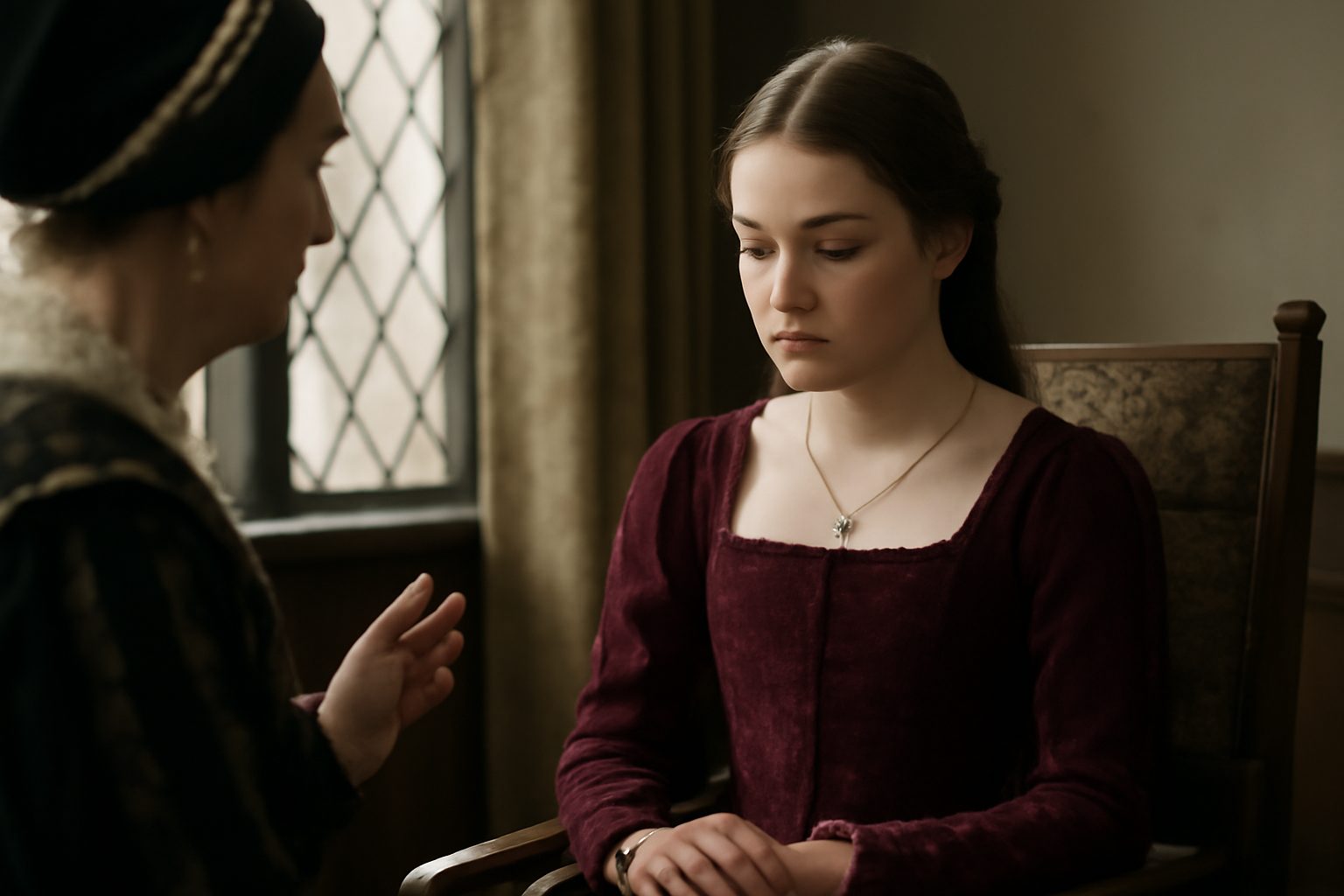
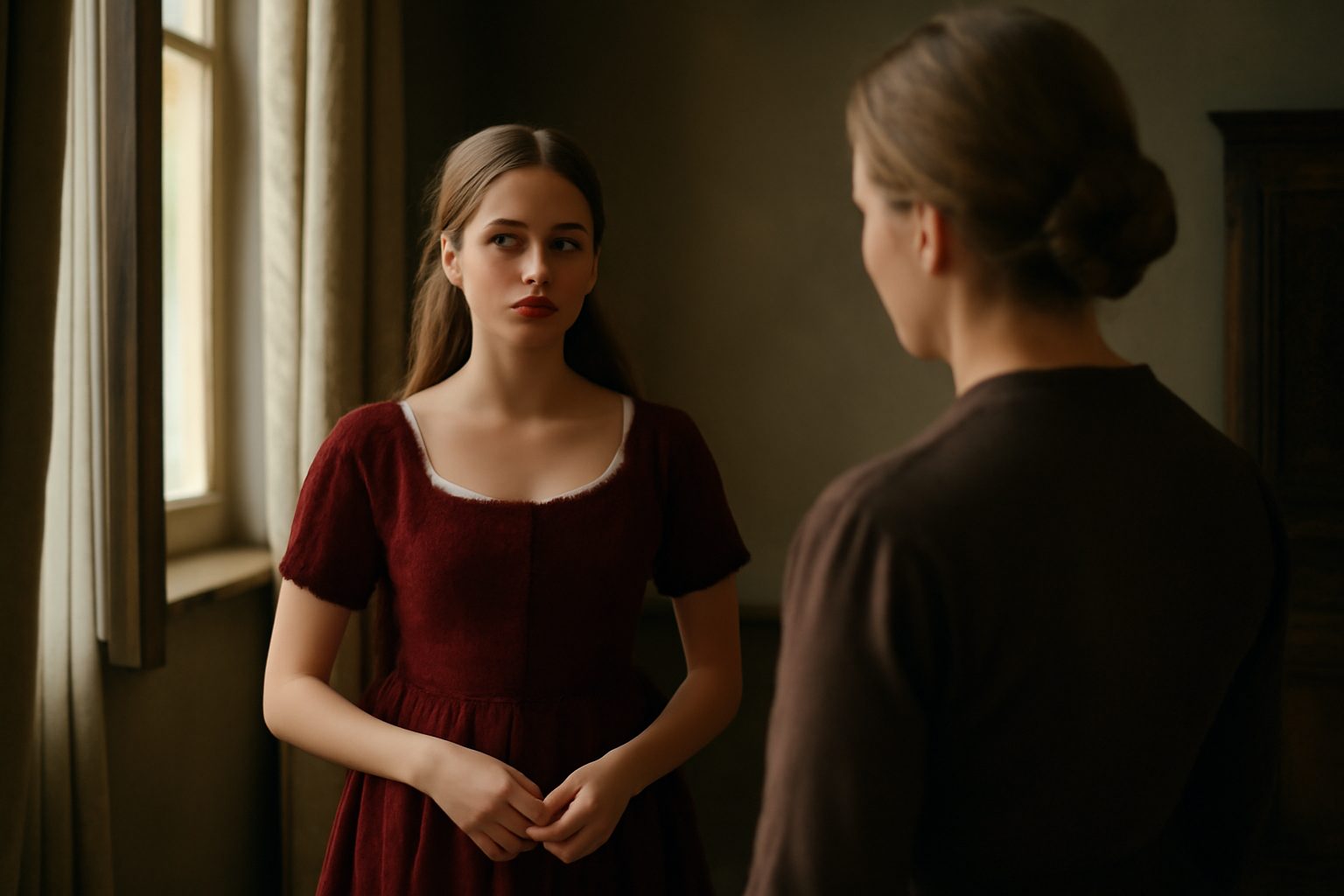
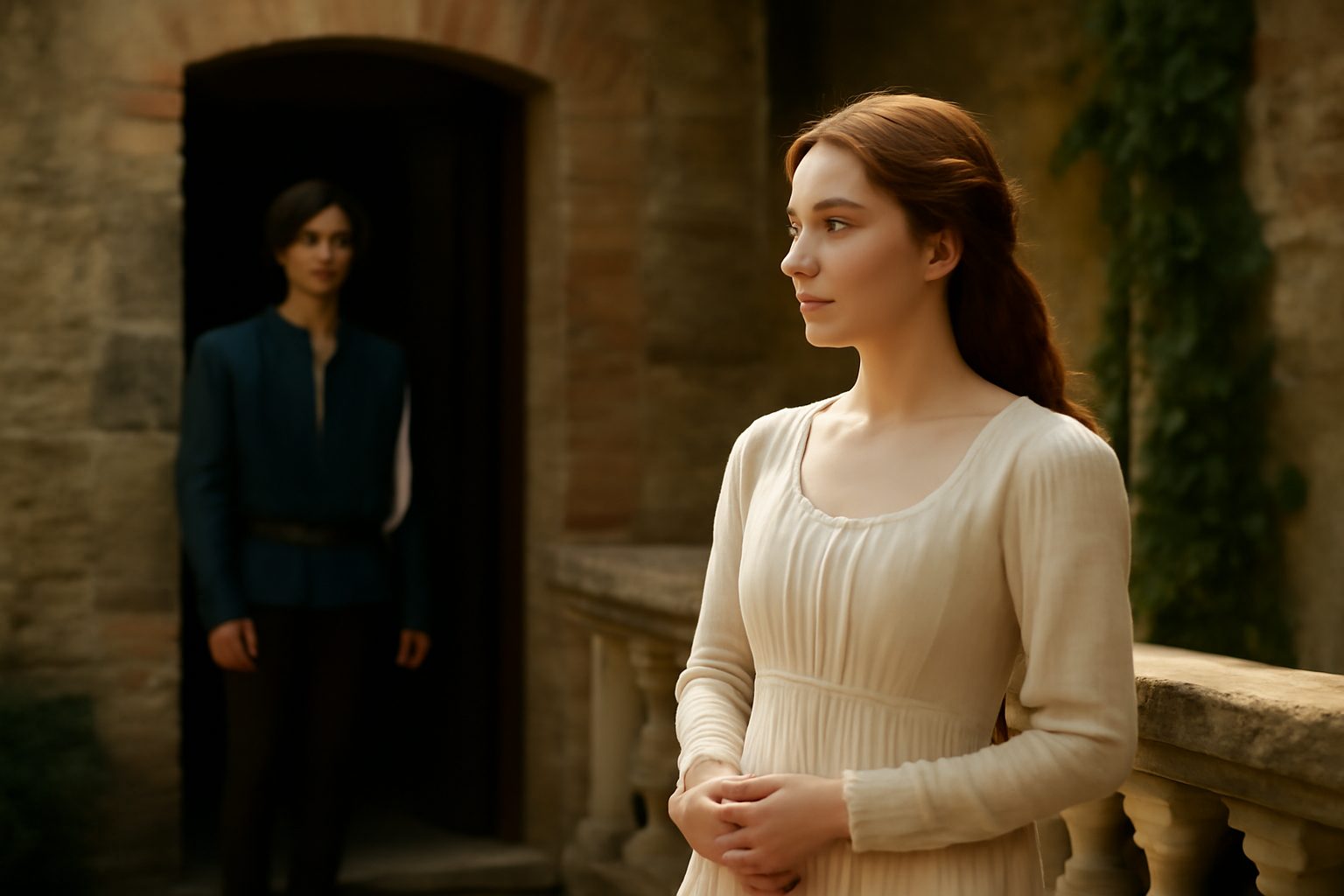
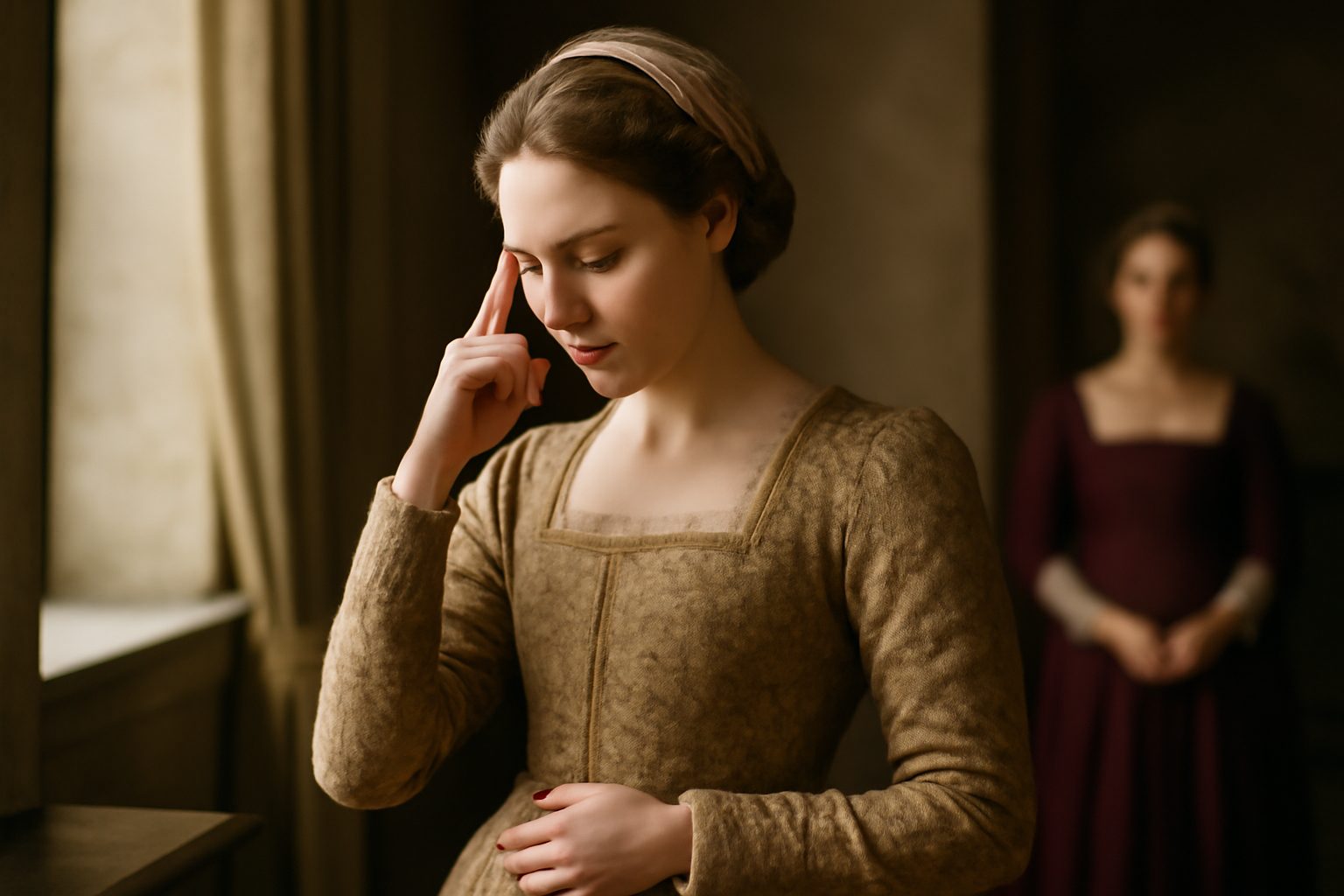
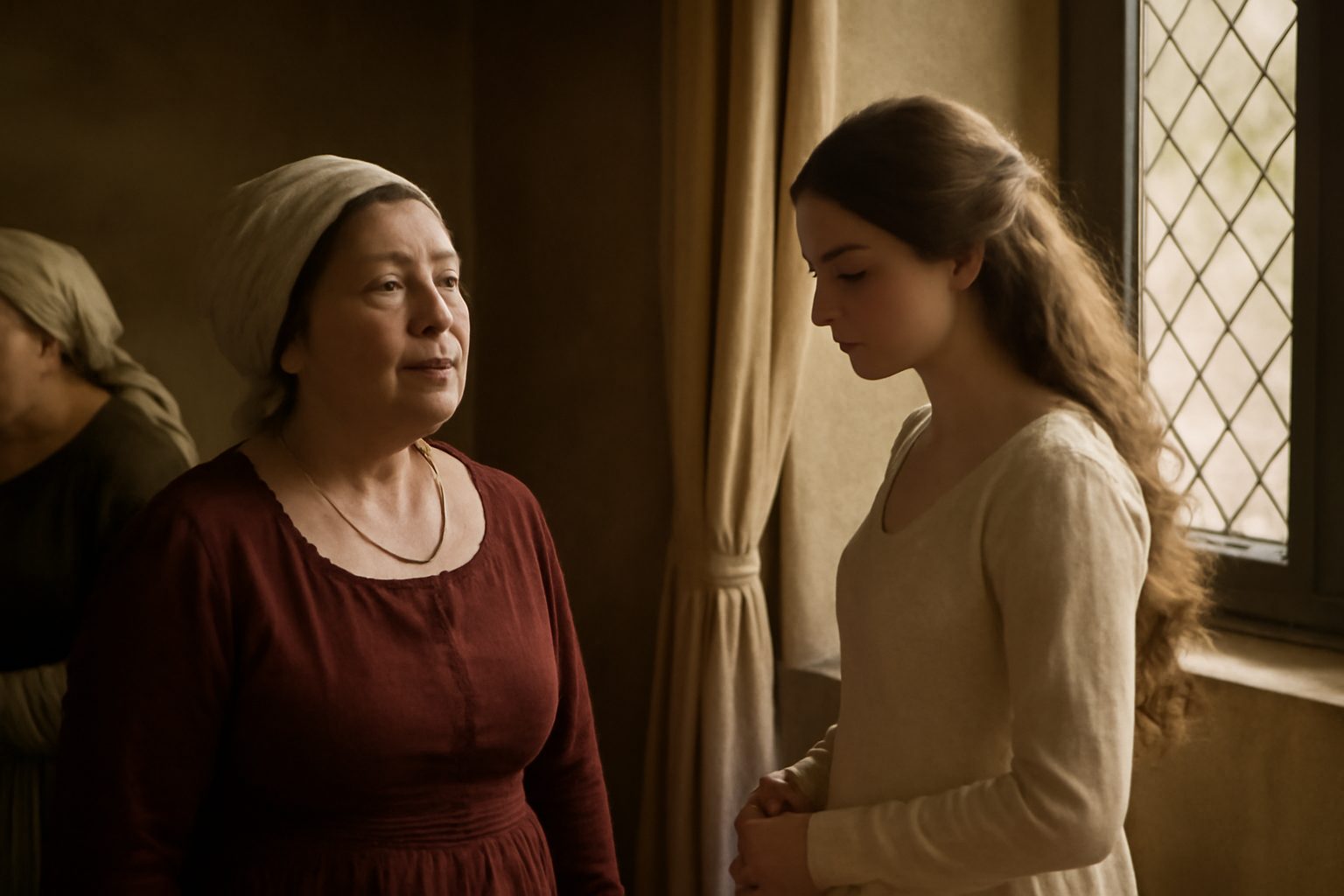
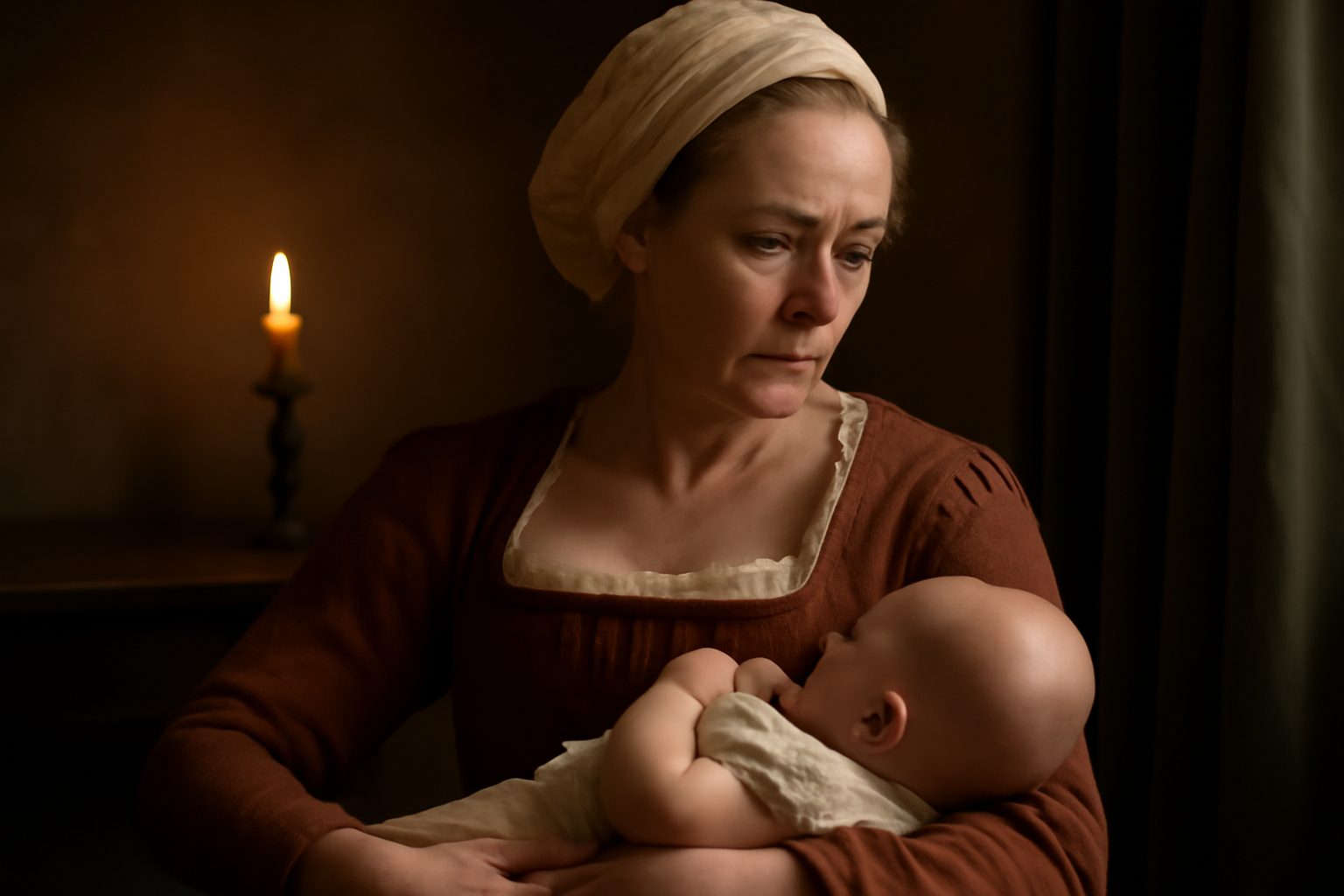
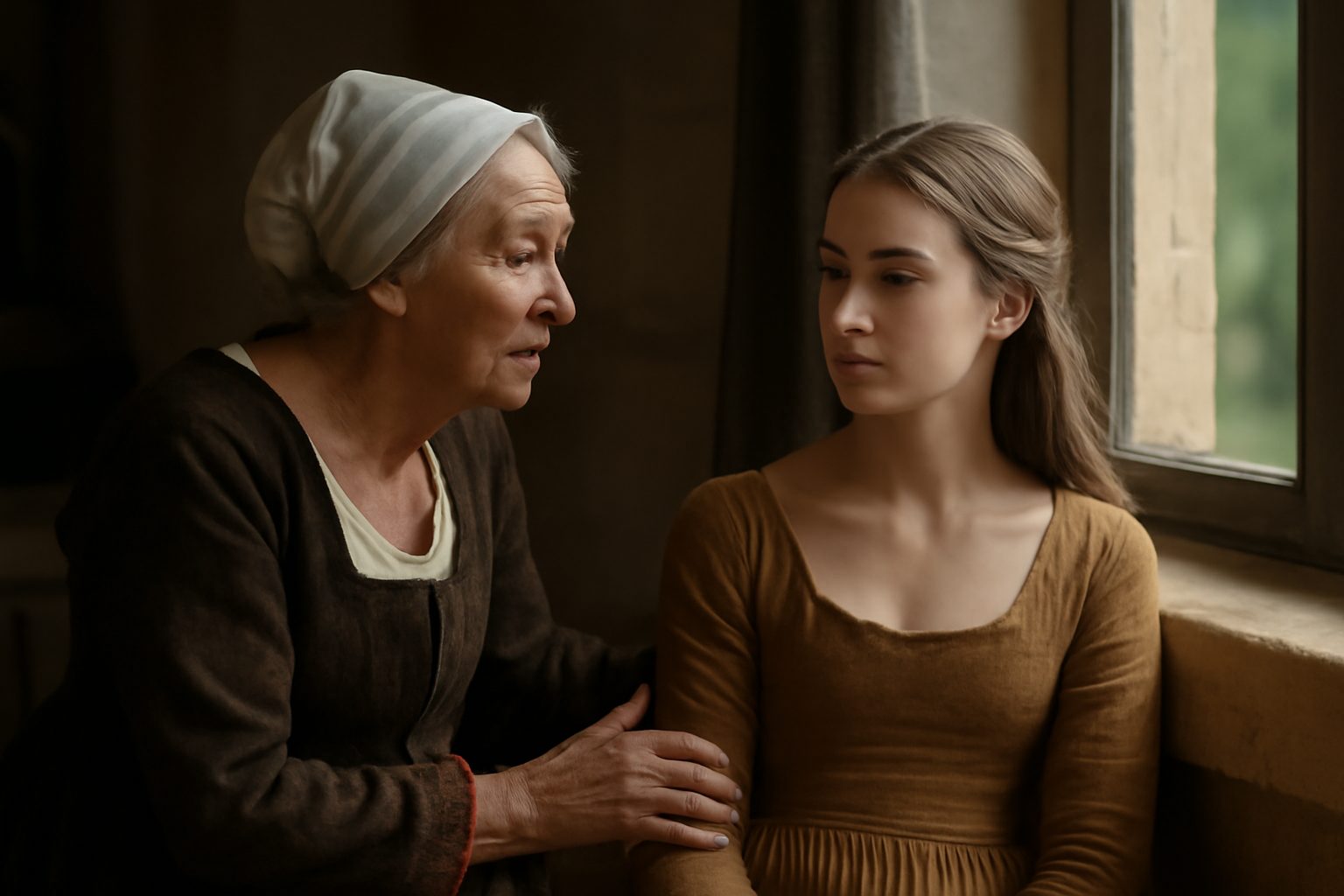
In Act 1, Scene 3 of Romeo and Juliet, Lady Capulet speaks to the Nurse about her daughter Juliet, who is nearing marriageable age. This line reflects the societal expectations of the time, where young women were often betrothed early. The conversation sets the stage for the arranged marriage discussions with Paris that follow.
Lady Capulet: "Thou know'st my daughter's of a pretty age."
In modern day english, we would say:
You know my daughter is at a good age to marry.
Frequently Asked Questions
What does Lady Capulet mean when she says her daughter is of a pretty age?
She means that Juliet is at a good age for marriage.
Connections to other verses:
Connections to "Thou know'st my daughter's of a pretty age"
Lady Capulet's statement about Juliet's age serves as a central point in Act 1, Scene 3, connecting to several other verses that elaborate on Juliet's youth, her readiness for marriage, and the Nurse's nostalgic recollections.
Juliet's Precise Age
The Nurse immediately affirms her precise knowledge of Juliet's age in Faith, I can tell her age unto an hour, emphasizing her intimate role in Juliet's upbringing. This is followed by her blunt declaration in She's not fourteen, which directly supports Lady Capulet's remark. The Nurse further specifies the timing in Come Lammas-eve at night shall she be fourteen, marking Juliet's impending birthday.
Nostalgic Recollections
The Nurse's memories provide context for Juliet's "pretty age," recalling her weaning in And she was wean'd,--I never shall forget it,-- and the earthquake eleven years prior in Tis since the earthquake now eleven years. These anecdotes ground Juliet's current age in a timeline of personal history, illustrating how she has reached a marriageable stage.
Marriage and Maturity
Lady Capulet's comment subtly introduces the theme of marriage, which is explicitly addressed in How stands your disposition to be married?. The Nurse's hopeful wish in An I might live to see thee married once ties Juliet's "pretty age" to societal expectations, while Juliet's modest response in It is an honour that I dream not of contrasts with the urgency implied by her mother's observation.
Physical Development
The Nurse's anecdote about Juliet falling backward in Thou wilt fall backward when thou hast more wit humorously alludes to her physical maturation, complementing Lady Capulet's focus on her age. This connection highlights the interplay between Juliet's youth and her emerging adulthood.