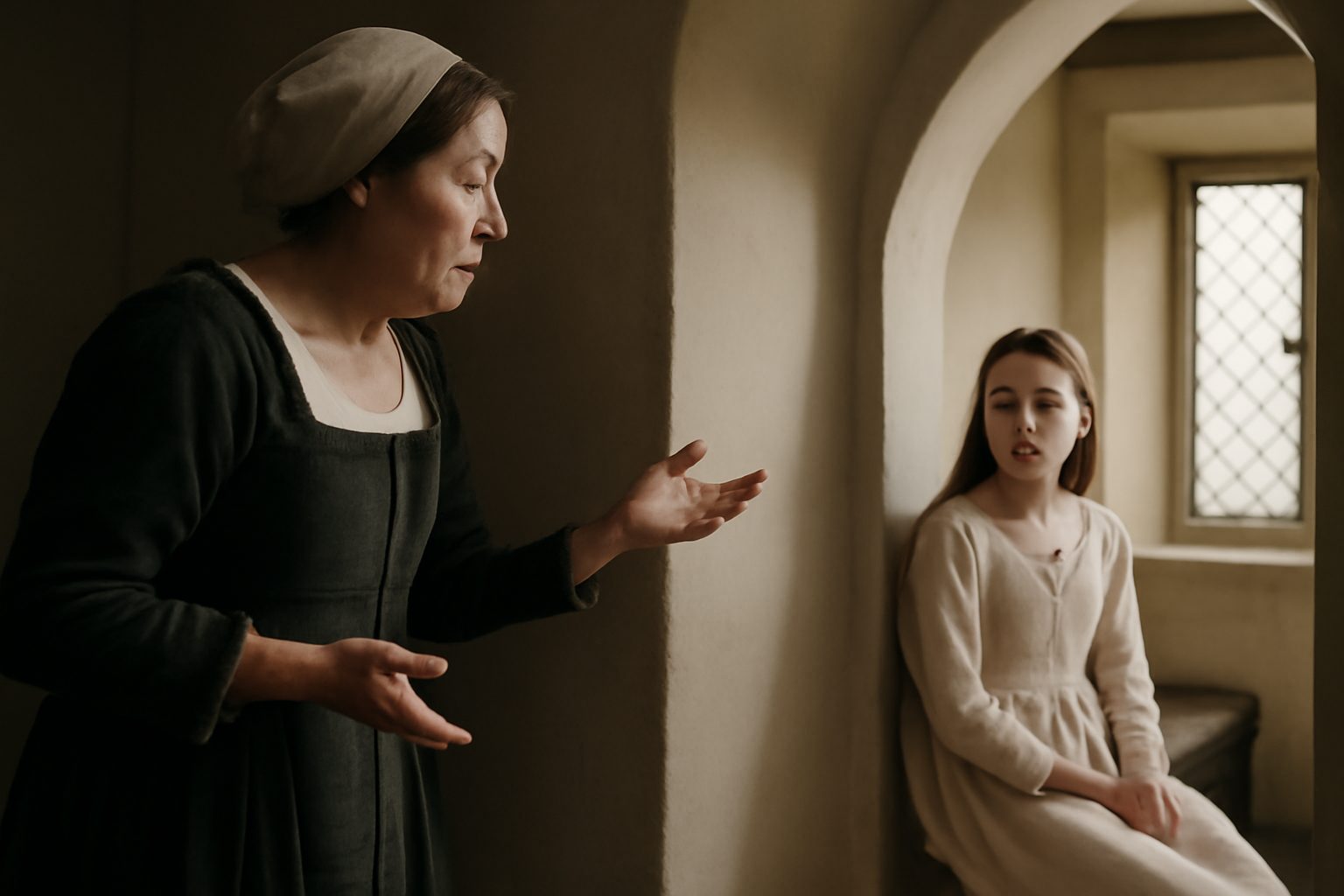
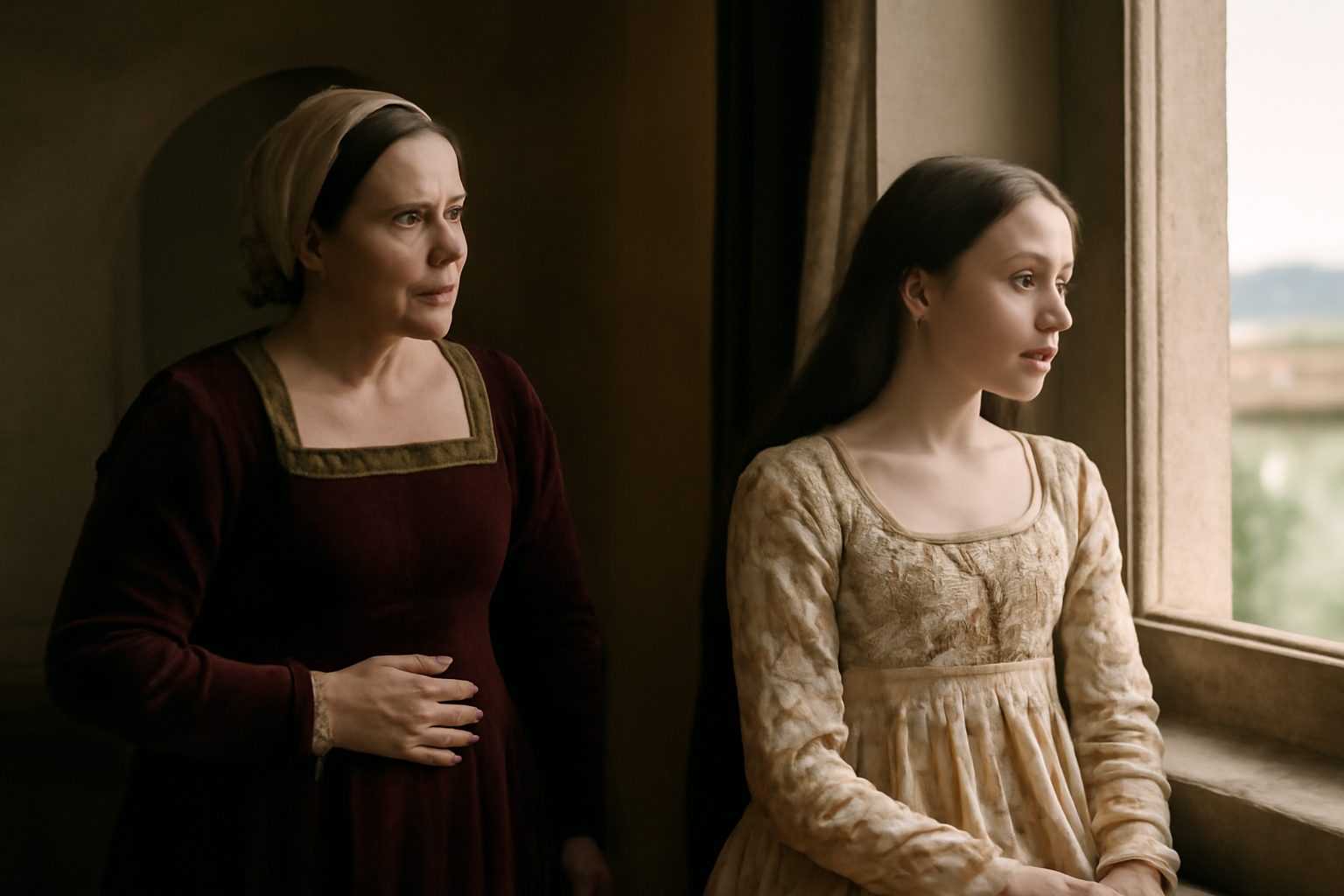
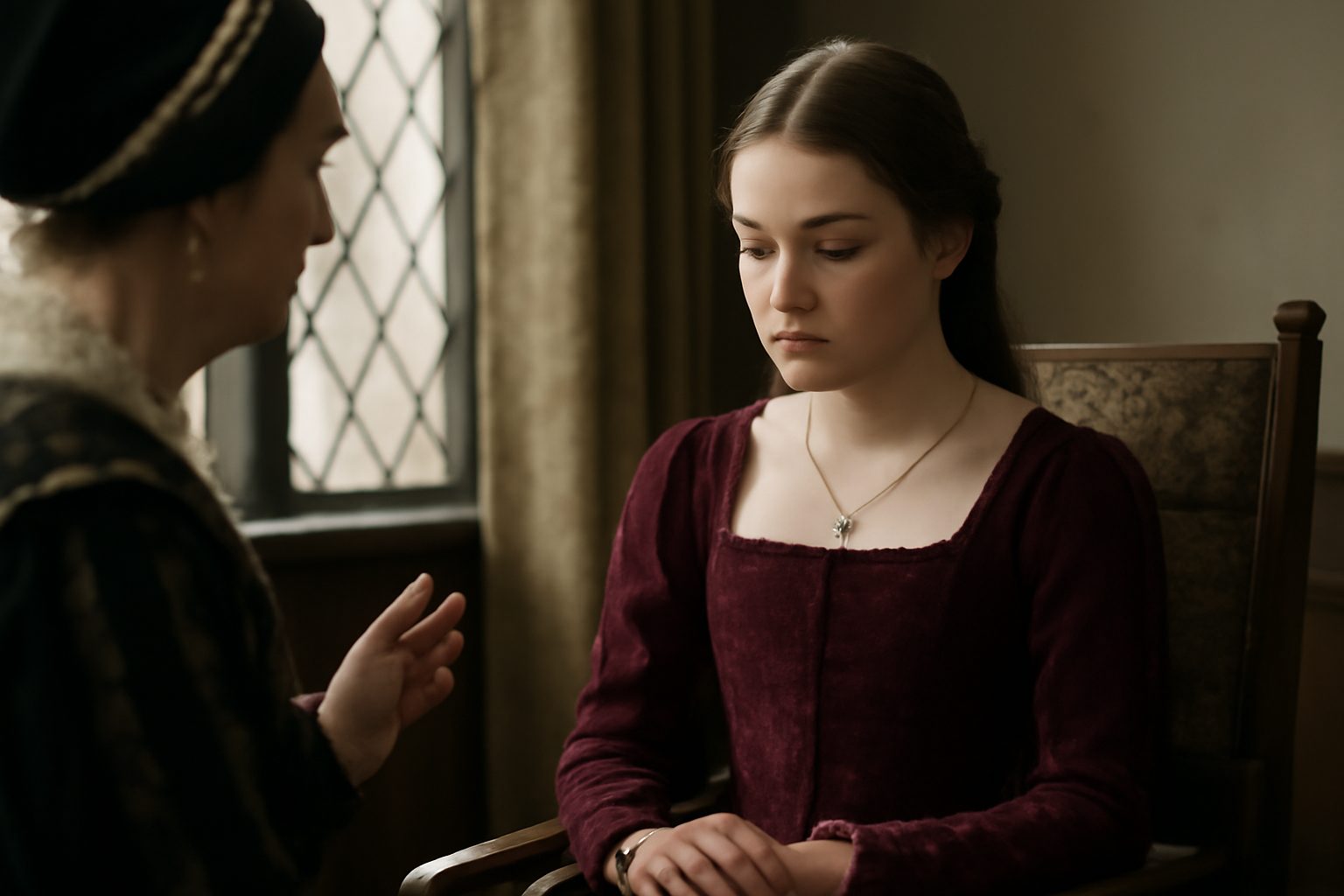
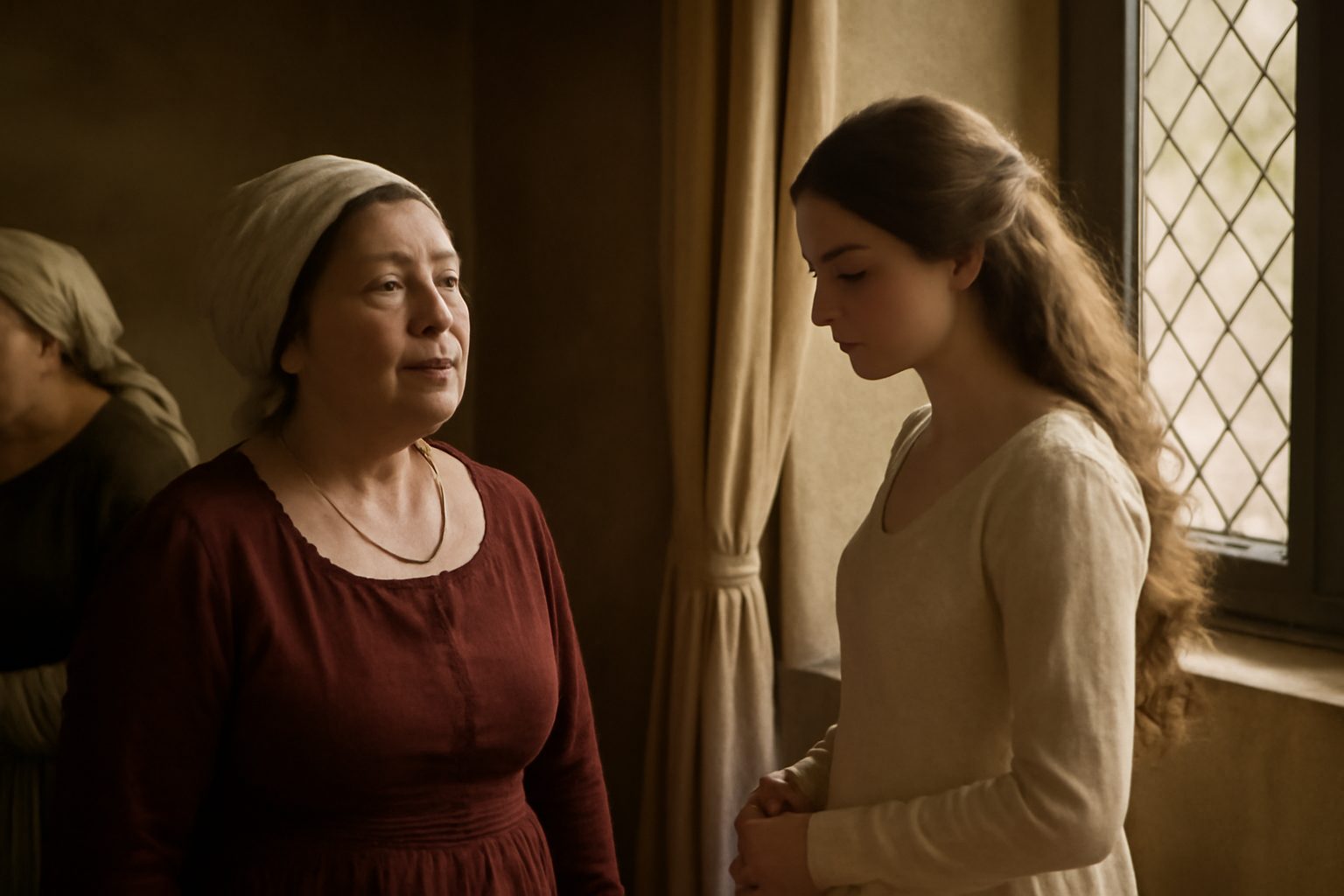
In Act 1, Scene 3 of Romeo and Juliet, the Nurse recounts a humorous yet poignant memory from Juliet's infancy. She describes how the young Juliet, while weaning, reacted to the bitter taste of wormwood applied to the nurse's breast. This moment reveals the Nurse's affectionate, earthy character and her long-standing bond with Juliet.
Nurse: "When it did taste the wormwood on the nipple"
In modern day english, we would say:
When it tasted the bitterness on the breast.
Frequently Asked Questions
What does the nurse mean when she talks about wormwood on the nipple?
She is referring to a bitter taste that the baby Juliet experienced when nursing, symbolizing hardship early in life.
Connections to other verses:
Connections to "When it did taste the wormwood on the nipple"
The verse "When it did taste the wormwood on the nipple" is part of the Nurse's extended recollection of Juliet's infancy, which serves to characterize both the Nurse's earthy, anecdotal personality and Juliet's early life. This specific line connects thematically and narratively to several other verses in the scene.
Direct Context and Weaning References
The wormwood reference is immediately preceded by "For I had then laid wormwood to my dug", explaining the Nurse's action to wean Juliet. This is followed by "Of my dug and felt it bitter, pretty fool", which describes Juliet's reaction to the bitter taste. The entire weaning episode begins with "And she was wean'd,--I never shall forget it,--", setting up this memorable moment.
Juliet's Early Development
The Nurse's memories continue with Juliet's physical milestones, such as "For then she could stand alone; nay, by the rood" and "She could have run and waddled all about", showing her growth shortly after weaning. These details ground the wormwood incident in a timeline of Juliet's childhood.
Comic and Bawdy Undertones
The Nurse's anecdote takes a humorous turn with "Yea,' quoth he, 'dost thou fall upon thy face?" and "Yea,' quoth my husband,'fall'st upon thy face?", where the Nurse's husband makes a bawdy joke about Juliet falling backward. This connects to the earlier weaning story as part of the Nurse's fond, ribald reminiscences.
Juliet's Age and the Passage of Time
The Nurse frequently references Juliet's age, such as in "Come Lammas-eve at night shall she be fourteen" and "On Lammas-eve at night shall she be fourteen", contrasting Juliet's infancy with her current near-marriageable age. The wormwood story is part of establishing how long the Nurse has cared for Juliet.
Transition to Present Concerns
This nostalgic speech eventually gives way to Lady Capulet's interruption in "Enough of this; I pray thee, hold thy peace", shifting focus to Juliet's potential marriage to Paris. The wormwood anecdote, while humorous, also subtly highlights the Nurse's deep emotional investment in Juliet, which becomes crucial later in the play.