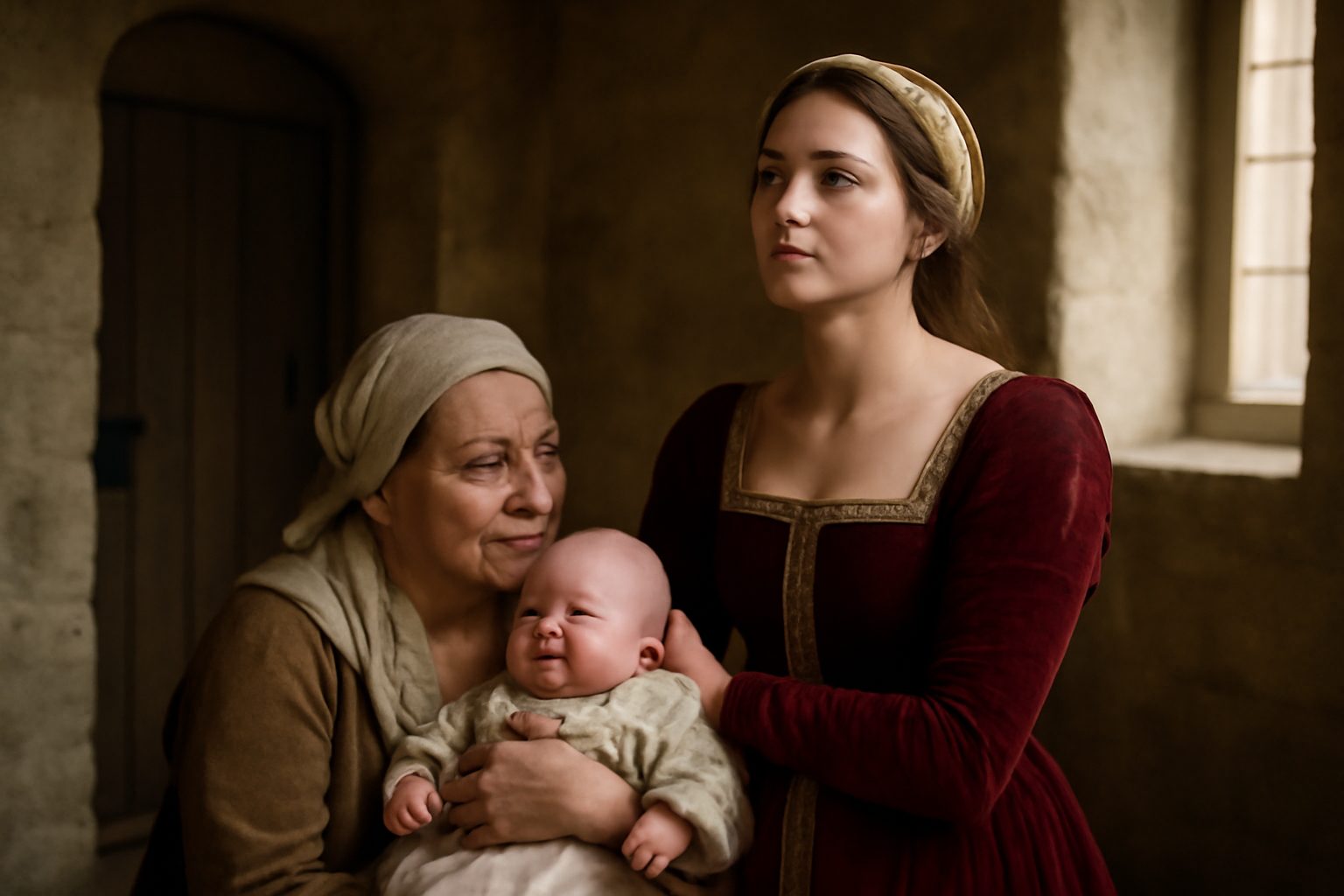
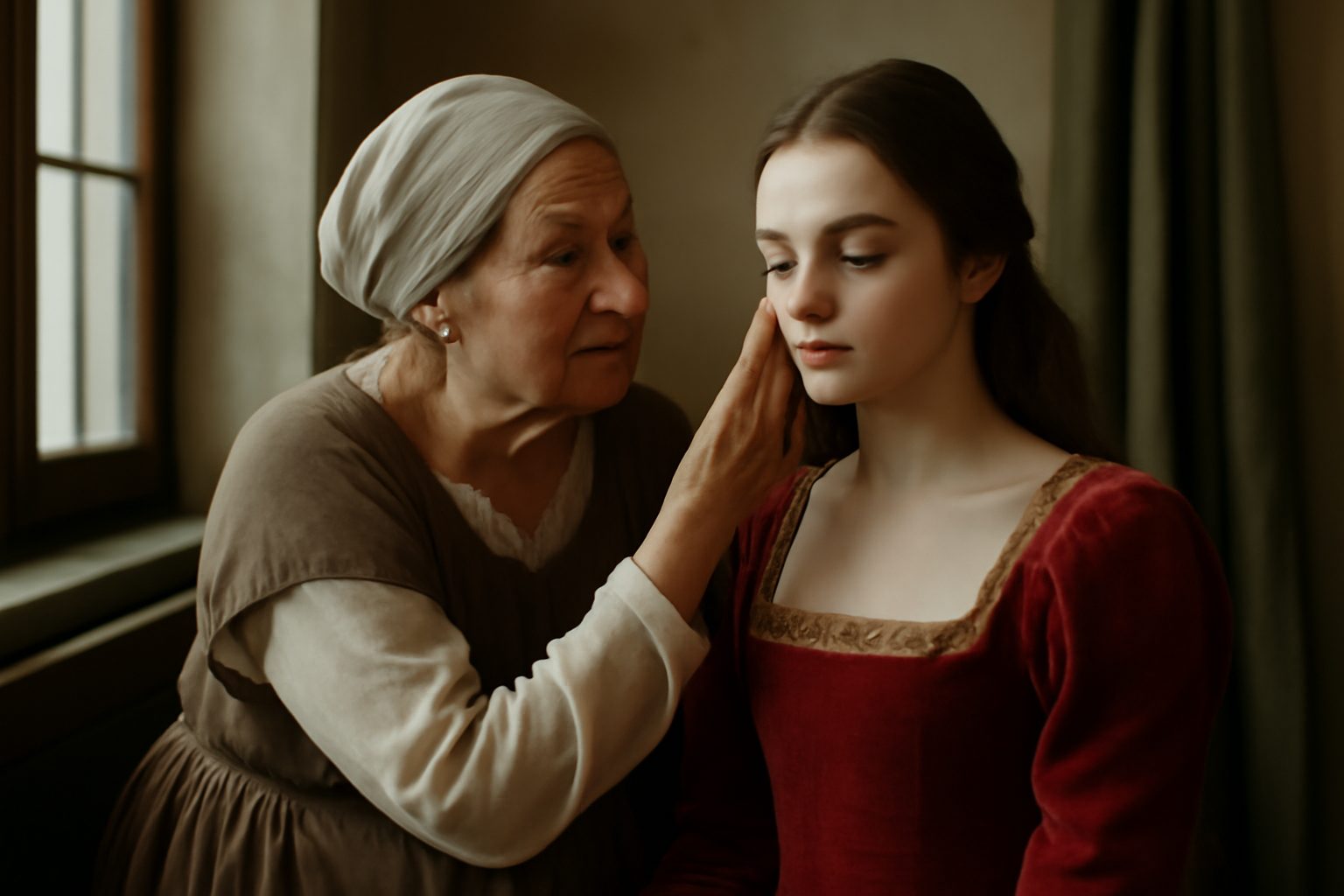
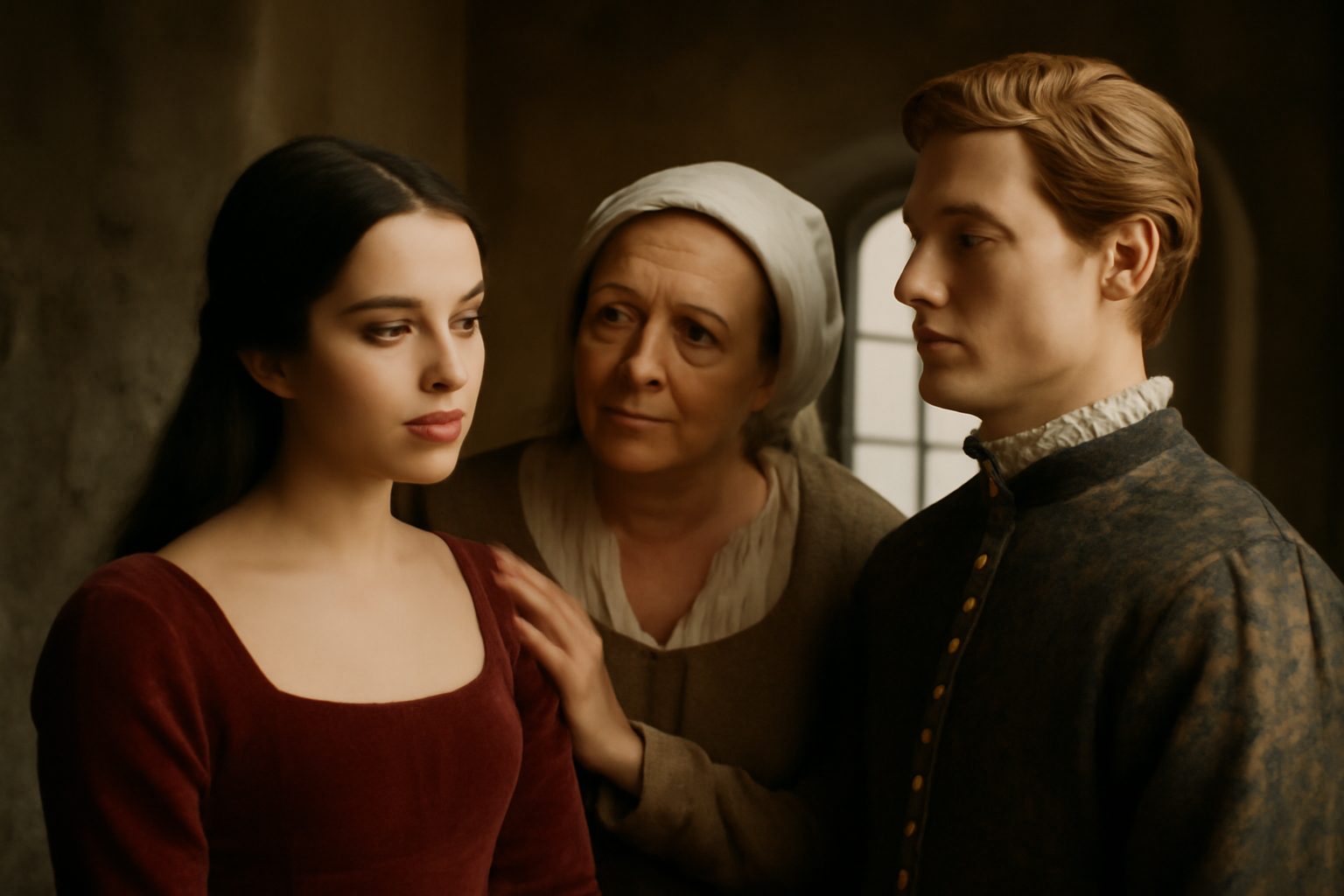
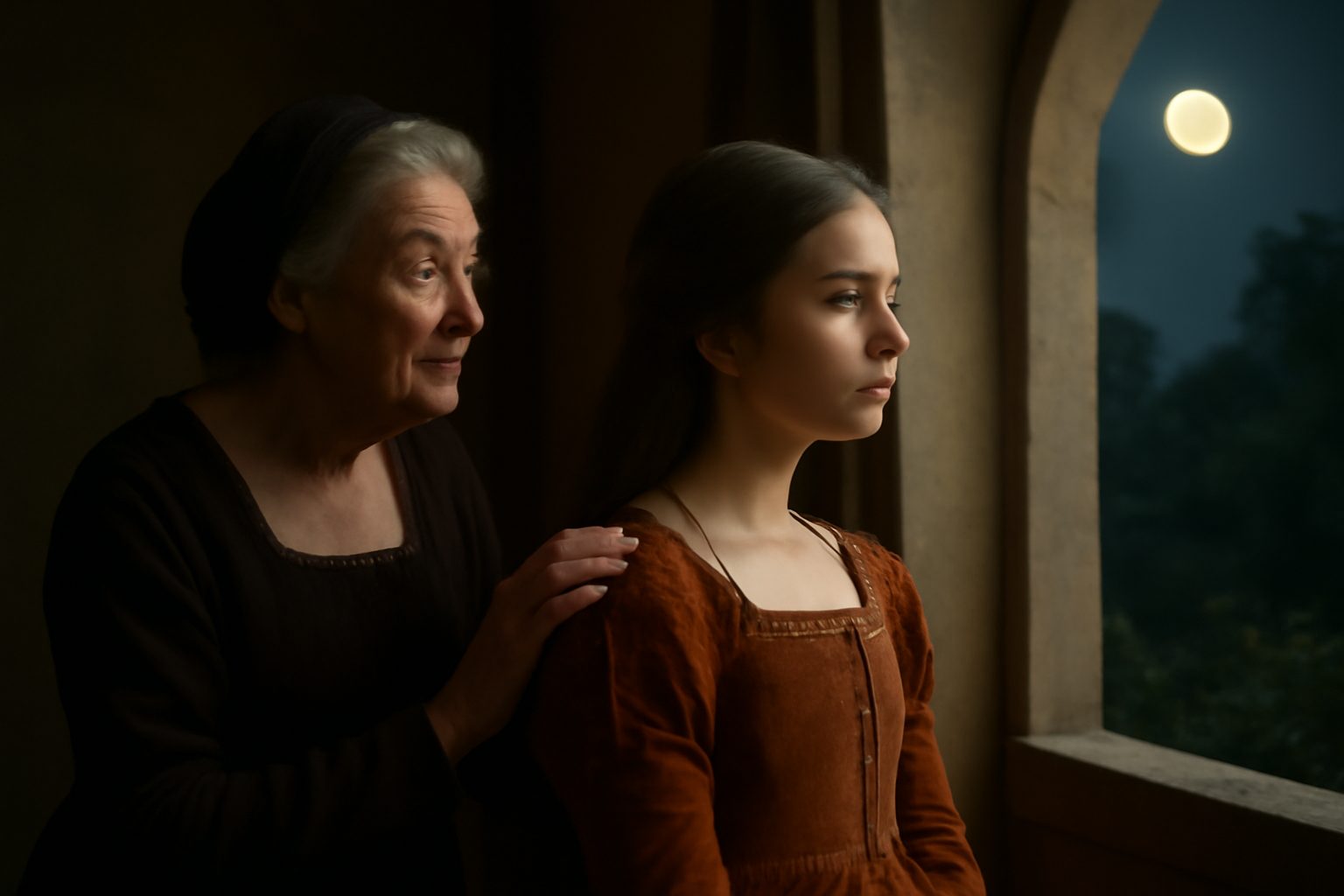
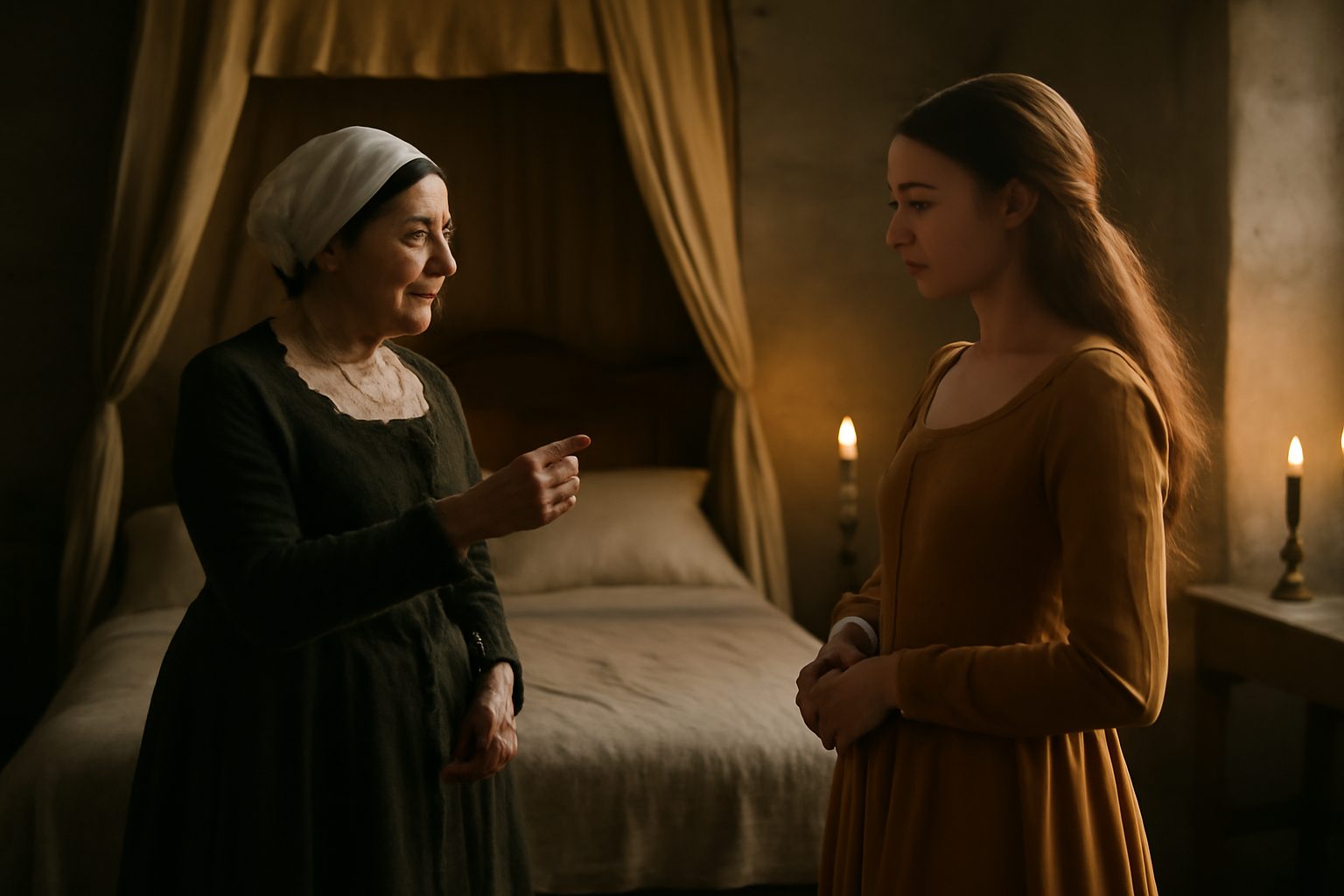
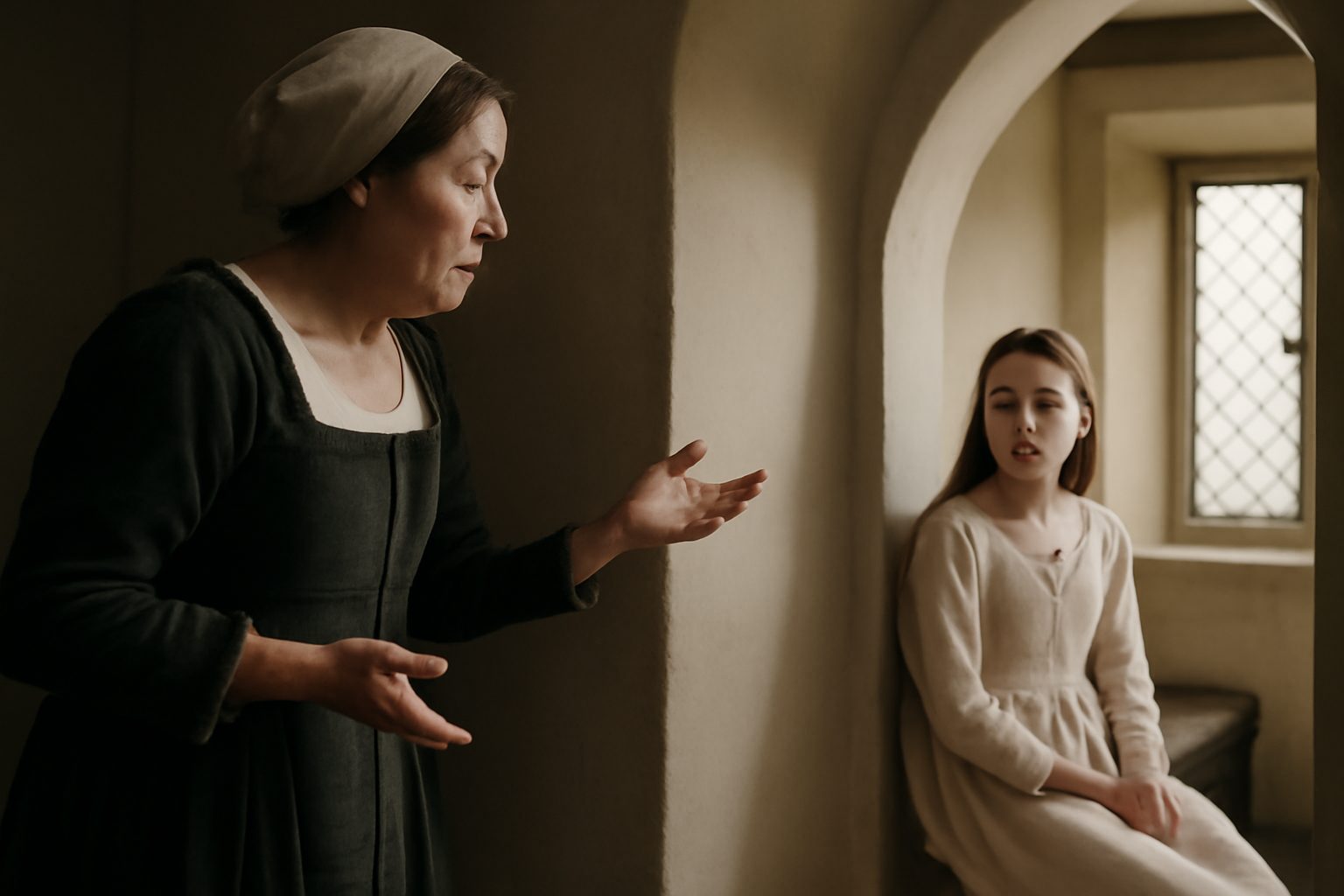
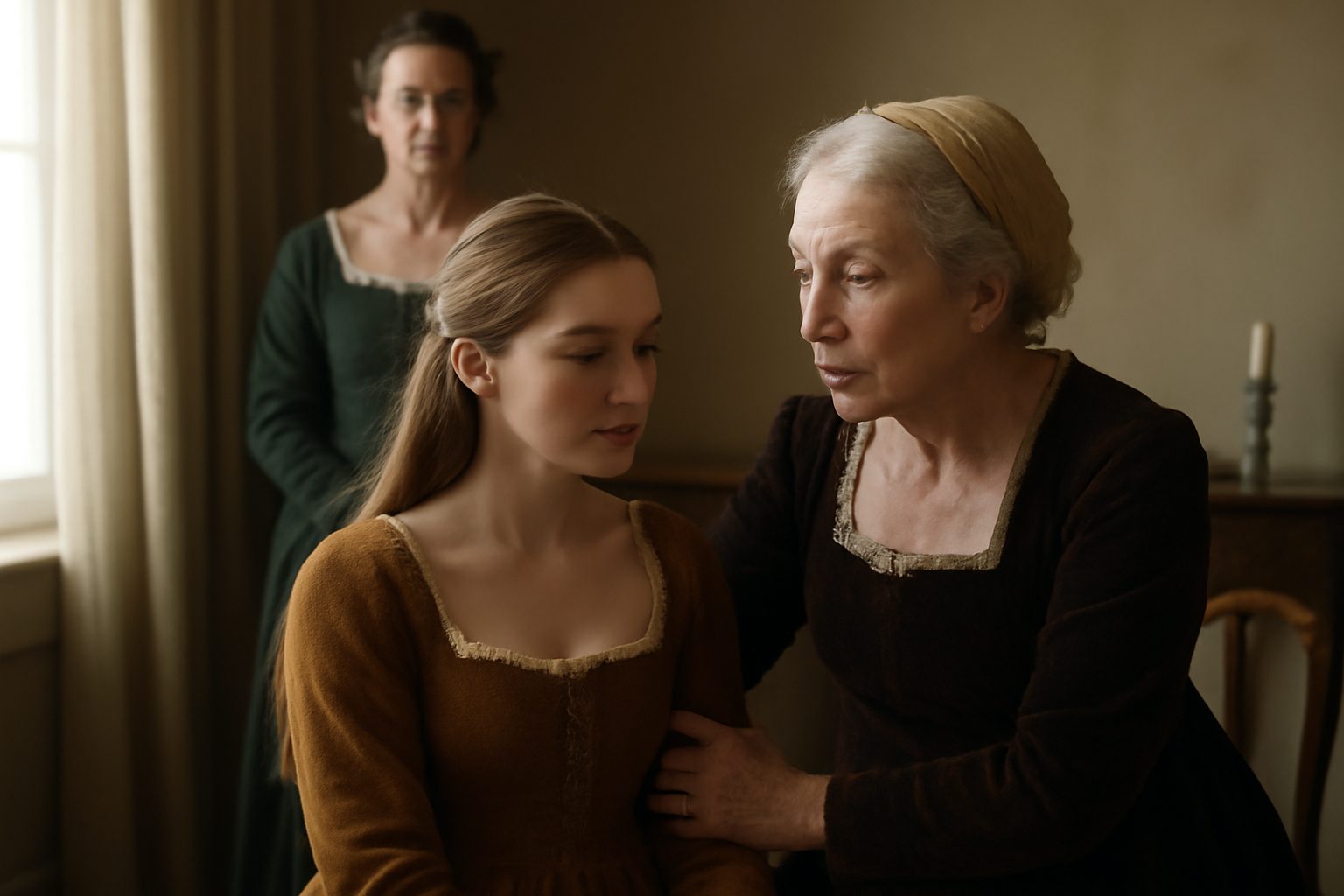
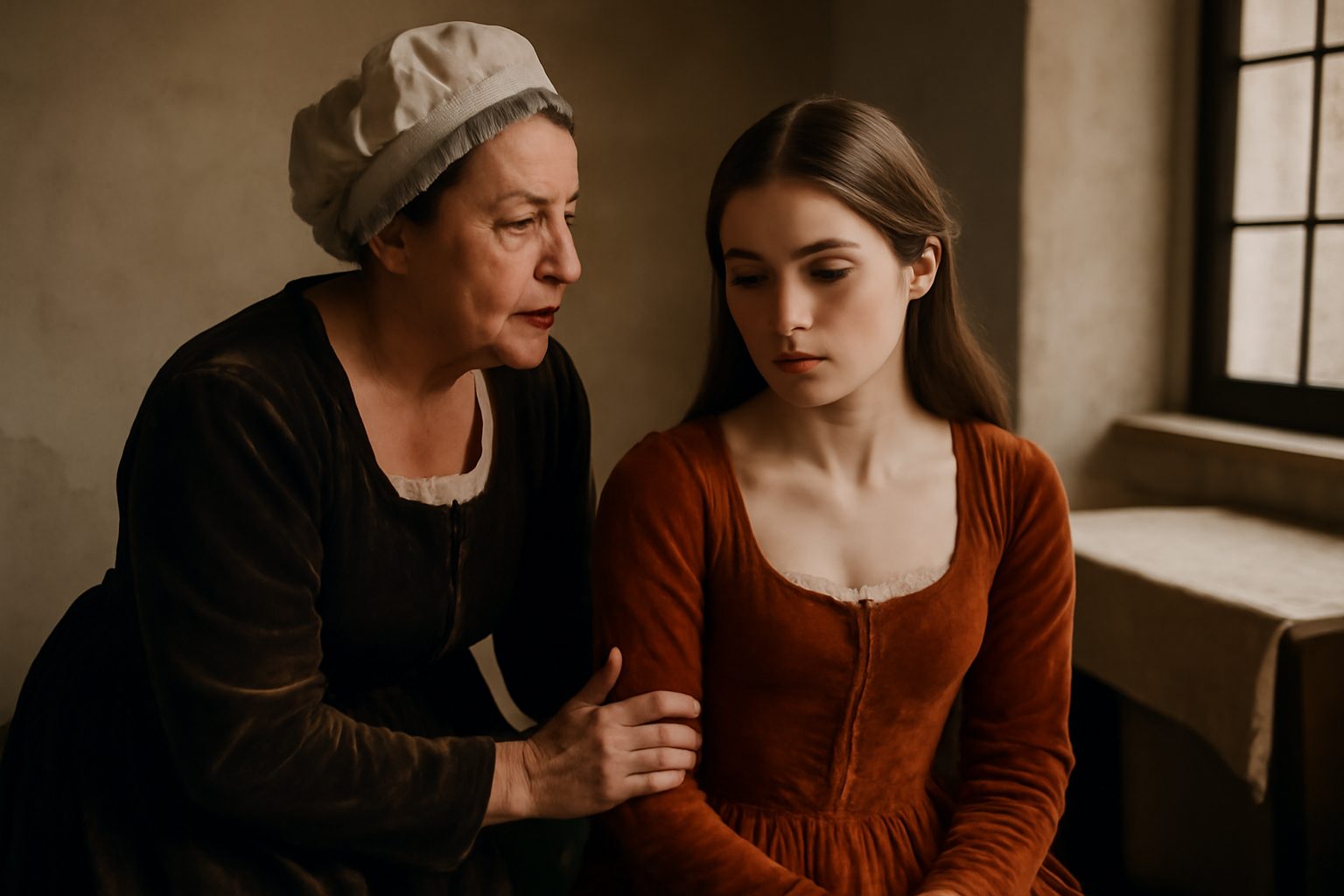
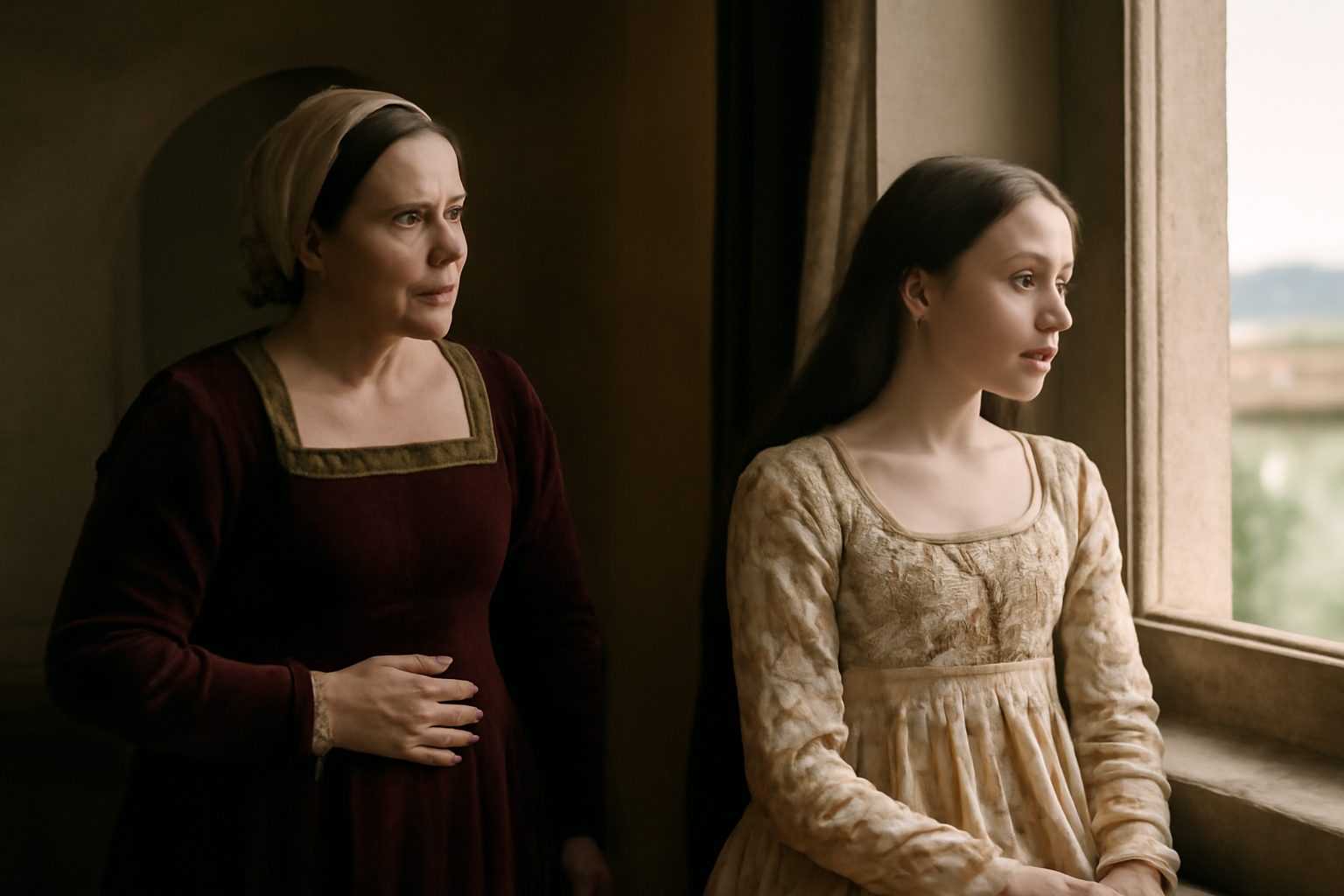
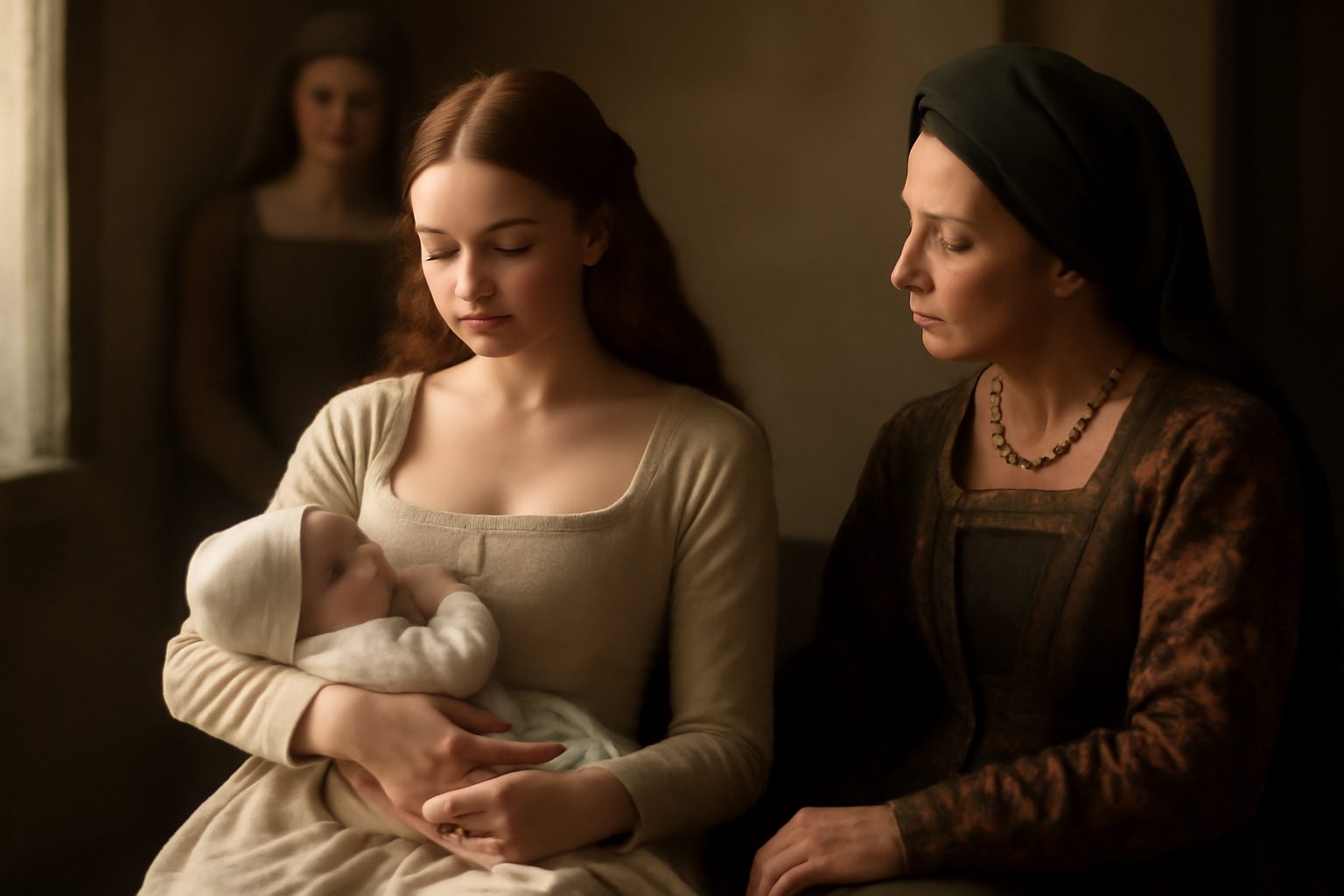
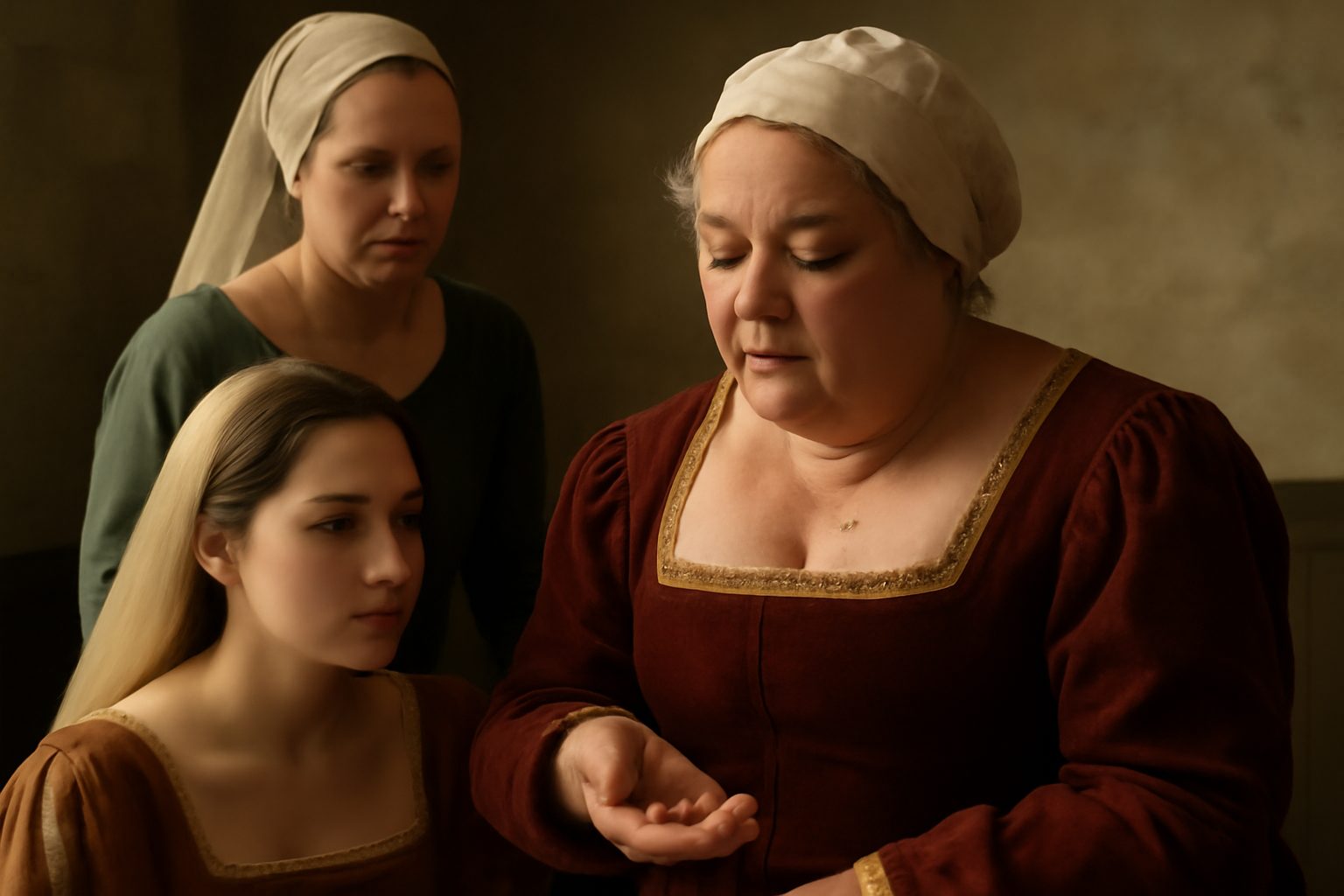
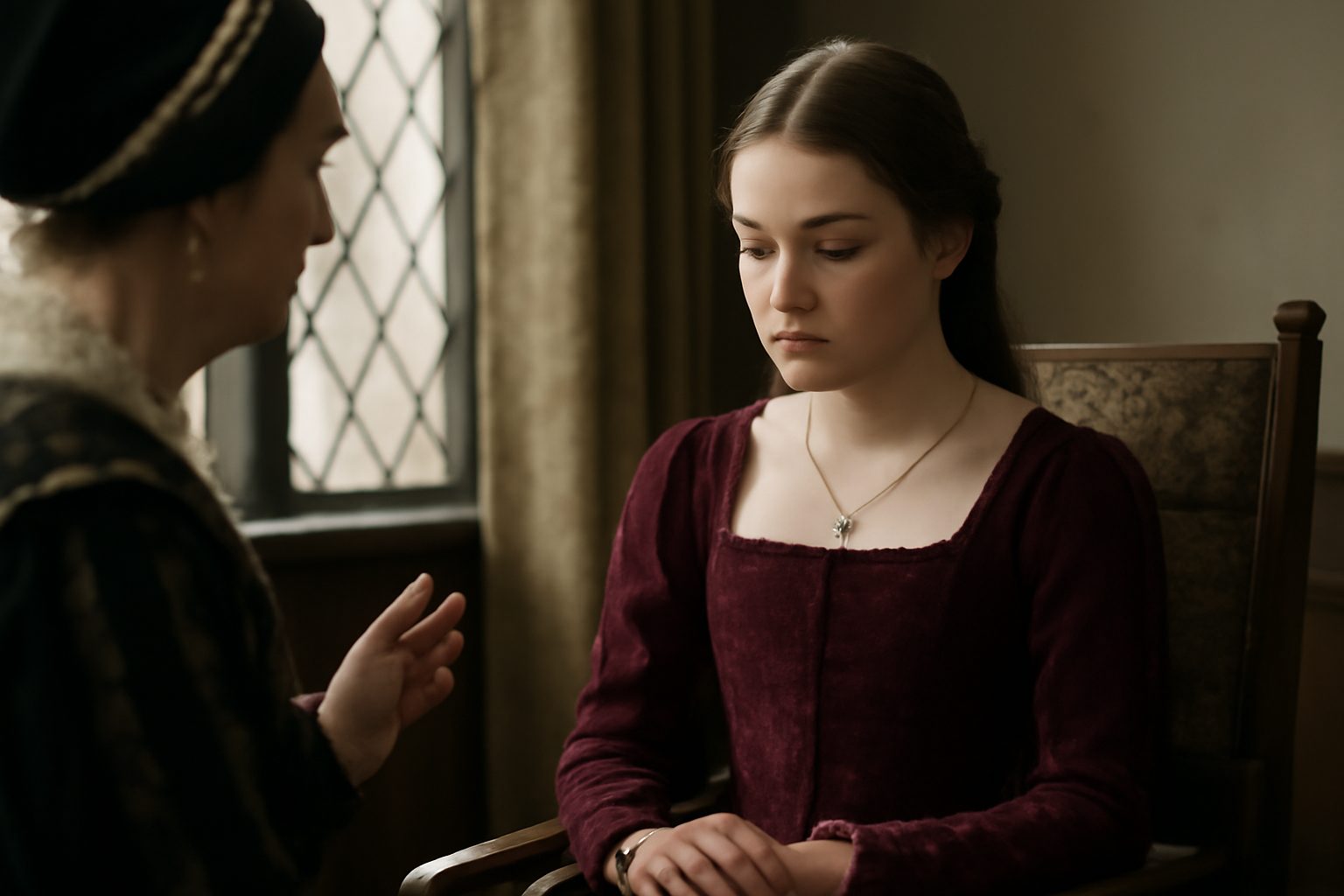
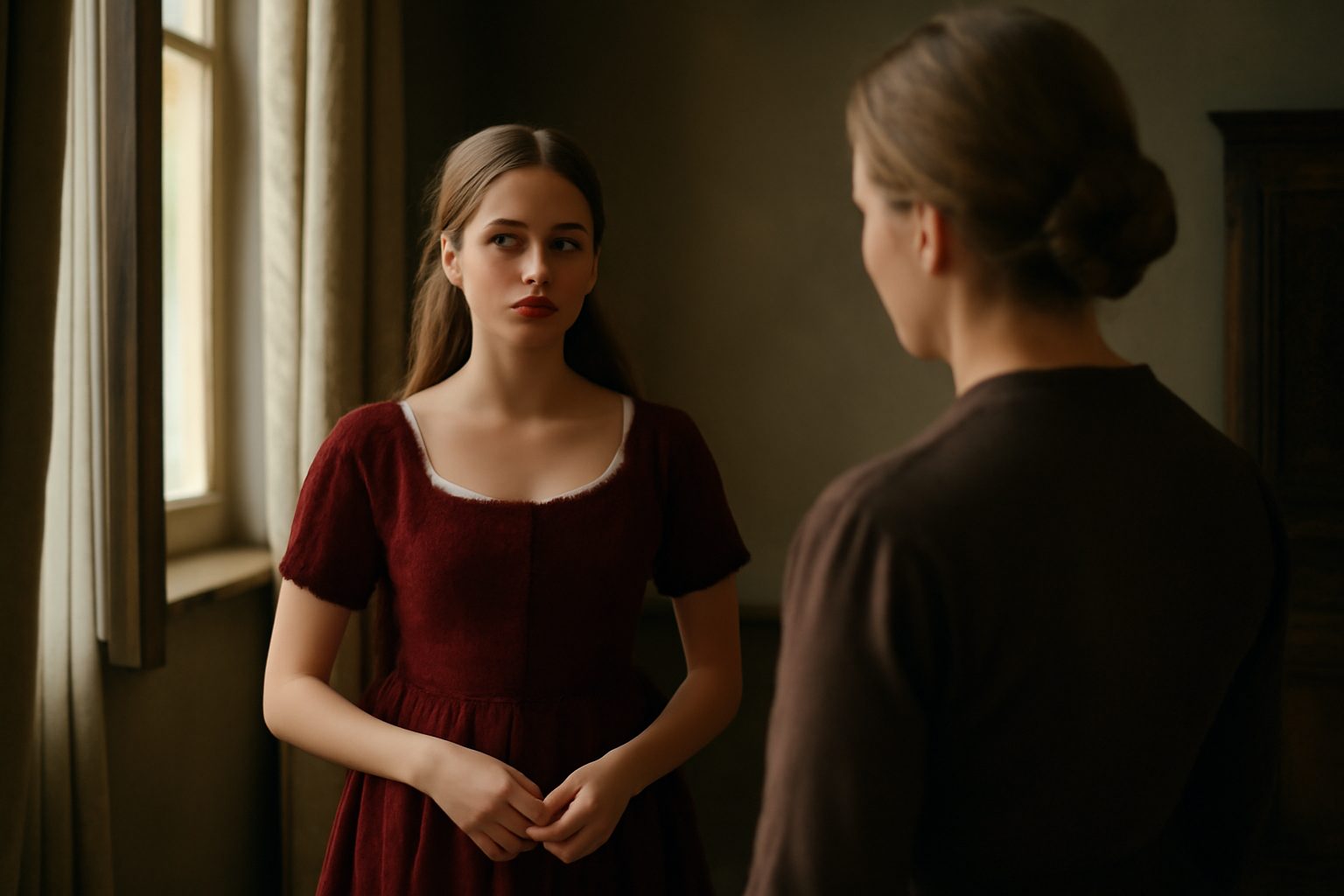
In Act 1, Scene 3 of Romeo and Juliet, Lady Capulet and the Nurse discuss the prospect of Juliet marrying Paris. Lady Capulet compares Paris to a splendid book, suggesting that his virtues are widely admired and celebrated. This line reflects her attempt to persuade Juliet that Paris is a worthy suitor by appealing to his esteemed reputation.
Lady Capulet: "That book in many's eyes doth share the glory,"
In modern day english, we would say:
Many people admire and praise that book.
Frequently Asked Questions
What does Lady Capulet say about the book in this line?
She says that many people admire and praise the book.
Connections to other verses:
Connections to "That book in many's eyes doth share the glory"
The verse "That book in many's eyes doth share the glory" is part of Lady Capulet's extended metaphor describing Paris as a desirable "book" that Juliet should "read" and embrace. This imagery connects thematically and structurally to several other verses in the scene.
Metaphorical Continuation
This line directly precedes "That in gold clasps locks in the golden story", completing the image of Paris as a valuable book whose contents (his virtues) are secured and worthy of attention. The "glory" mentioned refers to the admiration Paris receives, which is further elaborated in "As all the world--why, he's a man of wax", emphasizing his perfection and universal appeal.
Visual and Literary Imagery
The idea of "reading" Paris is introduced earlier in "Read o'er the volume of young Paris' face", urging Juliet to study his features. This connects to "And find delight writ there with beauty's pen", suggesting his appearance holds joyful qualities, and "Examine every married lineament", which advises a detailed inspection of his harmonious features.
Beauty and Worth
The "glory" of the book aligns with "For fair without the fair within to hide", highlighting Paris's inner and outer beauty. The metaphor culminates in "This precious book of love, this unbound lover", portraying him as an invaluable but incomplete work until Juliet "binds" him through marriage.
Social and Marital Context
The public recognition ("many's eyes") in this verse echoes the societal pressure evident in "The valiant Paris seeks you for his love" and "So shall you share all that he doth possess", which frames the marriage as a practical elevation. Juliet's cautious response in "I'll look to like, if looking liking move" contrasts with the assured "glory" attributed to Paris, underscoring her hesitant agency.