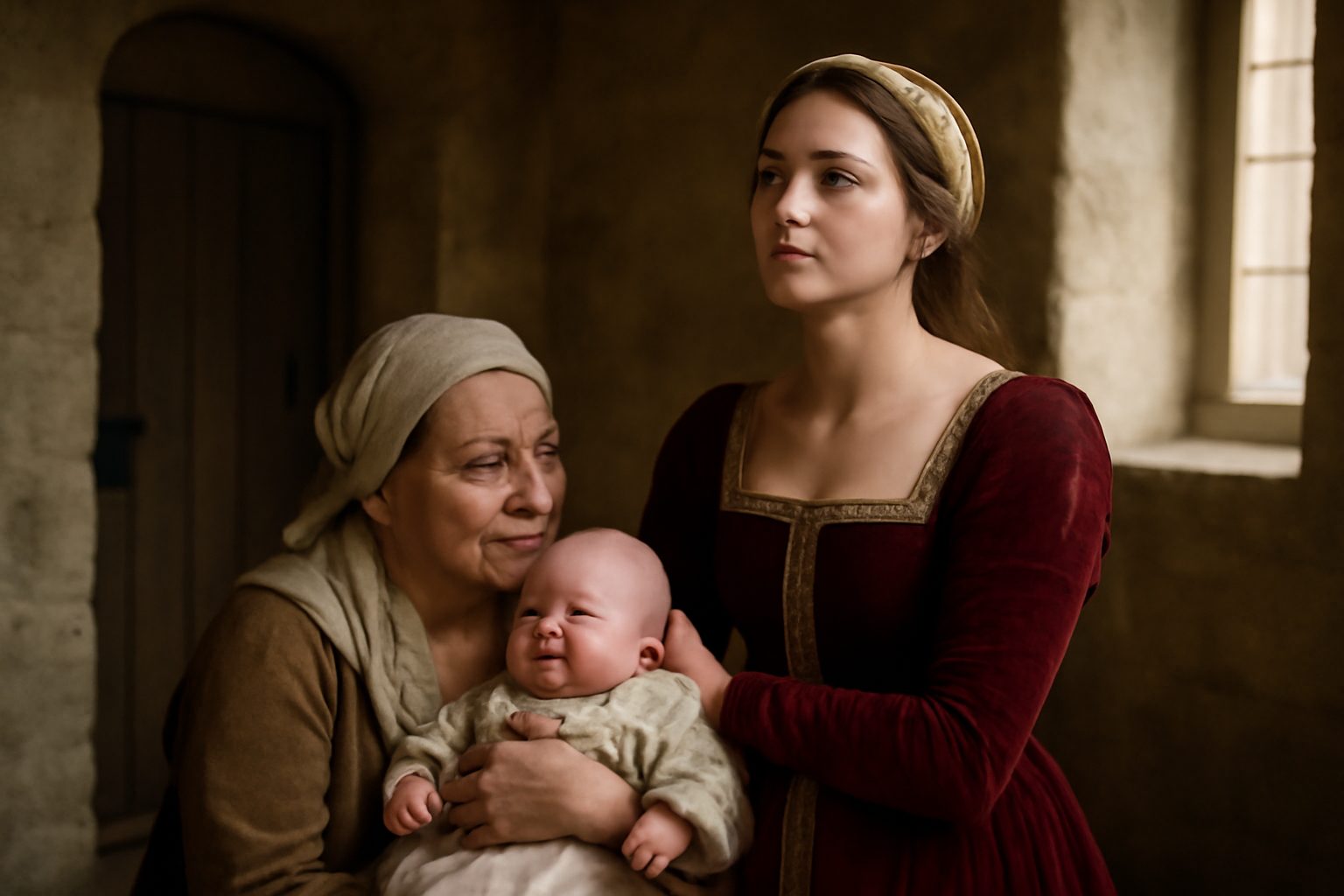
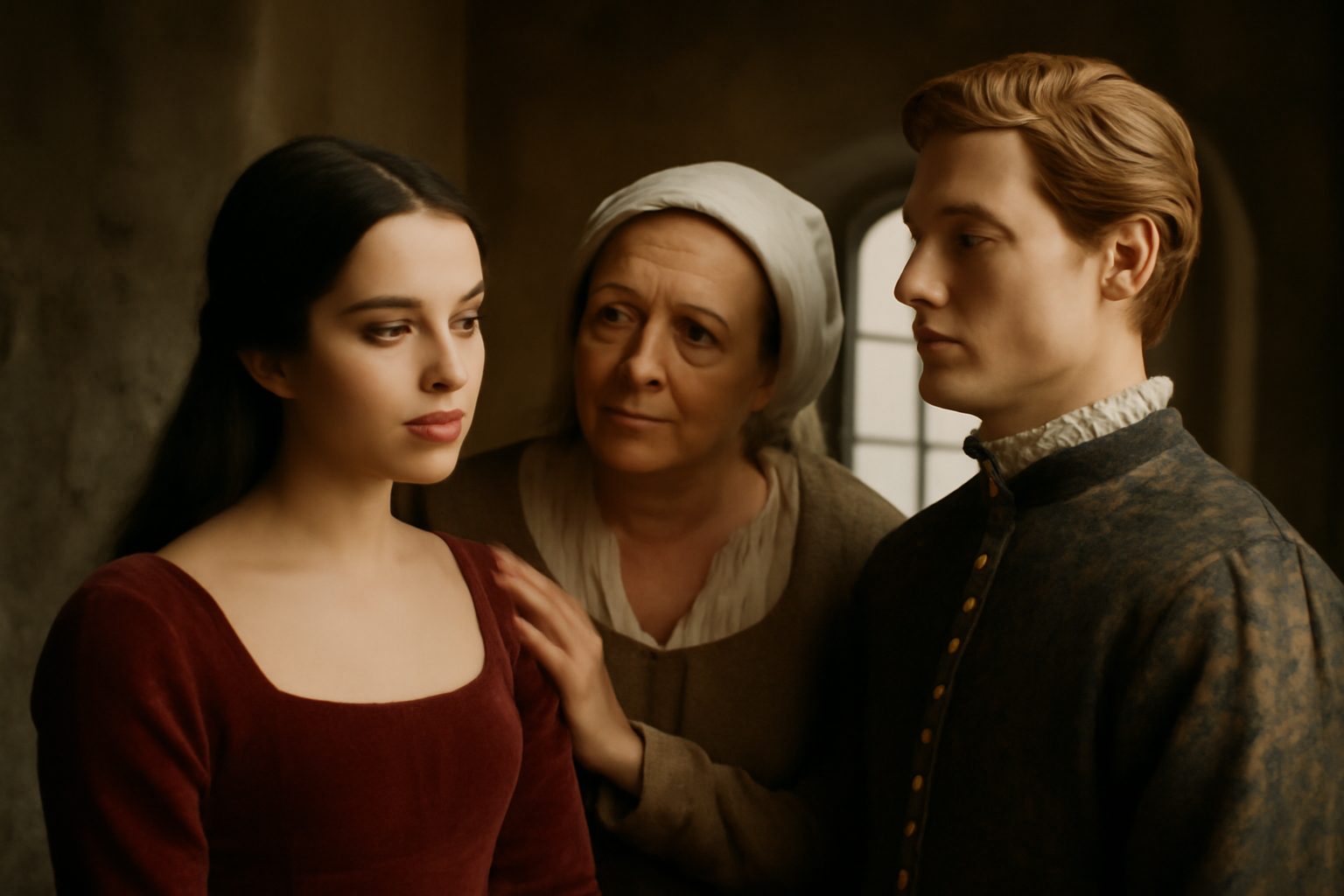
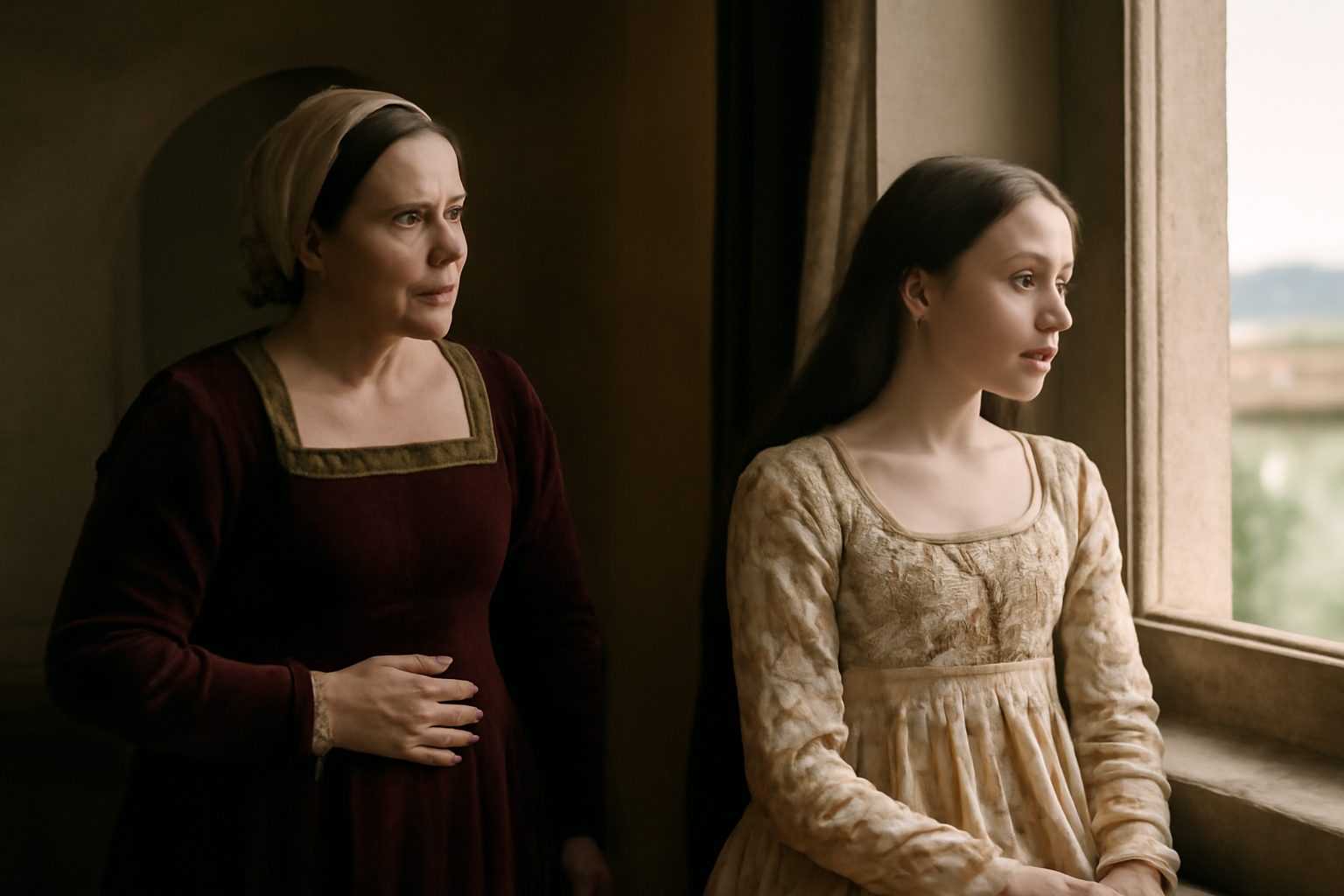
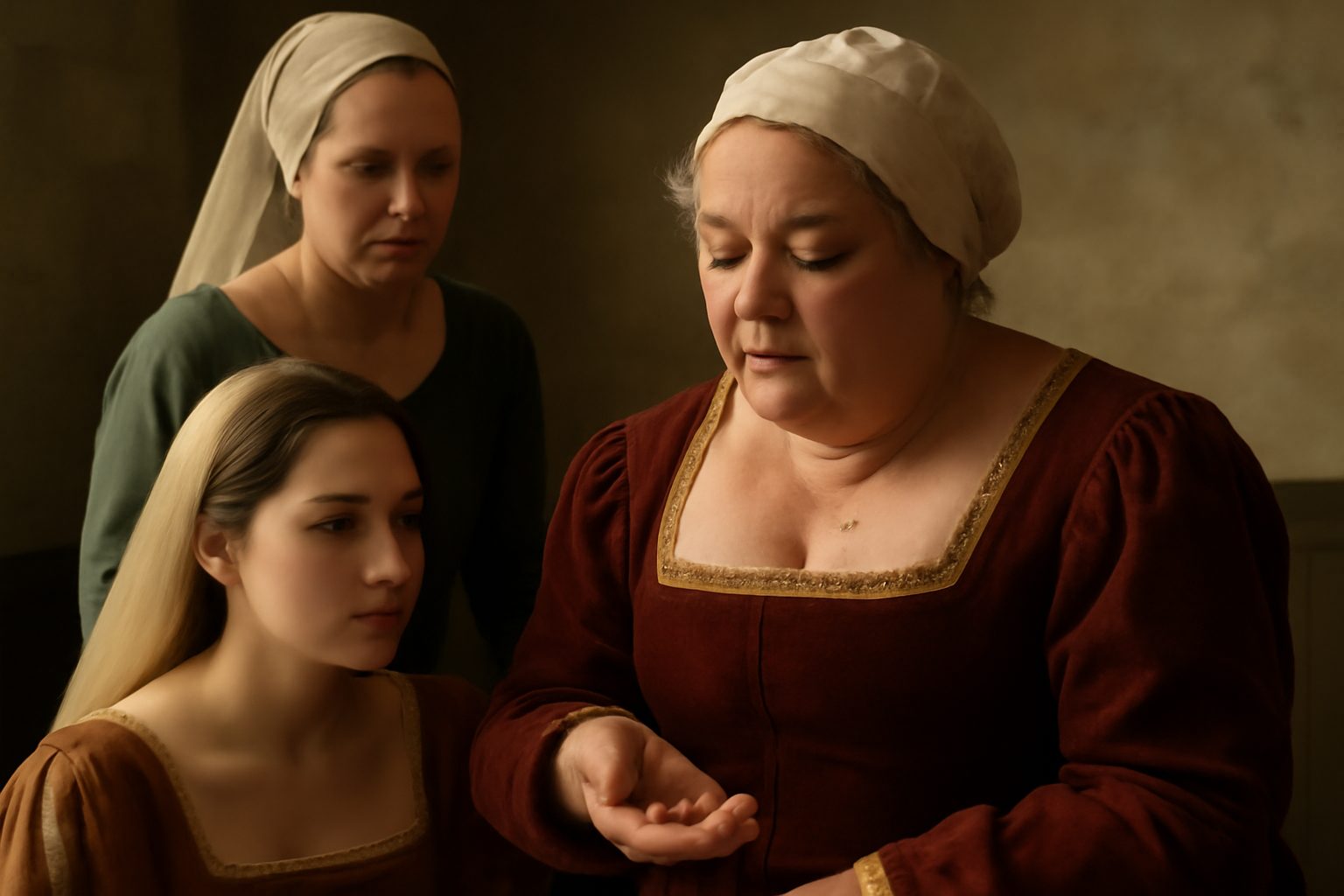
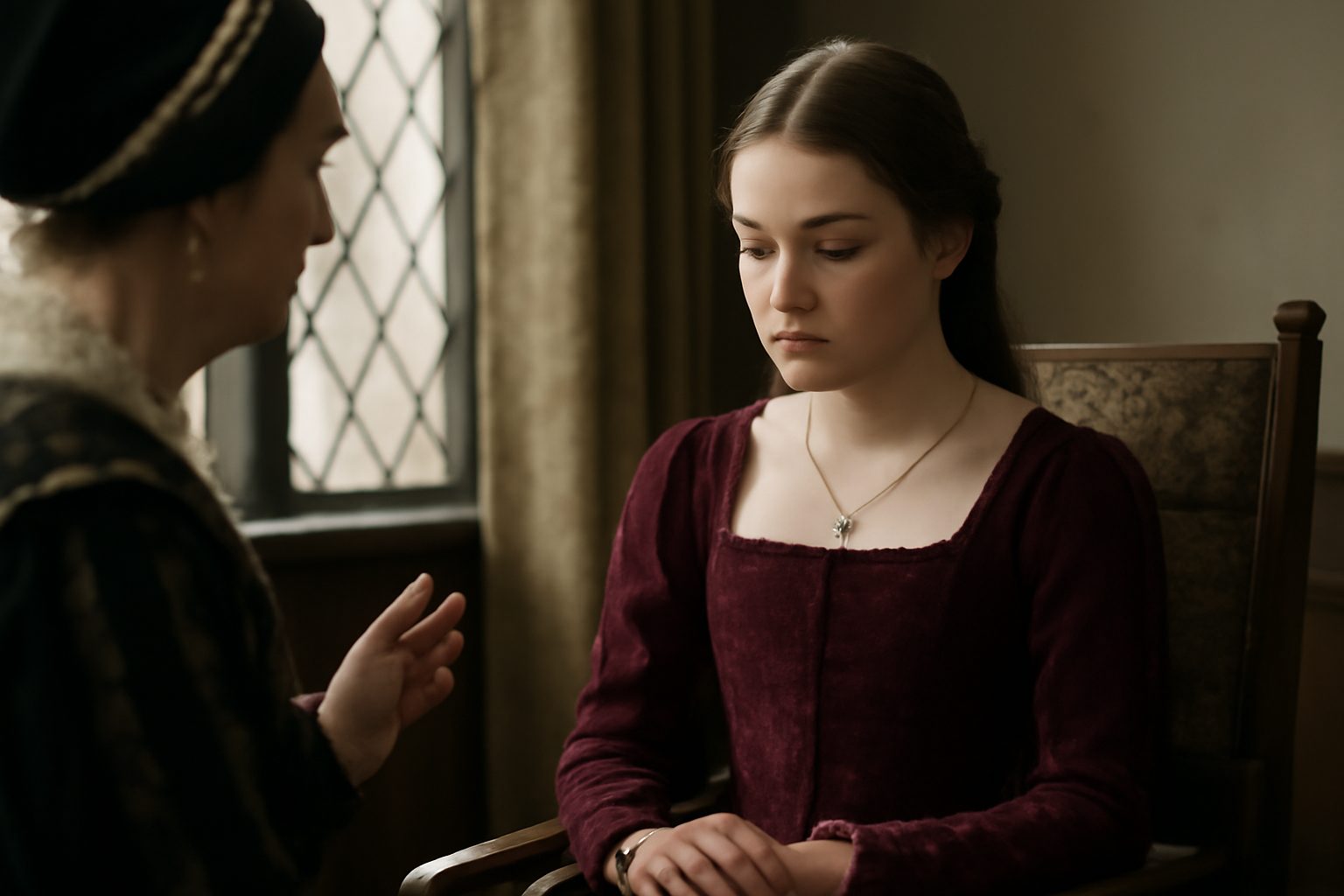
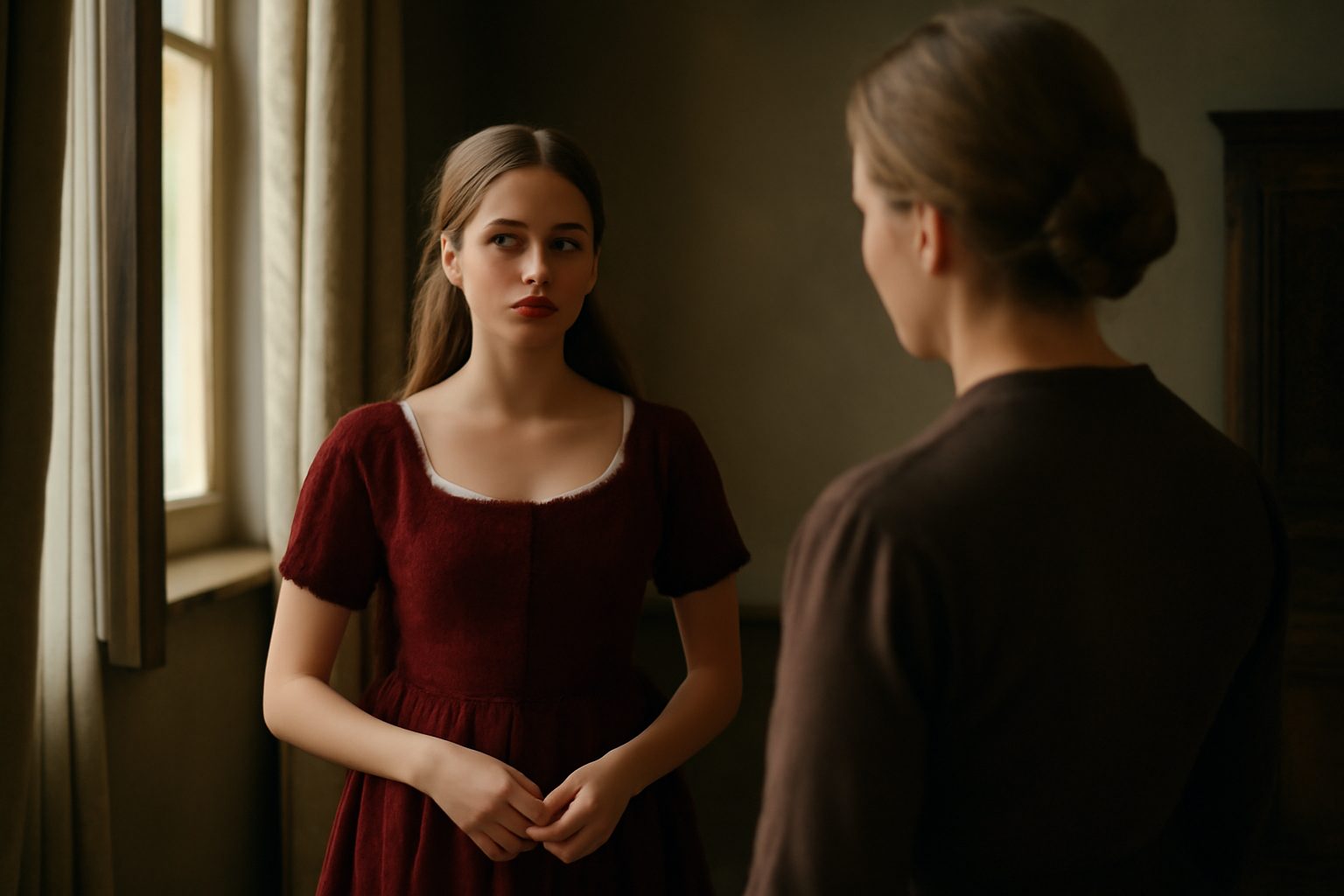
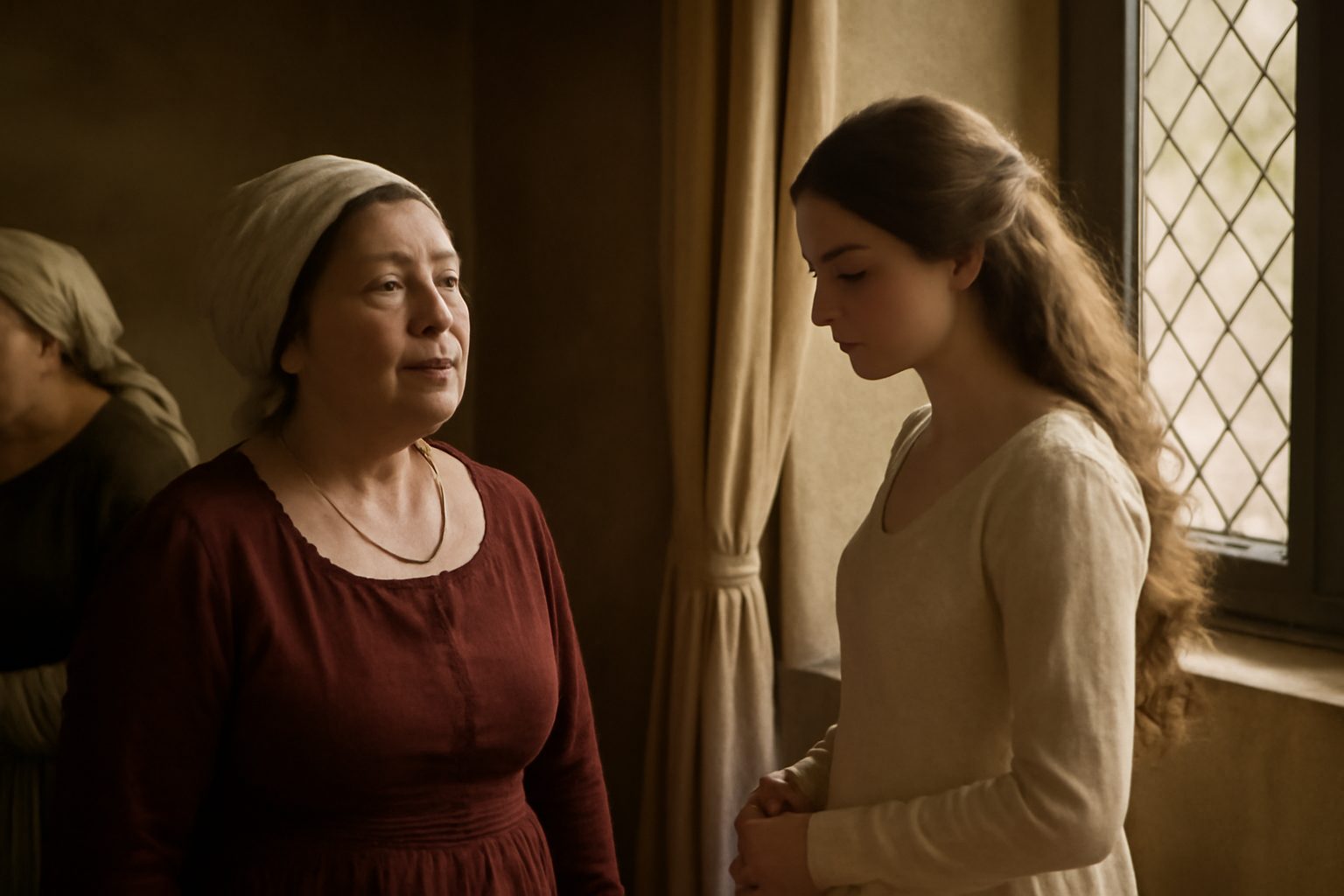
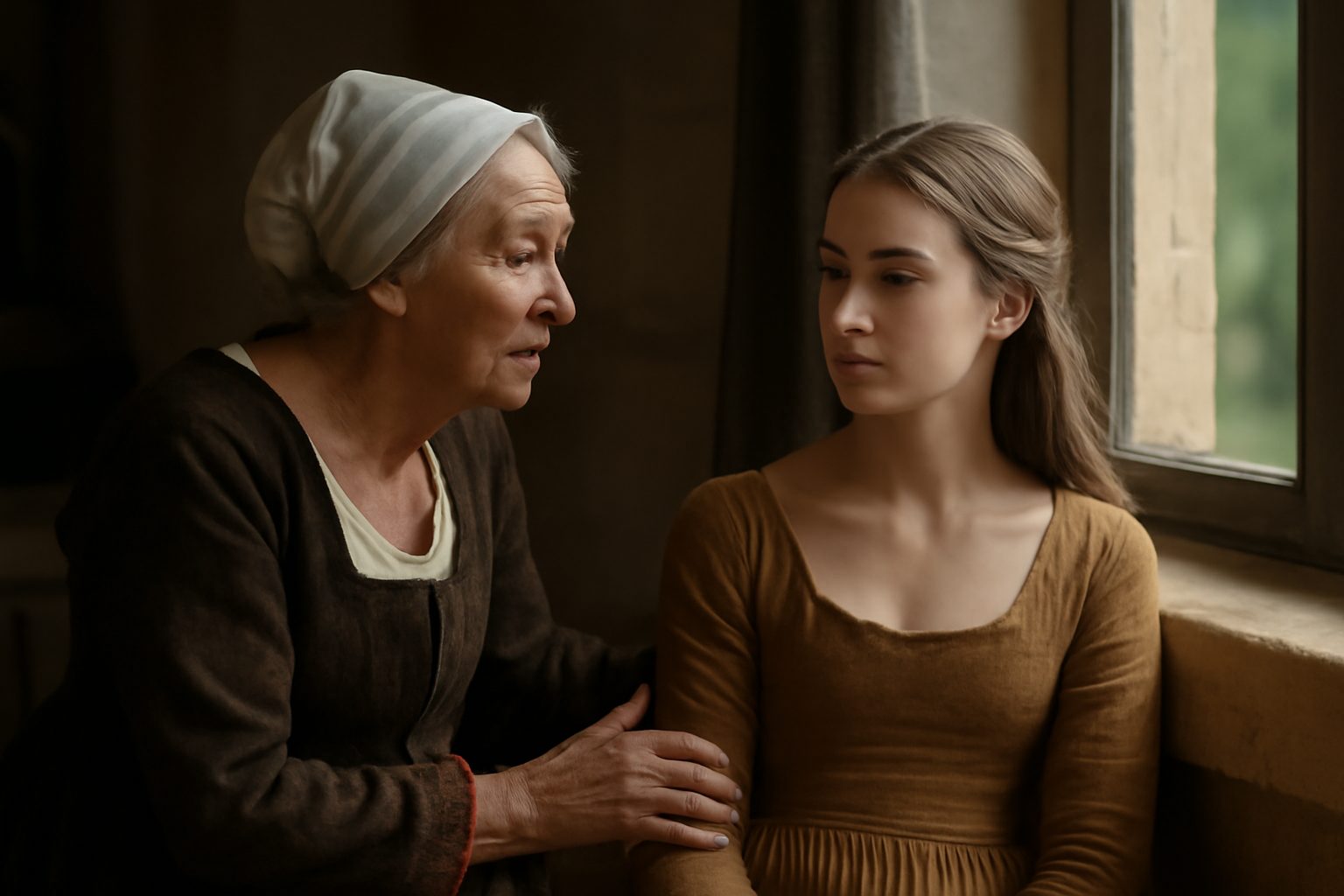
In Act 1, Scene 3 of Romeo and Juliet, Lady Capulet speaks to her daughter Juliet about the prospect of marriage. This line comes as part of a conversation where Lady Capulet hints that Juliet is no longer a child and should consider Paris as a suitor. The brief phrasing reflects her attempt to transition from gentle persuasion to a more direct approach.
Lady Capulet: "That you are now a maid. Thus then in brief:"
In modern day english, we would say:
You’re still a virgin, so here’s the short version.
Frequently Asked Questions
Who is speaking in this line from Romeo and Juliet?
Lady Capulet
What is Lady Capulet talking about in this line?
She is telling Juliet that she is still unmarried.
Connections to other verses:
Connections to "That you are now a maid. Thus then in brief:"
The verse "That you are now a maid. Thus then in brief:" serves as a pivotal moment in Lady Capulet's conversation with Juliet, transitioning from the Nurse's nostalgic anecdotes to the central topic of marriage. This line directly introduces the proposal of Paris, framing Juliet's current status as a maiden in contrast to the impending prospect of matrimony.
Connection to Juliet's Age and Maturity
This statement is closely tied to earlier discussions of Juliet's youth, such as the Nurse's insistence in "She's not fourteen." and the precise calculation of her age in "Come Lammas-eve at night shall she be fourteen.". These references establish Juliet's transition from childhood, making Lady Capulet's comment about her maidenhood contextually significant as she is deemed ready for marriage.
Link to Maternal Advice and Social Expectations
Lady Capulet's remark aligns with her earlier encouragement in "Well, think of marriage now; younger than you,", where she emphasizes that girls Juliet's age are already mothers. This creates a parallel between Juliet's current state as a maid and the societal expectation that she should soon marry, as elaborated in "Are made already mothers: by my count,".
Association with the Proposal of Paris
The phrase "Thus then in brief:" directly precedes the introduction of Paris as a suitor, referenced in "The valiant Paris seeks you for his love.". This connection highlights the practical purpose of the conversation—to persuade Juliet to consider Paris, which is further supported by Lady Capulet's praise of his qualities in verses like "As all the world--why, he's a man of wax.".
Contrast with Juliet's Reluctance
Juliet's reserved response to the idea of marriage, found in "It is an honour that I dream not of.", contrasts with Lady Capulet's forward-looking statement. This tension underscores the generational and emotional divide between them, as Juliet's innocence ("a maid") clashes with her mother's ambitions.