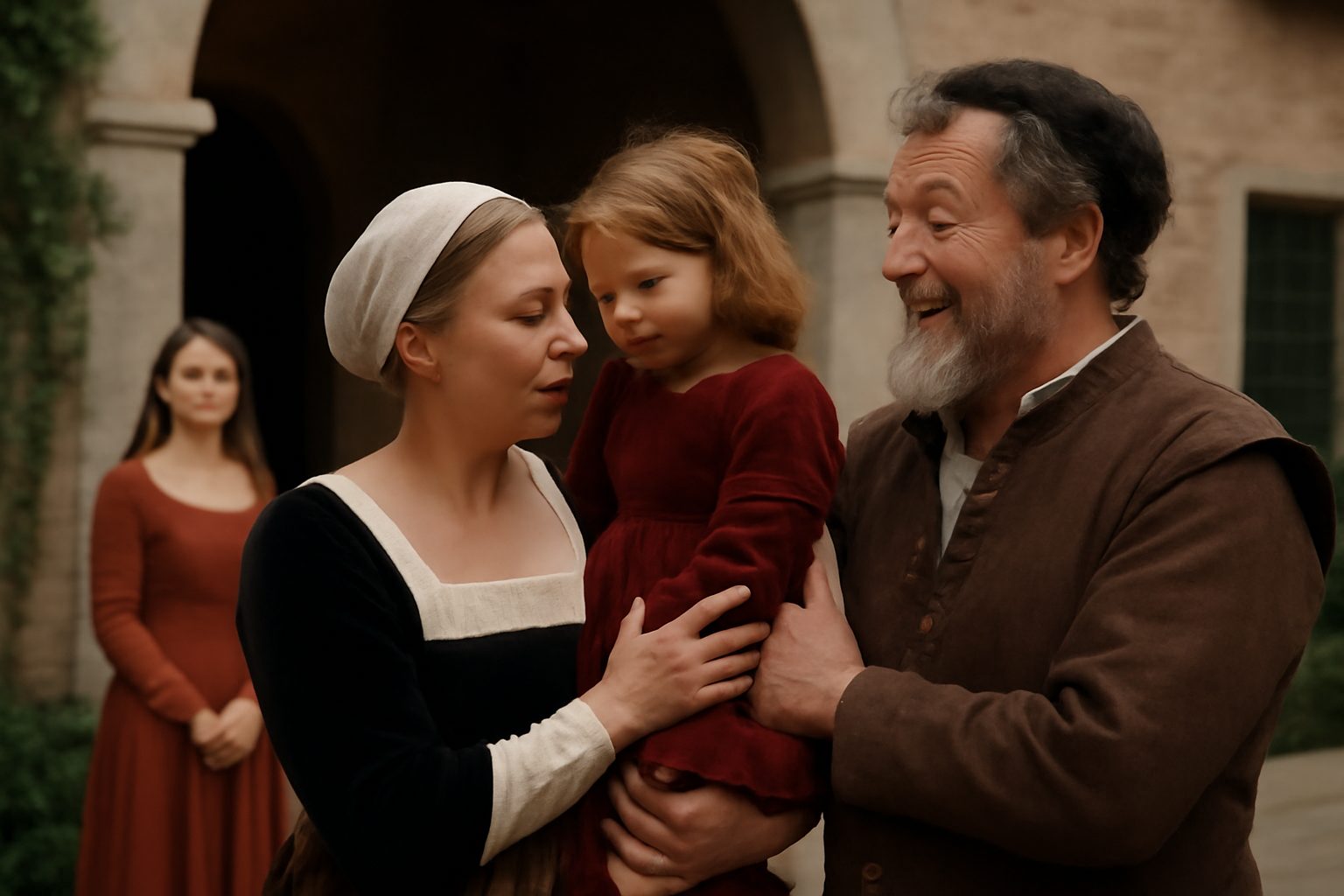
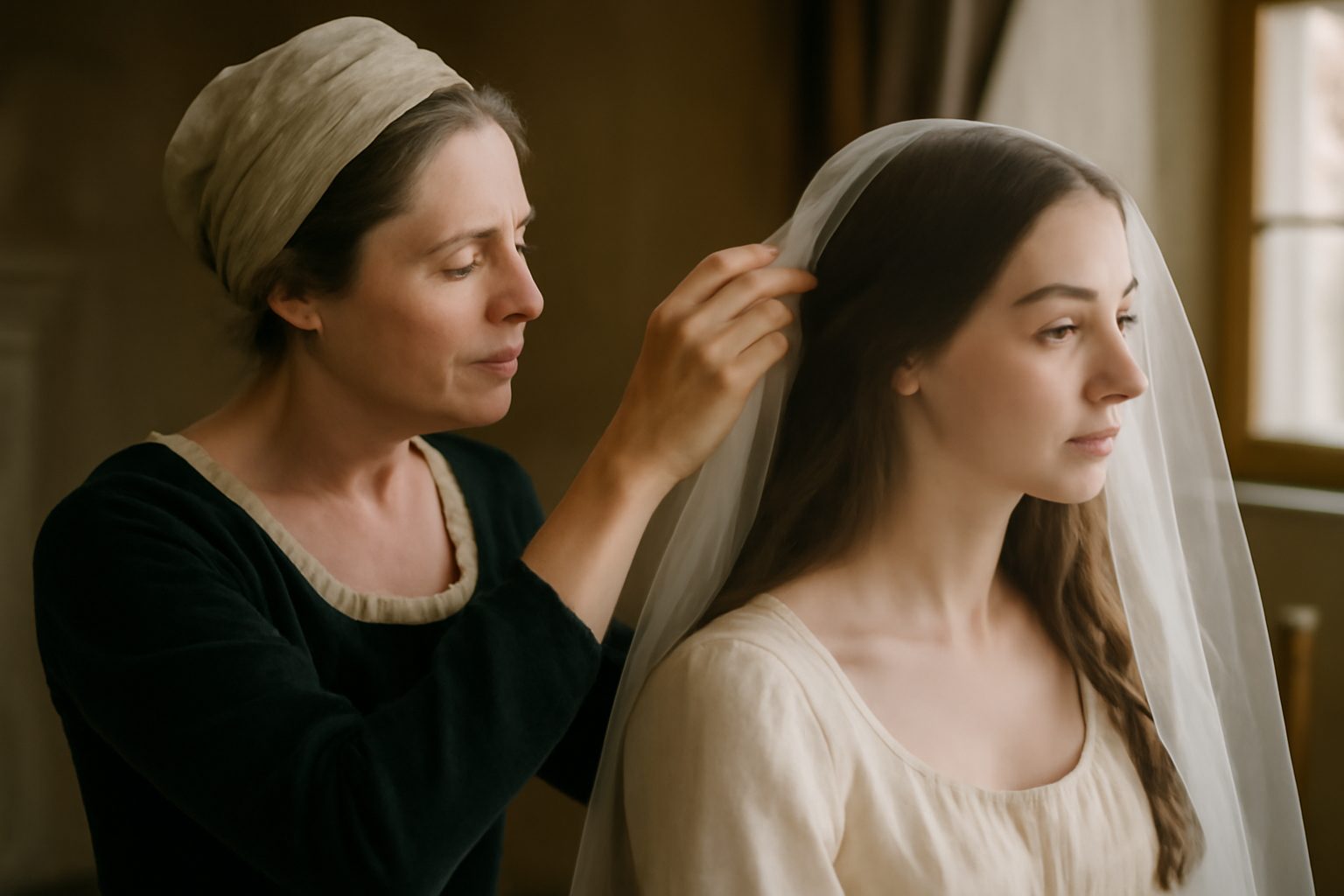
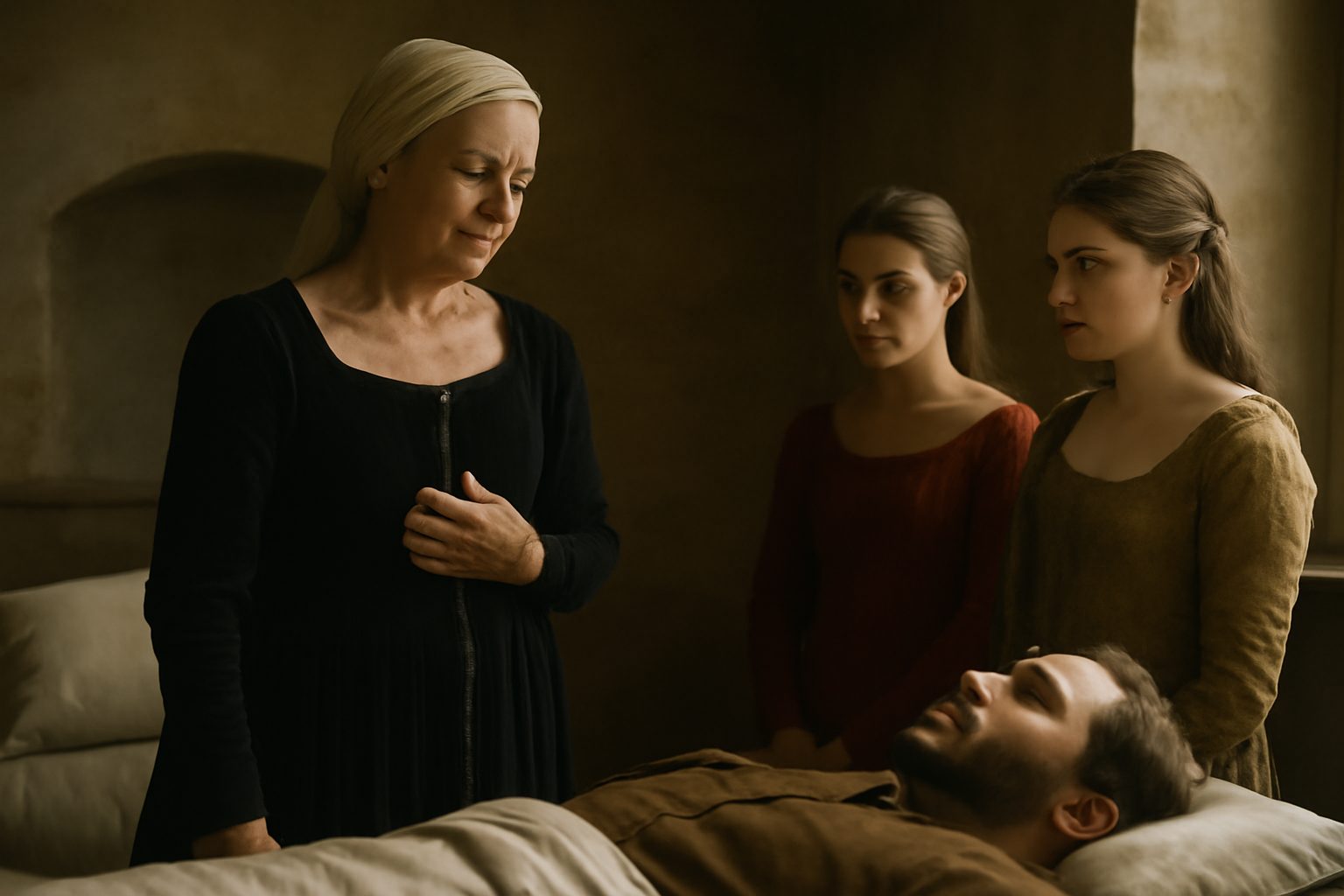
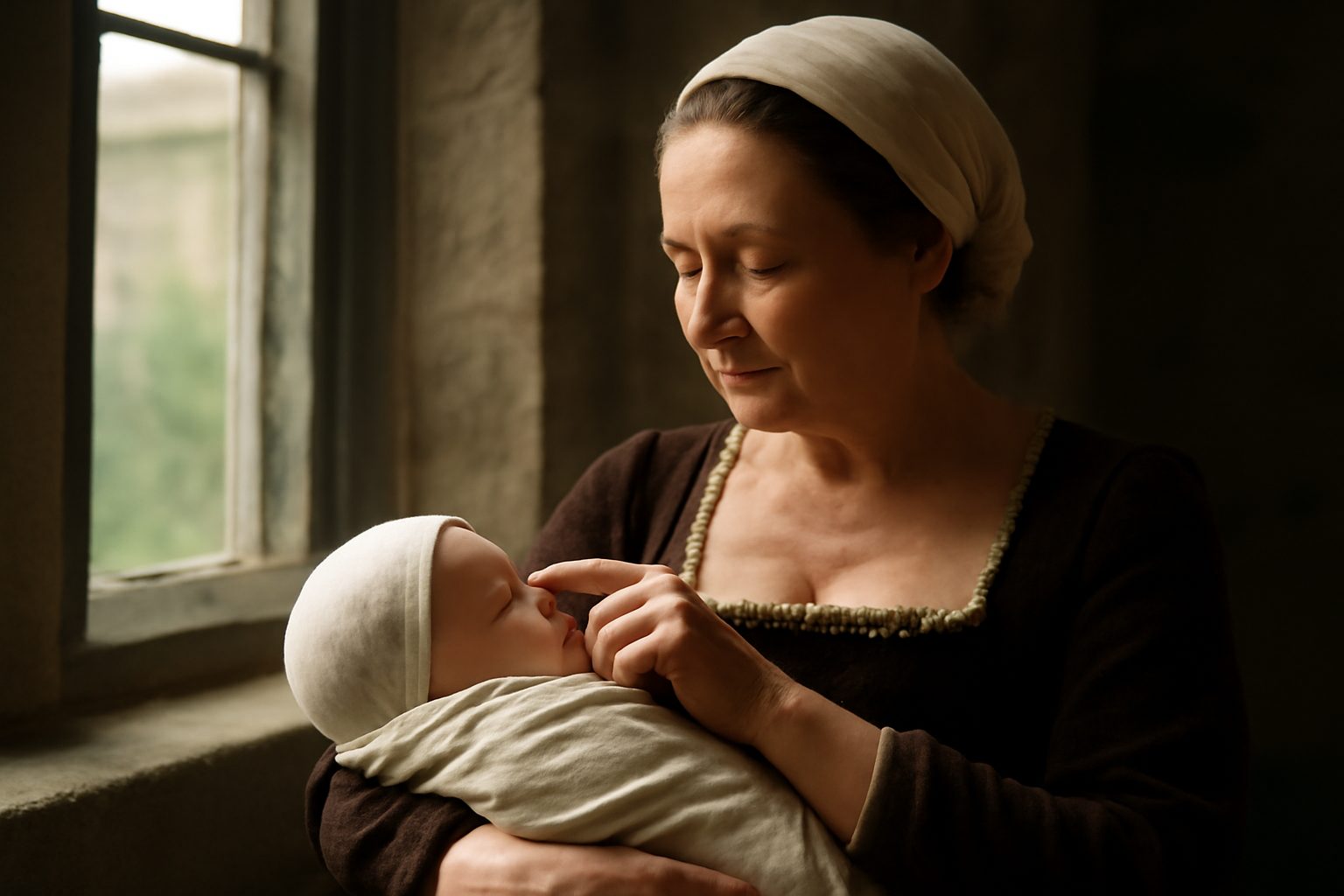
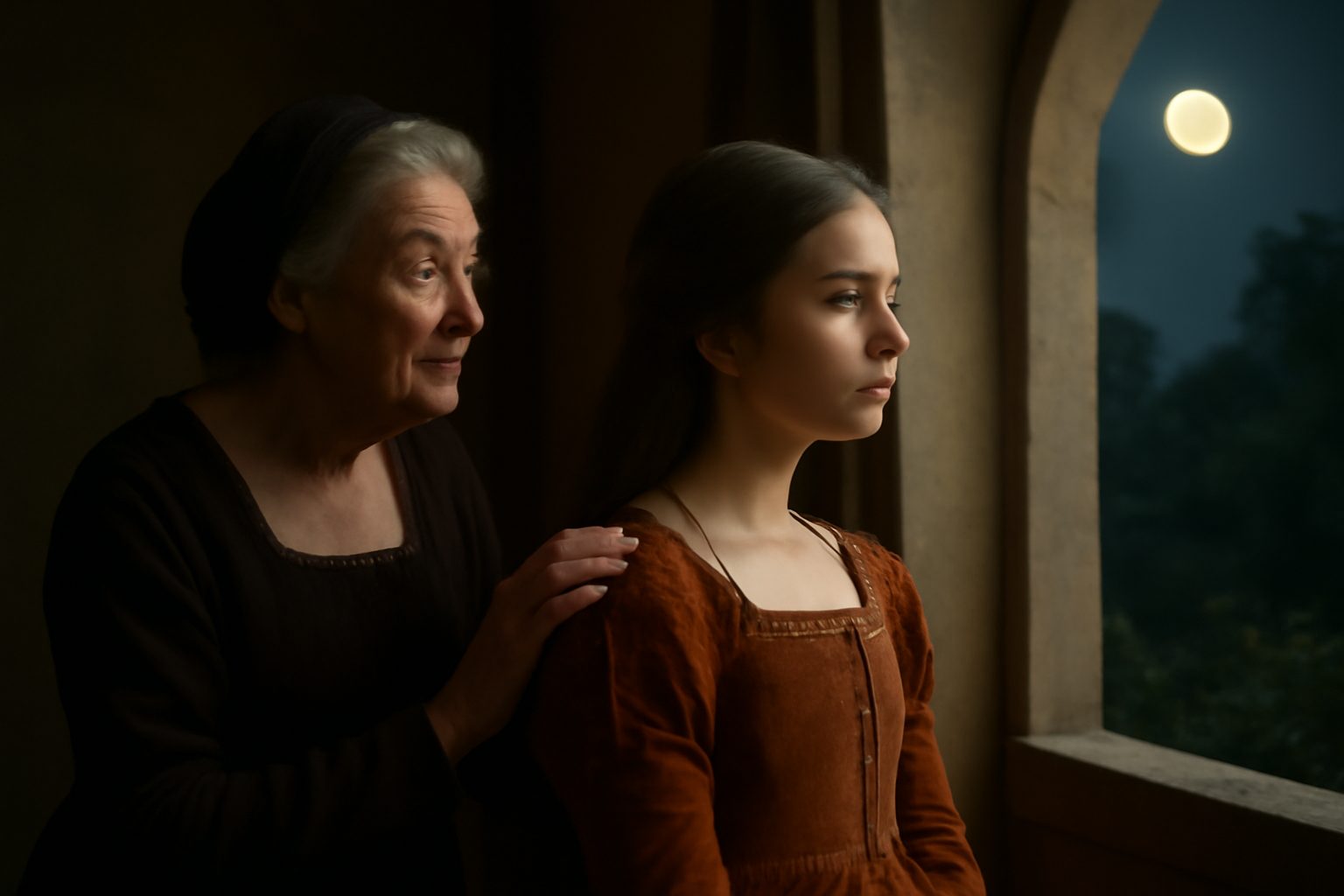
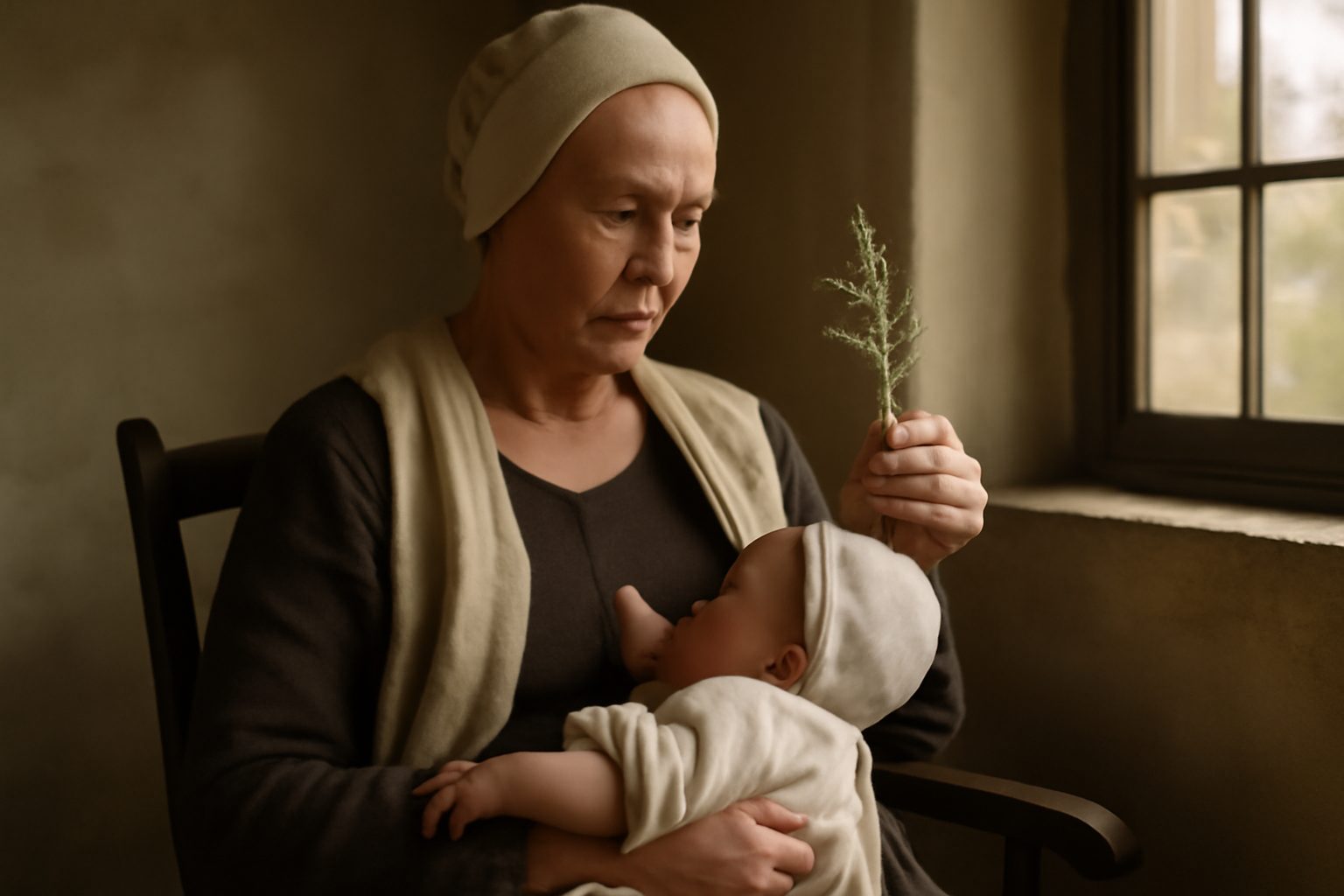
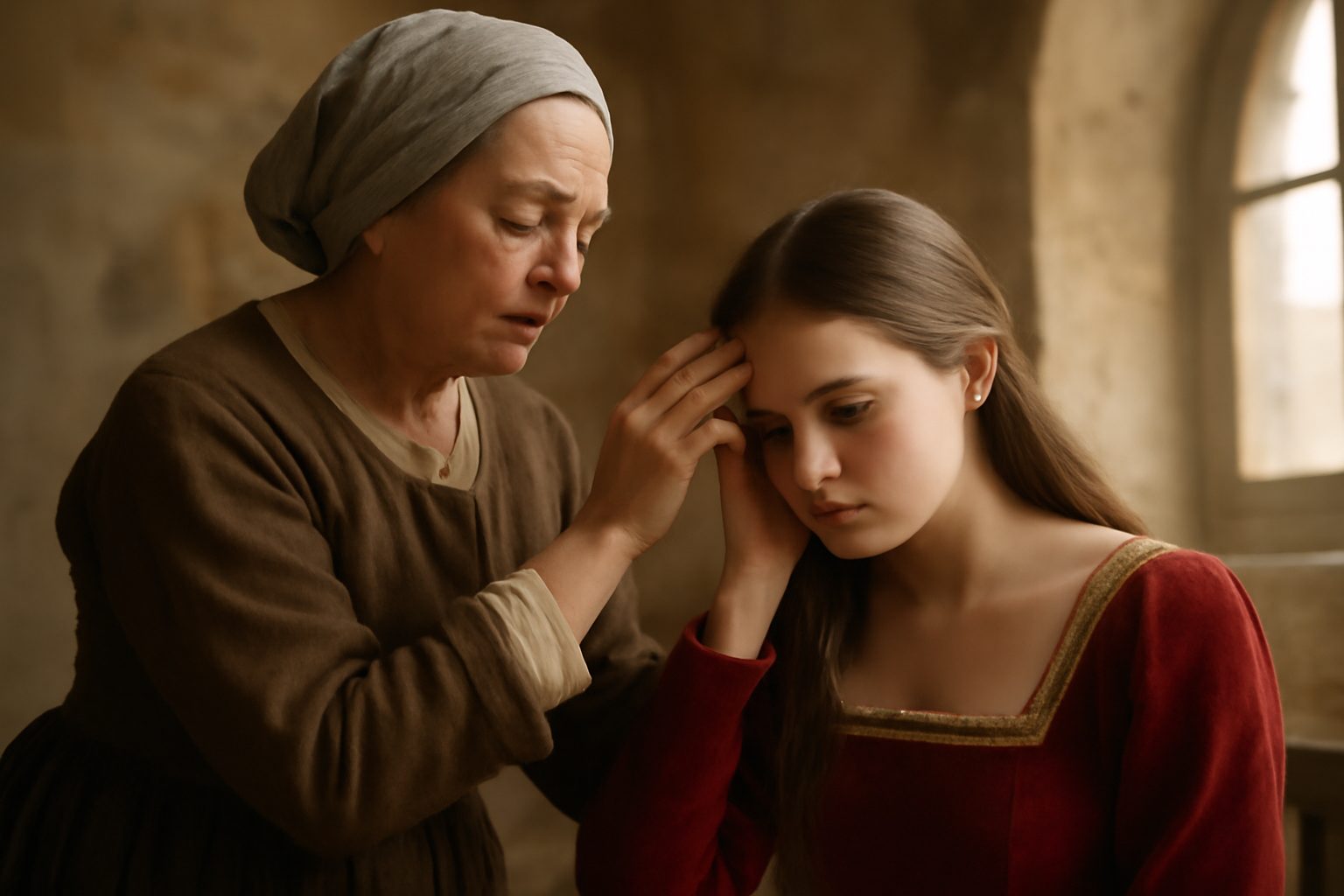
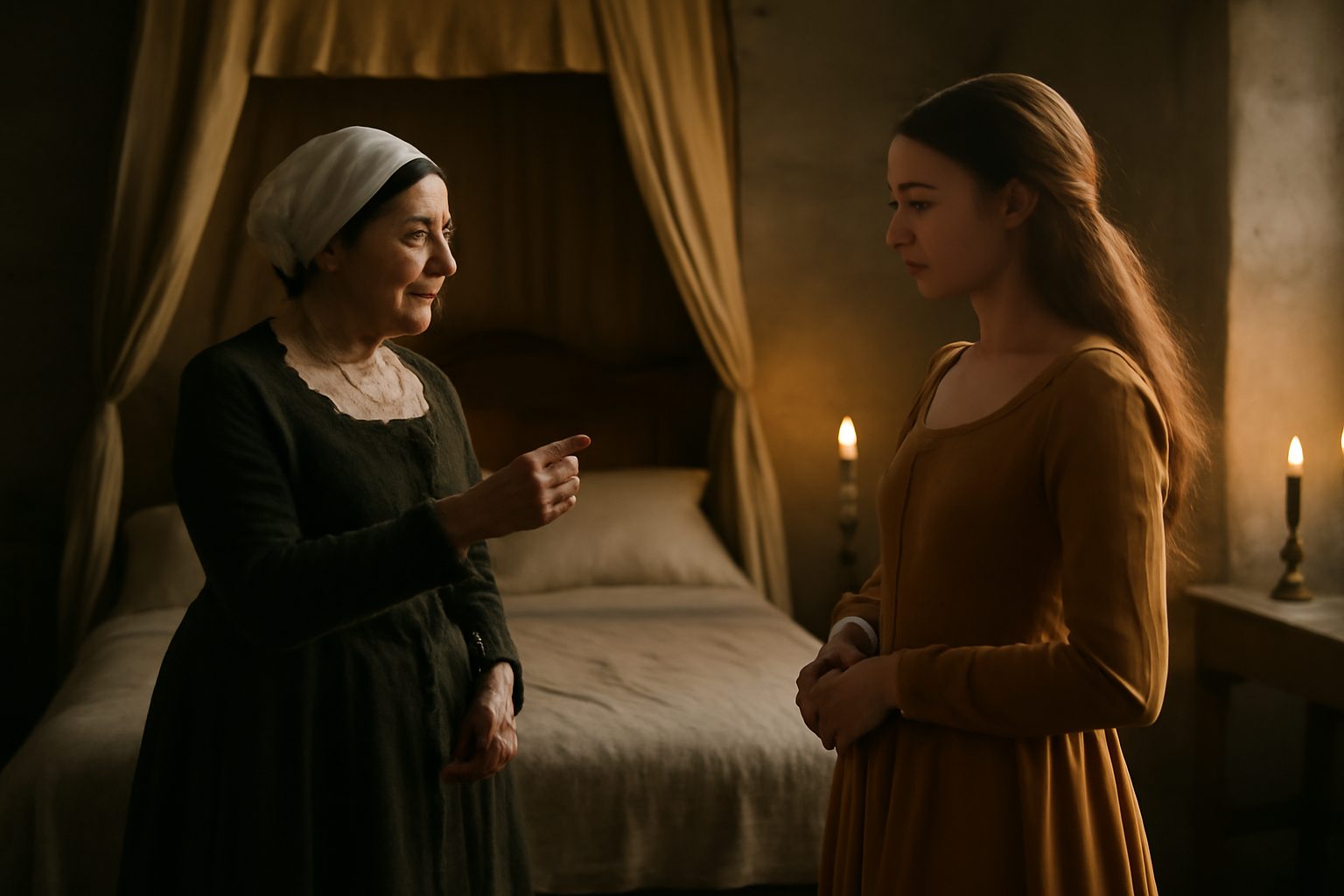
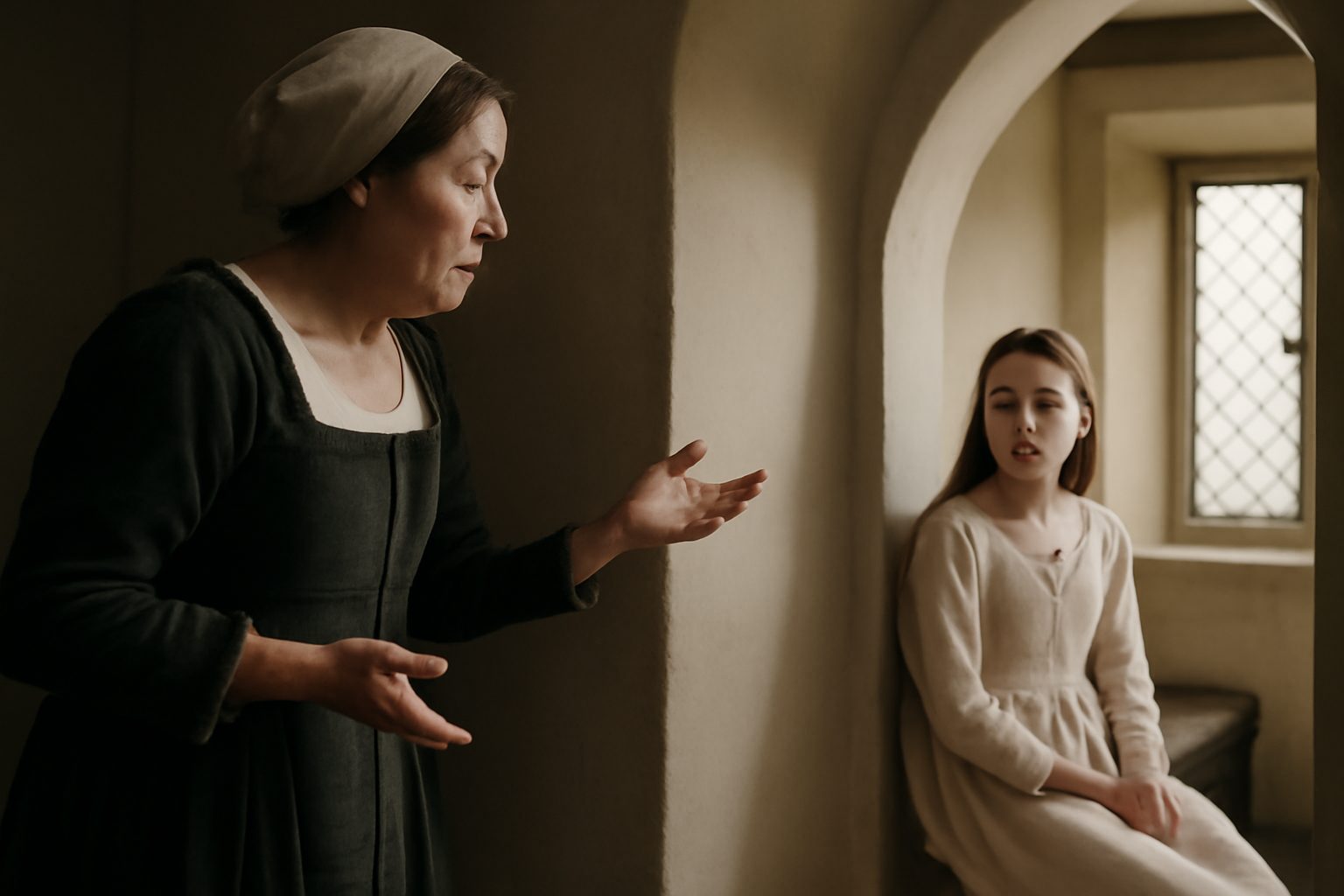
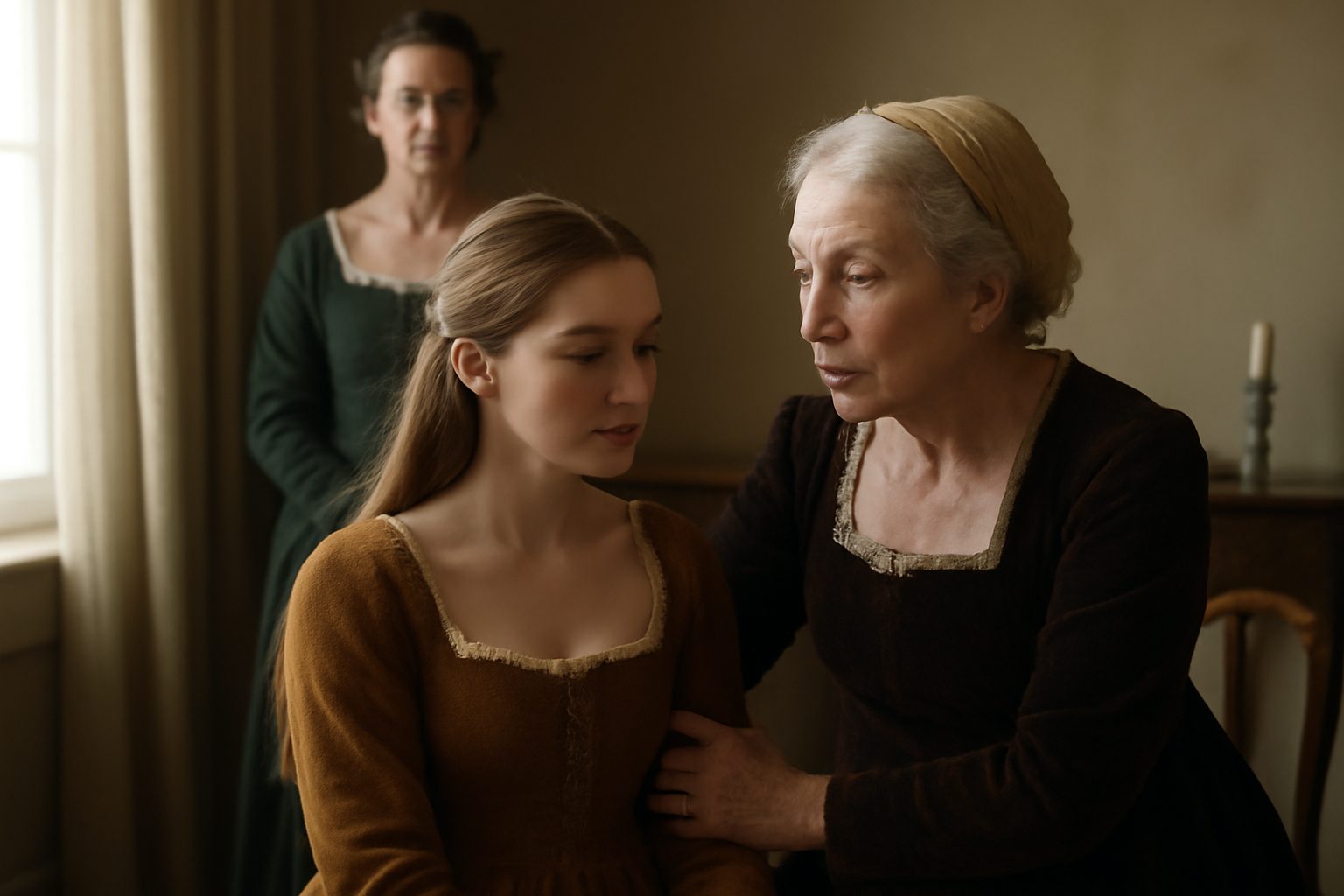
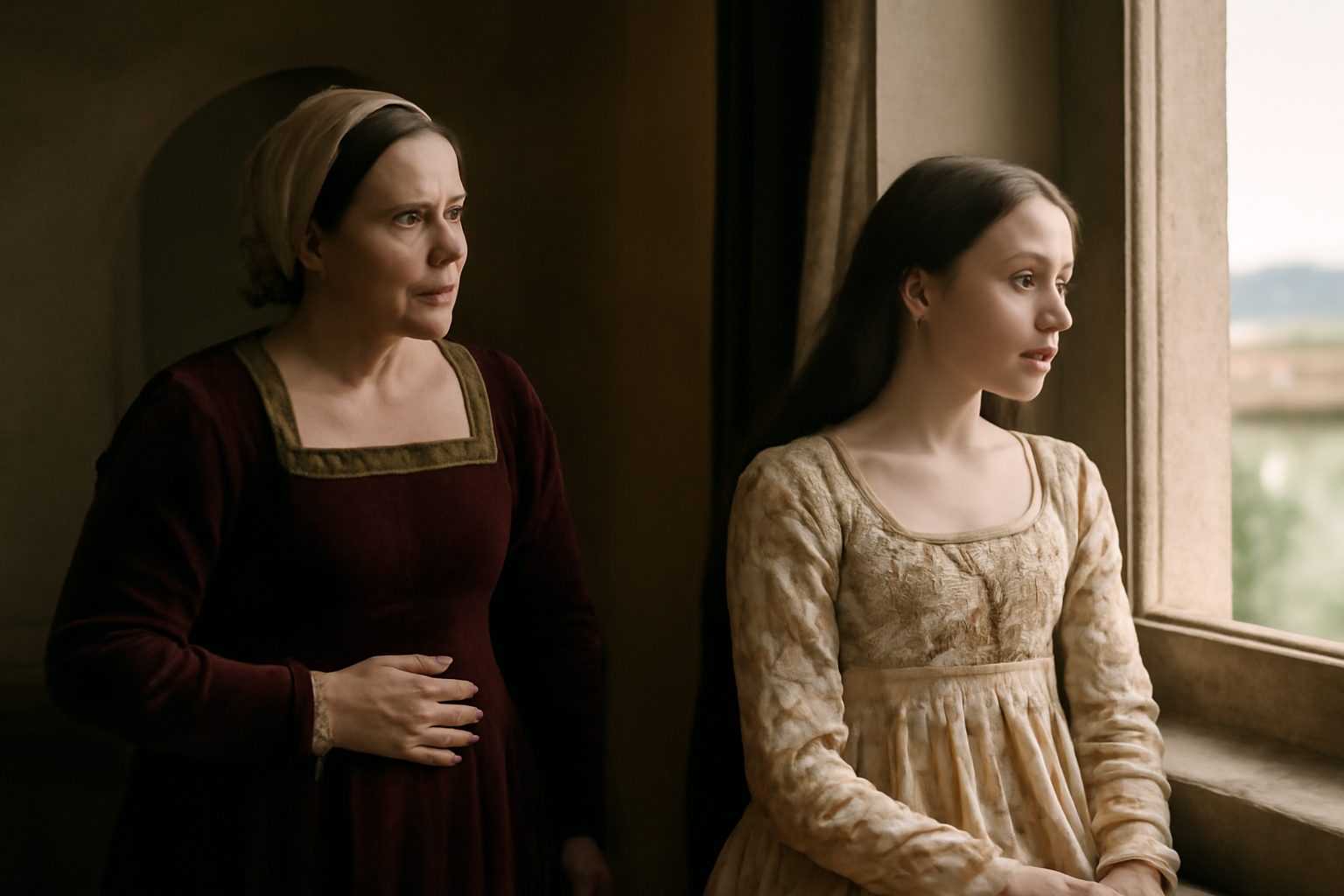
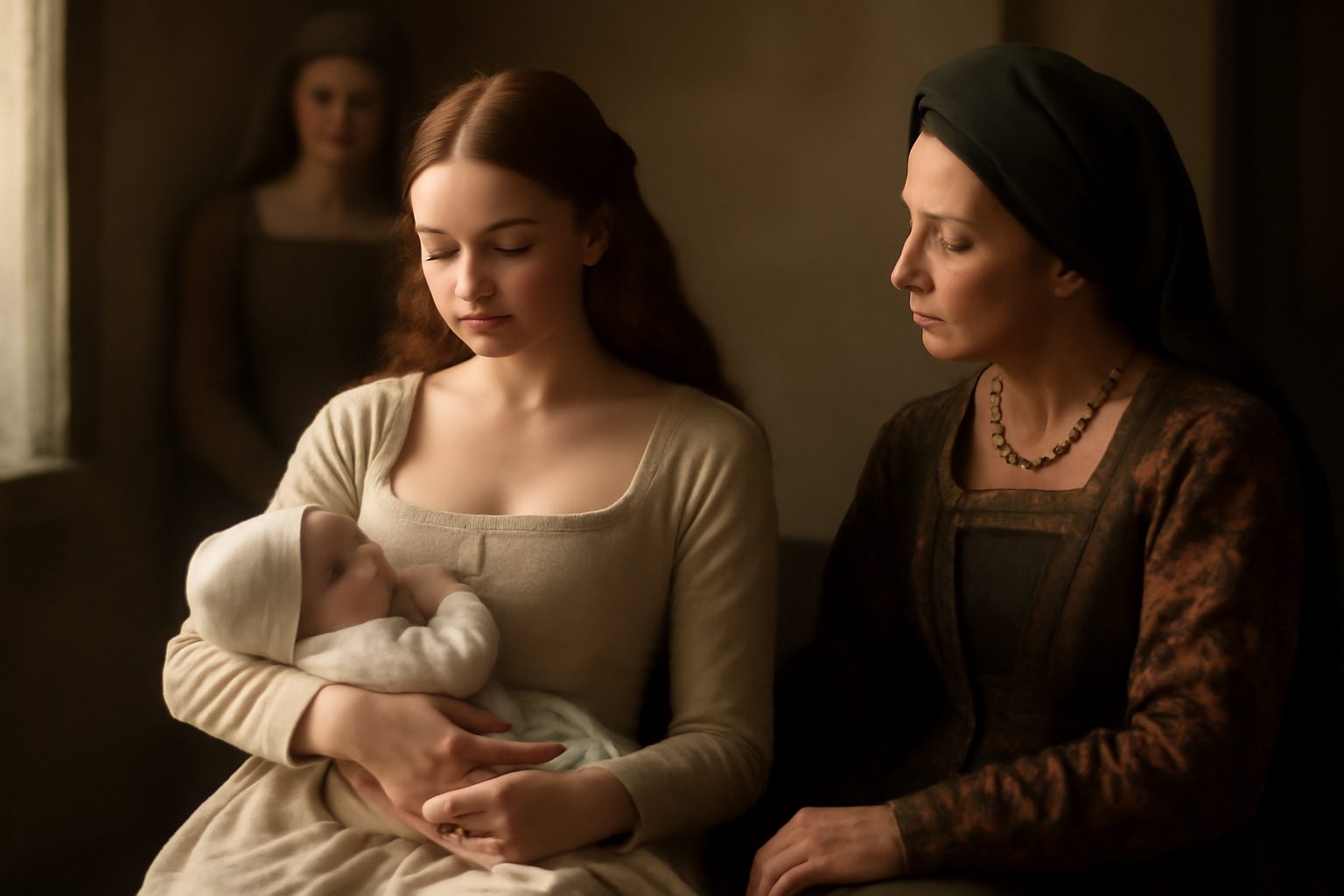
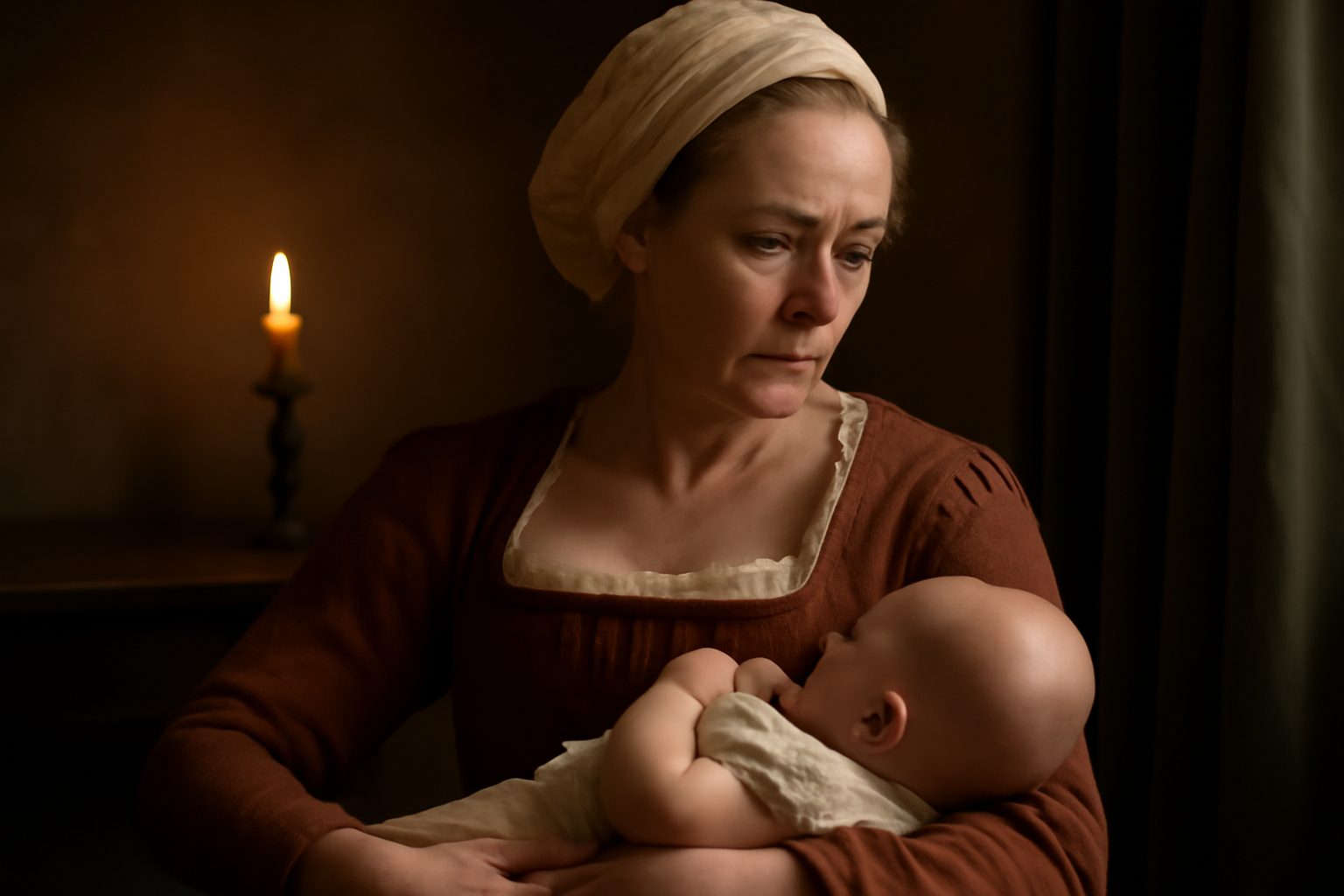
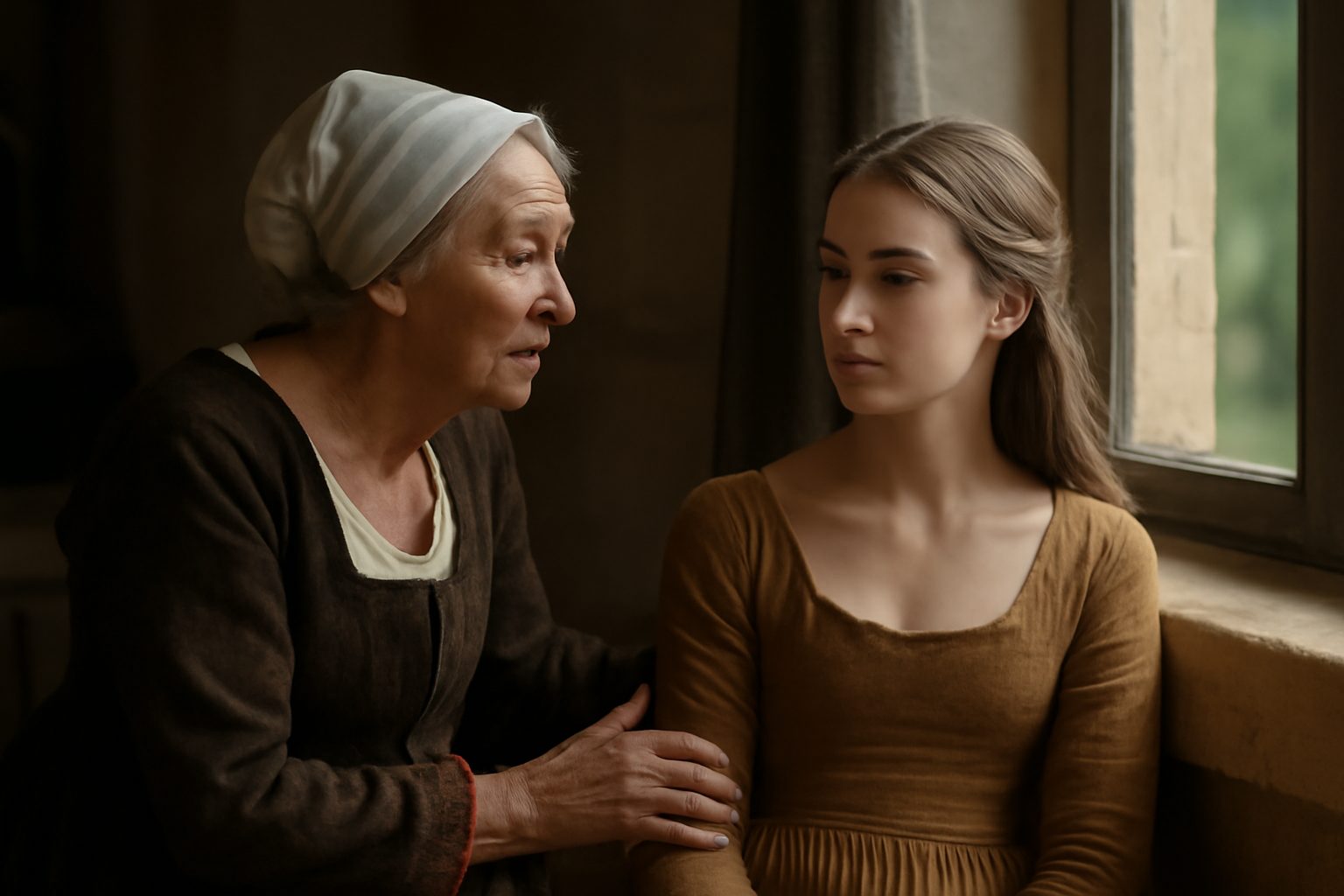
In Act 1, Scene 3 of Romeo and Juliet, the Nurse reminisces about her late daughter, Susan, who would have been the same age as Juliet. This brief, poignant moment reveals the Nurse's personal grief and deep affection for Juliet, whom she has cared for since childhood. The line underscores the Nurse's maternal role in Juliet's life, adding emotional depth to their relationship.
Nurse: "Were of an age: well, Susan is with God;"
In modern day english, we would say:
We were the same age, but Susan has passed away and is in heaven now.
Frequently Asked Questions
What does the Nurse mean when she says Susan is with God?
She means that Susan has passed away and is now in heaven.
Connections to other verses:
Connections to "Were of an age: well, Susan is with God;"
The verse "Were of an age: well, Susan is with God;" is spoken by the Nurse, referring to her deceased daughter Susan, who would have been the same age as Juliet. This line reveals the Nurse's personal loss and deep emotional connection to Juliet, whom she has raised as her own.
Connection to Juliet's Age and the Nurse's Memories
The Nurse frequently references Juliet's infancy and childhood, establishing a timeline that connects to Susan. For instance, she recalls "Come Lammas-eve at night shall she be fourteen", emphasizing Juliet's upcoming birthday. This is echoed in "On Lammas-eve at night shall she be fourteen", reinforcing the significance of the date. The Nurse's vivid memory of weaning Juliet, as in "And she was wean'd,--I never shall forget it,--", and the earthquake eleven years prior ("Tis since the earthquake now eleven years"), ties Juliet's growth to shared history, including the loss of Susan.
Connection to Maternal Themes and Loss
The Nurse's mention of Susan is part of a broader theme of motherhood and loss. She speaks of her late husband in "And then my husband--God be with his soul!", paralleling the invocation of God for Susan. Her affectionate, albeit bawdy, recollections of Juliet's infancy, such as "Thou wilt fall backward when thou hast more wit;" and "Thou wilt fall backward when thou comest to age;", highlight her role as a surrogate mother, deepening the poignancy of Susan's absence.
Connection to the Nurse's Character and Foreshadowing
The Nurse's grief over Susan underscores her devotion to Juliet, which later influences her actions in the play. Her pragmatic yet heartfelt advice about marriage, like in "An I might live to see thee married once", reflects her hopes for Juliet's future, a future denied to Susan. This personal history adds layers to her character, making her more than a comic figure and foreshadowing the tragedy that will envelop Juliet.