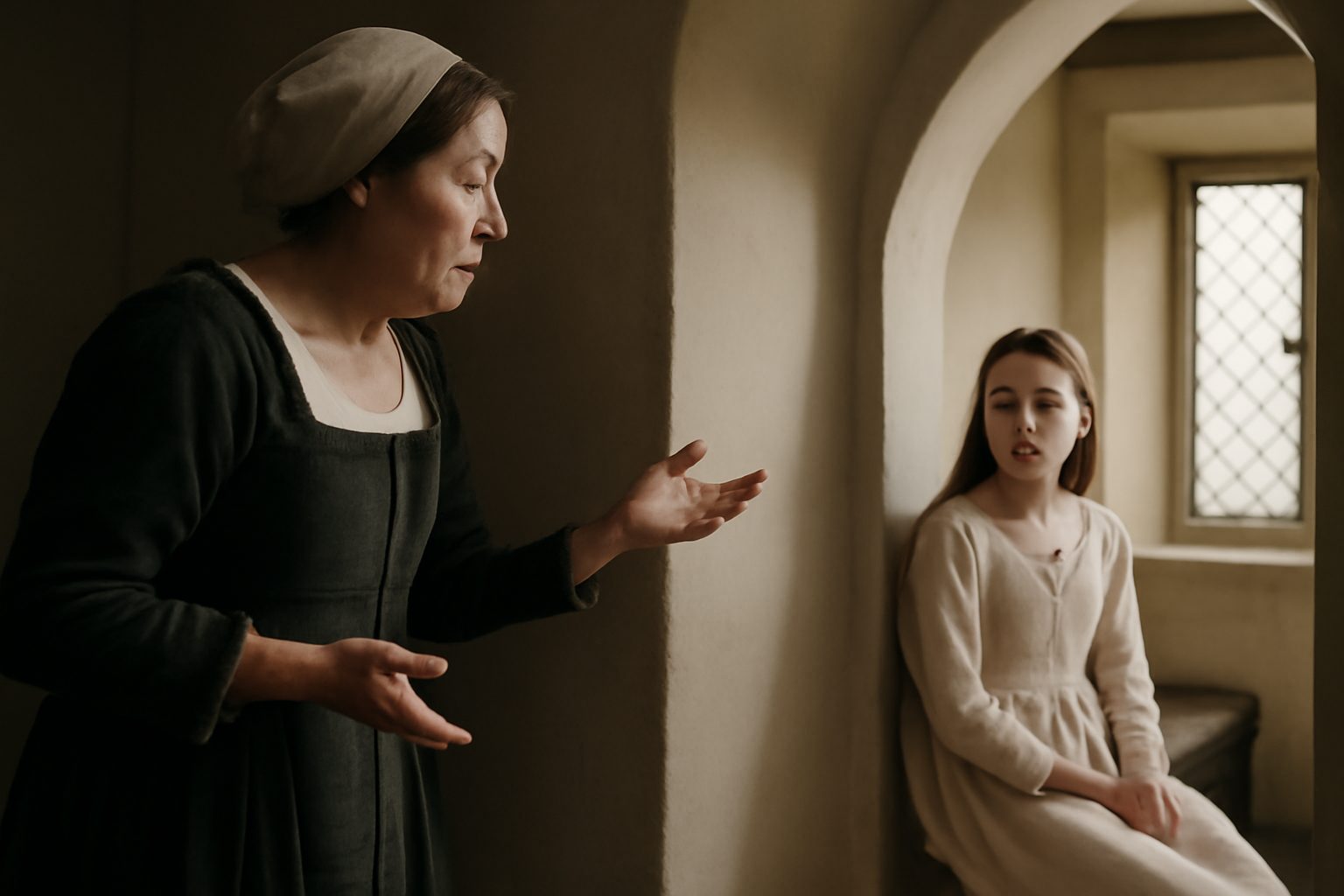
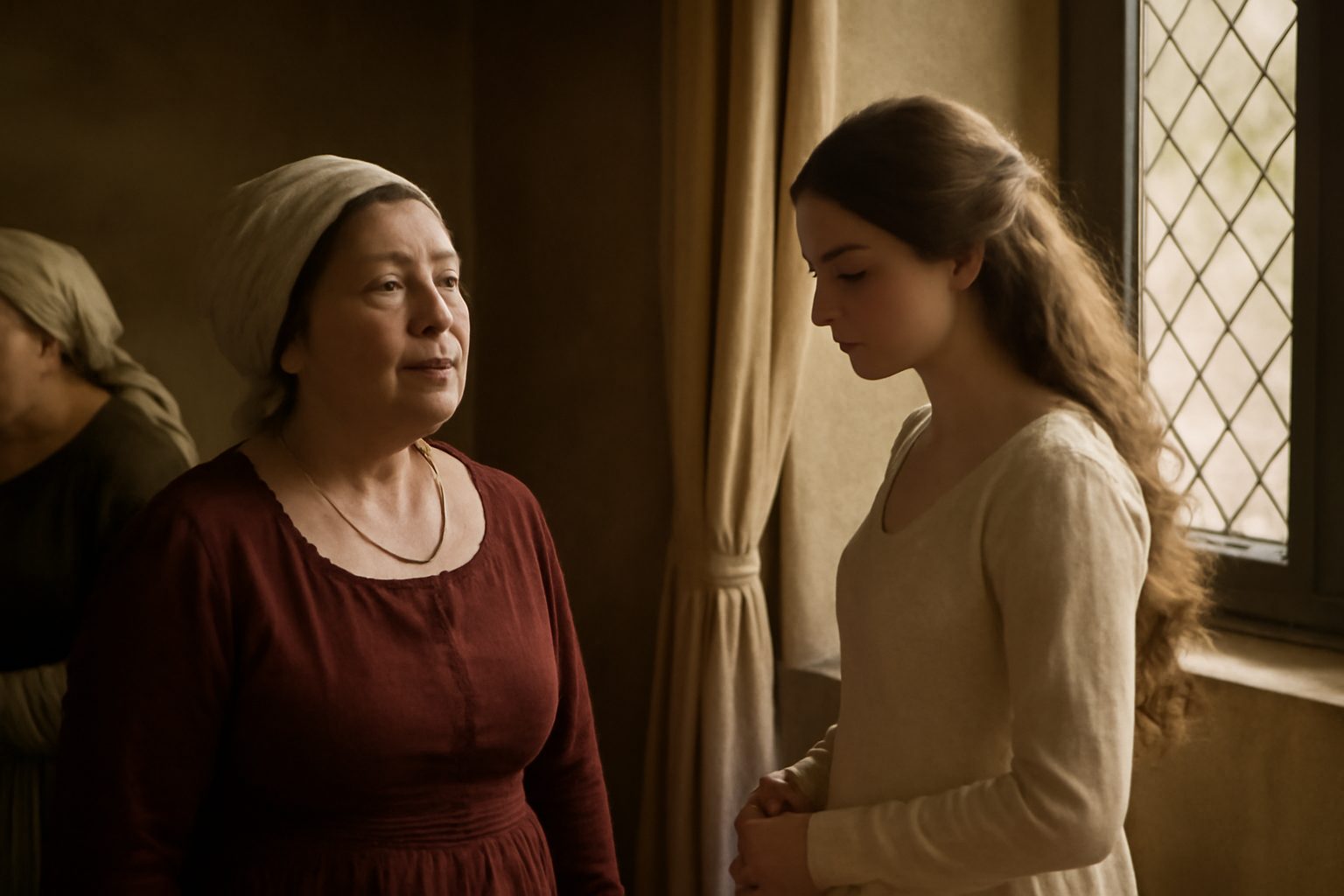
In Act 1, Scene 3 of Romeo and Juliet, the Nurse recounts a humorous yet revealing memory from Juliet's infancy. She describes weaning Juliet by applying bitter wormwood to her breast, a moment that underscores her long-standing, maternal bond with Juliet. This anecdote highlights the Nurse's earthy, affectionate nature while providing insight into Juliet's upbringing.
Nurse: "For I had then laid wormwood to my dug,"
In modern day english, we would say:
Back then, I had put bitter wormwood on my breast to wean my child.
Frequently Asked Questions
What did the Nurse put on her breast in this scene?
The Nurse put wormwood on her breast.
Connections to other verses:
Connections to "For I had then laid wormwood to my dug"
The verse "For I had then laid wormwood to my dug" is part of the Nurse's vivid, earthy recollection of Juliet's infancy. It connects thematically and narratively to several other lines in the scene, particularly those detailing the Nurse's personal history and her deep, almost maternal bond with Juliet.
Nurse's Personal Memories and Loss
The mention of applying wormwood to her breast links directly to "When it did taste the wormwood on the nipple", continuing the anecdote of weaning Juliet. This memory is tied to the Nurse's own maternal experiences and losses, as seen in "Susan and she--God rest all Christian souls!--", where she references her deceased daughter, Susan, who was the same age as Juliet. The bittersweet nature of these memories is underscored by "Were of an age: well, Susan is with God;", highlighting the Nurse's personal grief intertwined with her care for Juliet.
Juliet's Infancy and Development
The verse also relates to the Nurse's detailed account of Juliet's early years, such as "And she was wean'd,--I never shall forget it,--", which directly follows the wormwood reference. This is part of a longer narrative that includes "For then she could stand alone; nay, by the rood," and "She could have run and waddled all about;", painting a picture of Juliet's growth. The earthy, humorous tone continues with "Of my dug and felt it bitter, pretty fool,", emphasizing the physical and emotional intimacy between the Nurse and Juliet.
Comic Relief and Character Depth
The Nurse's rambling, anecdotal style provides comic relief but also depth to her character. Lines like "A' was a merry man--took up the child:" and "To see, now, how a jest shall come about!" showcase her fondness for storytelling and humor, which is rooted in these personal memories. The wormwood incident is a key part of this, illustrating her pragmatic, nurturing yet whimsical nature.
Foreshadowing and Themes
While the wormwood verse is nostalgic, it subtly introduces themes of bitterness and hardship, which foreshadow the play's tragic elements. This contrasts with later lines where the Nurse encourages Juliet's marriage to Paris, such as "As all the world--why, he's a man of wax." and "So shall you share all that he doth possess,", highlighting her role in both Juliet's past and her fraught future.