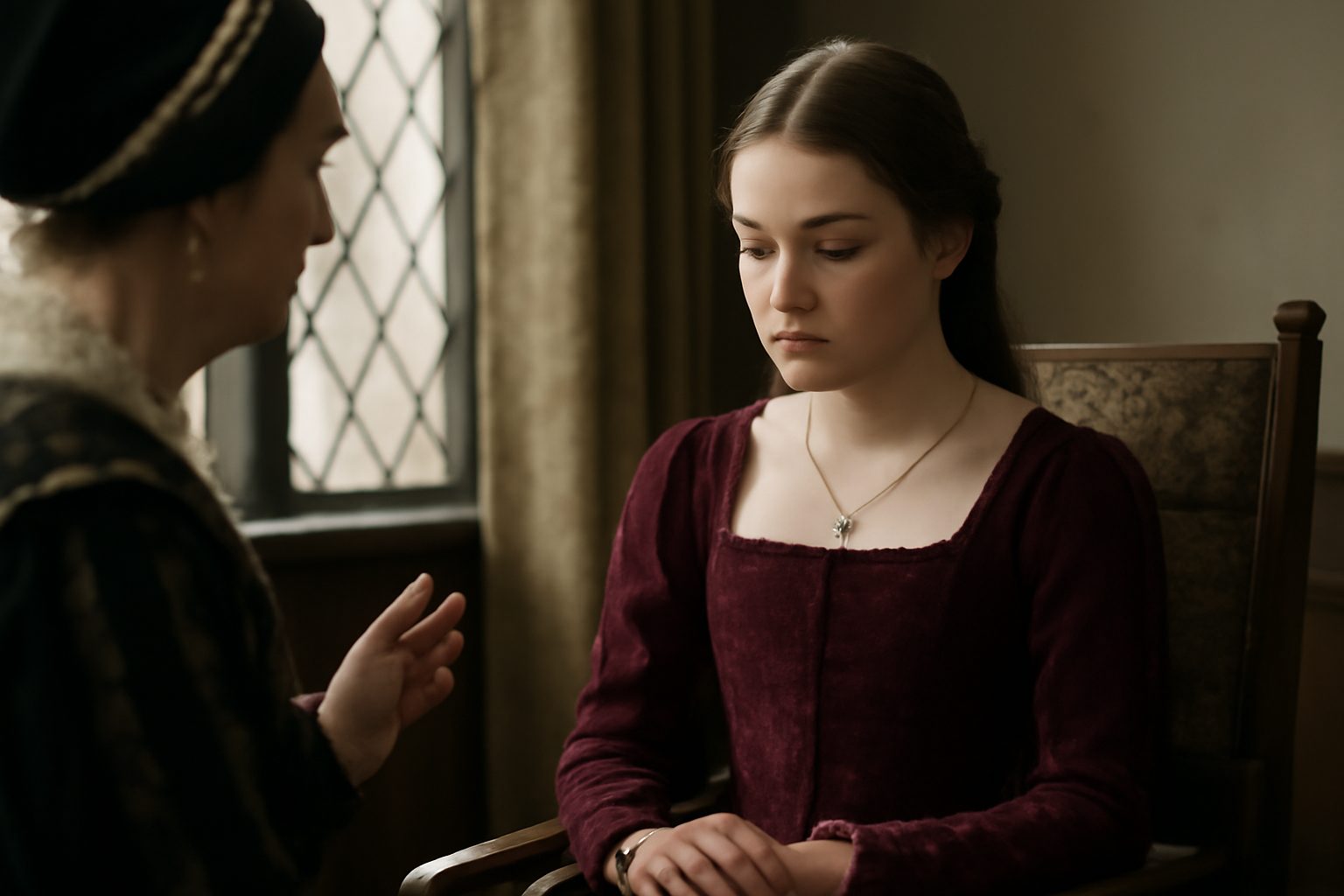
In Act 1 Scene 3 of Romeo and Juliet, the Nurse recounts a humorous childhood memory of Juliet while speaking with Lady Capulet. Her remark about not being able to help but laugh reflects her affectionate, lighthearted nature, contrasting with Lady Capulet’s more formal demeanor. This moment offers a glimpse into the Nurse’s close bond with Juliet before the play’s tragic events unfold.
Nurse: "Yes, madam: yet I cannot choose but laugh,"
In modern day english, we would say:
Yes, my lady, but I can't help laughing.
Frequently Asked Questions
Why does the Nurse laugh in this scene?
The Nurse laughs because she remembers a funny story about Juliet when she was a baby.
Connections to other verses:
Connections to "Yes, madam: yet I cannot choose but laugh,"
The verse "Yes, madam: yet I cannot choose but laugh," is spoken by the Nurse in response to Lady Capulet's command to stop her rambling story. This moment of involuntary laughter connects to several other verses in the scene, primarily through the Nurse's nostalgic and humorous recollections of Juliet's infancy.
Nostalgic Recollections and Humor
The laughter here stems from the Nurse's memory of Juliet as a toddler, specifically an incident where Juliet fell and her husband made a jest. This connects directly to "Yea,' quoth my husband,'fall'st upon thy face?", where the Nurse quotes her husband's teasing remark after Juliet's fall. The humor and affection in this memory are echoed in "To see, now, how a jest shall come about!", highlighting the Nurse's fondness for recounting these playful moments.
Juliet's Early Years
The Nurse's anecdote is part of a longer narrative about Juliet's childhood, which includes "And she was wean'd,--I never shall forget it,--", referring to Juliet being weaned, and "When it did taste the wormwood on the nipple", which details the method used to wean her. These verses collectively paint a vivid, personal picture of Juliet's infancy, which the Nurse recalls with a mix of humor and tenderness.
Response to Authority
The laughter also follows Lady Capulet's earlier exasperated command, "Enough of this; I pray thee, hold thy peace.", showing the Nurse's inability to contain her mirth despite being reprimanded. This dynamic underscores the Nurse's informal, maternal role versus Lady Capulet's more formal demeanor.
Continuation of the Story
Right after this laugh, the Nurse continues her story with "To think it should leave crying and say 'Ay.'", describing Juliet's response as a child, which further emphasizes the comical and endearing nature of the memory that provokes her laughter.