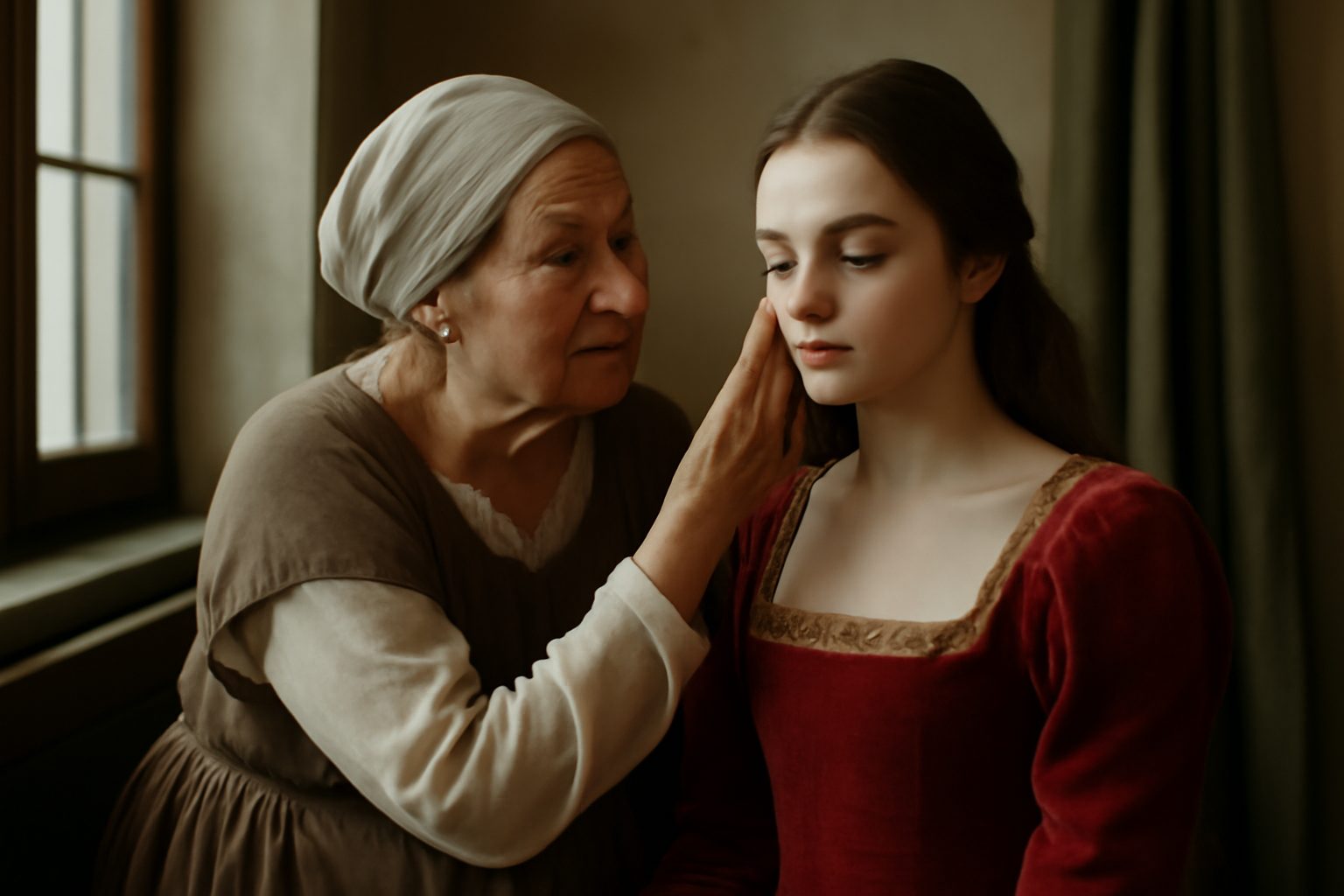
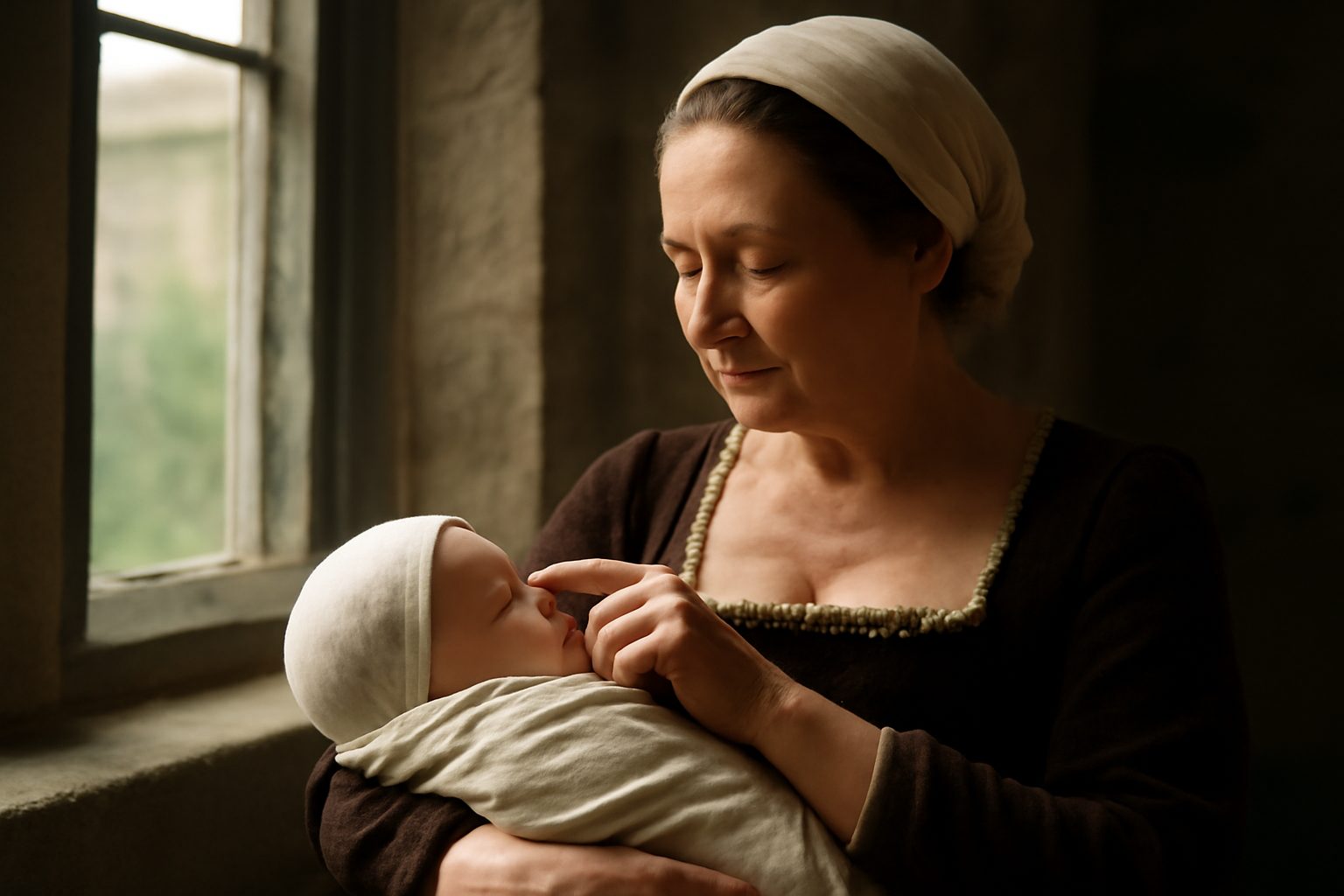
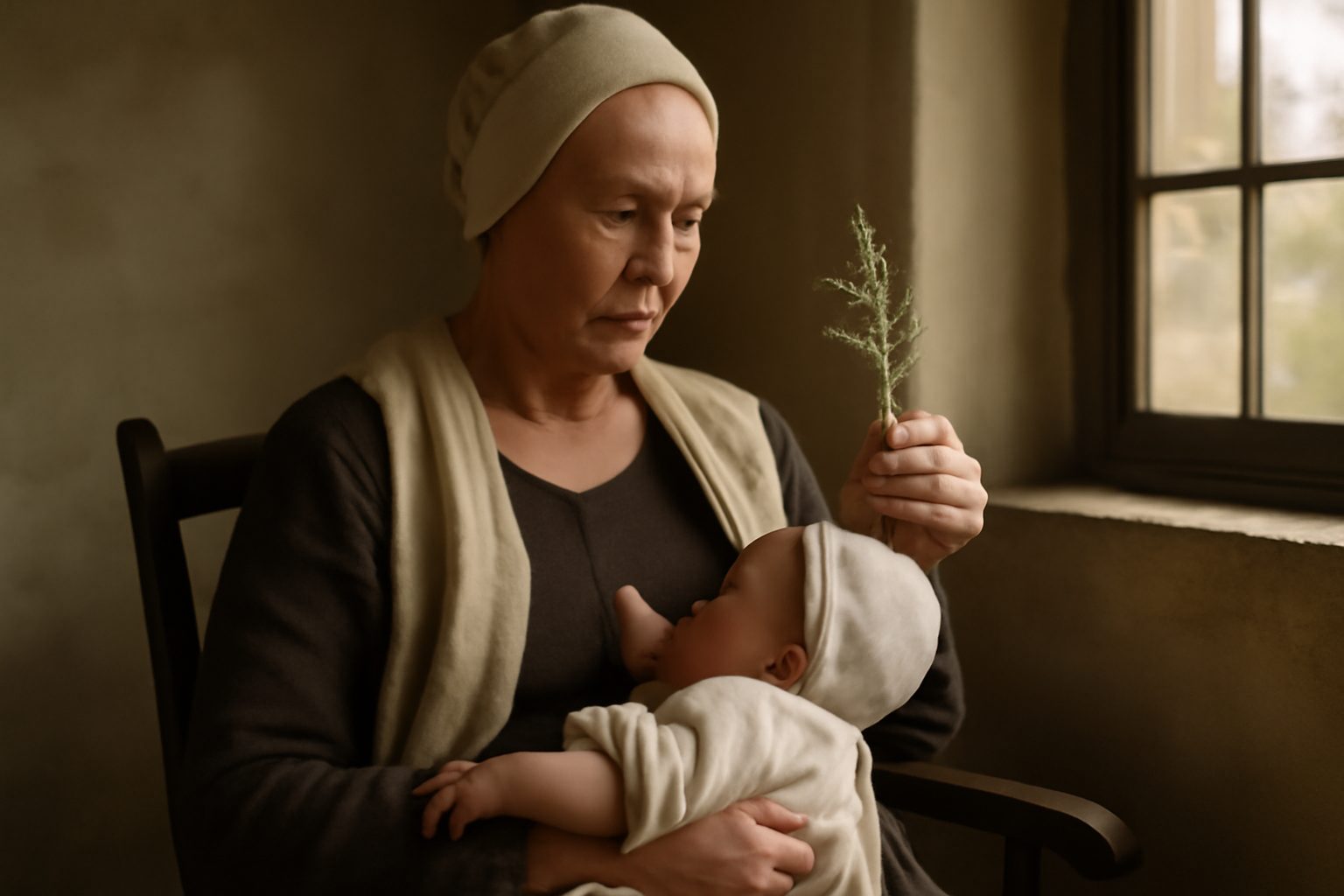
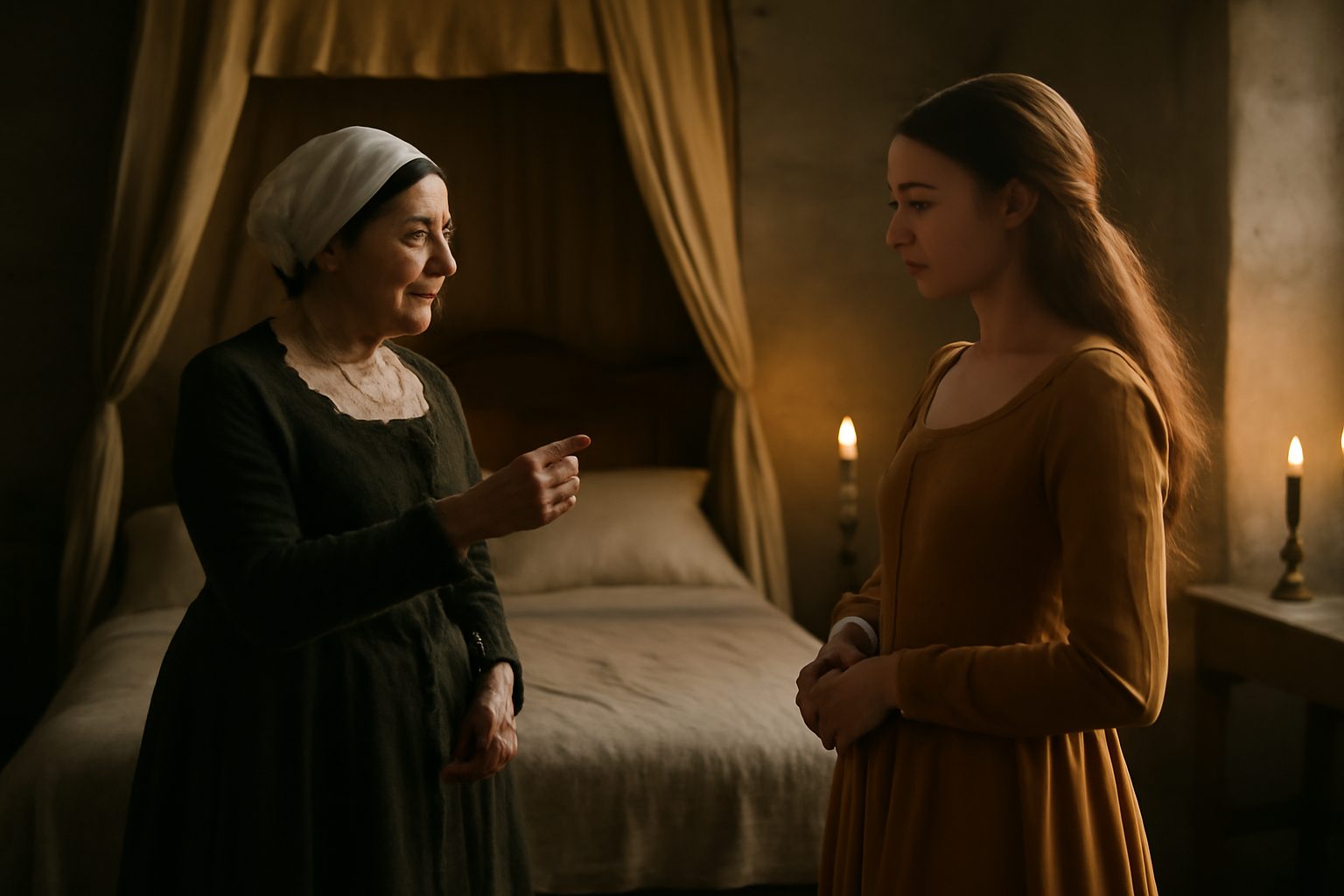
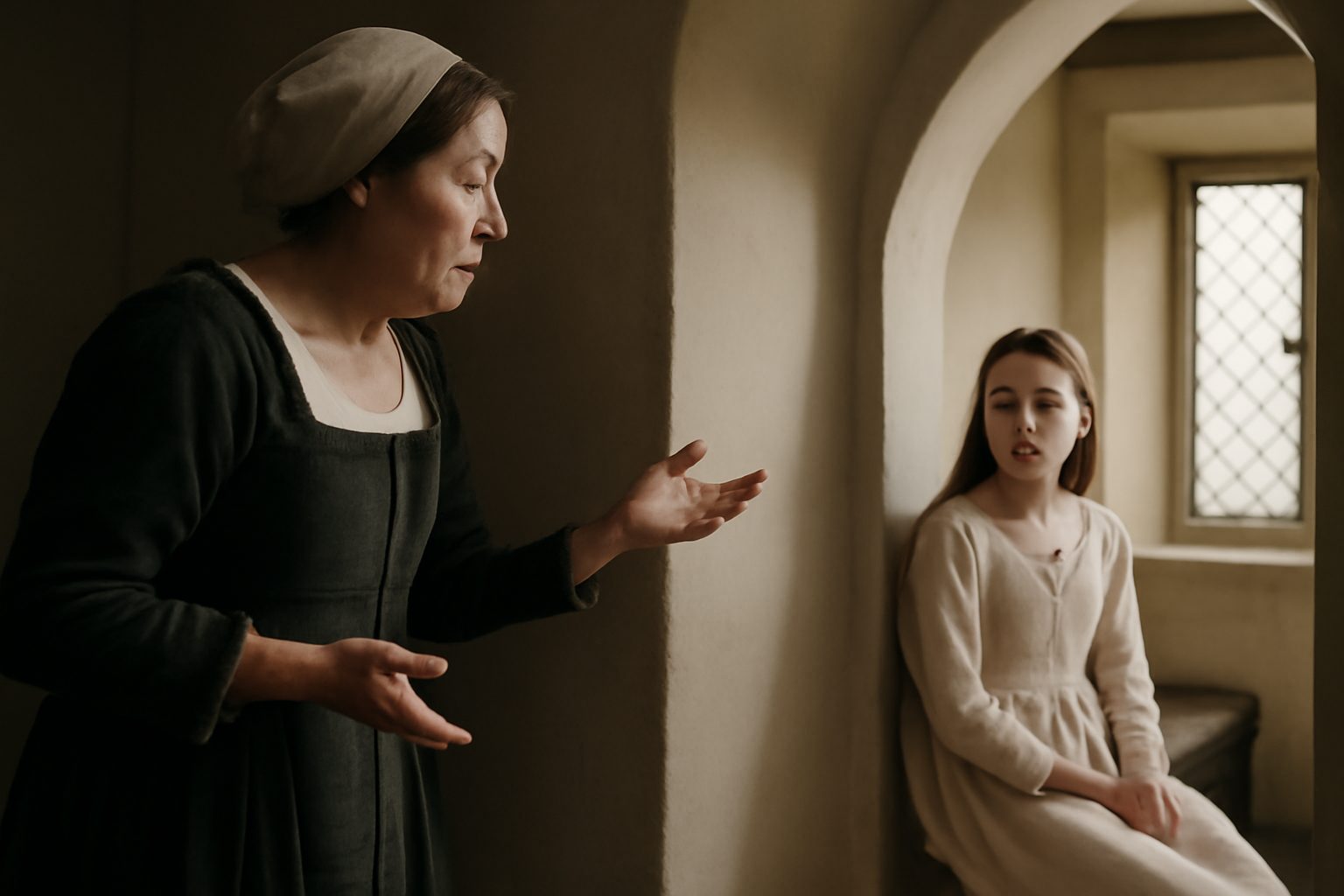
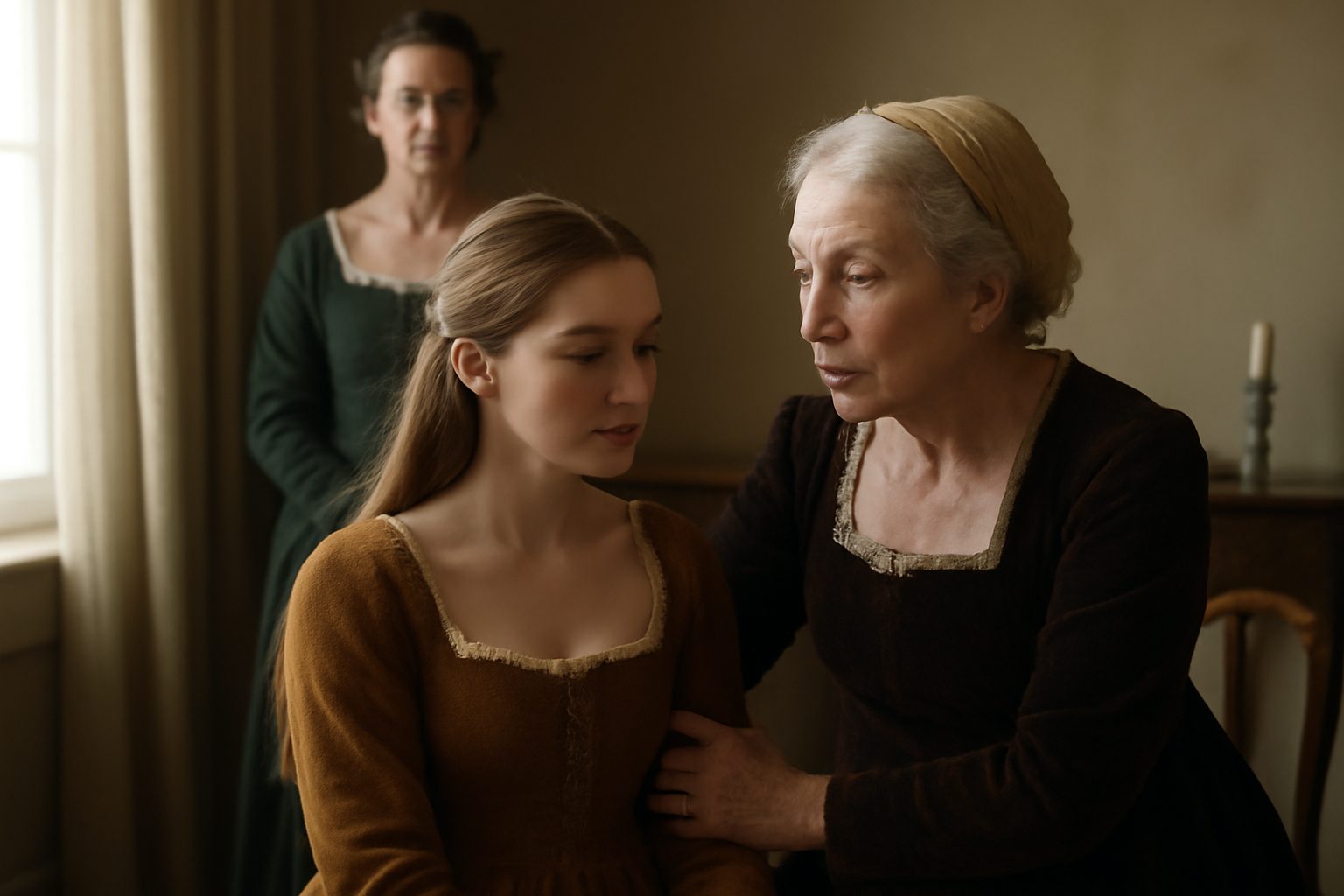
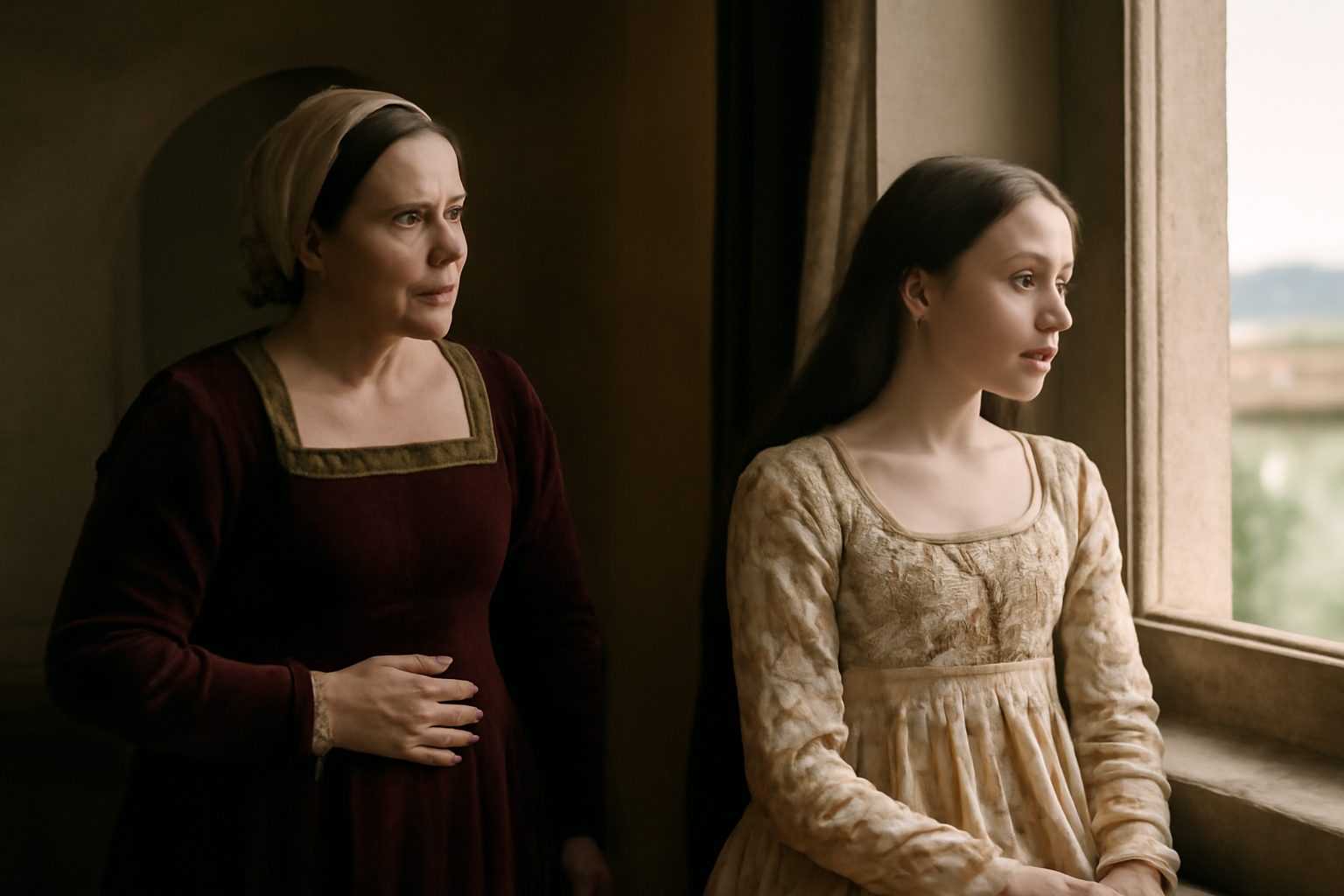
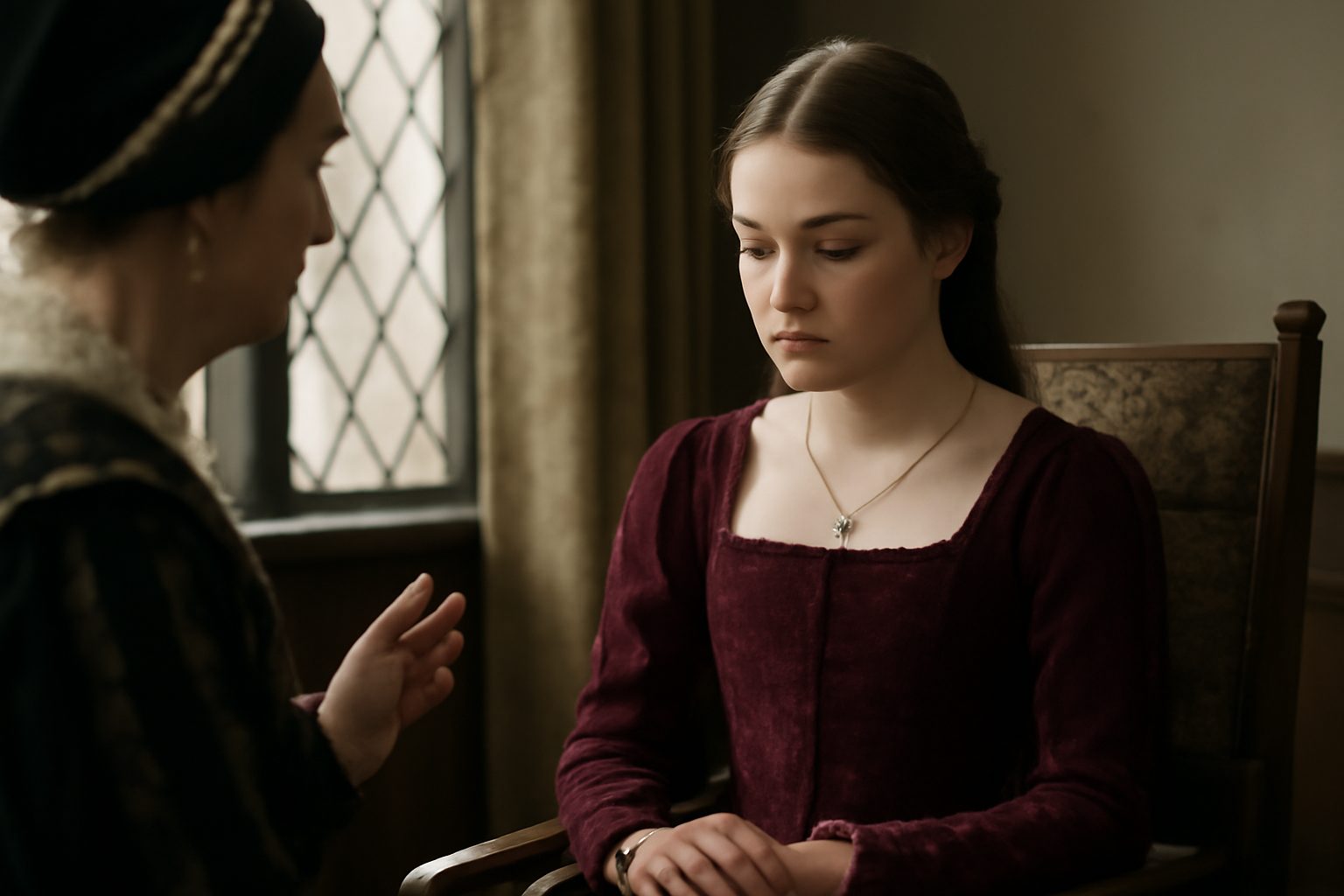
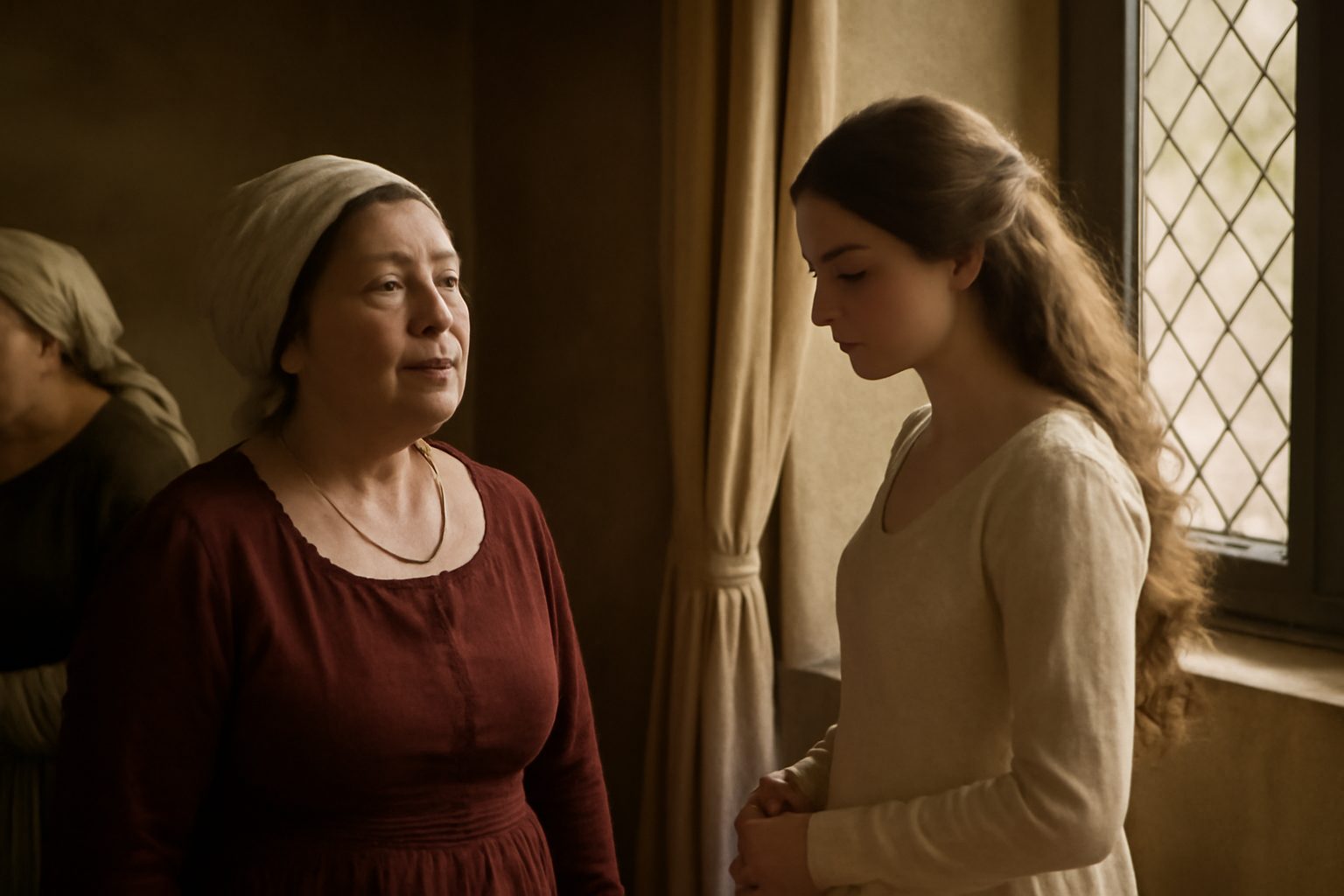
In Act 1, Scene 3 of Romeo and Juliet, the Nurse reminisces about Juliet's childhood in a humorous and bawdy monologue. This particular line playfully exaggerates a small injury Juliet once had, comparing it to the size of a rooster's testicle to emphasize the Nurse's fond, earthy storytelling. The moment highlights the Nurse's affectionate, if irreverent, relationship with Juliet.
Nurse: "A bump as big as a young cockerel's stone;"
In modern day english, we would say:
The nurse is complaining about a lump on her head as big as a small rooster's testicle.
Frequently Asked Questions
What does the Nurse compare the bump to in this line?
She compares the bump to the size of a young rooster's testicle.
Connections to other verses:
Connections to "A bump as big as a young cockerel's stone"
The verse "A bump as big as a young cockerel's stone" is part of the Nurse's vivid, earthy recollection of Juliet's childhood. It connects thematically and narratively to several other passages in the scene, particularly those that highlight the Nurse's character and her intimate, often humorous, memories of raising Juliet.
Connection to Childhood Injury and Memory
The description of Juliet's childhood injury in this line is immediately preceded by "And yet, I warrant, it had upon its brow", which sets up the anecdote, and followed by "A parlous knock; and it cried bitterly", emphasizing the severity and emotional impact of the incident. These verses together paint a tender, albeit comical, picture of young Juliet's vulnerability.
Connection to the Nurse's Anecdotal Style
The Nurse's fondness for digressive storytelling is evident in her recounting of Juliet's weaning and early words, such as in "And, pretty fool, it stinted and said 'Ay.'" and "The pretty wretch left crying and said 'Ay.'". These moments, like the description of the bump, showcase her maternal pride and the personal history she shares with Juliet.
Connection to Themes of Growth and Time
The Nurse's references to Juliet's age and development, such as "Come Lammas-eve at night shall she be fourteen" and "For then she could stand alone", frame the bump anecdote within the broader context of Juliet's journey from infancy to marriageable age, underscoring the passage of time and the inevitability of change.
Connection to Humor and Earthiness
The Nurse's use of coarse, bodily humor in this line is echoed in other parts of her speech, such as "Thou wilt fall backward when thou comest to age" and "Thou wilt fall backward when thou hast more wit", which carry playful, albeit bawdy, undertones about maturation and sexuality.