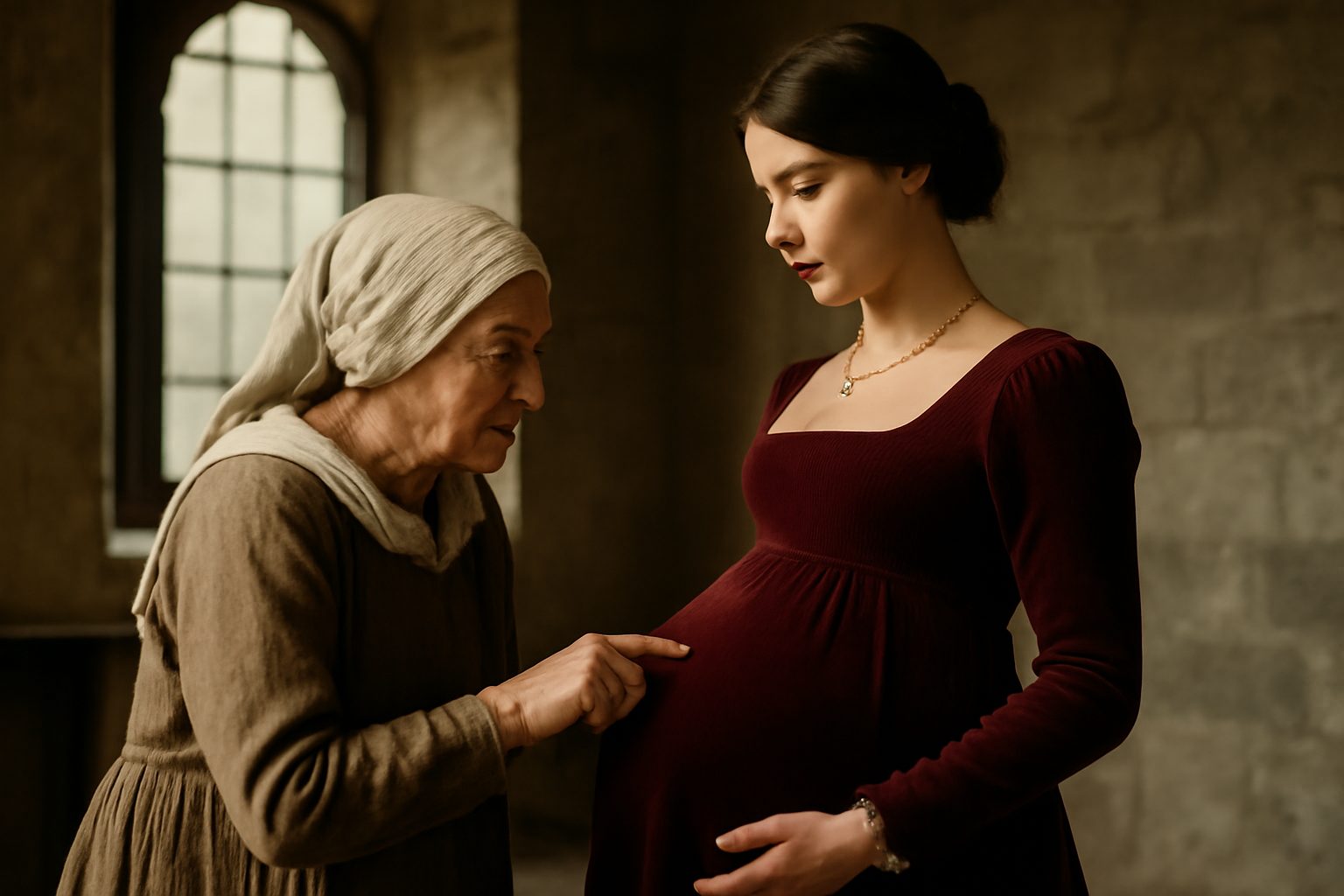
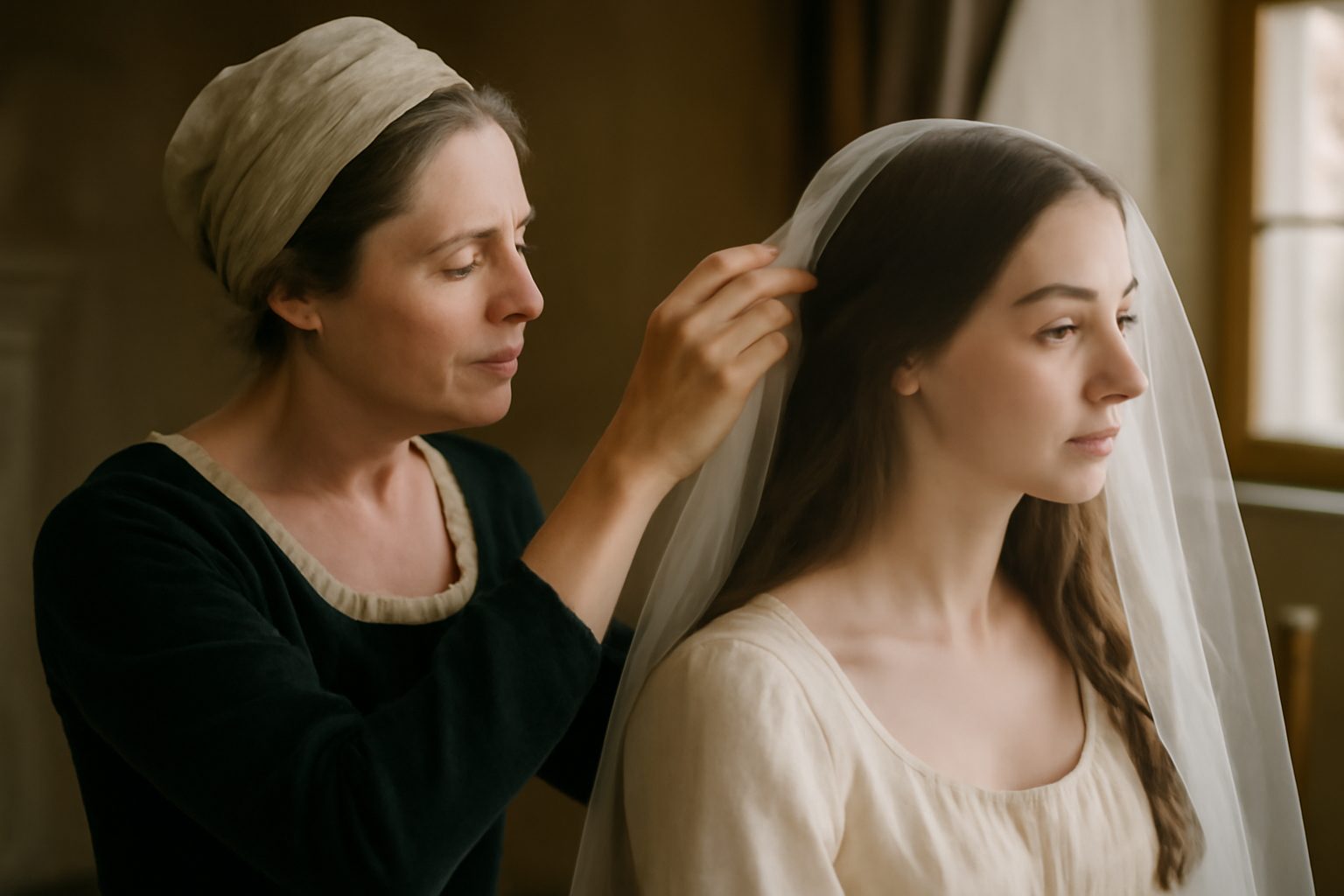
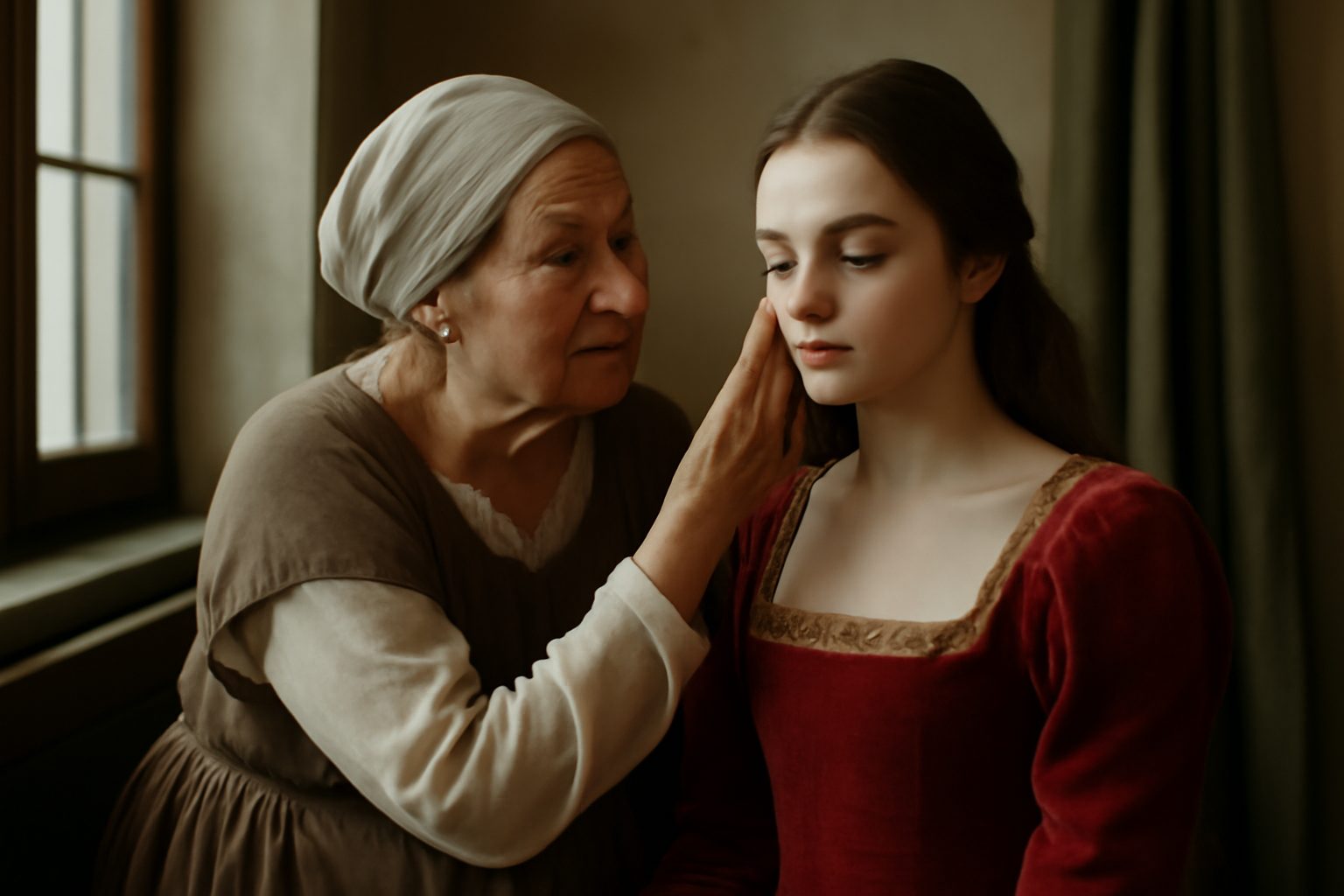
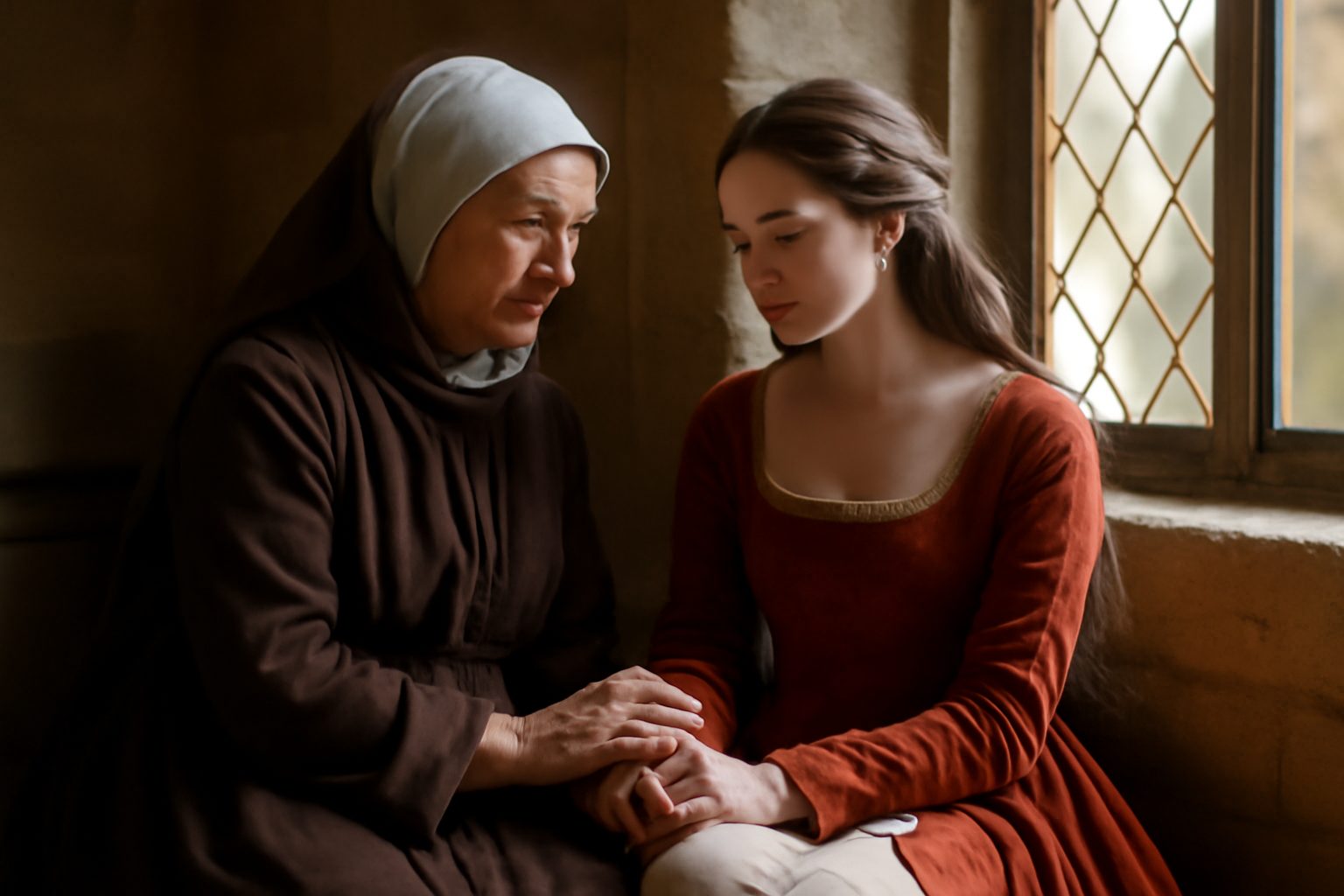
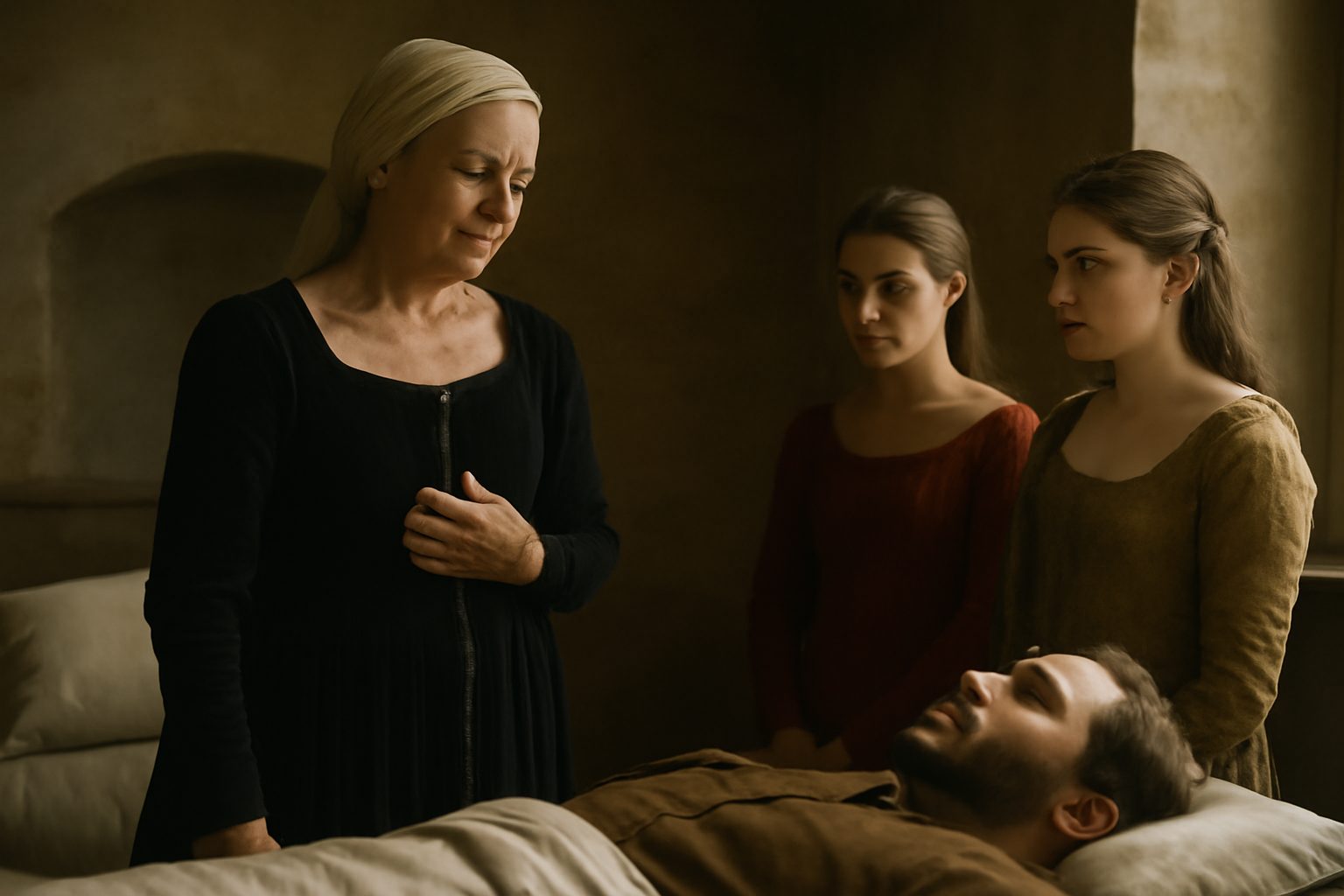
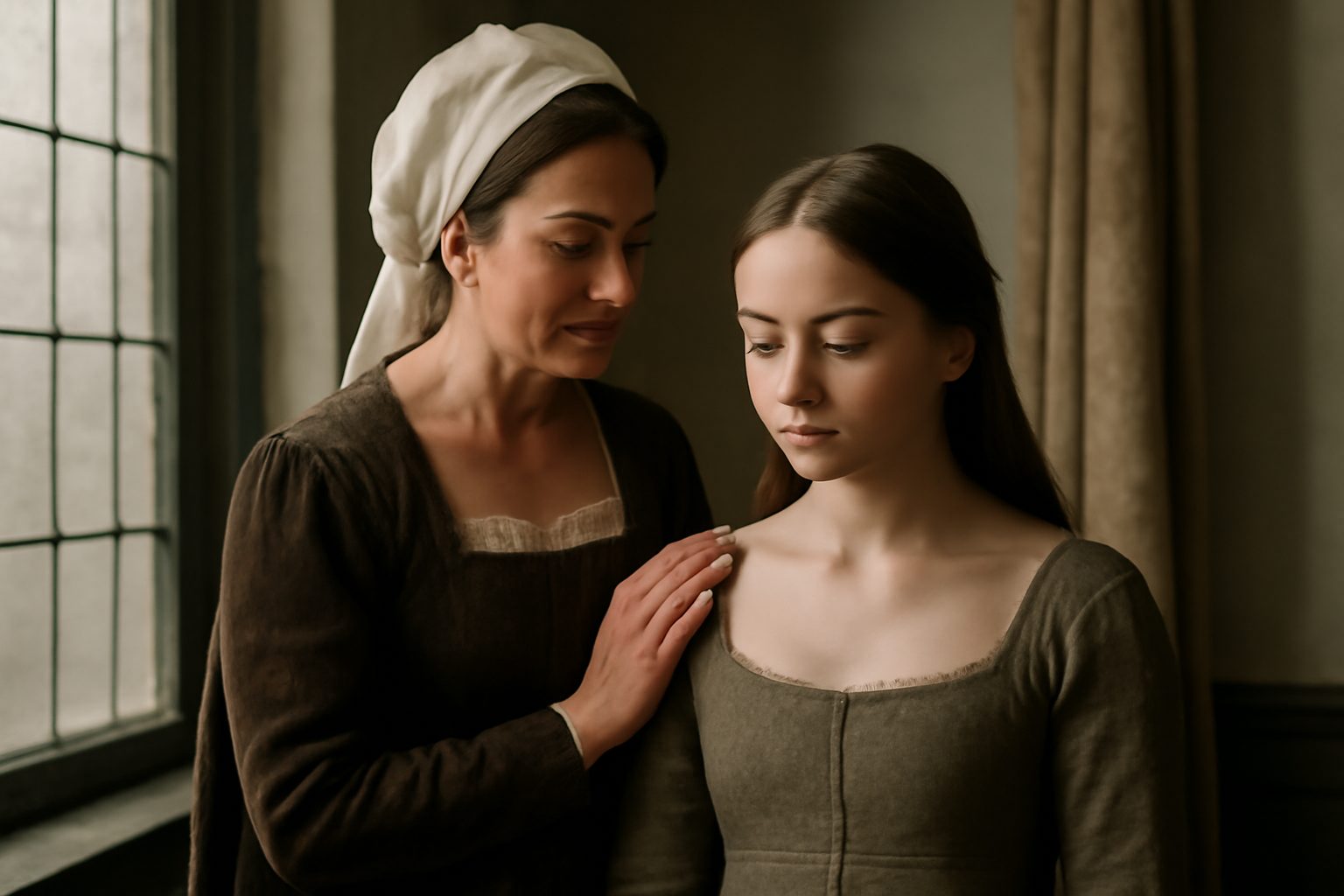
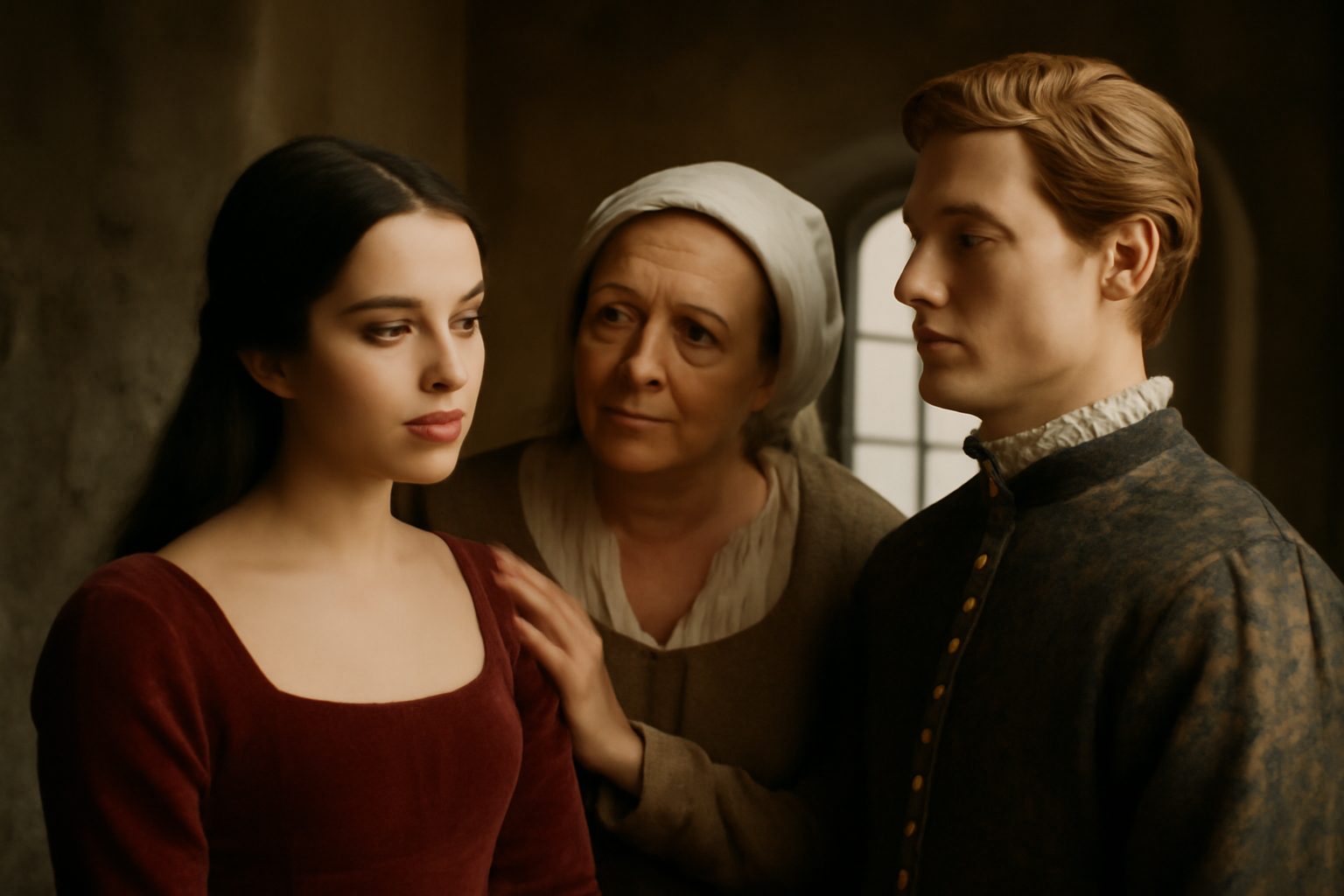
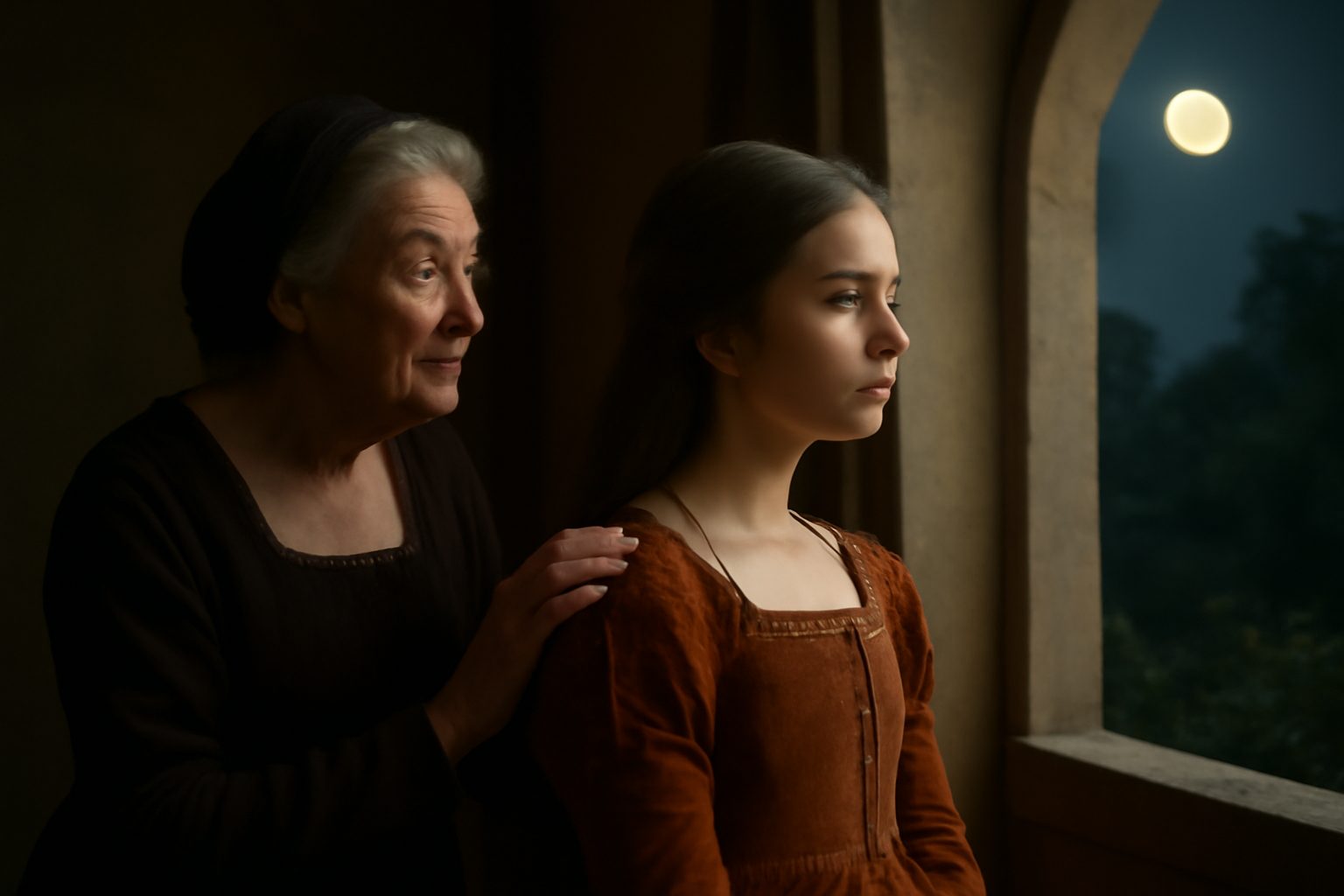
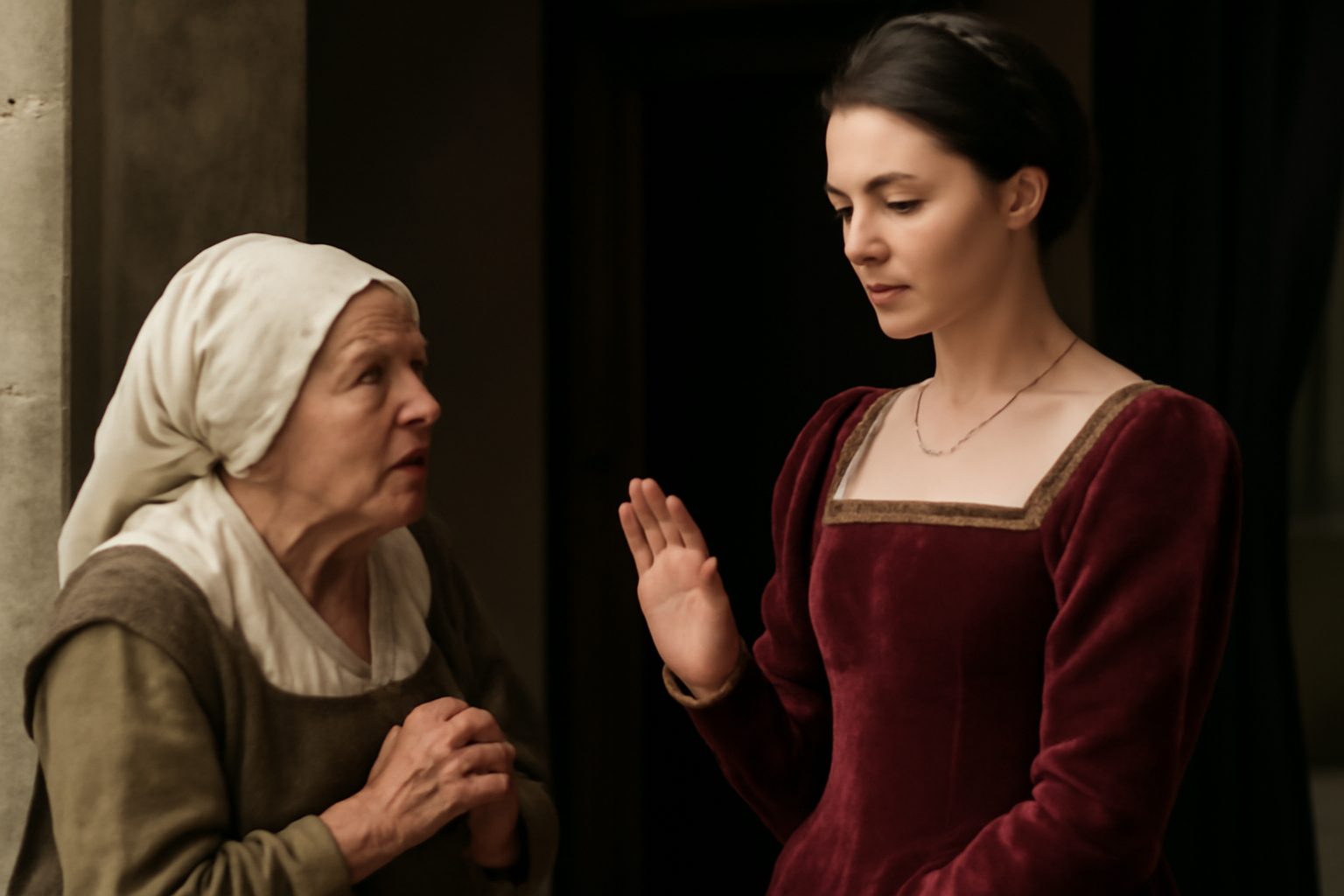
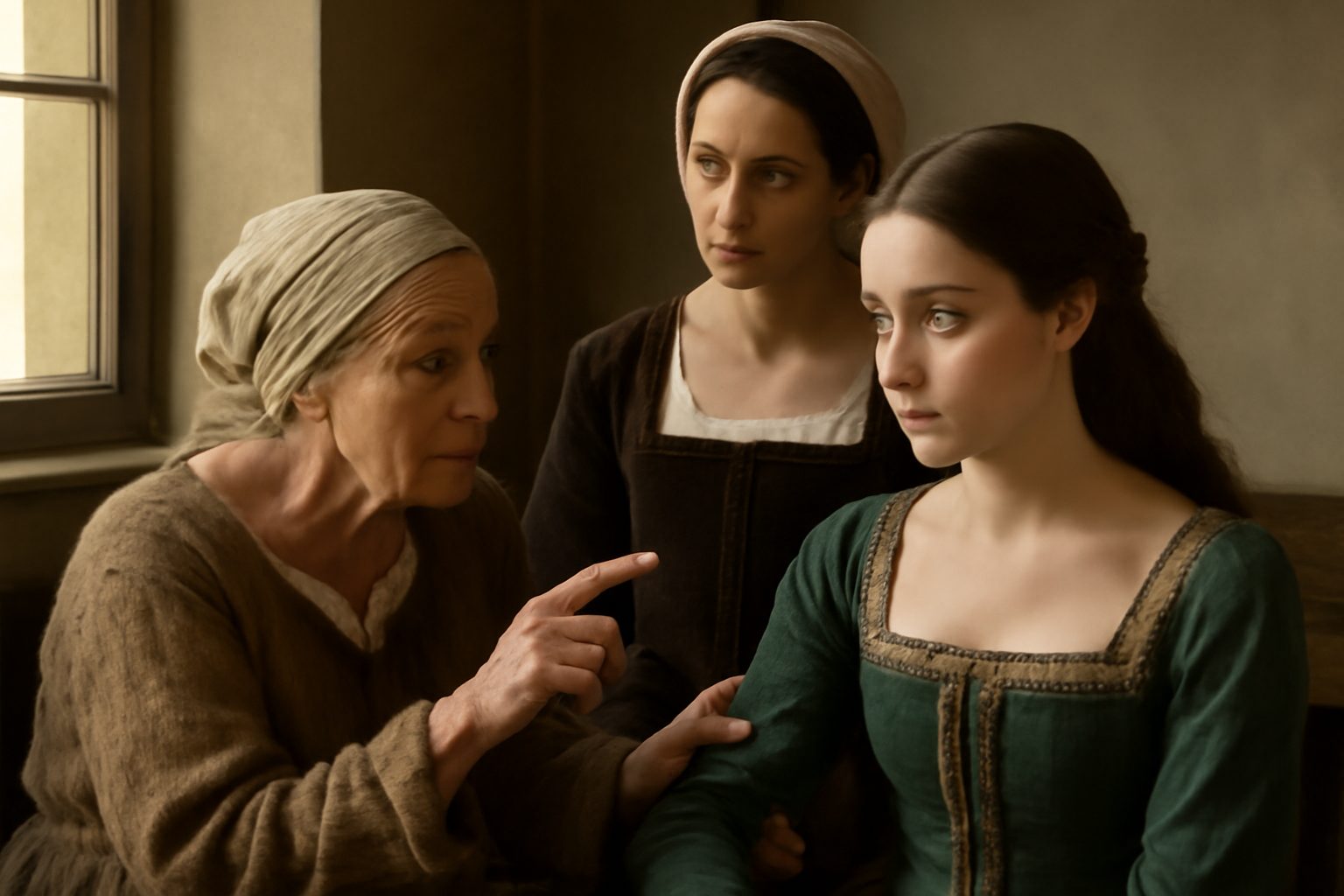
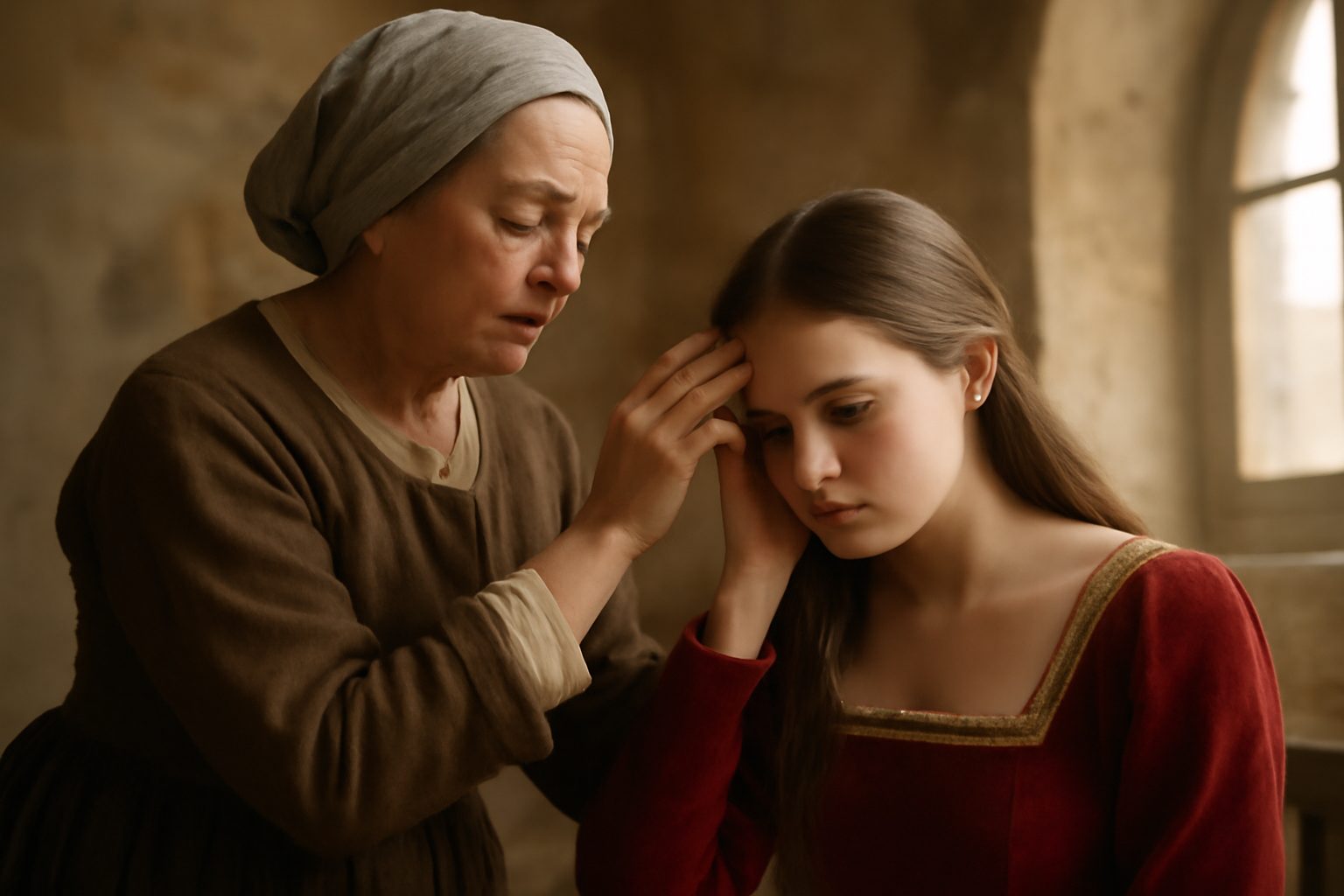
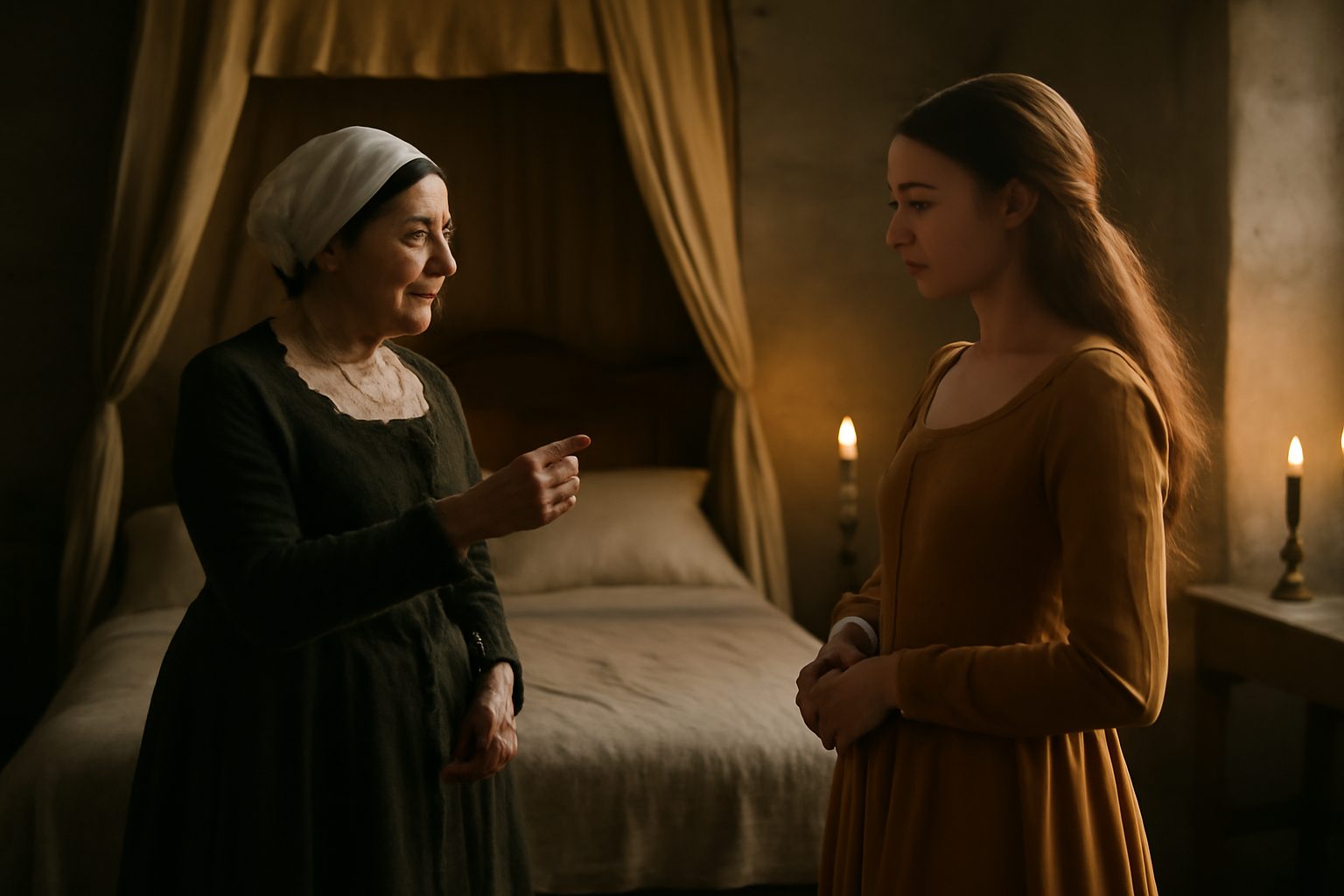
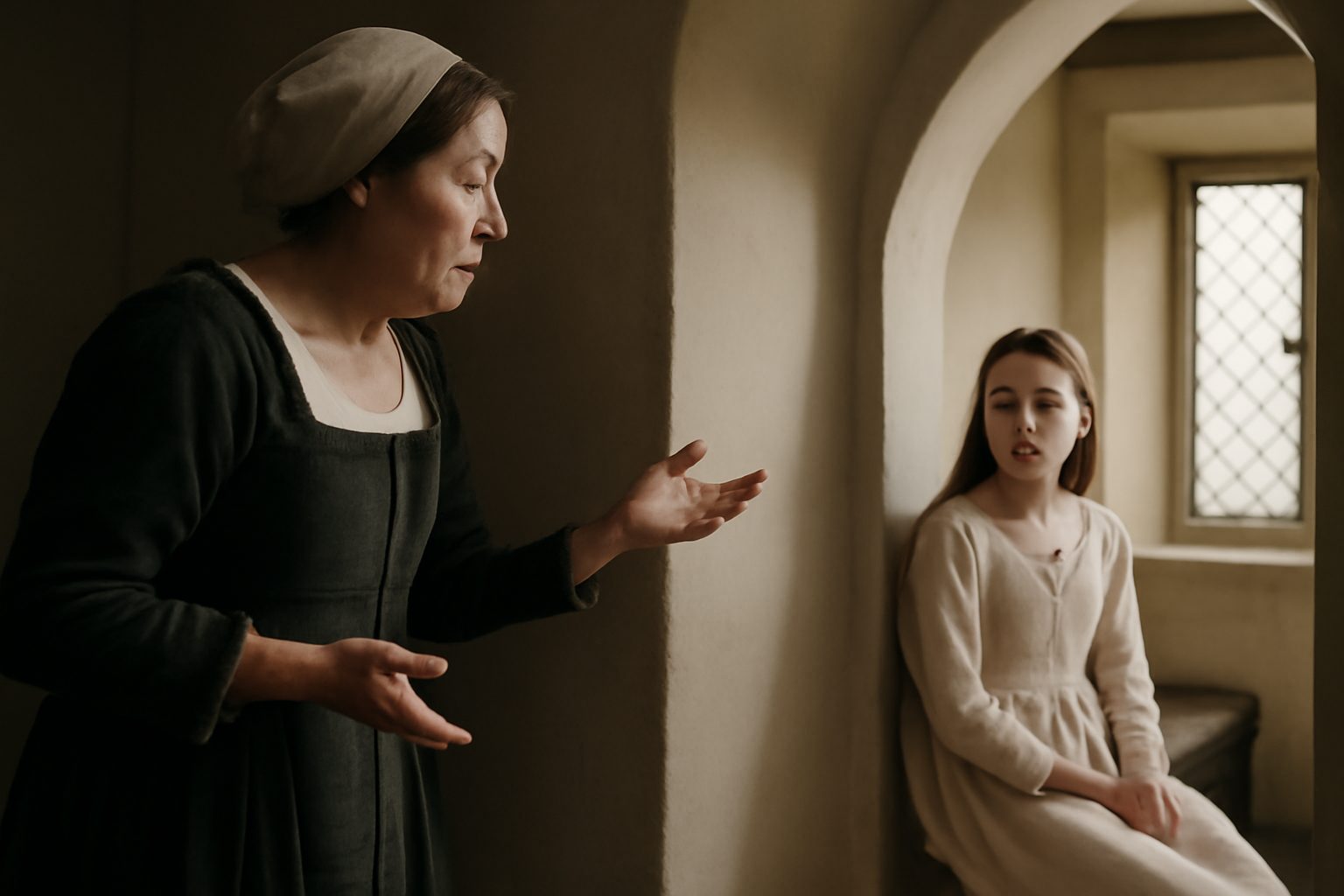
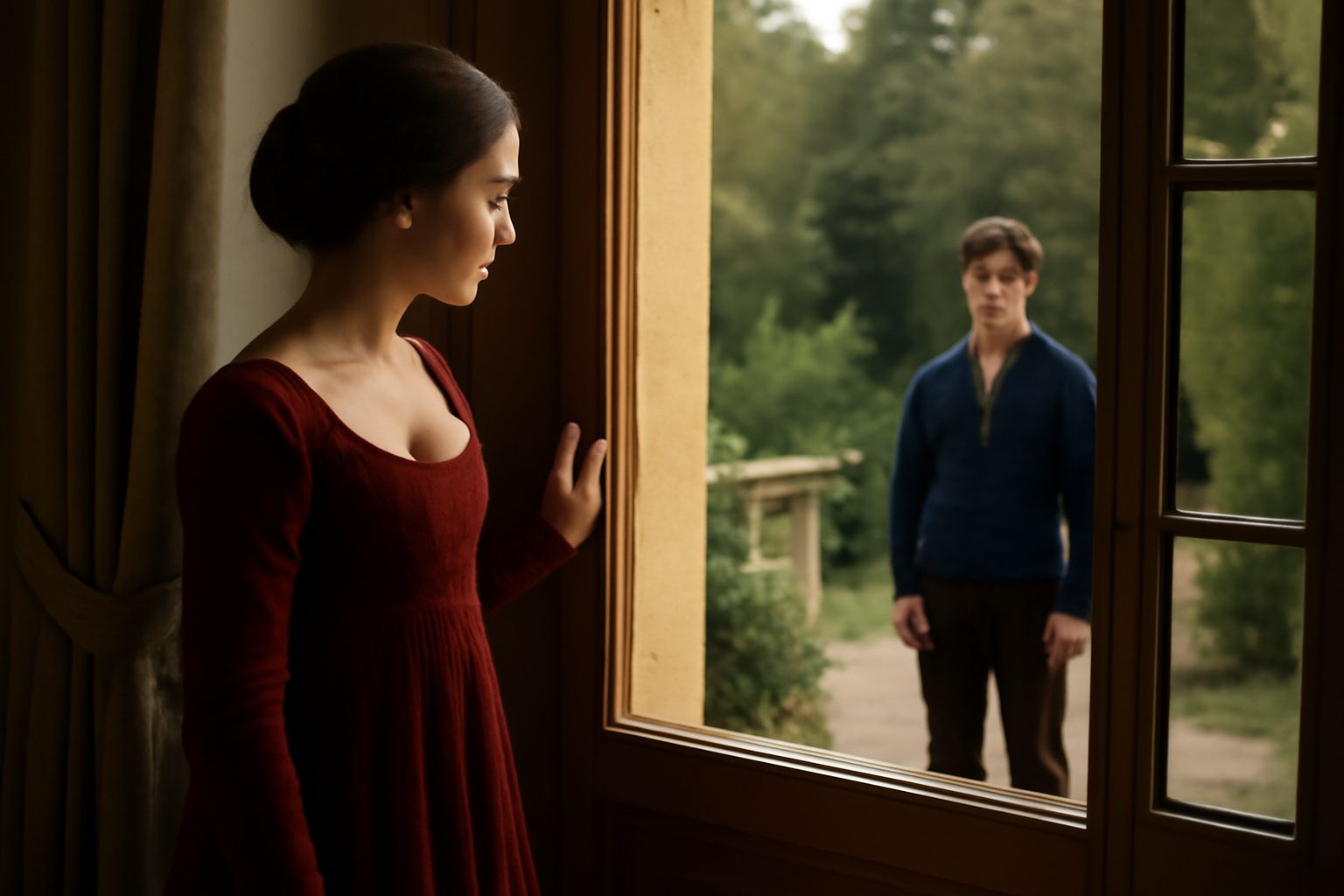
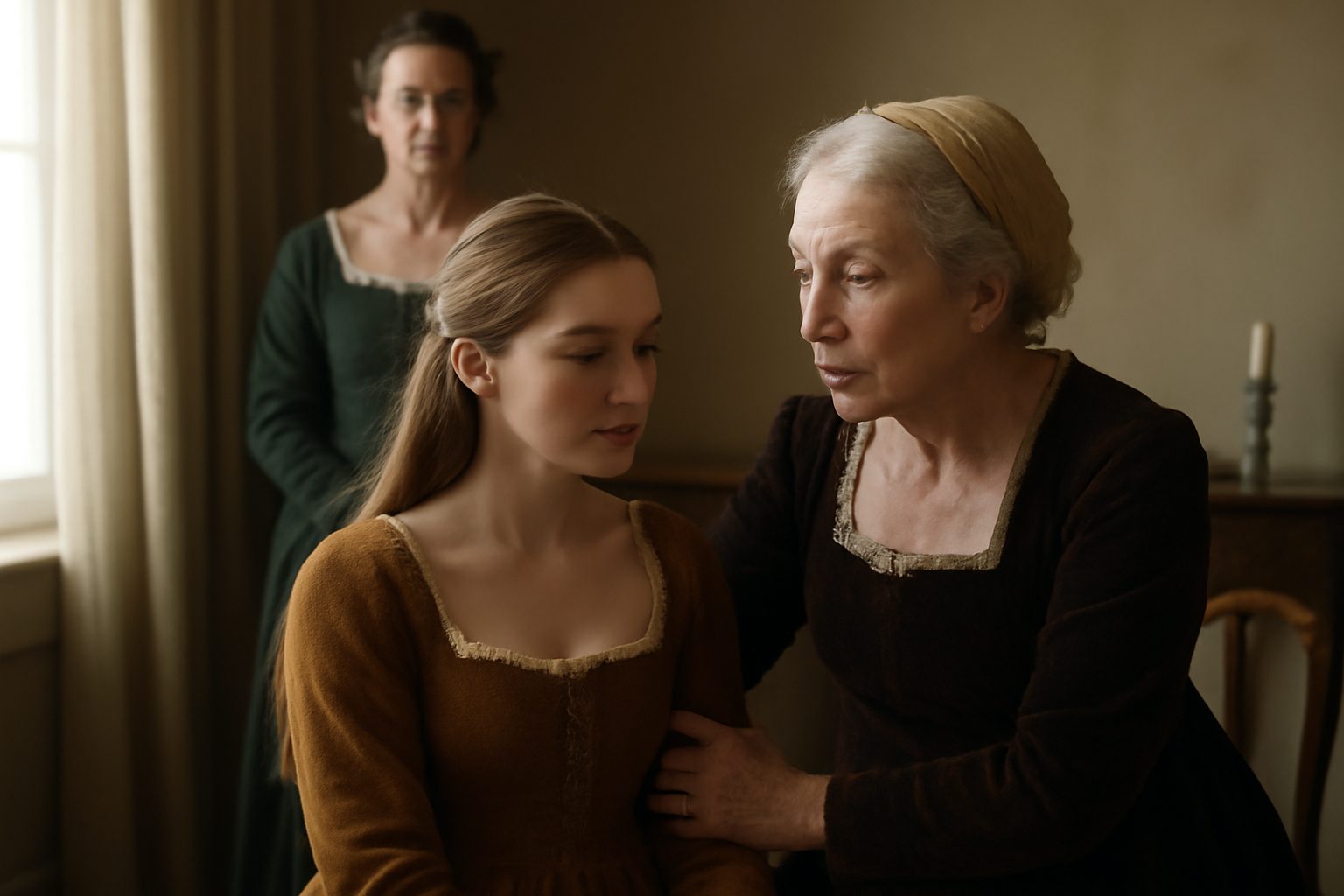
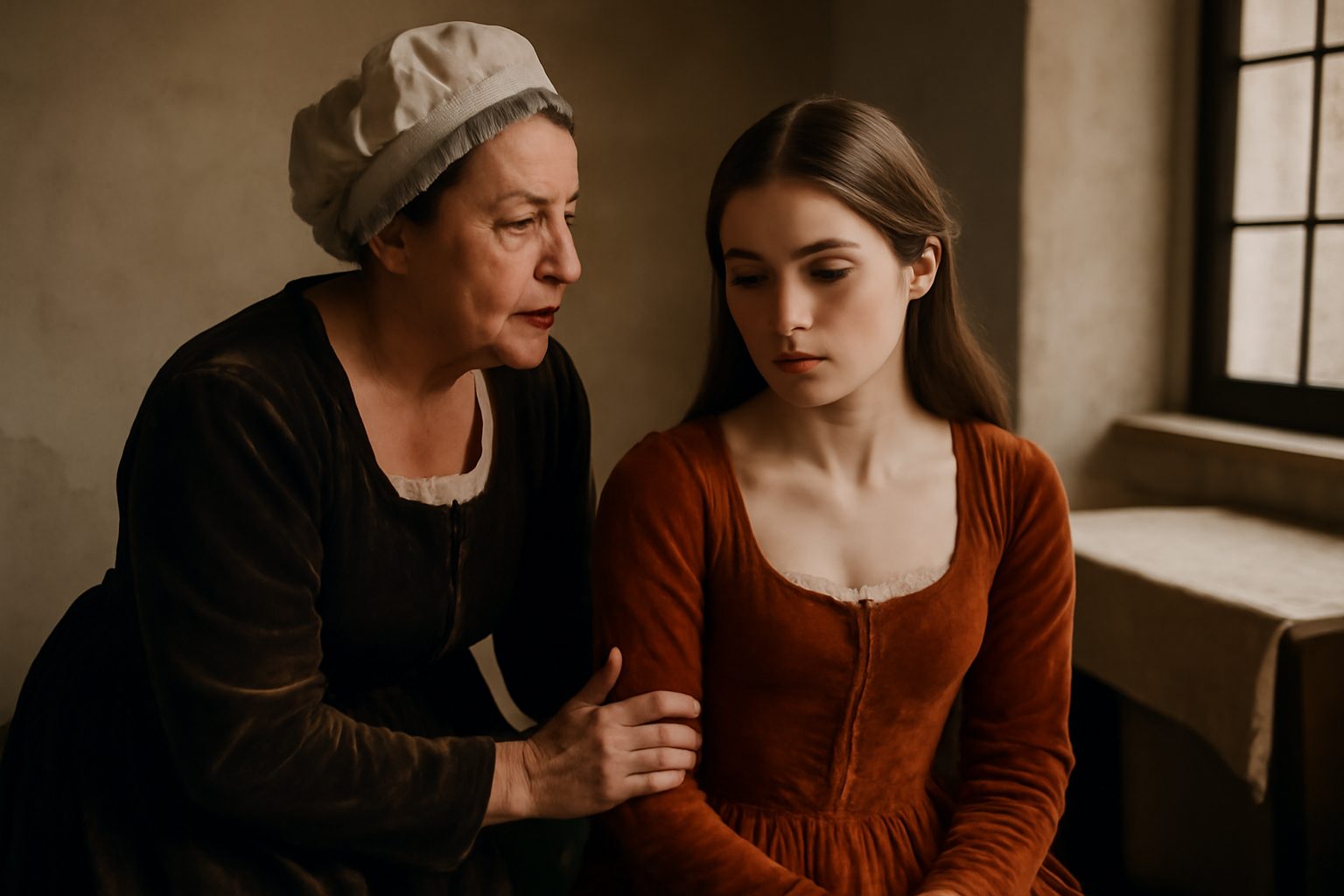
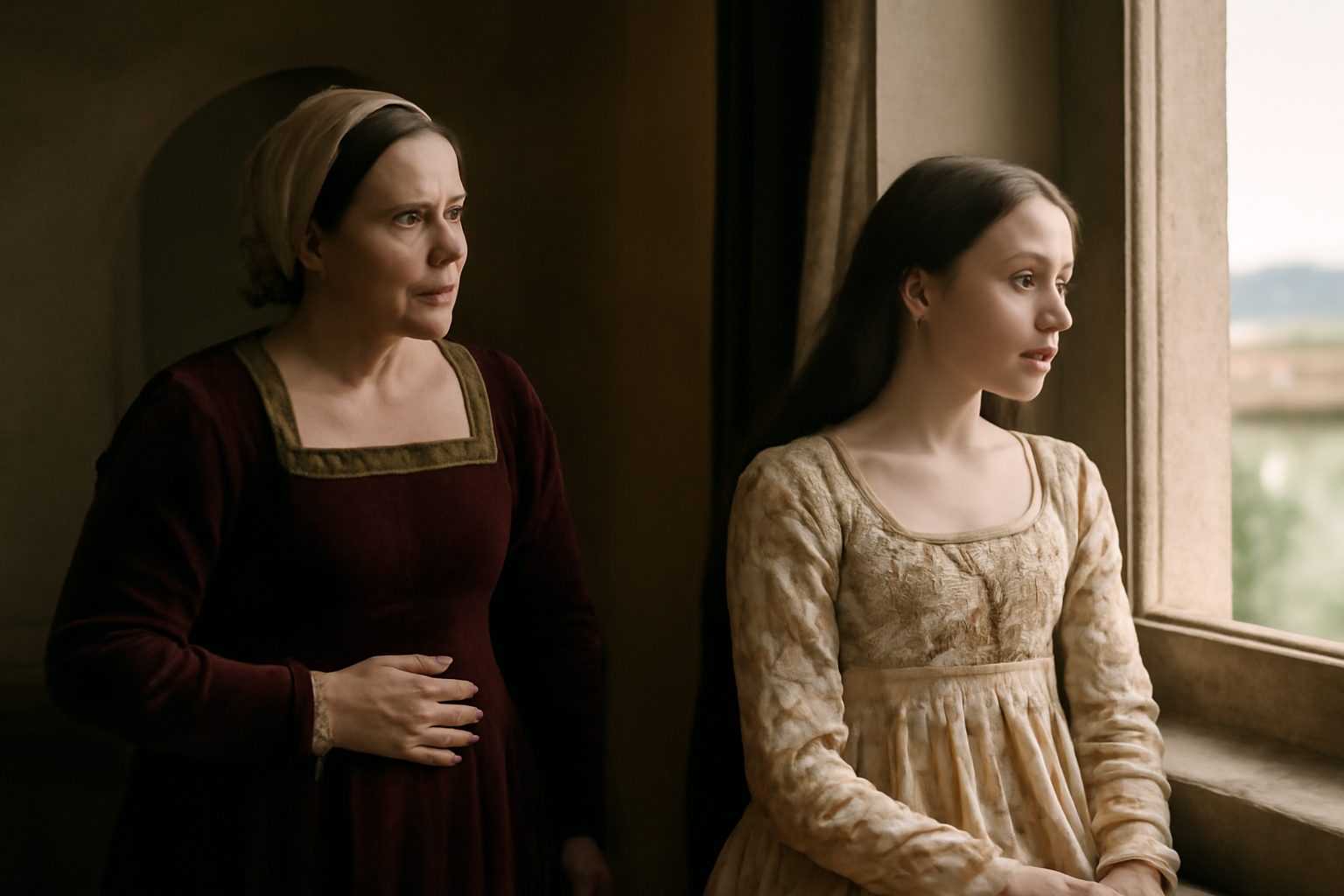
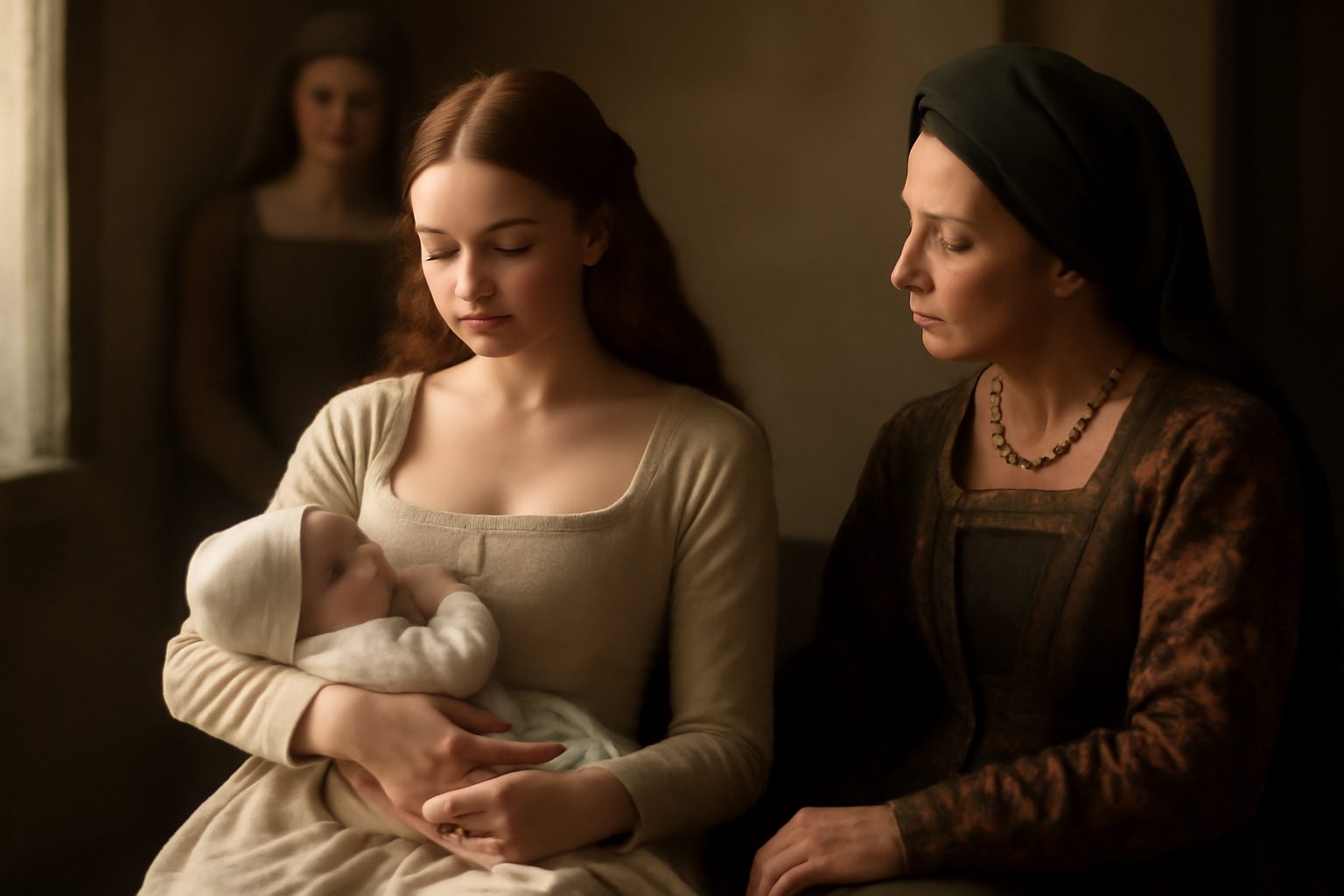
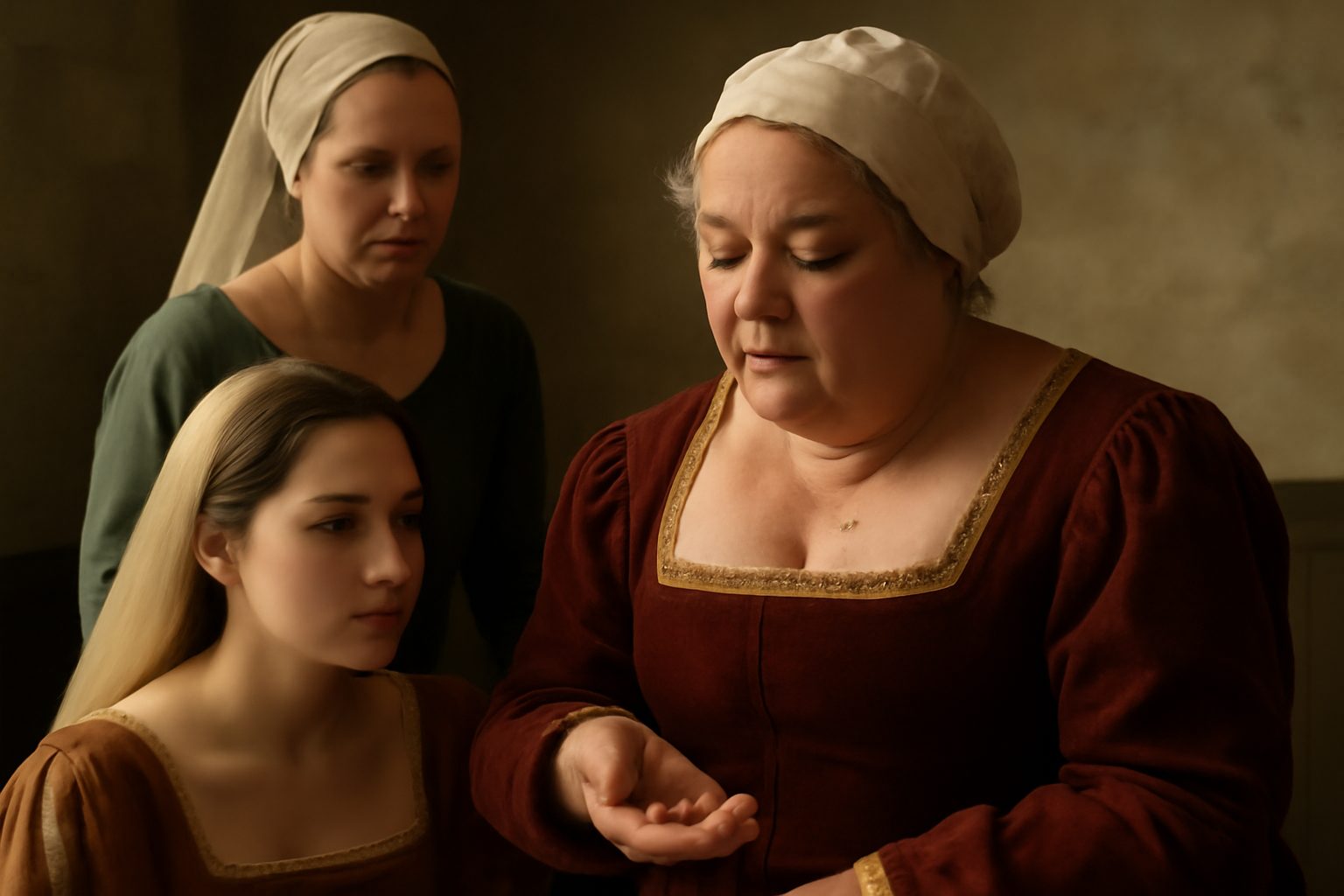
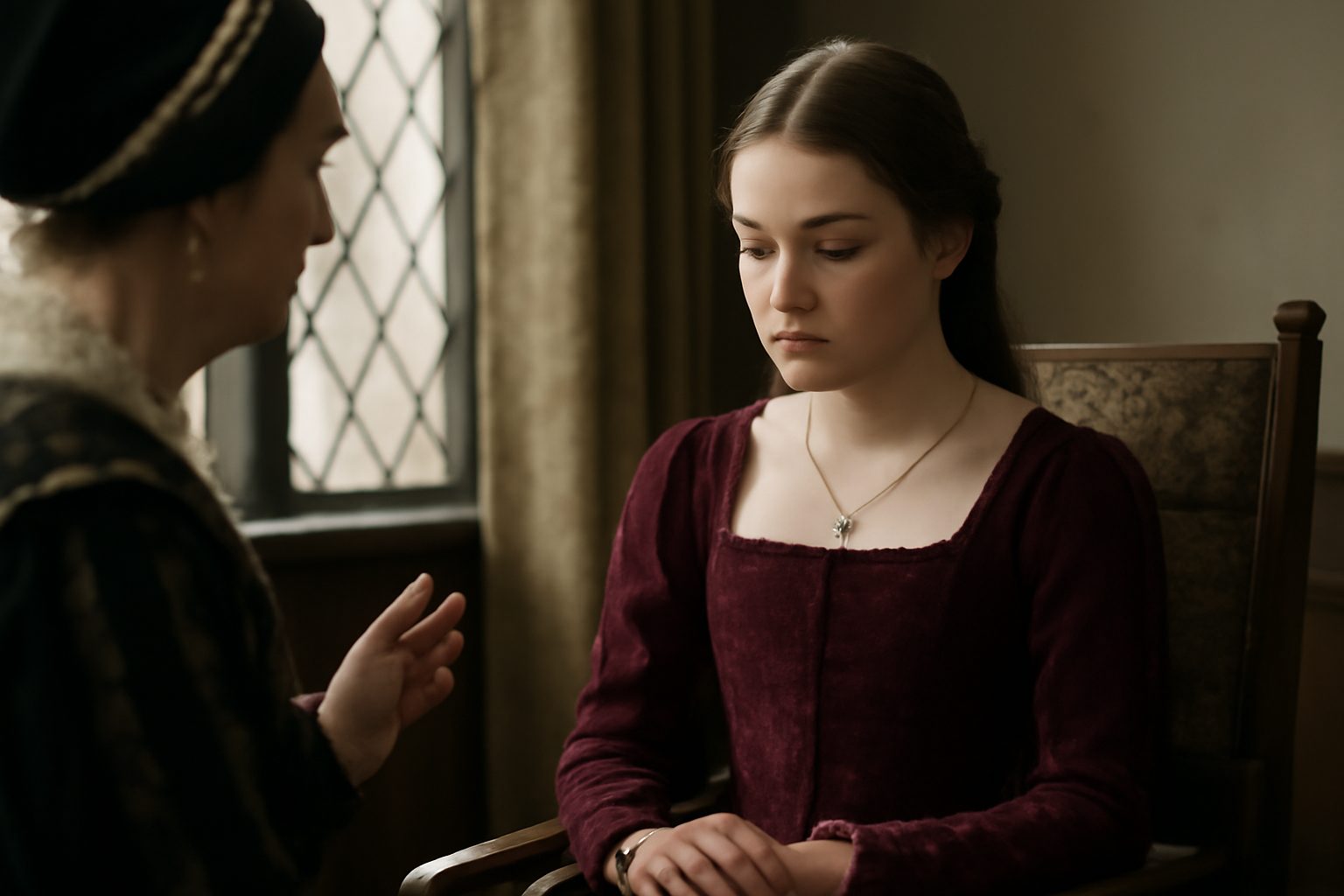
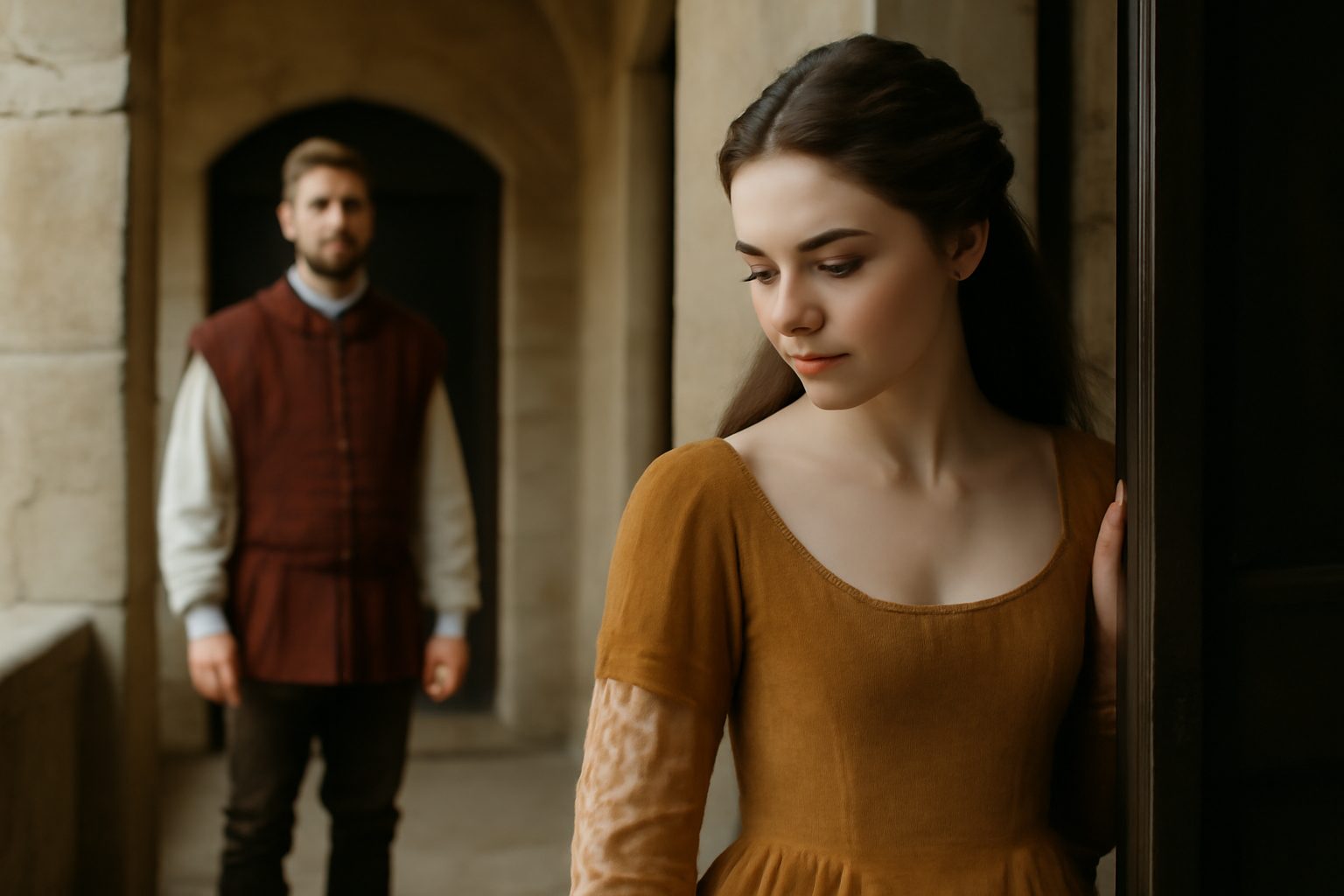
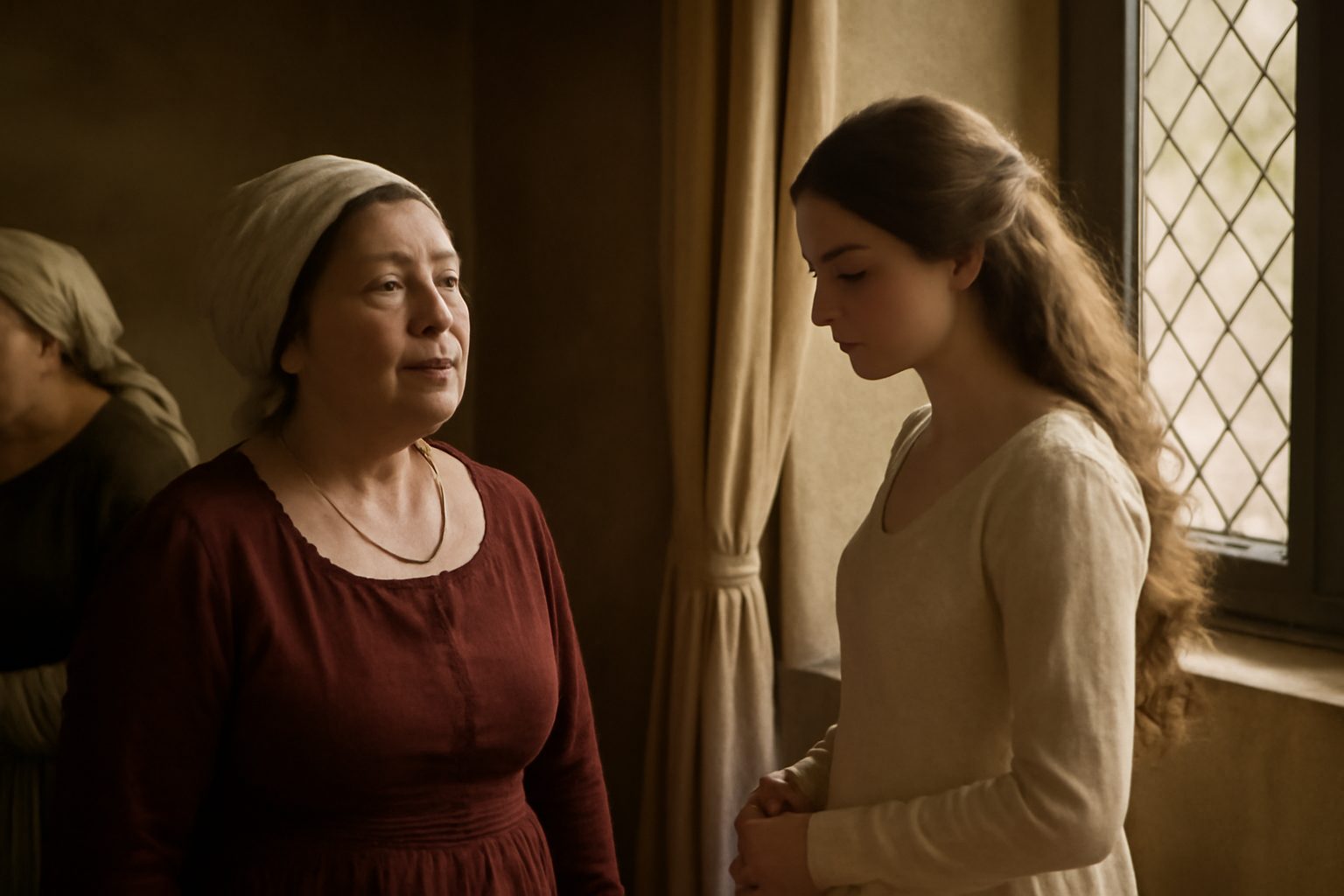
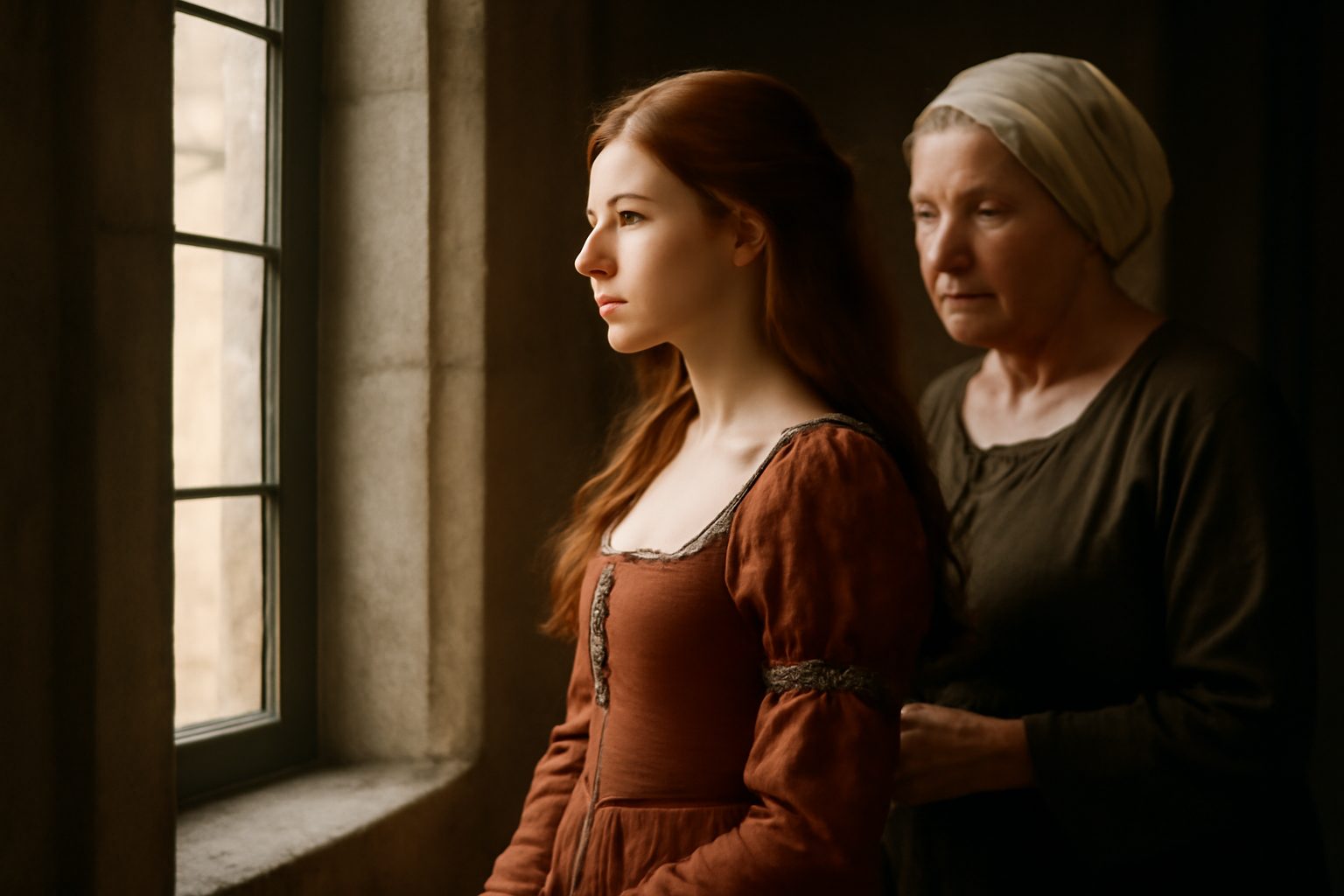
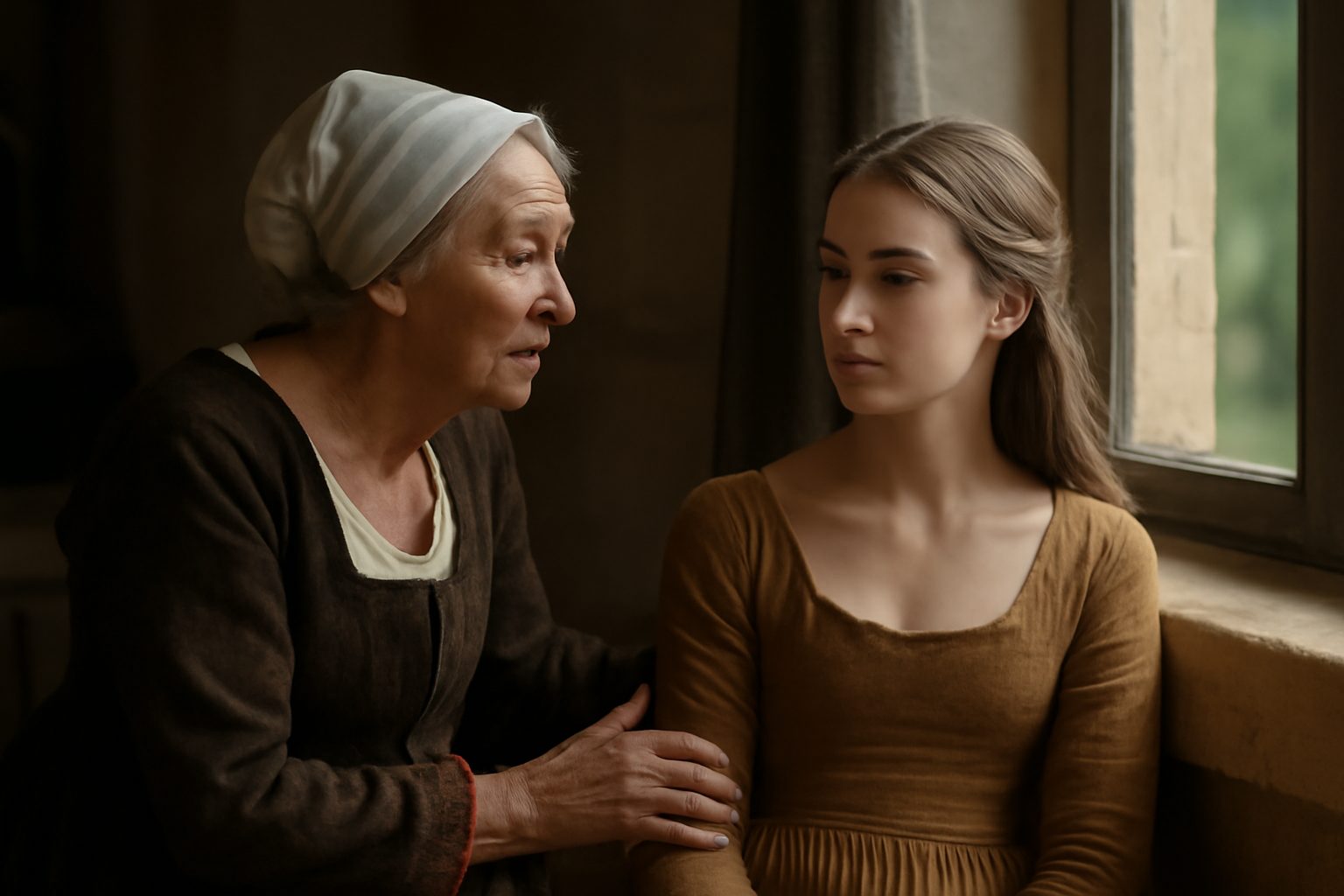
In Act 1, Scene 3 of Romeo and Juliet, Lady Capulet and the Nurse discuss the prospect of Juliet marrying Paris. The line in question playfully highlights the recurring focus on marriage in their conversation, as the Nurse interjects with a pun on the word itself. This moment underscores the societal expectations placed on young women like Juliet, even as she remains unaware of the match being arranged for her.
Lady Capulet: "Marry, that 'marry' is the very theme"
In modern day english, we would say:
The word "marry" is exactly what we're talking about right now.
Frequently Asked Questions
What is Lady Capulet talking about when she says the word 'marry' is the very theme?
She is talking about marriage being the main topic of their conversation.
Connections to other verses:
Connections to "Marry, that 'marry' is the very theme"
The verse "Marry, that 'marry' is the very theme" serves as a pivot in Act 1, Scene 3, introducing the central topic of marriage. It connects directly to Lady Capulet's inquiry in "How stands your disposition to be married?", which immediately follows, reinforcing the theme's urgency.
Contextual and Thematic Links
This line also ties to Juliet's hesitant response in "It is an honour that I dream not of", highlighting her initial reluctance. The Nurse's earlier nostalgic remark in "An I might live to see thee married once" foreshadows this moment, emphasizing familial expectations.
Character and Plot Development
Lady Capulet's persuasion continues with "What say you? can you love the gentleman?", directly challenging Juliet after introducing the theme. The Nurse's earthy humor in "Thou wilt fall backward when thou comest to age" contrasts with the formal discussion, yet underscores the societal pressure surrounding marriage.
Symbolic and Poetic Echoes
The theme resonates in Lady Capulet's metaphorical description of Paris in "Read o'er the volume of young Paris' face", framing marriage as a literary or aesthetic pursuit. Juliet's eventual acquiescence in "I'll look to like, if looking liking move" shows her cautious engagement with the theme introduced here.