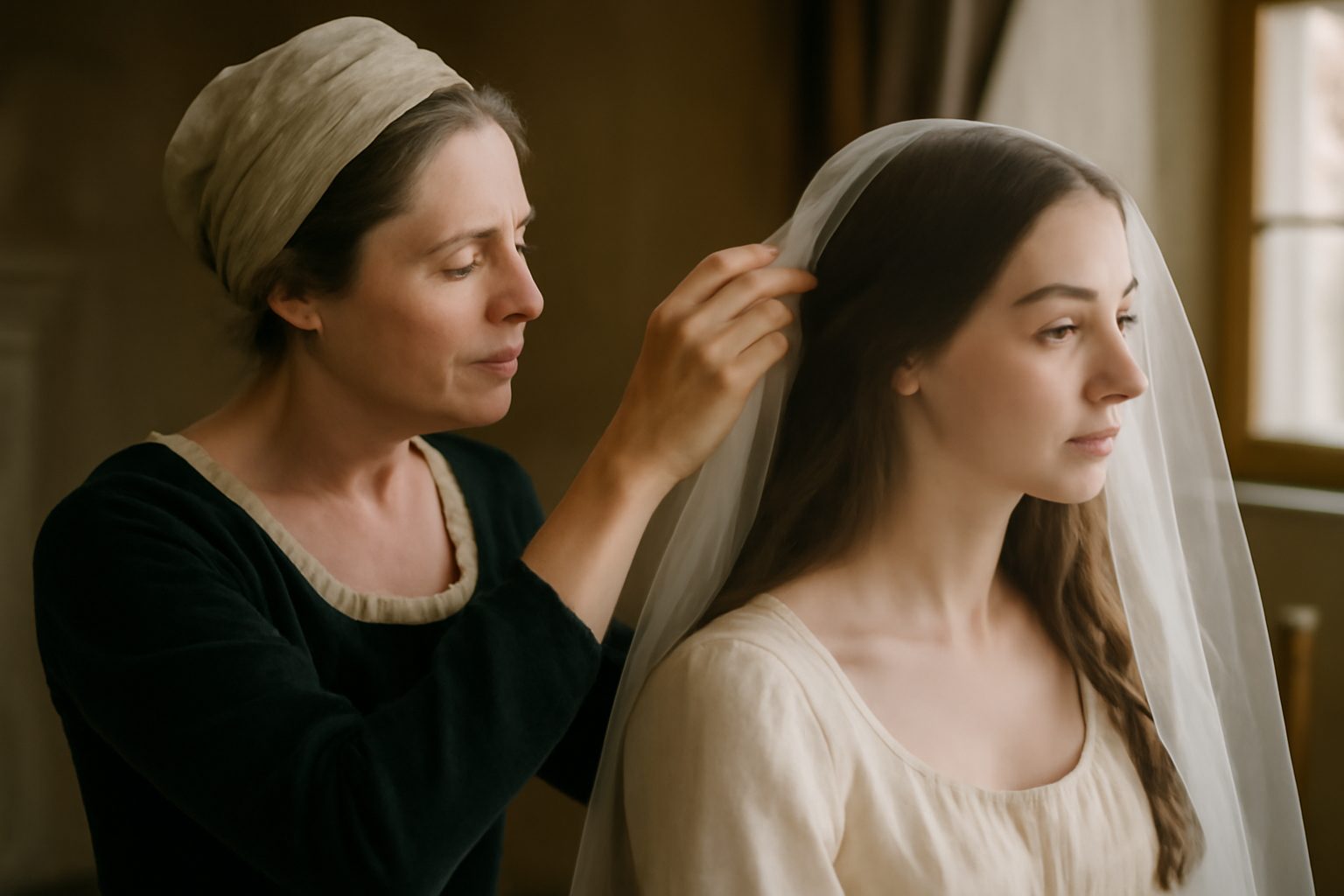
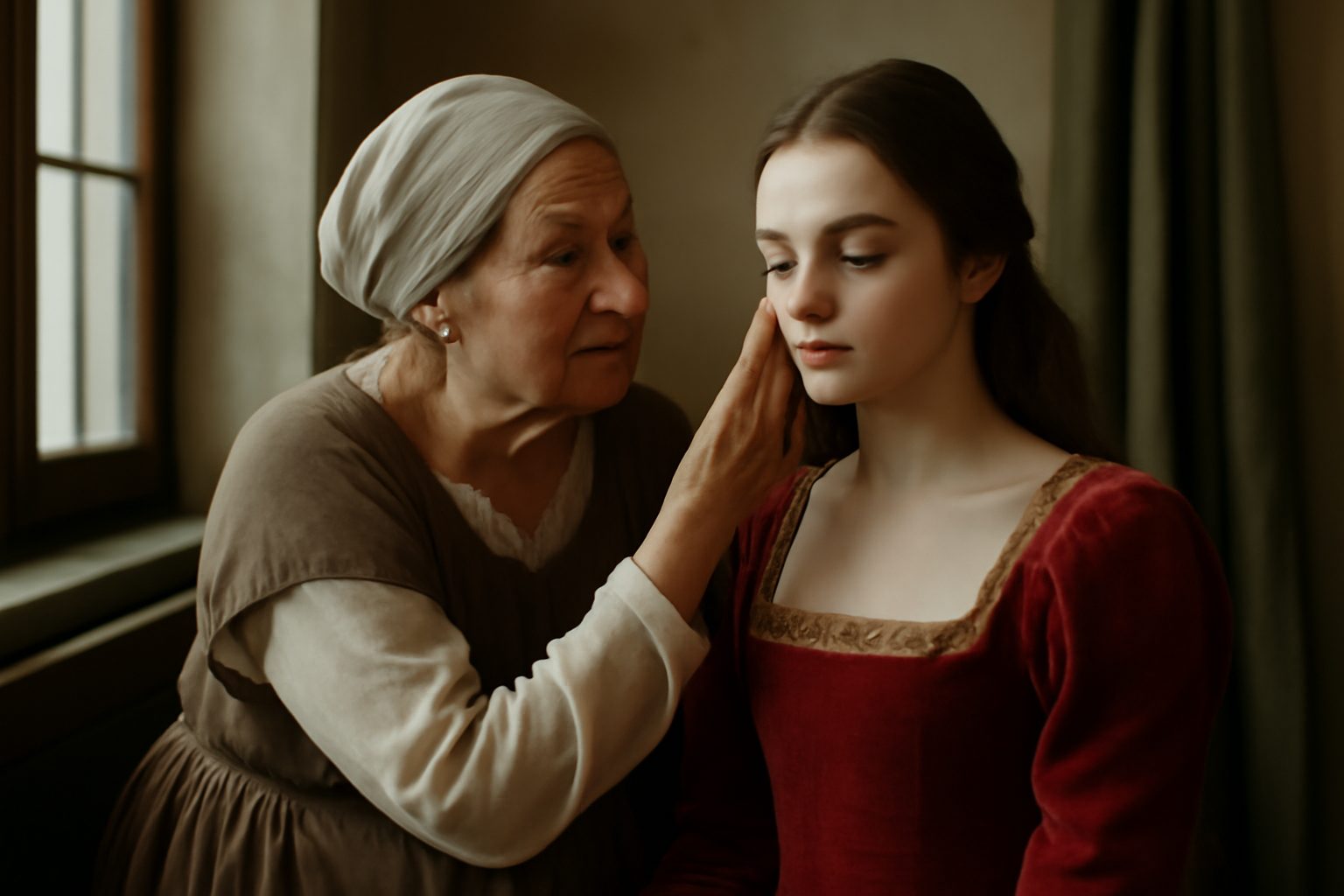
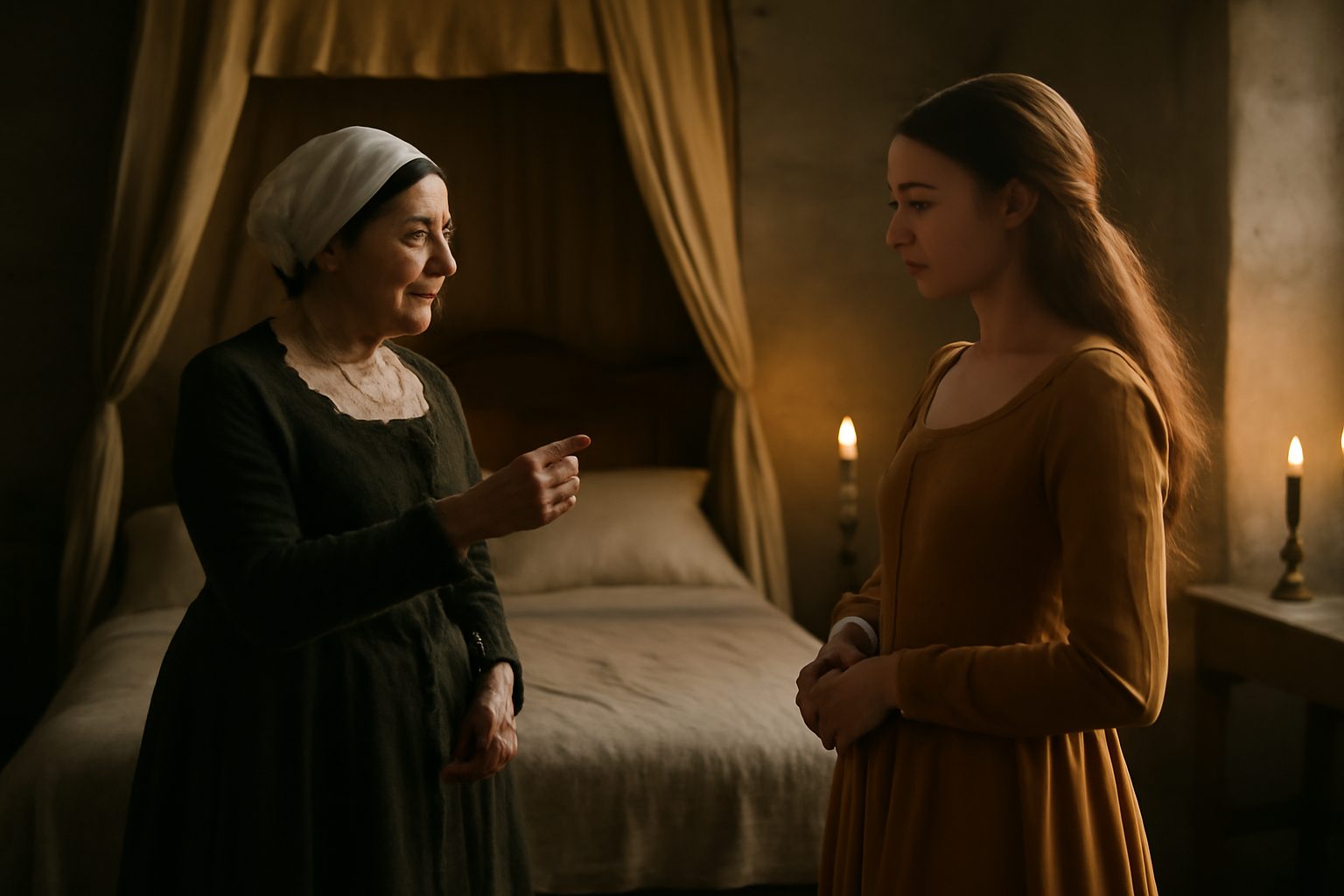
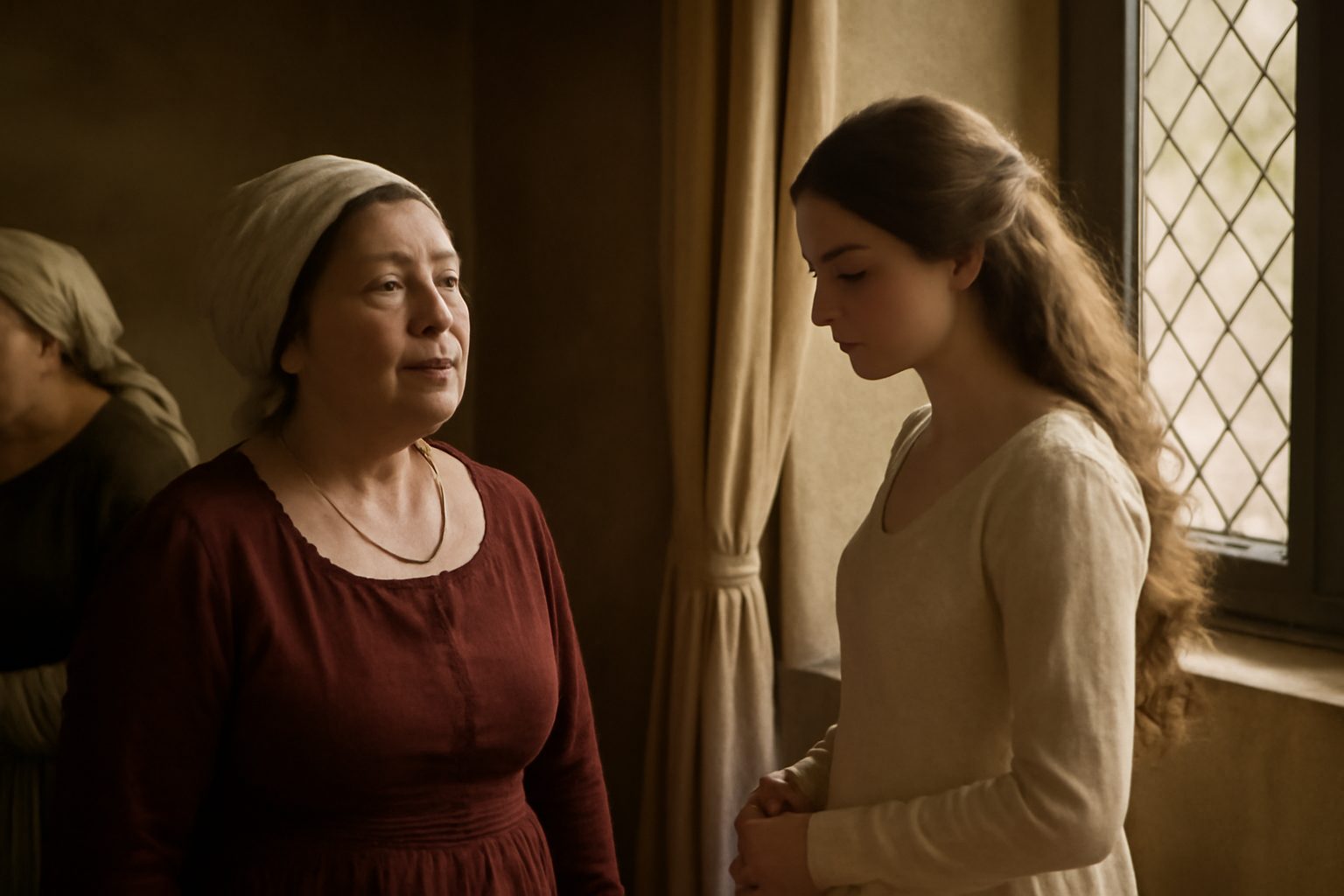
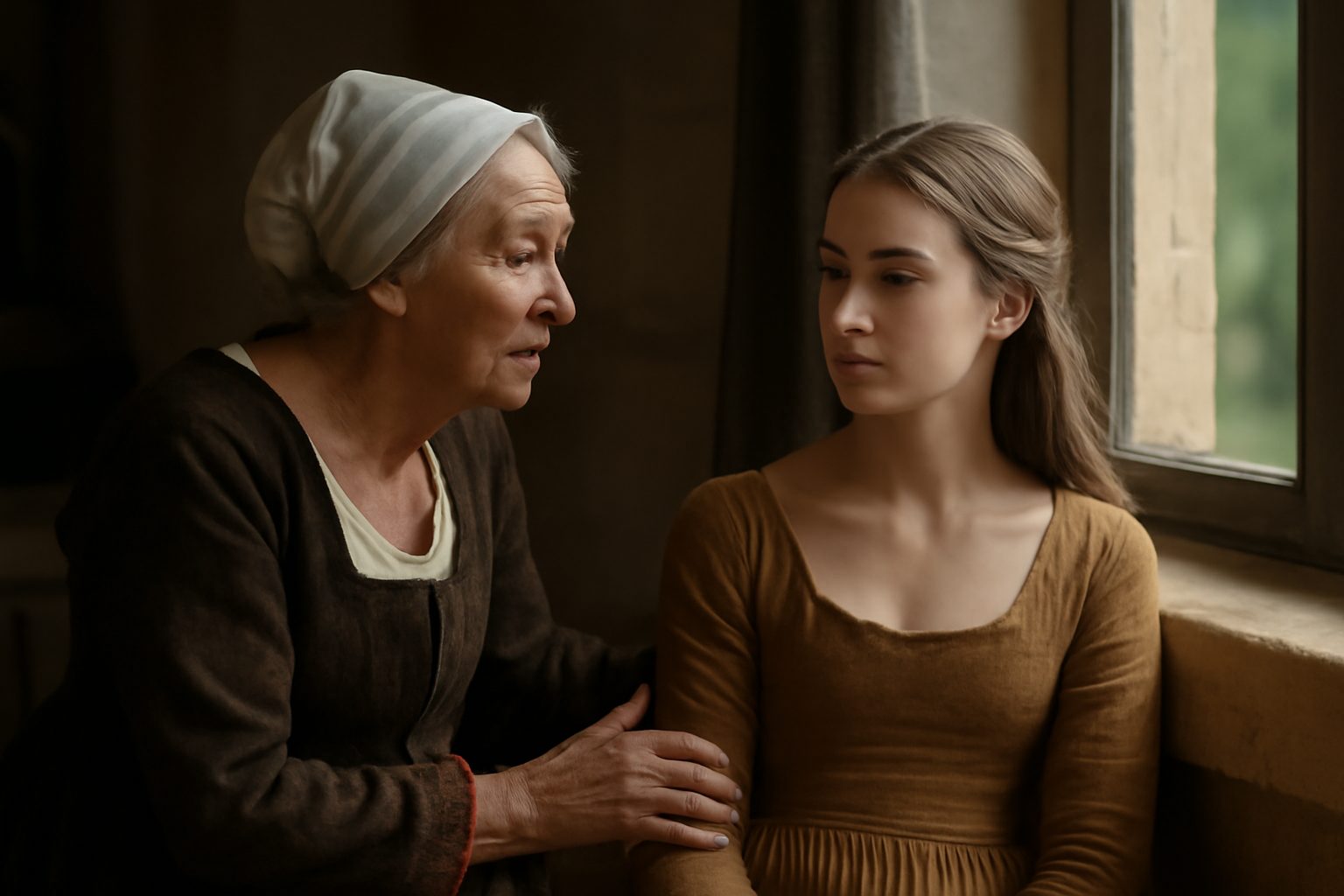
In Act 1, Scene 3 of Romeo and Juliet, Lady Capulet speaks to her daughter Juliet about the prospect of marriage to Paris. She urges Juliet to carefully consider his appearance and qualities, suggesting that she study each of his refined features. This moment highlights the societal expectations placed on young women to evaluate potential suitors based on outward merits.
Lady Capulet: "Examine every married lineament,"
In modern day english, we would say:
Look closely at every part of her face that shows she is ready for marriage.
Frequently Asked Questions
What does Lady Capulet mean when she tells Juliet to examine every married lineament?
She is advising Juliet to carefully look at Paris's facial features and qualities, as he is a potential husband for her.
Connections to other verses:
Connections to "Examine every married lineament"
The verse "Examine every married lineament" (/romeo-and-juliet/one/1-3/act-1-scene-3-87/) is part of Lady Capulet's extended metaphor describing Paris as a book that Juliet should "read." This line urges Juliet to closely observe the harmonious features ("married lineament") of Paris's face, suggesting that his physical perfection mirrors inner virtue.
Connection to the Book Metaphor
This instruction directly follows Lady Capulet's earlier advice to "Read o'er the volume of young Paris' face", establishing the metaphor of Paris as a valuable text. The idea of examining his features is elaborated in "And see how one another lends content", emphasizing how each of his features complements the others to create a perfect whole.
Connection to Inner and Outer Beauty
The concept of "married lineament" (harmonious features) connects to the theme of external beauty reflecting internal worth, mentioned in "For fair without the fair within to hide". This suggests that Paris's appearance is not just superficially attractive but signifies his noble character.
Connection to Juliet's Response
Juliet's measured response to her mother's pressure is seen in "I'll look to like, if looking liking move", showing her willingness to follow the instruction to "examine" Paris, though she remains non-committal about her feelings.
Connection to the Nurse's Character
The Nurse's earthy, humorous anecdotes about Juliet's childhood ("Thou wilt fall backward when thou comest to age") provide a stark contrast to Lady Capulet's polished, courtly language, highlighting the different perspectives on love and marriage presented in the scene.