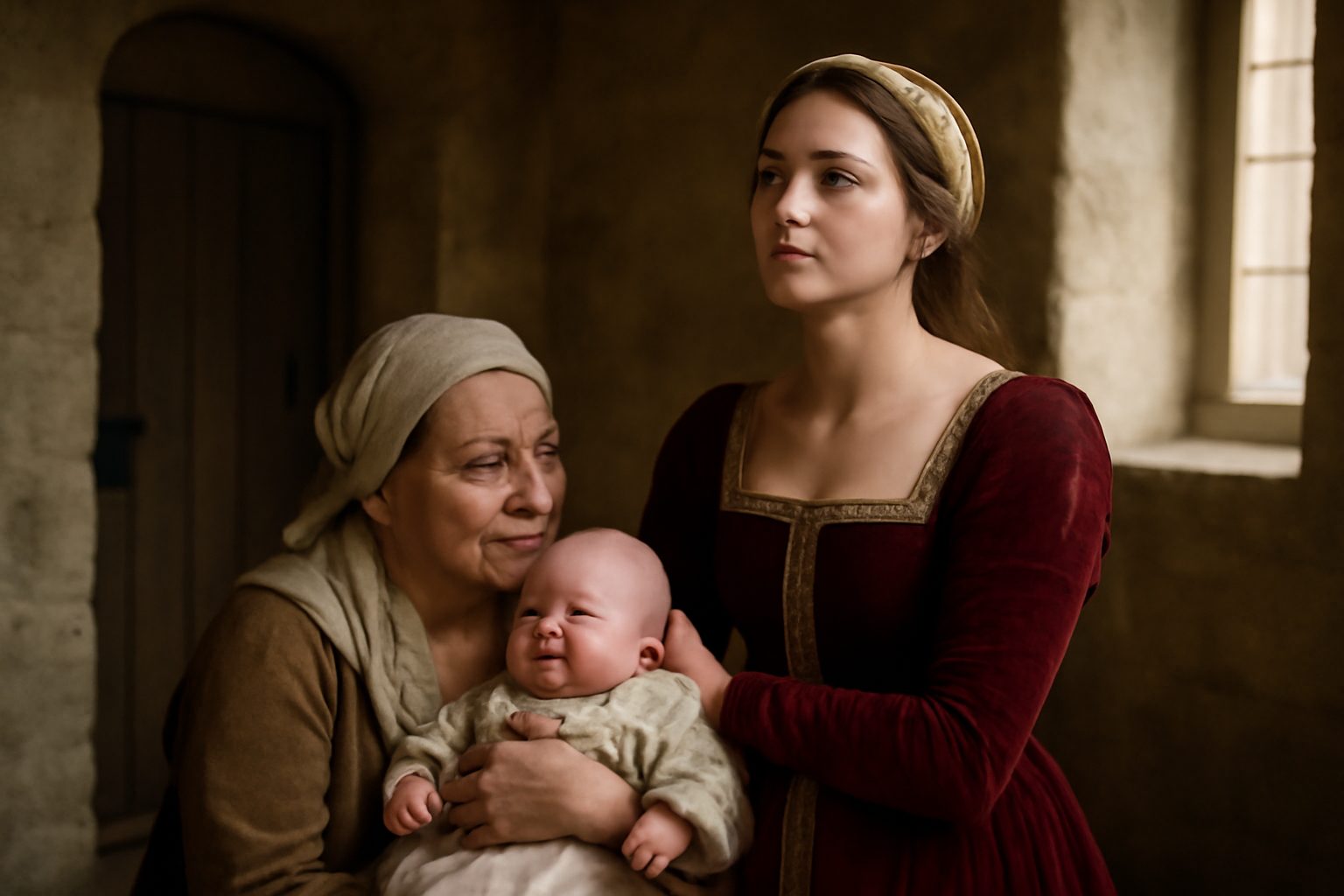
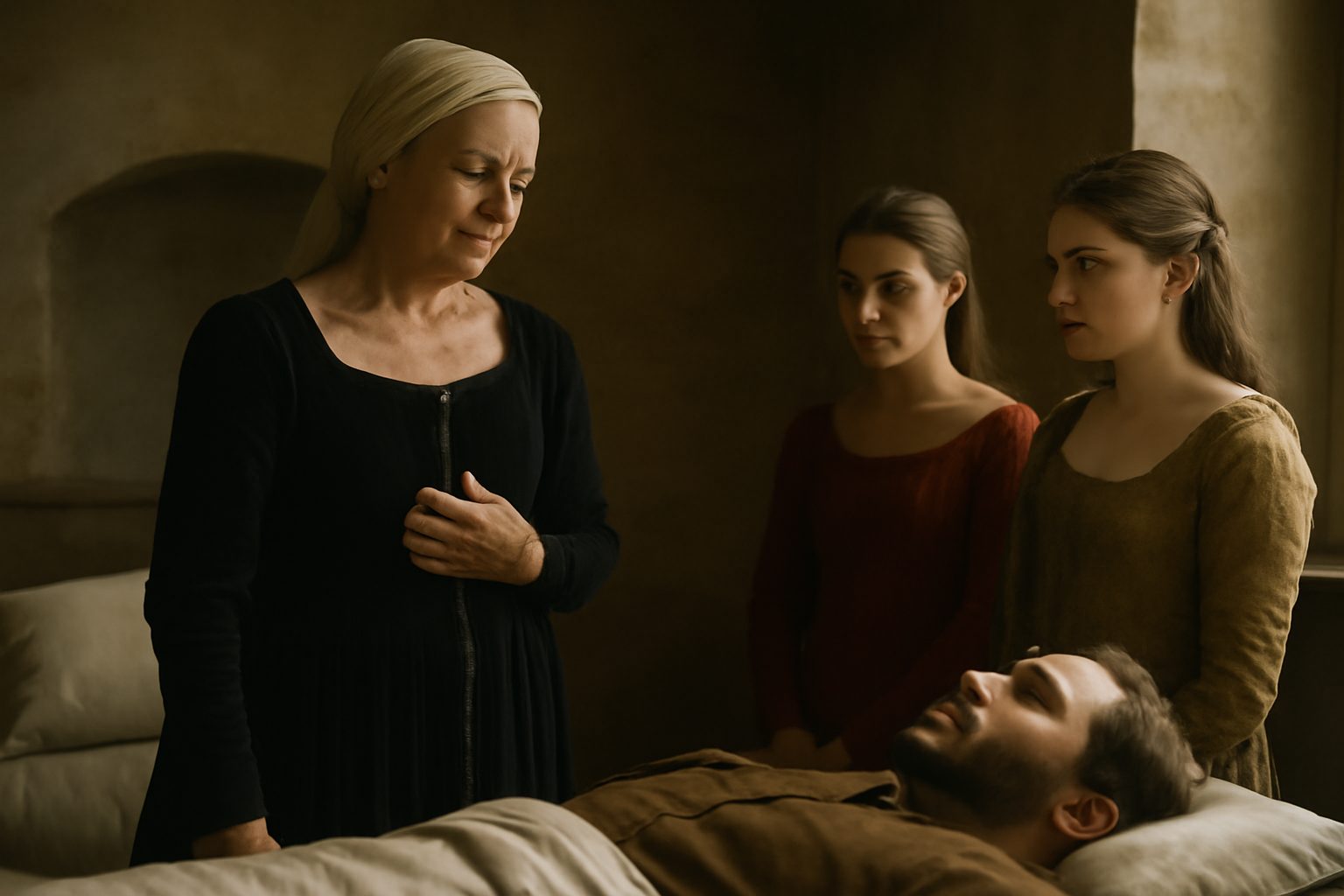
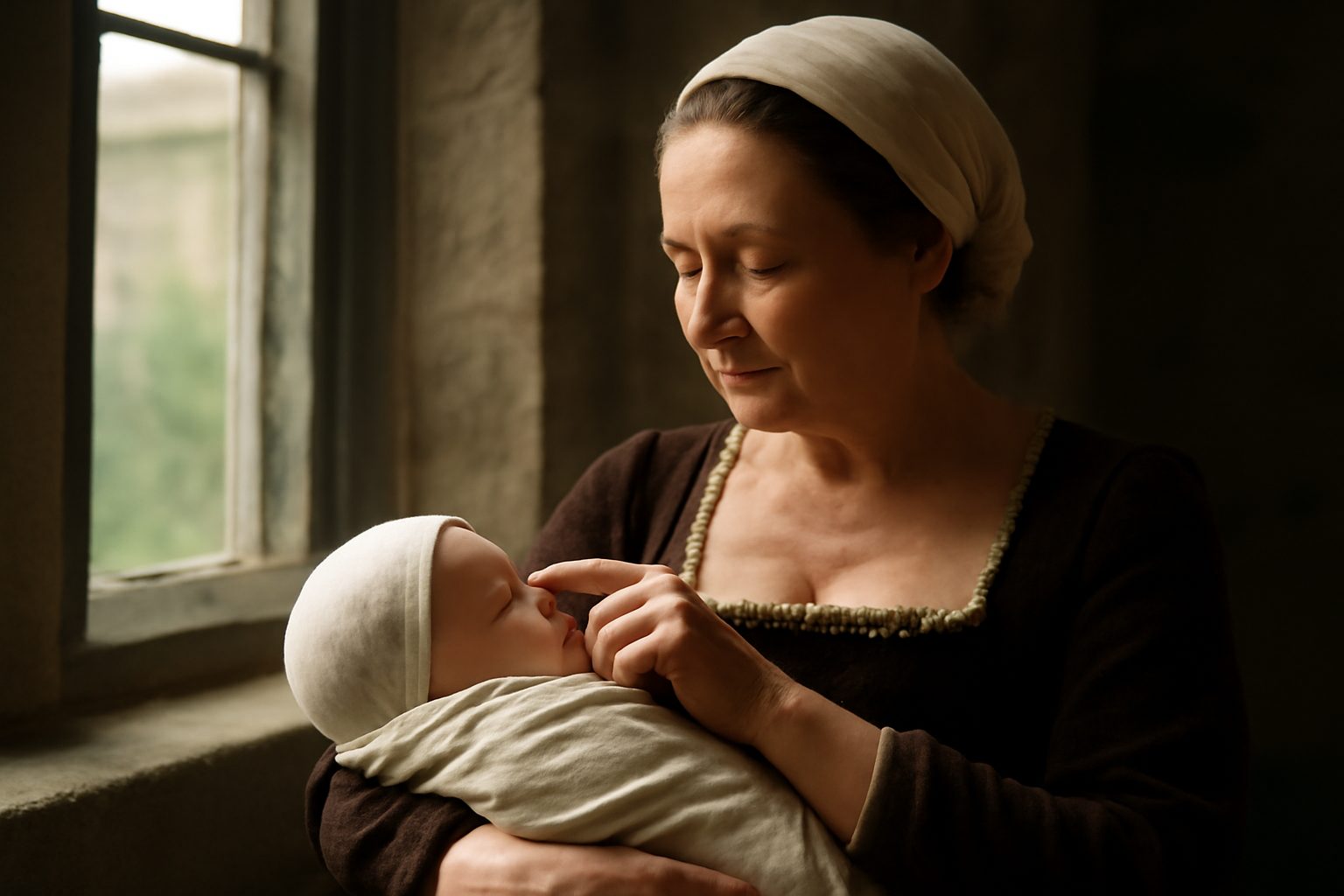
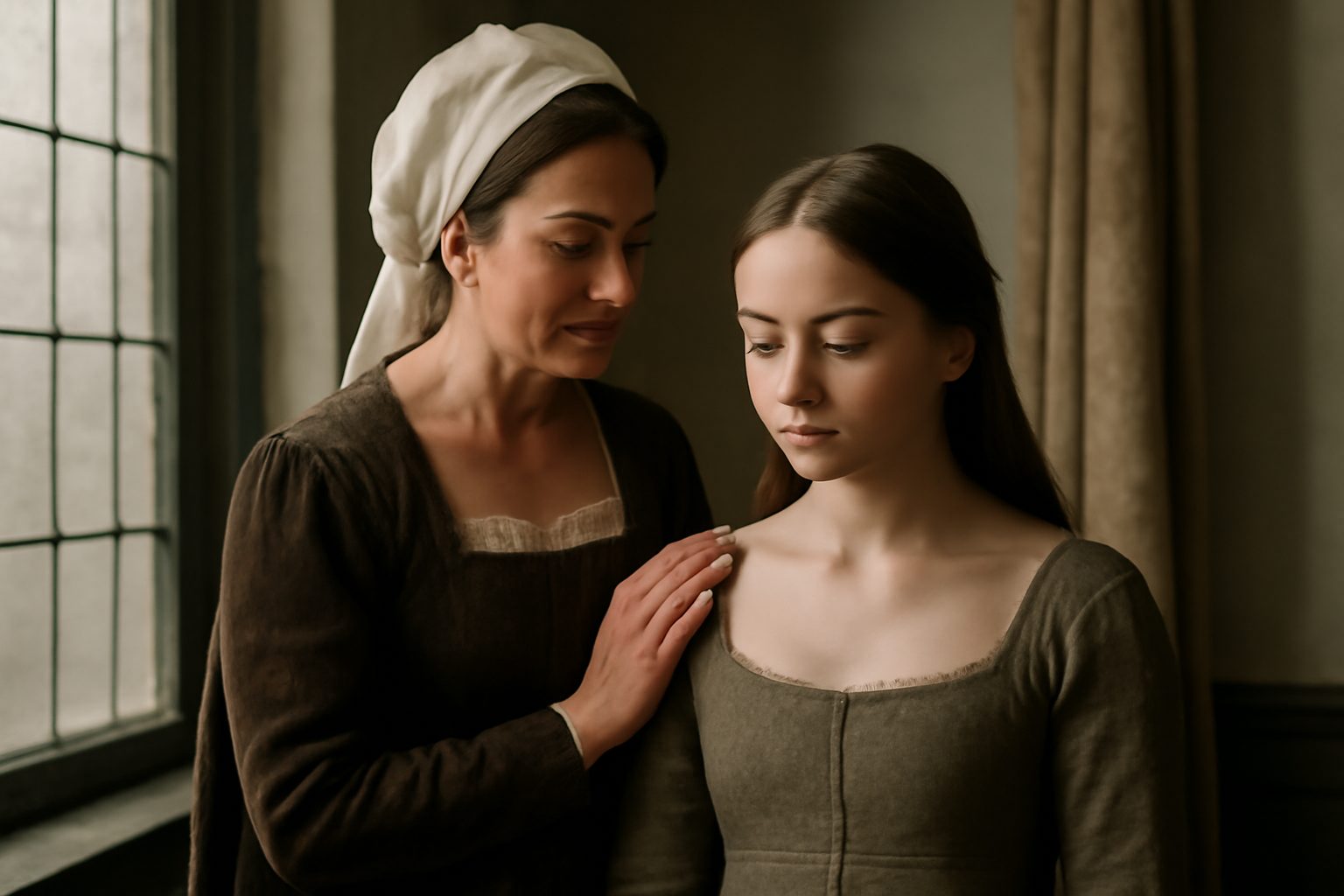
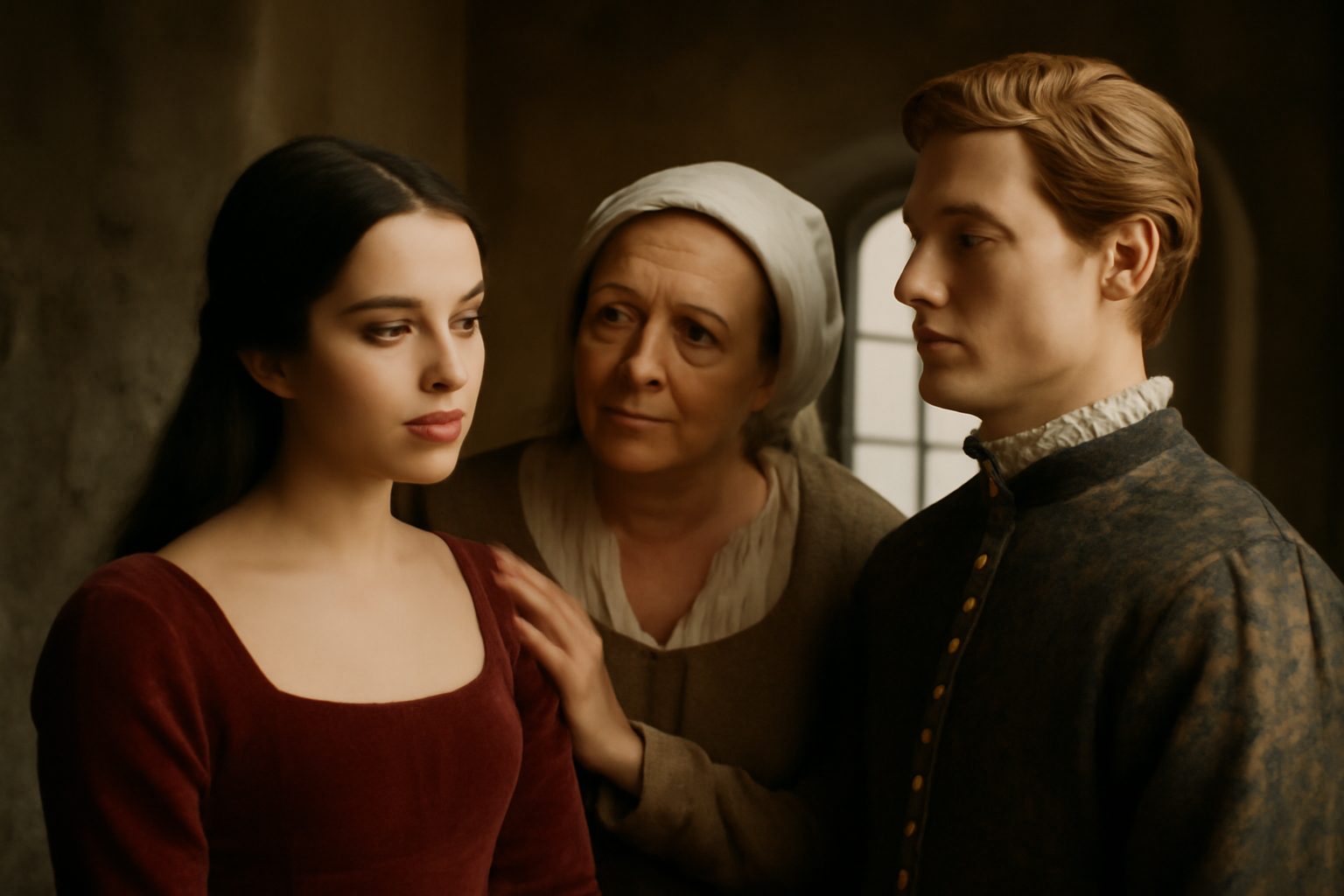
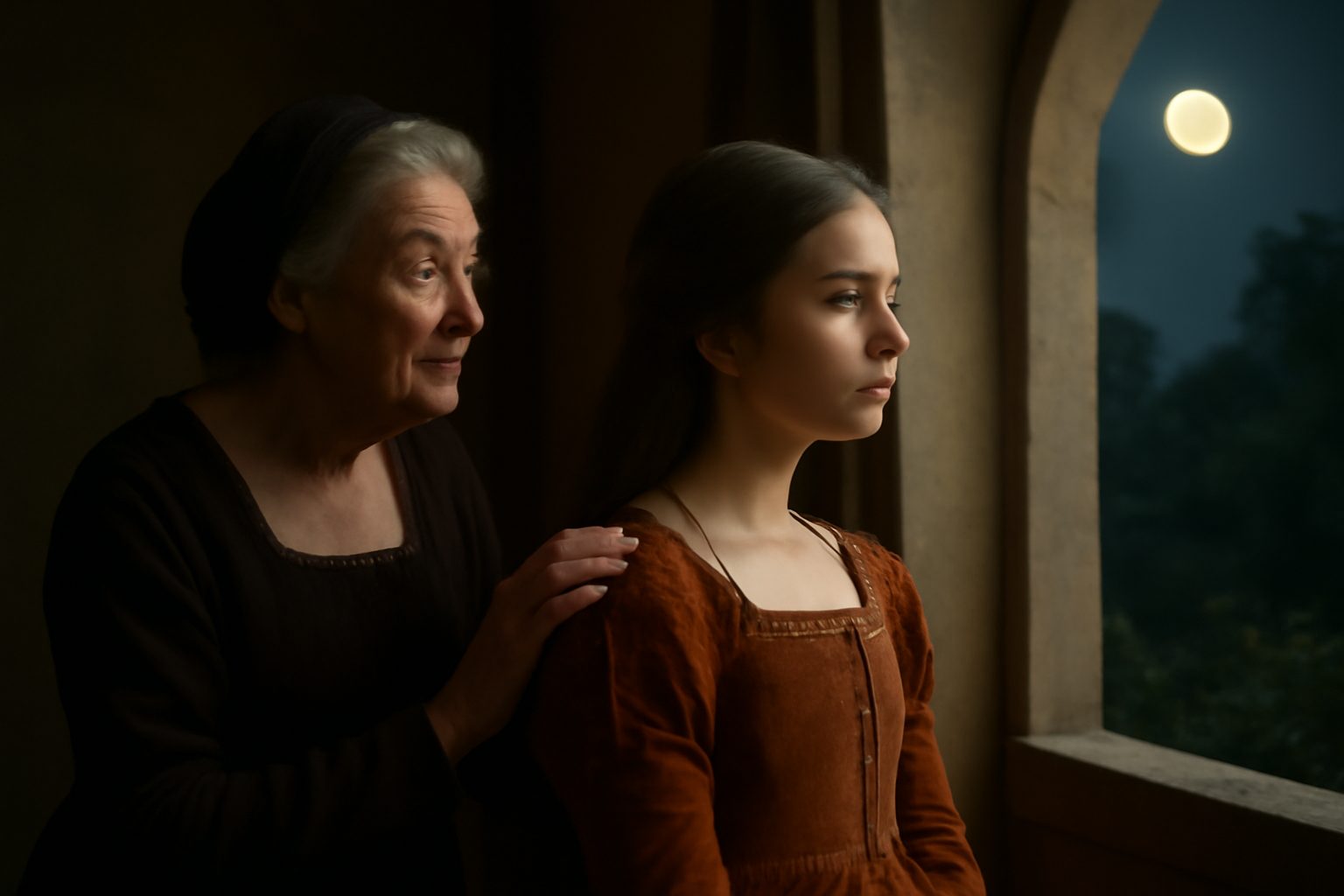
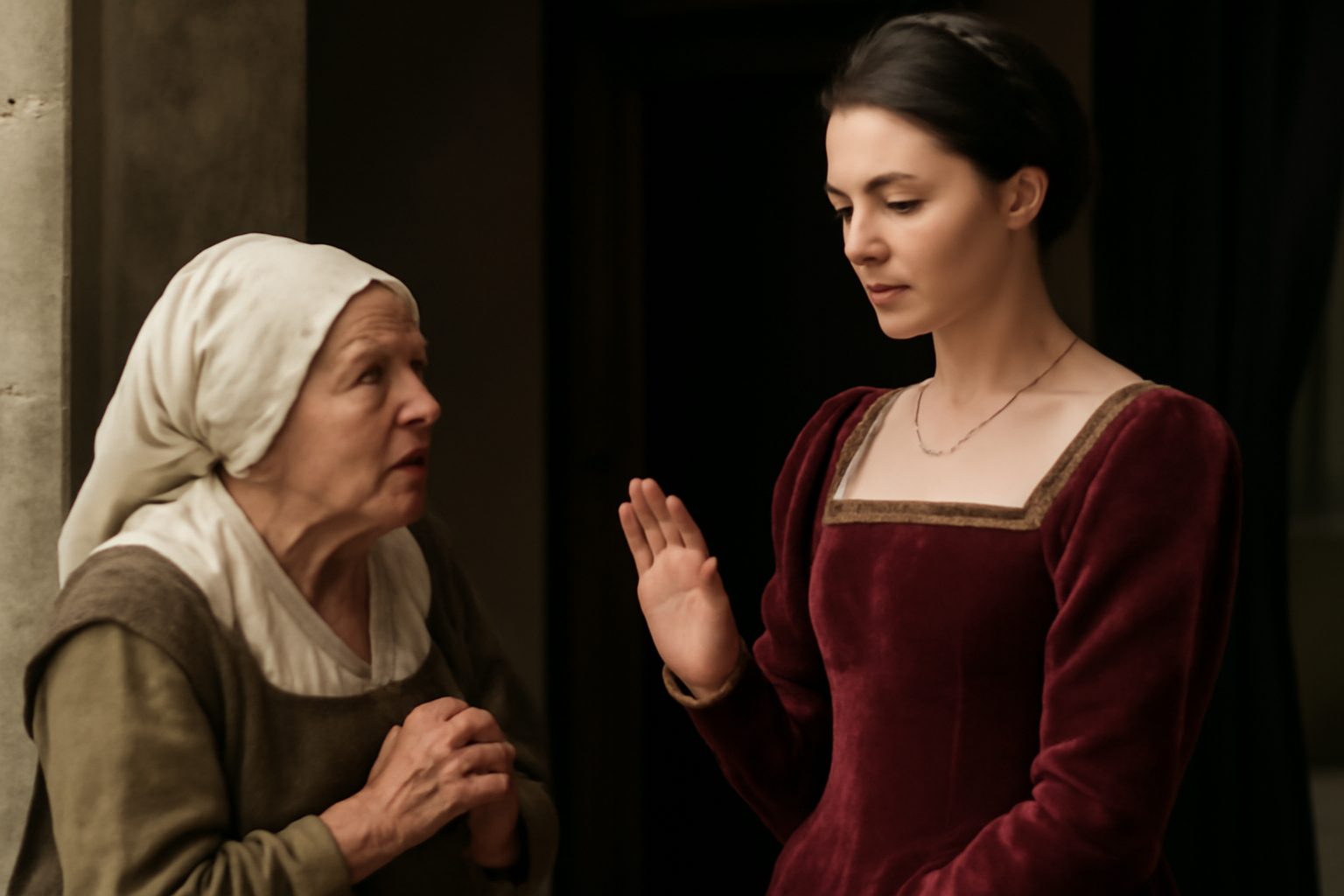
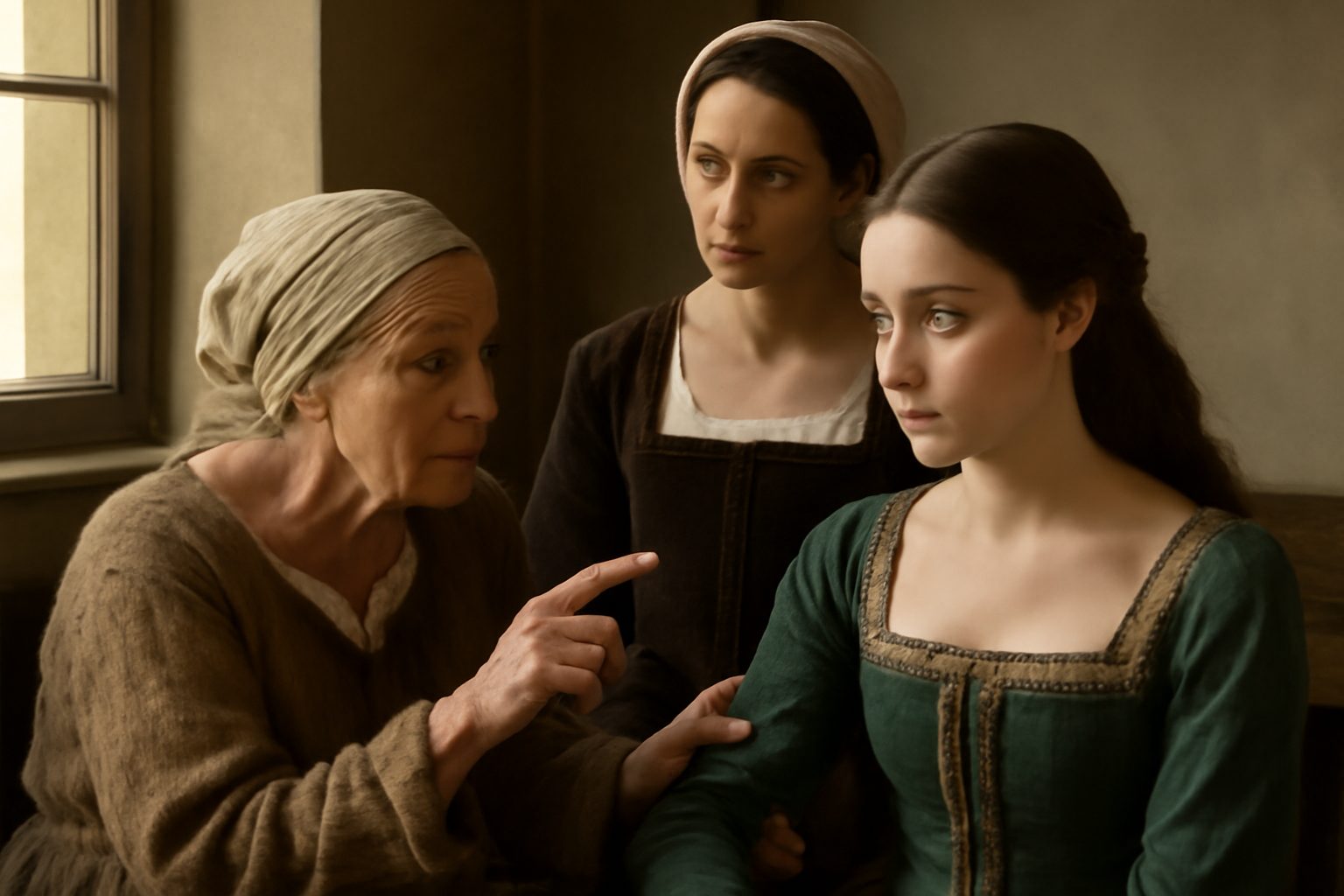
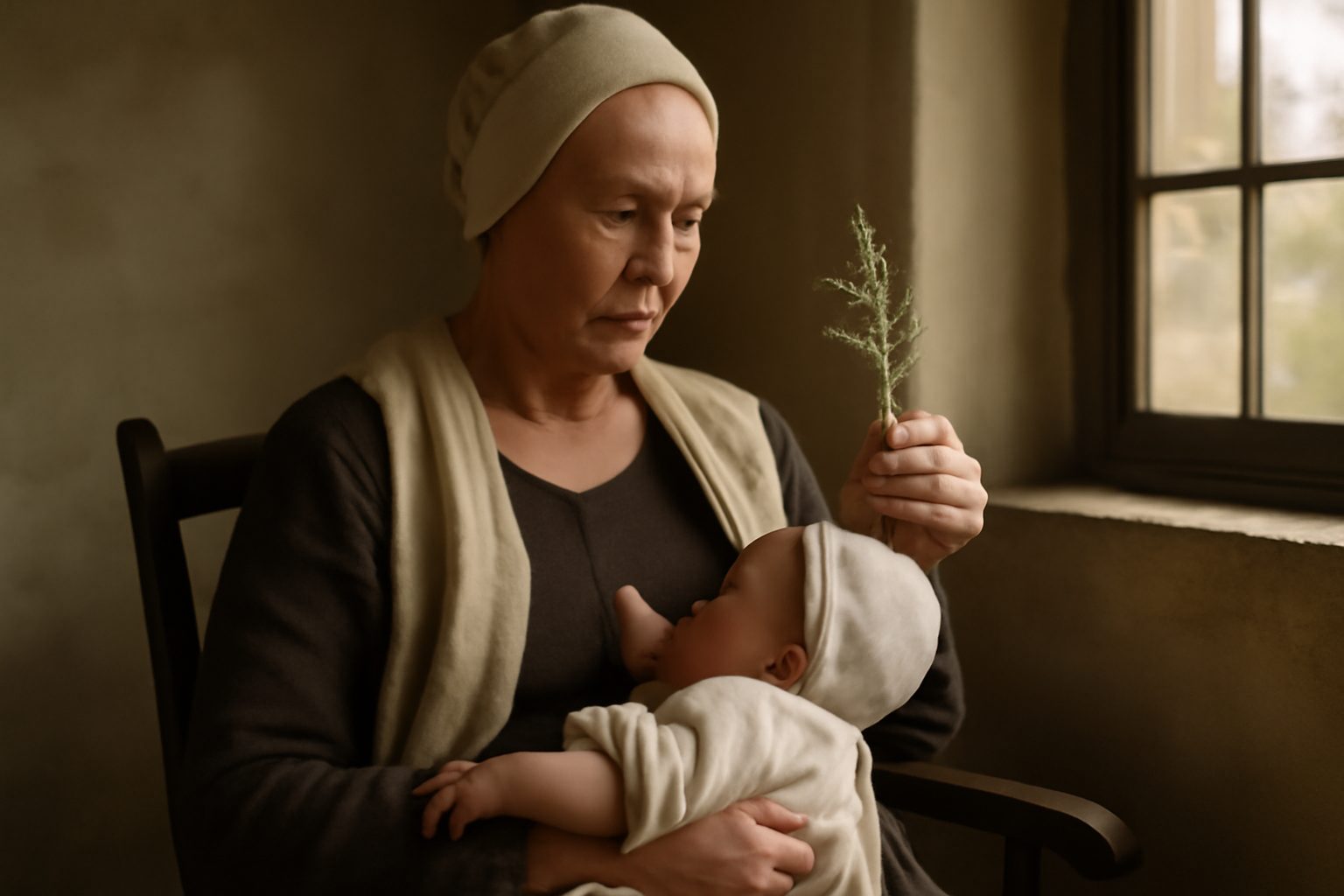
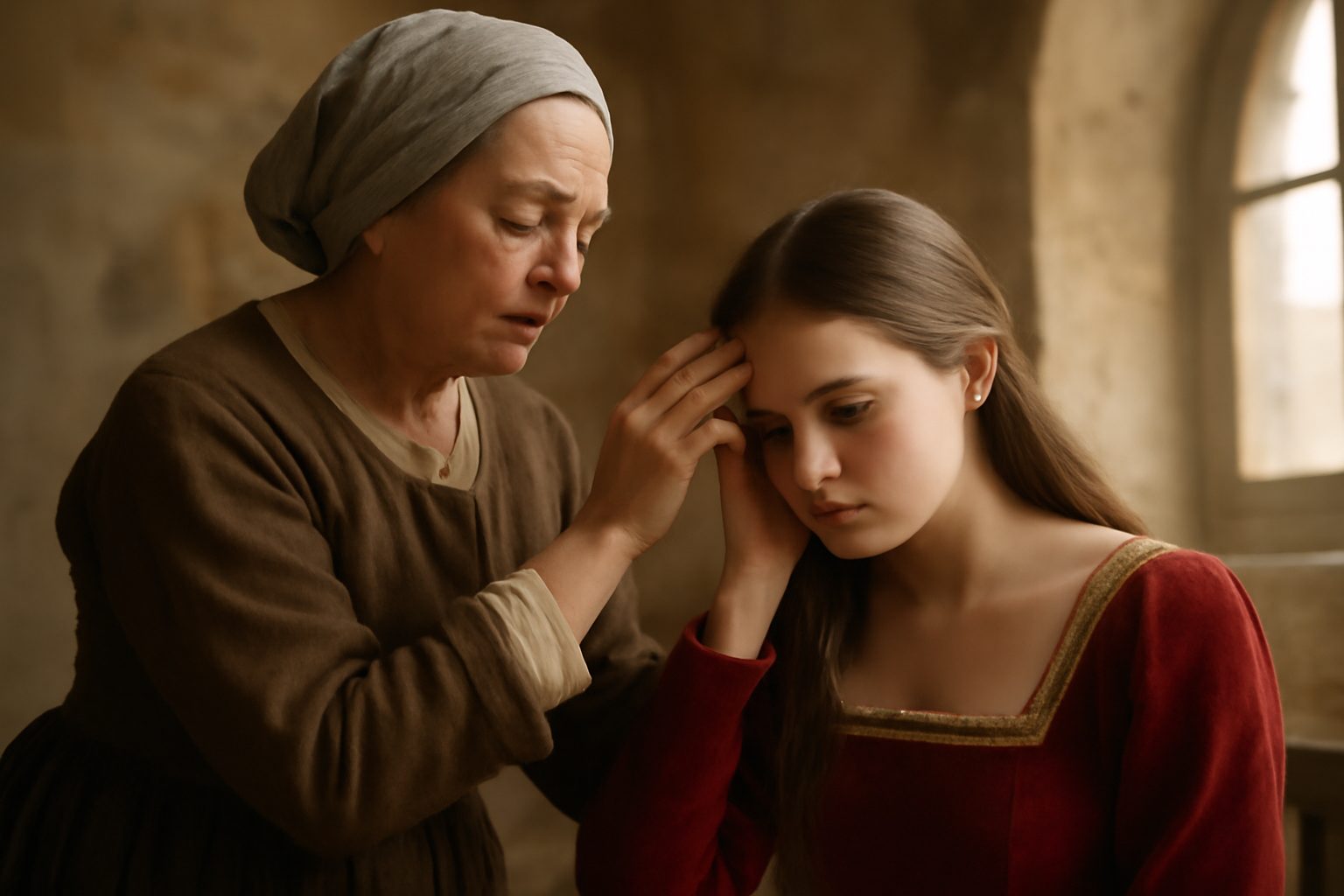
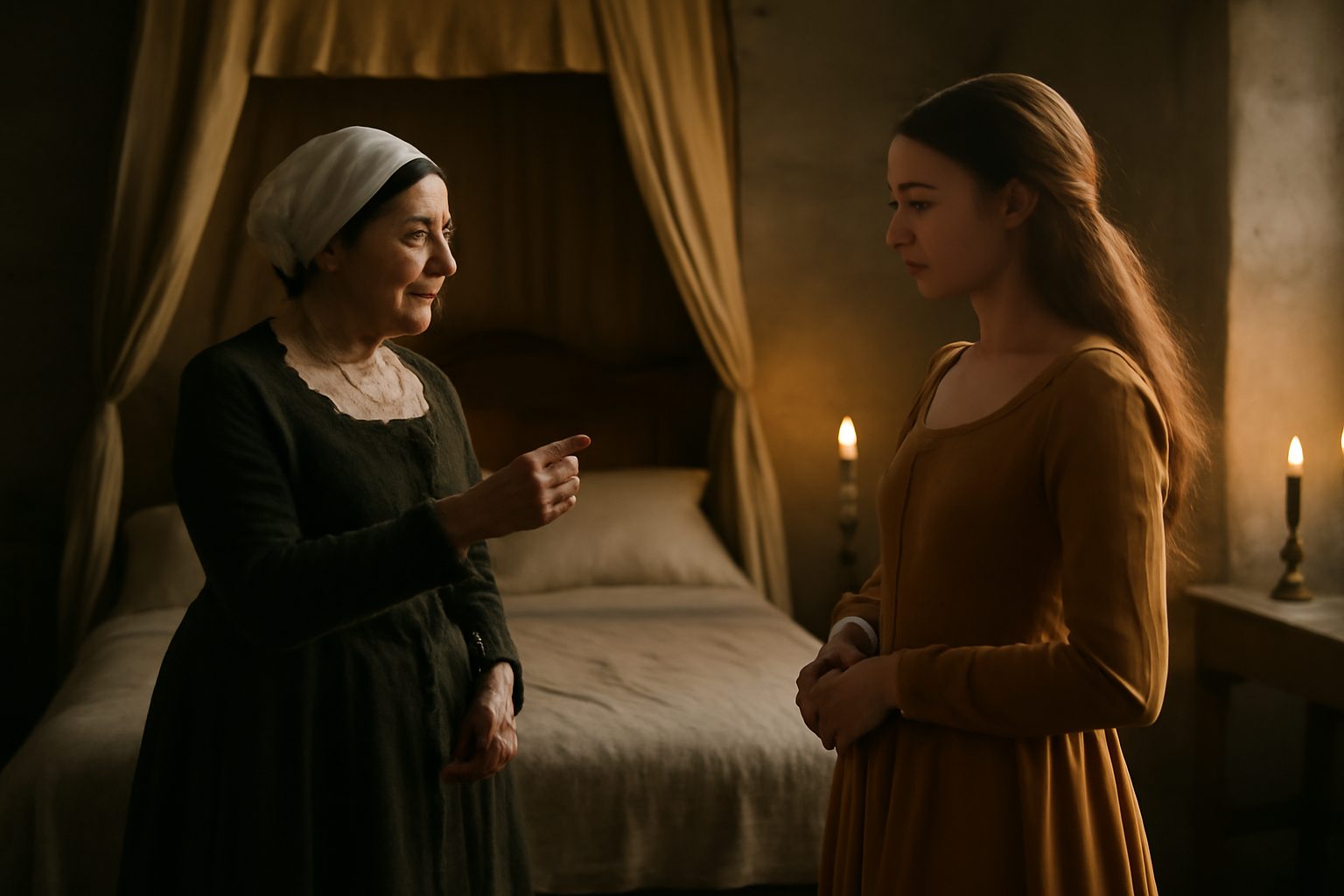
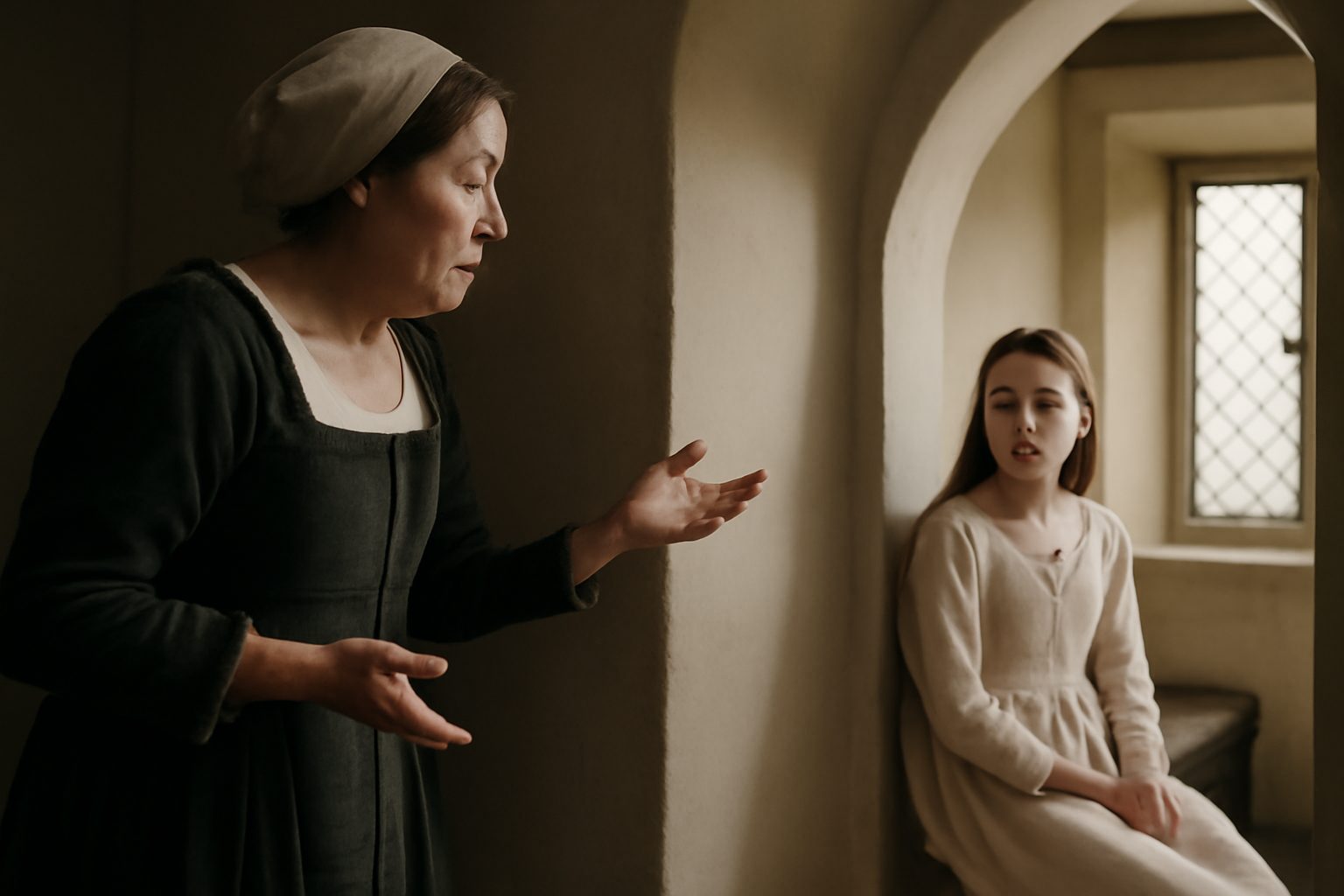
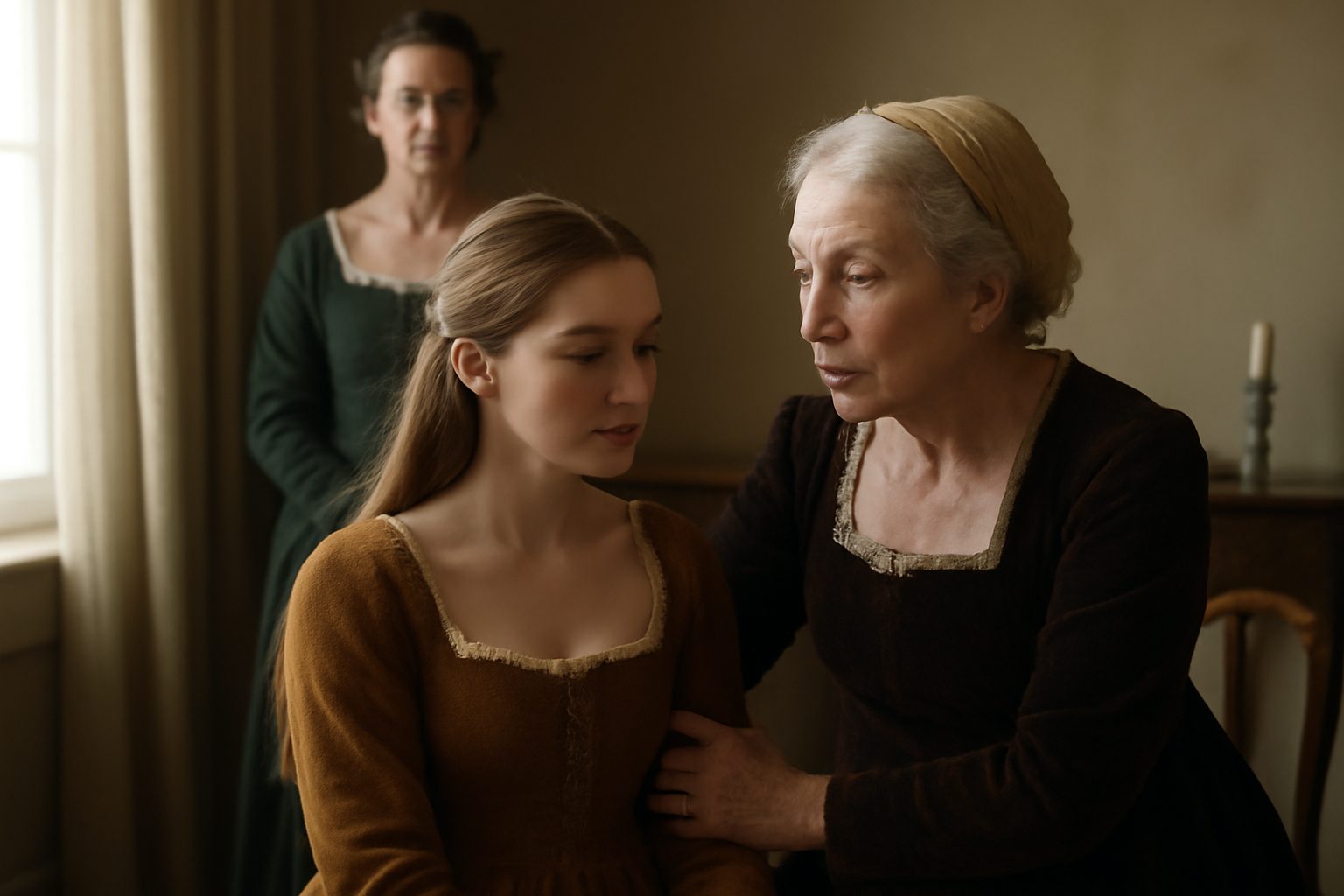
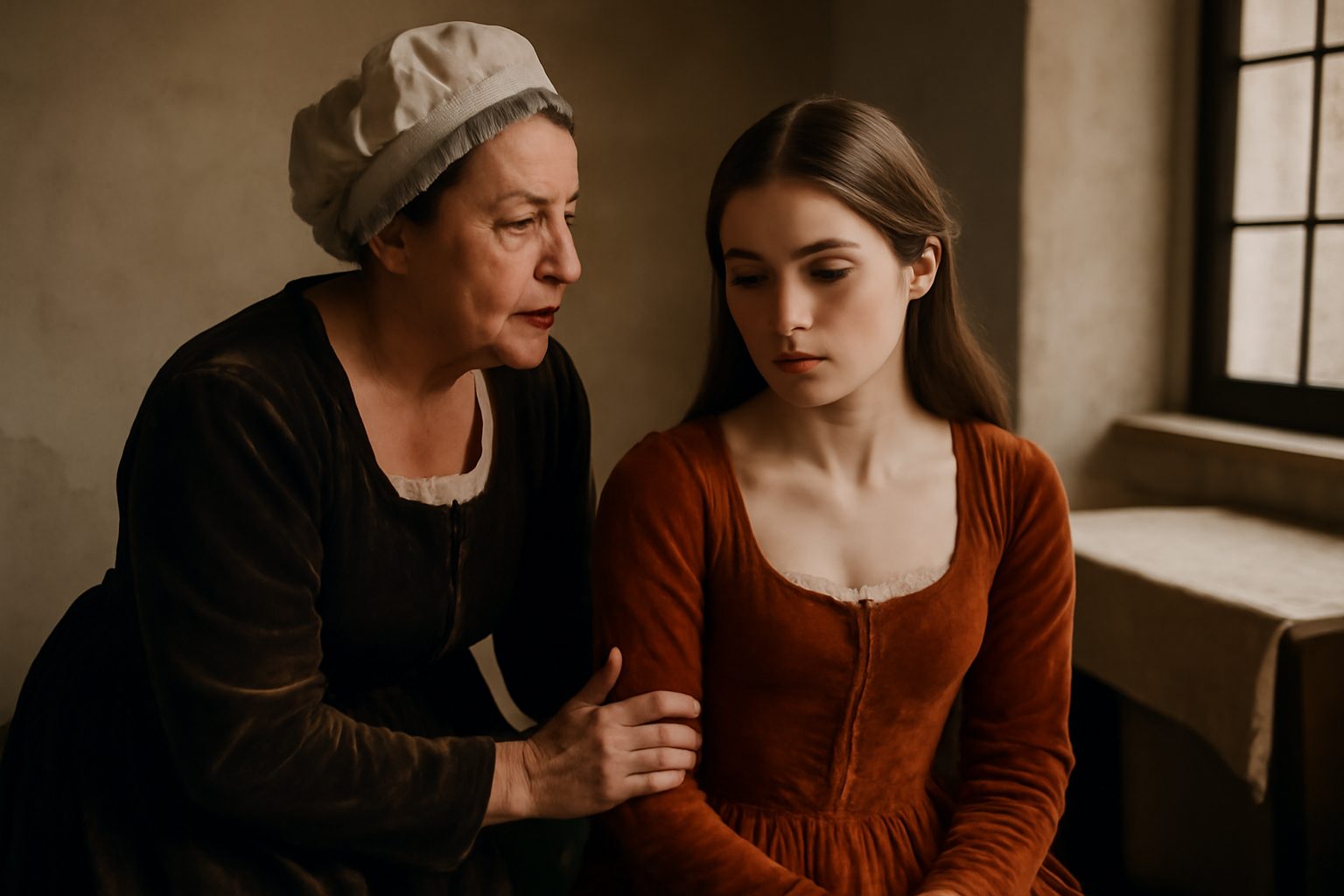
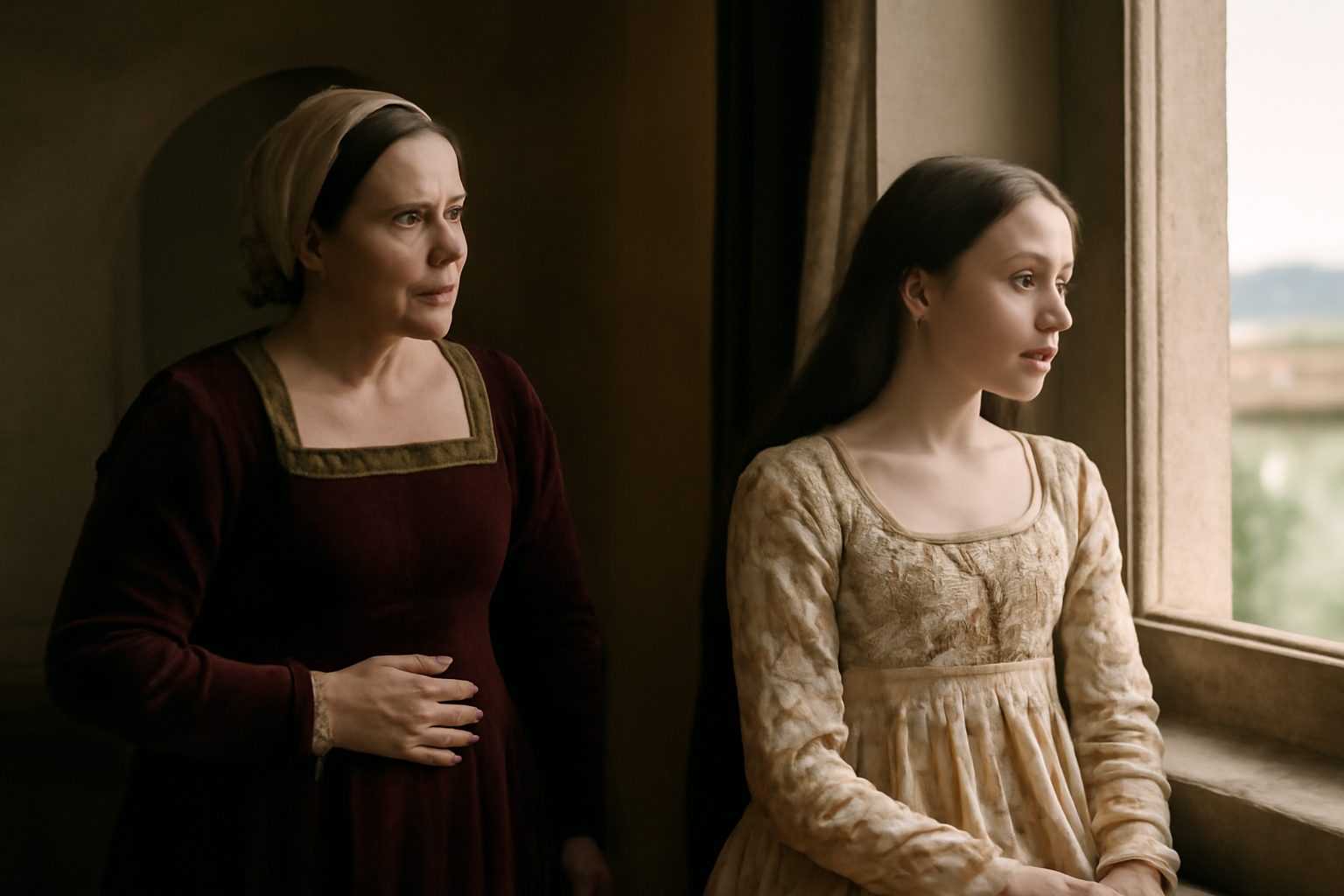
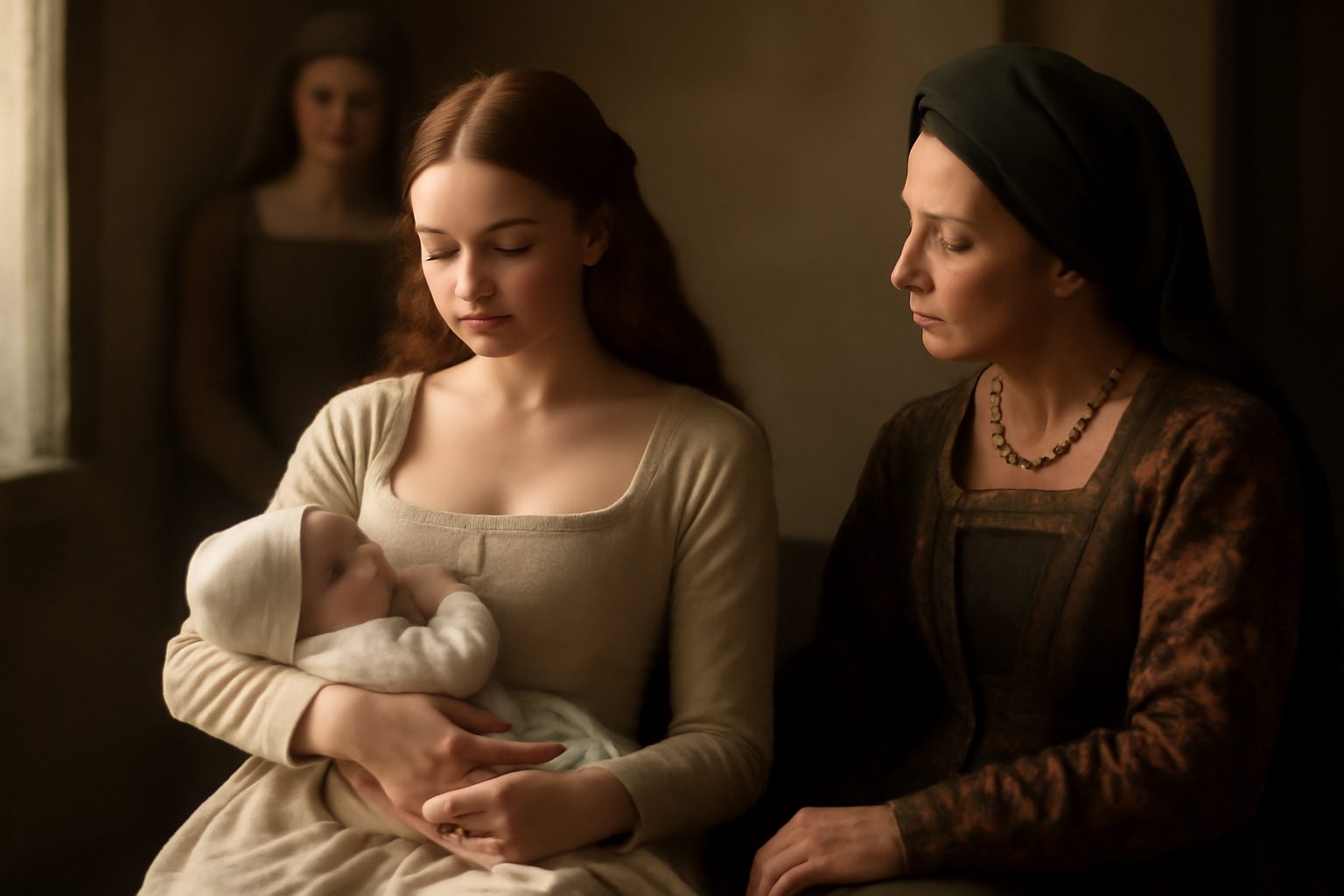
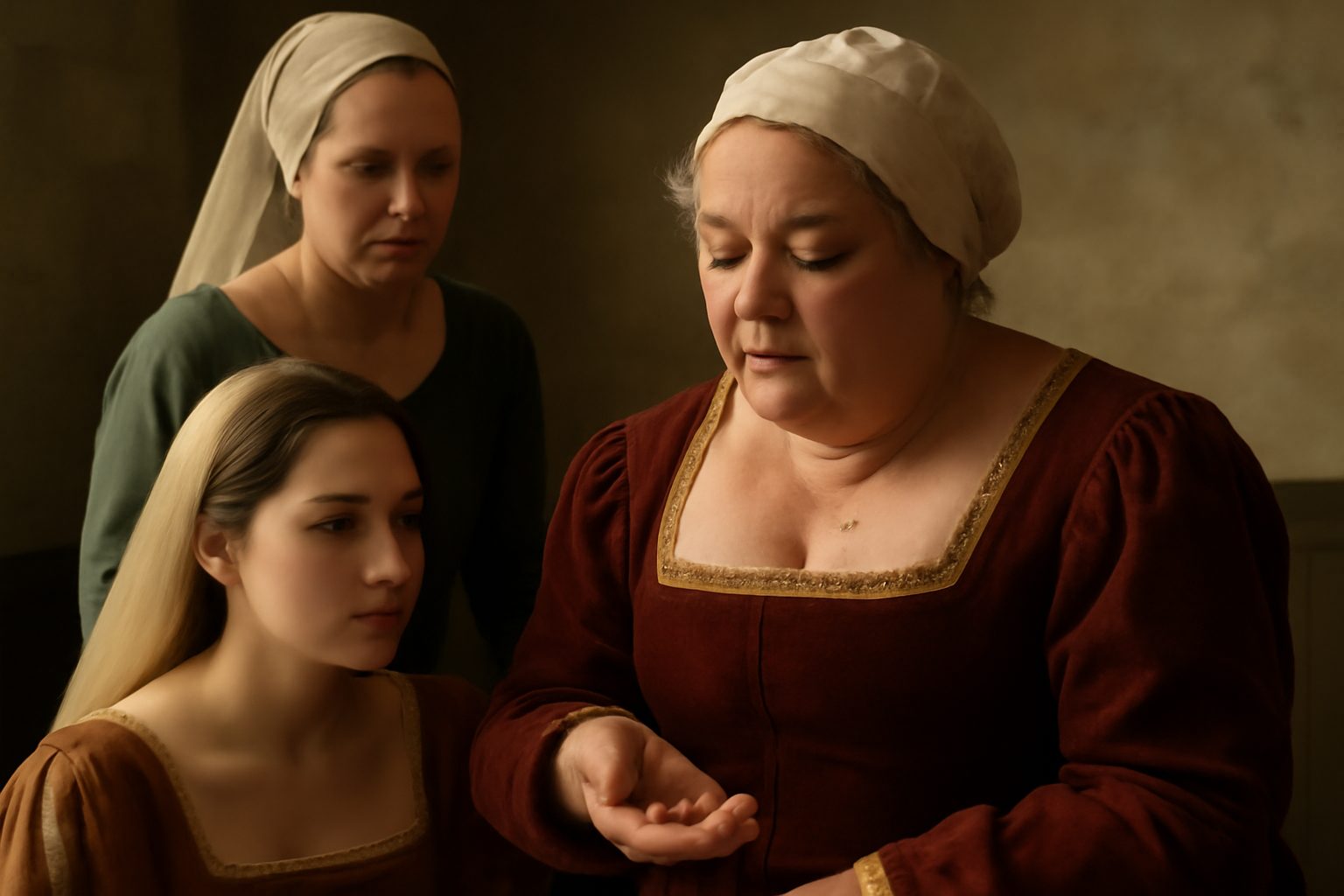
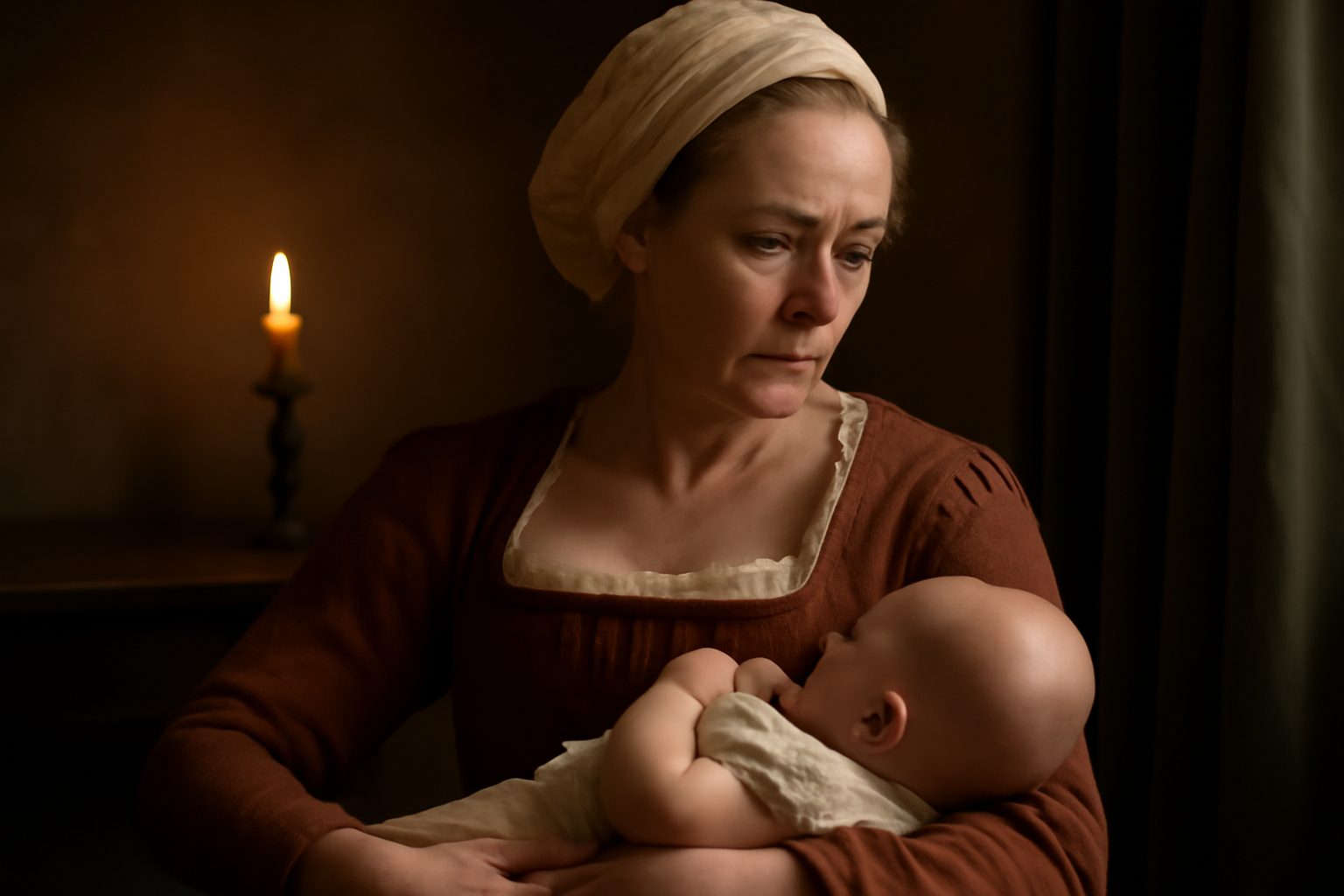
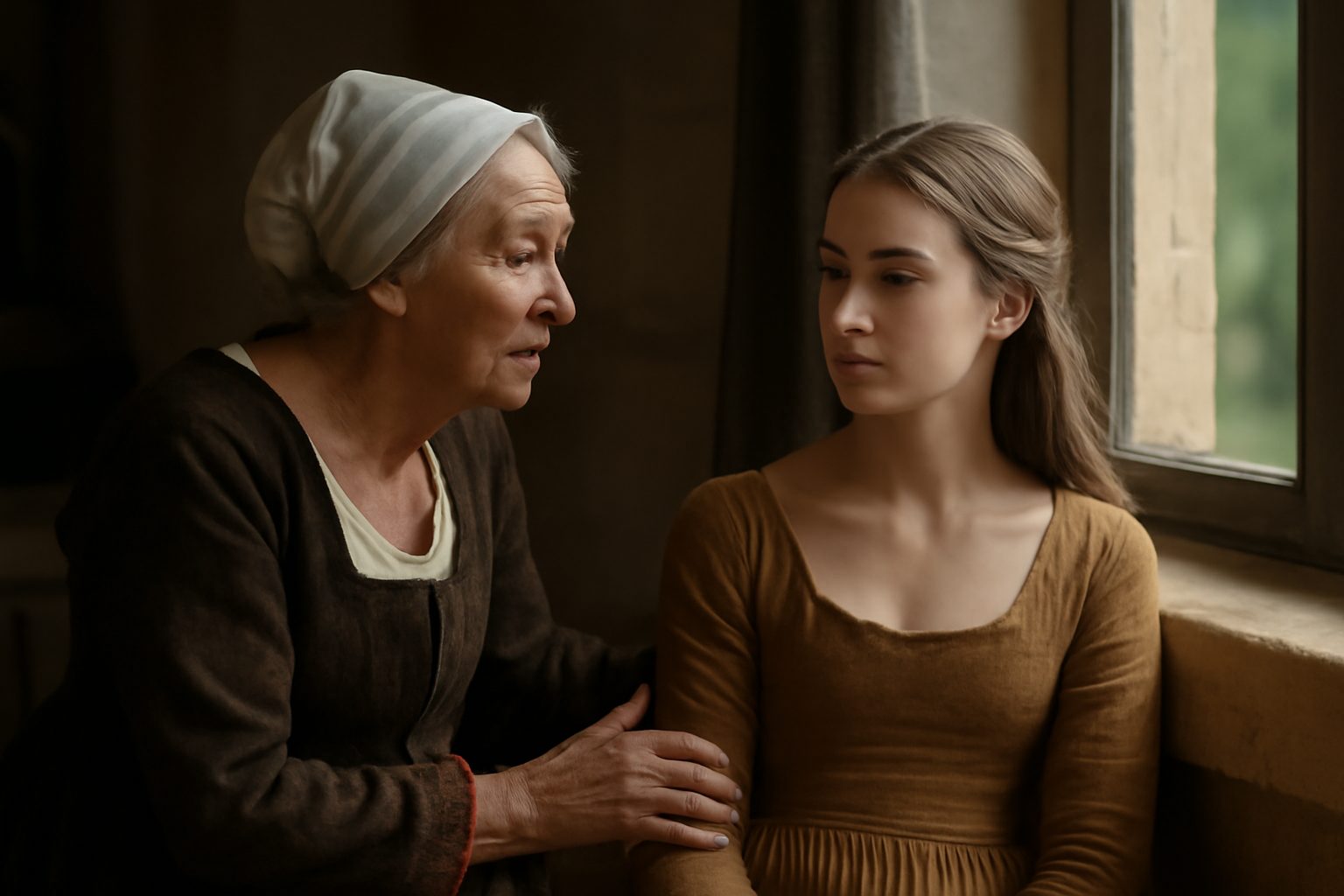
In Act 1, Scene 3 of Romeo and Juliet, Lady Capulet and the Nurse discuss Juliet's potential marriage to Paris. The Nurse reminisces about Juliet's childhood, recalling a humorous moment when the young Juliet, after stumbling, was comforted but then playfully contradicted herself. This line captures the Nurse's affectionate and nostalgic tone as she describes Juliet's endearing, contradictory behavior as a child.
Nurse: "The pretty wretch left crying and said 'Ay.'"
In modern day english, we would say:
The poor thing stopped crying and finally said yes.
Frequently Asked Questions
What did the pretty wretch do after crying?
She said 'Ay'.
Connections to other verses:
Connections to "The pretty wretch left crying and said 'Ay.'"
The verse "The pretty wretch left crying and said 'Ay.'" is part of the Nurse's nostalgic recollection of Juliet's infancy, specifically referencing a moment when Juliet, as a baby, stopped crying and responded affirmatively. This moment is echoed and expanded upon in several other verses within the same scene.
Direct Repetition and Variation
The phrase is directly repeated in "And, pretty fool, it stinted and said 'Ay.'", reinforcing the Nurse's fond memory. Additionally, "Wilt thou not, Jule?' it stinted and said 'Ay.'" provides the full context of the question posed to baby Juliet, linking back to the original moment.
Contextual Background
The incident is foreshadowed in "Wilt thou not, Jule?' and, by my holidame,", which sets up the Nurse's anecdote. The Nurse's amusement at the memory is evident in "To see, now, how a jest shall come about!", highlighting the humorous nature of the event.
Related Infant Memories
This moment is part of a broader narrative of Juliet's childhood recounted by the Nurse, including "And she was wean'd,--I never shall forget it,--" and "For I had then laid wormwood to my dug," which describe the weaning process that led to the bitter taste mentioned in "When it did taste the wormwood on the nipple".
Structural and Thematic Links
The Nurse's repetitive storytelling style connects these verses, emphasizing her role as a comic yet nurturing figure. The anecdote also subtly introduces themes of growth and transition from infancy to marriage, echoed in Lady Capulet's lines like "Well, think of marriage now; younger than you,", drawing a parallel between Juliet's past acquiescence and her current situation.