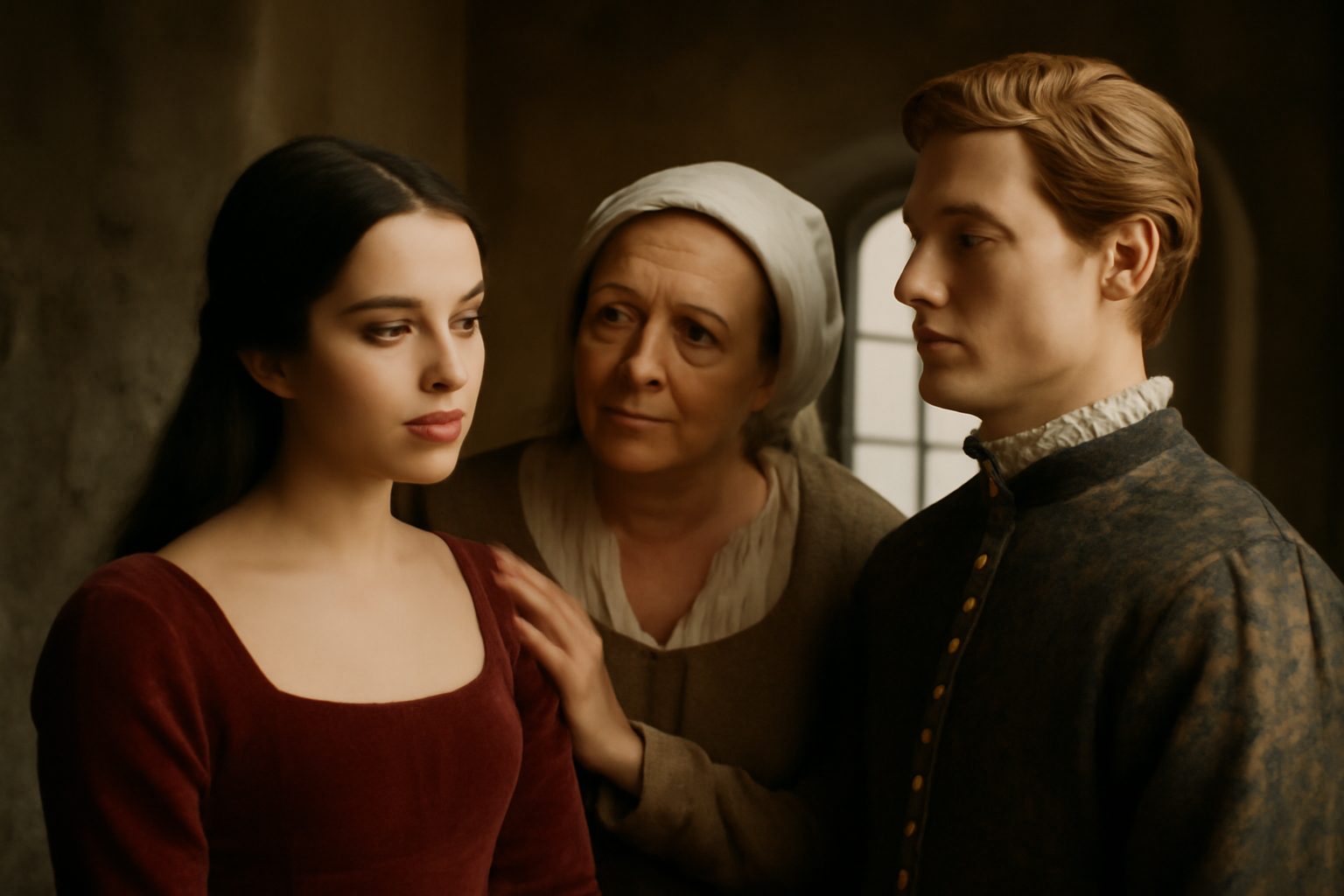
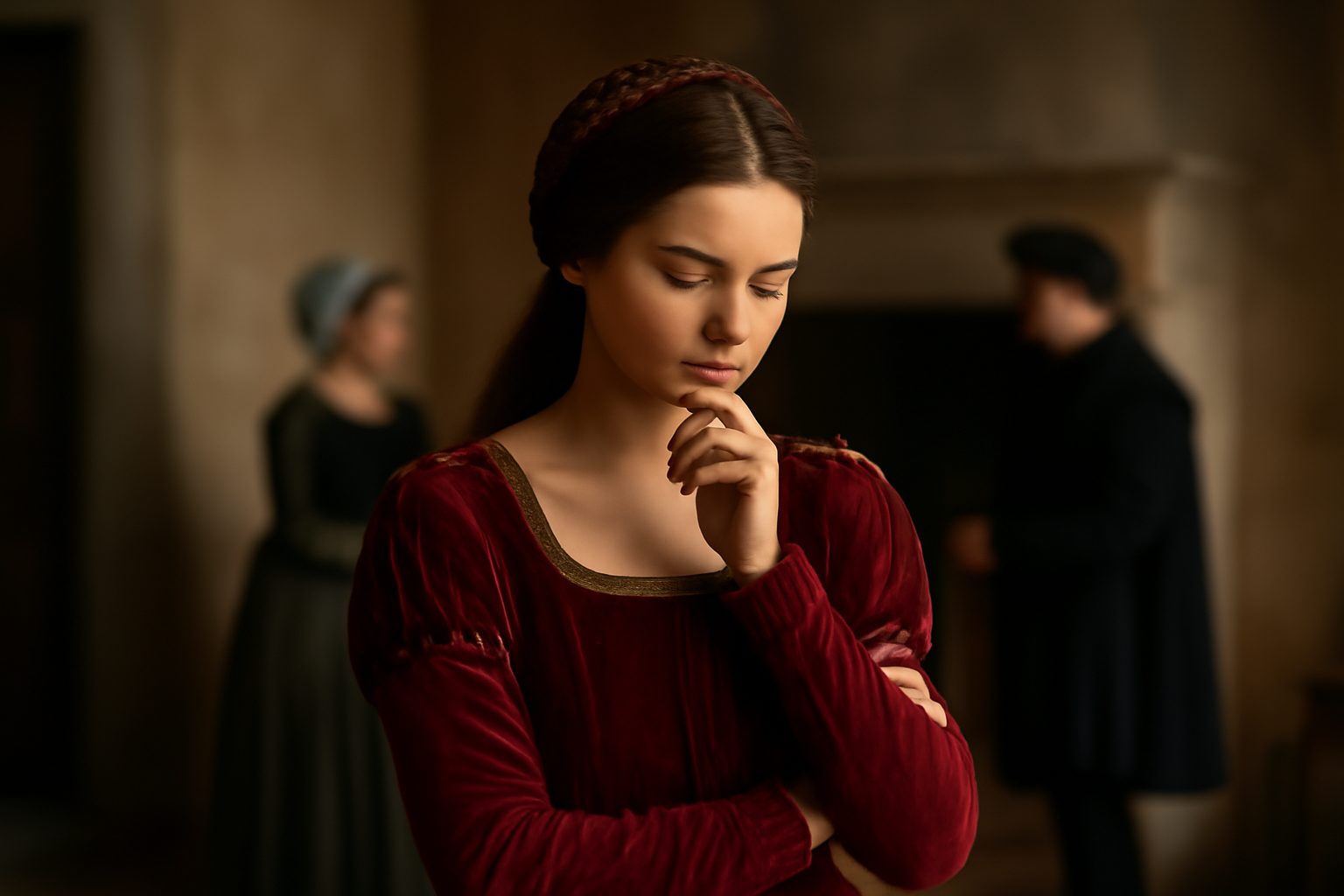
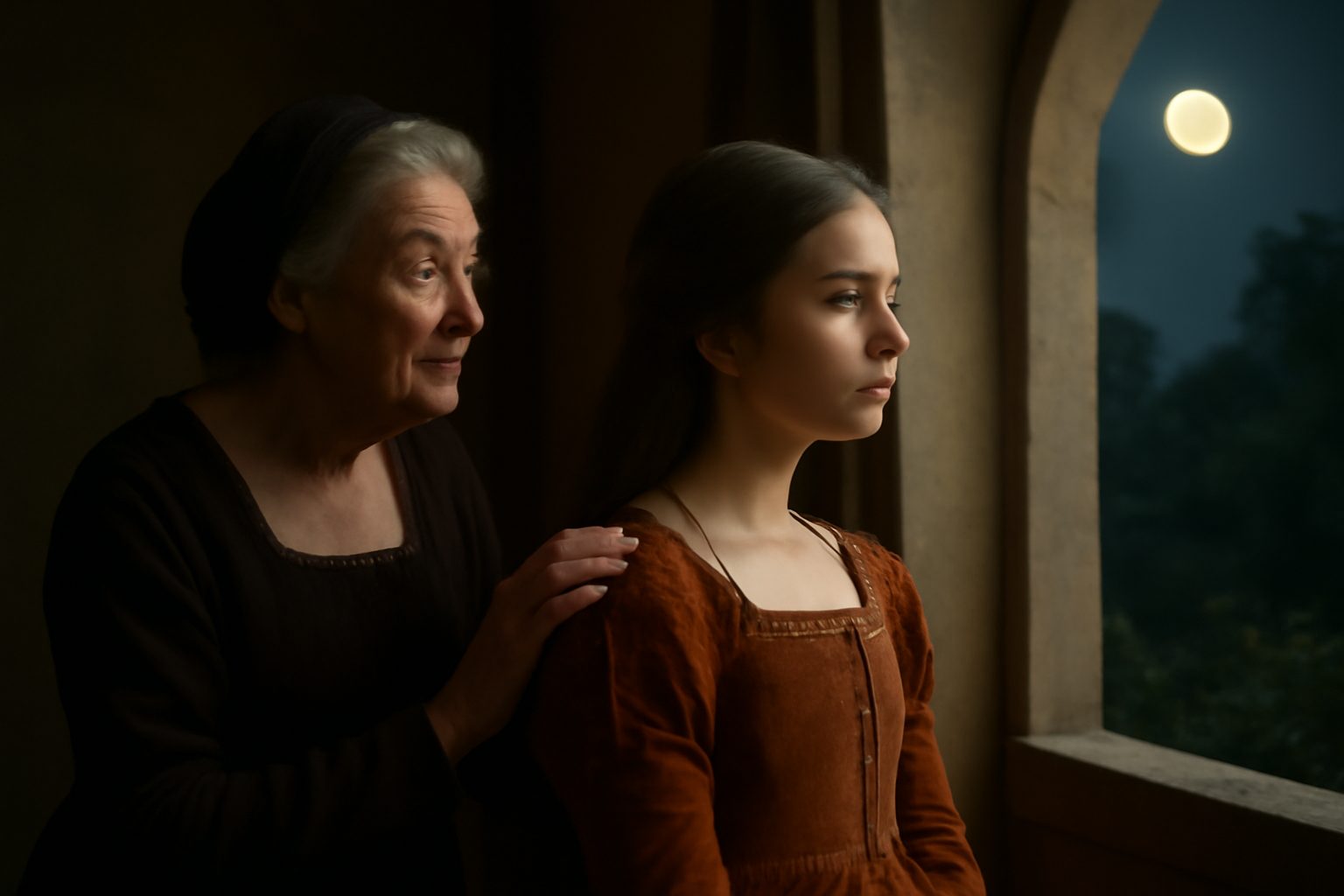
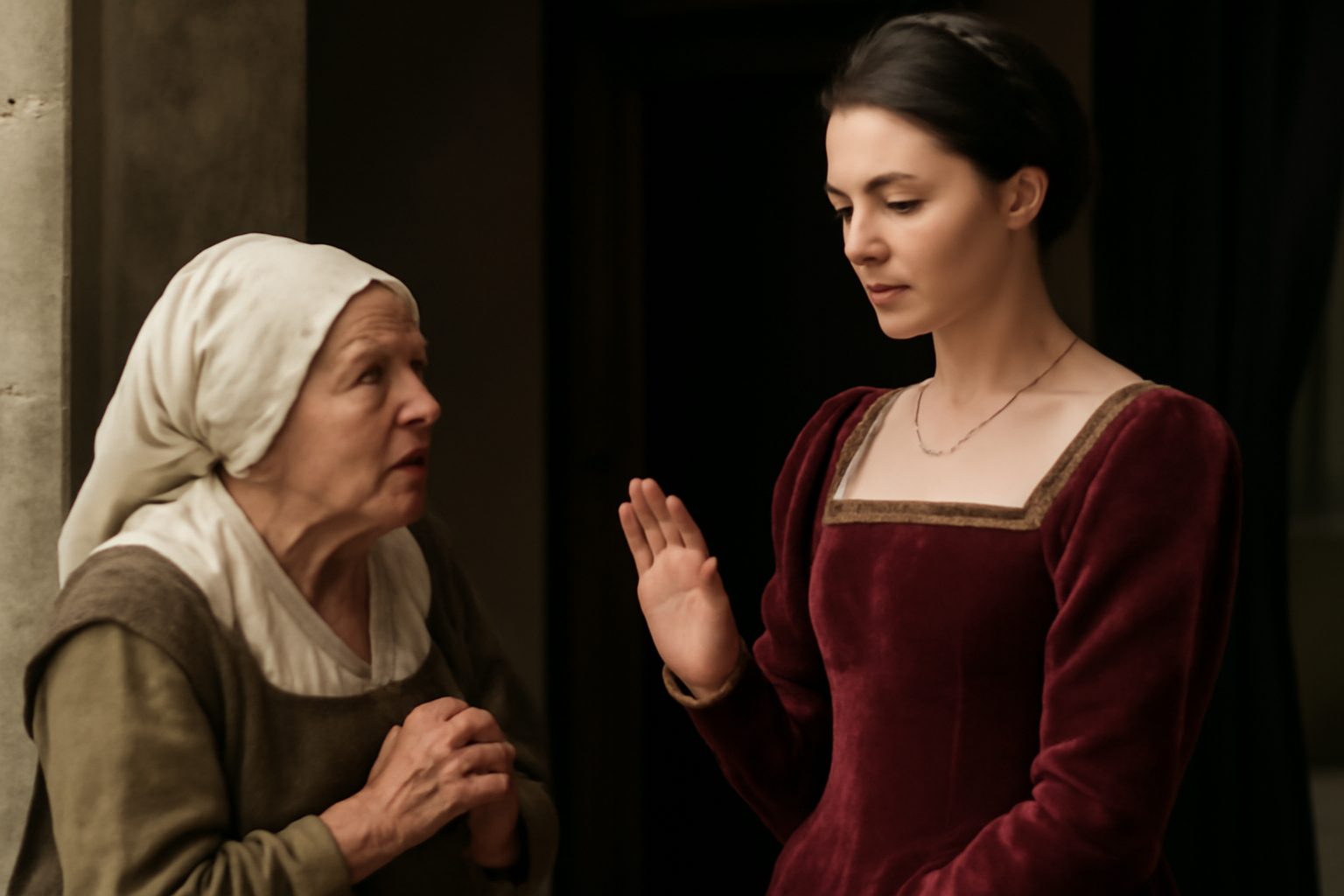
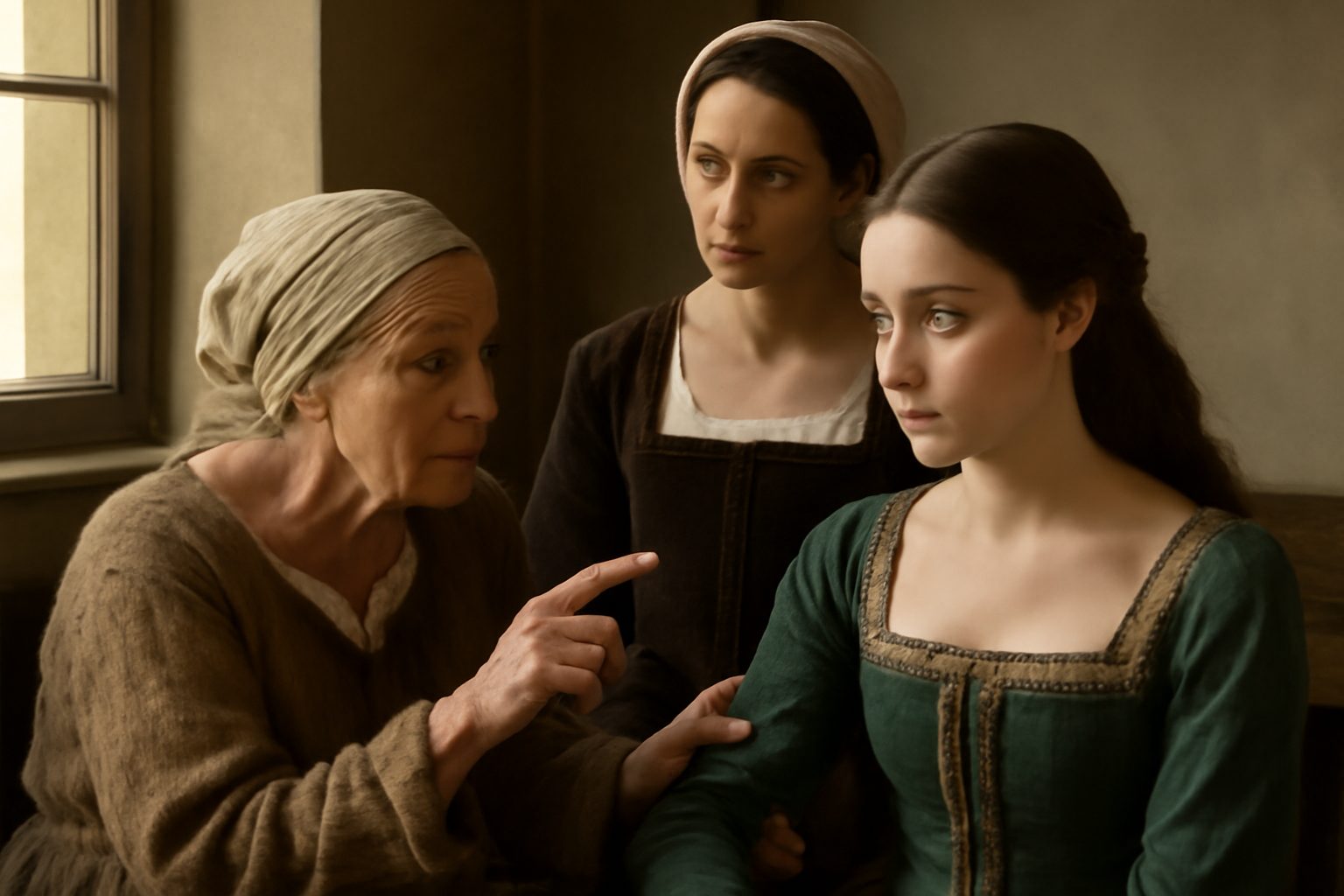
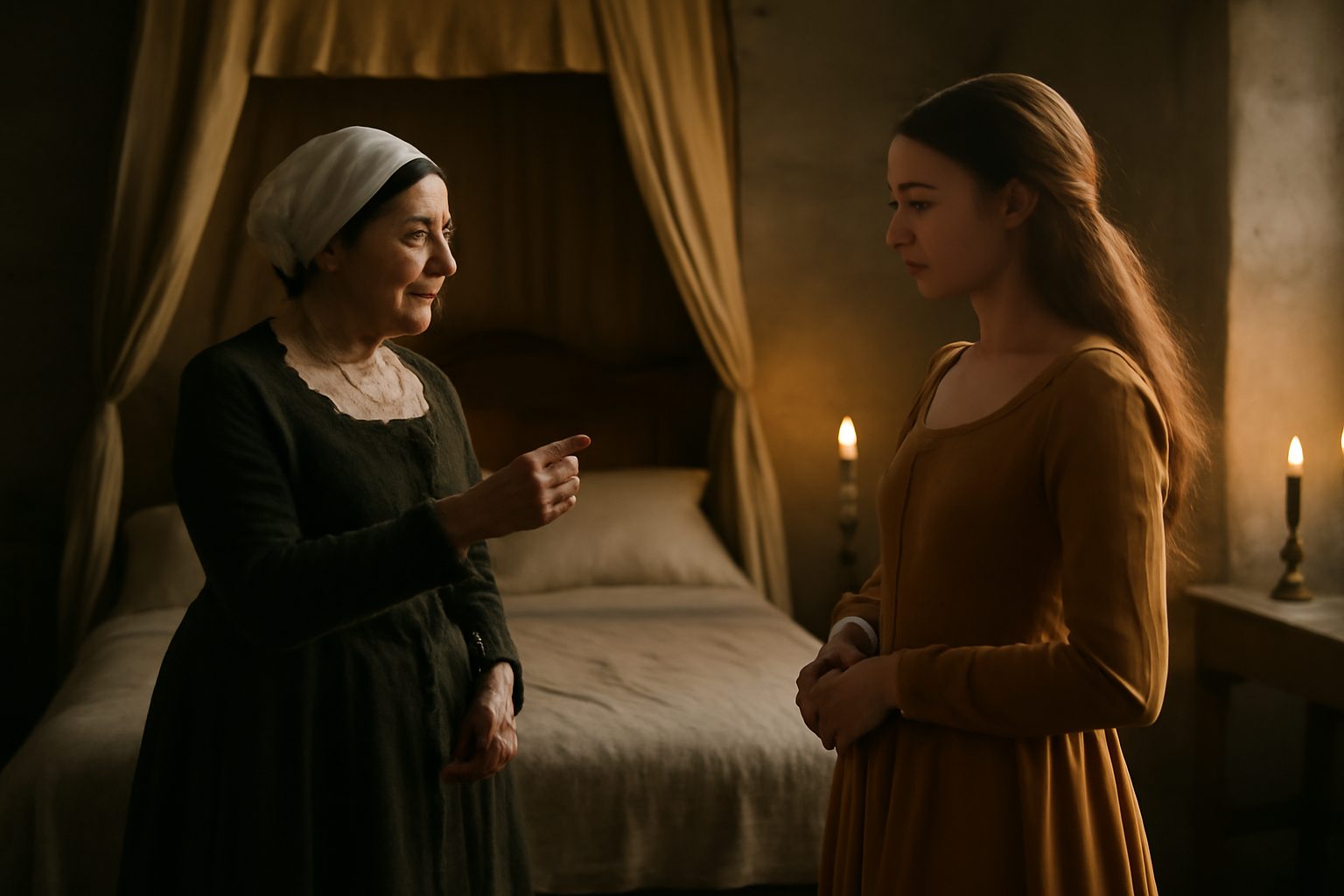
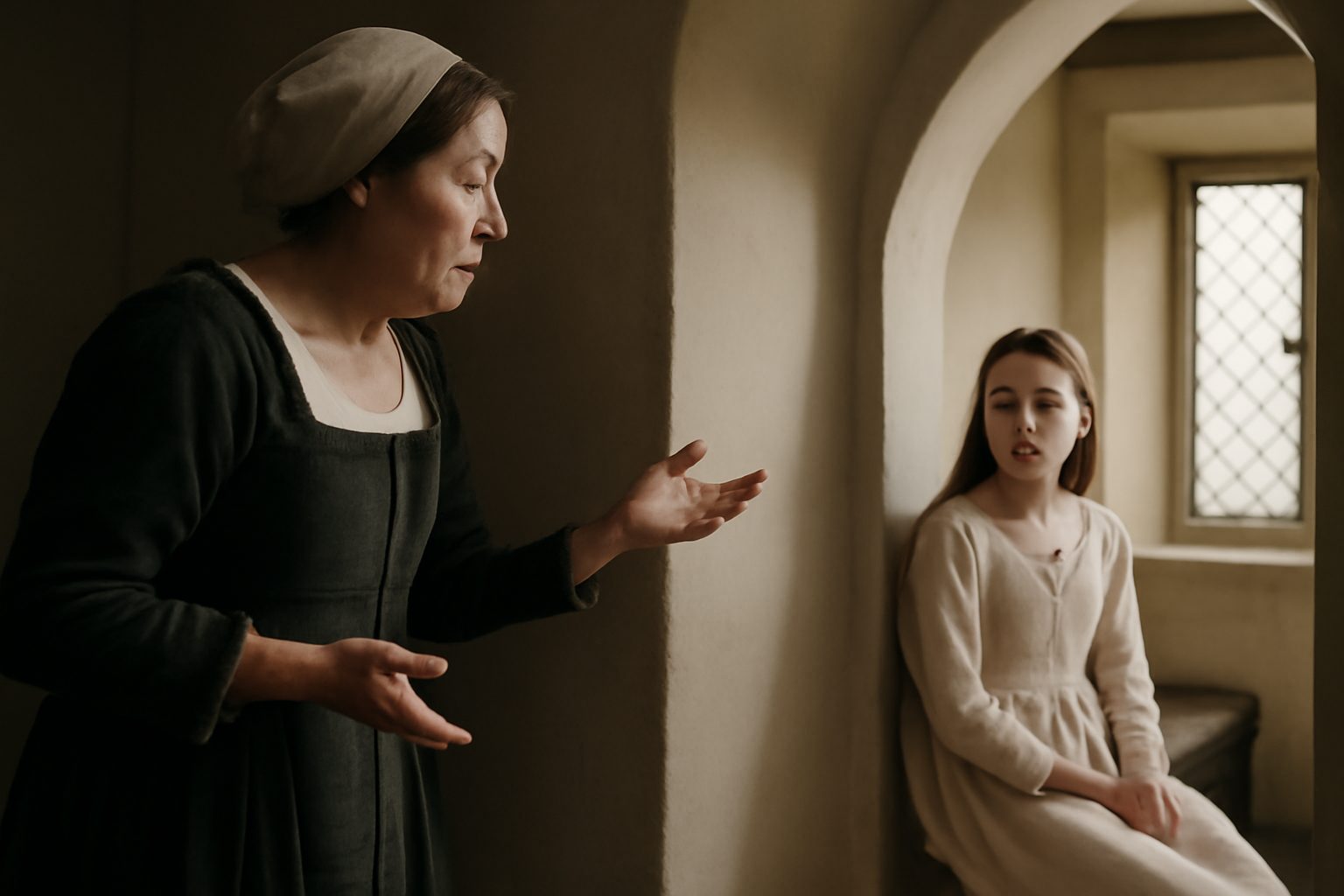
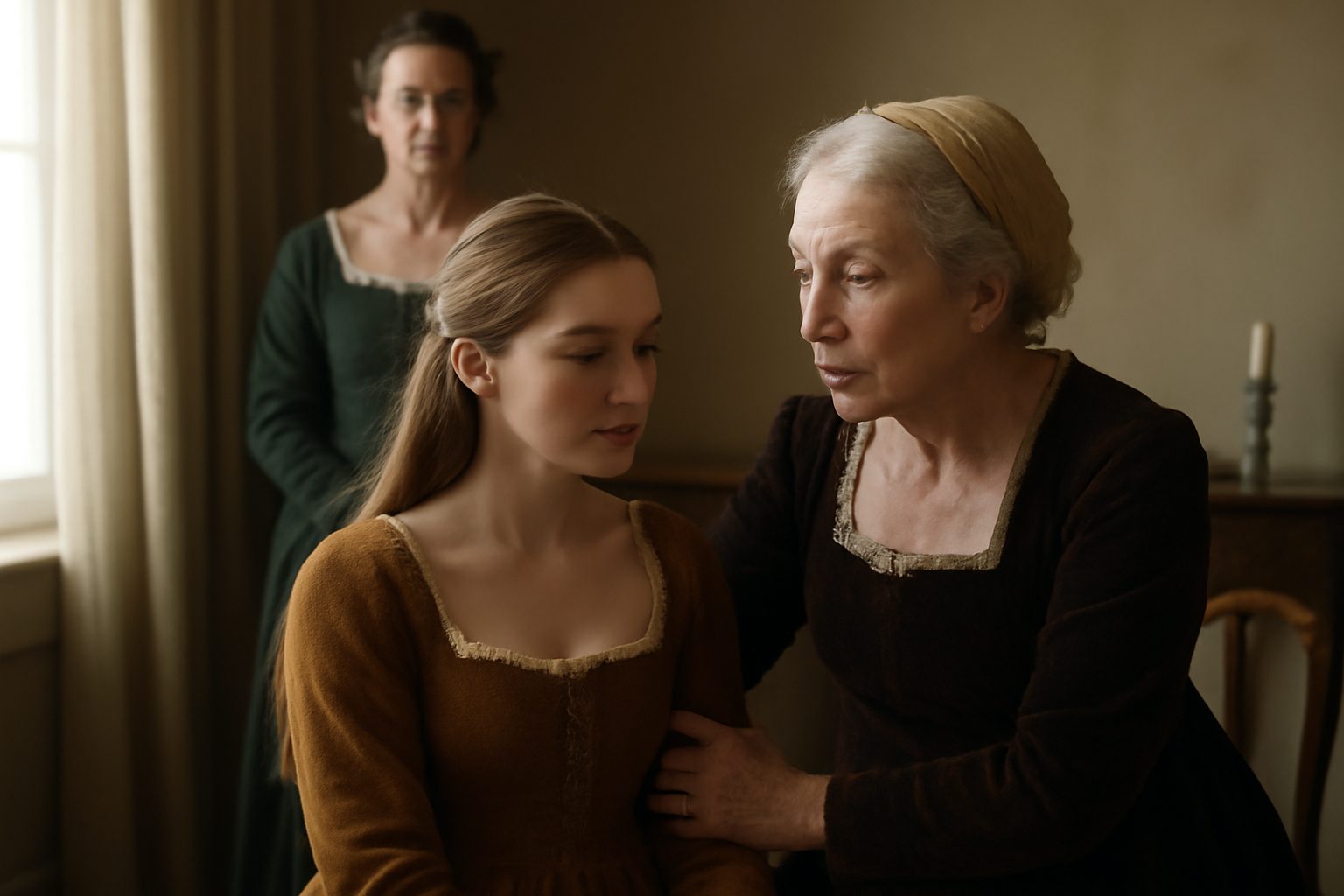
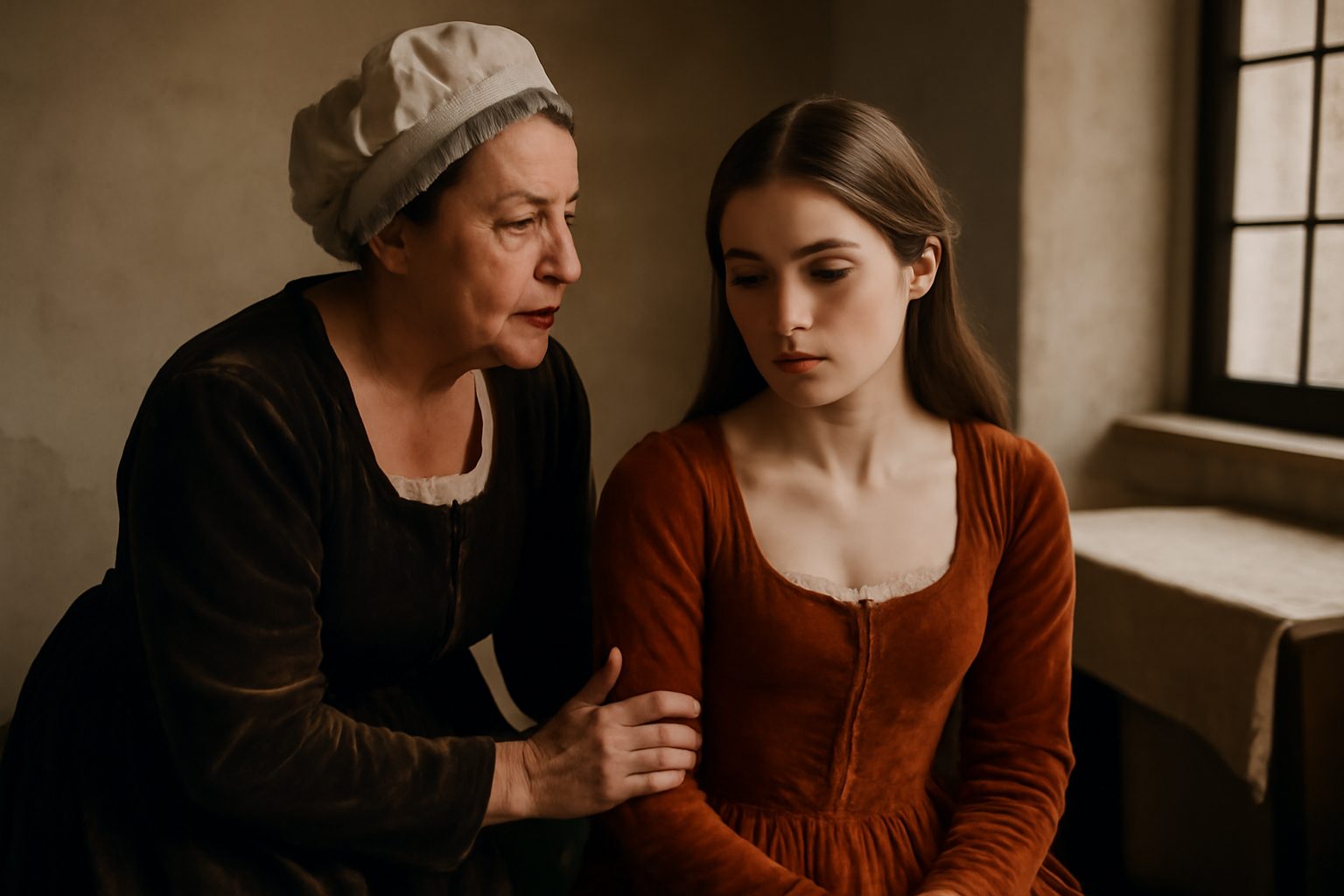
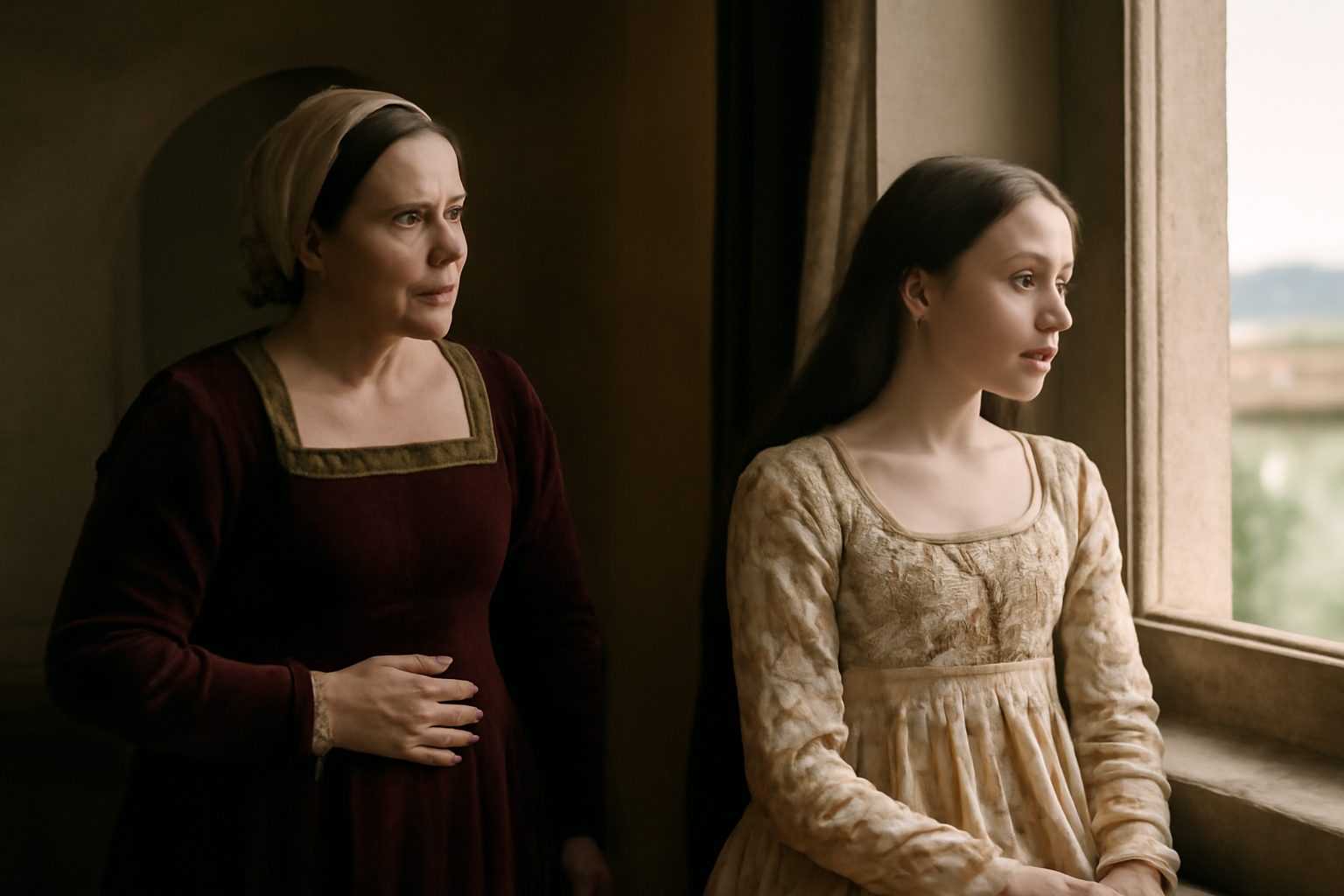
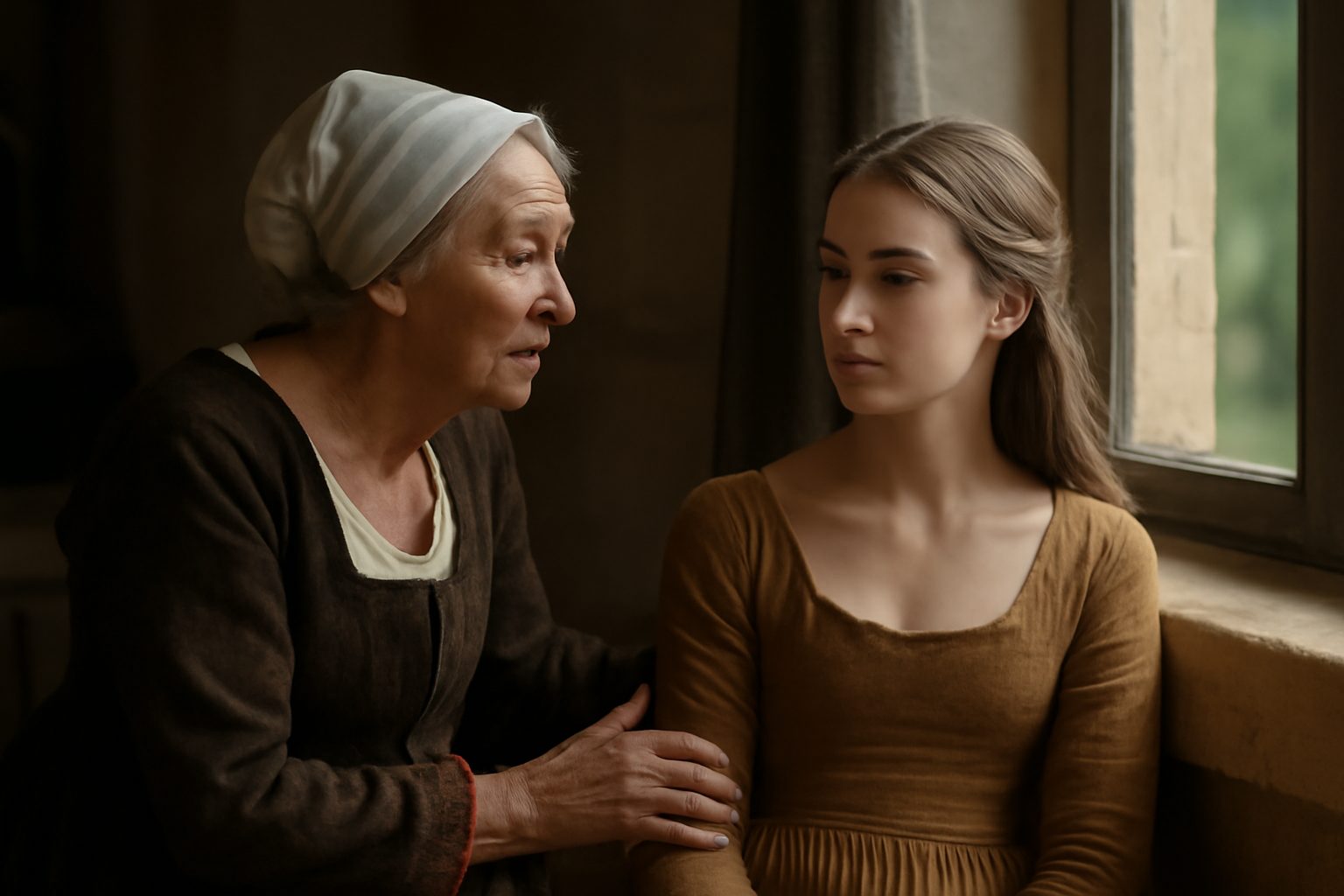
In Act 1, Scene 3 of Romeo and Juliet, Lady Capulet questions her daughter Juliet about her feelings toward Paris, a wealthy nobleman whom the family favors as a suitor. This line is part of a conversation in which Lady Capulet and the Nurse gently pressure Juliet to consider marrying Paris, though Juliet has not yet formed an opinion of him. The moment highlights the societal expectations placed on young women in Verona, where arranged marriages were common.
Lady Capulet: "What say you? can you love the gentleman?"
In modern day english, we would say:
What do you think? Could you love him?
Frequently Asked Questions
Who is asking if someone can love the gentleman?
Lady Capulet
What is Lady Capulet asking about in this line?
If someone can love the gentleman
In which act and scene does this line appear?
Act 1 Scene 3
Connections to other verses:
Connections to "What say you? can you love the gentleman?"
The verse "What say you? can you love the gentleman?" is a direct question posed by Lady Capulet to Juliet, inquiring about her feelings for Paris. This moment is central to the scene's exploration of marriage, duty, and youth.
Immediate Context and Character Responses
This question follows Lady Capulet's earlier query in "How stands your disposition to be married?", which sets the stage for Juliet's measured response. Juliet's reply, "It is an honour that I dream not of.", shows her initial reluctance and innocence, contrasting with the directness of the later question about loving Paris.
Lady Capulet's efforts to persuade Juliet are evident in her description of Paris as "a man of wax." and the Nurse's enthusiastic support calling him "a flower; in faith, a very flower.", both aiming to make him appealing. The metaphor of reading Paris like a book, introduced in "Read o'er the volume of young Paris' face," and expanded in "This precious book of love, this unbound lover,", frames the proposal as something to be studied and appreciated, reinforcing the question of whether Juliet can love him.
Juliet's Cautious Agreement
Juliet's eventual response to the question is not immediate agreement but a cautious promise in "I'll look to like, if looking liking move:", showing her obedience but also her uncertainty. This leads to her mother's final encouragement in "Go, girl, seek happy nights to happy days.", which closes the discussion on a note of hopeful expectation.
Nurse's Interjections and Memories
The Nurse's interruptions, such as her nostalgic recollection in "Thou wast the prettiest babe that e'er I nursed:", provide comic relief but also highlight Juliet's youth and the Nurse's affectionate, if sometimes inappropriate, involvement in the conversation. Her anecdote about Juliet's childhood, including the line "Wilt thou not, Jule?' it stinted and said 'Ay.'", parallels the current situation where Juliet is again being asked to agree to something, this time marriage.
Structural and Thematic Links
The question also ties into the broader themes of the scene, such as the pressure on young women to marry, reflected in Lady Capulet's statement "Well, think of marriage now; younger than you,", and the societal expectations that Juliet is beginning to navigate.