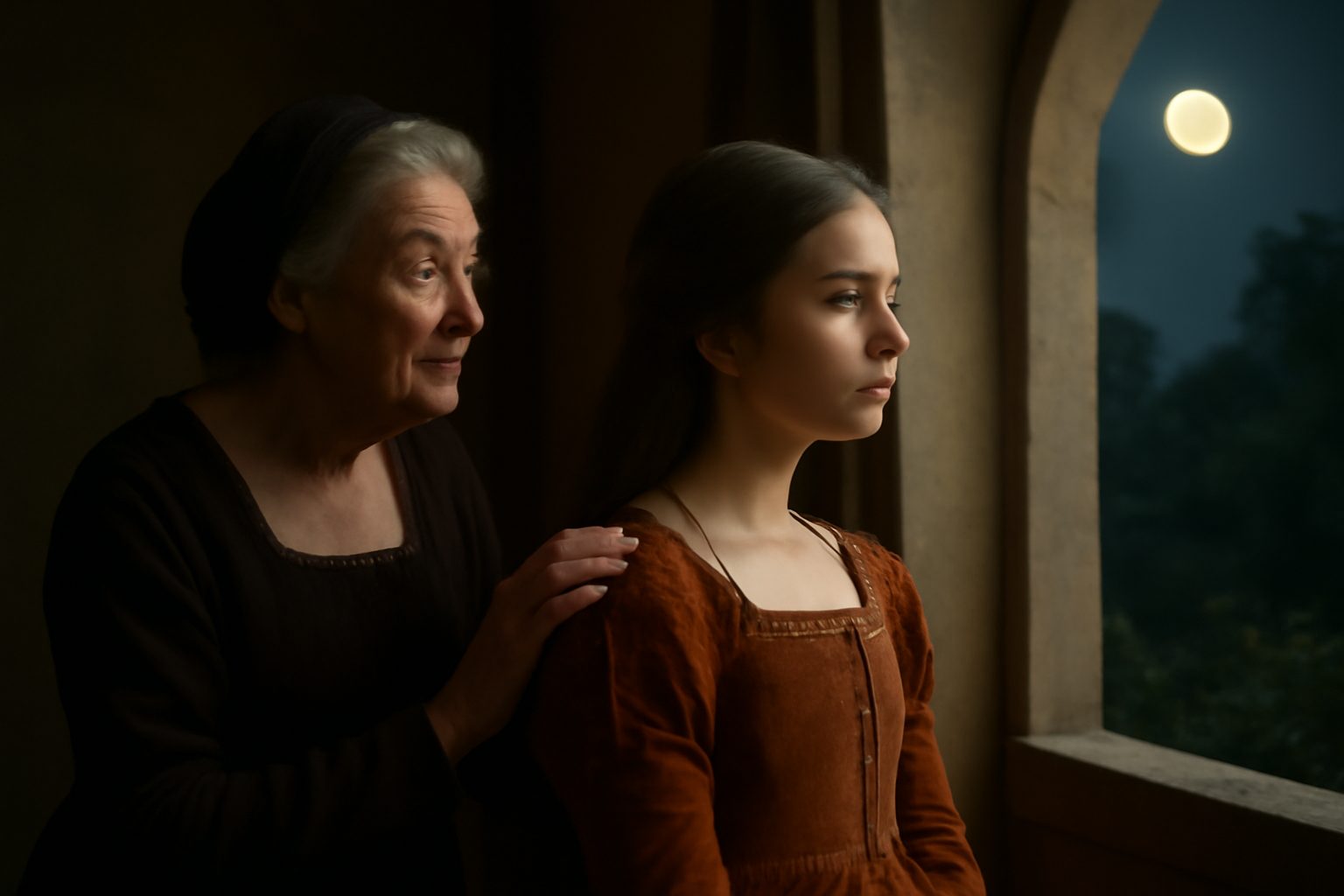
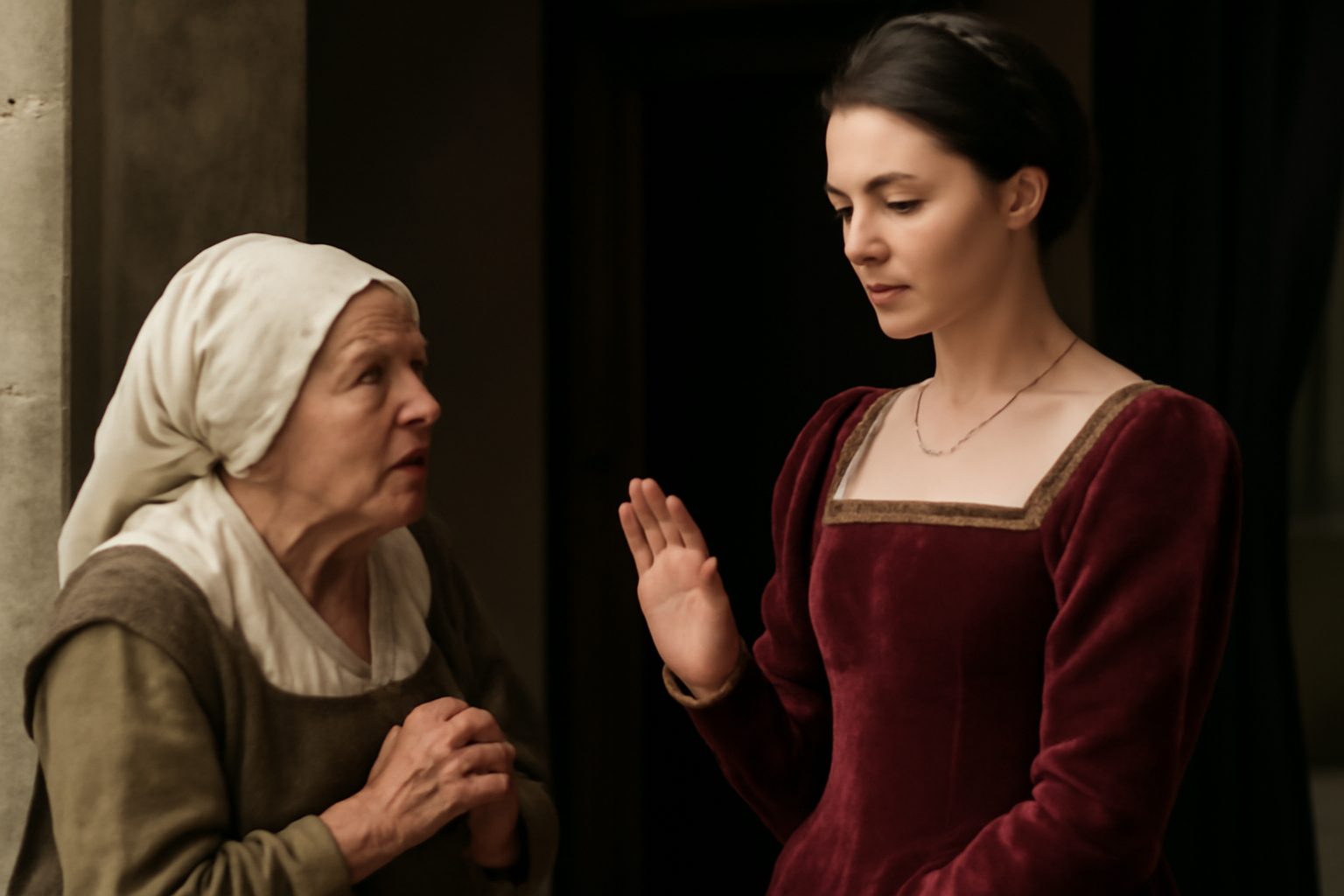
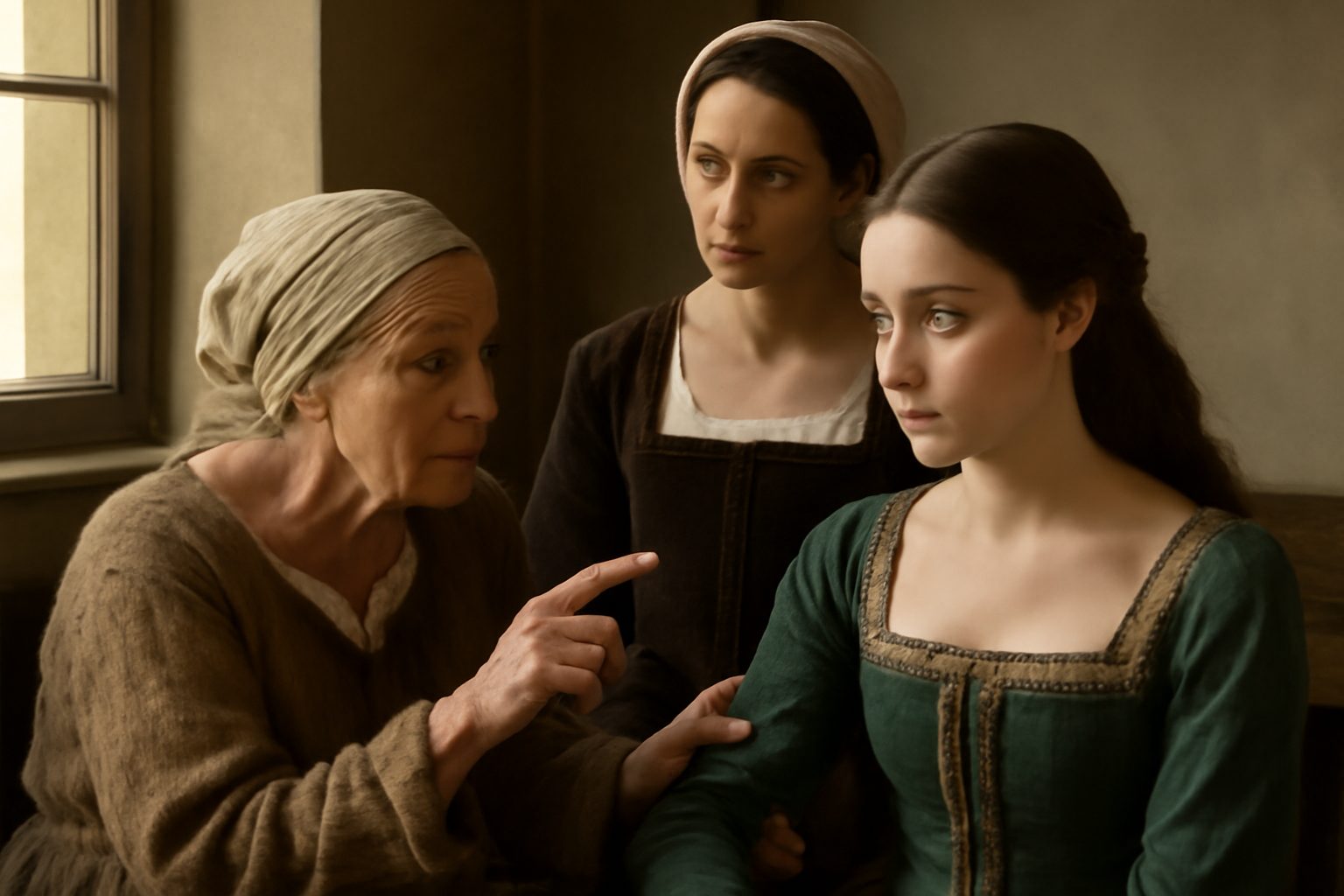
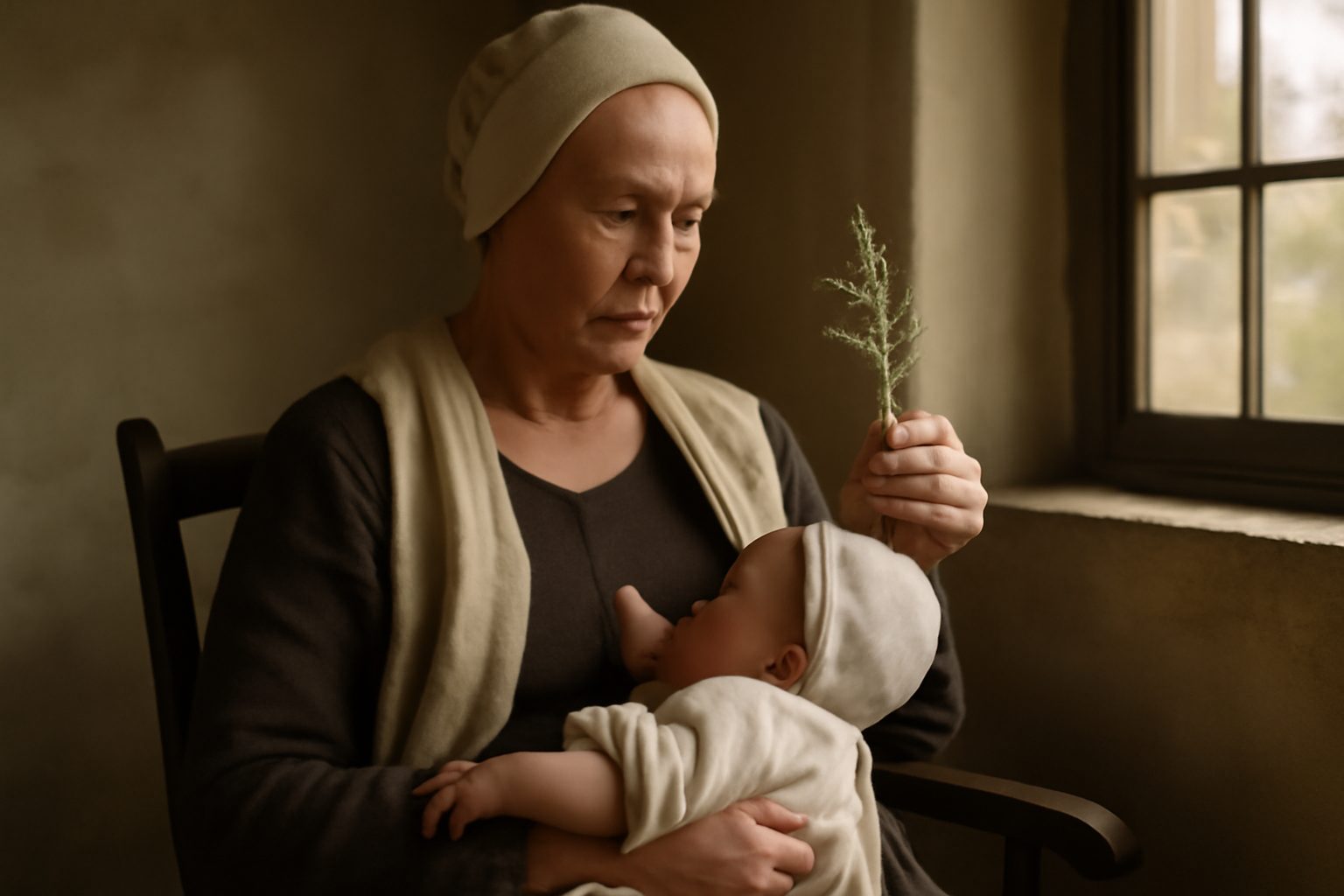
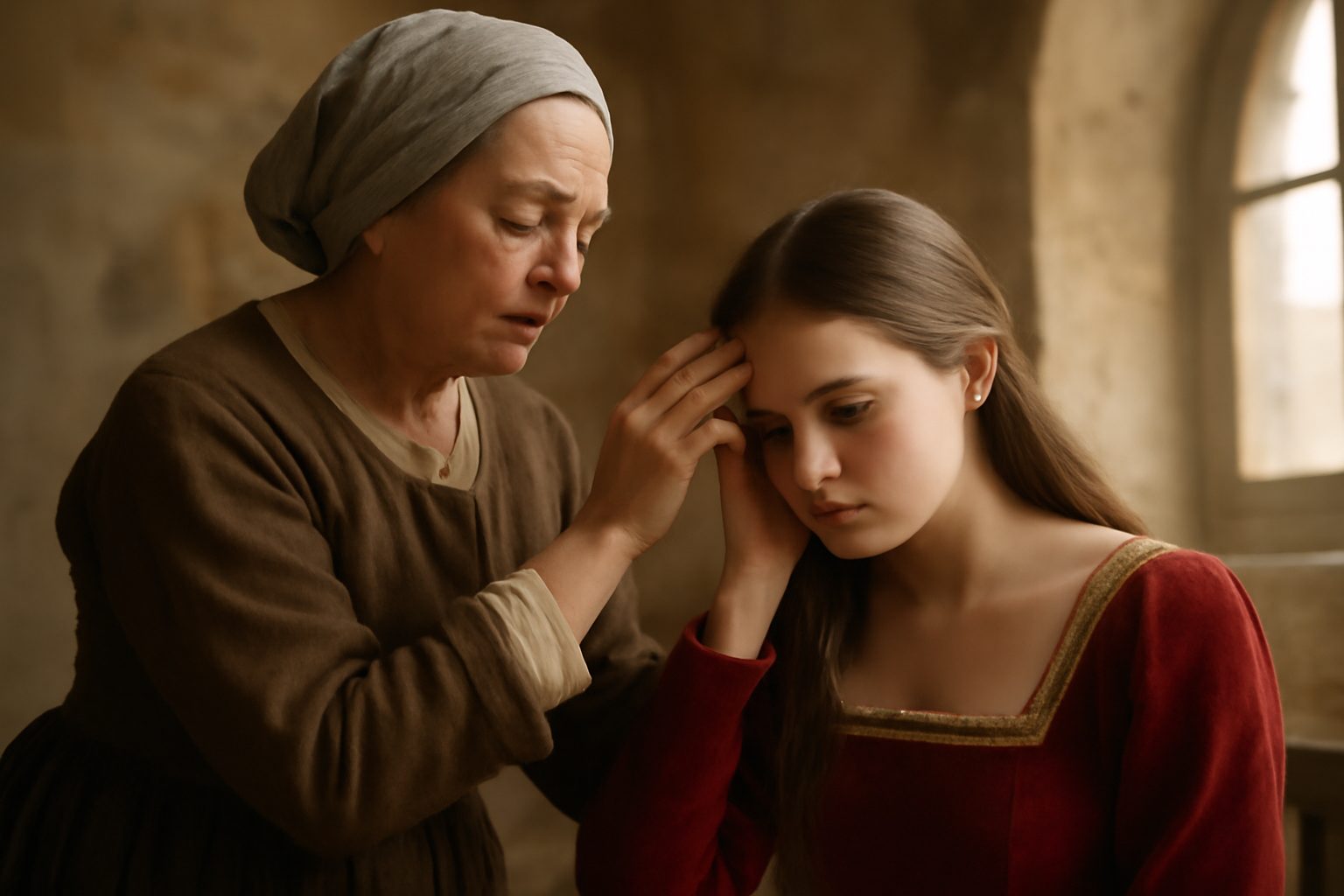
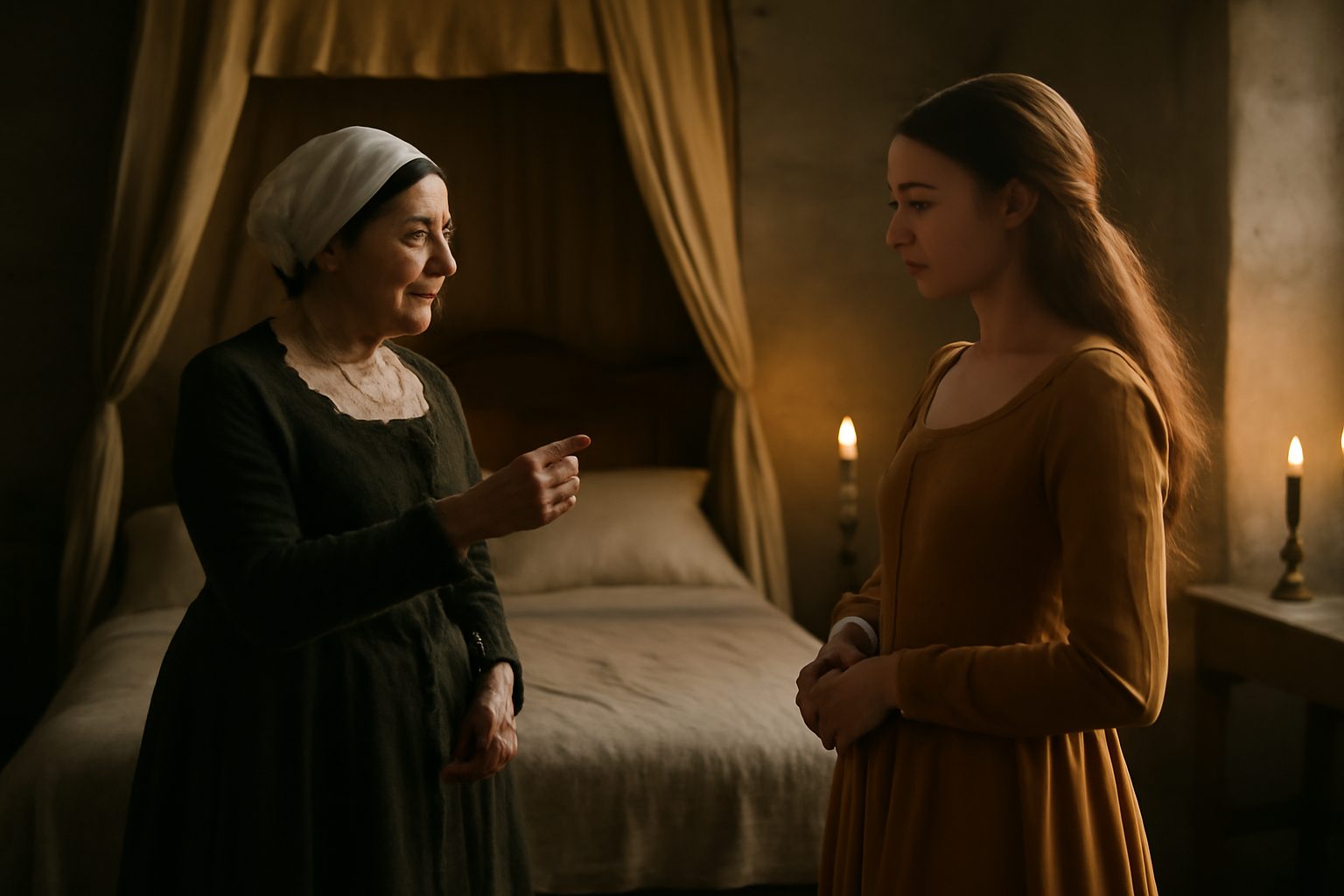
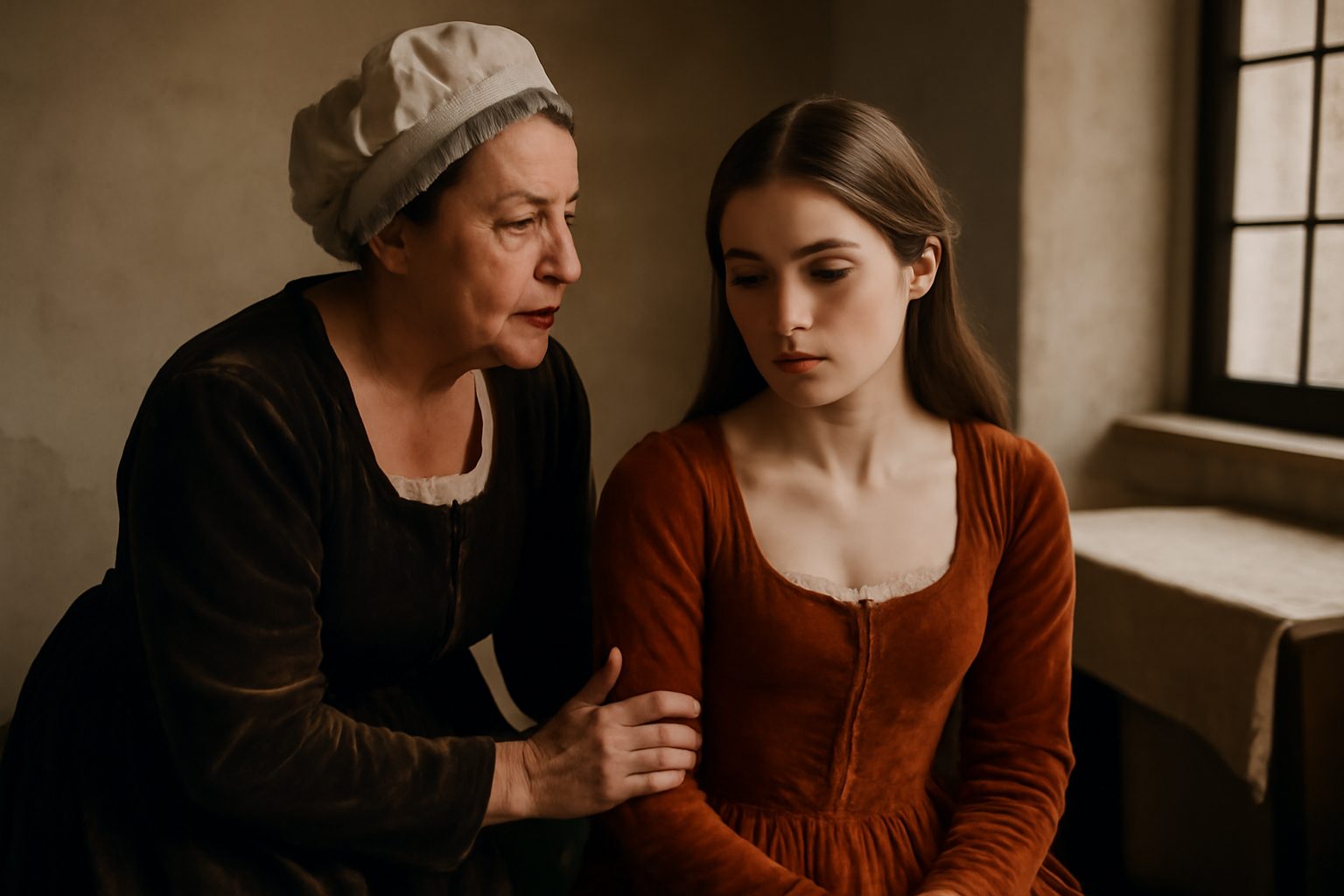
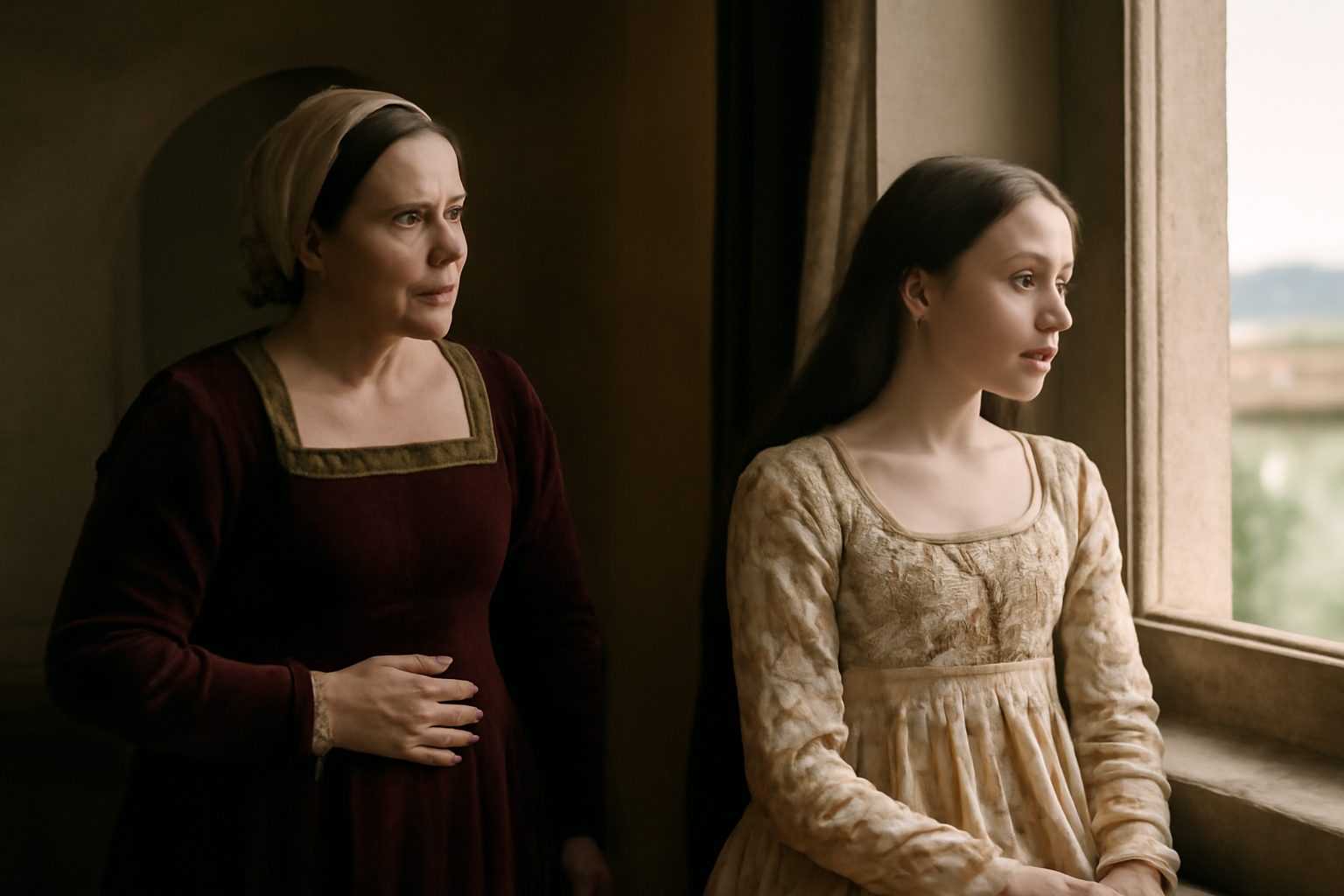
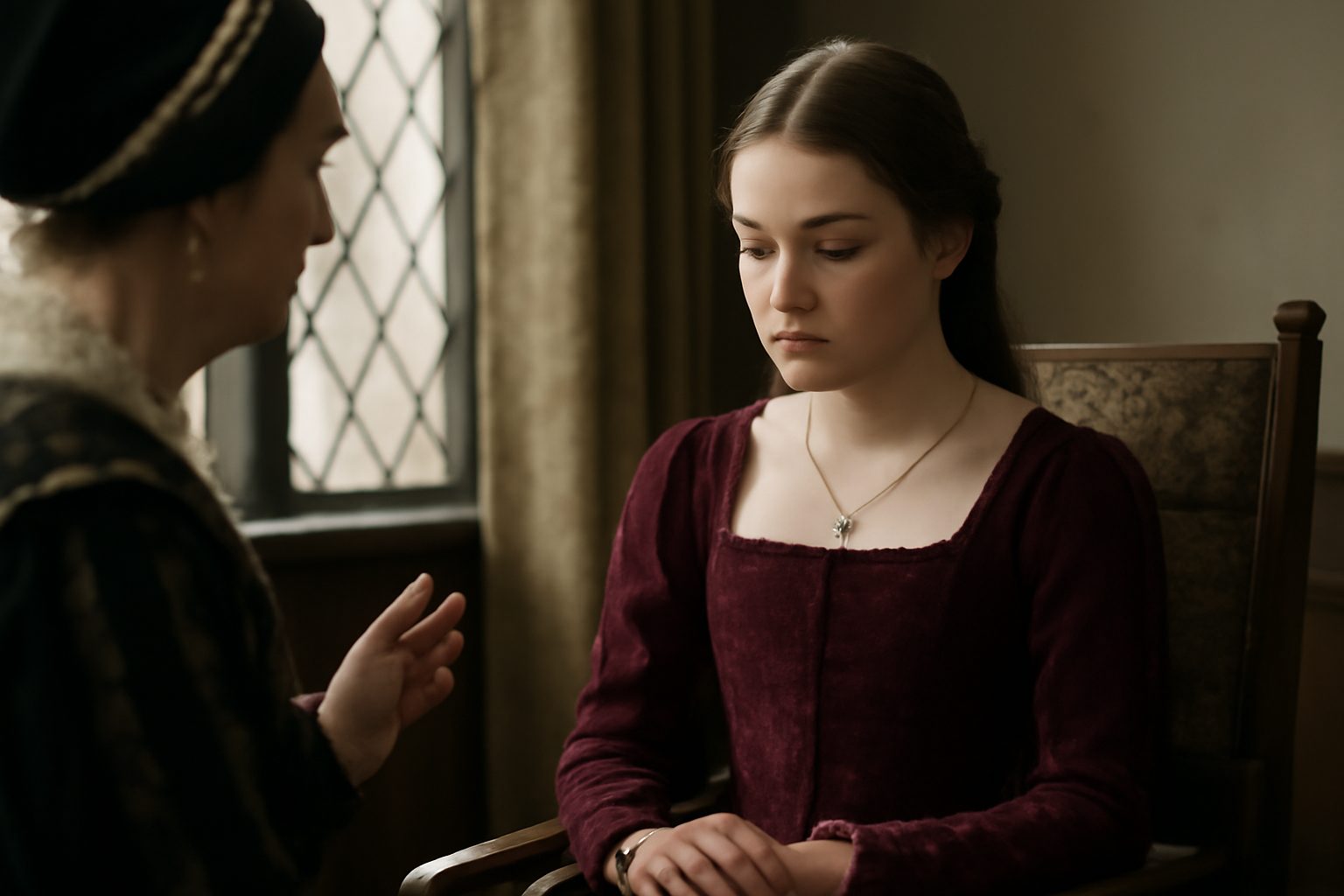
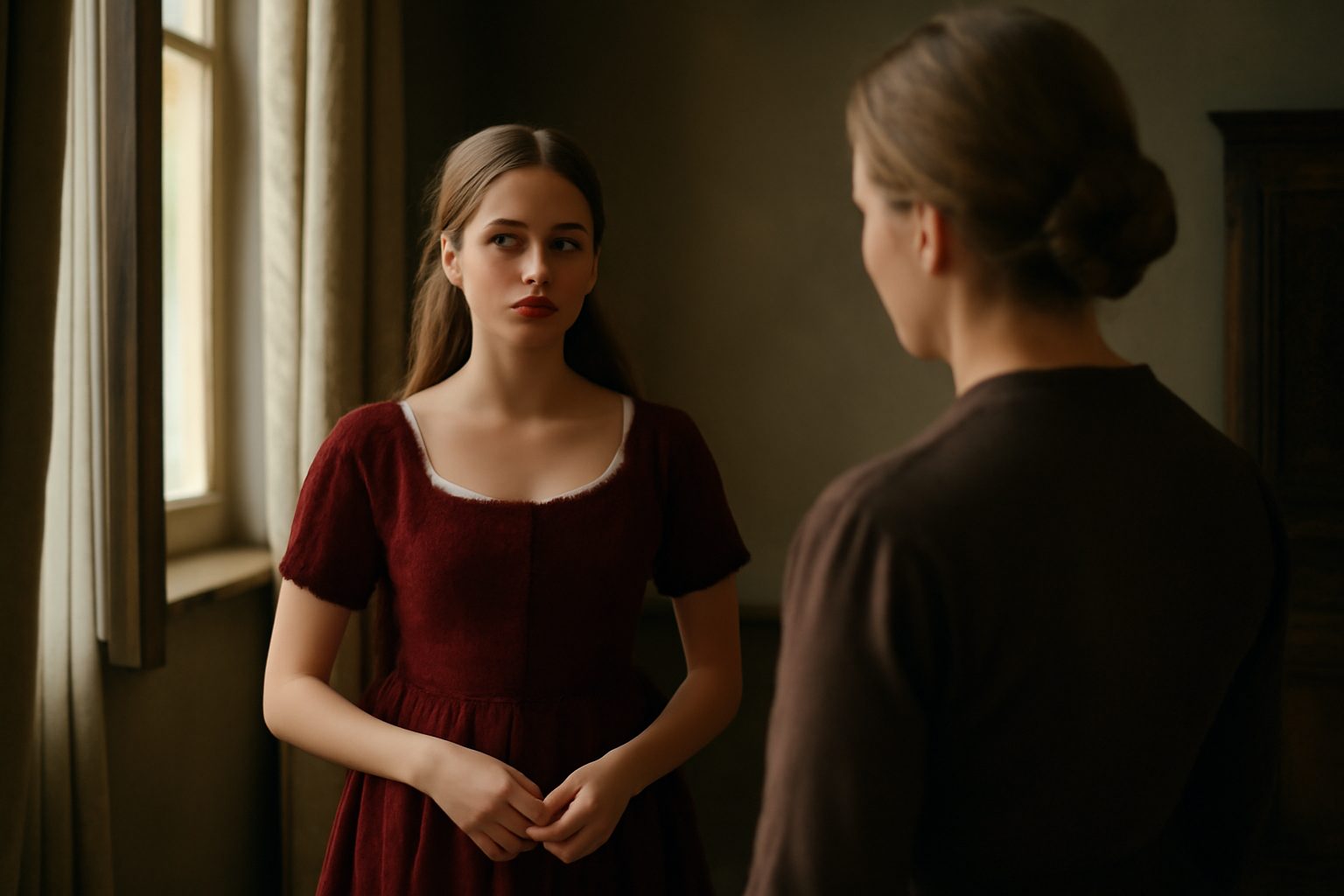
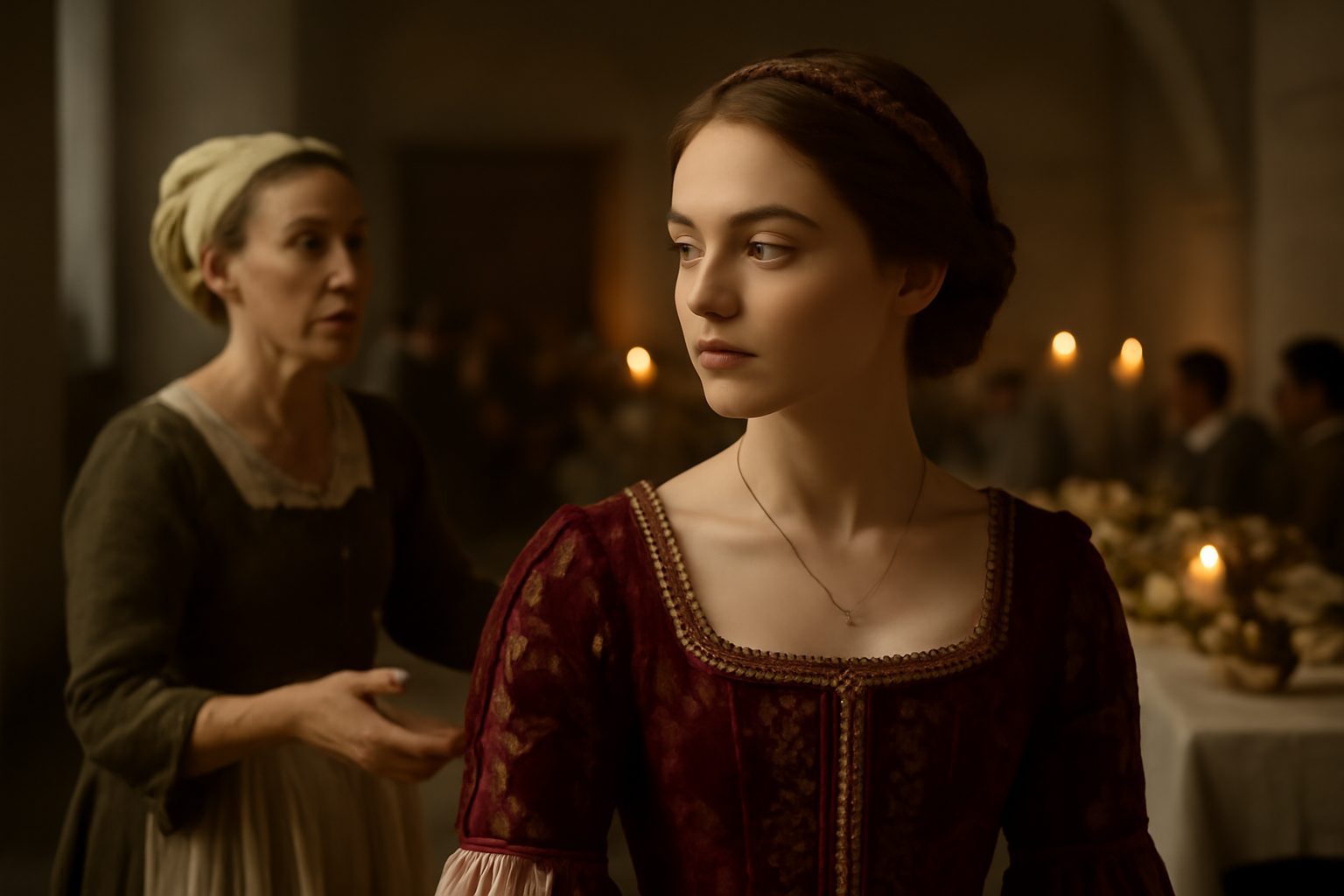
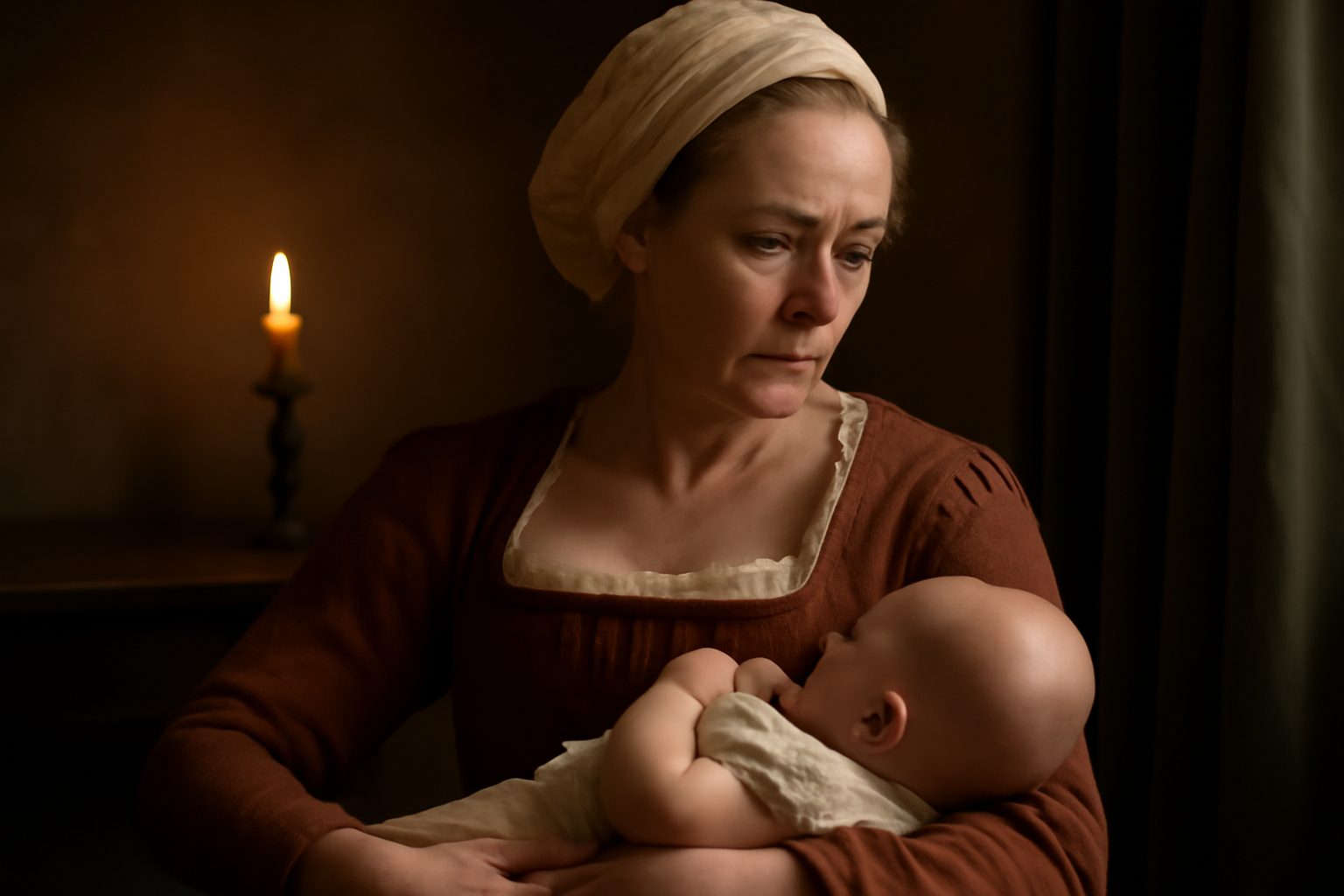
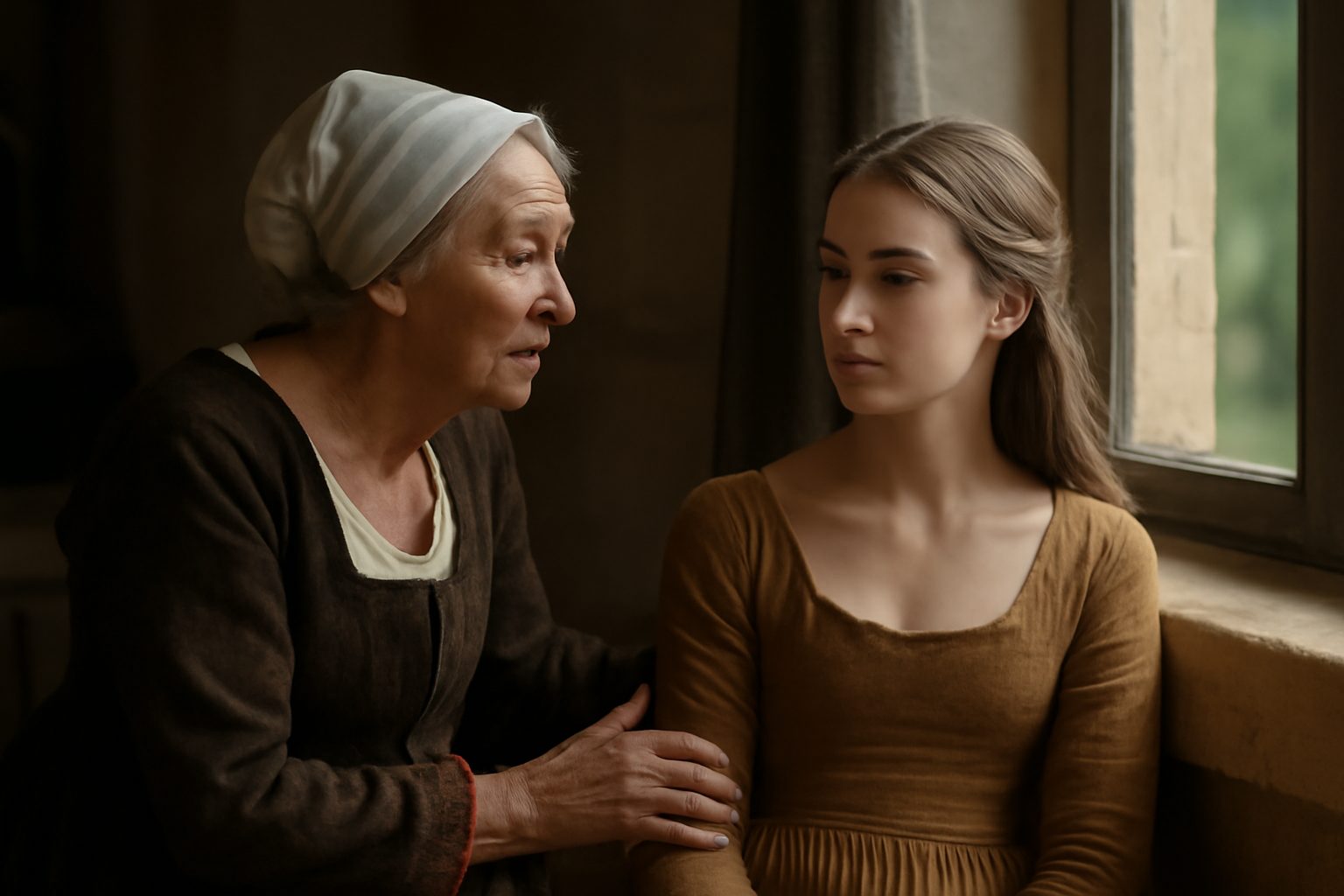
In Act 1 Scene 3 of Romeo and Juliet, Lady Capulet speaks to her daughter Juliet about the prospect of marrying Paris, a wealthy and noble suitor. The line refers to the idea of a lavish, storybook union, where Paris's wealth and status would secure Juliet a life of splendor and admiration. This moment highlights the Capulets' emphasis on social standing and material advantages in marriage.
Lady Capulet: "That in gold clasps locks in the golden story;"
In modern day english, we would say:
The beautiful cover holds a beautiful tale inside, like a precious book bound in gold.
Frequently Asked Questions
What does Lady Capulet compare to a golden story in this line?
She compares a beautiful book cover to a golden story.
Connections to other verses:
Connections to "That in gold clasps locks in the golden story"
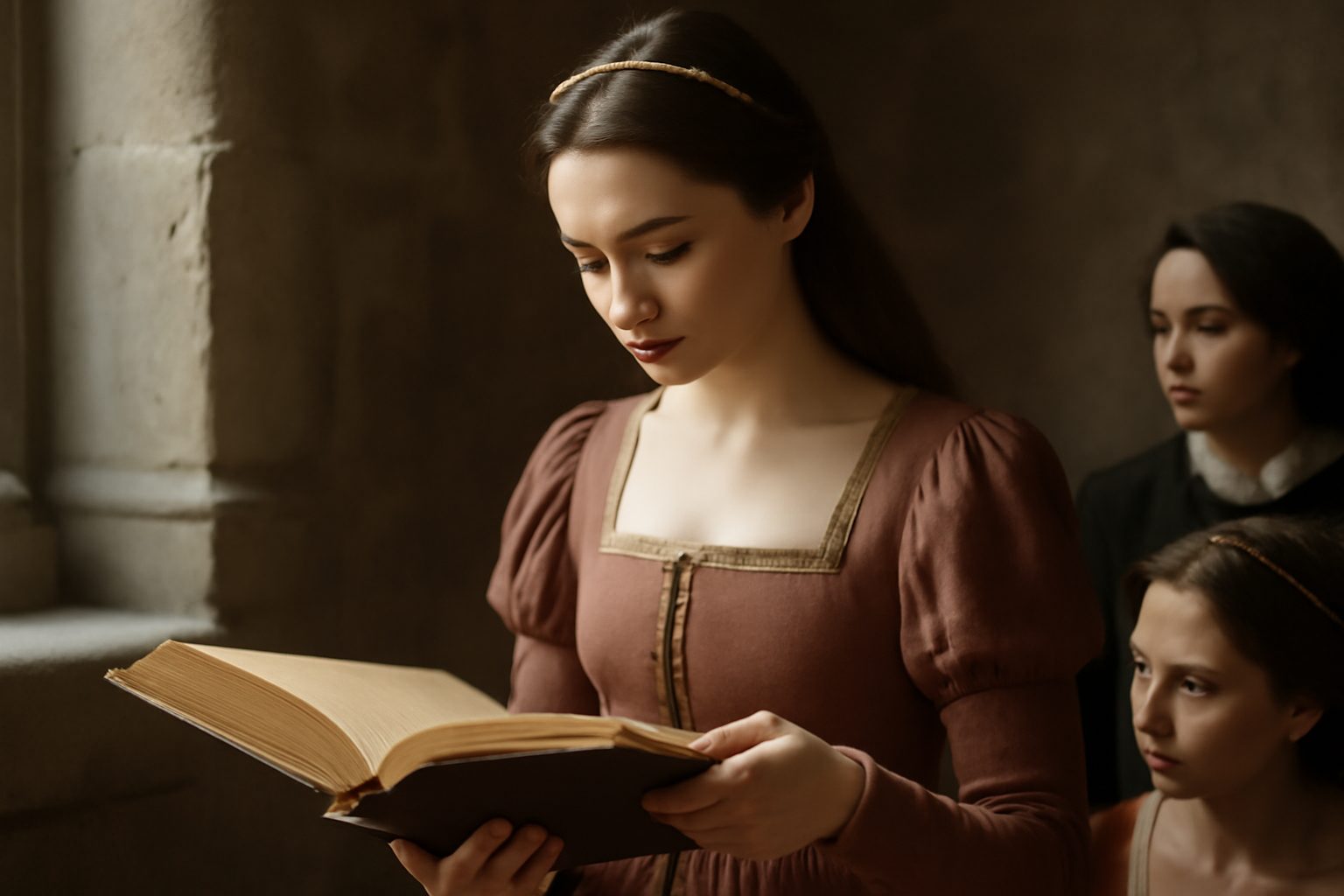
The verse "That in gold clasps locks in the golden story" is part of Lady Capulet's extended metaphor describing Paris as a beautiful, unread book that Juliet should consider marrying. This imagery connects to several other verses in the scene that elaborate on the themes of beauty, value, and marriage.
Metaphorical Descriptions of Paris
Lady Capulet's comparison of Paris to a book begins with "Read o'er the volume of young Paris' face", urging Juliet to examine his features. She continues with "And find delight writ there with beauty's pen", emphasizing the pleasure found in his appearance. The golden clasps mentioned in the target verse symbolize the binding that contains and enhances the valuable story, much like "To beautify him, only lacks a cover" suggests that marriage will complete his perfection.
Shared Glory and Honor
The idea of shared value is echoed in "That book in many's eyes doth share the glory", indicating that Paris is admired by many. This connects to the golden story being locked with clasps, implying both protection and display of his worth. Additionally, "So shall you share all that he doth possess" reinforces the benefits Juliet would gain through marriage.
Beauty and Inner Qualities
The theme of external beauty reflecting inner virtue is present in "For fair without the fair within to hide", suggesting that Paris's outer appearance matches his inner qualities. The golden clasps and story metaphor aligns with this, portraying him as a treasured object of both aesthetic and moral value.
Juliet's Response and Moderation
Juliet's cautious reply in "I'll look to like, if looking liking move" shows her willingness to consider Paris, but without deep commitment yet. This contrasts with the lavish praise in the golden story metaphor, highlighting her youthful prudence. Her moderation is further emphasized in "But no more deep will I endart mine eye", indicating she will not look too deeply or fall in love rashly.
Nurse's Earthly Perspective
The Nurse's pragmatic and humorous anecdotes, such as "Thou wilt fall backward when thou comest to age", provide a earthy counterpoint to Lady Capulet's lofty metaphors. This juxtaposition underscores the difference between romantic idealization and practical reality in discussions of marriage.